XC3 Weaponlight

Archive for the ‘Guest Post’ Category

FirstSpear Friday Focus— Retro-Fit Cummerbund

Friday, October 9th, 2020

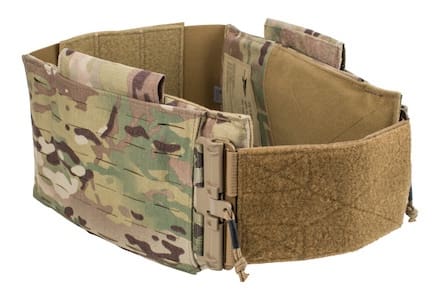
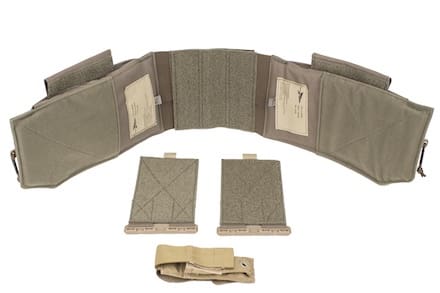
This week’s focus is all about the Retro-Fit Cummerbund. Combining all the features of the Overlap Cummerbund, including a strong elastic back that provides security and comfort, the Retro-Fit Cummerbund is a great solution for those utilizing a different plate carrier that want to use FirstSpear’s 6/12 modular platform and Tubes technology. The low-profile loop interior for mounting our hook-backed Ragnar pockets for radios, extra mags inside the cummerbund, making users lighter and faster with a slimmer profile.

SPECS:

Model: Retro-Fit Cummerbund

Size: Small (26”–32”); Medium (32”–38”); Large (35”–41”); XL (38”-44”); 2XL (41­”–47”); 3XL (48”–52”)

Colors: Black, Coyote, Multi-Cam, Ranger Green

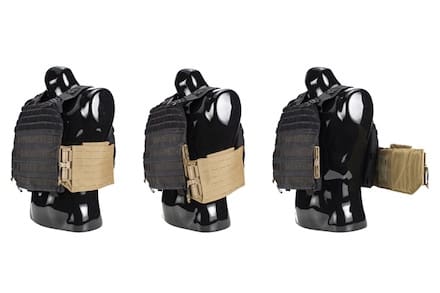
FirstSpear’s Tubes Rapid-Release Technology solves many of the problems with common closure methods on plate carriers. The common closure in the front with the hook & loop fasteners can present many performance failures. It not only adds bulk, it is noisy, and retains water and mud; from a safety standpoint, the hook and loop closures can cause cummerbund protection items (like side plates, inflatable flotation) to shift position and misalign from where they should be to offer maximum protection.

Tubes technology has solved all these challenges. Quick to close, and even quicker to remove, the Retro-Fit Cummerbund utilizes Tubes to allow end users to utilize this capability and the 6/12 Modular Platform without completely changing your entire load carriage platform. This kit is compatible with carriers that utilize traditional hook and loop flap systems and cummerbund pass-through channel. It accepts both soft armor and 6 in. x 6 in. hard plates.

Constantly pushing the envelope in technological advances to better serve the warfighter and first responders, check out First-Spear.com. To read more about our technology advancements, go to First-Spear.tech.

Sensor with 100,000 Times Higher Sensitivity Could Bolster Thermal Imaging

Friday, October 9th, 2020

Better detecting microwave radiation could improve thermal imaging, electronic warfare, radar

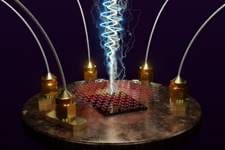
RESEARCH TRIANGLE PARK, N.C. — Army-funded research developed a new microwave radiation sensor with 100,000 times higher sensitivity than currently available commercial sensors. Researchers said better detection of microwave radiation will enable improved thermal imaging, electronic warfare, radio communications and radar.

Researchers published their study in the peer-reviewed journal Nature. The team includes scientists from Harvard University, The Institute of Photonic Sciences, Massachusetts Institute of Technology, Pohang University of Science and Technology, and Raytheon BBN Technologies. The Army, in part, funded the work to fabricate this bolometer by exploiting the giant thermal response of graphene to microwave radiation.

“The microwave bolometer developed under this project is so sensitive that it is capable of detecting a single microwave photon, which is the smallest amount of energy in nature,” said Dr. Joe Qiu, program manager for solid-state electronics and electromagnetics, Army Research Office, an element of the U.S. Army Combat Capabilities Development Command’s Army Research Laboratory. “This technology will potentially enable new capabilities for applications such as quantum sensing and radar, and ensure the U.S. Army maintains spectral dominance in the foreseeable future.”

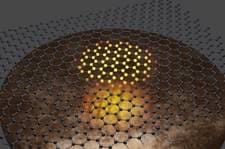
The graphene bolometer sensor detects electromagnetic radiation by measuring the temperature rise as the photons are absorbed into the sensor. Graphene is a two dimensional, one-atom layer thick material. The researchers achieved a high bolometer sensitivity by incorporating graphene in the microwave antenna.

A key innovation in this advancement is to measure the temperature rise by superconducting Josephson junction while maintaining a high microwave radiation coupling into the graphene through an antenna, researchers said. The coupling efficiency is essential in a high sensitivity detection because “every precious photon counts.”

A Josephson junction is a quantum mechanical device which is made of two superconducting electrodes separated by a barrier (thin insulating tunnel barrier, normal metal, semiconductor, ferromagnet, etc.)

In addition to being thin, the electrons in graphene are also in a very special band structure in which the valence and conduction bands meet at only one point, known as Dirac point.

“The density of states vanishes there so that when the electrons receive the photon energy, the temperature rise is high while the heat leakage is small,” said Dr. Kin Chung Fong, Raytheon BBN Technologies.

With increased sensitivity of bolometer detectors, this research has found a new pathway to improve the performance of systems detecting electromagnetic signal such as radar, night vision, LIDAR (Light Detection and Ranging), and communication. It could also enable new applications such as quantum information science, thermal imaging as well as the search of dark matter.

The part of the research conducted at MIT included work from the Institute for Soldier Nanotechnologies. The U.S. Army established the institute in 2002 as an interdisciplinary research center to dramatically improve protection, survivability and mission capabilities of the Soldier and of Soldier-supporting platforms and systems.

By US Army CCDC Army Research Laboratory Public Affairs

Natick Soldier Center’s New Fabric Enhances Cybersecurity, Subzero Weather Durability

Thursday, October 8th, 2020

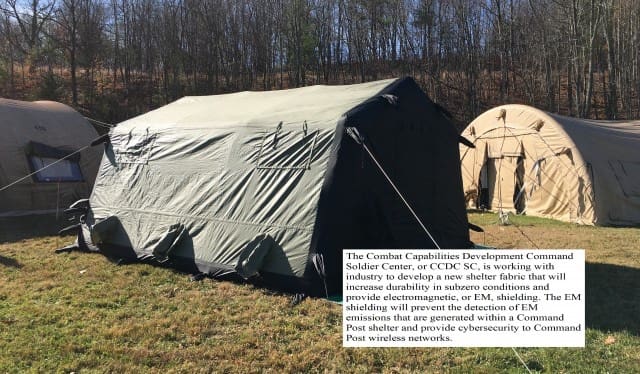
NATICK, Mass. – The Combat Capabilities Development Command Soldier Center, or CCDC SC, is working with industry to develop a new shelter fabric that will increase durability in subzero conditions and provide electromagnetic, or EM, shielding. The EM shielding will prevent the detection of EM emissions that are generated within a Command Post shelter and provide cybersecurity to Command Post wireless networks.

CCDC SC’s Expeditionary Maneuver Support Directorate is working with industry partners to develop the new laminate systems with higher performance and durability. Kristian Donahue, a chemical engineer in EMSD at CCDC SC, explained that General Purpose, or GP, shelter fabrics are currently made with a coating that becomes brittle at subzero temperatures. This impacts the durability of the fabric, the environmental protection of the shelter, and the light discipline aspect of signature management. Light discipline refers to luminous signs that can lead to the detection of the presence of troops and military facilities.

Donahue stated that the team was already able to successfully develop a new GP tent material that eliminates the low-temperature durability issues, a significant milestone which will help benefit the EM shielding work as well.

“Our goal is to also add additional functionality to this GP tent fabric by integrating an electromagnetic shielding material into the GP fabric,” said Donahue. “This EM shielding fabric will prevent the EM emissions generated within a Command Post shelter from being detected by adversaries, as well as provide cybersecurity to wireless networks operating within the CP.”

Donahue explained that EM shielding is important for both security and Soldier safety.

“Electromagnetic emissions can be detected by adversaries therefore giving away your position,” said Donahue. “Those emissions can also be intercepted and exploited by cyber warfare units.”

The new shelter fabric is also lower weight, thus reducing the logistical footprint. Moreover, there is no longer the risk of increased volume associated with the current fabric, which may become stiff at subzero temperatures and the stiffness can affect volume. In certain cases the increased volume may interfere with moving and packing.

The new fabric technology will also enhance Soldier protection and lethality.

“With increasing peer and near-peer adversaries, the ability to maintain Command and Control and Communications becomes highly imperative,” said Donahue. “The ability to maintain C3 while not being detected is important in the ability to increase unit survivability and unit lethality. The ability to deny detection during a multi-domain battle will ensure dominance on the battlefield.”

By Jane Benson, CCDC SC Public Affairs

Augmented Reality K9 Goggles Could Help Protect Soldiers

Wednesday, October 7th, 2020

RESEARCH TRIANGLE PARK, N.C. — Military working dogs often scout areas for explosives devices and hazardous materials and assist in rescue operations, but giving dogs the necessary commands to perform these missions can put Soldiers in harm’s way. Augmented reality may change that.
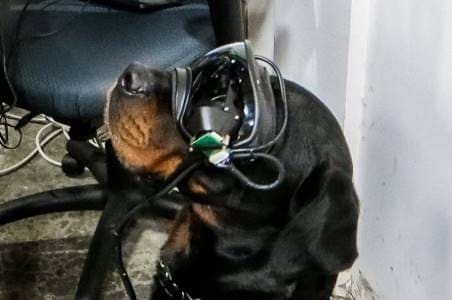
Through a project funded by the Small Business Innovation Research program and managed by the Army Research Office, an element of the U.S. Army Combat Capabilities Development Command’s Army Research Laboratory, a new technology has been developed by Command Sight, Inc., to provide military working dogs with augmented reality goggles that allow a dog’s handler to give it specific directional commands while keeping the warfighter remote and out of sight.

In 2017, Dr. A.J. Peper started Command Sight, a small business based in Seattle, to bridge human and animal communication. Through conversations with current and former military operators he identified a need to increase the efficacy of communication between canine and handler. As a result, Command Sight built the first prototype of augmented reality glasses for military working dogs.

Peper said initial feedback from his proof of concept was, “the system could fundamentally change how military canines are deployed in the future.”

The augmented reality goggles are specially designed to fit each dog with a visual indictor that allows the dog to be directed to a specific spot and react to the visual cue in the goggles. The handler can see everything the dog sees to provide it commands through the glasses.

“Augmented reality works differently for dogs than for humans,” said Dr. Stephen Lee, an ARO senior scientist. “AR will be used to provide dogs with commands and cues; it’s not for the dog to interact with it like a human does. This new technology offers us a critical tool to better communicate with military working dogs.”
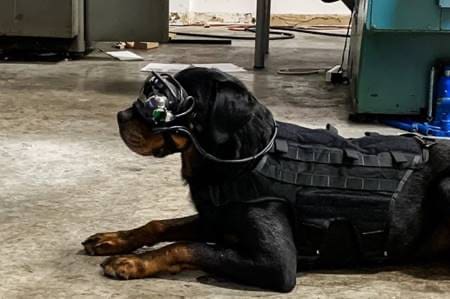
The initial prototype is wired, keeping the dog on a leash, but researchers are working to make it wireless in the next phase of development.

“We are still in the beginning research stages of applying this technology to dogs, but the results from our initial research are extremely promising,” Peper said. “Much of the research to date has been conducted with my rottweiler, Mater. His ability to generalize from other training to working through the AR goggles has been incredible. We still have a way to go from a basic science and development perspective before it will be ready for the wear and tear our military dogs will place on the units.”

The basic science research behind this technology focuses on understanding canine vision and cognition as this tool is developed.

“We will be able to probe canine perception and behavior in a new way with this tool,” Lee said.

Currently, military working dogs are commonly directed by hand signals, which require the handler to be within sight of the dog, or by laser pointers, which also required the handler to remain close to the dog and generates a light source, which could be a safety issue.

Audio communication, using a camera and a walkie talkie placed on the dog are also used to direct the canines and allows the handler to be further from the dog, but the verbal commands can lead to confusion for the dog, for example, a dog runs around a set of stairs rather than going up them.

Augmented reality goggles could offer Special Forces dogs and their handlers a new alternative.

“The military working dog community is very excited about the potential of this technology,” Lee said. “This technology really cuts new ground and opens up possibilities that we haven’t considered yet.”

The augmented reality system uses goggles military working dogs have already been wearing for protection in inclement conditions and aerial deployments from Rex Specs. By leveraging a product the dogs are already used to wearing, Peper said it makes the technology adoption easier for both the dogs and the handler.

“Even without the augmented reality, this technology provides one of the best camera systems for military working dogs,” Lee said. “Now, cameras are generally placed on a dog’s back, but by putting the camera in the goggles, the handler can see exactly what the dogs sees and it eliminates the bounce that comes from placing the camera on the dog’s back.”

The Command Sight team has completed the Phase I of the SBIR and was selected to continue to Phase II. The SBIR program funds research and technology development with small businesses using a three-phase process. In contrast to the basic research programs managed by ARO, the SBIR program focuses primarily on feasibility studies leading to prototype demonstration of technology for specific applications.

Additionally, the Department of Defense Rapid Reaction Technology Office has provided funding for the next phase of development. With that funding, Command Sight is now working with Navy Special Forces to build prototypes that will be tested on their military working dogs. Each of the dogs received a 3D scan to get dimensional data to understand where to place optics and electrical components, specific to each dog.

The researchers plan to spend the next two years developing a production level wireless product. Once they have a prototype they will get user feedback and revise the product for manufacturing.

“ARO has been a critical partner in making technical, training and direct user connections to build ground swell of interest and secure funding sources,” Peper said. “We’re excited about getting this into the hands of the Soldier, hopefully in just a few years.”

By US Army CCDC Army Research Laboratory Public Affairs

UF PRO Presents – The “Boo Boo” Bag

Monday, October 5th, 2020

A “Boo Boo” bag is part of a medical kit reserved for minor cuts and blisters (headaches, too), the non-life-threatening stuff that’s inconvenient but nonetheless needs to be treated.

We’ve presented ready made versions in the past with many preferring to make their own. This video featuring former Special Forces Medic Luka, shows what he puts in his “Boo Boo” bag.

Read more at ufpro.com/blog/article/civilian-edc-whats-my-combat-medic-bag.

MATBOCK Monday – Skins

Monday, October 5th, 2020

MATBOCK Skins

Good morning and Happy MATBOCK Monday!

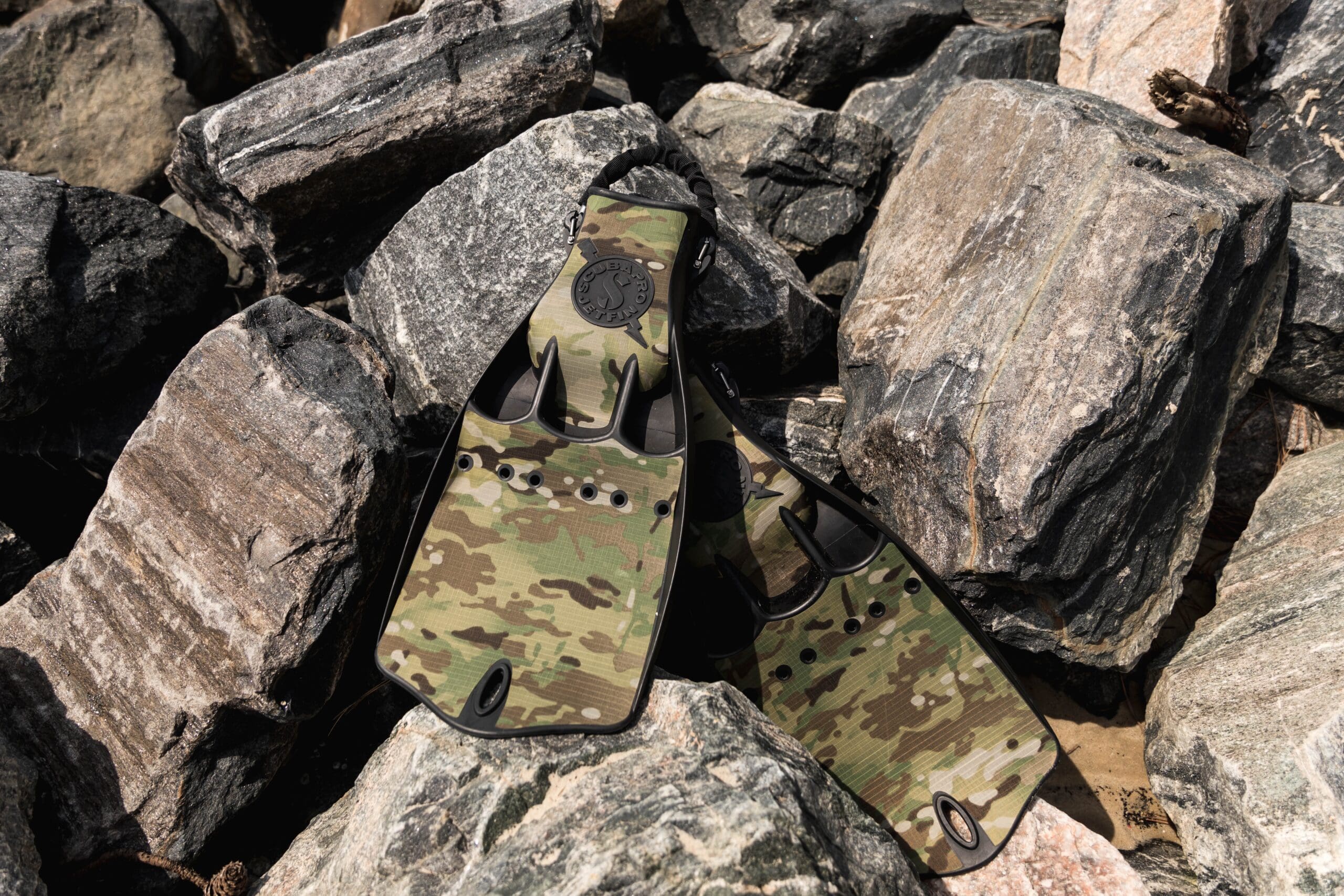
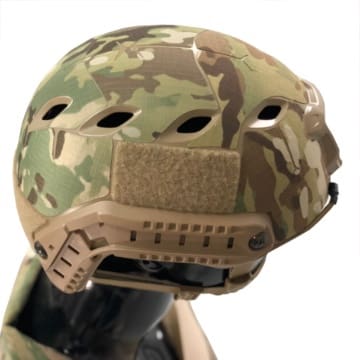
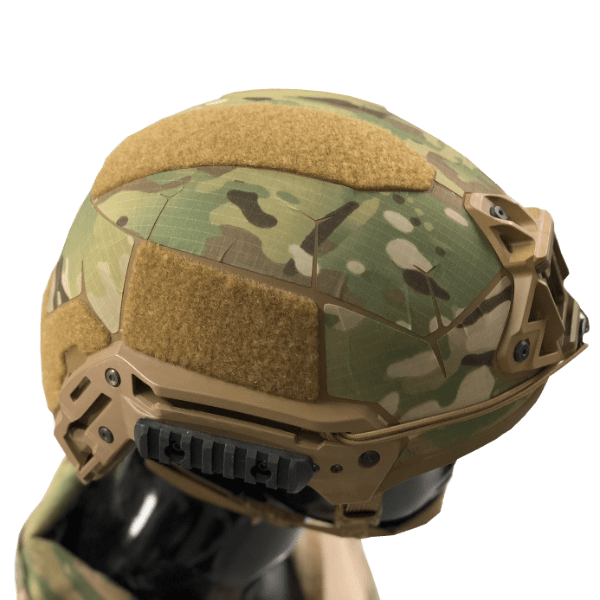
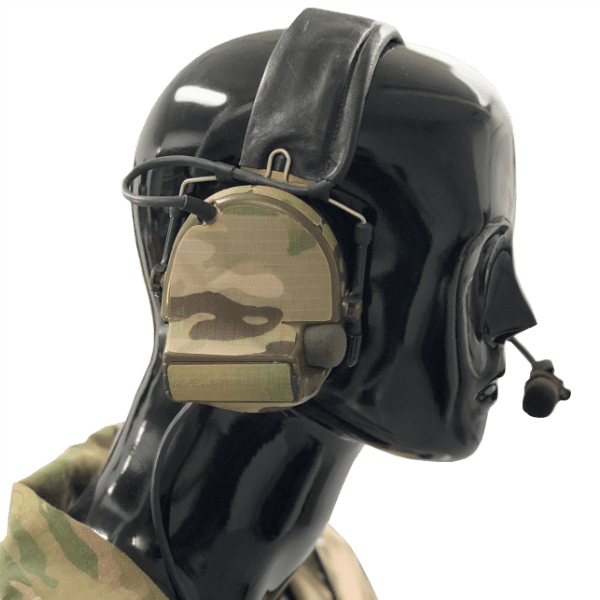
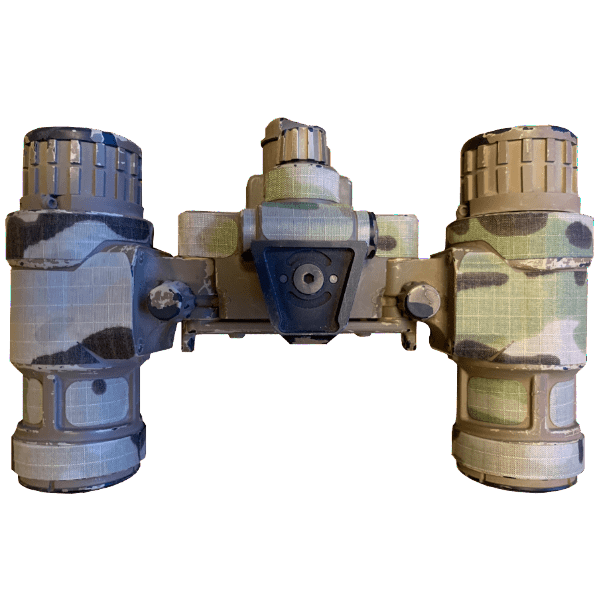
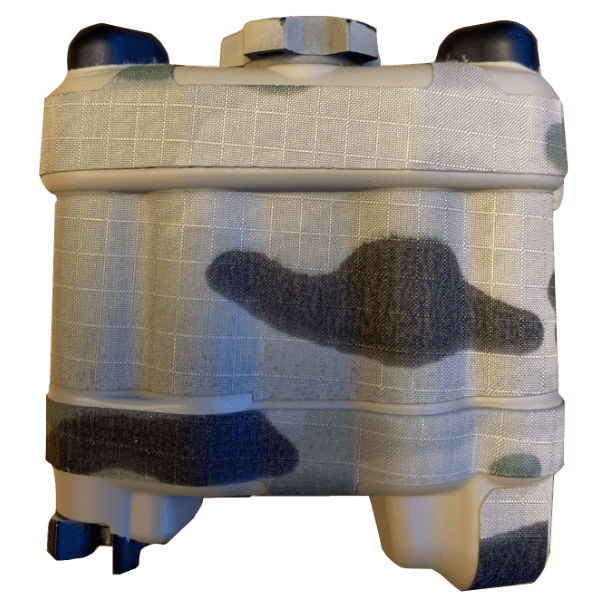
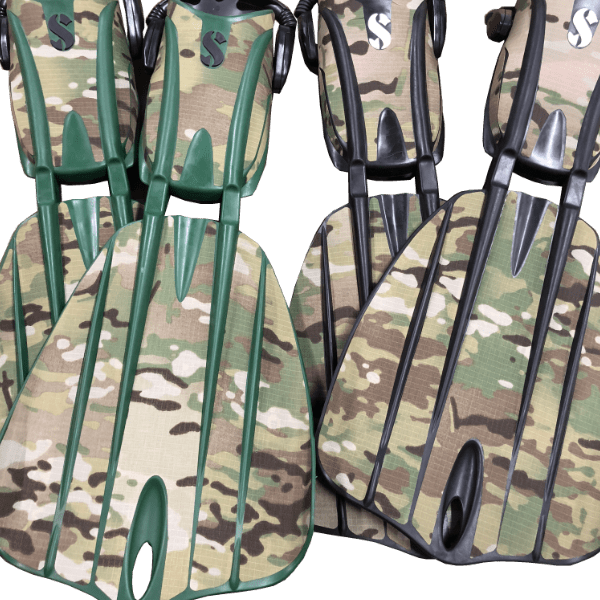
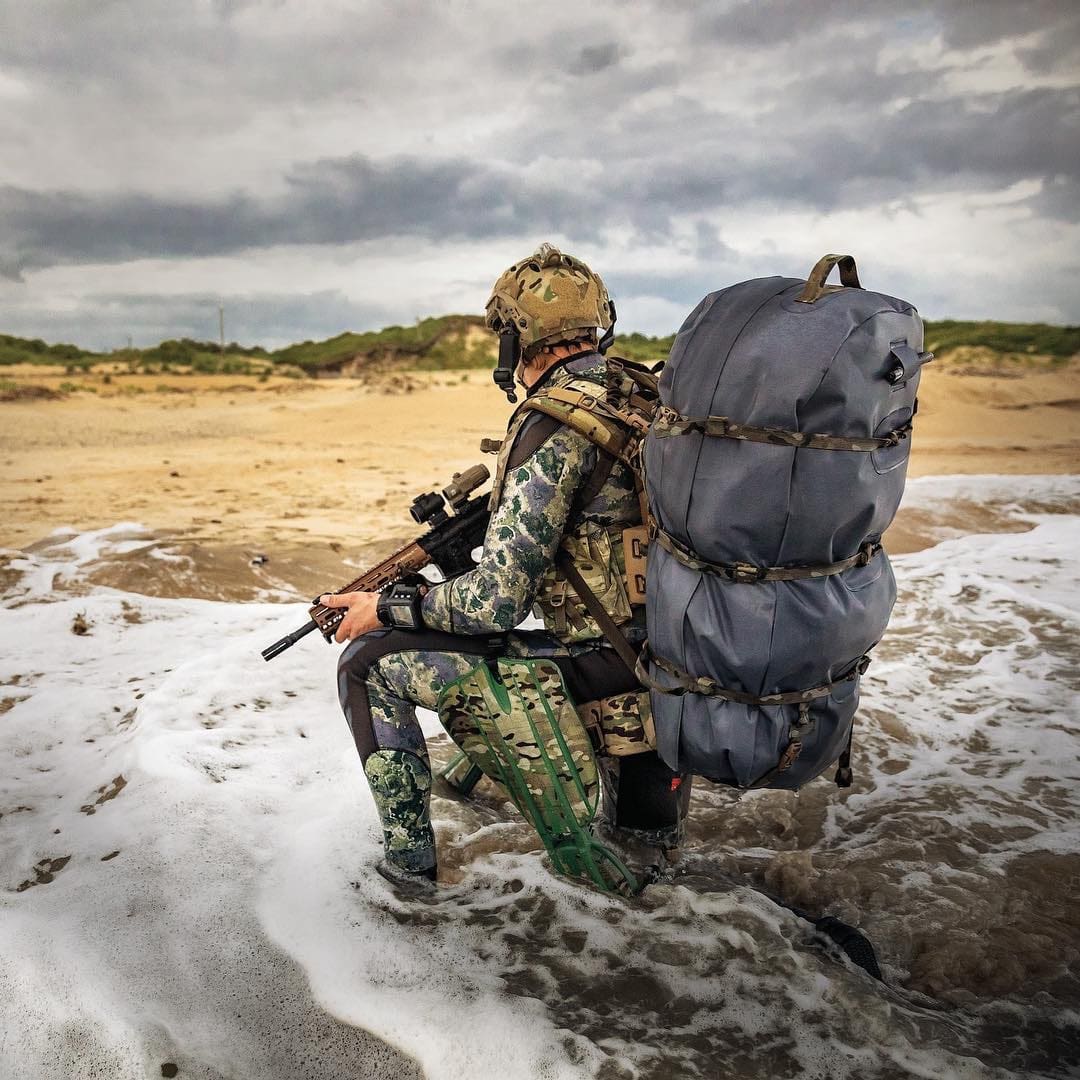
The Patent Pending MATBOCK Skins are a multi-layer adhesive/fabric laminate designed to give the user the ability to camouflage any surface desired. The Skins are waterproof and oil resistant, can be reused multiple times and are certified Near IR Compliant. Simply peel and place the MATBOCK Skins on the item you wish to camouflage, when the Skins are not needed peel them off and place on wax paper for later use. It’s that easy!

Applications

Team Wendy and Ops Core Helmet Skins

Peltor Skins

PVS – 31 Skins

Scuba Pro Skins

Don’t forget to tune in Monday at 1:00 PM EST as we go live to show the MATBOCK Skins and answer any questions you may have.

www.matbock.com/collections/skins

RCO Delivers Department of the Air Force Capabilities

Monday, October 5th, 2020

WASHINGTON (AFNS) —

Less than 200 personnel assigned to the Department of the Air Force Rapid Capabilities Office rapidly develop capabilities to outpace and counter the increasing threats of adversaries.

Their primary focus incorporates cutting-edge approaches to standard acquisition processes to produce capabilities for both the Department of Defense and the DAF, which includes the U.S. Air Force and the U.S. Space Force.

The mission of the DAF RCO is to expedite development and fielding of select DoD combat support and weapon systems by leveraging defense-wide technology development efforts and existing operational capabilities.

“Built on using speed and efficiency, we expedite the fielding of critical capabilities to the warfighter,” said Randy Walden, director and program executive officer for the DAF RCO. “This includes operators in both the United States Air Force and the United States Space Force in support of the National Defense Strategy.

Originally activated in April 2003, one of its first projects was to deploy significant upgrades to the Integrated Air Defense System, now operational around the National Capital Region, to meet critical counter-terrorism objectives before the January 2005 Presidential Inauguration Day.

Today, the DAF RCO portfolio includes several high priority developmental and experimental programs.

For example, the X?37B Orbital Test Vehicle program is an experimental test platform that supports the U.S. Space Force to meet DAF objectives. Space Professionals conduct X-37B launch and on-orbit operations, and the DAF RCO program office team will include Space Force members as the new service continues to stand up.

The X-37B is an experimental test program to demonstrate technologies for a reliable, reusable, unmanned space test platform. The primary objectives of the X-37B are twofold: reusable spacecraft technologies for America’s future in space; and operating experiments, which can be returned and examined on Earth.

Currently, the X-37B is conducting on-orbit operations in its sixth mission.

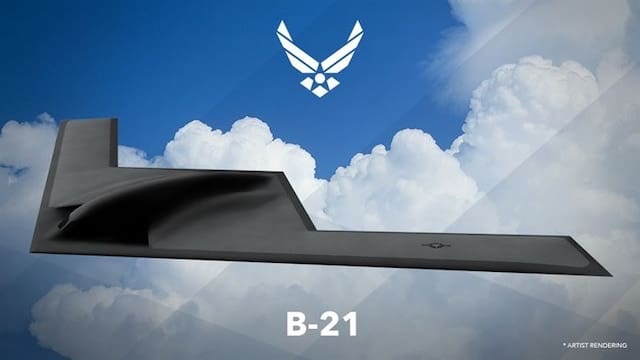
The DAF RCO is also home to the B-21 Raider program. The B-21 is a U.S. Air Force priority, which will provide critical operational capability and flexibility across a wide range of military objectives, providing both conventional and nuclear capabilities in fulfillment of national objectives.

The B-21 is being designed to be highly survivable with the ability to penetrate modern air defenses to strike any target, anywhere on the globe in a contested area of operations.

The program plans to deliver the first B-21 aircraft to operational bases in the mid-2020s.

“The DAF RCO is a unique organization because it supports priorities for both the Space Force and Air Force,” Walden said. “The office is staffed with a variety of functional DAF specialists who form a collaborative melting pot of expertise built specifically to operate within the gray areas of the standard acquisition processes.”

The DAF RCO conducts streamlined acquisitions in response to Air and Space Forces and Combatant Command requirements. It reports directly to a board of directors comprising of the Under Secretary of Defense for Acquisition and Sustainment; Under Secretary of Defense for Research and Engineering; Secretary of the Air Force; Assistant Secretary of the Air Force for Acquisition, Technology and Logistics; U.S. Space Force Chief of Space Operations; and Chief of Staff of the Air Force.

“Whether it’s digital engineering, prototyping or modern software development, the DAF RCO is committed to advancing the capabilities of the Department of the Air Force,” Walden added.

By Secretary of the Air Force Public Affairs

SCUBAPRO Sunday – Operation Gothic Serpent

Sunday, October 4th, 2020

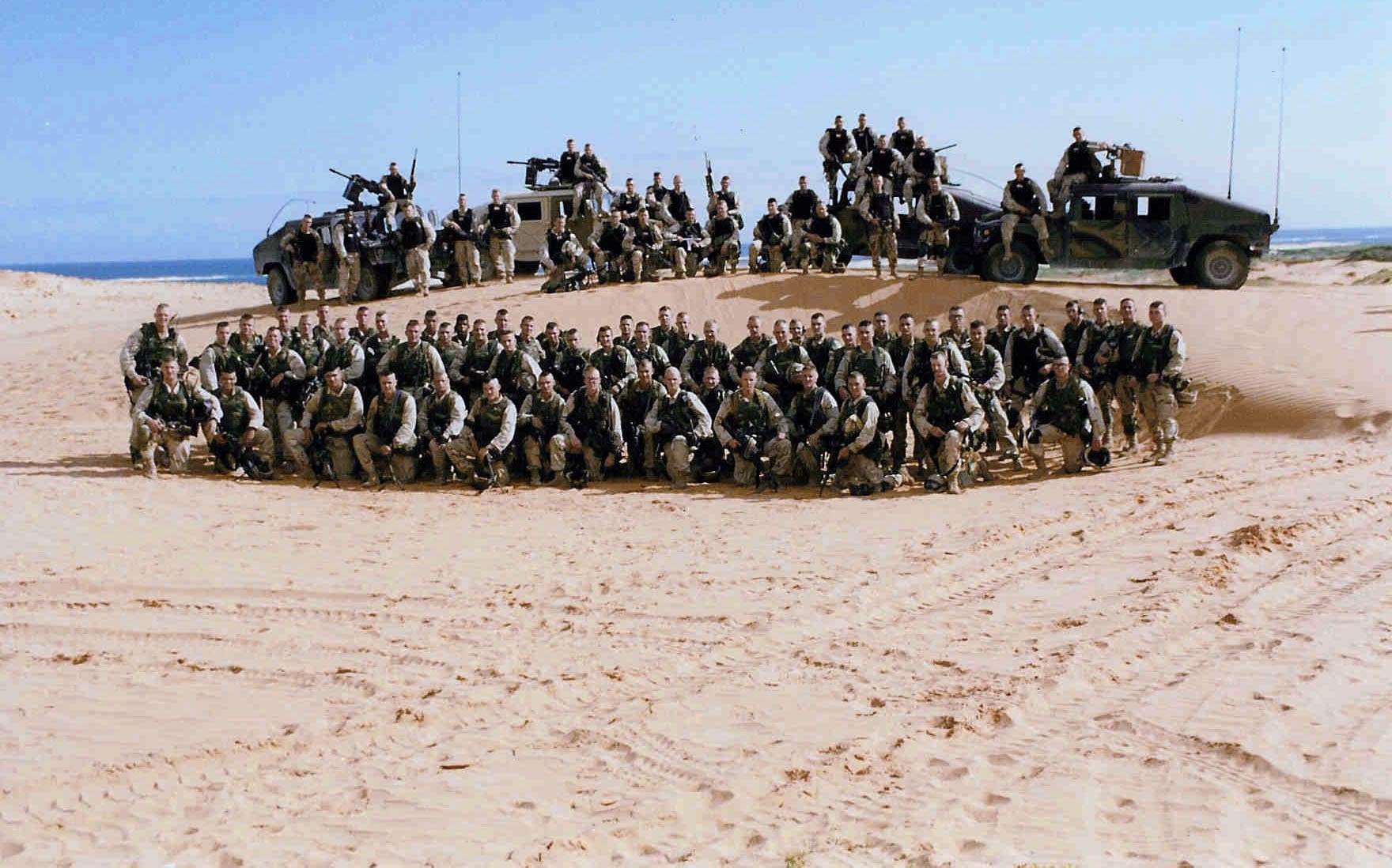
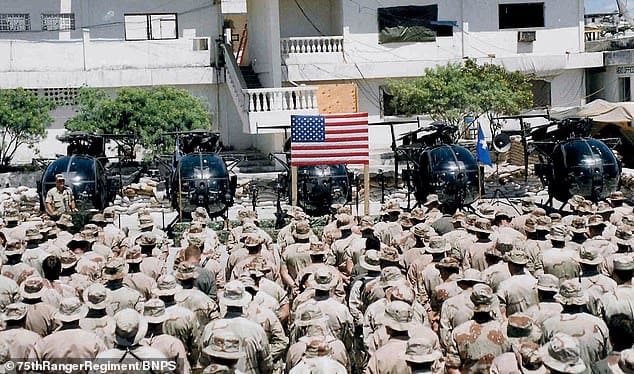
Yesterday and today October 3rd and 4th is the Day of the Rangers, Battle of Mogadishu or better known as Blackhawk Down. Task Force Ranger was tasked with conducting a raid to capture two lieutenants of a Somali warlord. Task Force Ranger was made of members of C squadron of the 1st Special Forces Group Detachment Delta and B company of 3rd Ranger Battalion, Task Force 160 Special Operation Aviation Regiment, SEALs from Naval Special Warfare Development Group and Air Force Pararescuemen and Combat Controllers from the 24th Special Tactics Squadron. They were transported to the target by ground and helicopters. The mission should have only taken about an hour. They inserted around 1350 local time, from the start they found themselves under heavy fire. When two Black Hawk helicopters were shot down (the first being around 1620 local) it quickly went from a snatch and grab to a rescue and recovery. A long ground battle to place and the U.S. forces were heavily outnumbered. By the time the last Troops made it to safety at a UN base it was around 0640 local on the 4th.




While leaving the last crash site, a group of Rangers and Delta operators led by SSG John R. Dycus realized that there wasn’t enough room in the vehicles for them and they were forced to move out on foot to a rendezvous point on National Street but they ended up going all the way back to the UN Base. This is known as the Mogadishu Mile. They think it was anywhere from 3.5 to 4 miles.

Casualties included 19 dead American soldiers and 73 wounded, with Malaysian forces suffering one death and seven wounded, and Pakistani forces suffering one death and two injuries. There were between 315 and 2,000 Somali casualties. Two Medals of Honor were posthumously awarded to MSG Gary Gordan and SFC Randy Shughart for their actions on the ground to protect one of the pilots (Mike Durant) and the crash site.

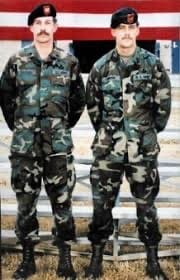
1st SFOD-D 

MSG Gary Gordon Killed defending the crew of Super Six-Four Medal of Honor

SFC Randy Shughart Killed defending the crew of Super Six-Four Medal of Honor

SSG Daniel Busch Crashed on Super Six-One, died from wounds received defending the downed crew Silver Star

SFC Earl Fillmore Killed moving to the first crash site Silver Star

SFC Matt Rierson Killed on October 6, 1993 by a mortar which landed just outside the hangar Silver Star

MSG Tim “Griz” Martin Died from wounds received on the Lost Convoy Silver Star and Purple Heart

3rd Ranger Battalion, 75th Ranger Regiment

CPL Jamie Smith Died of wounds with the pinned-down force around crash site one Bronze Star with Valor Device and Oak leaf cluster, Purple Heart

SPC James Cavaco Killed on the Lost Convoy Bronze Star with Valor Device

SGT Casey Joyce Killed on the Lost Convoy Bronze Star with Valor Device

PFC Richard “Alphabet” Kowalewski Killed on the Lost Convoy Bronze Star with Valor Device

SGT Dominick Pilla Killed on Struecker’s convoy Bronze Star with Valor Device

SGT Lorenzo Ruiz Killed on the Lost Convoy Bronze Star with Valor Device

160th SOAR (Nightstalkers)

SSG William Cleveland Crew chief on Super Six-Four-killed Silver Star, Bronze Star, Air Medal with Valor Device

SSG Thomas Field Crew chief on Super Six-Four-killed Silver Star, Bronze Star, Air Medal with Valor Device

CW4 Raymond Frank Copilot of Super Six-Four-killed Silver Star, Air Medal with Valor Device

CW3 Clifton “Elvis” Wolcott Pilot of Super Six-One and died in crash Distinguished Flying Cross, Bronze Star, Air Medal with Valor Device

CW2 Donovan “Bull” Briley Copilot of Super Six-One and died in crash Distinguished Flying Cross, Bronze Star, Air Medal with Valor Device

2nd Battalion 14th Infantry Regiment, 2nd Brigade 10th Mountain Division

SGT Cornell Houston Killed on the rescue convoy Bronze Star with Valor Device, de Fleury Medal

PFC James Martin Killed on the rescue convoy Purple Heart