Pirata Series from OTB Boots - Coming March 2026!

Archive for the ‘Guest Post’ Category

Soldier Feedback Driving Army Modernization

Thursday, November 28th, 2019

FORT PICKETT, Va. — Senior Department of Defense officials and congressional staff were briefed on the status of the Integrated Visual Augmentation System, or IVAS, program at Fort Pickett, near Richmond, Virginia, Nov. 6. IVAS is a next-generation situational awareness tool under development to return overmatch to Soldiers in small units throughout the close combat force.
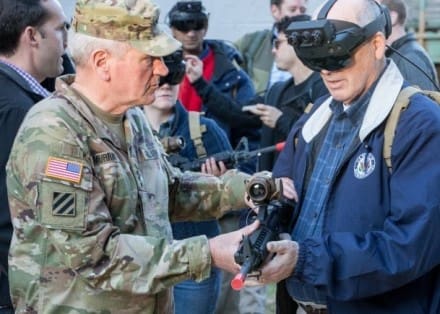
“Technology will never be as slow as it is today,” said the Hon. James E. McPherson, the senior official performing the duties of undersecretary of the U.S. Army. “We never want to have a fair fight.”

“Budgets make us make hard choices,” McPherson said. “Could we field everything we have on the drawing board today? Probably not. We’re going to have to make hard choices, budget-driven choices on what’s most important to field.”

Decision-making can be informed through aggressive evaluation to quickly discern viable military solutions and modify designs early, before sinking additional costs into a program. To facilitate research, U.S. Army Futures Command’s eight cross-functional teams, or CFTs, have conducted dozens of Soldier-centered engagements called Soldier touch points to further the Army’s modernization priorities.

“Soldier touch points help us better demonstrate technology, like the IVAS, at specific points in the development process, the cross-functional team gets direct feedback — and if something fails — it fails early and we learn from it,” said Gen. John M. Murray, commanding general of Army Futures Command.

Soldiers are brought into the development process to provide input to industry, testers, researchers and acquisition experts on the capabilities they will need to fight and win. During these events, prototypes are delivered to units to incorporate into their training.

The events are designed to empower Soldiers to help improve the final equipment and technology. This feedback loop is critical to drive cost-effective and timely innovation.

“That’s why these touch points are so very, very important, something that is really revolutionary that we’ve not done before,” McPherson said. “Before, it’s been, the engineers put it together, met the requirements, ‘Ok, here you go,’ and the Soldier gets it and says, ‘I’ve got to adapt to this now.’ Now, we’re making the weapon system adapt to the Soldier.”
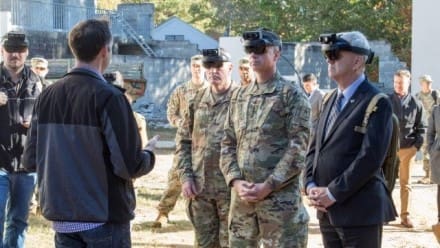
The current IVAS touch point was led by AFC’s Fort Benning, Georgia-based Soldier Lethality CFT in conjunction with the command’s Orlando, Florida-based Synthetic Training Environment CFT. They were joined by industry partners to gather tens of thousands of data points and direct feedback to spur rapid iterations of the IVAS design and technology before the next touch point takes place in the future.

Soldier touch points are conducted in coordination with the Program Executive Office Soldier, or PEO Soldier, an organization within the Office of the Assistant Secretary of the Army — Acquisition, Logistics and Technology, or ASA(ALT). Based at Fort Belvoir, Virginia, PEO Soldier is the Army’s acquisition agency responsible for everything a Soldier wears or carries.

“We’re doing something called Soldier-centered design,” said Jason Regnier, PEO Soldier’s technical director for the IVAS project.

“The touch points now are a culmination of months of work, where we actually put it in their hands and get real-time feedback, make improvements, even on the site, and then think about what that next turn is going to be,” Regnier said. “Instead of one, stamped-out design that we can give to Soldiers — that may or may not really work — this is designed, in essence, by Soldiers through this Soldier touch point project.”

These engagements not only generate Soldier-initiated problems that have been overlooked, but also confirms or dispels the need to address real or perceived problems with the technology for the development teams.

This Soldier-centered design concept was also explained by an industry partner developing the IVAS device for the Army.

“It’s really an adaptation of an industry practice known as human-centered design, where you really have to start with deeply understanding the underlying human needs. In this case, what are the needs of the Soldier?” said Scott Evans, Microsoft Corporation’s general manager for the IVAS program. “In the case of a Soldier, you have to have a methodology to make sure that we understand those needs and that we can evaluate prototypes against those needs.”

These touch points are about teamwork, collaboration, and common-sense innovation, said Brig. Gen. David M. Hodne, the director of the Soldier Lethality CFT.

“Soldier-centered design, feedback from Soldiers and feedback from our partners at Microsoft on how we can achieve technical solutions to arrive at an exceptional device that will allow Soldiers to fight, rehearse and train in a manner they’ve not been able to previously.”
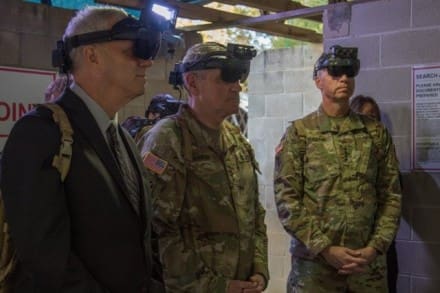
The Soldier touch points make rapid iteration of the prototypes possible.

“We’re here not just to evaluate the prototype against the measures that we identified, but we’re also here to learn more around the Soldier needs and carry that forward,” Evans said. “We’re also here to evolve our methodology. Every time we have a Soldier touch point, our ability to understand, what is the most effective way to measure things like Soldier performance? We get better at the actual methodology itself.”

In addition to working with traditional industry partners, AFC seeks solutions from non-traditional innovators through the Army Applications Laboratory and a small business office within the command’s headquarters.

AAL was stood up in the Capital Factory in downtown Austin to provide a venue for innovators with novel solutions to discover how they could support Army modernization efforts. They host regular engagements with entrepreneurs and seek direct feedback from Soldiers.

For example, in July, an AAL team held a collaborative event at Fort Hood, Texas. They visited with III Corps Soldiers from military occupational specialties related to combat arms, combat support, and combat service support to provide innovators with their reactions to proposed technologies. It is also an opportunity for start-ups to grasp the hurdles they may encounter in development.

“Scalability is often an issue for small businesses, which could provide opportunities for the traditional defense industry to assist them,” Murray said. “We’re trying to figure out how we can become more agile. There are a lot of great small companies out there, and we’re trying to figure out how we can become more agile in the way that we resource them. Providing early Soldier input, when possible, is an easy value add.”

Regnier said Soldiers participating in the Fort Pickett exercises were enjoying their involvement. It not only serves a research method, but also provides an outlet for them to build confidence in their future equipment — they get a first-hand look at tomorrow’s battlefield technology.

“The feedback has been extremely positive, in the sense that the Soldiers understand the technology, in that there are some limitations now,” Regnier said. “But they can see where we’re going. They understand the difference between equipment they either have or wish they had in their normal units and what this capability is.”

Regnier said he has been with the IVAS project since its inception and has also provided technical advice on the development of another device recently fielded, the Enhanced Night Vision Goggle — Binocular, or ENVG-B, which the Soldier Lethality CFT coordinated.

“As we walked into this, we realized, normally the way the defense department approaches a problem like this is: we come up with a specification, for say a thermal weapons sight. It has to be able to see 1,000 meters, under cold and hot conditions, and in the rain, and can only weigh four or five pounds,” Regnier said.

He said the new process is completely different.

“In this case, we started looking at: ‘How does industry make a product?'” Regnier said. “And the way they make a product is, they figure out, ‘What does the user actually need? What does the Soldier need to do?’ That changed the approach. So, instead of doing a specification, we did studies. Soldier-oriented studies, where they came in and talked to researchers to explain what their job really is.”

Ten Soldier touch points were conducted during the ENVG-B’s development phase to inform its final design. Soldiers reported hitting twice as many targets while wearing the ENGV-B, as opposed to the current single-tube, monocular night vision device in broad use. They were also able to drive faster and complete land navigation tasks quicker as a result of the clarity the new binocular provided.

“The ENGV-Bravo was designed by Soldier for Soldiers,” said Pvt. 1st Class Dustin Roy, an infantryman with the 1st Infantry Division, following the fielding of the device at Fort Riley, Kansas, in September. “It makes me feel more confident in it, that it was designed by Soldiers. I know that I’m getting a good piece of gear, a good tool.”

The initial fielding of the ENVG-B speaks to the success of the cooperative relationships being fostered between AFC, ASA(ALT) and PEO Soldier, and industry partners, to keep Soldiers at the centerpiece of modernization efforts.

The Soldier touch point program provided significant feedback during the development of the ENVG-B, and is now doing the same for the IVAS developers.

“We need our Soldiers’ input, the end-users who are going to actually use this equipment,” Murray said. “Our decisions today will have a direct impact on them in the years to come. They’re the ones who will be using this in the field. The quicker we can work out kinks, the quicker — and cheaper — we can get it into their hands for effective use.”

Story by Army Futures Command

Why I Formed the American Suppressor Association by Knox Williams

Wednesday, November 27th, 2019

In December 2008 I was a broke college junior looking for extra cash to buy beer and take my girlfriend on dates. I loved guns, thought silencers were illegal (they’re not), and didn’t know what I wanted to do after graduation. Knowing how much I loved to shoot, a family friend of mine, who babysat for the owner of Advanced Armament Corp. (AAC), set up an interview for a paying internship that started in January. I aced the interview, landed the job, and walked through the doors at AAC for the first day of my internship not knowing that this $10/hour part time job would ultimately lead to the development of the American Suppressor Association.

Growing up the son of an audiologist, I always understood the importance of hearing protection. Before my first hunting trip at age 15, my mother made me a set of custom earplugs. She let me know in no uncertain terms that I was to wear them no matter what, because exposure to even a single gunshot can permanently damage your hearing. Like most teenage boys, I didn’t listen. As I settled the scope of my Remington 710 chambered in .30-06 on the vitals of the first deer I saw, I distinctly remember thinking that I should put my earplugs in. A half second later, when that button buck took a step forward, I pulled the trigger. My ears rang for three days.

When I graduated from the University of Georgia in 2010, I was hired full time at AAC as the Special Projects Coordinator. One of the first assignments in my new role was the development of AAC’s Can U, an interactive website designed to educate consumers on the legalities and functionalities of suppressors. In order to build out the content, I spent weeks researching every state’s laws and regulations as they pertained to suppressors. At the time, hunting with a suppressor was only legal in 22 states. When I realized my home state of Georgia was not one of them, I knew that I would do whatever it took to change the law because I didn’t want the next generation of hunters to jeopardize their hearing like I did.

As I began developing a plan to make hunting safer, I quickly realized two things:

1) At the time, no other NGOs were working on pro-suppressor reform. If we wanted to change suppressor laws, we would have to do it ourselves.

2) We would be far more effective if we were able to create a coalition to work together on our common goals.

It was out of these realizations that the idea for ASA was born.

Nearly a year later I organized an industry meeting in Washington, D.C. on August 19, 2011 to discuss the formation of an association with an attorney that specialized in the establishment of non-profits. The meeting was attended by representatives from AAC, Gemtech, Gun Trust Lawyer, M3 – Major Malfunction, NRA, SilencerCo, and SWR. By the end of the meeting, AAC, Gemtech, and SilencerCo each pledged $5,000 towards the development of a trade association. On September 8th, our articles of incorporation were approved, officially creating the American Silencer Association (ASA) – now known as the American Suppressor Association.

At the end of 2011, I left AAC with the intention of transitioning full time to ASA. However, we were unable to establish a full-time position, so I remained engaged with ASA in an unpaid capacity. For the next two years, I simultaneously consulted with Etymotic Research, a leading manufacturer of electronic hearing protection devices, and volunteered my time to advocate for suppressors and grow ASA. It wasn’t until December 2013 that I received my first paycheck when I assumed the role of Executive Director.

While Georgia was the impetus for my personal desire to leap into the political fray, the initial goals of our newfound association were more comprehensive. As stated in our initial pitch to industry, ASA sought to “further the pursuit of education, public relations, legislation, hunting applications, and military applications for the silencer industry.” Those goals remain largely unchanged to this day.

On July 1, 2014, as a result of over three years of work, my initial dream was realized when hunting with a suppressor became legal in Georgia. It was the eighth state that we helped flip. Despite this keystone victory, my desire to ensure that every law-abiding citizen in every state has the ability to own and use suppressors to help protect their hearing was magnified.

In 2015, ASA expanded by hiring Michael Williams, a full-time attorney who served as our General Counsel for nearly two years. During his tenure, he helped draft dozens of pieces of legislation, including the Hearing Protection Act. In September 2016, we added Owen Miller as the Director of Outreach. Prior to joining us, Owen was the Director of Compliance at Gemtech for over a decade. Since joining our team, Owen has helped ASA more than triple the ranks of our public membership.

Today, state legislation remains one of our top priorities. As a direct result of our lobbying and educational efforts, Iowa, Minnesota, and Vermont legalized suppressor ownership. Alabama, Arizona, Florida, Georgia, Indiana, Iowa, Kansas, Louisiana, Maine, Michigan, Minnesota, Montana, New Hampshire, North Carolina, Ohio, Oklahoma, Texas, and Wyoming all legalized the use of suppressors while hunting.

For the past eight years, ASA has actively lobbied in 30 states, fought to ease the archaic restrictions on suppressors in D.C., testified in front of dozens of legislative bodies, hosted countless suppressor demonstrations for legislators, policymakers, media, and the public, and funded research proving the efficacy of suppressors. We are the boots on the ground in the fight to legalize and deregulate suppressors and are the front-line defense against the anti-suppressor factions that want them banned.

I tell you all of this to illustrate that the American Suppressor Association is an organization of, by, and for the gun community. We are not here simply to field a paycheck and stop working at 5:00 PM. Rather, we are committed personally and professionally to the advancement of suppressor advocacy. For the past six years, I have spent more nights in hotels than at home because I’m willing to do whatever it takes to expand and protect your right to protect your hearing.

Are you willing to stand with me?

The American Suppressor Association is calling on suppressor owners everywhere to make your voice heard by joining or making a donation to ASA today! Do so now through December 2nd, and you’ll be automatically entered to win one of 12 prizes worth more than $15,000. Your membership makes ASA’s voice stronger and provides the funding that allows ASA to stay active and engaged in the essential fight to protect and expand suppressor rights nationwide!

Visit CansNotBans.com for details and to enter.

The McRae Industries Story – Part 3, War In The Desert

Wednesday, November 27th, 2019

> When war broke out in the Persian Gulf, McRae Footwear shored up its workforce to deliver a new product. The desert boot was designed to stand up to the arid climate and sandy terrain of the Middle East.

Keeping out the heat

BY JULY 1990, times were tough for McRae Industries. The Cold War was over, military spending was down, and Defense Department demand for combat boots had ground to a halt. To weather the financial storm, company founder and CEO Branson McRae laid off nearly half of the company’s 287-person workforce and began to pursue other lines of business. It was the first furlough since McRae Footwear began making military boots in 1967.

“Many in our workforce had been with us for more than two decades,” says Victor Karam, who at that time headed up McRae’s footwear division. “Sending them home was heartbreaking.”

“No one wanted to see the U.S. in another war. But we took great pride in knowing these boots would make life better for our troops.”

— Victor Karam, Director, McRae Industries

Responding to the surge

Just a month later, war broke out in the Persian Gulf.  In response to Iraq’s invasion of Kuwait, the U.S. joined 38 other countries in an allied coalition, and laid-off McRae Footwear employees returned to work. Their orders? To produce a new desert combat boot for American troops.

“The government called us up to Philly on a Saturday morning, ” Victor remembers. “We were given a contract to produce 250,000 pairs of boots. Desert Storm came so quickly that our country wasn’t prepared to supply boots suited for the desert sand.”

Desert combat: The Persian Gulf War called for new tactics-and new boots.

As troops were scuttled to the Gulf, McRae Footwear operated at peak capacity, churning out 200 cases of boots a day, 12 pairs a case, until the war ended in February 1991. To meet the demand, McRae Footwear also subcontracted with three other manufacturers and relied on its recently purchased western boot factory to help fill the government’s order.

Following Stormin’ Norman’s specs

The war required ground forces to operate in desert conditions – an environment not encountered by U.S. troops since the North African campaign of World War II. McRae Footwear was one of four companies the government selected to manufacture the new boot, again using vulcanization to attach the outsole to the upper and create a bond of invincible strength.

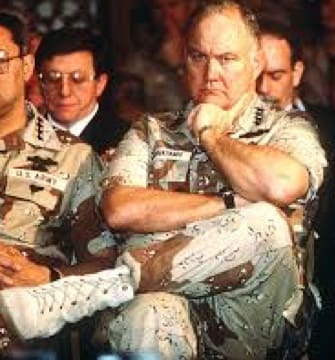
General Norman Schwarzkopf, U.S. commander in the Persian Gulf region, served as a key advisor in developing boot specs. He found that the black, leather, and canvas boot originally crafted for the Vietnam War was not suited to desert conditions. For example, drainage vents designed to keep out jungle moisture were letting sand in, and steel plates in the soles that protected against booby traps were retaining heat.

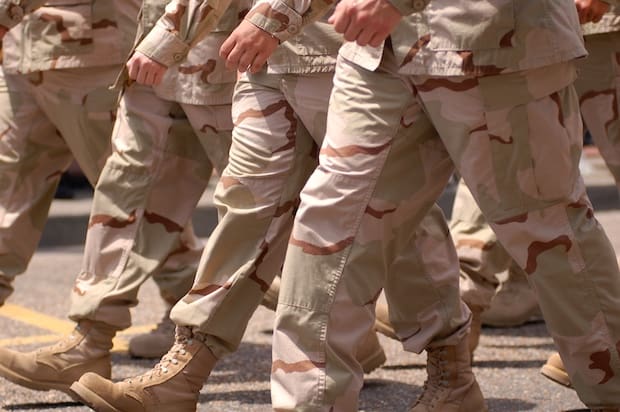
Along with removal of the vents and steel plates, Schwarzkopf’s specifications for the desert combat boot were many: tan fabric, padded collar, leather ankle reinforcement,10 speed-lace eyelets for easy tying and untying, and a Panama-sole tread pattern on the bottom of the boot, designed to easily shed debris. Boots were also insulated to provide extra protection from ground temperatures that could reach as high as 130 degrees.

Strict specifications: General Schwarzkopf set a high bar for designing the new desert combat boot.

After the war, the government continued to procure desert combat boots from McRae Footwear for ongoing operations in the Persian Gulf, as well as for use in other hot-weather regions. The original boot formed the basis for the hot-weather Army and Marine Corps combat boots of the 2000s. Today, the boot is produced using a rubber Vibram Sierra outsole, providing exceptional shock absorption and durability.

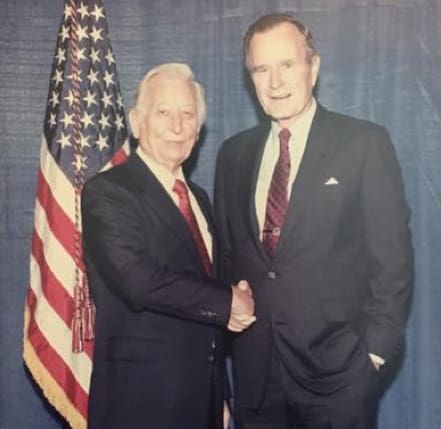
Mutual appreciation: Branson McRae meets President George H.W. Bush, who led the nation through the Persian Gulf War.

mcraefootwear.com

Brigantes Presents – Outdoor Military Show

Wednesday, November 27th, 2019

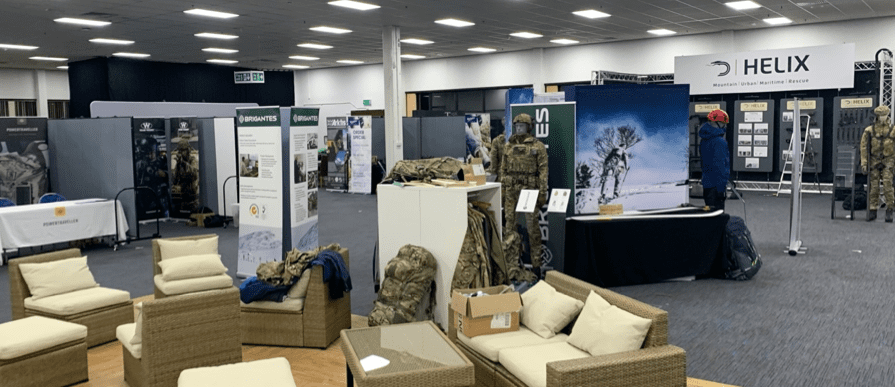
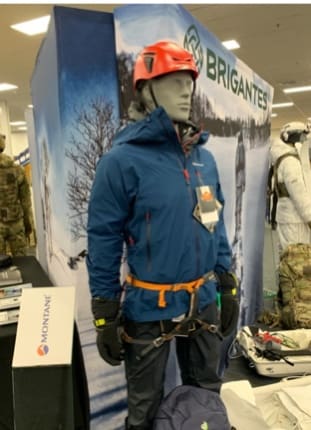
The inaugural Outdoor Military Show took place last week at the University of West of England, Bristol.

As the only show focused on on the man equipment it was well attended by the key brands from the UK outdoor industry and visited by all arms of the services and Ministry of Defence.  With the UK military undergoing dramatic change it was a perfect opportunity for new technology and ideas to be viewed and discussed.

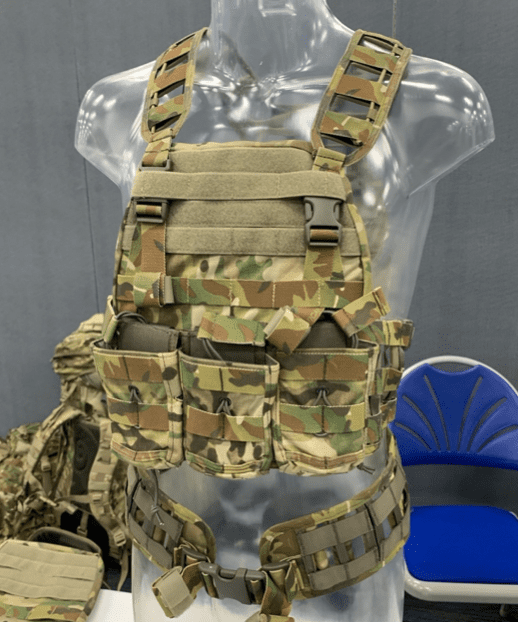
There were several highlights.  First up was a new ultra lightweight chest rig/plate carrier from Snigel. This was brought across especially for the show and generated a huge amount of interest.

Based on an innovative skeletal chassis it can be fully de-armoured making it ideal for light role forces who need to manoeuvre successfully in difficult terrain.

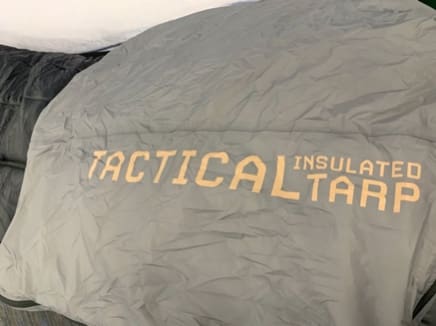
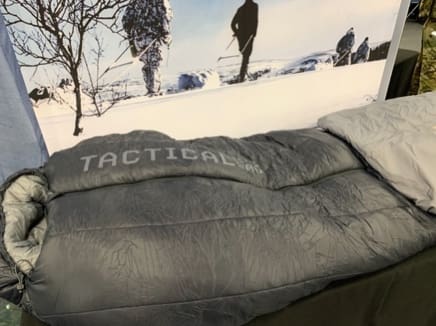
Cold weather operations continue to be a key topic of discussion and several new innovative projects were displayed at the show.  Included in this was a completely new sleep system which is designed for the use of arctic light role forces.  It is in its final stage of development and will been seen in its full colours in the new year.  It includes the Tactical Arctic Bag (TAB) and Tactical Insulated Tarp (TIT).  More on both of these in a future post.

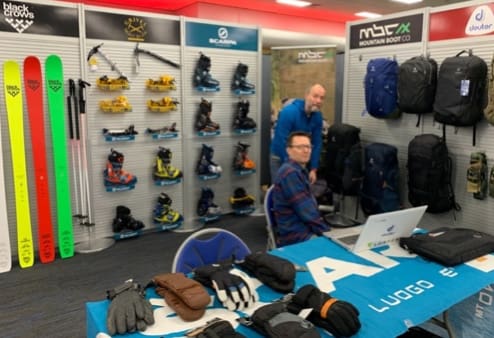
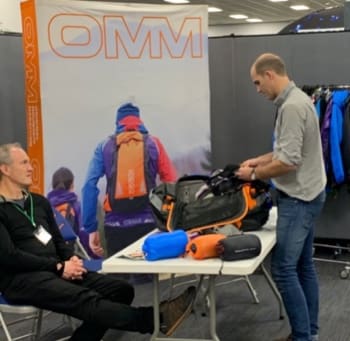
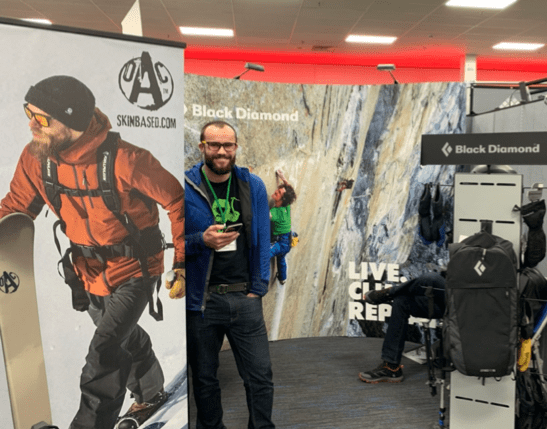
Alongside tactical product you could see plenty of the newest civilian outdorr clothing and equipment.  This included Black Diamond, DMM, Scarpa, Exped, OMM, Grivel, Black Crows and Ion.

The show is planned to take place again early November 2020 with the promise of more innovative technology and excellent opportunities for the defence community to engage with the outdoor industry.
For further information please contact:

For more information contact warrior@brigantes.com

For international enquiries: international@brigantes.com

Max Talk 46: Video (Night Vision) HEAT Night Operations Class

Monday, November 25th, 2019

This is the forty-fifth installment of ‘Max Talk Monday’ which shares select episodes from a series of instructional videos. Max Velocity Tactical (MVT) has established a reputation on the leading edge of tactical live fire and force on force training. MVT is dedicated to developing and training tactical excellence at the individual and team level.

This video was taken on the second night of the HEAT Night Operations Class in November 2019, using a ‘student cam’ equipped with an ANVRS camera.

More information on this class can be found at maxvelocitytactical.com/tactical-classes/h-e-a-t-night-operations

Class prerequisites are:
HEAT 1 Combat Tactics
HEAT 2 Combat Patrol

Max is a tactical trainer and author, a lifelong professional soldier with extensive military experience. He served with British Special Operations Forces, both enlisted and as a commissioned officer; a graduate of the Royal Military Academy Sandhurst. Max served on numerous operational deployments, and also served as a recruit instructor. Max spent five years serving as a paramilitary contractor in both Iraq and Afghanistan; the latter two years working for the British Government in Helmand Province, Afghanistan.

Website: Max Velocity Tactical

YouTube: Max Velocity Tactical

US Army Project May Improve Military Communications by Boosting 5G Technology

Sunday, November 24th, 2019

RESEARCH TRIANGLE PARK, N.C. (Nov. 21, 2019) — An Army-funded project may boost 5G and mm-Wave technologies, improving military communications and sensing equipment.

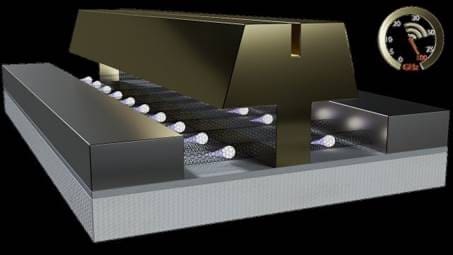
Carbonics, Inc., partnered with the University of Southern California to develop a carbon nanotube technology that, for the first time, achieved speeds exceeding 100GHz in radio frequency applications. The milestone eclipses the performance — and efficiency — of traditional Radio Frequency Complementary Metal-Oxide Semiconductor, known as RF-CMOS technology, that is ubiquitous in modern consumer electronics, including cell phones.

“This milestone shows that carbon nanotubes, long thought to be a promising communications chip technology, can deliver,” said Dr. Joe Qiu, program manager, solid state and electromagnetics at the Army Research Office. “The next step is scaling this technology, proving that it can work in high-volume manufacturing. Ultimately, this technology could help the Army meet its needs in communications, radar, electronic warfare and other sensing applications.”

The research was published in the journal Nature Electronics.

The work, funded by ARO, an element of U.S. Army Combat Capabilities Development Command’s Army Research Laboratory, is a part of a Small Business Technology Transfer Program. The program focuses on feasibility studies leading to prototype demonstration of technology for specific applications.

For nearly two decades, researchers have theorized that carbon nanotubes would be well suited as a high-frequency transistor technology due to its unique one-dimensional electron transport characteristics. The engineering challenge has been to assemble the high-purity semiconducting nanotubes into densely aligned arrays and create a working device out of the nanomaterial.

Carbonics, a venture backed start-up, and USC, successfully overcame this challenge. Projections based on scaling single carbon nanotube device metrics suggest the technology could ultimately far exceed the top-tier incumbent RF technology, Gallium Arsenide.

Carbonics employs a deposition technology called ZEBRA that enables carbon nanotubes to be densely aligned and deposited onto a variety of chip substrates including silicon, silicon-on-insulator, quartz and flexible materials. This allows the technology to be directly integrated with traditional CMOS digital logic circuits, overcoming the typical problem of heterogeneous integration.

“With this exciting accomplishment, the timing is ripe to leverage our CMOS-compatible technology for the 5G and mm-Wave defense communication markets,” said Carbonics’ CEO Kos Galatsis. “We are now engaged in licensing and technology transfer partnerships with industry participants, while we continue to advance this disruptive RF technology.”

In 2014, Carbonics spun-out from the joint center of UCLA-USC and King Abdulaziz City for Science and Technology in Saudi Arabia called the Center of Excellence for Green Nanotechnologies.

The research is based in part, on work funded by the Army more than 10 years ago at University of California Irvine. A graduate student who worked on that project for his doctoral thesis research, Dr. Christopher Rutherglen, is now Carbonics’ chief technology officer.

By U.S. Army CCDC Army Research Laboratory Public Affairs

SCUBAPRO Sunday – Drinking Saltwater

Sunday, November 24th, 2019

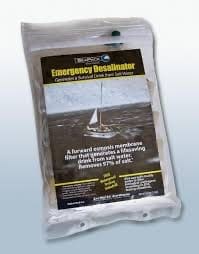
I know most people will never be on a boat that sinks and be in the situation, whereas they would have to try and survive by drinking saltwater. First, don’t drink saltwater it will kill you. But there might come a time that you are on are out in the field for a long time, and you have to find water, and its either get it from the ocean or possible from a river or swap that has brackish water (half salt/ half fresh). The best method is to have a pump with you that can be used for saltwater. It will be a lot of work pumping saltwater and turning it into fresh is a lot of work for a little reward. There is also a way to get clean water out of saltwater that uses a leaching method that you can fill and forget. HTI uses Osmosis is the natural diffusion of water through a semi-permeable membrane from a solution containing a low concentration of dissolved solids to a solution having a higher level of dissolved solids. When it comes to the best method for you that depends on the situation, I am going to talk about a few different techniques and also suggest a few things you can just buy and keep around.


Getting salt out of seawater requires the following essential components. It doesn’t matter what you do to accomplish this, but they should be as clean as posable.

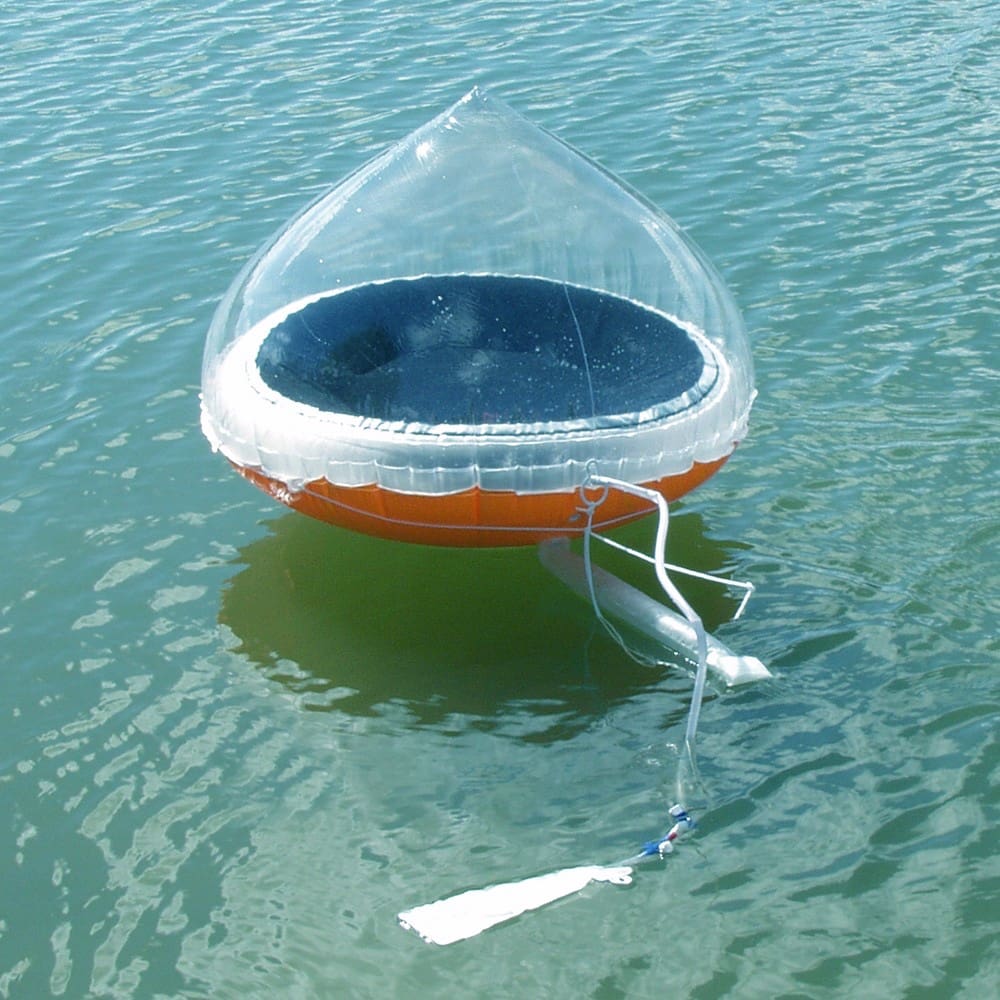
1. Method of evaporation

2. Something to catch condensation

3. A way to collect the condensation back into a substantial container.

There are a lot of things you can use to accomplish this, and during a real survival situation, knowing the necessary actions will go a long way. You should always carry the right items, so if you find yourself in this situation, it will make it a lot easier. All of this will go a long way and could save your life. You should always have items to purify water on your boat because you never know what will happen. You can have this in your boat, and if you need it, it is there.


 

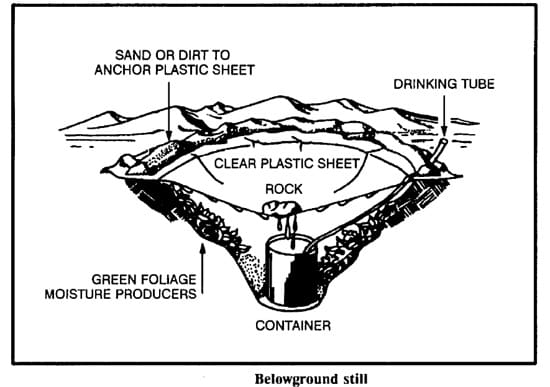
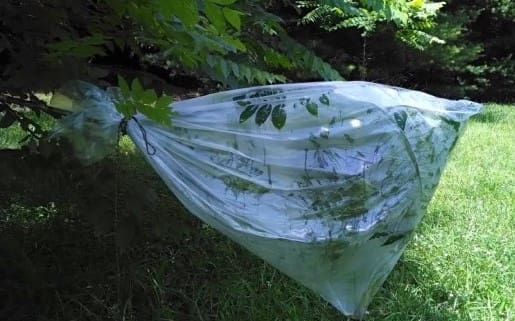
Above is a basic Solar still, you can even just put a plastic bag on green vegetation and collect water that way.

This can be accomplished with a poncho also. Beach well. Along the coast, obtain water by digging a beach well. If you are near a beach you can go back on the beach or inland a little bit and dig a beach well, let it fill with water and drain it at least three times before you drink it. It should be boiled or treated.

 

There was an 18year old kid from Indonesia that survived 49 days on a tiny fishing boat, and he used his clothes to filter the water thru to make it (more) drinkable. He used his cotton shirt and drank the water thru it. Some studies have shown that filtering water through a sari, is a garment that is commonly worn by women in the Indian subcontinent, can significantly increase its potability. In 2003, scientists discovered that filtering water from rivers and ponds in Bangladesh through a folded piece of cotton cloth taken from a sari cut the risk of infection with cholera by half. Interestingly, they noted that old fabric makes for a better filter than new material because the pore size of loose threads is smaller.

In a follow-up study in 2015, researchers found that a filter made of four layers of worn cotton material could filter out more than 99 percent of all cholera bacteria.

One of the biggest things to remember in a survival situation is, do not eat if you don’t have water. If you have water available to you, you should try and filter it as much as possible. But if it comes to, I am going to die if I don’t drink the water. Well, most survival experts say to drink it. (that only counts for freshwater not water with salt in it) When you are rescued, a lot of what you can get from drinking bad water can be treated.


Soldier Center, Harvard Collaborate to Advance Soldier Technologies

Saturday, November 23rd, 2019

NATICK, Mass. — The U.S. Army Combat Capabilities Development Command Soldier Center is working with Harvard University to research a wide range of technologies to enhance Soldier protection and performance. Soldier knowledge and input are playing a key role in the partnership.

“The collaboration between the CCDC Soldier Center and Harvard University will help identify and address capability gaps to better meet the needs of Soldiers and will help to get new critical capabilities into the hands of our Soldiers more quickly,” said Douglas Tamilio, director of the CCDC Soldier Center. “Research will also benefit immensely from the ingenuity of both organizations and from the added insight made possible by the involvement of former and current Soldiers throughout the research, development, engineering and testing process.”

The CCDC Soldier Center is dedicated to using science and technology to ensure America’s warfighters are optimized, protected, and lethal. CCDC SC supports all of the Army’s Modernization efforts, with the Soldier Lethality and Synthetic Training Environment Cross Functional Teams being the CCDC SC’s chief areas of focus. The center’s science and engineering expertise are combined with collaborations with industry, DOD, and academia to advance Soldier and squad performance.

The center supports the Army as it transforms from being adaptive to driving innovation to support a Multi-Domain Operations Capable Force of 2028 and a MDO Ready Force of 2035. CCDC SC is constantly working to strengthen Soldiers’ performance to increase readiness and support for warfighters who are organized, trained, and equipped for prompt and sustainable ground combat.

Some of the research being performed by Harvard and CCDC SC comes under a Cooperative Research and Development Agreement, or CRADA, between CCDC SC and Harvard’s John A. Paulson School of Engineering and Applied Sciences, or Harvard SEAS.

“The Master CRADA will provide a streamlined way for the organizations to collaborate in diverse areas of mutual interest and leverage each other’s expertise,” said Sheri Mennillo, CCDC SC’s technology transfer manager who helped develop the Master CRADA between Harvard and CCDC SC.

Dr. Kevin “Kit” Parker is the technical point of contact for Harvard for the CRADA. Parker is the Tarr

Family Professor of the Bioengineering and Applied Physics Disease Biophysics Group, Wyss Institute for Biologically-Inspired Engineering, at the John A. Paulson School of Engineering and Applied Sciences at Harvard University. Parker, a lieutenant colonel in the U.S. Army, is also a professor in the department of Chemical and Life Sciences at the United States Military Academy at West Point.

Parker and other scientists in his lab are working closely with the Soldier Center.

“Collaboration with academia is a critical means by which we at Soldier Center can ensure that we can provide truly innovative ways to increase Soldier lethality,” said Dr. Richard Green, director of the Soldier Protection and Survivability Directorate at the CCDC Soldier Center. “The Soldier Center is located near some of the premier academic research institutions in the world, and we regularly engage with local universities and universities that are farther away to help enable solutions that may not have been thought possible in the past. Through collaborations, such as our collaboration with Kit Parker’s lab at Harvard, we learn more about the art of the possible, and academia gets a better understanding of challenges the Army faces as we work to modernize for the future fight.”

“Academic collaborations, especially those with distinguished local universities such as Harvard, provide CCDC SC the opportunity to leverage cutting-edge expertise and facilities to augment our own R&D capabilities,” said Dr. Kathleen Swana, a researcher at CCDC SC. “CCDC SC, in return, provides valuable scientific and Soldier-centric expertise and testing capabilities to help drive the research forward. Dr. Kit Parker’s experience and technical prowess also provide a unique perspective on potential science and technology solutions for the Soldier, and I look forward to seeing the outcome of future collaborations with his lab.”

The spark for the initial idea for the partnership came about when Parker and Brian Wood, the G-8 budget officer at CCDC SC and formerly a lieutenant colonel in the U.S. Army Reserves, were attending a Pacific Operational Science and Technology meeting. Parker and Wood realized the many potential benefits of CCDC SC working with Harvard to advance technologies for the Soldier. Both men served in the same unit in the U.S. Army Reserve Sustainment Command Detachment 8.

One of the projects that CCDC SC and Harvard University are working on together is the development and testing of ballistic protection nanofibers, which have the potential to be used to create lighter body armor.

Grant Gonzalez, one of Parker’s PhD students, invented the nanofibers.

“We are reimagining Kevlar fibers, attempting to make them stronger and tougher, by decreasing their diameter to change how the polymer inherently organizes and crystalizes,” said Gonzalez. “These fibers will decrease the weight the warfighter carriers without sacrificing protection.”

The Harvard inventor needed CCDC SC’s ballistics and testing expertise. Gonzalez, who has been the primary liaison between Parker’s laboratory and CCDC SC, has now graduated and is the first PhD student to be jointly mentored by people at CCDC SC and Harvard.

“The capabilities of the CCDC SC allow us to quantify the successes of our fibers from the perspective and needs of the warfighter,” said Gonzalez.

In addition to ballistic protection, Parker noted that the Kevlar nanofibers invented by Gonzalez have other potential uses.

“We’re working with Natick’s boot lab to test Kevlar nanofibers on the bottom of combat boots and doing abrasion testing,” said Parker. “When working with the Kevlar and ballistics, we realized that there were some unique abrasive properties, helping Soldiers better navigate lava rock and terra firma. The Kevlar nanofibers also have flame-retardant properties. So, if you are an armored crew member or if you are on an aircraft, in both situations, you may need to worry about an onboard fire. The idea is that we may be able to put Kevlar nanofibers into your flight suit or crewmember suit to give you more flame retardancy.”

Gonzalez explained that the fibers may also have applications for emergency responders, police, and firemen.

“These fibers have potential applications in ballistic protection for police and puncture-resistant materials for emergency responders and firefighters,” said Gonzalez.

Former and current Soldiers are involved throughout research, development and testing process, providing all-important insight into identifying capability gaps to meet the needs of the warfighter.

“Army Reserve Soldiers bring a critical combination of expertise to the table — civilian education and professional experience coupled with military experience and associated professional relationships from both sides,” said Wood. “Having current and former Soldiers involved in S&T brings expertise, experience and the passion to follow the effort to completion. Further, these Soldiers may personally benefit from the S&T developments and new capabilities in an operational environment. Through Soldiers’ knowledge and operational experience, they bring critical insight as to what is needed and if/how the new equipment will be used.”

Parker served several combat tours in Afghanistan and has first-hand knowledge of issues and capability gaps faced by Soldiers on the battlefield. Parker’s lab at Harvard includes many military veterans, including veterans who did tours of duty in Iraq and Afghanistan, as well as tours in Africa and the Philippines.

“So these are folks with first-hand battlefield experience,” said Parker. “This is unprecedented. There are multiple layers of expert input going into the science.”

West Point cadets also participate in Parker’s lab at Harvard. CCDC SC works collaboratively with West Point cadets as well.

“I want cadets to understand the role of science and technology in providing for the force,” said Parker. “It’s important to get users involved in design processes very early on. In addition to Soldier research, the idea is that we are training tech-savvy leaders for the next generation of Army combat leaders, and we are training the next generation of civilian scientists and engineers to support national security.”

Parker pointed out that there is great potential for Soldiers to work in labs after uniformed service. He noted that this experience builds on, and exploits, their value to the nation and supports the model of Soldier for Life.

“I have a bunch of military veterans, including Army, working in my lab,” said Parker. “Taking these junior enlisted and junior NCOs and bringing their subject matter expertise, technical knowledge, and applications orientation to the basic science lab is extremely unusual and points to what I call ‘Soldier innovation.’ Junior enlisted and NCO corps expertise are one of the greatest untapped resources that our defense research complex needs to access.”

Parker said he greatly admires the brain power available at CCDC SC. He is eager to expand his research ties throughout CCDC SC and is eager to establish a working relationship with the Combat Feeding Directorate in particular.

“Soldiers have unique dietary needs,” said Parker. “I think people don’t realize that when you sit down to eat an MRE (Meal, Ready to Eat), that’s a scientific and technology parade.”

Both Wood and Parker are dedicated to serving the Soldier and believe the CRADA will lead to even more collaborative efforts in the future.

“Since the CRADA reaches into the entire School of Engineering and Applied Sciences, we anticipate that this agreement could lead to break through developments in multiple technical areas,” said Wood.

“I want to be able to say that the Soldier in the field is better off because of something we did in the lab,” said Parker. “We want to make a major contribution to the Army’s future.”

By Jane Benson, CCDC SC