XC3 Weaponlight

Archive for the ‘Guest Post’ Category

SCUBAPRO Sunday – Navy Seawolves Task Force 116 Vietnam “Rowell’s Rats”

Sunday, June 21st, 2020

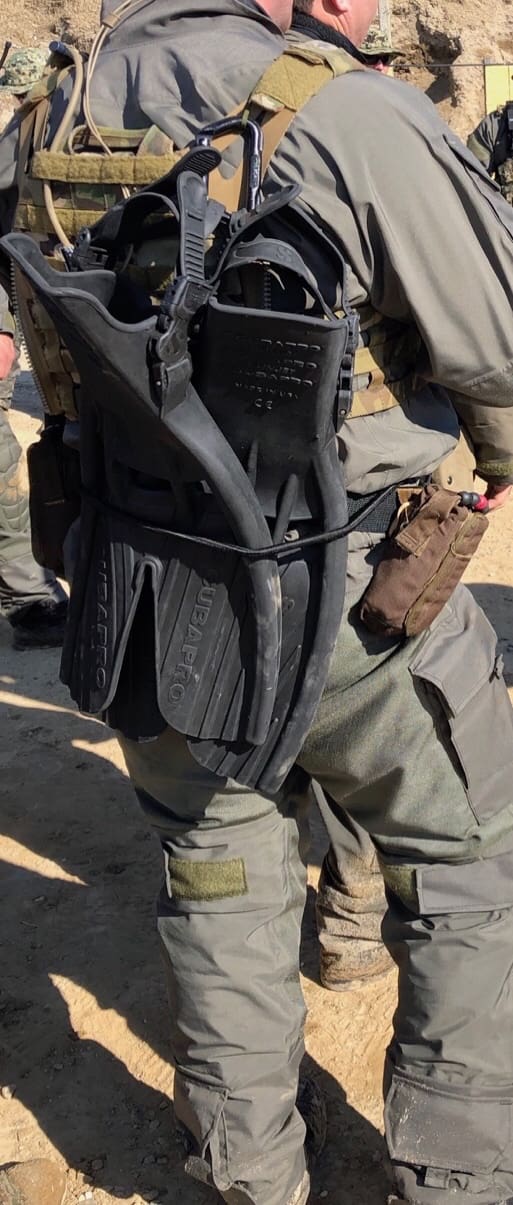
You have heard of the Seawolves if you have ever read any stories about the SEALs or The Brown Water Navy in Vietnam. The Navy Seawolves became the most decorated Helo squadron in the Vietnam war. The Navy Seawolves were stood up overseas, and they were decommissioned overseas.  They were set up to provide air support for Navy units fighting in the Rung Sat Special Zone, to support the SEAL Teams and Boat Units. They provide insertion and extraction platforms, close air support, medevac, and taxis from base to base. They did it all. They used hand me down aircraft from the Army and turned them into Navy Seawolves Helicopters. I love learning about the history of units like this, there will never be a movie about them, but the man that made up the Seawolves are the backbone of the U.S. and our military history.

Retired Army Major General Carl McNair, who commanded the 121st Assault Helicopter Company during the Vietnam War, once recalled a story about Army General Creighton Abrams—commander of all military forces in Vietnam—visiting an airbase for an awards ceremony for Army aviation personnel. Riding as a passenger in a jeep along what passed as a flight line, he noted a young man not wearing a cover and ordered his driver to pull over. Abrams had served under General George S. Patton during World War II, so he was tough. Questioning what he thought was a soldier out of uniform, he received a response that went something like: “Sir, I am not a soldier. I am a sailor and a Seawolf, and in the Navy, we don’t wear covers on the flight line.” Abrams responded, “Very well, carry on,” and proceeded on his way. There is nothing better than a General having no idea who you are.

www.usni.org/magazines/naval-history-magazine/2019/june/i-am-sailor-and-seawolf

video.kpbs.org/video/scramble-the-seawolves-yacuzi

DoD Identifies Commercial Decontaminant for Field Use Against COVID-19

Saturday, June 20th, 2020

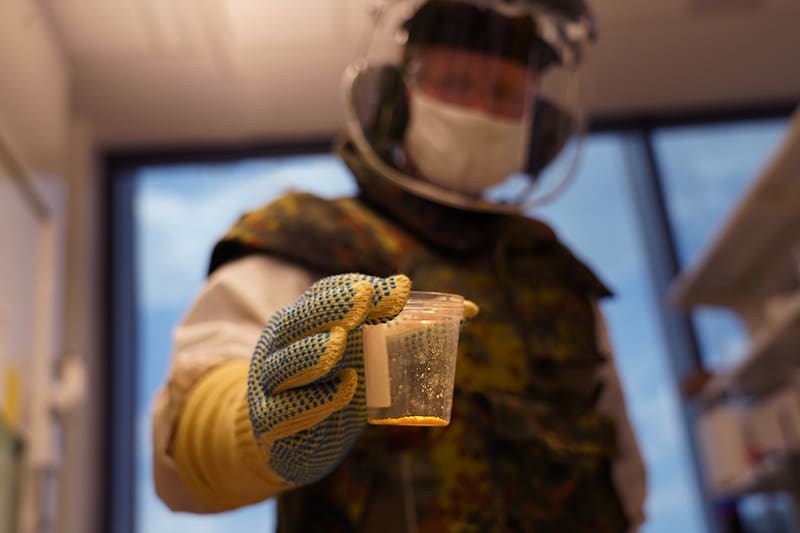
Aberdeen Proving Ground, MD – A chemical and biological decontamination solution improved through testing and evaluation by the Combat Capabilities Development Command (CCDC) Chemical Biological Center has been identified by the Defense Threat Reduction Agency (DTRA) as an effective COVID-19 disinfectant.

Center researchers have been working with Atomes, F.D., a company located in Quebec City, Canada, for more than two years. The Center provided testing and quality assurance to determine the general chemical and biological disinfecting effectiveness of their product, Bioxy. After conducting a literature review to examine disinfection options against COVID-19, DTRA identified Bioxy for use as an effective in-the-field disinfectant against COVID-19 and other viruses, according to Vipin Rastogi, Ph.D., a senior research biologist at the Center.

Rastogi and his group have been testing the effectiveness of Bioxy since the beginning of the Center’s relationship with the company, which led to the DTRA-funded literature review. “Originally, the company had no idea whether it would be effective against chemical or biological agents. They were marketing it as a sanitizer and disinfectant for medical and veterinary clinics,” he said. “Our work with the company was a partnership in which we performed detailed effectiveness testing against chemical and biological agents. We were able to provide Atomes with very specific advice on how to fine tune the product so that it could provide optimal protection to warfighters and the public against a broad range biological agents, spores and viruses.”

The Center research group, led by Rastogi, determined that Bioxy works well against a wide range of chemical and biological agents, as well as the family of viruses which includes the pox virus, Feline calici virus and the Ebola virus. His team performed its testing using the Organization for Economic Cooperation and Development (OECD) Guidelines for the Testing of Chemicals. It is an international regulatory method for determining the efficacy of antimicrobial chemicals against spores, cells and viruses. The method is used by the 37 OECD member nations as well as the U.S. Environmental Protection Agency, much of industry and many independent laboratories.

“We place 10 microliters of live agent on a glass or steel test surface called a coupon, dry the agent for 45 to 60 minutes, place 50 microliters of Bioxy solution on top of that, then after a 10-minute contact period, add a neutralizer to inactivate the active components of test solution in a vial,” Rastogi explained. “The vial contents are vigorously mixed to retrieve the viable virus particles remaining off the test surface. We then perform a count of the viable organisms remaining.” The effectiveness of the disinfectant is determined by the percentage of change in the number of viable organisms in control coupons compared to those remaining on test coupons.

Chlorine bleach has long been known to be an extremely effective disinfectant; but it is highly corrosive, making it unsuited for disinfecting the sensitive electronic equipment found in military vehicles. Peroxide-based disinfectants such as Bioxy achieve a high level of effectiveness without being caustic. “The active ingredients in Bioxy break the molecular bonds in the virus,” said Rastogi. “Chemical bonds underlying the lipid virus envelope are what give the virus particle its structural integrity, so breaking them renders the virus particle nonfunctional. The active components may also destroy or break down bonds within the DNA or RNA that enables it to reproduce.”

A Powder, Not a Liquid

“Both variants of Bioxy tested, Bioxy H and Bioxy Enviro, provide many practical advantages to its military users because they are powders, and not liquids,” Rastogi said. “Bioxy, marketed as a powder, has three advantages. It’s not corrosive. You can ship it without any fire hazard precautions, and when you need it, you mix it with water and you have a ready-made decontaminant.” It works by generating peroxide when mixed with water.

While Bioxy still requires water to activate the peroxide, the amount of water needed is far less than the hundreds of gallons typically used by decontamination trucks. “We conducted a limited scale study where we tested a 5 percent solution,” Rastogi said. “If you want to translate that to ratios, 5 percent means five parts powder, 95 parts water. But if that much water is not available, you could make a 10 to 25 percent solution.”

Using Bioxy at these higher concentration decontaminates the biological agent with no adverse effects on the Soldier. “It is safe for the skin and is biodegradable,” Rastogi said. “It decomposes to innocuous end products, oxygen and water.”

It is also inexpensive and commercially available for application to warfighters’ personal protective equipment, vehicles, and any other potentially contaminated materials in the field with far less logistical burden than hauling large quantities of water-based decontaminants.

Program Pays Dividends

The relationship between the CCDC Chemical Biological Center and Atomes, F.D. is the product of the Foreign Technology and Science Assessment Support Program, known as FTAS, which is funded by the Office of the Secretary of Defense. It provides seed funding for scientists to perform initial research, technology assessments and test and evaluation studies on promising defense technologies developed in other nations. Participating U.S. Army organizations, such as the Center, select foreign technology initiatives on a competitive basis. Army researchers seeking an FTAS grant submit a proposal which is evaluated by a panel of Army experts, and winning applicants are funded for one year to provide proof their technology’s effectiveness in meeting an Army need.

“Had we not formed this relationship with Atomes, DTRA would have never known about Bioxy and what a valuable broad spectrum disinfectant it is for biological agents,” said Rastogi. “It is very satisfying to know that because of this work, the warfighter and the public have an inexpensive, non-corrosive environmentally safe and highly effective technology in hand.”

“The Center’s use of the FTAS program to contribute to the development of a new technology as useful as Bioxy is a prime example of innovation in action,” said Eric Moore, Ph.D., director of the Chemical Biological Center. “Good ideas are where you find them, and we are glad we pursued this one – doubly so because it turns out that it is proving itself to be an answer to a brand new threat.”

DTRA is now funding Rastogi and his team to test the effectiveness of a number of other commercially available disinfectants to destroy the COVID-19 coronavirus using the OECD method.

By Jack Bunja

FirstSpear Friday Focus – Centurion Short

Friday, June 19th, 2020

Today we are getting a look at the all American Made FirstSpear Centurion Short. Utilizing the same sizing, form, fit and technical features as the FS Centurion Pant but with an 11.5” inseam. Constructed with a premium ripstop nylon / combed cotton featuring Nano-glide mesh pockets that offer the perfect amount of stretch. Integrated low-profile belt system helps keep the shorts secure with or without a belt using a BioThane webbing and jam lock buckle. Removable Poron foam inserts on your right and left side allow you to carry a knife, gun, or phone in total comfort. Like most FirstSpear products the shorts are 100% Made in America with 100% USA Materials. Inseam 11.5″

Available now in sizes Small – 2XL.

Sizing Guide
• Small – 29-30
• Medium – 32-34
• Large – 34-36
• XL – 36-38
• 2XL – 40-42

www.first-spear.com/centurion-shorts

Integrated Visual Augmentation System Update

Friday, June 19th, 2020

Here one of the latest photos of the US Army’s Integrated Visual Augmentation System, a which fuses image intensification and thermal imaging with Augmented Reality overlays. It’s built by Microsoft.

Interestingly, the form factor is pretty similar to the Soldier Integrated Protective Ensemble headborne subsystem from the early 90s.

Here’s an update from the Program Office.

Team IVAS Continues to Deliver Despite COVID Obstacles
“I can absolutely say that today we are on track to meet a fourth quarter ‘21 delivery for our first unit equipped.”
– COL. Chris Schneider, PM IVAS

FORT BELVOIR, Va.– Cutting-edge modernization efforts come with their own set of challenges, and COVID-19 has ensured that there are no exceptions.

Program Executive Office (PEO) Soldier’s Project Manager Integrated Visual Augmentation System (PM IVAS) continues to leverage the team’s unique structure, talents, and culture to contribute to the force’s readiness, even with the additional challenges presented by COVID-19.


Mark Stephens, PM IVAS Director of Acquisition and Operations, and Jared Walega, PM IVAS Test Director, highlighted how problem solving, routine distributed work solutions, modular architecture design, Soldier Centered Design (SCD), and Supply Chain Risk Management (SCRM) have allowed the project flexibility during the COVID pandemic.

Stephens emphasized how Team IVAS has applied efficient problem-solving skills from the project’s inception.

“Senior defense officials recognized the erosion in close combat capabilities and saw an immediate need to ensure overmatch for our dismounted force,” said Stephens. “Congress recognized the requirement and reprogrammed funds to start IVAS in FY19. Within six months from the Secretary of Defense’s approval in late May, Team IVAS awarded multiple Other Transaction Agreements to industry and kicked off IVAS before Christmas 2018.”

Team IVAS has rapidly solved problems ever since. This includes the successful integration of partners from around the country. Because the team overcame this initial obstacle, remote work is now routine.

The distributed team has built and relied on a digital infrastructure to manage the mission from any physical location. Therefore, they are able to maintain the mission even with the obstacles COVID has presented.

“When COVID hit we had already established a solid Integrated Product Team [IPT] Battle Rhythm using long distance collaboration methods like SharePoint, TEAMs, and Power BI,” Stephens said. “Using TEAMs over the past 18 months allowed video teleconferencing, sharing document collaboration, and reviewing our program management dashboards, so all our leaders were battle tested”.

Secure remote tools have allowed for continued IVAS prototyping through Army Enabled Tests (AET) even while team members are quarantined at home.

“We also implemented a practice of what we call Army Enabled Testing that allows us to get updates from our partners, test the updates in a safe environment, and provide feedback. This methodology helps us manage our performance risks, and not have to wait until Soldier Touchpoint 3 [STP 3] to discover problems,” said Stephens.

Team IVAS’ dynamic problem solving and reliable remote infrastructure guaranteed that aspects of testing continued to ensure minimal overall impacts to the program’s timeline.

“As COVID-19 impacted the organization, the Test Directorate determined we could still conduct a thorough AET with focus on Rapid Target Acquisition (RTA), Tactical Assault Kit (TAK), Synthetic Training Environment (STE), and other necessary capabilities while maintaining requisite social distance and implementing COVID-approved decontamination procedures for the Heads Up Displays (HUD),” said Walega.

“We have a dispersed team that is capable of downloading the latest software build and loading it onto their HUDs. This process has enabled remote testing of software builds and the ability to provide rapid feedback to Microsoft to include live fire video, data, and assessments,” Walega added.

The continued AET testing and iteration of specific IVAS capabilities through the COVID pandemic has been largely based on the Soldier feedback collected at every stage in development over the last 18 months.

“Soldier Centered Design (SCD) was developed in IVAS as a combination of Human Centered Design and tailored acquisition best practices,” said Walega. “SCD focuses on current Soldier and Marine input throughout the entire development process to prevent engineers and developers from building a product that does not meet the priorities of our warfighters.”

The process puts emphasis on making a product that Soldiers will enjoy using to increase their lethality in training and on the battlefield.

According to Walega, “If a Soldier loves and uses IVAS, then we have provided a system that has much greater capability than the current kit.”

In order to ensure that IVAS will truly maximize Soldier lethality, intentional Soldier feedback at every design and decision point has been a program priority.

“We have collected over 23,000 hours of Soldier feedback,” said COL. Christopher Schneider, Program Manager IVAS. “Because we’ve got so much feedback, we’re highly confident in the current design and STP 3.”

The Soldier-centric approach has turned out to be a key asset to the program during the change in normal operations. Though large scale events such as the IVAS STP 3 will shift due to COVID restrictions, the team has reorganized the internal program schedule so that IVAS is not delayed in deploying to the warfighter.

The team is reordering the intensive hardware and software design reviews that were initially planned for after STP 3, and is leveraging their ingenuity, remote tool infrastructure, and plethora of Soldier feedback to expedite the hardware design review to before the October event. This will allow the formal software design sprint to be completed after STP 3, and both designs to be finalized during Capability Set 4 iterations.

“We wouldn’t have the flexibility that we do, frankly, if we hadn’t been doing Soldier Touchpoints, user juries, user studies, and human factors engineering excursions throughout the last 18 months of the program,” said Schneider.

Though the pandemic has impacted every aspect of the program, including supply chain logistics, industry partners have continued to support with solutions.

“With the advent of the Coronavirus, the supply chain risk management strategy has taken on a new level of importance,” said Nicholas Pate, PM IVAS Manufacturing Engineer.

“IVAS vendors have worked tirelessly to assess, analyze, and make quick decisions to avert imminent delays. Luckily, the PM IVAS supply chain strategy, from the very start of the program, has always been to mitigate risk by avoiding sole sources of supply, cultivating multiple sensor vendors, and ensuring parallel paths of supply,” said Pate.

To date, IVAS vendors have been able to react quickly to minimize negative impacts from the Coronavirus.

“Microsoft, as well as the low light and thermal sensor vendors, delivered preliminary supply chain information on critical components for early risk mitigation assessment on the IVAS supply chain,” Pate added. “This information ensures that quality and security controls are implemented to ensure a stable and sustainable supply chain.”

As Team IVAS continues to overcome COVID’s obstacles, leadership is unwavering in its dedication to the safety of both Soldiers and the team.

“We really took a deliberate thought process and approach to moving the Soldier Touchpoint into October,” said Schneider. “We wanted to make sure that we had the opportunity to get it right.”

Overall, every decision has been made with the safety of the team and readiness of Soldiers as top priorities. Though STP 3 is now taking place in October at Fort Pickett, Va., the rest of the program deliverables remain on track.

“I can absolutely say that today we are on track to meet a fourth quarter ‘21 delivery for our first unit equipped,” said Schneider.

Story by Courtney Bacon.

AFRL, AFSOC Launch Palletized Weapons from Cargo Plane

Wednesday, June 17th, 2020

WRIGHT-PATTERSON AIR FORCE BASE, Ohio (AFNS) —

Through a partnership with the Air Force Research Laboratory, the Air Force Special Operations Command successfully released simulated palletized munitions in three airdrops at Dugway Proving Ground, Utah, Jan. 28 from an MC-130J Commando II, a multi-mission, combat, transport and special operations tanker.

This successful Phase I operational demonstration represents a milestone in executing a palletized munitions airdrop, which refers to the delivery of a large volume of air-launched weapons at any given time.

In this case, munitions stacked upon wooden pallets, or Combat Expendable Platforms, deployed via a roller system. AFSOC used an MC-130J Commando II since its cargo area supported the release of multiple, relatively large munitions.

AFSOC aircrew released five CEPs rigged with six simulated munitions, the same mass as the actual weapons, including four Cargo Launch Expendable Air Vehicles with Extended Range across a spectrum of low and high altitude airdrops. These long-range, high precision weapons destroy moving and non-moving targets.

“In the end, the demonstration accomplished all objectives,” said Jerry Provenza, AFRL CLEAVER program manager. In the three airdrops, all five CEPs separated cleanly from the aircraft, and the munitions separated from the CEPs.

“This successful (demo) is evidence of our commitment to evolve innovative weapons concepts and enhance our partnership with AFSOC to meet the needs of the National Defense Strategy,” said Col. Garry Haase, director of AFRL’s Munitions Directorate. “CLEAVER represents a different approach to launching large numbers of long-range weapons, which will bring a new dynamic to the high-end fight.”

The employment of these weapons directly advances the Air Force palletized munition experimentation effort, an innovative concept in which a multi-engine platform carrying large quantities of network-enabled, semi-autonomous weapons accompanies remotely piloted aircraft and fighter jets in combat missions. 

The CLEAVER, while first envisioned by AFRL’s Center for Rapid Innovation, is now led by program managers from AFRL’s Munitions Directorate at Eglin Air Force Base. Dr. Alok Das, AFRL senior scientist and CRI director, leads a rapid reaction team that provides solutions to the warfighter’s highest priority urgent needs.

Das explains that the CRI is “in the business of innovation” by developing non-traditional solutions that address operational challenges. After assembling the subject matter experts and forming a collaborative team, the CRI developed the prototype CLEAVER.

For this Phase I demonstration, an AFSOC 27th Special Operations Wing MC-130J aircraft flew to the range from Hill AFB, accompanied by an Air National Guard 137th SOW MC-12W Liberty chase aircraft flying from Salt Lake City International Airport. This turbo prop plane with intelligence, surveillance and reconnaissance, made real-time observations, capturing photos and video during three airdrops.

In future demonstrations, AFSOC will release CLEAVER glider vehicles, powered vehicles, and full-up vehicles with optional Warhead and terminal guidance. Provenza said AFRL’s Munitions Directorate will provide vehicles and SMEs in Phase II and beyond. He asserts that AFRL is committed to this strategic partnership with AFSOC.

By Whitney Wetsig, Air Force Research Laboratory Public Affairs

TYR Tuesday – IDTOUR VTS |Virtual Trade Show| PICO-DS & DSX Plate Carriers

Tuesday, June 16th, 2020

Our mission has always been about protecting those who run towards the threat.  To that end, we created the Innovate or Die® Tour and Mobile Showroom. Over the past couple years it has allowed us to meet you face-to-face, gather your feedback and answer your questions.

Life has been put on hold for many people around the world, but you have not stopped risking your safety and health against all the threats we face today.

We can’t wait to meet you on the road again.

Thank you to the men and women of the armed forces, first responders and health care professionals who continue to put their lives on the line. You haven’t stopped working and neither will we.

Introducing the Innovate or Die® Tour Virtual Trade Show #IDTOURVTS. New episode launching every Tuesday.

Episode One:

IDTOUR VTS |Virtual Trade Show| PICO-DS & DSX Plate Carriers

IDTOUR VTS |Virtual Trade Show| Preview

Black Box Sheds Light on Night Vision Challenges for USAF Aircrew Students

Tuesday, June 16th, 2020

JOINT BASE SAN ANTONIO-RANDOLPH, Texas (AFNS) — A device that was developed at Joint Base San Antonio-Randolph to help aircrew and paratrooper students understand night vision threats during initial aerospace physiology training will soon become a standard trainer across the Air Force.

A collaborative effort of the 502nd Trainer Development Squadron and Air Education and Training Command Aerospace Physiology Lead Command, the unaided night vision trainer, also known as an NV light bar, demonstrates how dark adaptation and various types of lighting enhance unaided night vision.

The Air Force has been working with a night vision box/light bar for more than 30 years, but these devices were permanently affixed to classrooms and over time have broken or no longer work, said Senior Master Sgt. Ismael Paez Jr., AETC aerospace physiology functional manager.

“The device the 502nd TDS is developing for us is bringing us into the 21st century,” he said. “This device will be mobile, can be controlled via remote and can operate on batteries.”


The aerospace physiology career field has a waiver in place to forgo the requirement to use the night vision device while ensuring training objectives are met, Paez said, but that will change with the new device.

“Once the new night vision light bar is produced, we’ll go from having a handful of legacy devices to more than 40 devices across the Air Force,” he said.

Work on the unaided NV trainer began a few years ago in response to a request from an aerospace physiology technician and aerospace physiology training systems program manager, said Josh Chesney, 502nd TDS program manager.

“The current training is done in a classroom setting with a projector and PowerPoint presentation,” he said. “This device will provide more realistic training.”

The training teaches students about the limitations of the human visual system under low lighting conditions and the illusions they may experience under those conditions.

A rectangular black box that works in tandem with a remote control, the NV light bar demonstrates a variety of anomalies that challenge aircrews.

One of these is autokinesis, a nighttime visual illusion that causes a stationary light to appear to move.

The demonstration of this illusion helps fliers recognize the causes, effects and appropriate prevention of autokinesis during flight, free fall and while under canopy.

The instructor turns on a single red light in the middle of the NV trainer and students stare at a single, fixed light for a minimum of eight to 10 seconds to experience the illusion of an erratically moving light, which is the autokinetic phenomenon.

Next, the instructor turns off the single red light and turns on the outer two red lights of the trainer, and students stare between the two lights for eight to 10 seconds, causing the movement of light to increase. When there are up to four lights with little to no visual references, the illusion increases.

Students learn to avoid autokinesis illusions by concentrating on a single light while maintaining it in their peripheral vision, a technique called nighttime scanning.

Other anomalies the NV trainer addresses are the Purkinje shift, which is the tendency of the eye to shift toward the blue end of the color spectrum at low illumination levels as part of dark adaptation, and flash blindness.

During the flash-blindness demonstration, instructors explain to aircrew and parachutists that their eyes perceive afterimages following glare exposure, which affect their vision for different lengths of time, and tell them how to compensate for these “whiteout” afterimages.

Use of the unaided NV trainer in aerospace physiology classes helps aircrew and parachutists develop their inherent visual abilities to the greatest possible degree, Paez said.

“Although the ability to see at night varies from person to person, experience shows that most people never learn to use their night vision efficiently,” he said. “However, proper training can markedly improve night vision ability. Night vision training improves aircrew attentiveness, scanning techniques and mental interpretation of the images within their eyes.”

The training is intended for aircrews with normal but untrained night vision and is not a method of testing night vision abilities, Paez said.

“A trained person with fair vision may see more at night than an untrained person with superior vision,” he said.

By Robert Goetz, 502nd Air Base Wing Public Affairs

MATBOCK Monday – Medical Backdraft

Monday, June 15th, 2020

Good morning and Happy MATBOCK Monday,

Developed in coordination with some of the leading medics and combat first responders, the MATBOCK Backdraft is for small teams with relatively quick access to higher levels of care. The unit mounts on the back of the plate carrier via MATBOCK Ghost Tabs and is split into 2 separate removable pouches that are held in place via Velcro. The unit was designed to split medical equipment between bleeding and airway and is run in this setup by different units.

The bottom of each pouch is attached to an adjustable lanyard that connects to the side panel of the plate carrier. When the operator requires the contents of one of the pouches, he or she simply pulls the lanyard, releasing that pouch.

Don’t forget to tune in on Monday at 4:30 PM EST as Jim and Casey conduct a live demonstration of the Medical Backdraft and answer all of your questions.