TYR Tactical

Archive for the ‘Guest Post’ Category

Air Combat Command Discusses 16th Air Force as New Information Warfare NAF

Saturday, September 21st, 2019

JOINT BASE LANGLEY-EUSTIS, Va. (AFNS) —

Gen. Mike Holmes, Air Combat Command commander, discussed the designation of the 16th Air Force as a new information warfare numbered air force Sept. 18 at the Air Force Association’s Air, Space & Cyber Conference in National Harbor.
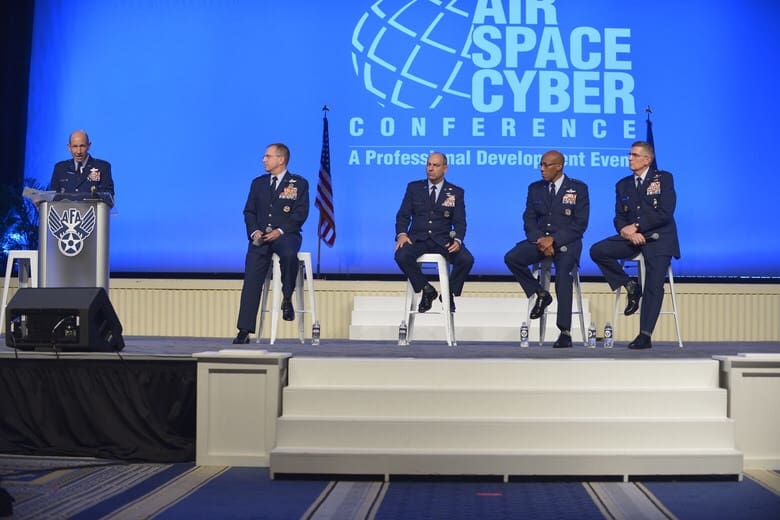
ACC will integrate 24th Air Force and 25th Air Force capabilities into a new organization under a single commander who will be responsible for providing information warfare capabilities to combatant commanders with the speed to match today’s technological environment.

“By having cyber and all the intelligence, surveillance and reconnaissance tools together, one of the things it allows me to do is build a collection plan in advance before I do something and am able to have better information to support better decisions for our warfighters,” he said. “The Air Force is not going to run independent information warfare campaigns, but we’ll build those, organize, train and equip tools for combatant commanders.”

The heritage of 16th Air Force pays tribute to a group of highly decorated Airmen with a history of continued excellence in joint warfighting, strategic deterrence and military partnerships. During the Balkans air campaigns in the 1990s, the 16th Air Force pioneered efforts in the way the Air Force conducts intelligence operations, setting the foundation for operating in a continuously evolving information environment.

“We want to arm our leaders with options they can use that are proportional to the things that peer adversaries are doing,” he said. “We think we can present more robust teams with better intelligence support behind them and present some information ops options, which we have some game at already, but to improve that and be able to offer it on a larger scale to more combatant commanders at once.”

Activating 16th Air Force emphasizes the organization’s continued excellence in addition to its early use of integrated information systems and emerging technologies, such as remotely piloted aircraft. Just as the 16th Air Force made history bedding down the RQ-1 Predator at Taszar, Hungary, to provide enhanced ISR capabilities in the Balkans, it will soon make history again in the expanding arena of information warfare.

“The activation of 16th (Air Force) will synchronize the mission areas of ISR, electronic warfare, cyber and information operations capabilities,” said Holmes. “This integrated capability will provide multi-domain options to component and combatant commanders around the globe.”

The 16th Air Force will be located at Joint Base San Antonio-Lackland, Texas, where ACC will hold an activation ceremony later this year.

By Staff Reports, Air Combat Command Public Affairs
Soldiers Test New Combat-Focused Marksmanship Qualification

Saturday, September 21st, 2019

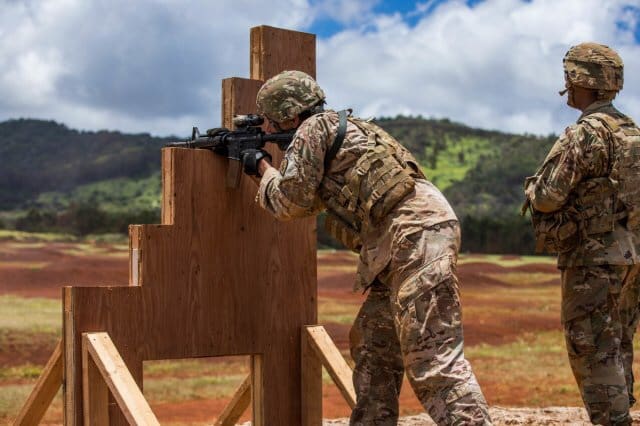
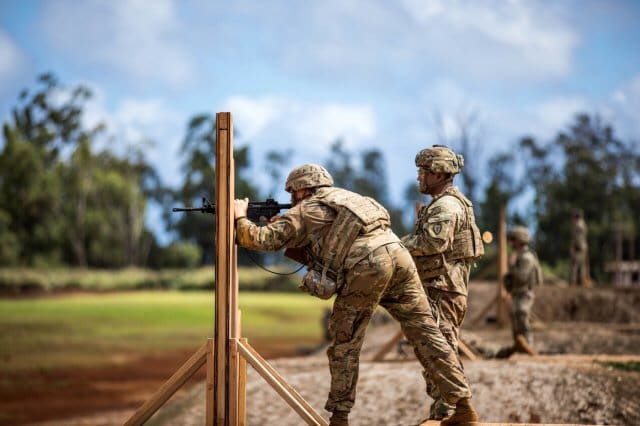
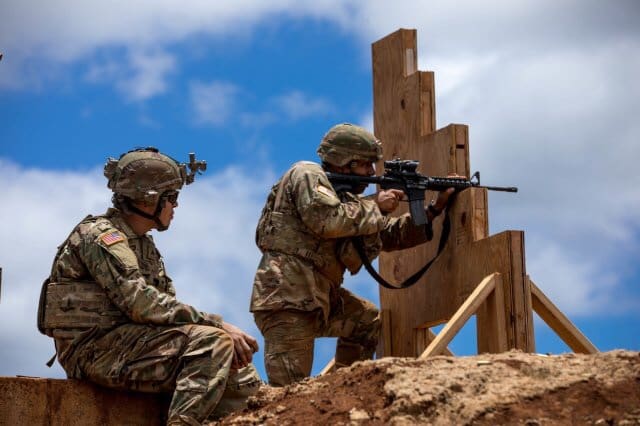
SCHOFIELD BARRACKS, Hawaii — Similar to the implementation of the new Army Combat Fitness Test (ACFT), the Army is now changing how Soldiers qualify with their weapons, making individual weapons qualification more combat focused beginning October 2019.

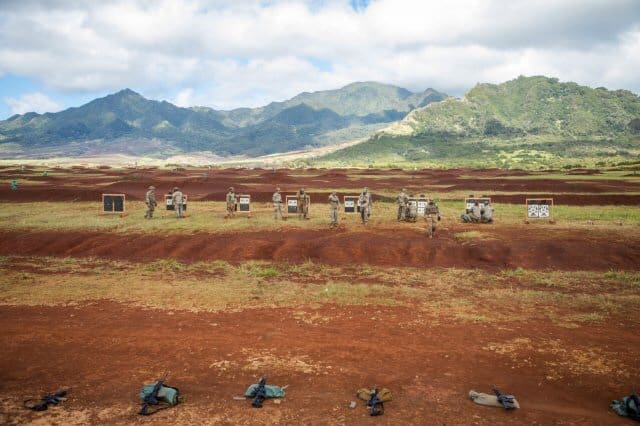
Soldiers across the 25th Infantry Division with varying skill levels prepared for the new marksmanship standards by conducting a pilot program to assess current installation support capabilities at Schofield Barracks, Hawaii.

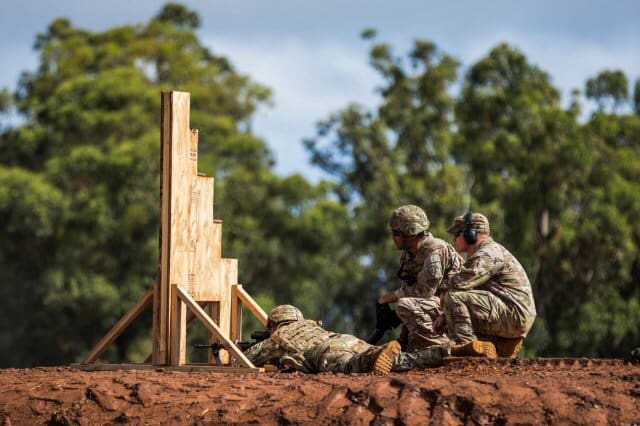
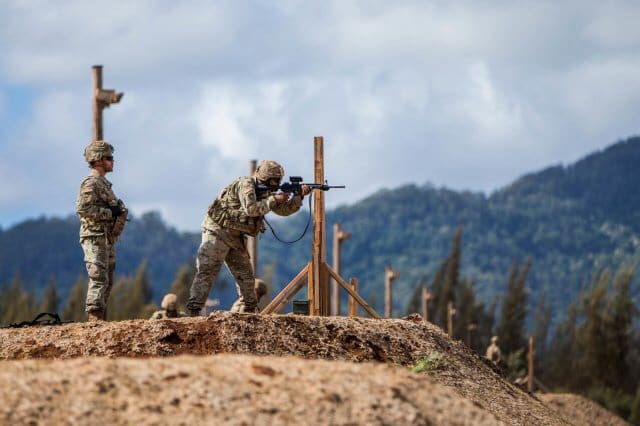
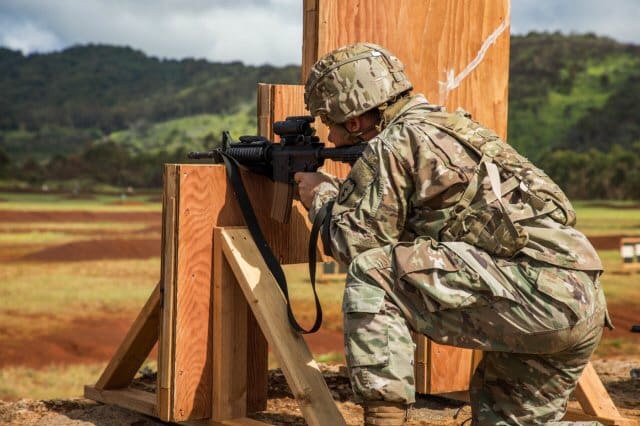
The new four-phase course will now feature standing firing positions. Soldiers are issued four 10-round magazines to engage 40 pop-up targets from the four shooting positions. Soldiers start in the standing position then go to the prone unsupported, then prone supported, kneeling supported and finally the standing supported position. Soldiers utilize a barricade and will have 8-10 second intervals to change magazine and positions.

The new course will replace the current marksmanship qualification course with one that requires Soldiers to engage targets faster and to operate as they would during an enemy engagement.

“The old qualification did not help in combat situations, so they incorporated magazine exchanges and position changes by yourself to represent combat,” said Staff Sgt. Tadeysz Showers, assigned to the 25th Sustainment Brigade. “No matter the military occupational specialty (MOS), any MOS can teach a Soldier how to do this new weapons qualification.”

The division marksmanship pilot program was led by the Lightning Academy Senior Instructor Staff Sgt. Daniel Martin and three other instructors through preliminary marksmanship instruction (PMI), Engagement Skills Trainer (EST), and qualification tables on a standard pop-up range.

In the current qualification course, Soldiers take instructions from the range tower, such as when to change magazines and firing positions. “Now, the qualification only has commands to begin the qualification and when it has ended,” said Martin. “The four 10-round magazines will be in your kit, and you will transition your position and conduct magazine changes on your own without any commands from the tower.”

“The new qualification saves time,” said Showers. “The old qualification took about 20 minutes, this one takes about four minutes to execute and is much faster paced.”

The course is set to become the Army-wide standard for rifle marksmanship. Qualification implementation begins October 2019.

“The new qualification is more challenging, but a lot more realistic,” said Martin. “Some Soldiers have never conducted magazine exchanges on their own without being told when to on the line during the Automatic Record Fire. The course is helping the Army become more efficient in urban combat scenarios.”

“Soldiers start by receiving a series of classes on how to properly zero the rifle, whether it’s a bare rifle or with optics,” said Showers. “Soldiers received classes on laser bore sight, Minute of Angle (MOA), zeroing process, windage, ballistics, and also received EST training and practiced position changes before going to a live range.”

The new weapons qualification maintains the same score requirements as the current system to pass in each category; Soldiers must hit 23 targets out of 40 to qualify. Soldiers must hit 23 to 29 targets for a Marksman rating, 30 to 35 for Sharpshooter and 36 to 40 to qualify for Expert.

“This new weapons qualification is more combat oriented with changing positions, changing magazines and engaging the targets,” said Sgt. Octavius Moon assigned to the 25th Sustainment Brigade. “This will help Soldiers shoot better as well as make ranges faster and have more Soldiers qualified. It helps Soldiers become more knowledgeable about their weapon as well.”

By SGT Sarah Sangster

Zero Tolerance Knives ZT0223 Available

Saturday, September 21st, 2019

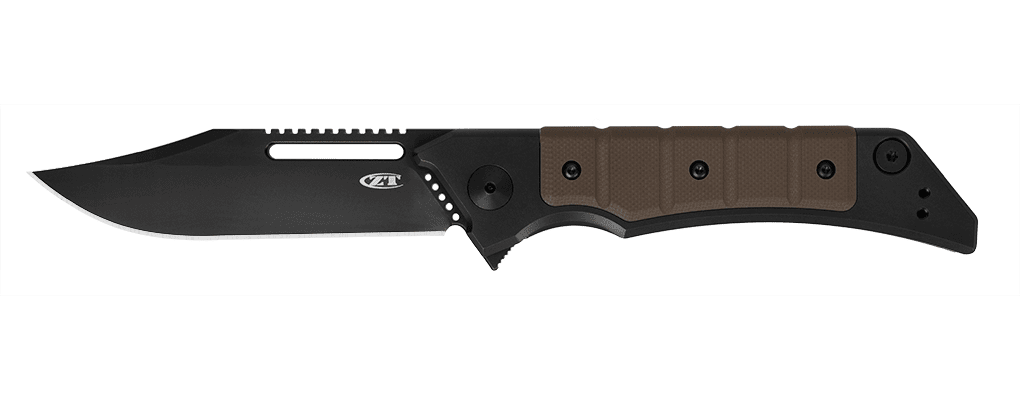
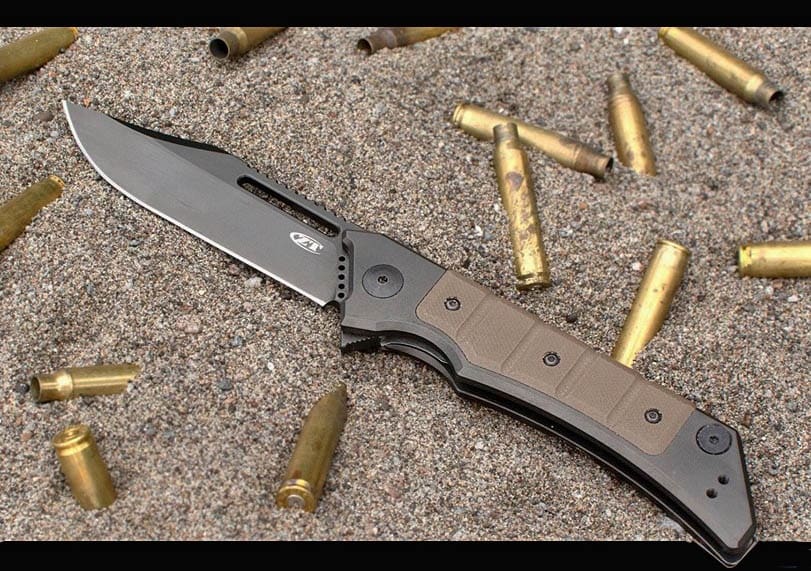
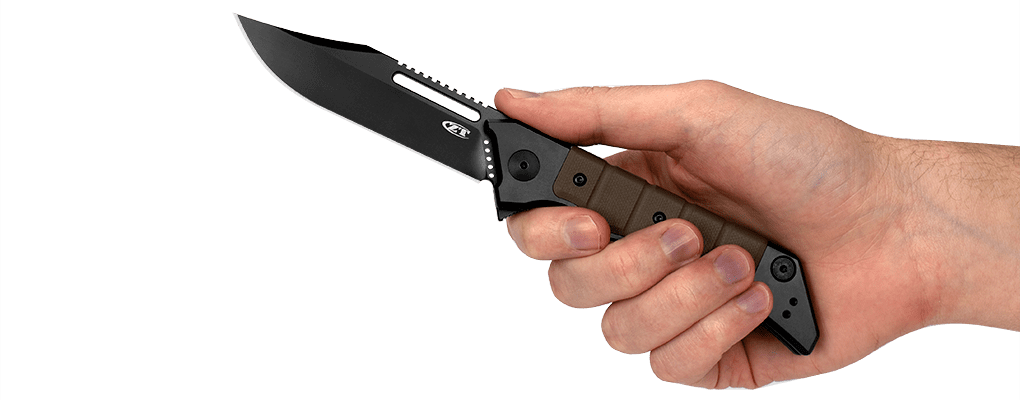
As you may have seen back ’round the time of Blade Show (see SSD coverage here), Zero Tolerance Knives recently released the ZT0223. A Tim Galyean design, the new folder takes its inspiration from what is obliquely referred to as a “classic military knife” (read, Ka-Bar), but the ZT knife is a folder, “…making it easy to EDC and ready for every task you ask it to take on.”

Details are as follow;

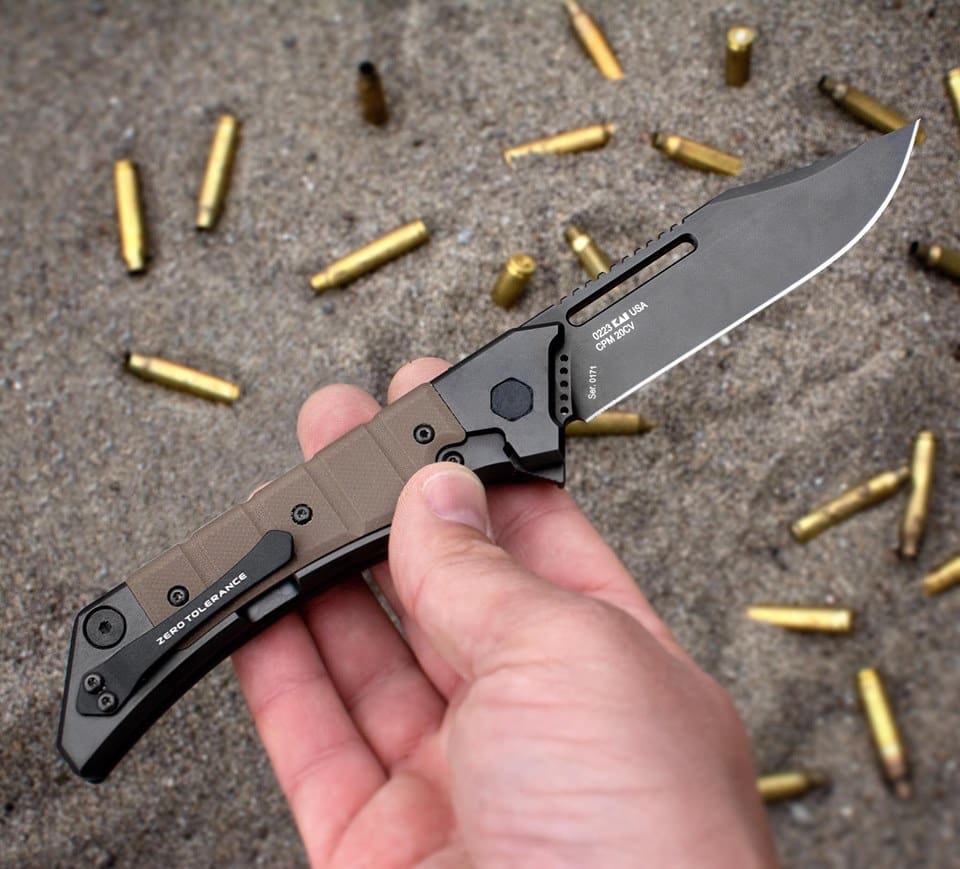
The blade is clip-point style with heavy jimping along the spine and a cutout to decrease weight. CPM 20CV blade steel offers exceptional hardness and wear resistance to take and hold a sharp edge, toughness to resist impact, and—with the highest level of chromium of any high-vanadium steel—excellent corrosion resistance. For an extra measure of blade protection, ZT adds black DLC (Diamond-Like Carbon) coating, ceramic bead blasted for a non-glare finish.

The titanium handle is also DLC coated and bead blasted to extend the matte look. The 0223 has a sturdy titanium frame lock with a hardened steel lockbar insert for reliable lockup. ZT’s KVT ball-bearing system, combined with a highly ergonomic flipper, make the 0223 quick and easy to open, too. The 0223’s earth brown G10 handle scales are reminiscent of the original military knife’s stacked leather handle. Our G10 scales wrap around to the top of the handle and meet in the middle to provide a comfortable and secure grip—as well as helping to keep debris out of your knife.

The pocketclip is left/right reversible and made of bent steel with a black Teflon® finish. The bronze-anodized titanium tube spacer in the handle is secured by two custom screws. A series of decorative holes drilled in the ricasso of the blade echo the jimping along the spine and add to the subtle details of this remarkably handsome knife.

The ZT0223 full product sheet can be found online here; on IG @ztknives.

Specs include:
                    Made in the USA
                    Manual open, KVT ball-bearing system
                    Frame lock, with steel lockbar insert
                    Reversible clip (left/right, tip-up)
                    Steel: CPM 20CV, DLC coating
                    Handle: Titanium, DLC coating, earth brown G10 
                    Blade Length: 3.5 in. (8.9 cm)
                    Blade Thickness: 0.156 in. (0.4 cm)
                    Closed Length: 5 in. (12.8 cm)
                    Overall Length: 8.6 in. (21.8 cm)
                    Weight: 4.7 oz. (134 g)

Read up on all the knives here on SSD

FirstSpear Friday Focus – Stratton Flannel is Back

Friday, September 20th, 2019

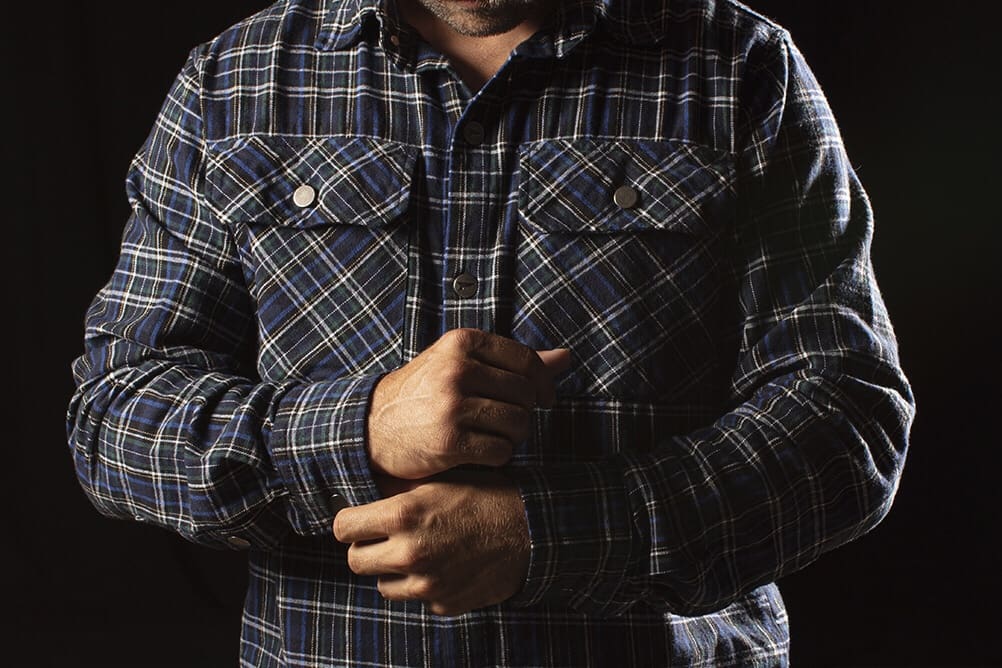
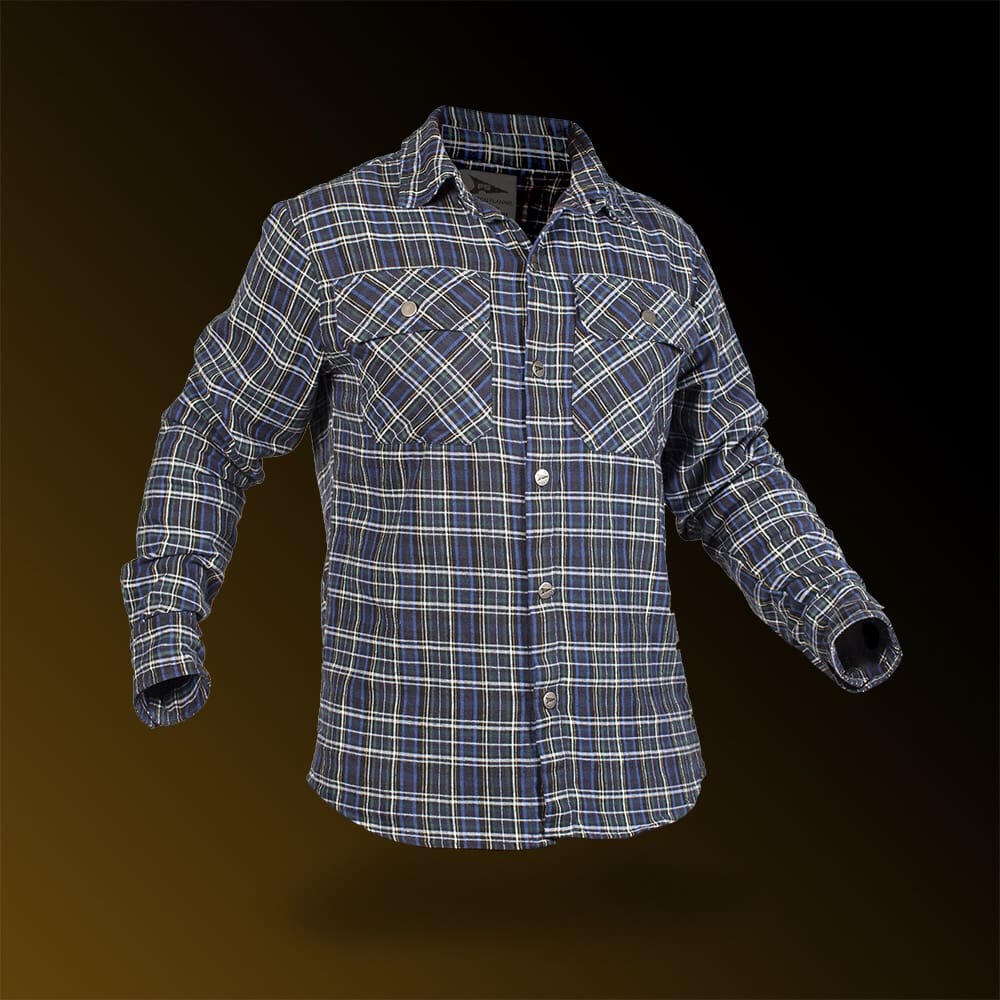
Today we are getting the first look at the all new FS Stratton Flannel now available in the lighter 4oz weight perfect for fall. 100% American made with the same generous cut that can be worn all on its own or open as an outer garment. Premium construction with two outer pockets, high collar, and hang loop. Sizing is the exact same as last year. If you plan to wear the flannel on its own with no layers step down one size from your normal t-shirt size, the flannel will shrink about 3% after about three wash cycles. In-stock and now shipping exclusively from FirstSpear.

www.first-spear.com/technical-apparel/outerwear/stratton-flannel

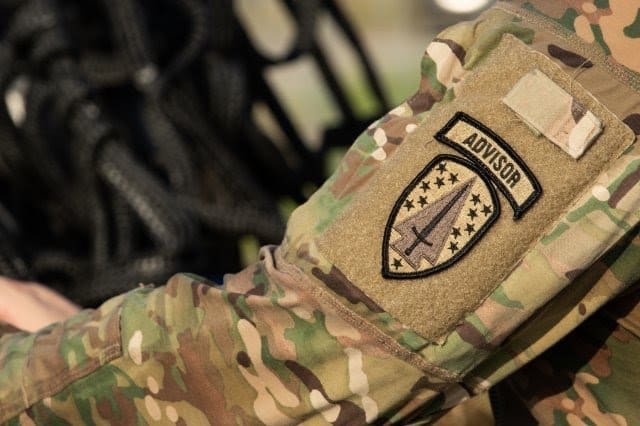
1st SFAB Trains and Certifies Military Advisors for Worldwide Employment

Thursday, September 19th, 2019

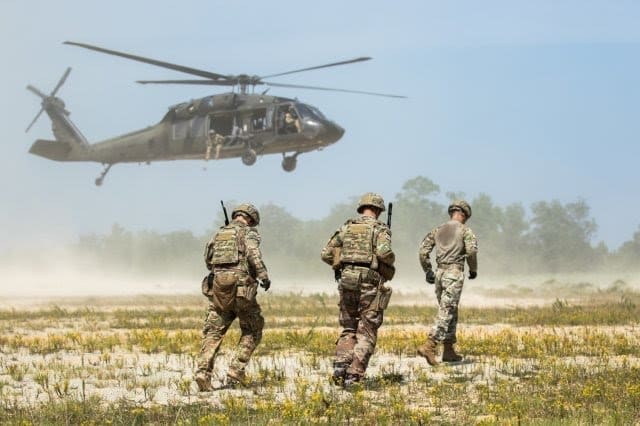
FORT BENNING, GA. – The 1st Security Force Assistance Brigade, an Army conventional force for training and advising globally, had the opportunity to enhance their capabilities and train their military advisors over a two-week period during Advisor Forge at Fort Benning, Georgia, August 5 through 18, 2019.

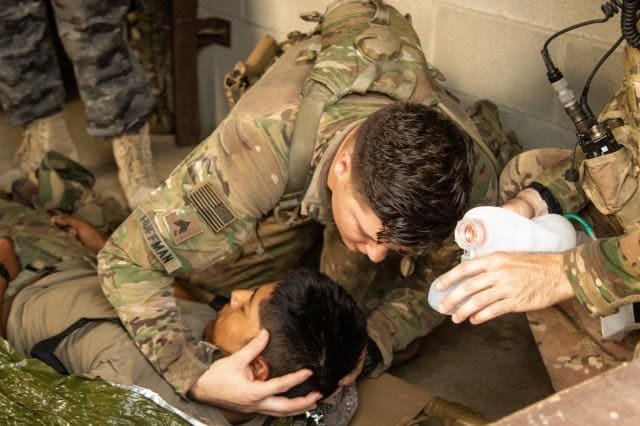
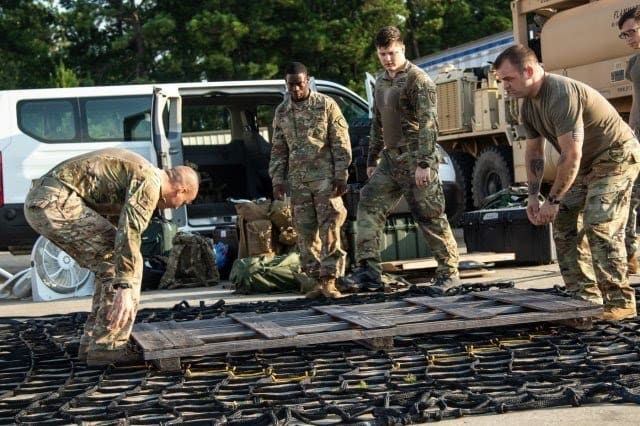
Across scorching hundred degree temperatures in field environments, the Army’s advisors trained in partnering with a foreign force, conducting sling-load operations, establishing electronic equipment for global communication and emergency medical relief scenarios.

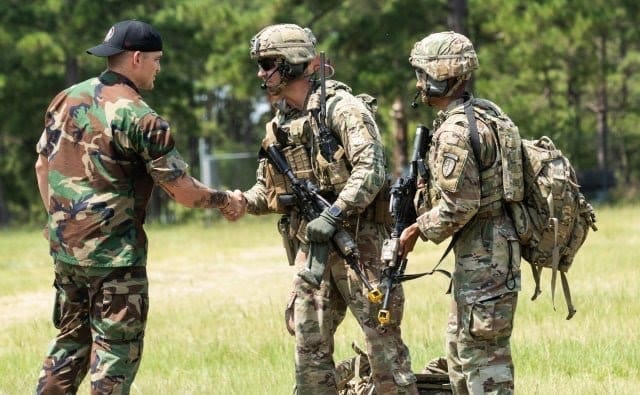
The training exercise focused on the development of skills for Army advisors to provide support, advise, and liaise with foreign conventional security force partners in time of worldwide employments.

“Through adaptability, we can be prepared for all different presented issues and come together as a global team to solve them,” said Sgt. Michael Fletcher, an intelligence analyst assigned to 1st Security Force Assistance Brigade.

The culminating exercise was an opportunity for participating Soldiers to enact 1st SFAB’s mission statement of supporting local security operations to build partner security capacity and capability and achieve regional security in support of US National Interests.

“The reason why we are in the SFAB is to create enduring innovative solutions,” said Cpt. Travis Coley, Headquarters and Support company commander within the 6th Battalion, 1st Security Force Assistance Brigade, “We exist to empower conventional foreign security forces in establishing sustainable methods to solve issues.” Coley believes SFAB Soldiers are able to do so by applying their training in the understanding of local customs, culture, traditions and political nuances.

The military advisors and instructors of the 1st SFAB, formed in 2017, includes 529 Soldiers, 360 that are officers. It is the first brigade of its kind. According to the Pentagon. Six fully operational brigades are expected to train and preform at the highest capacity by 2020.

By PVT Daniel Alkana

Army Cyber Leaders Talk Workforce Strategies, Talent Management

Wednesday, September 18th, 2019

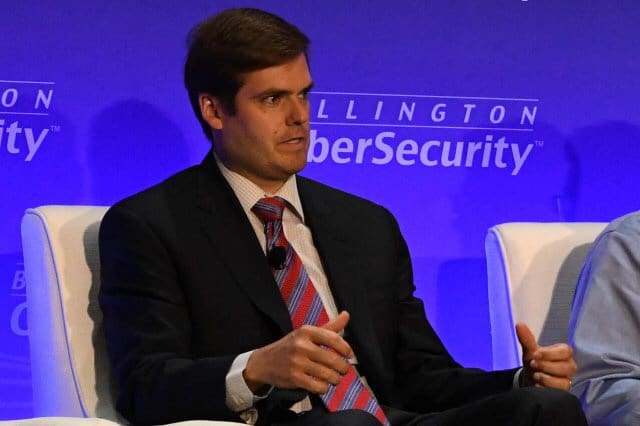
WASHINGTON — The military is doing a great job recruiting cyber talent into military and civilian service, but retention is more difficult, said the deputy assistant secretary of defense for cyber policy said at the Billington Cybersecurity Summit in Washington.

“We have people lined up out the door that are ready to come onboard and do the mission, whether it’s cyber operations or traditional cybersecurity,” Burke E. “Ed” Wilson said at last week’s event.

Wilson said Congress gave the military some unique authorities that have helped in hiring qualified civilians.

“This has allowed us to hire with more agility based on the talent,” he said. “That’s been a big win, and we’ve seen very good results over the last 18 months.”

But the challenge is retention. “Clearly, we don’t do well on salary in the military, but we’ve been able to handle that with bonuses,” Wilson said, adding that the strategy is working well, except in some niche areas.

John “Jack” Wilmer, the Defense Department’s deputy chief information officer for cybersecurity and chief information security officer, said young people are attracted to the military because it has a “cool mission.” To keep them, the military provides them with some really great training opportunities, he said.

Cyber games, for example, allow them to go toe-to-toe with some of the best cyber warriors from other countries, he said. “We try to incentivize people and connect them with opportunities,” he added.

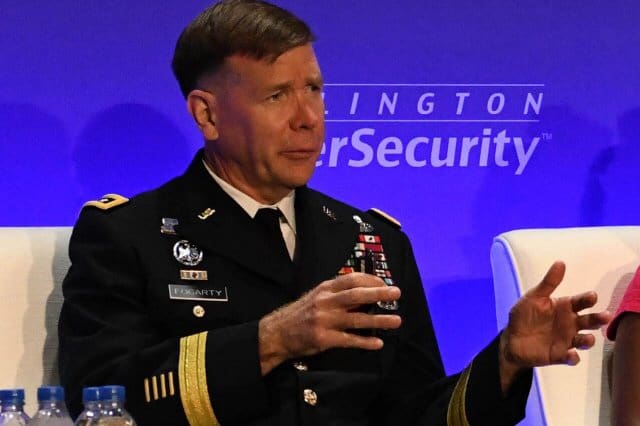
Army Lt. Gen. Stephen Fogarty, commander of Army Cyber Command, said another way to incentivize the workforce while solving difficult cyber problems is to organize the cyber workforce into teams.

Teams can be made up of people who are experts at electronic warfare, information operations, intelligence, developers, malware analysts and other specialties based on the type of operation they’re engaged in, he said.

The teams can extend outside the U.S. military and include foreign military partners, commercial vendors and academia, Fogarty said.

“We very rarely act without a consortium of partners. I can’t think of a single operation that didn’t include multiple partners,” he said. “Young people reach out to their peers and build their own networks. They’re very successful at building these ad hoc relationships, and they get after the mission.”

By David Vergun, Defense.gov

Brigantes Presents – High Angled Solutions – The Lofoten Gore-Tex Pro Lite Pants

Wednesday, September 18th, 2019

Since 1929, Norrona have devoted their time into making the greatest outdoor products available. Their focus is quality, function and design and Brigantes are excited to announce our UK military relationship with them.

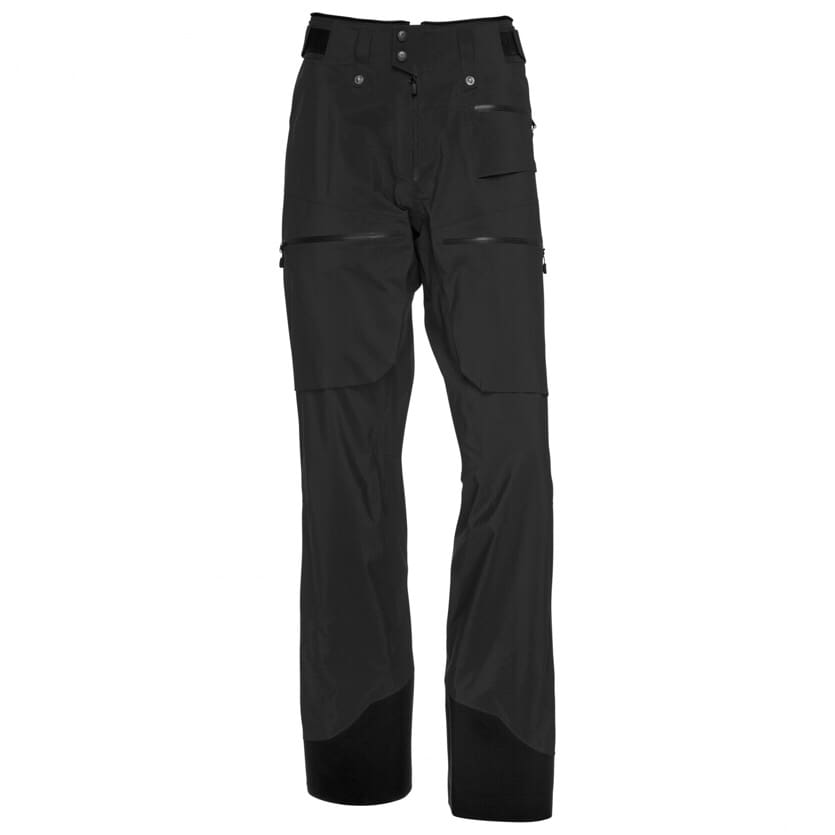
The Lofoten Gore-Tex Pro Light Pants are Norrona’s lightest water and windproof pants for the hardcore freeriders.

Developed to achieve the perfect balance between lightweight and durability, these pants have a lot of the same features as the lofoten Gore-Tex Pro Pants but are made in a lightweight wind and waterproof 80D GORE-TEX® Pro fabric. 

They have key features such as Custom-fit system™ waist adjustment, thigh ventilation with powder mesh, thigh pockets for essential gear and reinforcement on the lower leg. The cut of the pants is slightly tighter than on the Lofoten Gore-Tex Pro, but still with a fit that is customized for big mountain freeride. 

These are the ideal pants for deployments in the mountains where troops are in need of superior protection with all the critical details incl durable, lightweight, wind and waterproof garments.

For UK sales contact: warrior@brigantes.com

Or visit: Brigantes.com


Handheld Digital Targeting System Provides Fire and Air Support to Marines

Tuesday, September 17th, 2019

MARINE CORPS BASE QUANTICO, Va. —

A Marine Corps Systems Command fire support device will be one of several communication technologies demonstrated at Island Marauder 2019.

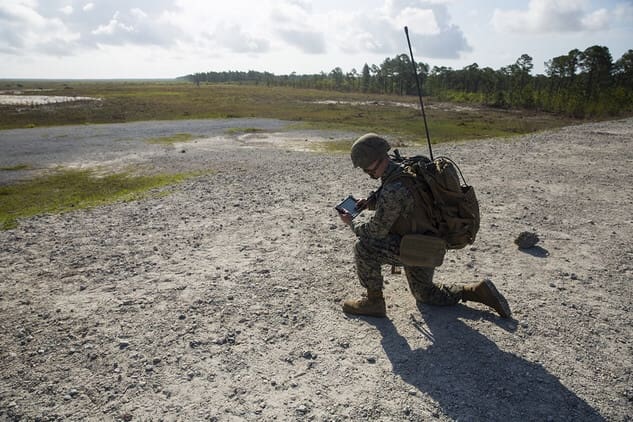
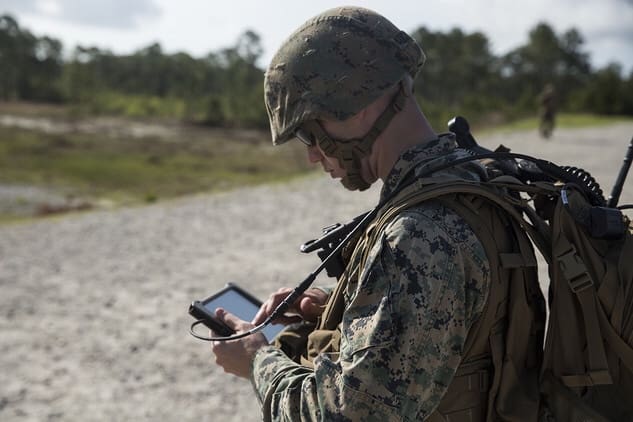
The Target Handoff System version 2.0 is a lightweight, fire control system that employs commercial off-the-shelf, shock-resistant tablets to perform various targeting functions. The man-portable technology helps ascertain global positioning coordinates and call for fire support.


It allows Marines to use a single system to control close air support as well as artillery, mortars and naval surface fire support missions.

“THSv2 is the digital fire support Program of Record for the Marine Corps,” said Jeff Nebel, Fire Support Coordination team lead at MCSC. “It is a modular equipment suite that provides the warfighter with the capability to quickly and accurately identify and locate targets, and transmit that information digitally to fire support systems or weapons platforms.”

Fielded in fiscal year 2018, THSv2 enables the Marine Air-Ground Task Force to view an updated satellite image of the topography of a location. The technology provides a platform for receiving and manipulating video information. It can also be used as a controller for unmanned and autonomous systems.

“The system decreases the probability of incorrect data transfer of the initial fire request by providing a digital communication link between the observer and fires platform,” said Nebel.

The Corps has leveraged electronic tablets—including the MAGTF Common Handheld—to support the warfighter. Like MCH, THSv2 is software embedded into a tablet. However, MCH is primarily used for situational awareness on the battlefield, while THSv2 feeds information to Advanced Field Artillery Tactical Data System and other fire support and weapons platforms.

THSv2 is interoperable with several other technologies, including the AN/PRC-117 radio, Naval Fire Control System and the Common Laser Range Finder-Integrated Capability. At Island Marauder 2019, Marines will demonstrate the interoperability of THSv2 with other communication systems, including Networking on the Move.

Engineers and analysts for the THSv2 emphasize its significance in completing missions on the battlefield.

“The Target Handoff System version 2.0 is important to the warfighter because it speeds up the kill chain and reduces human error by not requiring targeting information to be passed via voice,” said William Bensch, an analyst for THSv2. “Everything is done digitally.”

Since its fielding, THSv2 has received positive feedback from Marines who participated in various live-fire events and other training. Nebel hopes annual hardware and software updates will make the technology even more useful to the warfighter.

 “It’s a piece of the latest and greatest in cutting edge technology,” said Bensch. “The system is robust enough to be expanded upon. We’re looking to provide the warfighter with the best equipment to engage the enemy faster and more efficiently—and THSv2 does that.”

Story Matt Gonzales, MCSC Office of Public Affairs and Communication | Marine Corps Systems Command

Photos by PFC Taylor W. Cooper