Phantom Lights

Archive for the ‘Guest Post’ Category

Brigantes Issue Essentials – OMM’s Tactical Insulated Tarp

Wednesday, April 15th, 2020

Each week we bring you products that should be on all military standard issue kit lists. This week it’s OMM’s Tactical Insulated Tarp.


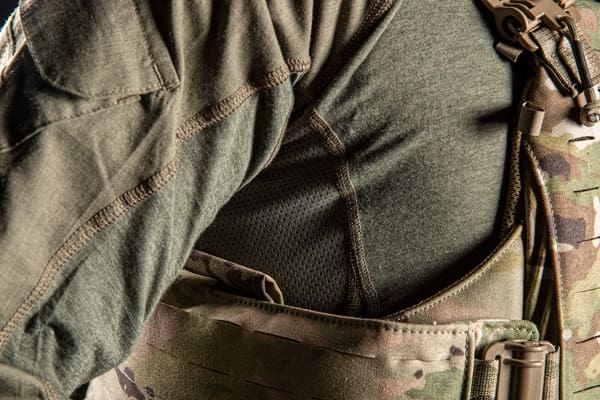
The OMM Tactical Insulated Tarp is a lightweight waterproof, multipurpose tactical warm/sleeping system. It has a camouflaged waterproof print on the exterior with a reversible inner white material for concealment in winter/snowy environments.

The Tactical Insulated Tarp can be configured in multiple ways to enable it to be used as a sleeping bag, an insulated tarp or worn as a full-length insulated waterproof outer layer.

As well as a sleeping bag and thermal, waterproof outer layer it can also be used as a waterproof insulated shelter. It comes with sewn-in tape and webbing rigs and each end that are internally strengthened. It can be tensioned and strung to provide a waterproof insulated shelter. Each corner has taped attachment points to allow for a customisable shelter.

For ease, the tarp packs down into its internal mesh pocket.

TECHNICAL SPECIFICATIONS

Waterproofing

• 0,000 mm Hydrostatic Head

• 10, 000 MVTR

• Fully Taped Seams

Insulation

• 60 gsm insulation

• TOG rating – 3

Dimensions

• Length – 200cm

• Width – 200cm

• Weight – 715grams

For more information contact internation@brigantes.com

For UK sales contact warrior@brigantes.com

Or visit Brigantes.com to set up an account.

The Baldwin Files – Survival Strategy

Tuesday, April 14th, 2020

Kansas tried to kill me once. It happened like this; a.k.a., this ain’t no bullshit. I returned from a three-year plus tour in Germany in the fall of 1978. I spent a couple of weeks leave with my parents and siblings in Kentucky and then drove cross-country to my new assignment at Fort Lewis, Washington. I had been a Sergeant, E-5 for almost two years and had managed to save a little money. I took that cash and bought a used Ford Pinto. For those of you too young to remember, the Pinto was one of the earliest American compact cars. It was supposedly prone to exploding into a ball of fire if rear-ended by another vehicle. I had no such experience. However, the Pinto was cheap and good enough for my needs. It served me well for the next year. This particular Pinto had two idiosyncrasies that are relevant to this story; the AM/FM radio never worked and the heater was anemic.

There were no GPSs in those days. I planned my trip by using a big Rand McNally booklet of roadmaps. I simply looked for the shortest route. That took me along Interstate 90 that generally parallels the northern border of the country. It was already early November, but frankly, I did not give due consideration to the weather. In my defense, there was no Weather Channel or weather apps in those days so a cross-country forecast was not available. I was in luck this time. There was quite a bit of snow on the ground in the northernmost states, but the roads were clear and I made good time. However, I did freeze my rear end off along the way. Therefore, when I took leave the next October, I traveled a slightly longer and more southerly route back home along Interstate 80. 80 runs through Nebraska and Iowa. The weather cooperated but the ride was still chilly. Consequently, I planned my return route even further south along Interstate 70, which runs through Kansas and the middle of the country.

I still had no clue what the weather would be enroute. By the time I got to Kansas City, it was around 2300 hours and a cold rain was falling. The temperature was already less than 40 degrees. I filled my gas tank and headed west, fully expecting to push through the rain in short order. I could not have been more wrong. Even before I got to Lawrence, Kansas – some 25 miles away – it was snowing heavily. However, the snow was “dry” and blowing in the wind rather than wet and heavy. I saw that as a positive since it was not freezing or packing on the road and the Pinto still had good traction. I continued to think that this was a linear storm that I would soon pass through and so I pushed on. Another 25 miles or so and I was just west of Topeka, Kansas. The going had been slow but steady. I had drafted behind an 18 Wheeler almost all the way; however, he turned into a Stuckey’s Truck Stop on the edge of town. I kept going…for approximately another 6 miles.

The snow had stopped falling by that point, but when the wind would gust, blowing snow caused brief whiteout conditions; there were no more tracks from other vehicles to follow and the road was becoming harder and harder to discern. I was probably going 5 miles per hour when I lost the road on my left side. I felt the difference when the Pinto left the pavement and immediately began to slide down the low embankment sideways, but I could not stop it. It was a truly slow-motion event as the Pinto snowplowed sidelong into a big powdery drift and came to rest only about 6 feet from the road. To make matters worse, the engine died and the headlights went out immediately. The car was canted slightly to the left and I knew that the driver’s side door was blocked by snow so I went out by the passenger door to survey the situation. I had been chilly in the car, but as soon as I stepped outside, I knew I was in deep trouble. It was bitterly COLD. I found out later that at the time, the temperature in Topeka was 12 below zero and the wind chill made it ~25 below. I was not prepared for that extreme in any way, shape, or form.

I had no flashlight, but the sky was now clear and there was some moonlight for illumination. I did a quick 360 but did not see any lights anywhere. I knew about how far it was back to the truck stop but had no idea if anything was closer in the other direction. There did not seem to be any farmhouses nearby and the closest line of trees appeared to be 100 meters away or more. That scan only took a few seconds but my toes, fingers, and ears were already burning and breathing the frigid air was hurting my nose and throat. I popped the hood and saw that snow had been pushed up around the fan blade and battery, melted by the engine’s heat, and refrozen almost instantly into a solid block of ice. I was not going to be able to do anything about that. I tried to close the hood, but it was frozen open. I jumped back into the car and could not fully close the passenger door because the latch had frozen. Likewise, moisture had heavily frosted over the interior of all the windows in the vehicle.

It was dark and cold in there, but at least I was out of the wind. I was wearing jeans, a t-shirt, loafers, and a light jacket – the standard fall uniform of young men in the 70s. I did not have a hat or gloves or heavier clothing with me. I dug into my duffle bag and wrapped another t-shirt around my head and ears. Through a combination of ignorance and hubris, I had managed to drive myself into a real-world life-threatening survival situation. At that point professionally, I had not gone to a formal survival course; however, I did have a modicum of training, skills, and experience. After three winters in Germany and a year at rainy Fort Lewis, I knew a lot about recognizing and mitigating hyperthermia and frostbite. As I sat there shivering uncontrollably in the dark I knew I had to act fast or risk succumbing in short order to one or both.

The Pathfinder Detachment I had been a part of in Germany belonged to the Division’s Aviation Battalion. We were issued all the same survival gear that the pilots and crew chiefs received. We also had the additional tasker to provide quarterly fieldcraft and survival refresher training to the aviators – principally to make sure they remained current on the issued items. Therefore, once a quarter for two years, I had been giving classes on things like shelter making and fire starting. For the most part, my teammates and I had taught ourselves those skills by reading the survival manual, following the instructions, and independently practicing the techniques. Then the detachment would go off to the local training area by itself. We would each give our assigned presentations to be “murder boarded” by the team before giving the classes to the aviators. A time tested old-school training methodology that worked well throughout my entire career.

That night in Kansas, I realized that I had been guilty of thinking about survival situations only in the context of a military mission gone wrong – soldiers cut off behind enemy lines and that sort of thing. Again, in my defense, the survival manuals I had read were almost exclusively focused on that potential circumstance. Likewise, those classes in Germany had been tailored entirely toward that kind of specific scenario. I was smart enough to know that I was woefully unprepared to unexpectedly be fighting for my life in Kansas. I was shivering too hard to dwell on it, and my ears, toes, and fingers were still hurting. I needed to get my blood flowing and core temperature up. A Pinto was never designed to be a gym. However, I began to do calisthenics as vigorously as I could in the cramped space. It would have made a hilarious video if someone had filmed it but I took it seriously and tried to work up a sweat. I did not manage that, but the exercise did help. Indeed, I was grateful that my toes and fingers were still painful and had not gone numb.

I had also failed to bring much in the way of survival gear or even basic supplies. I had no water or food available. However, hunger and even dehydration were not of immediate concern. On the plus side, I was young; physically fit, uninjured, and was certainly not lost. I knew exactly where I was and I was only feet away from a major thoroughfare. While the snow in the drift I was stuck in was perhaps three feet deep, the snow on the road was only about four inches and hardly impassable. Had my car been working and on the pavement, I would have likely been able to drive the Pinto out. Indeed, had I been wearing the appropriate cold-weather clothing, I could have reasonably considered walking out. By this time it was probably 0300 hours and I was beginning to wonder why no other vehicles had passed going in either direction. Had I missed them somehow?

What I did not know is that this severe early winter storm had been declared a statewide emergency and the Governor had closed all the roads. This was the heyday of the CB radio but I did not have one of those either. However, I suspect that the trucker who had pulled off the road got word of that shutdown on his CB. Although I did not know the reason, it became obvious that I was on my own – at least in the short term. I realized that a car with the hood up on the side of the road would appear abandoned and might not be searched or even approached. I started to think about drawing attention. I did have a couple of items to work with. I had a 4” Buck folder on my belt and a zippo lighter in my pocket. To be honest, I carried the Buck because that was what infantry soldiers did – on and off duty – to ensure that we were not mistaken for support soldiers. Likewise, while I did not smoke myself, I carried the lighter solely because – occasionally – a young lady needed a light for her cigarette.

At least I had some minimal tools to work with. I decided that as soon as there was some light I would throw out my spare tire, use my Rand McNally as tinder and perhaps throw on other clothing items if necessary to keep the fire going until the rubber started to burn. I did hope to get some heat from the fire but primarily wanted it to be a smoke pot. Indeed, I was concerned that it not be too close to the vehicle so that the fumes would be suffocating or smoke me out of the car. I decided to cut the stem and punch some additional holes in it with the knife to make sure it was completely deflated to avoid the possibility of it popping explosively when it started to burn. I was letting the air out of the tire when my plan became moot. Help had arrived and I had not seen or heard it coming. There was a pounding at the back of the car. I did not waste the opportunity. I kicked open the passenger door and surprised the Kansas State Trooper at the back of the car. He had been knocking the snow off the tag to get the license number of just one more abandoned vehicle.

I do not remember what we said to each other, but I grabbed my duffle bag and a minute later was in his very well heated Ford Bronco enroute back to the Stuckey’s I had passed some 4 hours earlier. It seemed a lot longer than that. In hindsight, there is some irony in the fact that I rode in on a Pinto and out on a Bronco. I had survived. The Pinto did not make it. That experience had a significant impact on me personally and professionally. It was sobering and left me with the conviction to never again be caught by an emergency so poorly prepared. I redoubled my efforts to learn traditional survival skills as well as other foundational life skills –like cooking – that have served me well.

I did not have unlimited funds, but over time I equipped every vehicle I have owned since with essential tools for recovery and safety. Items like a machete and etool to dig or cut my way out if stuck; road flares to serve as a signal of distress as well as a fire starter; long-burning candles for warmth and light; two poncho liners per vehicle; gloves and wool hats, etc. In part, because I learned those lessons and made those preparations, I was never in such a dire situation again. I doubt I ever will be. The experience confirmed to me the things that the survival manuals talk about. In order to survive a person needs the will, the tools, and the skills – indomitable will being by far the most important factor.

I admit it was grim that night in Kansas, but I never stopped believing in my ability to ultimately prevail. However, it should be obvious, that had I been better prepared and informed I could have changed my route and avoided the storm and drama. Then it would have been just another boring and unremarkable cross-country drive rather than a dangerous adventure. Learning enough to avoid unnecessary risks is both a survival and life skill that is more common in older rather than younger people. It is definitely something that deserves to be passed from generation to generation. Some people, units, and leaders do not want to “waste” time learning “primitive” skills. First, it is misleading to think of these skills as primitive; thus implying that they are easy for modern people to master. On the contrary, successful fire starting, for example, is a complex enterprise that requires considerable practice.

I have observed that the will to live is strengthened considerably when individuals and teams have confidence in their capabilities. Therefore, to me, “survival training” of any kind – drown proofing for instance – is well worth the cost of time and resources. That is true even if the individual soldier never has cause to use those lifesaving skills in an actual emergency. Consequently, I strongly recommend leaders break out the manuals or find in house subject matter experts. Take your Messkit Repair Company (Airborne) out to the local training area, build some shelters, and start some fires. Bring in some chickens or bunnies and have a kill class, and – of course – eat your training aids. Do more than that. As leaders, we are responsible not only to teach our soldiers how to survive, or simply live in the field on the margins. We are teaching them how to individually and collectively thrive in the pervasively dangerous conditions of combat. Sure, trying to avoid death is job one. Nevertheless, that is just the minimum starting point. Nor should we ever go into battle with the goal of just “getting by” or fighting to a draw. A good unit prepares and fights to win – each and every day.  

I have tried to consistently apply the survive, live, and thrive methodology to my life since that night in Kansas. In the interim, my wife and I have experienced two hurricanes, multiple tornadoes, a nasty ice storm, and even a relatively close encounter with a volcanic eruption when Mount Saint Helens exploded. We gained valuable experience from each event. We learned that it was infinitely better to be prepared rather than reactive. I am not a “prepper” as the term is perhaps unfairly, but still commonly applied. Nor do I consider preparedness a “lifestyle” choice or side-hustle. Preparedness is an integral part of my family’s life. It is our routine to keep a full pantry of nonperishable items. Therefore, we do not need to go out and panic buy when a crisis approaches. We keep our vehicles well maintained and habitually top them off if they get below three-quarters of a tank. Having learned multiple times that gas stations may not be able to pump gas out of their tanks if the electricity is off.

Many of those habits are traditional Army SOPs constantly reinforced by training and deployments. At the end of a mission, we automatically rearm, refit, and maintain our gear and vehicles before resting. The more self-reliant we can be individually the more resilient our military teams and civilian communities will be in a disaster – and the quicker we can bounce back from a setback. We have all seen it countless times. Shortly after the tornado passes, self-reliant people are out with their chainsaws clearing trees from their neighbors’ yards. We expect it. Ideally, being self-reliant makes us more selfless not self-centered. I caught part of the Tom Hanks movie “Cast Away” earlier tonight; specifically, the scene where he loses Wilson at sea. I was reminded that the Hanks character was only in a “survival situation” during the first 8-10 days on the island. Once he figured out fire, shelter, and food, he transitioned to living under austere circumstances. As I recall, he successfully lived that way for 4 years before loneliness drove him to build a raft and risk death again. He was living but not thriving.

All the successful people I know have made a habit of getting the most use out of their time. Many of us are in some form of isolation today. Awhile back, Gunz mentioned that it is a great time to start or restart a PT program. I agree. I have personally made a point of trying to learn new skills, read a good book, or build something. I refuse to binge-watch some TV show to waste time. In other words, I suggest investing time vice killing it. We are all facing a situation that requires us to live under more austere circumstances then we have been accustomed to. We learned to survive by changing our routines and embracing new habits like “social distancing.” Each region of the country may be in a different place in the continuum. However, like Hank’s character, many of us are through the survival phase and have largely adapted to the new pattern of our lives. I would suggest that all of us keep supporting those most at risk and on the front lines. Have confidence. Eventually, we will overcome this threat. In the meantime, we need to find ways to thrive and win. We are in this together.

LTC Terry Baldwin, US Army (Ret) served on active duty from 1975-2011 in various Infantry and Special Forces assignments. SSD is blessed to have him as both reader and contributor.

MCSC Fields Upgraded Tablet-Based Technology

Monday, April 13th, 2020

MARINE CORPS BASE QUANTICO, Va. —

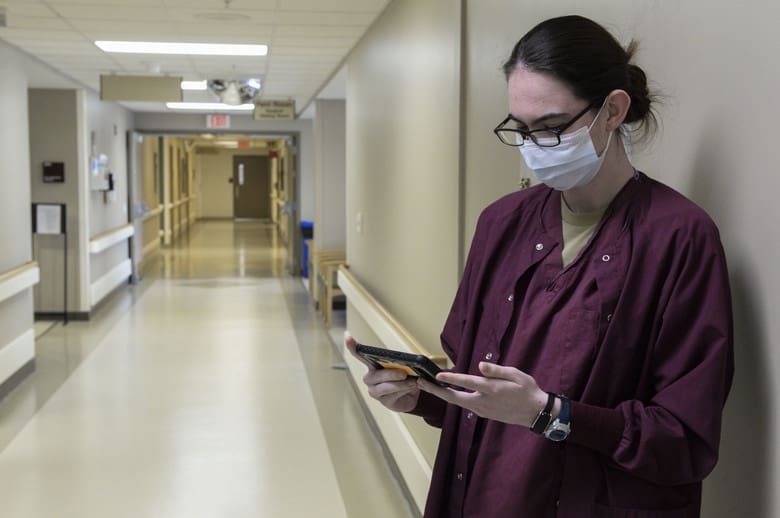
Last year, the Marine Corps fielded a lightweight, tablet-based system that improves situational awareness on the battlefield. This year, Marines will see an enhanced version of the technology.

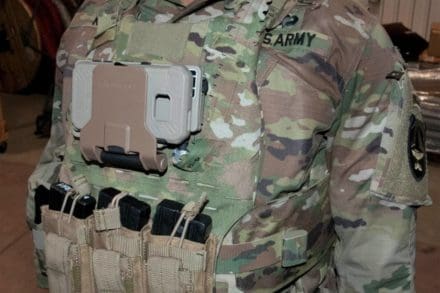
The Marine Air-Ground Task Force Common Handheld enables dismounted Marines to leverage commercial smart devices to plot and share locations. The tablet’s software includes a moving map with friendly and enemy positions, giving Marines at all levels a better overall view of the battlespace.

“MCH includes applications specific to the needs of a Marine at the tactical edge,” said Maj. R. Travis Beeson, Tactical Applications and Services Team Lead at Marine Corps Systems Command. “The system increases digital lethality while decreasing the chance for friendly fire.”

MCH allows Marines to relay messages and locations to other users in a manner similar to text messaging. The system’s capabilities augment previous methods of radio contact, allowing quieter and more efficient long-distance communication.

“By employing MCH, location errors due to misreading a paper map will be reduced,” said Maj. Justin King, MCSC’s project officer for MCH.

Updated system increases efficiency

MCSC recently rebuilt the system’s communication engine to increase interoperability.

The upgraded MCH enables Marines to communicate with one another through several additional communication systems, including the Advanced Field Artillery Tactical Data System, the Command and Control Personal Computer and the Army’s Joint Battle Command-Platform.

The newer system has lower data bandwidth requirements—a constrained resource on the battlefield— and uses a lower percentage of the available network when compared with the previous version of the technology.

“Reducing bandwidth frees up space for other tactical uses,” said King. “It also allows for additional users on the network without clogging it.”

In December 2019, MCSC fielded the upgraded version of MCH to infantry Marines aboard Marine Corps Base Camp Lejeune, North Carolina, and will continue fielding to other infantry units throughout the year. The program office plans to field to the Reserves in fiscal year 2021.

Marine feedback on the MCH has been overwhelmingly positive, said Beeson. He noted how those who have received the system emphasize its benefits, while Marines still awaiting the technology are excited for its arrival.

“The units are constantly asking when they will receive theirs,” said Beeson. “And others have asked when they will receive more. The feedback has been great, but the MCH team recognizes that our work isn’t complete and will continue to develop and field new capabilities.”

Both Beeson and King expressed excitement over the benefits of MCH and its ability in helping Marines better accomplish their missions. The system is an efficient way to communicate with one another without relying on voice communication.

“Commanders down to the squad level will be better equipped with a lightweight tablet that grants them better situational awareness via a moving map with both friendly and enemy positions,” said Beeson. “That will ultimately help them on the battlefield.”

By Matt Gonzales, MCSC Office of Public Affairs and Communication | Marine Corps Systems Command

MATBOCK Monday 1 – Day Assault Pack

Monday, April 13th, 2020

Good morning and Happy MATBOCK Monday,

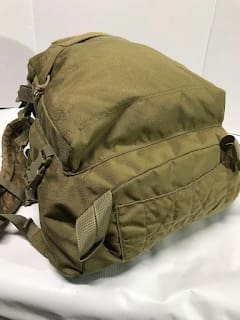
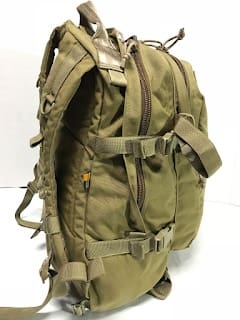
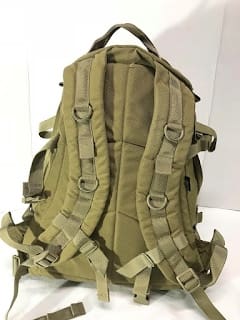
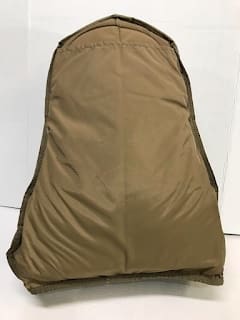
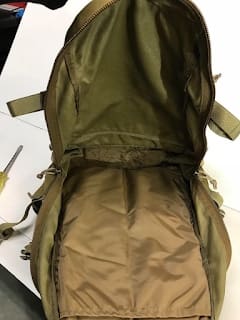
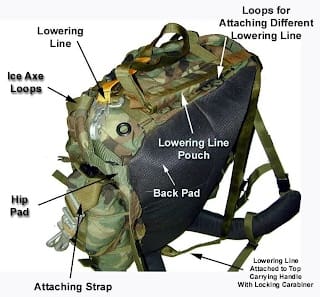
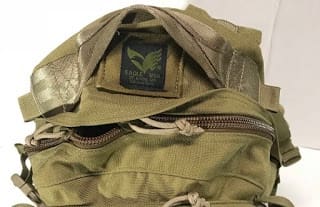
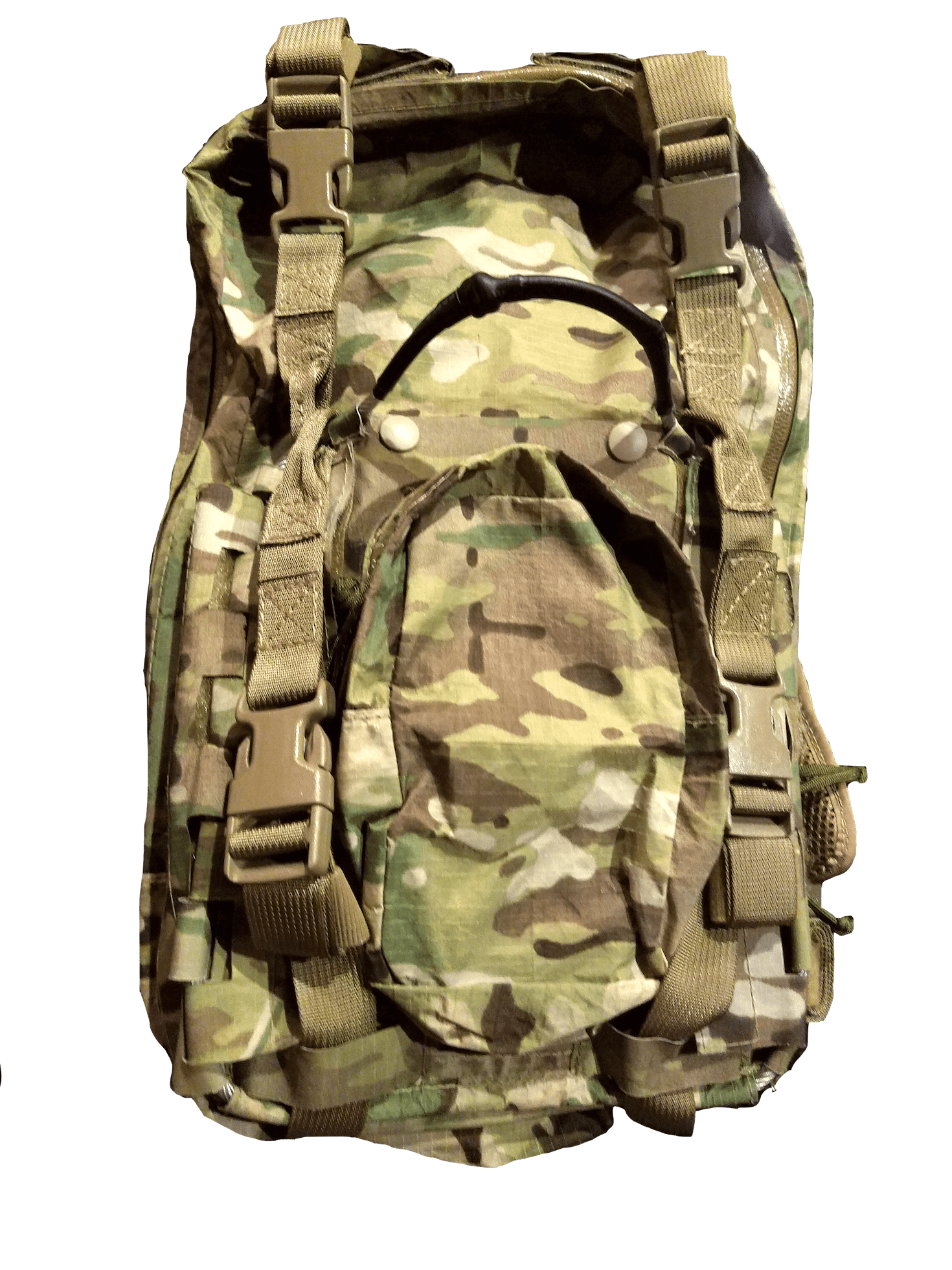
The 1 Day Assault Pack is made from MATBOCK’s Ghost material giving it superior strength, abrasion resistance, water and CBRN resistance and heat transfer capabilities in a lightweight package. Designed for the 117G Radio, it has MATBOCK’s exclusive water-seal external ports for comms cables and antennas, an adjustable internal shelf for radio height adjustments and an expandable, removable pouch to double its size. The 1 Day Assault is available in Multicam and Black

Don’t forget to tune in on Monday at 4:30 PM EST for a live demonstration and a chance to ask any questions you may have. Stay safe!

To join the MATBOCK Monday webinar visit zoom.us.

Link to website: www.matbock.com/products/1-day-assault-pack

Fort Riley Brigade Combat Team Kicks Off Unmanned Aircraft System Assessment

Monday, April 13th, 2020

FORT RILEY, Kan. – The 1st Armored Brigade Combat Team, 1st Infantry Division conducted the first Soldier-operated flight during the Army Futures Command-directed Future Tactical Unmanned Aircraft System capabilities assessment, April 7, 2020.

Announced in December 2019, the assessment will evaluate selected unmanned aircraft systems to define the capabilities needed in the next generation UAS for brigade combat teams.  Data gathered during the assessment will be critical to determining the requirements for the RQ-7 Shadow replacement.

Future Unmanned Aircraft Systems is a signature effort within the Army’s Future Vertical Lift Modernization priority. The Program Executive Office for Aviation’s Unmanned Aircraft Systems Project Office in collaboration with Army Futures Command is leading the capabilities assessment.

The “Devil Brigade” is the first U.S. Army Forces Command unit to demonstrate one of the four vertical take-off and landing unmanned aircraft systems procured for the assessment.

Assigned the Arcturus UAV JUMP 20, it is the largest of the selected systems weighing 210 pounds with an 18-foot wingspan. Despite the size, its reduced acoustic signature compared to the Shadow is appreciated by the entire crew. “We’re used to screaming at each other and having to use radios in order to communicate,” said Spc. Christopher McCoy, a crew chief assigned to 1st Engineer Battalion, 1st Armored Brigade Combat Team. “You can stand right next to this aircraft and not even raise your voice,” said McCoy.

According to Spc. Nicholas Miller, an unmanned aircraft systems operator also assigned to 1st Engineer Battalion, the JUMP 20 maintains the ability to launch and recover from a confined area with minimal ground support equipment. “Currently, we need a runway for launch and recovery of the Shadow. With the VTOL system on the JUMP 20, we don’t need any of that, we’re working with half the equipment,” he said.

The extended endurance of the system allows multiple operators to take turns training on the payload at altitude, while a second aircraft conducts repeated launches and recoveries to train operators and crew chiefs on critical modes of flight.

Over the next five months, the Big Red One Soldiers will operate the system as a surrogate for their RQ-7 Shadow, performing similar tactical tasks for the BCT, but with the added vertical take-off and landing capability and control while on the move. The assessment utilizes a crawl, walk, run mentality, progressing through operator and collective training, then culminating in brigade level field training exercises and a Combat Training Center rotation.

Under increasing COVID-19 precautions, it was uncertain whether the assessment would remain on schedule. Maj. Gen. John Kolasheski, commanding general of the 1st Infantry Division determined the assessment could continue with proper mitigations. The Army is following CDC and DoD guidelines to combat the spread of COVID-19.

The four other FORSCOM units participating in the assessment are assigned the Martin V-Bat, Textron Aerosonde HQ, L3 Harris FVR-90, and a second Arcturus UAV JUMP 20 are scheduled to begin in the coming months. These assessment schedules are under regular re-evaluation as COVID-19 conditions change.

For updates throughout the FTUAS assessment, visit: www.dvidshub.net/feature/FTUAS

By Sarah Tate

SCUBAPRO Sunday – Beards

Sunday, April 12th, 2020

One of the hardest or easiest things to do is dive with a beard or a mustache. I say it that way because, like most things, if you practice doing it, you will get better. There are a few things you can do that are going to help when diving with facial hair. I am going to cover some of the gear and other tricks and also repost a video that I found, and I think they are good.

First, you need to have the right mask. Depending on the size of your face and facial hair will help determine the mask you need. But honestly, you should still be able to use the same mask you always have unless you have gone full bigfoot. Here are a few of the better masks out there for dive with hair.

I have tried to pick low volume masks that are good for combat swimmer operations.

The SCUBAPRO Synergy 2 Mask is excellent for people with beards because of its unique two-skirt system. The flexible skirts fit tightly against your face, with the outer skirt providing additional support and rigidity. Combined, they provide superior comfort and resistance to leaking compared to other masks. When people are diving, and their mask starts to leak, the first thing you try and do to fix it is to pull it tighter, and if that doesn’t work you pull it tighter again, if this isn’t working, you do it again. If no matter what you do, your mask keeps leaking, try losing it up a little, when it is tight the mask will get ripples, like if you were to put a rubber band over your shirt sleeve. The Synergy 2 mask is suitable for people with a smaller face. If you have a beard or mustache and want a solid mask, you can’t go wrong with this one.

If you are looking for a mask that is good for beards and mustaches, the SCUBAPRO Solo is a good fit. The double-sealed silicone skirt conforms to almost every face, giving you an excellent leak-free seal. The SCUBAPRO Solo features a frameless, single tempered glass lens that is specifically designed to provide a wide field of view. Because of how close it sits to your face, the Solo has a low volume fit and easy clearing. Other notable features include a wide-split style, non-slip strap with adjustable buckles, a silicone skirt that comes with double-feathered edge sealing that is effective even against facial hair, and a nose-pocket that allows you to pinch your nose to clear.

The SCUBAPRO Crystal Vu Plus is a single lens mask, which some people like because it can provide a more precise, unobstructed view underwater. It comes with a purge valve, and this makes it easy to clear and rarely fogs up. Should water enter the mask because the mask didn’t seal properly around your beard or mustache, exhale air through your nose to clear the water. You can breathe out through your nose, and the water is vented out. The purge valve can fit a little tight for some people, but most people love this mask once they try it. 

Another feature of this mask is the side viewing windows, which provide excellent peripheral vision in the water. It has an excellent seal that should allow it to fit snug and tight on about 90% of people, even with facial hair.

In the video, Richie Denmark talks about using a razor to help trim a little bit of your facial hair away. I just wanted to point out the Schick Silk Touch-up multipurpose exfoliation tool. It is excellent for fine-tuning your hair.

Richie, Thank you for letting me post your video.

There are a lot of good masks out there besides the ones I mentioned. Atomic makes some really good high-end masks. Like everything you do, you need to make sure you practice. Even if it’s just getting in the pool a couple of times, it is easy to say it is the gear’s fault that you can do something. Lastly, remember if you are diving a rebreather and you are going to put something on your mustache to help it seal, do not use petroleum produces.      

The Missing Aspect of Soldier Lethality: Improved Armor Carriers in a Constrained Fiscal Environment by CPT Daniel Vazquez

Saturday, April 11th, 2020

Occasionally, we get the opportunity here at SSD to share some great writing by fellow members of the profession of arms.? “The Missing Aspect of Soldier Lethality: Improved Armor Carriers in a Constrained Fiscal Environment” was written by US Army CPT Daniel Vazquez in an interest in providing his troops with more effective armor carriers.

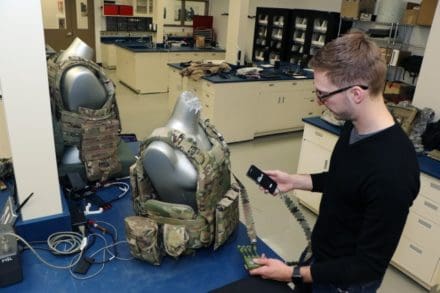
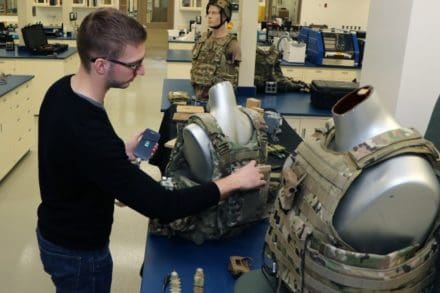
Anyone who has been issued body armor in the conventional Army knows that it is bulky, heavy, and less than ideal. This has often led to individuals purchasing their own plate carriers. In today’s article, one Soldier went a step further and conducted testing and evaluation of several commercial options in comparison to the current Improved Outer Tactical Vest and Soldier Plate Carrier System to show the commanders above him the data showing improved performance. With one of the current modernization efforts in the Army being Soldier Lethality (covered here on SSD as well) the concept of providing Infantrymen, Cav Scouts, Forward Observers, etc with better plate carriers compared to support personnel doesn’t seem like too far a stretch these days.

We are lucky to share his work with others who may be in a similar situation. Below is an abridged of the full work. A link to entire study is available at the end of the post.The Missing Aspect of Soldier Lethality: Improved Armor Carriers in a Constrained Fiscal Environment

“All the campaigns which we have studied lead us to the same conclusion, that the load carried by the infantry soldier must be reduced.”

– Report of the Committee on the Lessons of the Great War, October 1932.

In February 2018, then Secretary of Defense Jim Mattis, announced the creation of a Close Combat Lethality Task Force (CCLTF) whose mission is to improve “the preparedness, lethality, survivability, and resiliency of our Nation’s ground close-combat formations”. In the two years since, great strides have been made in cutting through the bureaucracy and red tape regarding acquiring “kit” for this force. The roughly 100,000 personnel identified are the potential recipients for a new rifle, optic, night vision and augmented reality heads up displays, a synthetic training environment, and more. Something that is missing, however, is any mention of a push to improve the current defensive equipment fielded by this force. The majority of this force relies on the legacy Improved Outer Tactical Vest (IOTV) and Soldier Plate Carrier System (SPCS) body armor systems, made to meet the Army’s lowest common denominator human factors, to hold their ballistic plates and soft armor.

With the XVIII Airborne Corps as the USFORSCOM proponent, I propose that the CCLTF should work with PEO Soldier’s Soldier Requirements Division to authorize rapid Other Transactional Authority (OTA) procurement of commercially available plate carriers. These plate carriers should offer decreased weight and improved mobility in comparison to current (IOTV/SPCS) and future (Modular Scalable Vest (MSV)) systems and would be for the Army’s conventional component of the force. This Army Conventional Close Combat Force (AC3F) as defined in this paper consists of the same Military Occupational Specialties (MOS) that are to be the recipients of the Next Generation Squad Weapon (NGSW), ENVG-B Night Vision, and Integrated Visual Augmentation System (IVAS) programs. Lessons learned over the past 19 years of warfare should drive purchasing and equipping decisions for the AC3F, independent of the rest of the Army. This can be immediately applied with options that are currently available, for less than what the Army already pays for the MSV, IOTV, and SPCS.

Testing, Evaluation, and Methodology

In order to compare plate carrier systems performance to the IOTV, multiple tests were ran to evaluate plate carrier performance versus current Army issue (table 1 to table 4). Omitted from this testing is the Crye AVS as the AVS is already a standard within USASOC and 1st SFAB. Those interested should search USASOC’s and 1st SFAB’s testing/selection of it. All plate carriers tested in this T&E are aftermarket ones personally purchased or donated to provide examples of alternate choices. The goal of this paper is to inform the reader of other potential options on the market, not to sell a particular plate carrier to the Army. All tests were oriented around soldier performance related to combat activities.

Table 1: 1 Mile Run (1MR) for time. Uniform for testing was the standard army IPFU. All individuals conducted a one mile warm up jog at the start of each testing day. Service members then rested for five minutes before conducting the one mile run for time. All individuals rested for eight minutes between IOTV/plate carrier iterations. No more than three iterations were conducted per day in order to avoid significant degradation of the service member’s cardiovascular ability to the point where it would significantly affect test results.

All participants averaged 9 – 41 seconds improvement in their plate carrier times (pending type of carrier) versus their IOTV control times. Of note is that all plate carrier times were faster than the IOTV even though the majority of plate carrier runs occurred as second or third iterations versus all IOTV times were done first to eliminate fatigue from factoring into the control time. See Table 1 below for all times. Times highlighted in green were the fastest recorded times and those in red were the slowest recorded.

Table 2: O-Course Evaluation. Uniform for this testing was OCP pants, OCP top, boots, and tan t-shirt. Control time was run with IOTV. Service members conducted a warm up iteration wearing a slick uniform before resting five minutes before conducting the first iteration. Service members then rested 5 minutes and then conducted the event again wearing a plate carrier. Four iterations (not including the warm up iteration) were conducted per day.

All participants averaged 29 – 60 seconds improvement in their plate carrier times (pending type of carrier) versus their IOTV control times. All plate carrier times were faster than the IOTV even though the majority of plate carrier runs occurred as a second or third iteration. See Table 2 below for all times. Times highlighted in green were the fastest recorded times for the carrier and those in red were the slowest recorded. O-Course obstacles (in order) were as follows: 260m run, 2x 6ft wall, balance beam, monkey bars, low wall vaults, and a forty five degree wall. The event occurred as follows: a complete lap of the O-Course, followed by all listed obstacles for time. The intent of the event is to replicate movements (run/jump/climb/balance) required during combat operations in complex terrain.

Table 3: Combat PT Stress Event. Uniform for this testing was OCP pants, boots, and Tan-T shirt. Control group was established using IOTVs. For each carrier all individuals conducted a 50m 190lbs SKEDCO drag, a 100m farmers carry with 2x 53lbs kettlebells and a burpee every 25m, 15x 30inch box jumps, 5x 225lbs deadlift, 5x 135lbs hang clean, 5x 95lbs thruster, 3x standing long jump, and 5x tire flips using a Medium Tactical Vehicle (MTV) tire. The purpose of the event was to replicate movements common to combat environments. Each participant conducted a round and then swapped carriers. At the end of each round, each service member rated the carrier just worn by its perceived comfort, weight, and mobility. All participants evaluated each carrier on a scale from 1 (lowest) to 5 (highest) and swapped carriers prior to the next iteration. Each carrier was rated separately, all individual ratings were then averaged together. The individual factor scores (Comfort/Weight/Mobility) were then added together for a total score.

Table 4: The final event was MOUT/SUB-T training at Fort Campbell’s Cassidy MOUT Site. Following the conclusion of testing all participants were told to rate all plate carriers from most desired to least desired based on the question, “if you could only deploy with one for nine months knowing you would be operating in mountainous and urban environments in mounted and dismounted operations.” Each carrier votes were tallied and the places averaged. The scores of the user preference ranking were then combined with the previous ratings from O-Course, Combat PT, and 1MR times for an overall ranking.

Findings & Recommendations

The results of all testing bring to light four points. First, the government provided carriers (IOTV and SPCS) came in last after averages were taken for all events. Second, while the IOTV and SPCS consistently came in the bottom, the commercial carriers all varied in test results depending on the event, though all greatly surpassed the IOTV and SPCS. Third, at least amongst the sample population, the service members who participated in testing all valued smaller profile and lighter carriers for their use. Finally, amongst the top four places (with six carriers altogether due to two ties) the first place carriers and the fourth place carriers differed by only three points while the difference between the fourth place and fifth place had a difference of nine and between four and last a difference of fourteen showing that at least amongst the top four places that there is little variation in overall performance when comparing quality manufacturers and all perform much better than the government options.

The current next generation vest/plate carrier that the Army is developing is the Modular Scalable Vest (MSV). Part of the Soldier Protection System, the MSV portion is meant to replace everything from current concealable body armor to plate carriers to a full IOTV-style set up to include deltoid and groin protection. The issue that befalls the MSV is, like the IOTV, in an attempt to do everything, it will do nothing well. Part of this is from the intense focus on modularity. When it comes to the mass issue of a single system to fill multiple roles then having a modular system is understandable. A mass issue to a service with over one million personnel across all three components (Active/Guard/Reserve) fits the older fits the older industrial age Army but not that of a modern information age one. When one focuses on what level of modularity is actually needed for a force like the AC3F is it often actually less than what is provided by the MSV.

A plate carrier for the AC3F should meet the modularity requirement through compatibility with exchangeable back panels, different placards, as well as cummerbunds and/or a structural harness. The Crye AVS, Spiritus Systems LV-119 OVERT, and Velocity Systems SCARAB-LT are all excellent examples of the right sort of modularity that is needed for a member of the AC3F. The MSV’s level of modularity will ensure it meets basic requirements for the larger Army but over compensates in the categories that will actually benefit the AC3F.

Note: With the exception of the MSV, all weights were taken using an ETEKCITY model EL11 Scale

The use of commercial options currently on the market will also save the Army money. If the Army were to outfit the members of the AC3F with the Crye AVS Kit instead of the MSV, it would save $359.10 per individual. If the Army chose to outfit the AC3F with the LBT MPC instead of the MSV it would save $803.71 per person. In fact, the Army would be able to field three MPCs for the cost of one MSV. View further comparisons listed in table 6 (below). From a financial standpoint, the Army budget is in constant flux. The Army already conducts multiple “night courts” to determine which programs to cut in order to allocate funds towards modernization efforts. By purchasing a commercially available carrier for AC3F personnel the Army can use the saved money towards other programs. For some carriers, prices may vary depending on whether or not they are purchased as a kit or in a specific configuration.

Note: non-FedLog prices do not take into account price reduction due to bulk purchase and/or contract by the U.S. Army.Recommendations

In order to facilitate a transition to an improved plate carrier, the recommended course of action is that the Army either mirrors 1st SFAB’s 2017 procurement of the Crye AVS (via PEO Soldier and USSOCOM PM-SSES) as the example in the purchase and issue of improved systems or uses Other Transactional Authority (OTA) methods of procurement. The XVIII Airborne Corps, with the support of the Maneuver Center of Excellence, should be the proponent and initial force to test and evaluate through several soldier touch points and be the first recipient of the selected system. The XVIII Airborne Corps fits the requirement for evaluation due to the existence of three different formations (light, airborne, and armored) within it.

As an interim solution, the Army should identify a list of suitable options until a permanent solution for the AC3F is chosen and authorize, at either the Corps or Division level, funds for the purchase from single vendor for the interim carrier to meet the needs until the CCLTF and/or Soldier Lethality Cross Functional Team can settle on a single carrier to meet the need of the warfighter. This sole carrier purchase will prevent the fielding of multiple different plate carriers and thus reduce the training complexity of needing to train multiple different carrier types for removal under stress.

The selection of a plate carrier separate to what KDH already offers the Army does not need to impact the current contracts already held by KDH either. Rather, the fielding of separate equipment to the AC3F can help facilitate the fielding of the MSV to non-AC3F personnel as the overall number required to receive the vest will be reduced.

Conclusions

To be clear, this paper is not arguing for “cool guy gear.” Gear alone does not dictate performance. While kit alone does not guarantee performance, it does effect a soldier’s overall performance when considering the Soldier as a holistic system and not one of an individual simply loaded down with equipment. As we improve the individual soldier, the squad will improve as well.

The MSV may suit the needs of MOS’s separate of the AC3F but it will not facilitate the close combat force in the overall effort of creating a more lethal Squad. If the MSV were to exceed the requirements of the close combat force, then units like the 75th Ranger Regiment would be fielding it en masse to replace their current systems. This is not the case. While members of the SFAB that was fielded MSVs may have stated that PEO Soldier “got it right this time” the SFAB is not a combat unit in regards to the forces identified as part of the Close Combat Force. The article in which the SFAB Soldier is quoted also does not specify the service member’s MOS nor his or her knowledge in regards to other offerings on the market.

The bottom line is this: if America’s close combat force is different enough to warrant improved rifles, machine guns, and night vision, then it certainly warrants improved plate carrier solutions as well. The solution already exists on the commercial market with multiple options vastly superior to the current standard issue. All this exists at a price point less than the “solutions” that have been issued to the primary fighting force for far too long. So long as the commercial carrier can meet a set of established requirements (the requirements used by USASOC are a good starting point) and is using Army issued ballistic packages there is little downside for the AC3F end user. Given the prices of some sample options (not taking into account reduced cost from bulk orders), the Army would also save money by purchasing these systems versus the IOTV/SPCS/MSV.

In the end, the CCLTF exists to improve the lethality of America’s close combat forces and to enable them to remain the preeminent ground fighting force into the foreseeable future. Part of this objective can be achieved by equipping said forces with improved plate carriers to reduce weight and increase mobility. This is a “win-win,” if there ever was one. A decrease in weight will reduce fatigue on the soldier during long movements or in combat situations. Reduced fatigue will translate into better decision making, better employment of their weapons systems, and easier recovery if a service member is injured and unable to be moved under his or her own power. Lastly, a decrease in cost means more carriers can be purchased for the same price, or money can be saved for the same numbers. It is for these reasons that the Army should equip its AC3F warfighters with superior equipment today in order to set conditions for success in the future.

Special Thanks to Velocity Systems, Spiritus Systems, and ATS Tactical Gear for providing demonstration plate carriers and components for Testing & Evaluation. All other plate carriers used for T&E were either issued or a personal purchase by those participating in the testing.References


Note: All Pictures of worn carriers includes Army issued side plates and, with the exception of two carriers with side plate pouches organic to the cummerbund, IOTV side plate pouches to highlight compatibility with current issue equipment.

Ref 1: Modular Scalable Vest (MSV) on display

Ref 2: Crye Adaptive Vest System (AVS)

Ref 3: Generation III Improved Outer Tactical Vest (IOTV)


Ref 4: Generation IV Improved Outer Tactical Vest (IOTV)

Ref 5: Soldier Plate Carrier System (SPCS)

Ref 6: London Bridge Tactical Modular Plate Carrier (MPC)

Ref 7: Shellback Tactical Banshee

Ref 8: Crye AirLite Structural Plate Carrier (SPC)

Ref 9: ATS Aegis v2

Ref 10: Crye Jumpable Plate Carrier (JPC)

Ref 11: Velocity Systems SCARAB-LT

Ref 12: Spiritus Systems LV-119 OVERT

CPT Daniel Vazquez is a 2013 graduate of Norwich University’s Corps of Cadets and has a B.A. in history. Commissioned as an infantryman in 2013, he has served in both Stryker and Infantry Brigade Combat Team formations as a Rifle Platoon Leader, Company Executive Officer, and Scout Platoon Leader. He is currently serving as the Battalion Operations Officer in an IBCT Infantry Battalion. He is the author of “The War Yet To Come: A Story of the Future Battlefield” available on Amazon Kindle. The views and opinions described in the paper are his, and do not reflect the official position of the U.S. Army.

You can download your copy of the complete study here.

SureFire Spotlight: The Closed Tine Warcomp

Saturday, April 11th, 2020

SureFire Spotlight videos are a high level rundown of specific products. This one focuses on the Closed Tine Warcomp.

SureFire’s WARCOMP-556-CTN is a closed tine flash hider that is neutrally ported to aid in recoil management. It mimics a traditional birdcage flash hider along with being a rock solid mounting option for SOCOM Series Fast-Attach suppressors. The muzzle device also has wrench flats machined into the sides of the adapter for aid in installation. The closed tine option does not have as much flash reduction to that of the open tine adapter but still is very capable.

www.surefire.com/warcomp-556-closed-tine-flash-hider