TYR Tactical

Archive for the ‘Guest Post’ Category

US Air Force’s 18th Weather Squadron Transitions to Fight Future Wars

Sunday, September 1st, 2019

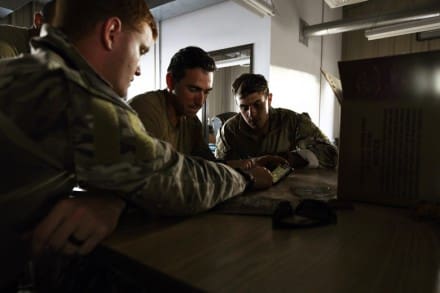
An organizational vision provides direction and unites a team by illustrating the future of that team. For the “Mighty” 18th Weather Squadron our new vision is, “Integrating Environmental Supremacy to Win Our Nation’s Wars.” To accomplish that vision, guided by Squadron Commander Lt. Col. James C. Caldwell, the men and women of the 18th WS, who have been fighting in the War on Terror for nearly two decades, now look to the future.

Stationed all along the eastern seaboard of the United States in nine geographically separated units, the Total Force Airmen of the Mighty 1-8 support the conventional Army units of the XVIII Airborne Corps and subordinate divisions, both in-garrison and across the globe. Headquartered at Pope Army Airfield, North Carolina, the 18th WS produces some of the world’s most elite Army Weather Support forecasters, also known as Staff Weather Officers.

While a vision provides the team’s direction, a mission statement provides the “how.” The 18th WS mission statement is to “Train and Equip Courageous, Credible, and Combat-Ready Army Weather Support Airmen.” The most critical component of that mission statement is training. Before 18th WS SWOs are ready for deployment, they must attend a number of different formal training courses, such as the Army Weather Support Course and Evasion and Conduct After Capture. Additionally, SWOs must also complete Airfield Qualification Training and M4 Carbine and M9 Pistol qualification, and provide weather support in both Army and Air Force training and certification exercises.

Some of the more robust exercises in which SWOs participate are at the Joint Readiness Training Center in Louisiana and the National Training Center in California, but SWOs also support live-fire exercises and aircraft gunnery exercises. These exercises prepare the Army, and our embedded SWOs, for current and future warfare. In addition, each geographically separated unit conducts local exercises with supported Army units, including Unmanned Aerial System weather support, but the training does not stop there.

At the 18th WS, SWOs may also have the opportunity to become a paratrooper by attending the Army Basic Airborne Course, or train on aircraft orientation, sling-load operations, and rappelling and fast-rope techniques at Air Assault School. If motivated enough, a SWO may also earn the Pathfinder badge by learning dismounted navigation, and establishing and operating helicopter landing zones and parachute drop zones. To fully embed with our Army units, SWOs require these extra skills when the call comes for accurate environmental predictions.

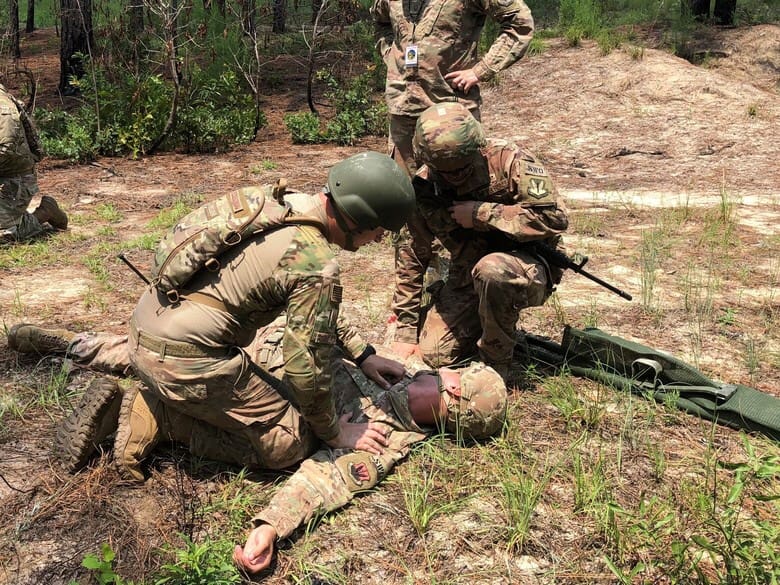
As a capstone to their training, SWOs must complete an annual, unilateral combat mission readiness evaluation called the Expeditionary Field Evaluation Exercise (EFEX). During the EFEX, SWOs are evaluated on all AWS training items, including land navigation, tactical visibility charts, field condition manual observations, convoy procedures, evaluating and transporting a casualty, Tactical Meteorological Observing System operations, AWS mission weather briefs, and many other tasks. Upon successful completion of the EFEX, SWOs are then certified to execute the mission downrange.

While the basis of effective weather support is accurate, timely and relevant weather products, SWOs go far beyond this. SWOs must tailor products to best support command and control, identifying potential environmental impacts to friendly and enemy forces, while providing means to mitigate or exploit conditions to the advantage of friendly forces or disadvantage of enemy forces. Being able to equip decision-makers with decision-grade intelligence to accomplish mission objectives is what truly separates a SWO from a weather forecaster.

Despite the grinding deployment schedule over the last 20 years, our mission is now changing. The Airmen and families of the Mighty 1-8, guided by the renewed vision and mission statements mentioned above, must accept the current state of global affairs. No longer do we have to solely prepare for counterinsurgency operations, rather, following in the footsteps of the Army, we’re bending our focus each day more towards the high-end fight. State-on-state warfare, as outlined in the National Defense Strategy and the Air Force Weather Functional Concept of Operations, requires a deeper look at our ability to shoot, move and communicate on the battlefield.

Our culture is shifting away from traditional thinking to answer non-traditional requirements that encompass the entire scope of the environment, from the bottom of the ocean to the reaches of space. There’s no doubt that the victor in the next big war will require every advantage, especially those found in Mother Nature. We take this obligation seriously and know full well that the Mighty 1-8 is required for victory. We must be ready! – “All The Way!”

By SMSgt Patrick Brennan and Miguel Rosado, 18th Weather Squadron, 93d Air Ground Operations Wing Public Affairs

SCUBAPRO Sunday – Landing on Mainland Japan

Sunday, September 1st, 2019

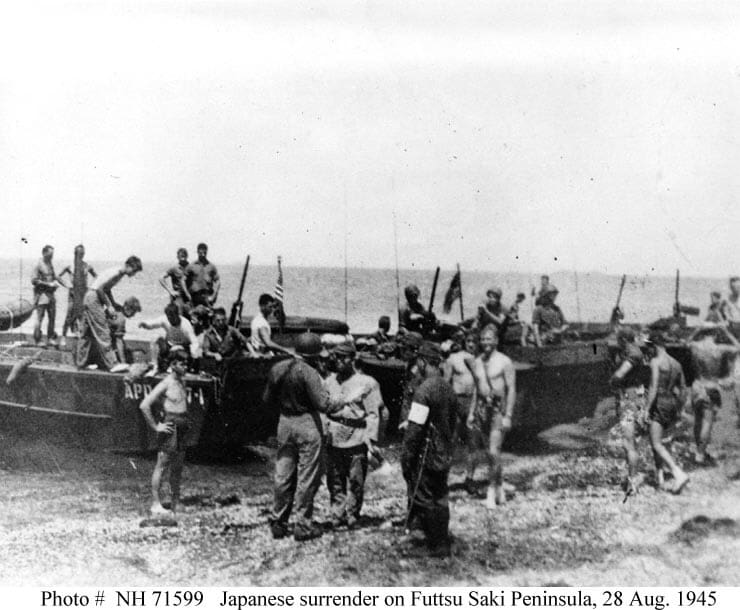
Amphibious Landings Tokyo Bay, 28 August – 2 September 1945


 On 20 August 1945 UDT 21 ( now SEAL Team Four) embarked onto the USS Begor from Guam. They were going to be part of the occupation force heading for Japan. On 28 Aug 1945 UDT 21 became the first U.S military unit to set foot on Japanese home soil. They were going to recon the landing beaches and ensure that that all fortifications were neutralized. When they landed, LCDR Edward P. Clayton, (back to camera) Commanding Officer UDT 21, was presented with the first sword surrendered to an American force on mainland Japanese. It was given to him by an Army Coastal Artillery Major (opposite Clayton), at Futtsu-Misaki Point, across from Yokosuka Naval Base. When word got back to macarthur that LCDR Clayton, had received what could be considered the official surrender of all troop on mainland Japan, he ordered that the sword is giving back, so the general could expect it. ( yes I am not a fan of the general)


The next day UDT 21 landed at Yokosuka Naval Base. They cleared the docks for the first U.S. warship to dock in Japan. The team remained in Tokyo Bay until 8 Sept.  Then it was tasked with locating the remaining Kamikaze, two-person submarines. With the end of the war, the navy draw-down from about 31 UDT teams to just two, one on each coast: UDT Baker and UDT Easy.

FirstSpear Friday Focus – All American Performance Briefs

Friday, August 30th, 2019

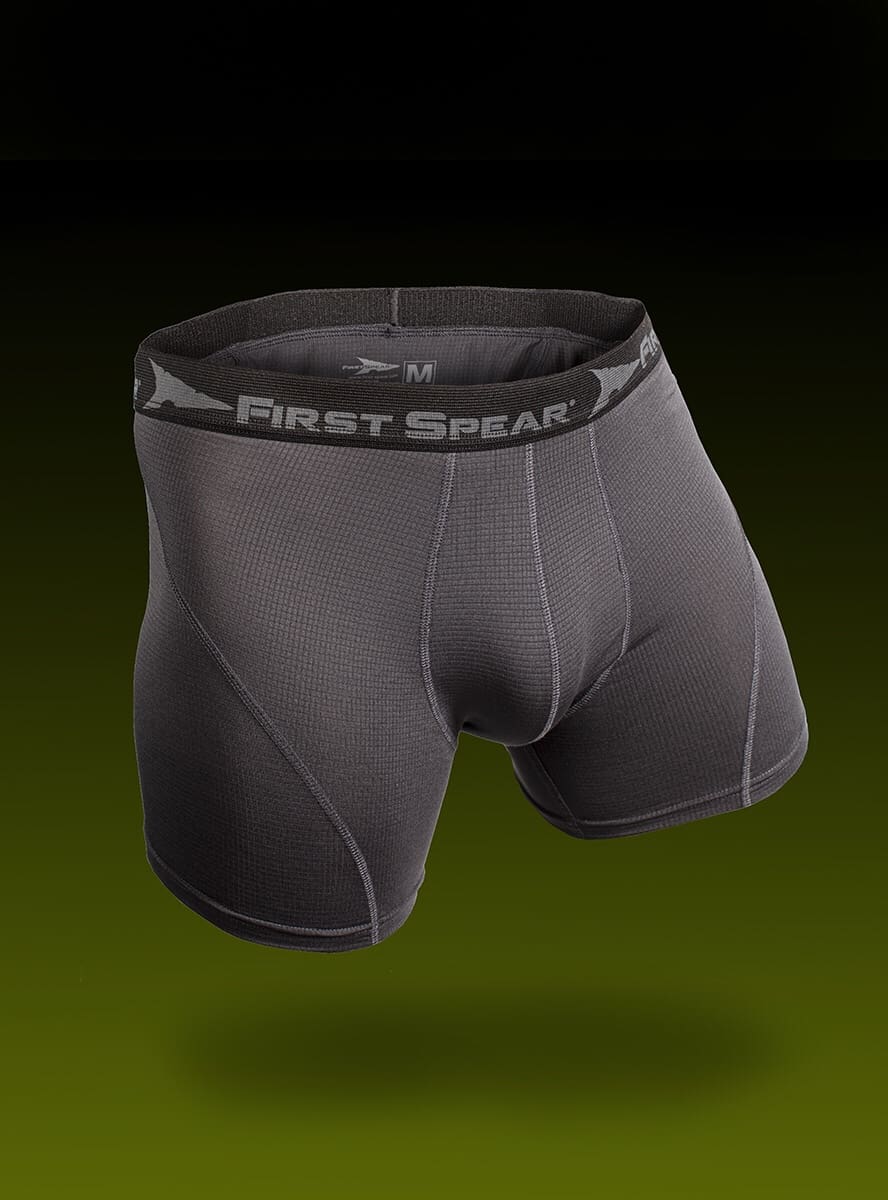
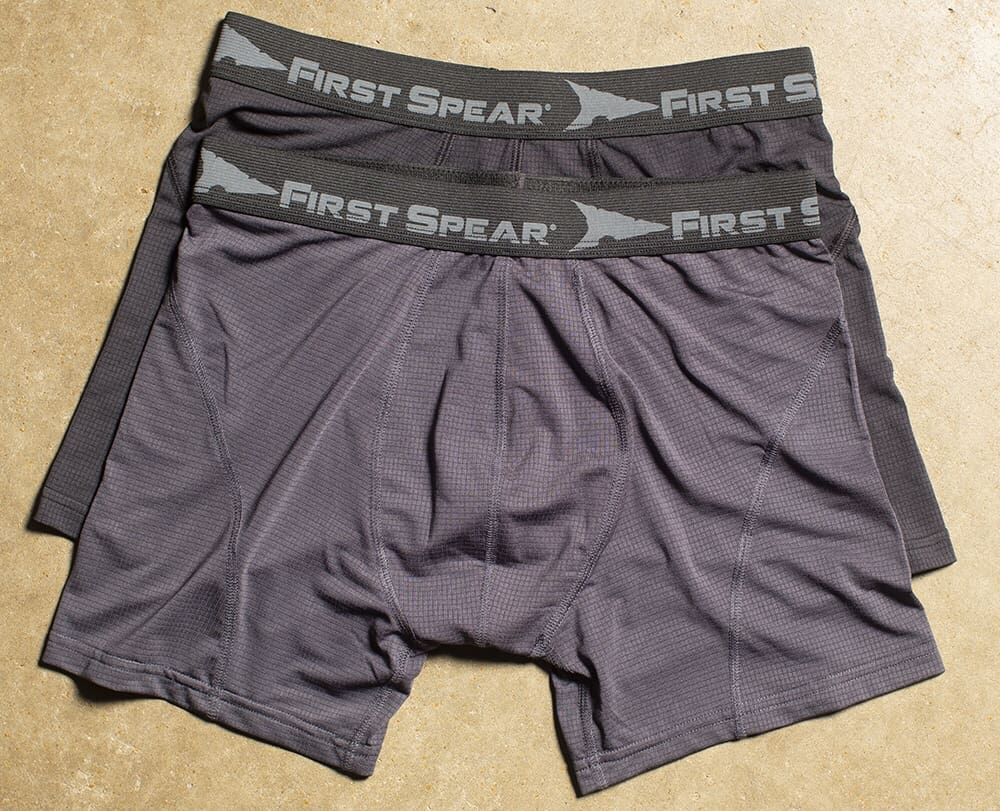
Today we are getting the first look at FirstSpear’s All American Performance Briefs. I’ve been wearing them for a few weeks and I love them. They are super comfortable.

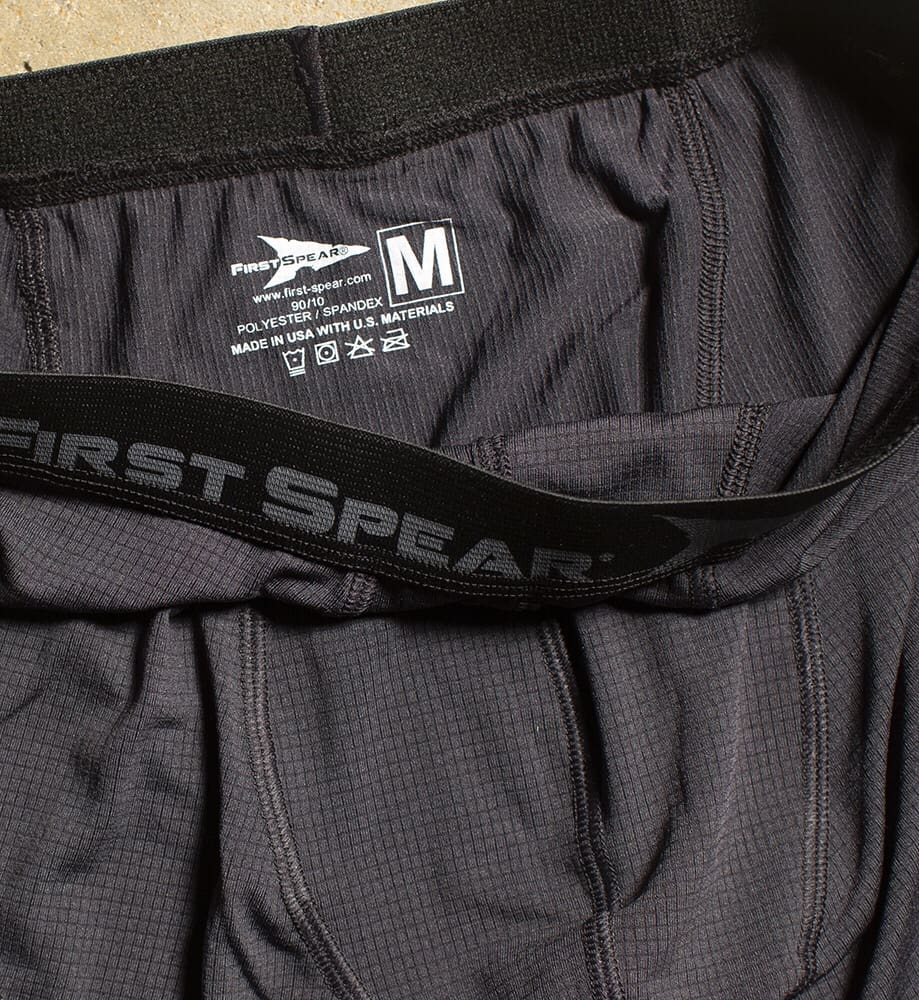
They are Berry Compliant, 100% American made with American materials. Modern features including anti-roll comfort waist band, flat seam technology, and a flex grid polyester/ spandex blend for maximum comfort. Four-way stretch design with no stink quick drying properties with extra room built into the front panel for enhanced support.

Sold as a two-pack in graphite and black. Available exclusively in the FS Web Store. Now Shipping.

www.first-spear.com/technical-apparel/t-shirts/performance-briefs

Army Overhauls Small Arms Training with Tougher Standards, Combat-Like Rigor

Tuesday, August 27th, 2019

This is the official story on the Army’s new TC 3-20.40, Training and Qualification-Individual Weapons.

FORT BENNING, Ga. — The U.S. Army has drawn up a sweeping overhaul of how it will train Soldiers in using small arms — rifles, pistols and automatic rifles — a revamp that adds tougher standards and combat-like rigor to training and testing marksmanship.
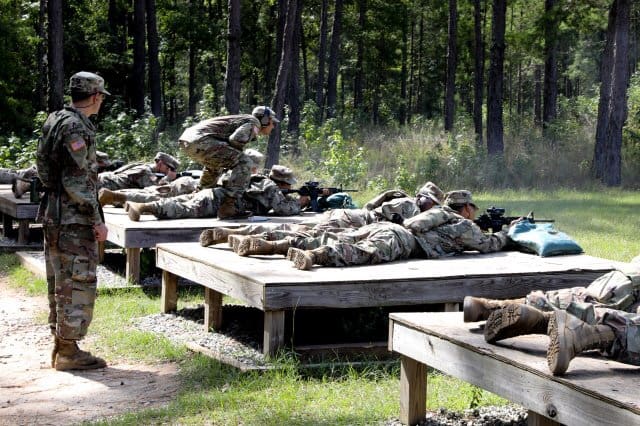
The combat-oriented revamp replaces a training system that dates to the Cold War era. It’s geared to ensuring that every Soldier — whether in a combat job or not — is trained from the start to not only hit targets but to have the other basic “tactical” weapon skills needed for combat, according to interviews with officials of the U.S. Army Infantry School at Fort Benning, Georgia.

Those skills include Soldiers’ ability to load, reload and otherwise handle their weapons just as they’d have to in the blur and stress of combat.

The overhaul is spelled out in a new marksmanship manual titled “TC 3-20.40, Training and Qualification-Individual Weapons.”

Referred to informally as the “Dot-40,” it runs to more than 800 pages and contains four chapters and nine appendixes.

“It’s exactly what we would do in a combat environment, and I think it’s just going to build a much better shooter,” said Command Sgt. Maj. Robert K. Fortenberry, who currently oversees the Infantry School’s marksmanship revamp project and is the Infantry School’s senior enlisted leader.

The Infantry School is part of Fort Benning’s U.S. Army Maneuver Center of Excellence, or MCoE.

The Dot-40 applies to the entire Army — the active duty force, including cadets at the U.S. Military Academy at West Point, as well as the Army Reserve and National Guard.

It covers four categories of what the Army considers “individual” weapons: the rifle and carbine; pistol; the automatic rifle; and sniper rifles.

It’s meant as a standardized, one-stop-shop for all Army units to follow in training their troops in individual weapons marksmanship.

And it applies to all Soldiers regardless of whether they’re in combat jobs — Infantry and Armor, for example, or not — a cook, a finance or supply clerk, X-ray technician or a musician in an Army band.

It was developed at Fort Benning over a two-year span by staff of the MCoE’s Directorate of Training and Doctrine, and by the Infantry School, as well as nearly 200 marksmanship experts drawn from across the Army, including the Reserve and National Guard, officials said.

All units regardless of type will be held to the same tougher basic standards. All will have to train their Soldiers in the same skills, and ensure they schedule the same amount, type and frequency of marksmanship training mandated by the Dot-40.

“It was just time for a re-blue,” said Fortenberry, using a term that refers to the re-bluing of firearms. “It’s not to say that what we were doing in the past was wrong. We killed a lot of bad guys in Iraq and Afghanistan and all over the world with our current level of marksmanship training. So it’s not that the old way of firing didn’t teach you how to shoot.

“There was an opportunity to create a fundamental change in regards to marksmanship that more closely aligns with what was done and learned over the past 19 years of combat, making it to where it fits the entire Army as a collective, and makes a more proficient marksman.”

To help foster proper understanding of the Dot-40 and to offer help to units in putting its requirements into action, members of the Infantry School’s Marksmanship Team have begun traveling widely to Army posts and explaining it to key audiences. Those include, among others, senior leaders who head divisions and brigades, as well as Soldiers at what are known as Leadership Professional Development sessions.

In creating the new approach the Army wants to bring all Soldiers to a “baseline” set of marksmanship skills that go beyond what it takes to get a passing score during a “qualification,” a term for a graded shooting test at a firing range.

The ability to hit their intended targets, though crucial, is only one part of the overall marksmanship skill set every Soldier should be equipped with, Infantry School officials said. Marksmanship training should also train Soldiers on the other tasks they’d face in using their weapon in combat, they said.

The Dot-40 mandates a series of drills and tests that check whether Soldiers can rapidly load and reload as they’d have to under fire, work the bolt of their weapon, switch firing positions quickly — standing, kneeling, lying prone, firing from behind a barrier — while at the same time exercising “critical thinking” — making battlefield snap judgments as to which targets to shoot at in which order — and hitting them. All are elemental to being deemed actually proficient in Soldier marksmanship, officials said.

And it adds other new requirements: that Soldiers fire their weapons effectively in night combat scenarios and in conditions that simulate chemical attack.

Marksmanship training in which Soldiers fire from the standing position or while steadying their weapon against a barricade is not new. But under the new methods both will become part of the official, graded marksmanship test each Soldier must pass to be declared “qualified” on use of their weapon.

“You’re employing your weapon system in a more tactical environment or scenario, versus the more traditional way of doing it,” said Fortenberry. “And by doing so, it creates additional rigor, using all of the elements of critical thinking, sound judgment, adapting to change, all of those non-tangible attributes.

“So for the individual, it’s a clear progression, to make them way more capable with their weapon system and all of the nuances that are part of marksmanship,” he said.

“You will work your transitions, from a standing against the barrier, you’ll work the kneeling to the prone, the prone to the kneeling,” he said. “Coaches will be assessing you based upon your transition periods, how well you do it. You’re forced now to pull from your kit and insert magazines.

“Before, commanders, leaders, didn’t have to necessarily focus on that,” said Fortenberry. “It now forces everybody to practice on it.”

Under the old method of marksmanship testing, Soldiers at the firing range would have magazines of ammunition neatly stacked in front of them, and would have to fire in a set progression that tested their aim but not the other weapon-related skills they’d need in a firefight, officials said.

Soldiers being tested during the “course of fire” will be called upon to fire at multiple targets and will have to aim true and think fast. And they’ll have to pull magazines from their combat gear — again, as in combat — rather than reaching to a conveniently placed stack.

“Four targets at a time will present themselves in this new course of fire,” said Fortenberry. “There is a quad series that comes up. How do I engage that? No longer is it stacks of 20 magazines here, stacks of 20 over here. Now you have tens.

“The magazines, now, cannot be pre-staged,” he said. “They have to be in your kit. So you have to pull from your kit, versus stack two over here, two over here, everything looks perfect.

“You now have to shoot from a barrier, from a concealed position. You transition from the prone to the kneeling and the kneeling to the prone. The clock doesn’t stop. So, you have to know — Boom! Got that exposure. Okay. I should be transitioning to the kneeling position now. Transition. There it is! — Boom! And then you’re engaging as you go.”

Also before the Dot-40, Soldiers were allowed to call for a time-out — an “alibi” in Army parlance — if their weapon were not working properly during the marksmanship test.

The Dot-40 changes that, too.

“Alibis are gone,” said Fortenberry. “‘Hey, Sarge! Got an alibi on lane three! Weapons malfunction!’ There’s no alibis anymore. You have to fix the malfunction,” just as a Soldier would have to in combat, he said.

If, however, a time-out were warranted, he said, leaders would be authorized to permit it but on a case-by-case basis.

Also mandated in the Dot-40 is use of indoor, electronic firing ranges as one of the methods to be used in teaching Soldiers to shoot. The electronic ranges, often called simulators in the Army, make marksmanship training more efficient and cheaper than relying solely on outdoor ranges.

The simulators are equipped with a set of stations from which Soldiers fire their weapons at electronic screens that display targets. The electronic equipment captures precisely where each shot landed. And it shows details of how the Soldier held the weapon when firing. Such details greatly aid instructors in assessing whether the Soldiers are holding their weapons properly and in coaching them toward becoming good shots.

Use of simulators for individual weapons training is also not new. But before the Dot-40 it was left to units’ discretion as to whether they’d use them. The Dot-40 requires their use.

All units regardless of type will be held to the same new, tougher basic standards. All will have to train the same skills, and ensure they schedule the same amount, type and frequency of marksmanship training mandated by the Dot-40.

But besides being a means of new, higher standards that lead to greater weapons proficiency at the shooter level, the Dot-40 is also meant to help all units Army-wide know through a single manual exactly what’s required of them.

Officials were concerned that the Army’s small arms methods had long been spread among numerous manuals in a way that could work against a unit being able to conveniently pin down all they had to do to meet the Army’s requirements consistently.

The Dot-40 codifies the new methods in a single, handy source for individual weapons, officials said.

“The Dot-40 was designed simply because we had multiple manuals and multiple best practices,” said Fortenberry. “And we were just grabbing whatever was on the shelf. We had nothing that spoke to individual marksmanship other than a very broad series of best practices, manuals. It hadn’t been evolved over time.

“What the Dot-40’s done is it’s now given everybody common ground, common understanding of marksmanship and how to effectively employ their weapon system,” Fortenberry said.

“Now,” he said, “they can grab the Dot-40 and say, ‘We need to get after individual marksmanship. What’s our way ahead?’ ‘Well, sir, based upon the Dot-40, we can lay this progression out.’ It gives them a template to design a training week or eight-week training model” to follow.

“We’re calling it ‘new’ but it’s truly not new,” said Fortenberry. “It’s a revamp definitely, an overhaul, of what we were already all doing. We now have synchronized it all and we have now built it all into a one-stop-shop.

“We are trying to give the Army something better than it had before, incorporate all these components that give a good, baseline-level of proficiency that is better than it was,” he said. “And it is achievable and attainable by every Soldier in the Army. Not just a qualification on the wall. They are proficient. They’re capable.”

The requirements outlined in the Dot-40 become part of the Army’s broader, overarching “Integrated Weapons Training Strategy,” which encompasses the Army’s training methods for all categories of its weapons.

The Army will give itself a year to have the new methods take effect, starting this October.

“Every commander and leader out there wants a Soldier to be trained and proficient in warrior tasks and drills, marksmanship being one of those — be able to place effective fires on the enemy,” said Fortenberry. “So the intent has never changed. This just grabs all the tools and gives them a blueprint to achieve that end state.”

Story by Franklin Fisher

Photo by Markeith Horace

Army Showcases New Ground-Based PNT, Electronic Warfare Tech

Tuesday, August 27th, 2019

ABERDEEN PROVING GROUND, Md. — The Army is advancing its ground-based precision navigation and timing, or PNT, technology to counter spoofing threats and improve operations in a multi-domain environment.

While GPS continues to be the “gold standard” for PNT capabilities, it can be disrupted from a number of frequency interferences such as weather, and man-made or natural terrain, said Col. Nick Kioutas, the PNT project manager.

Near-peer competitors have also demonstrated an ability to “spoof” current GPS technologies. Spoofing can generate position and timing inaccuracies on a battlefield, he said Friday at a media event hosted by Program Executive Office Intelligence, Electronic Warfare and Sensors, or PEO IEW&S.

The Army has taken a layered approach to ensure accurate position and timing data, he said. This approach includes the integration of non-radio frequency technologies on the battlefield, such as inertial-based navigation systems, chip-embedded atomic clocks, and Soldier-worn or vehicle-mounted odometers.

For example, industry officials are currently developing and testing a boot-sensor prototype that tracks a Soldier’s rate of movement, he said.

“It is like a pedometer,” Kioutas said. “If you knew you were walking at a certain pace and all of a sudden your system jumped a kilometer — you know you’re being spoofed.”

The Army also looks to secure access to alternative sources of PNT data through other GPS networks. Program officials have also considered the use of anti-jam antennas on vehicles to ensure access to GPS and PNT signals, Kioutas said.

“Our systems will integrate all these data sources to determine which one we can trust the most,” he said. “If our GPS is spoofed, we can look at our inertial navigation system [or other layered systems], and compare it to one of these alternative signals” to get accurate PNT data.

ELECTRONIC WARFARE

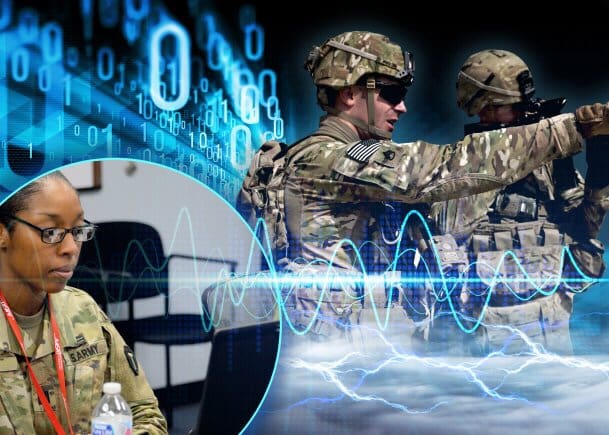
Along with improved PNT capabilities, PEO IEW&S is currently developing an Electronic Warfare Planning and Management Tool, or EWPMT, to manage and control electronic warfare assets in support of unified land operations.

Through the EWPMT, the Army can now visually synergize its EW attack, targeting, and surveillance capabilities to enable the maneuverability of forces. The tool also improves spectrum management operations and assists with the intelligence-gathering process.


Operators can streamline the process between the EWPMT and fires support, in addition to being able to configure their system to generate automated responses to a variety of signals or alerts, officials said.

Once a EWPMT system is triggered, the program will initiate its automated workflow, often distributing information throughout a tactical operations center. Depending on the engagement, operators can initiate a fire mission and provide tactical graphics for support.

“Operational units can now visualize the electromagnetic spectrum,” said Lt. Col. Jason Marshall, product manager for Electronic Warfare Integration.

“EWPMT is the commander’s primary tool to integrate multi-domain operations into their military decision-making process,” he added.

While still under development — EWPMT increment one, capability drop three — is leveraging user feedback to allow EWPMT to support the electronic warfare officer’s techniques, tactics, and procedures, Marshall said. A pool of electronic warfare Soldiers and electromagnetic spectrum managers, or 25Es, from across the Army are involved in the program.

Instead of waiting for EW to become an official part of the targeting process, program officials are trying to get ahead of the curve to fulfill a future requirement, said Capt. Daniel J. Nicolosi, EWPMT assistant product manager.

Currently, EW operators “have nothing,” added Chief Warrant Officer 2 Will Flanagan, senior electronic warfare targeting officer, who is assigned to the operations group at the National Training Center at Fort Irwin, California.

As an operator, Flanagan is highly involved in the EWPMT’s ongoing developmental process.

“With the EWPMT in front of me, I can show the commander where we’re at, and what we can do,” he said. “This will give us that spot on the TOC floor. This is the first tool to allow us to do our jobs.”

Future iterations of the EWPMT program, officials said, will focus on pacing the threat’s capabilities within a disconnected, intermittent, and latent environment. In turn, the program will help refine the Army’s ability to conduct cyberspace electromagnetic activities in support of multi-domain operations and enable the Army to fight and win on a complex battlefield.

VMAX

For the EWPMT to be effective, it relies on fielded communications sensors and other EW transmission devices.

The Versatile Radio Observation and Direction, or VROD, Modular Adaptive Transmission system, known as VMAX, have already been fielded to meet mission requirements.

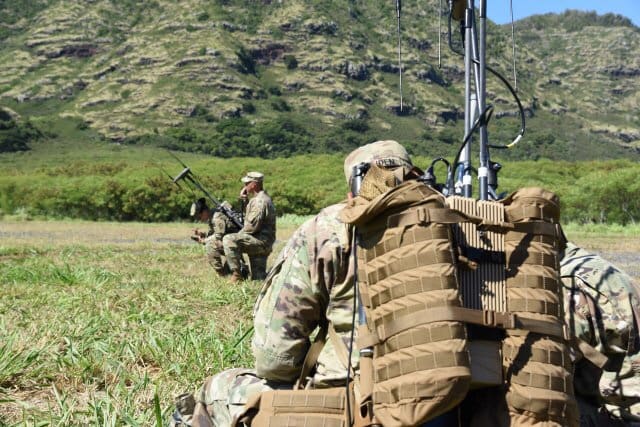
“VMAX is a lightweight man-portable electronics support and offensive electronic attack system. It is used to find, monitor, locate, and jam RF emitters in real time during tactical operations,” said Ken Gilliard, team lead of the Rapid System Applications Team, which falls under the Command, Control, Communications, Computers, Cyber, Intelligence, Surveillance, and Reconnaissance Center, or C5ISR.

“Its purpose is to create that advantage in the electromagnetic spectrum to provide Soldiers a window to maneuver on the battlefield,” he added.

When VMAX is operating in a support capability, operators can monitor the electromagnetic environment and determine what frequencies an adversary is operating on. Further, Soldiers can use multiple VMAX systems to geo-locate a signal, he said.

Similarly, if VMAX is supporting offensive EW capabilities, it can be used to jam or interfere with the signal within specific frequencies.

VMAX is a self-contained, battery-powered device, which weighs approximately 25-30 pounds, Gilliard said. Soldiers can tether VMAX to a vehicle, a building, or some air platforms. The device can be remotely operated and configured with a wide range of antennas to fulfill mission requirements.

The Army currently owns more than 200 VMAX nodes and 100 VROD nodes, he added. Majority of these devices are already deployed around the globe, many of them supporting operations in Europe and the Middle East.

Story by Devon L. Suits, Army News Service
Illustration by Justin Rakowski
Photo by 1st Lt. Jordan Linder

The 13th ASOS Conducts Combat Mission Training

Tuesday, August 27th, 2019

PETERSON AIR FORCE BASE, Colo. —

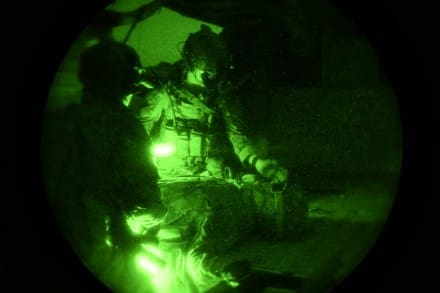
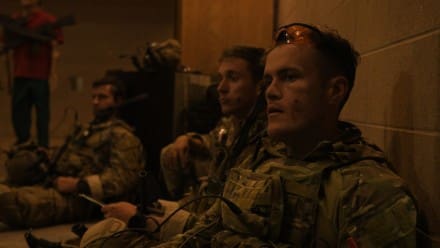
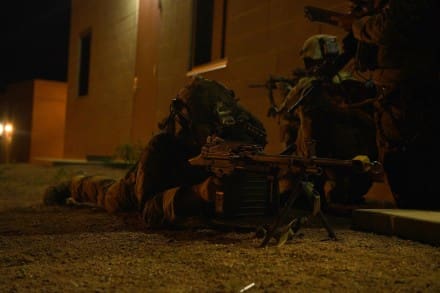
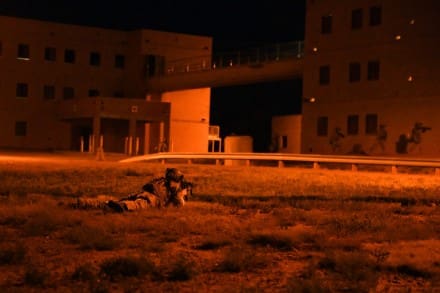
Ten Airmen from the 13th Air Support Operations Squadron went through a tactical air control party mission qualification training exercise July 15-18, 2019 on Fort Carson, Colorado.

The training is a way to gauge each Airman’s deployment readiness, test how the Airmen can perform as a team and is also one of the final steps of upgrade training for new Airmen. The training is for both newly assigned junior enlisted Airmen and officers.

0ABF6B10-3A80-4725-92C2-A491AB58D703

The group of Airmen went through multiple scenarios put together by more experienced TACPs and joint terminal attack controllers, to include clearing a building, securing a village, injured personnel rescue and handling a hostage situation.

PETERSON AIR FORCE BASE, Colo.

The exercise started Monday, July 15, and did not end until early Thursday morning, but for the students, preparations started the week prior.

“We tried to model it after real world operations,” said 2nd Lt. Stephen Stein, 13th ASOS TACP officer and chief of training. “So last week, before they started, the students received an operations order, which is something we would receive from the U.S. Army for an up and coming mission. After that, they started planning. So they had to start preparing the equipment, get the vehicles ready and then from there they had a timeline of when they would start the mission.”

During their exercise, the students were critiqued on their skillsets to make sure they would be ready in any contingency operation, ultimately deciding if they are deployable.

“I think this really showed us what we can expect in the future,” said 2nd Lt. Parker Gray, 13th ASOS TACP officer and exercise team lead. “ We were completing objectives and missions with criteria all throughout the week, all with minimal sleep, and I think that really showed us how we may react in the future, when we are in that kind of environment.”

Although the exercise was only for ten Airmen, approximately 30 TACPs and JTACs were involved with organizing the training exercise, participating as instructors, playing the role of an opposing force or helping set things up.

After the exercise, both Gray and Stein said they took away a lot from these events.

Stein, having done his training about 12 years prior as an enlisted TACP, said he was impressed with the effort the squadron put into it, and believed this set the new standard for MQT.

“The amount of hard work that was put into this by the instructors to set it up and make sure the scenarios were realistic and made sense, was phenomenal,” said Stein.

PETERSON AIR FORCE BASE, Colo.

Gray, as the student, said he took away lessons of leadership and how to work with his teammates.

“I think the biggest lesson as a team lead was I started out the week making decisions fast just trying to get everything done, but later on in the week I started involving the team a little bit more in the decision making process,” said Gray. “When we had a question, we took a few more minutes to get the team together, and we came up with better decisions. We really came together as a team, worked together as a team and were able to help each other out.”

By A1C Andrew Bertain, 21st Space Wing Public Affairs

Max Talk 35: Advanced Patrolling 3: Multiple Enemy Firing Points – Break Contact

Monday, August 26th, 2019

This is the thirty fifth installment of ‘Max Talk Monday’ which shares select episodes from a series of instructional videos. Max Velocity Tactical (MVT) has established a reputation on the leading edge of tactical live fire and force on force training. MVT is dedicated to developing and training tactical excellence at the individual and team level.

A return to the sand table for this video, the third in the Satellite Patrolling series, examining advanced patrolling tactics. This time, examining and running a sand table scenario for multiple enemy firing points (ambush), resulting in the need for the patrol to break contact. Utilizing a sand table model with figurines, as a method of introduction to explain these advanced patrolling techniques.

More of these instructional videos can be found by subscribing to the Max Velocity Tactical YouTube Channel. Detailed explanations can be found in the MVT Tactical Manual: Small Unit Tactics.

Max is a tactical trainer and author, a professional soldier with extensive experience in British elite forces and as a paramilitary contractor. Max was enlisted and later commissioned, via the Royal Military Academy Sandhurst, into the Parachute Regiment. The Parachute Regiment is an elite airborne infantry unit, comparable to the U.S. 75th Ranger Regiment, accessible only via the renowned ‘Pegasus Company’ Selection course. Max served in 1 and 2 PARA. Of the three PARA battalions, 2 and 3 PARA serve in 16 Air Assault Brigade as the UK’s elite Rapid Response Force, with one battalion at permanent high readiness for worldwide intervention operations. Max served in Para Reg when it was utilized to provide elite airborne infantry support to UKSF, as the forefathers of the SFSG. With training and operations validating the concept, including Op Barras (Sierra Leone), 1 PARA was placed permanently in role as part of the SFSG.

Additionally, Max served on a number of deployments, to include multiple tours in Northern Ireland, the Balkans and Afghanistan. Additional overseas assignments saw the opportunity to train, or train with, allied nations, including the U.S. Military. Roles which Max filled included rifle platoon commander, patrol leader, recruit instructor (platoon commander) at the PARA Training Depot, anti-armor platoon commander (fire support company), operations officer and command on deployments. Reaching a career point facing staff college and moving away from command of paratroopers, Max made the decision to resign from the service. After leaving the British Army, Max spent a further five years working operationally as a paramilitary contractor in both Iraq and Afghanistan; the latter two years based in Helmand Province working alongside the UK Military.

Since 2013, Max has run Max Velocity Tactical (MVT), a training company conceived to offer professional combat training for responsible citizens. As the Velocity Training Center (VTC) has grown into a state of the art training venue, MVT also took on pre-deployment training for U.S. SOF. This runs the spectrum from facility rental to tailored training packages specializing in Small Unit Tactics.

Website: Max Velocity Tactical

YouTube: Max Velocity Tactical

SCUBAPRO Sunday – History of Wetsuits

Sunday, August 25th, 2019

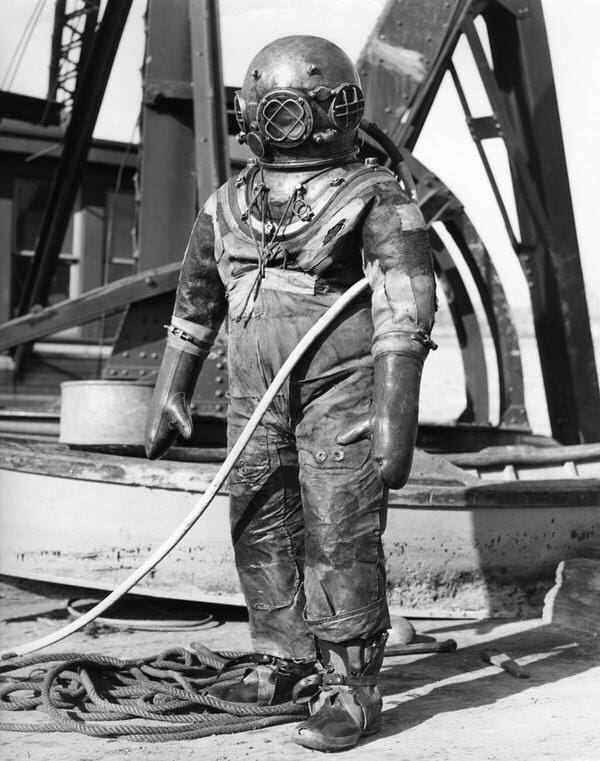
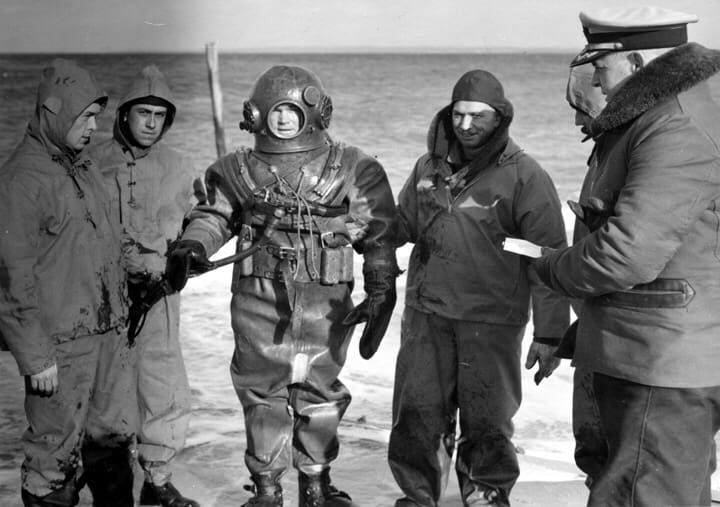
 Wetsuits go back to the commercial fishing and salvage industries of the 1910s. Before wetsuits divers used grease to help keep them warm (tuff bastards) The development of the wetsuit started as military research in the early 20th century. The first underwater suit was the Mark V suit (I know there were other types thru the ages) It allowed divers to go deeper into the ocean than ever before. It was developed for the U.S. Navy, primarily for use in deep-sea and salvage operations. Early versions of the wetsuit proved to be useful insulation garments, but with the discovery of neoprene, resulting from research throughout the Second World War, there was a big leap forward and the real turning point for the wetsuit as we know them. After World War Two, sport diving became more popular in the United States.  The popularity of movies like the “Frogmen,” (I have heard a lot of Vietnam Frogman joined after seeing the Frogman) the Cousteau book and film adaptation of “The Silent World” and the magazine “Skin Diver.”

The modern wetsuit dates back to 1951 – 1952. Hugh Bradner is mostly credited in invented it, (credited as the inventor of the contemporary wetsuit depending on who you ask) a physicist associated with the University of California, Berkeley looking to improve on the equipment used by the U.S. Navy. Early wetsuits sandwiched the relatively thin neoprene between layers of spandex or nylon. The earliest versions of the wetsuit worked by trapping a small amount of water between the body and the suit. The water is heated by the body’s temperature and acted as insulation. These modern wetsuits also had improved stitching and seams that kept the outfit watertight and prevented the outside water from entering the suit and cooling the diver. When Bradner first showed the Navy, they were not that happy with it. The Navy was concerned that the gas inherent in neoprene would make divers more visible on sonar.

This program was taken over Jack O’Neill in 1959; he started producing early neoprene wetsuits in his Santa Cruz garage. His company, called O’Neill began selling these suits in 1959 with the motto, “It’s always summer on the inside.” Around the same time, Bob Meistrell started producing a similarly-designed wetsuit under the company name Body Glove.

Bob & Bill Meistrell and Jack O’Neill (better known as the founders of Body Glove & O’Neill) have also staked their claims as inventors of the modern wetsuit.


The first neoprene suits were not easy to put on and could be easily torn by pulling and stretching. This led to the practice of divers sprinkling talc on their bodies before donning their wetsuit. After a few years, wetsuits began being lined with nylon so they could be put on easier. Many different techniques were employed over the evolution of the wetsuit design some of these were seam taping, seam gluing, and eventually blind stitching. Seam taping provided relief for some problems; this technique involved melting tape into the nylon which sealed the seam and prevented water from entering the suit. Seam gluing was another technique where they fixed the slabs of neoprene together, which resulted in a smooth, flat surface; however, the neoprene and the glue was often not a strong enough mix and easily tore. The eventual outcome was blind stitching, and this is the technique used predominantly in all wetsuit types and designs. The blind stitching technique is where a curved needle that is used for blind stitch sewing is designed not to go all the way through the neoprene but just under the surface of the material and comes back up on the same side. Using this technique, the neoprene is sewn together without having to puncture a hole through the entire piece of neoprene. As a result of this, no holes in the neoprene means no water flushing out the suit. Due to the nature of blind stitching, it creates a flat seam which increases the comfort of the wetsuit.

Body Glove designed the very first non-zip wetsuit, (there are two different years that I have found 1970 and 1989) But there are a lot more options today. There are several closure options to choose from (front, back & cross zip).  Spandex, for flexibility and titanium and other thermoplastic materials, for insulation, have been introduced to the fabric for improved performance. Eventually, they became lined with nylon, which decreased the sticky texture of the neoprene; however, nylon decreased the flexibility of the wetsuit. It was not until the 1970’s that double-backed neoprene was being sewed together; it was simple but not very effective. The result of punching holes through the double layers of neoprene opened the inside of the wetsuit to the environment. This resulted in lots of flushing through the seams, so the result of this was new techniques in seam binding.

Even today’s wetsuits are mostly made from foamed neoprene and are worn by just about every person that is in the water for extended periods from surfers, spearfishes, divers, windsurfers, and a wide range of other sports. Wetsuits are also used to help prevent abrasion and provide thermal insulation as well as assisting in buoyancy.