TYR Tactical

Archive for the ‘Guest Post’ Category

PEO Soldier Supports Big Red One Leader Professional Development

Monday, December 23rd, 2019

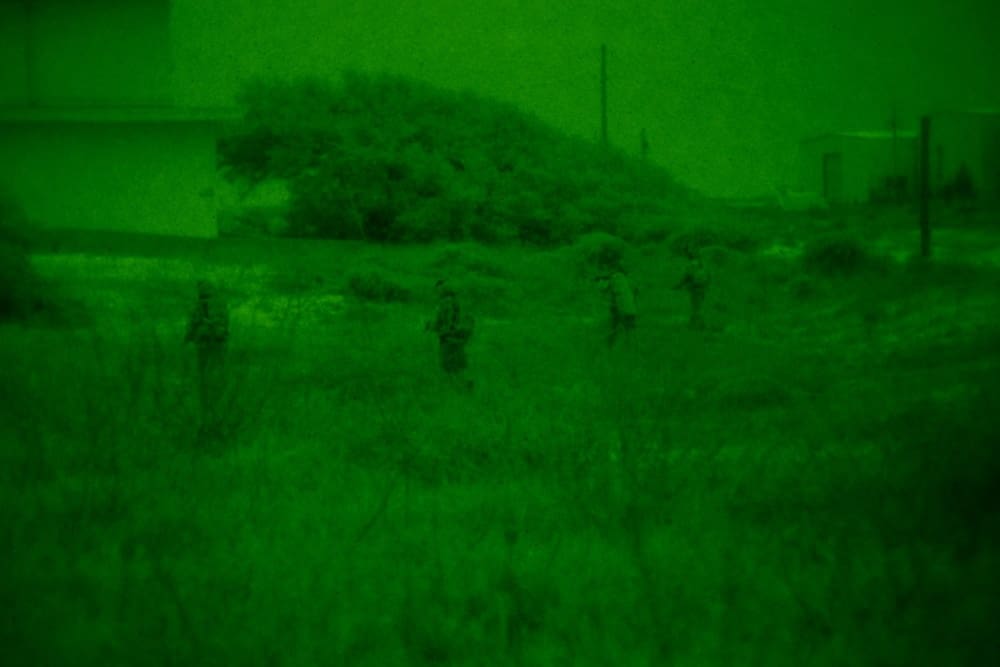
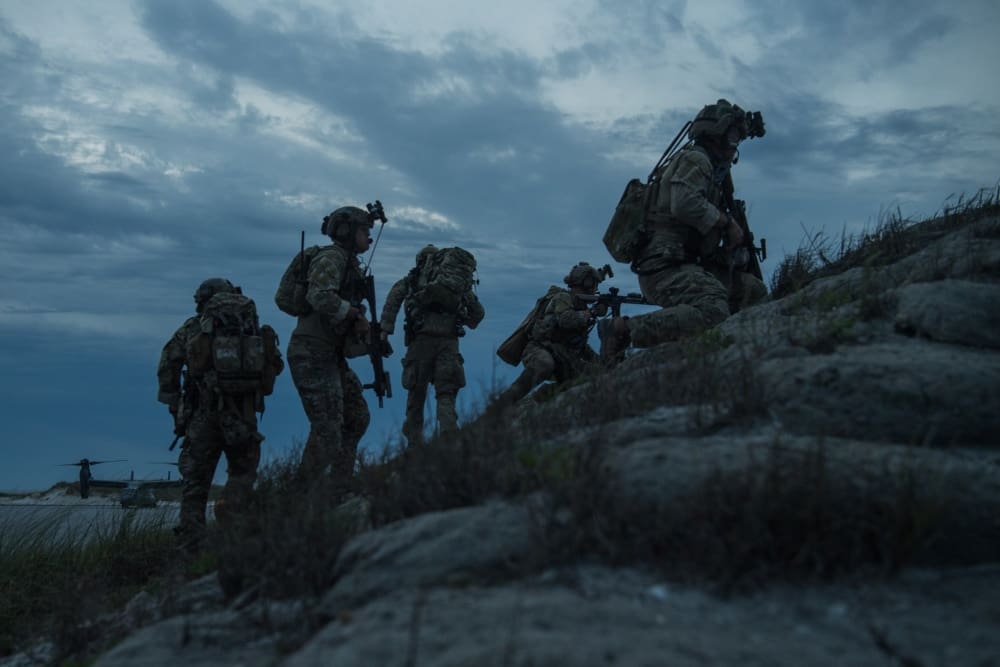
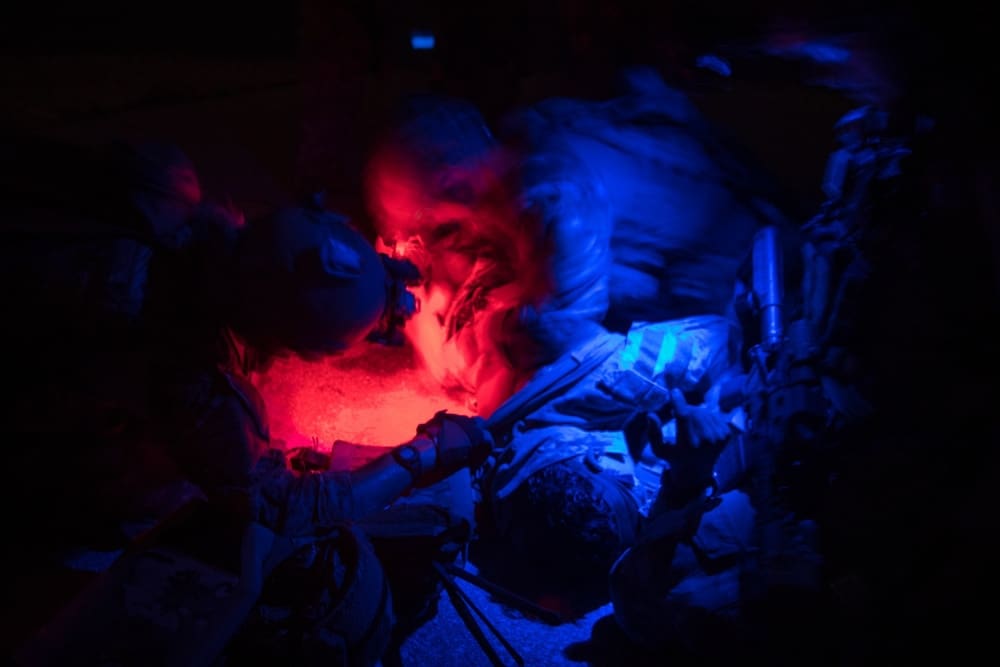
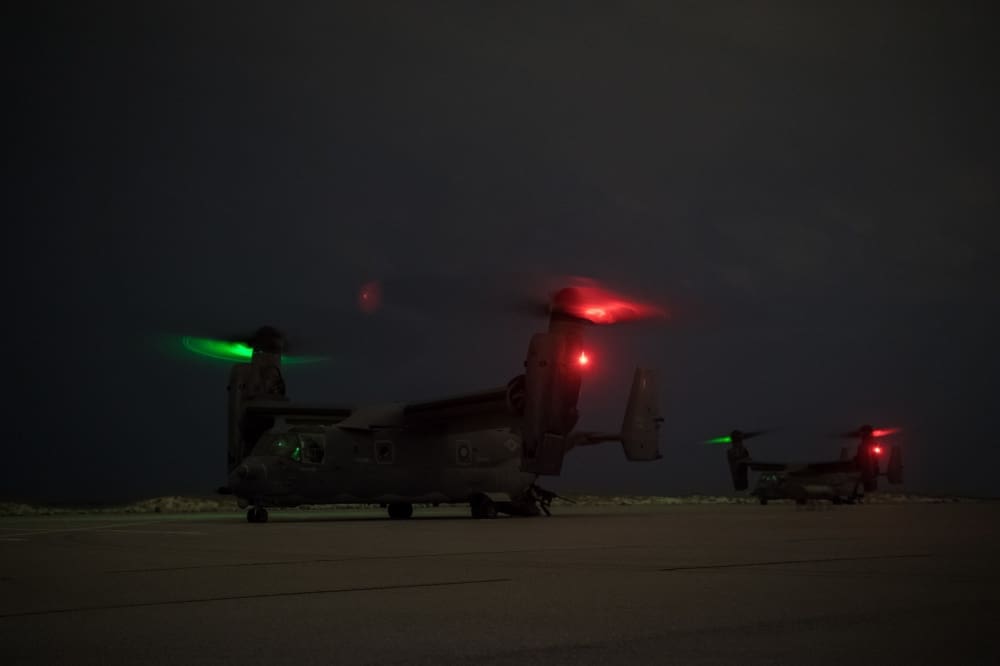
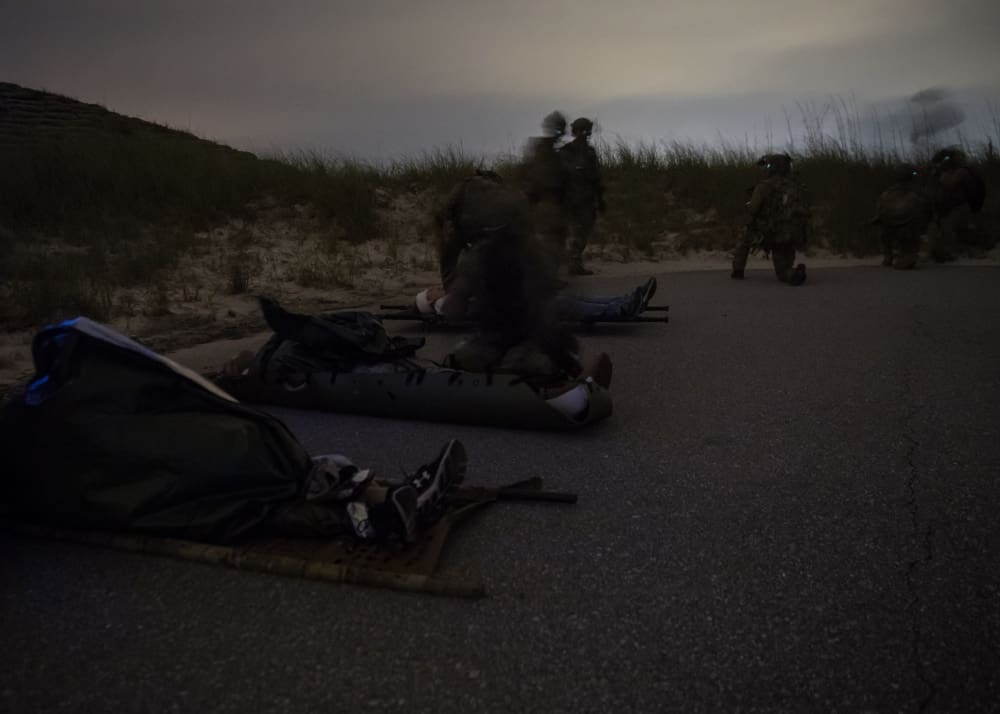
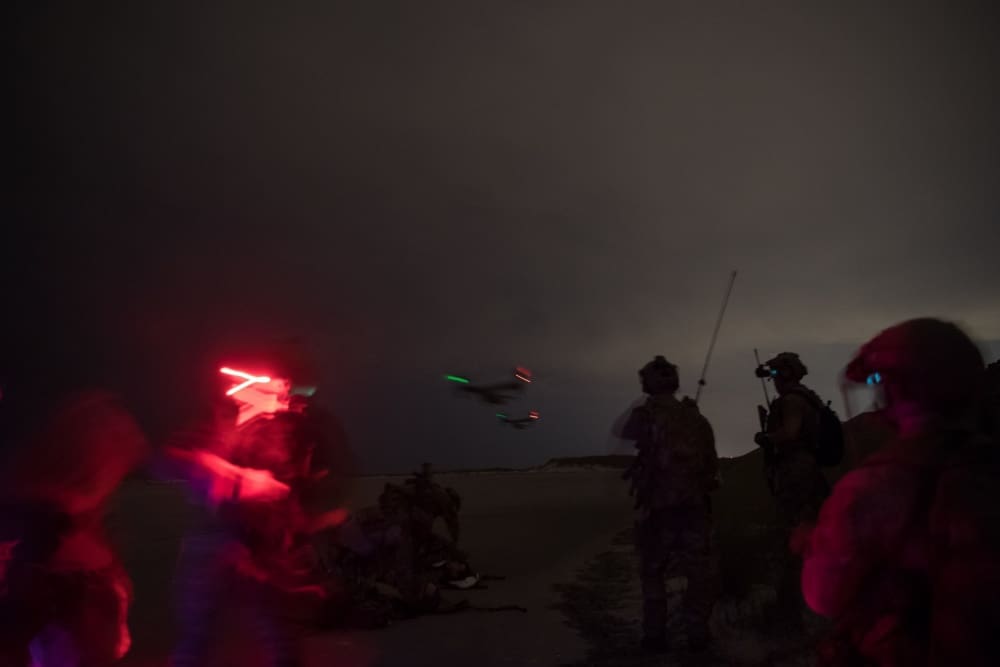
FORT BELVOIR— Members of Program Executive Officer Soldier (PEO Soldier) and Soldier Lethality Cross Functional Team (SL CFT) supported a 1st Infantry Division Leadership Professional Development (LPD) session at Fort Riley, Kan. on Dec. 11, 2019.

The LPD offered a rare opportunity for senior leaders to receive a hands-on capability set brief on the U.S. Army’s most advanced night vision goggle, the Enhanced Night Vision Goggle-Binocular (ENVG-B), Family of Weapon Site-Individual (FWS-I), Nett Warrior, and Next Generation Improved Head Protection System, as well as an overview of PEO Soldier.

The ENVG-B provides the U.S. Army’s close combat forces with the capability to observe and maneuver in all weather conditions, through obscurants, during limited visibility, and under all lighting conditions. This system signifies an evolution in technology that stems from innovative and collaborative efforts between PEO Soldier, Soldier Lethality Cross Functional Team (SL-CFT), and Army Futures Command (AFC).

Additionally, it successfully demonstrates the rapid prototyping process to meet the Army’s modernization priorities and is the first program to deliver an AFC capability set.

“We received a lot of interest during the initial fielding of the ENVG-B in September,” said Maj. John Nikiforakis, Assistant Program Manager, ENVG-B, PEO Soldier, “1st Infantry Division leadership requested that we return and provide a capabilities demonstration to senior leaders from across the division.”

Following the brief, leaders were able to engage in a hands-on demonstration of the ENVG-B and FWS-I. Each leader was given a 30-round magazine and an ENVG-B and FWS-I equipped rifle to become familiarized with the capability set.

They were able to execute Rapid Target Acquisition (RTA) through the synergistic capability derived from ENVG-B and FWS-I via the Intra-Soldier Wireless (ISW) connection to quickly acquire and engage thermal targets.

ISW is a short-range encrypted wireless technology that enables wireless interoperability amongst devices worn by a Soldier. Employed with the ENVG-B and FWS-I, it enables the two devices to interface with each other in order to obtain RTA.

Events like this LPD session with the 1st Infantry Division are an important element of capability set fielding as they provide leaders a firsthand look at the equipment and capabilities that their Soldiers use to plan and execute their missions.

“This is instrumental to capability set fielding because it provides a very different experience than reading or receiving a brief on the ENVG-B and RTA,” said Nikiforakis, “They actually get to handle the equipment and experience RTA by firing rounds downrange.”

Fielded to them earlier this year, 1st Infantry Division Soldiers will be taking this capability set with them on an upcoming deployment to Korea in 2020.

Sgt. Adam Rieger of B Co., 1st Battalion, 18th Infantry Regiment, 2nd Brigade Combat Team, 1st Infantry Division, deploying to Korea, described the many advantages of the ENVG-B compared to legacy night vision systems.

“The white phosphorous and dual tubes give us a better depth perception than previous goggles,” said Rieger, “We ran with them at the range and found that we navigate hazards much easier.”

Rieger also noted increased picture clarity when zooming and a much longer battery life than previous systems.

“This capability is going to be amazing in Korea,” said Rieger, “Being able to use thermal in tunnels and to see around a corner without having to physically turn it will be a huge advantage.”

Program Manager Soldier Maneuver and Precision Targeting’s mission is to equip the Soldier with sensors, lasers, and precision targeting devices to dominate the battlefield through improved lethality, mobility, situational awareness, and survivability in all operational environments.

PEO Soldier rapidly delivers agile and adaptive, leading edge Soldier capabilities in order to provide combat overmatch today and be more lethal tomorrow.

Story by Timothy Ahearn, PEO Soldier

Australia’s Victoria Police Select Daniel Defense Carbines

Monday, December 23rd, 2019

This release is from Huntsman, the company who will fulfill the contract.

VICTORIA POLICE AWARDS CONTRACT TO SUPPLY 300 DANIEL DEFENSE COMPLETE RIFLE SYSTEMS

Townsville, QLD – December 2019 – Huntsman Aus Pty Ltd (Huntsman) is pleased to confirm the award of a contract to supply 300 semi-automatic Daniel Defense rifle systems to be used by Victoria Police throughout the state from mid-2020.

The new contract followed a comprehensive tender process and the Daniel Defense rifle systems, supplied by Huntsman, were selected to expand Victoria Police’s capability to respond to critical incidents.

Huntsman managing director Rob Woods said it was an honour to be selected to supply the Daniel Defense rifle systems to Victoria Police.

“To be given the opportunity to play a small role in the broader Victorian Government investment in the Community Safety Statement 2018/19 is significant,” Mr Woods said.

“To have the complete system that we submitted extensively assessed against other companies within the Australian Defence industry is always a great test.”

“The contract win acknowledges the reliability, durability and accuracy of the Daniel Defense rifle and demonstrates the exceptional value for money of the assembled package.”

“Each component within the package is world class and most importantly proven through operational use.”

“The delivery of these rifles marks the continued growth of the national Daniel Defense fleet that Huntsman supports.”

“I am confident that officers who are issued the rifle now have the very best tool for the protection of the community and their own life.”

Recently the Australian Federal Police announced that the Daniel Defense rifle was selected for employment by first responders at designated Australian Airports. Other state police agencies also have Daniel Defense carbines in service.

Mr Woods said all Daniel Defense rifles were built using the latest in design and manufacturing processes.

“We are confident the police officers who will carry the new rifles will appreciate working with such a lightweight, reliable and accurate rifle,” he said.

“The rifle functions flawlessly with a broad range of ammunition, which will provide a degree of future proofing as law enforcement ammunition technology continues to develop.

“We are conscious of the enormous responsibility that the supply of equipment to law enforcement represents, especially when that equipment will be employed for the protection of life.

“We look forward to continuing a strong relationship with Victoria Police and supporting them into the future.”

Huntsman will provide Victoria Police Armourers with certified Daniel Defense Armourer training.

Huntsman will also provide Instructor Training through our partner Nexus Training Solutions, an Australian-owned training provider delivering world class equipment integration training to global government end-users.

www.huntsmandefence.com

-———

This release is from the Victoria Police:

Following a comprehensive tender process, Victoria Police has signed a new contract that will deliver 300 semi-automatic rifles to be used by uniform and frontline support police throughout the state from mid-2020.

The new weapons will be supplied by Huntsman Aus and will expand Victoria Police’s capability to respond to active armed offender and terrorist attacks outside of Melbourne.

More than 700 police officers from the Public Order Response Team (PORT) and four 24-hour regional uniform stations – Geelong, Ballarat, Morwell and Shepparton – will be trained to use the rifles in response to critical incidents.

PORT have been selected to receive the semi-automatic rifles as they are a frontline support unit which can be deployed anywhere in Victoria in response to major events, issues and high-risk times. The four regional stations have been selected to ensure there is a strengthened response in key regional areas

The rifles will not be personally issued and will instead be assigned to the relevant areas to be delegated each shift.

Deputy Commissioner Shane Patton, Regional Operations, said the introduction of the new weapons follows the rollout of active armed offender training to all police officers and the release of the new hostile vehicle policy; all of which are designed to uplift officer capability when responding to critical incidents.

“Let me be clear, it will be a very sad day if the rifles are used, but the reality is we need to be prepared if an active armed offender or terrorist attack was to occur in regional Victoria,” Deputy Commissioner Patton said.

“By expanding this capability to four key regional hubs and PORT the community can be reassured we have trained officers who can respond to these incidents in a timely manner.

“I also want to reassure the community that police officers will not be patrolling the streets with the rifles as part of general duties. Unless they are responding to a critical incident, the rifles will be securely stored at the police station or in vehicles and the community won’t see them.”

All members across the organisation will be provided with awareness training specific to the deployment of semi-automatic rifles from March 2020. The training of more than 700 officers will then progressively be rolled out from June next year until the end of 2021.

The rollout of the semi-automatic rifles is due to a $25 million investment from the Victorian Government as part of the Community Safety Statement 2018/19

– ends –

Beck Angel

Victoria Police Media Unit

New Algorithm Could Mean More Efficient, Accurate Equipment For Army

Sunday, December 22nd, 2019

RESEARCH TRIANGLE PARK, N.C. (Dec. 19, 2019) –  Researchers working on an Army-funded project have developed an algorithm to simulate how electromagnetic waves interact with materials in devices to create equipment more efficiently and accurately. The algorithm could be used in a wide range of fields – from biology and astronomy to military applications and telecommunications.


Electromagnetic waves exist as radiation of energies from charges and other quantum processes. They include radio waves, microwaves, light and X-rays. Mobile phones communicate by transmitting radio waves.


It takes a tremendous amount of computer simulations to create a device like an MRI scanner that images the brain by detecting electromagnetic waves propagating through tissue. Those simulations can take days or months to identify how the electromagnetic waves will react when they encounter the materials in the device. Because of the cost, there is a limit to the number of simulations typically done for these devices.


With funding from the Army Research Office, in a study, published in the SIAM Journal on Scientific Computing, SMU (Southern Methodist University) researchers revealed a faster algorithm for these simulations. It is a more efficient and less expensive way to predict the behavior of waves.


“We can reduce the simulation time from one month, to maybe one hour,” said lead researcher Wei Cai, SMU Clements Chair of applied mathematics. “We have made a breakthrough in these algorithms.”


“Electromagnetic waves are central to many important applications in sensing, power, and communication. Being able to conduct related simulations faster and less expensively will have many military applications,” said Dr. Joseph Myers, Army Research Office Mathematical Sciences Division chief. ARL is an element of the U.S. Army Combat Capabilities Development Command’s Army Research Laboratory. “For example, this work will help create a virtual laboratory for scientists to simulate and explore quantum dot solar cells, which could produce extremely small, efficient and lightweight solar military equipment.”


The new algorithm modifies a mathematical method called the fast multipole method, or FMM, which was considered one of the top 10 algorithms in the 20th century.


Using this new algorithm, the computer simulations map out how materials in a device like semiconductor materials will interact with light, in turn giving a sense of what a particular wave will do when it comes in contact with that device.


An engineer or mathematician would be able to use this new algorithm to test a device whose job is to pick out a certain electromagnetic wave. For instance, it could be used to test designs for a solar light battery that lasts longer and is smaller than currently exists.


“To design a battery that is small in size, you need to optimize the material so that you can get the maximum conversion rate from the light energy to electricity,” Cai said. “An engineer could find that maximum conversion rate by going through simulations faster with this algorithm.”


The algorithm could also help an engineer design a seismic monitor to predict earthquakes by tracking elastic waves in the earth, Cai noted.


“These are all waves, and our method applies for different kinds of waves,” he said. “There are a wide range of applications with what we have developed.”


The computational system used for this project, the SMU MANEFRAME II, is descended from the Army high-performance computing system “Mana,” formerly located at the Maui HPC Center in Hawaii, and donated and physically moved to SMU through the efforts of ARO and SMU.

By US Army CCDC Army Research Laboratory Public Affairs

SCUBAPRO Sunday – Battle of the Bulge Small Truce

Sunday, December 22nd, 2019

On December 24th, 1944, The Battle of the Bulge had started 8 days before with a massive push by the Germans to split the Allies in half and stop the use of the Belgium port of Antwerp. Many soldiers on both sides had become lost from their units and were looking for a place to stay. Three American Soldiers were lost around the area where the shack was. They saw the light from the small hunting cabin and the smoke from the chimney. They saw their chance to warm up. They knocked on the door and asked if they could come in. The German lady had a small chicken cooking for themselves but invited the Americans in to warm up and for the Christmas meal.  

One of the American Soldiers was wounded, and the lady tried to make him comfortable. There was a language barrier for a time till one of the soldiers found out the lady could speak French as well as German. So, everything was going well, and the Americans were feeling right at home.

Then suddenly there was a knock at the door. The American’s went for their guns. The lady went to the door and answered it. There were four German soldiers who were also lost from their unit, and they asked the lady for shelter. The lady answered them with this, “Yes, you can come in for Christmas dinner, but I have other guests.” One German soldier remarked, “Americana.” She said, “yes, and that this was Christmas, and there would be no killing on this night.” She also told the Germans that they would have to lay down their weapons while they came in. She instructed the Americans to do the same.

There they were all in the room together, soldiers who a little while ago were bent on killing each other. Now, they were in a small room together with no weapons. Everyone could feel the tension in the air. It was very quiet for about ten minutes. Then one American soldier offered the Germans a cigarette. They obliged. One of the Germans who had medical training asked about the wounded American. He then began to help the wounded American and made him as comfortable as he could be.

By the time the meal was ready, the atmosphere was more relaxed. Two of the Germans were only sixteen, their corporal was 23. As Elisabeth said grace, Fritz noticed tears in the soldiers’ eyes, both German and American.

The truce lasted through the night and into the morning. Looking at the Americans’ map, the corporal told them the best way to get back to their lines and provided them with a compass. They asked if they should instead go to Monschau, the corporal shook his head and said it was now in German hands. Elisabeth returned all their weapons, and the enemies shook hands and left in opposite directions. Soon they were all out of sight, and the truce was over.

thechaplainkit.com/2017/12/24/truce-in-the-forest-the-story-of-a-world-war-ii-truce-between-german-american-soldiers-during-the-battle-of-the-bulge

If you are in the Christmas spirit and want to watch a movie about the Battle of the Bugle, I would recommend Battleground. It was written by someone who was in the Battle of the Bugle. It is an all-time classic.

Sorry, I couldn’t find the whole movie. This is the preview.

Newsflash from ePIG – Germany’s Mehler Buys Controlling Interest In UF PRO

Friday, December 20th, 2019

Newsflash:

Mehler Vario System Gmbh (MVS) signs strategic partnership.

Since 18.12.2019, Mehler Vario System Gmbh takes over 51 % of the shares of UF PRO, 49 % remain with the previous owners Milena Wagner, Armin Wagner and Nejc Zavrl.

THIS NOW UNITED THE MEHLER VARIO SYSTEM GMBH, UF PRO AND LINDNERHOF Tactics, which results in a pretty strong overall package.

www.m-v-s.de

ufpro.com

www.lindnerhof-taktik.de

Source: ePIG Group

Security Forces Squadron of the Future: Creating More Effective Defenders

Friday, December 20th, 2019

RAF CROUGHTON, United Kingdom (AFNS) —

RAF Croughton is at the forefront of innovation, helping create the most effective defenders in the Air Force.

The 422nd Security Forces Squadron has been selected to undergo a six-month trial in a complete revitalization of the squadron.

“Security forces senior leaders recognized the need to overhaul security forces squadrons,” said Senior Master Sgt. Nicholas Whitney, 422nd SFS Defense Force Sustainment Flight superintendent. “We needed to capitalize on utilization of our resources and support operational function. Basically, aligning the forces for optimal performance.”

Air Force Chief of Staff Gen. David L. Goldfein commissioned this idea under the Year of the Defender initiative to focus on training readiness, modernizing the force enterprise-wide and improving quality of life with eight-hour shifts. Squadron of the Future began at RAF Croughton Sept. 1, concentrating on providing defenders with more training opportunities, protected time off, and reorganizing the unit structure into a leaner, more efficient system.

“The biggest takeaway for me is the decentralized command relationship for the master sergeants, … the (noncommissioned officer) tier and down,” said Capt. Alexander Parsons, 422nd SFS operations officer. “It is really empowering those in junior-leadership levels to make decisions at the tactical level. Whereas in a traditional chain-of-command hierarchy, the decisions are elevated and made at a higher level. That is not the focus here. I want my Airmen and my NCOs to be empowered to make those decisions even at the lowest level possible. That frees up the senior leadership within the squadron to focus more on the strategic, operational and longer-term objectives.”

For 18 years, Air Force security forces squadrons followed the U.S. Army doctrine of separating the squadron into sections, S1 through S5: Commander Support Staff (S1), Intelligence Flight (S2), Operations and Training Flight (S3), Logistics and Resources Flight (S4), and Installation Security, Plans and Programs (S5). The new test program has removed these classifications and restructured the squadron to be more effective with streamlined communication transitioning to a three-system operations flight, a sustainment flight and command support staff.

With the implementation of Squadron of the Future, the biggest quality-of-life improvement is that off-duty time is secured.

“We started this back in September and we have not once brought anyone in from protected time off,” Whitney said. “When the flight is on their protected time off, no one in the unit is allowed to bring someone in unless the commander approves it. It is equivalent to crew rest.”

Defenders at RAF Croughton also increased their monthly training days from four to six. Likewise, trainers work alongside defenders to assist in training needs.

“Previously when we had to go to training, people generally drag their feet,” said Tech. Sgt. Corey Southard, 422nd SFS noncommissioned officer in charge of training. “Now you have a trainer embedded amongst your flight. People are more receptive to it. They have someone with them who’s their trainer. It’s twofold – the quicker they train you, the quicker you get out or go off to bigger and better things.”

The Squadron of the Future concept is being tested at 14 different security forces squadrons across the Air Force, at least one in each major command. Monthly conference calls with senior leaders bring Airmen together to talk about the progress and give feedback.

“Our senior leaders at the headquarters level are really taking care of the defenders out on the ground,” Whitney said. “In 18 years, this is a whole new change, but it’s a change for the right reasons. It is making us a more lethal career field by giving us more time to do training. That’s a lot of time not only to take care of our annual training plan requirements, but it also allows us to focus on the things that may be specific to RAF Croughton. It’s making us more lethal defenders, because you never know when the next threat’s going to come.”

RAF Croughton is the only test base in U.S. Air Forces in Europe – Air Forces Africa.

By Airman 1st Class Jennifer Zima, 501st Combat Support Wing Public Affairs

FirstSpear Friday Focus – OEM Partner Series: Shaw Concepts

Friday, December 20th, 2019

It’s Friday and we have another edition of the FirstSpear OEM Partner Series where we take a look at a new company FS has partnered with and the equipment they build for them. Today we are checking out a great up-and-coming American equipment company, Shaw Concepts and the RAID Pouch.

Why was the RAID developed and why did you choose the Tubes system?

The RAID was developed from the lack of a good IFAK that could be easily removed and reattached. Most IFAKs on the market come off easily but once used don’t offer the user an easy way to pack up the contents and reattach the pouch. Some just dump out their contents, leaving the user to pick up their trash and just stuff it in their pockets or dump pouch. The RAID started out as a solution to this but proved itself to also make a great general utility plate carrier hanger pouch as well. The idea to use the FirstSpear Tubes came from my experience with the Tubes on the AAC I owned. They’re easy to connect and disconnect and they are short in distance from end to end making them fit well in the slim space between the plate carrier and RAID Pouch, something not many buckles can do well, which made it a simple choice. The ease of connecting with one hand without seeing it made it idea for lowlight and night time operations as well and that’s the sort of work our target customer base does.

Why did you choose FS manufacturing?

Once some of my designs caught a bit of traction and I found myself unable to fulfill the demand on my own sewing equipment I started looking into OEM options. FirstSpear turned out to be one and I was already familiar with their products and quality since I used their AAC Plate Carrier. I contacted them and to my surprise they answered and were willing to help and easy to work with.

Why is American manufacturing important to Shaw Concepts?

I fundamentally believe in American Exceptionalism and that as Americans it’s our responsibility to pioneer continuously. I also believe in taking care of fellow Americans and American Industries first. Most of us hate how much of what we use is made overseas and now that I’m in a position to choose to make things here or abroad I prioritize American manufacturing. Plus I get a sense of pride in seeing the ‘Made in the US’ tag on some of my products. I hope this shows in the quality of my products and the values of my business.

Why was Shaw Concepts started?

Shaw Concepts was started due to a lack of satisfaction in the gear offerings of the industry. Time and time again I found myself wishing for a particular piece of gear tailored to a certain purpose or just made well with the user’s comfort and use in mind. I found myself designing gear I wish I had and even making some early creations out of sea bag canvas with the help of my unit’s riggers. From there I started making things for fellow recondos around the barracks and coming up with new products like the RAID Pouch. I started an instagram (@ShawConcepts) for my creations; not planning for too much to come of it but people online and around the barracks were really impressed with what I came up with so from there it just kind of grew.

www.shaw-concepts.com/product-page/raid-pouch

Brigantes Presents – Nordic Pocket saw – The Arborist version – Now in stock

Wednesday, December 18th, 2019

Press release from Nordic:

We are happy to announce that our newest product, Nordic Pocket Saw – The Arborist Version, is now in stock and therefore available for you to order. The interest have been high among our customers and we therefore expect the first batch to be sold out quite quick.

Features:

•  Can be used to cut off 8 metres high up branches

•  No dangerous sawing while balancing on a ladder 

•  Step back up to 10 metres away from the tree trunk while sawing 

•  Disconnect the long straps and use the saw on the ground

Statistics from the US tells that 34% of all serious accidents in the garden is related to falls from ladders. 

Special designed chain

The chain on this version has, unlike our other products, teeth on both sides. This means that it does not matter which side the chain is placed over the branch when pulling it into position.

For more information contact: international@brigantes.com

For UK sales contact: warrior@brigantes.com