TYR Tactical

Archive for the ‘Guest Post’ Category

Army Selects Senior Research Scientist for Terminal Ballistics

Sunday, May 5th, 2019

ABERDEEN PROVING GROUND, Md. — The U.S. Army recently announced the selection of a new senior research scientist for terminal ballistics.

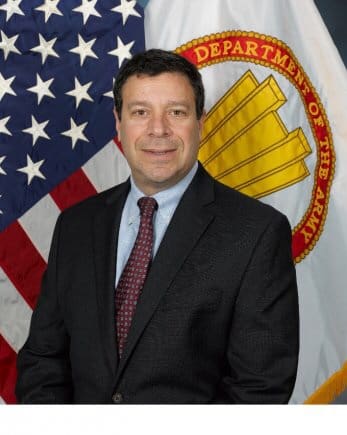
Dr. Scott E. Schoenfeld assumed the position March 17. He previously served as the senior scientist for the Lethality and Protection Sciences Campaign, chief of Armor Mechanics and chief of Impact Physics research with the Weapons and Materials Research Directorate of the U.S. Army Combat Capabilities Development Command’s Army Research Laboratory.

Terminal ballistics is a sub-field of ballistics and examines of the behavior and effects of a projectile as it transfers its energy to a target.

Across the Army there are less than 50 senior research scientists, known as STs, who serve as general-officer equivalents, advising leadership on science matters.

Schoenfeld will serve as the “as the Army’s leading expert in the field,” according to the announcement.

Schoenfeld’s experiences include oversight, guidance and execution of “broad theoretical and experimental initiatives to understand the mechanics and physics of weapon-target interactions,” as well as execution and oversight of applied research and development of programs associated with ballistics, terminal effects, mechanics, directed energy and computational science and engineering.

His responsibilities also included leadership of national and international partnerships conducting investigative programs in the areas of mechanics, physics and electro- magnetic response of materials and structures under conditions of blast, impact and penetration and the development of ceramic, energetic, smart, electromagnetic and hybrid protection technologies appropriate for battlefield deployment.

Schoenfeld earned a doctorate in applied mechanics in 1995 from the University of California, San Diego.

“My personal research experiences focus on the mechanics of materials with emphasis on multi-scale theories for single and polycrystalline materials and development of theories into computational algorithms suitable for simulation of impact conditions, penetrator-target interactions, structural failure and high strain-rate deformation of materials,” he said.

Schoenfeld has published several dozen peer-reviewed publications, ARL Technical Reports and Conference proceedings and has been active in American Ceramic Society, The Metals Minerals and Materials Society, American Society of Mechanical Engineers, The Materials Research Society, United States Association for Computational Mechanics, and the Hypervelocity Impact Society.

He has received numerous honorary awards including the Department of the Army Meritorious Civilian Service Award for cumulative contributions to the development of armor technology, a Department of Army Research and Development Award for Leadership Excellence and two Army Greatest invention awards.

“Dr. Schoenfeld’s expertise and leadership will accelerate the availability of superior, light weight, and agile protection for Army soldiers and vehicles. He will create, grow and capitalize on talent and ideas from across the DOD, industry, academia and other government agencies to accelerate availability of disruptive discoveries that will enable the United States and our partners to compete and win in multi-domain operations,” said Dr. Jeff Zabinski, WMRD director. “Internal to ARL, he will focus on our core competencies in Terminal Ballistics and Sciences for Lethality and Protection.”

“Please join me in congratulating Dr. Schoenfeld on this significant professional accomplishment as he becomes a member of the prestigious senior professional community,” wrote CCDC Commanding General Maj. Gen. Cedric T. Wins in an email to the workforce.

By CCDC Army Research Laboratory Public Affairs

CCDC Army Research Laboratory (ARL) is an element of the U.S. Army Combat Capabilities Development Command. As the Army’s corporate research laboratory, ARL discovers, innovates and transitions science and technology to ensure dominant strategic land power. Through collaboration across the command’s core technical competencies, CCDC leads in the discovery, development and delivery of the technology-based capabilities required to make Soldiers more lethal to win our Nation’s wars and come home safely. CCDC is a major subordinate command of the U.S. Army Futures Command.

The Baldwin Files – The Fighting Load Continuum Part II

Saturday, May 4th, 2019

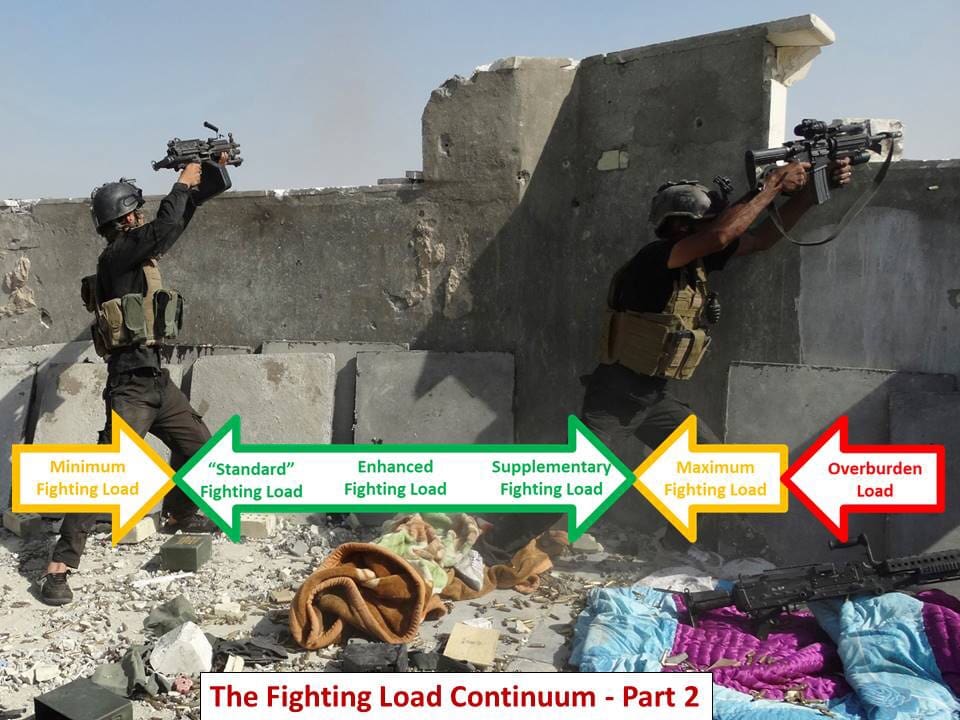
It has been a couple of months since Part I of the Fighting Load Continuum (FLC) series. I am not going to re-plow the same ground, but I will be referencing points from the first article. Consequently, it would probably be helpful for readers to review Part I before reading this iteration. We will start where the last part ended. “leaders have to face the fact that for the majority of dismounted combat operations – even relatively short ones – it is all but impossible to avoid at least some overloading [and]…the goal of effective load management should be to keep as many of a unit’s soldiers as possible in the more combat effective green range [of the FLC] – for as much of the time as possible – rather than the cautionary amber or high-risk red zones.

I gave away the “bottom line” of my own FLC concept last time. There is no magic solution and there is no trick to effective dismounted load management – it just requires timely, hard choices and deliberate trade-offs between firepower, protection, and mobility. However, units can be considerably more tactically effective if leaders make better-informed, pre-mission load management decisions. That involves consistently practicing the fundamentals like planning the mission first, then the load; focusing on successful prosecution of the fight, rather than equitably distributing the weight; and practicing and mastering deliberate and hasty load transitions. If a unit is following the age-old principles I outlined last time, everything carried is needed and represents capabilities deemed essential – not just unrelated or superfluous burdens to be endured.

Leaders need to acknowledge their limitations and not waste time agonizing over factors that they cannot “fix,” mitigate, or eliminate. Consider body armor for example. For extended dismounted combat operations involving “closing with and destroying the enemy by fire and maneuver,” I am – and have been – comfortable with lighter plate carriers and helmets. I accept the tradeoff between reduced protection and enhanced individual mobility. If in a static defense or mounted operations more body armor (protection) may be more appropriate. For dismounted reconnaissance perhaps no armor at all. What the leader cannot fix, mitigate, or eliminate in combat is the likelihood – sometimes the certainty – that some of your soldiers will die or be seriously injured no matter what choice you make. A leader has to live with that truth and shoulder than burden alone.

Likewise, recognize up front that load discretion is actually quite limited. Fixed weight items are a constant. Weapons, clothing items, body armor, and technological aids weigh what they weight – and if deemed necessary will be carried. NBC protective gear would be another example. If there is a realistic threat that the enemy will use chemical weapons there may not be a choice – the gear will need to be carried. On the other hand, consumables, like water, food, batteries, and ammunition, must be carried in quantities based on the anticipated rate of consumption and frequency of planned resupply. Longer duration missions, and those with limited options for external resupply, naturally force a unit to carry more of all consumables. Still, a unit should only carry what it truly needs, wasting nothing, and not burdening itself with “nice to have” items.

There is nothing new about that tactical reality. In fact, US Army doctrine on load management has been remarkable consistent for decades. ALL of the doctrine has repeatedly recommended that the “fighting load” not exceed ~48 lbs and so called “approach march load” not exceed ~72 lbs. However, FM 21-18, Foot Marches, as far back as 1990, explicitly acknowledged the inescapable conundrum. “Unless part of the load is removed from the soldier’s back and carried elsewhere, all individual load weights are too heavy [emphasis added]. Even if rucksacks are removed, key teams on the battlefield cannot fulfill their roles unless they carry excessively heavy loads. Soldiers who must carry heavy loads restrict the mobility of their units. Overloaded soldiers include the antiarmor teams (individuals carry weights of 111, 101, and 90 pounds), mortar teams (individuals carrying 83 pounds, even after distributing 100 mortar rounds of 3.5 pounds each), fire support teams (carry 92 to 95 pounds), and M60 machine gun teams (carry 78 to 87 pounds). All radio operators equipped with the AN/PRC-77 and KY57 VINSON secure device are also loaded above the maximum recommended combat load (84 pounds). AT4 gunners and low-level voice intercept teams are overloaded as well as Stinger and engineer breaching teams.”

That goes to show that recognizing the problem does not in and of itself solve the problem. One might incorrectly assume that today’s excessive loads can simply be attributed to changing public attitudes about casualties and some element of subsequent risk aversion by modern uniformed and civilian leadership. Except, the overloading of soldiers has always been a problem in every army and in every era throughout history. Generally, soldiers went to war with less capability, a.k.a. “lighter” than their opponents only because of the logistical limitations of their side in the conflict – not by choice. It is also true that lighter forces alone can reasonably delay, but rarely “win” toe-to-toe fights against heavier forces. Think Operation Market Garden.

Much has often been made of the fact that, in many cases, insurgents in Iraq and Afghanistan can run away faster than we can pursue on foot. Sure, small groups of locally based fighters that have no intention of seeking or accepting decisive battle can operate and travel extremely light. Indeed, blending quickly back into the general population enhances their chances of survival –not firepower. That is frustrating but in no way indicates that the insurgents are “winning” individual skirmishes. As a matter of fact, because of the more substantial capabilities we routinely carry and can bring to bear, we have – on average – been killing more than 100 insurgents for every one of ours lost for the last 18 years. Even overloaded by comparison, it is extremely rare for us to be at risk of losing any tactical engagement. Granted, it is also true that the prosecution and ultimately the strategic outcome of a war has very little to do with relative body counts, or whether we succeeded or failed to manage individual soldier loads, or even win tactical engagements.

Let us focus for a moment on one consumable class of supply in particular – ammunition. Can a unit or individual have “too much” ammunition. If in a static defense the answer may be no; however, if that ammunition has to be carried on soldiers’ backs the answer is yes. Ask any overloaded trooper who drowned in the inland canals or wading ashore at Normandy. Excess weight is excess weight. As mentioned in Part I, the baseline or standard “fighting load” has been defined by whatever the “basic load” of ammunition is for a rifleman in a given timeframe. Frankly, there has never been much “science” behind determining what a basic load should be. In the First World War, when the 1903 Springfield was the standard rifle, a soldier’s basic load was 55 rounds. 50 in his ammunition belt and 5 in the rifle. For the M1 Garand it was 88. 80 in the belt and 8 in the rifle. For the M14 it was 100 rounds, 80 in ammo pouches and 20 in the rifle. During the initial fielding of the M16 it was 140 (seven 20 round magazines) – although in Vietnam soldiers habitually carried twice that or more. After Vietnam, and the standardization of the 30 round magazines, a basic load stabilized at 210 rounds (7 magazines). I am not being facetious when I say that, historically, it seems the number of rounds or magazines a solder can carry in the issue ammunition belt or pouch has dictated basic loads – not rigorous scientific study.

Do modern riflemen actually need to carry almost three times more ammunition than their World War II counterparts? There is no quantifiable evidence that I am aware of that supports any such conclusion. Logisticians have developed scientifically derived and reliable food and water consumption rates for soldiers in combat. On the other hand, ammunition consumption rates are essentially subjective; and therefore, are of limited utility and not reliable at all. Simply stated, based on even a cursory review of modern (WW II and later) historical combat engagements, the more ammunition available, the more ammunition a unit in combat expends. This is true whether the unit ultimately wins or loses any particular fight.

If a modern unit does legitimate mission analysis and concludes that double or triple basic loads – i.e. 6-9 times what the WWII infantryman carried – is necessary to take an objective, maybe the task is simply more appropriate for a larger unit to tackle?  In any case, I would respectfully suggest that the unit establish an expedient range and expend that extra ammunition to improve soldier shooting skills and confidence before going on the mission instead. I can just about guarantee that would be a more effective use for that ammunition than carrying all that extra weight out of an overabundance of caution or fear.

In other words, it is much more likely that excess ammunition will be wasted rather than used for good effect. As seen in the attached picture, blindly pointing a weapon in the general direction of the enemy and going cyclic until running out of ammunition or a weapon inevitably fails is usually referred to as the “spray and pray” firing technique. Indeed, even calling it a “technique” lends it some semblance of unwarranted legitimacy and is far too kind. Let us call “spray and pray” what it is – panic fire. While panic fire may be emotionally cathartic for poorly trained leaders and scared soldiers, it produces no positive tactical results – and wastes a great deal of ammunition. In short, despite its reportedly widespread use by American forces in Vietnam, panic fire is NOT effective at eliminating the threat or winning the close fight. How do I know that with a high degree of certainty? Simple, no Army has ever had programs of instruction or ranges designed and dedicated to teaching panic fire techniques.

A unit that allows soldiers to panic fire every time they make contact does not need more ammunition – they need more training and a lot more fire discipline. Fire superiority does not mean that one side makes more noise or simply fires more rounds than the other side. Fire superiority requires synchronized fire and maneuver to gain a relatively dominate position to suppress, fix, and ultimately finish an enemy – while simultaneously thwarting his efforts to do the same to you. That means, upon contact  – if not prior to contact – soldiers shed their excess load, return disciplined, aimed, and effective, fire in order to seize the initiative, out maneuver, and decisively out fight their opponents.

Historically, cohesive units with more combat experience tended to carry less rather than more ammunition into battle. Arguably, the unpopular draft, individual soldier and officer frequent rotation policies, and shake-and-bake-NCOs made the experience of some American units in Vietnam the exception that proves that rule. Conversely, American Airborne units of World War II were a great example for modern leaders to study. The paratroopers certainly jumped overloaded to get as much materiel into the fight as possible. However, the troopers dumped or cached the excess ASAP and went into the fight with not much more than ammo and water. That is because the Airborne training program emphasized speed over firepower. The ability of relatively lightly burdened troopers to secure tactical and operational objectives as fast as possible before heavier forces could react and reinforce those positions was critical to mission success. Therefore, the individual troopers and leaders trained with a focus on the lightest possible fighting load, not the necessarily heavy jump load.

Similarly, today’s leaders must triage the fight ahead and adjust load priorities accordingly to facilitate mission success. Do not confuse what you CAN carry with what you NEED to carry to win that fight. Determine what is needed, who needs to carry an essential item, and where (what echelon of the FLC) does the item need to be in to effectively support each phase of an operation. I would suggest that – except in extreme circumstances – a basic load of 7 magazines should be considered the hard ceiling for an individual rifleman’s load. Indeed, smart small-unit leaders know that their bigger organic “boom sticks” can produce better tactical effects against a determined enemy. Machineguns, recoilless rifles, and mortars provide more combat bang for the buck than individual carbines. In other words, instead of carrying more M4 magazines, a unit’s mission is likely better served by distributing more of the heavier ammunition for the crew-served weapons.

In Part III, I will discuss techniques for mastering those load transitions and some training strategies that can better prepare units and leaders to successfully manage every aspect of the Fighting Load Continuum.

LTC Terry Baldwin, US Army (Ret) served on active duty from 1975-2011 in various Infantry and Special Forces assignments. SSD is blessed to have him as both reader and contributor.

FirstSpear Friday Focus – Summit Bag Padded Insert

Friday, May 3rd, 2019

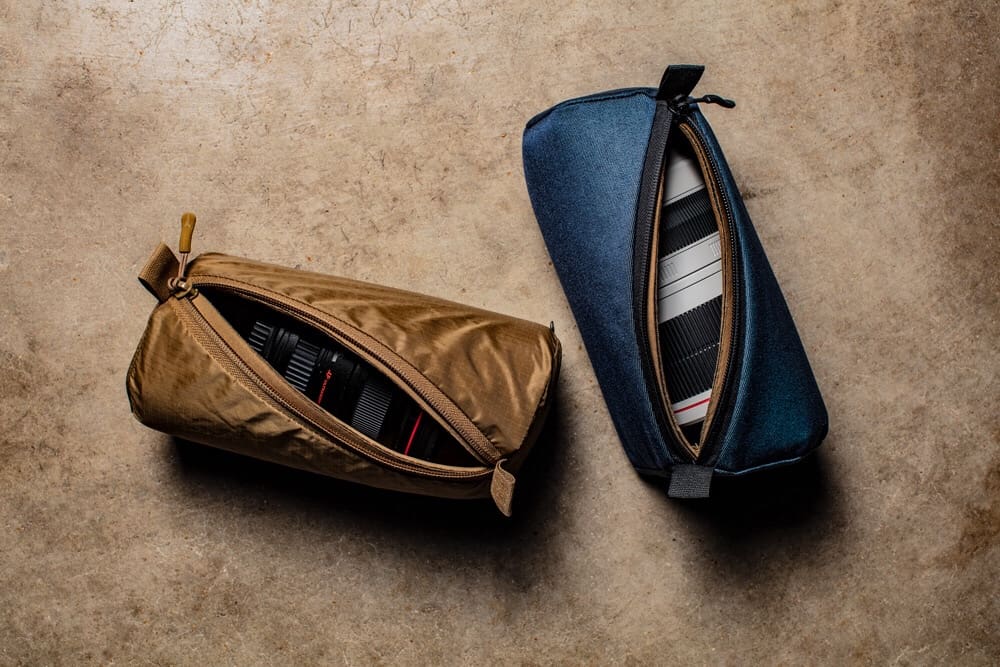
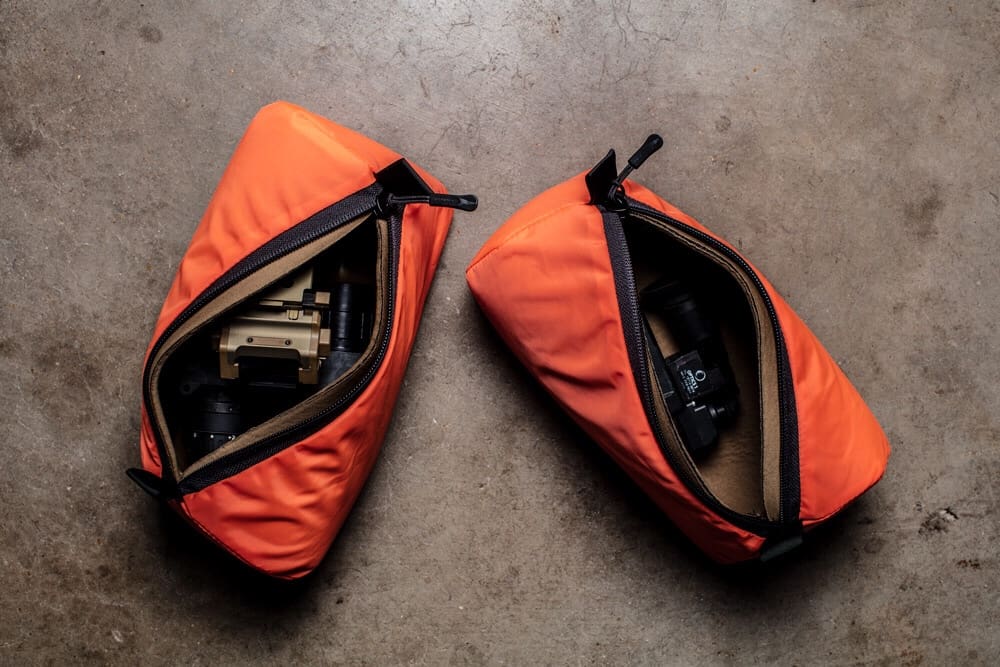
Today we are taking a look at an all new accessory for the popular FirstSpear Summit Bag line, the padded insert. Built to fit directly into your existing summit bags the padded insert is a high density low profile foam designed to fit perfectly inside your summit bag and offer padding to help protect sensitive items during transport while inside another larger pack or bag.

Available now for the medium (2L) size only. Made in the USA.

www.first-spear.com/summit

PAs Help Medical Personnel Hone Battlefield Skills

Thursday, May 2nd, 2019

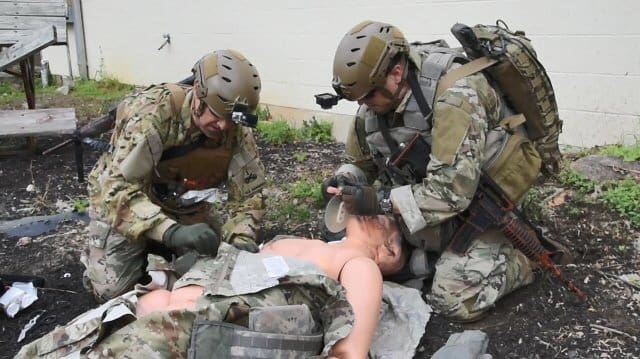
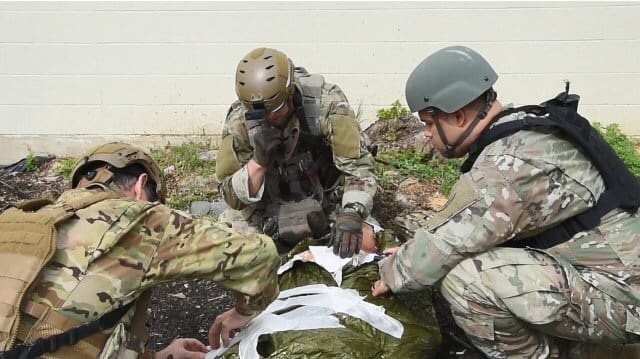
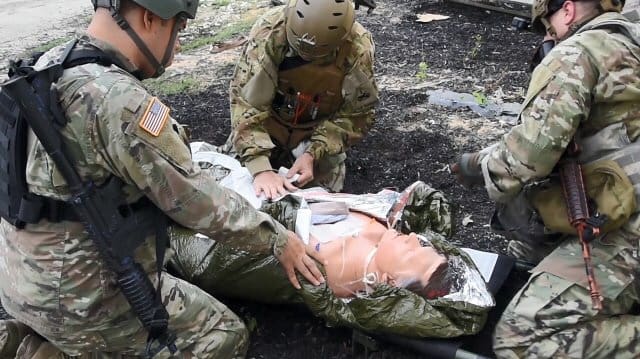
FORT SAM HOUSTON, Texas — The Tactical Combat Medical Care Course (TCMC) began in April 2004 when several Physician Assistants (PAs) noticed that many medical Soldiers were being deployed to combat areas without being properly equipped or trained in medical combat readiness. The TCMC covers a wide variety of areas within a 5-day time frame to include trauma and wound care.

“Currently, the program is geared toward doctors, physician assistants, nurses and senior medics to prepare them for combat medical readiness at the point of injury,” said Shon Compton, an original founder of the program as well as an instructor at TCMC.

Compton added, “The course is presently taught at Fort Sam Houston and Camp Bullis in San Antonio, Texas, and includes didactic and hands-on field training. Although other Armed Services have been through the program, the course is geared towards active duty Army that can be centrally funded from their units. The priority is to those preparing for deployment.”

Presently, there is a waiting list to get in the course as they are targeting 1,500 to 2,000 students annually. The training is considered a sustainment course.

TCMC prepares the students with skills for medical events they may encounter while deployed, as well as sharpening the skills they already possess.

Bret Smith, an instructor and program manager with TCMC, said, “The course also covers trauma resuscitations that are geared toward the deploying provider.” He added, “We like to target those on orders about 180 days out. Over the years, we have realized that Soldiers should come through the course every 2-3 years to keep their skills up-to-par.”

While the students are already medically inclined, they are surprised at how much they learn from the program, as they are taken out of their comfort zone of the hospitals and put in situations such as working in a battalion aid station where the team works together in groups of four on traumatically injured casualties. The course is designed to force the students to improvise, think on their feet and take the lead in a trauma operation.

“Providers have to realize that during the course, there isn’t always assistance in the field and they must be able to learn to do a lot of the skills themselves, such as pushing medications, starting IVs or performing a cricothryotomy,” added Smith.

Over the past several years, the TCMC program has won several awards and is helping Soldiers achieve readiness in the field. “TCMC continues to be one of the best training programs in Army Medicine. It teaches our Soldiers about low or high intensity conflict in austere environments in the field of combat medicine,” said Smith.

Brigantes Presents – High Angled Solutions – Norrona Svalbard Lightweight Jacket

Wednesday, May 1st, 2019

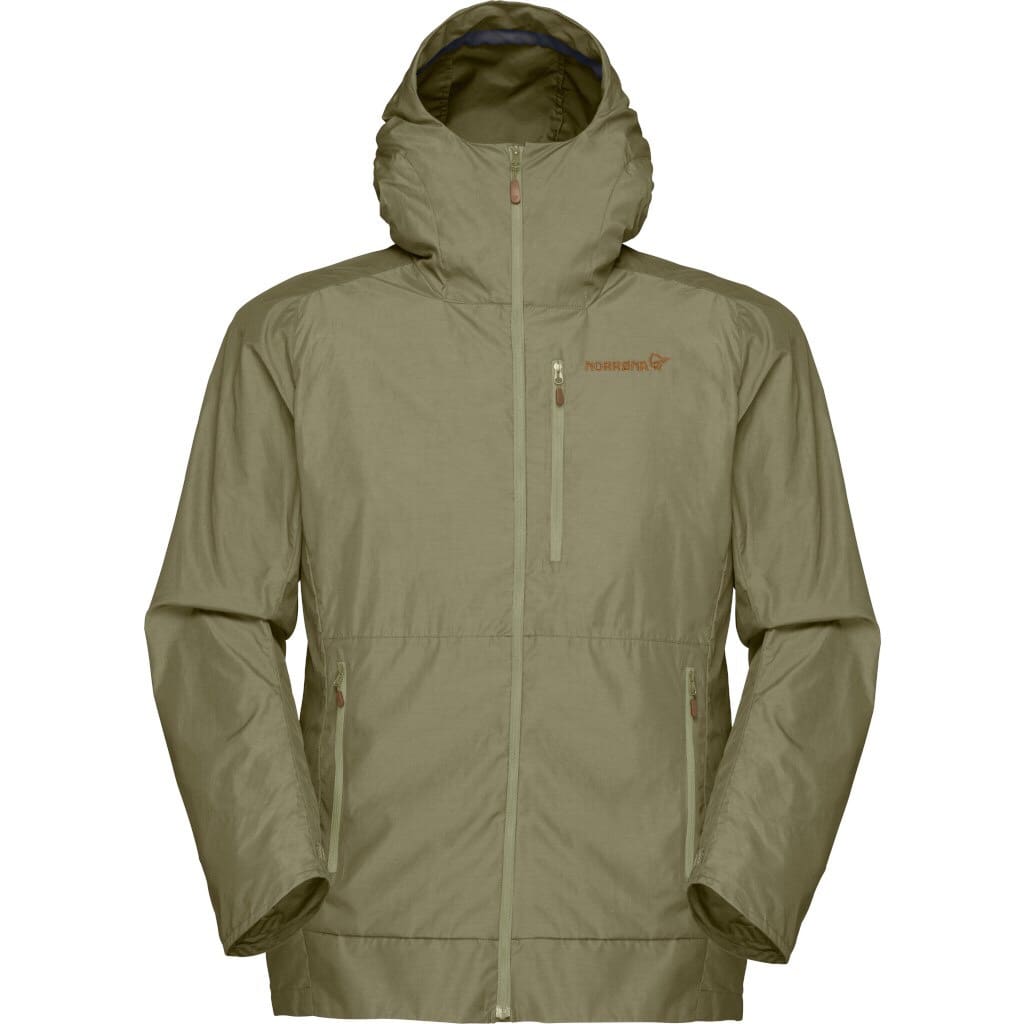
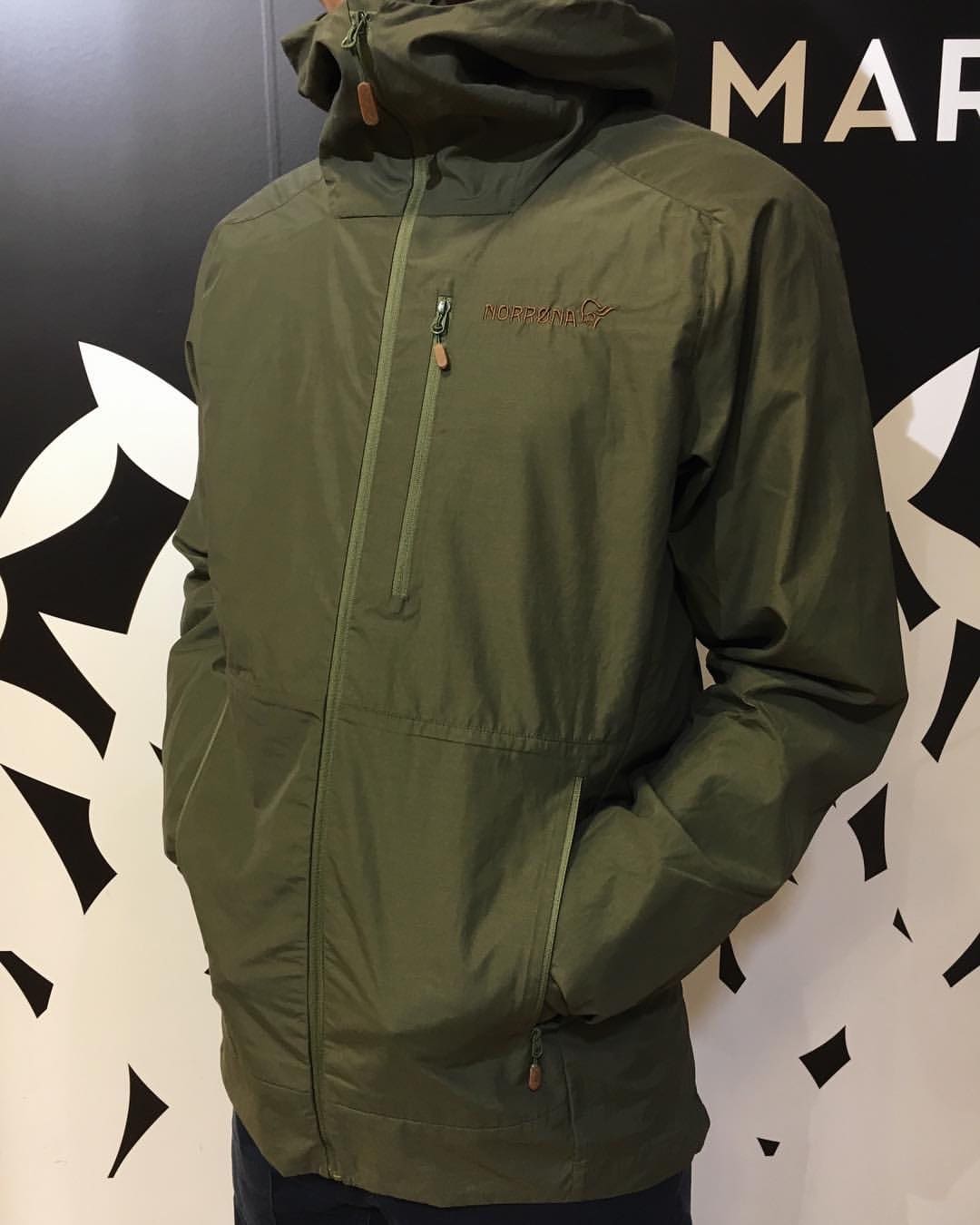
Norrona, is a Norwegian outdoor company that continuously pushes the boundaries of functional product design to offer premium quality gear for any adventure, which makes them an ideal solution for the military.

With the Norrona Svalbard collection, they blend heritage and future to make progressive hiking products. The Svalbard lightweight jacket is a modern organic cotton mix outdoor jacket with all the functions and features to keep you protected from wind and some light/short showers.

Made with Pertex fabric, the jacket uses incredible fine yarns, precisely woven to provide a very lightweight, yet strong and durable fabric. Its softness allows down and synthetic insulation to fully loft and the downproof construction prevents the down from leaking through the face.

The jacket features articulated elbows for greater flexibility of movement and asymmetric cuffs with Velcro adjustment. The double YKK zippers, pockets and cuffs are DWR treated to ensure water repellent properties.

The Svalbard lightweight jacket has a unique centre front ventilation and a back ventilation for greater air circulation to give comfort during warm or high intense activities.

For those looking for a lightweight, durable windproof jacket for use on warmer treks and activities, the Norrona lightweight jacket not only satisfies the needs of the end user, but add greater flexibility, comfort  and ventilation.

For more information contact: international@brigantes.com

For UK sales contact warrior@brigantes.com


Navy Introduces New Uniforms for Brig Inmates

Tuesday, April 30th, 2019

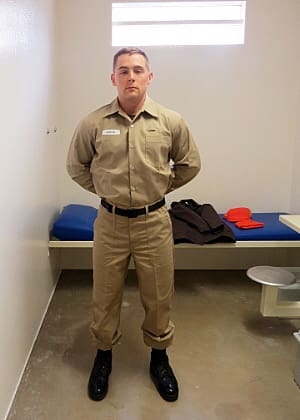
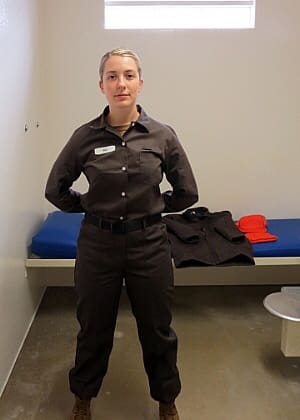
MILLINGTON, Tenn. (NNS) — To enhance security and provide for public safety, all pretrial and post-trial prisoners confined in Navy shore military correctional facilities (MCFs) will begin wearing a Navy non-military standardized prisoner uniform (SPU) May 1.

Wearing of the SPU will be mandatory for all prisoners, regardless of Service affiliation.

Currently, all prisoners confined in Navy shore MCFs wear their respective Service utility uniform.  The “military model” approach adheres to a Navy philosophy, that the approach curbs abusiveness, maintains structure and discipline with core military values to influence positive behavior in an effort to support the prisoners’ rehabilitation.

“However, having prisoners wear their Service uniform creates security and public safety challenges, such as difficulty in distinguishing staff from prisoners,” said Jonathan Godwin, senior corrections program specialist with the Corrections and Programs Office, Navy Personnel Command.

“Prison populations are largely comprised of prisoners incarcerated for crimes against people, which is reflected in courts-martial judgments with longer sentences and more less-than-honorable discharges from service,” Godwin added. “Additionally, punishments consist of total forfeiture of all pay and allowance, and it is rare for a prisoner to return to active duty.”

Pairing these challenges with a prisoner population almost exclusively in a non-pay status and not returning to duty, the costs associated with buying and maintaining Service uniforms becomes a tremendous and unnecessary fiscal burden to the Navy and the taxpayer.  The price for a Service-specific military utility uniform with one pair of trousers and a top is approximately $95. When you add in a fleece jacket, the total easily exceeds $150.

The new SPU top and trousers will cost approximately $18.50. Adding a belt, buckle, ball cap and watch cap, and the price is about $22.  Then add a jacket and the complete price to clothe a prisoner will be about $45.

There will be two, distinct in color, uniforms worn by prisoners with the prisoner’s legal status determining which will be worn. The pretrial prisoner uniform will be chocolate brown in color and post-trial prisoner uniform will be a tan-colored uniform.

The SPU consists of MCF issued shirt/blouse, pants, web belt with open-faced buckle, and Service-issued undergarments, service-issue socks and boots or facility approved footgear.  Additional SPU accessory items consist of a prisoner jacket and a baseball cap and/or beanie/watch cap.

“In addition to the enhancement of correctional security, improved public safety and significant fiscal savings, the wearing of the new SPU will produce numerous benefits across a wide range of Navy corrections operations,” Godwin said. “These include an SPU with a neat and professional look, an easier-to-maintain and care-for uniform, and less wear and tear on equipment, i.e. washing machines and dryers, and less cleaning supplies, i.e. laundry detergent.”

The SPU will be provided and funded by the Navy MCF.  During in-processing into a Navy MCF, prisoners will sign for the uniforms and they will be held responsible for care and maintenance. Upon release from confinement, the prisoner will return the issued SPUs back to the MCF.

Also beginning May 1, clothing and packing list for prisoners entering confinement will no longer require four sets of utility uniforms and jackets.  However, prisoners in pretrial-status will require their service dress uniform for court appearances.

Commands placing a service member into a Navy MCF for confinement are encouraged to review the required confinement documents and clothing packing lists, which can be found at www.public.navy.mil/bupers-npc/support/correctionprograms/brigs.

From Navy Personnel Command Public Affairs

Max Talk 19: GEAR: HELMETS – The Why, What, How for Day & Night Tactical Operations

Monday, April 29th, 2019

This is the nineteenth installment of ‘Max Talk Monday’ which shares select episodes from a series of instructional videos. Max Velocity Tactical (MVT) has established a reputation on the leading edge of tactical live fire and force on force training. MVT is dedicated to developing and training tactical excellence at the individual and team level.

This Max Talk is a follow-on gear video focusing on helmet options and use for day and night tactical operations. This was requested after the previous ‘GEAR: Why, What, How. Building Your Kit for Tactical Operations’ video, which was posted here as Max Talk 18.

Detailed explanations can be found in the MVT Tactical Manual: Small Unit Tactics.

Max is a tactical trainer and author, a lifelong professional soldier with extensive military experience. He served with British Special Operations Forces, both enlisted and as a commissioned officer; a graduate of the Royal Military Academy Sandhurst. Max served on numerous operational deployments, and also served as a recruit instructor. Max spent five years serving as a paramilitary contractor in both Iraq and Afghanistan; the latter two years working for the British Government in Helmand Province, Afghanistan.

Website: Max Velocity Tactical

YouTube: Max Velocity Tactical

Excellence in Tactical Training.

USSOCOM Inducts Four Historic Figures into the Commando Hall of Honor

Sunday, April 28th, 2019

Virginia Hall, Army Col. Charles Munske, Army Lt. Col. Leif Bangsboll and Command Master Chief (SEAL) Richard Rogers, were inducted into U.S. Special Operations Command’s Commando Hall of Honor for their remarkable contributions to special operations in a ceremony held at the headquarters on MacDill Air Force Base, Florida, April 18, 2019. Although their actions were from another era, they embody the first Special Operations Forces truth “Humans are more important than hardware.” The four inductees are an eclectic group of special operations pioneers who shared a dedication and a commitment to defending our country.
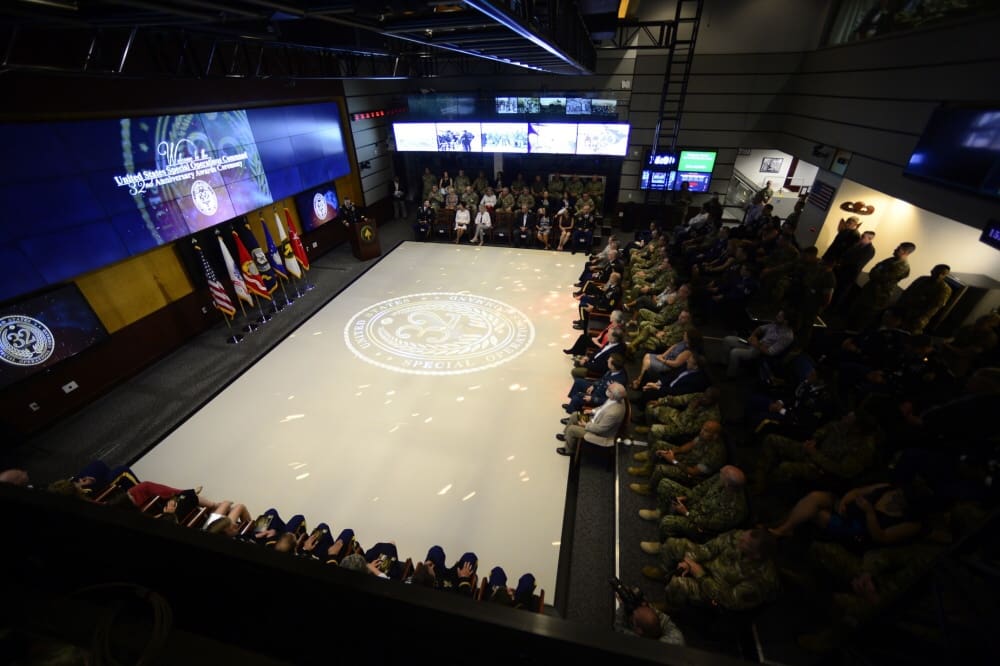
Hall, an amputee and first female operative sent into France during World War II spying in Lyon, the Nazi-allied Vichy government of France. Munske, a career Civil Affairs officer credited for rebuilding Japanese infrastructure after the devastation of World War II and was in the forefront rebuilding both Pyongyang and Seoul during the Korean conflict. Bangsboll, a Danish turned American Office of Strategic Services operator who parachuted behind enemy lines into Denmark helping defeat the Germans during World II earning the Distinguished Service Cross and who would also go on to serve with valor in Korea. Rogers, a SEAL would serve from platoon point man to senior enlisted leader USSOCOM from 2000 to 2003.

The limping lady
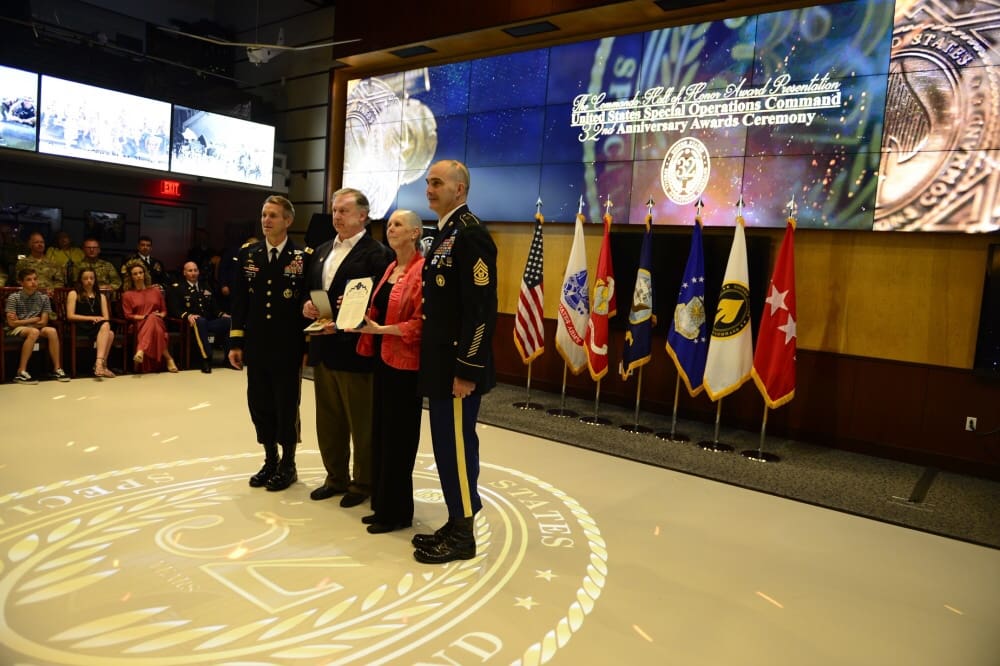
Hall, the daughter of a wealthy family from Baltimore, wanted to become a Foreign Service Officer before the outbreak of World War II, but was turned down by the State Department despite being fluent in French, German, and Italian. Women could be clerks but not officers. Besides, she was missing her left leg below the knee, the result of a hunting accident in Turkey years earlier, which to the State Department further disqualified her.

Undeterred, Hall went overseas and joined the British Special Operations Executive. There, she became the SOE’s first female operative sent into France. For two years she spied in Lyon, part of the Nazi-allied Vichy government of France under the guise of a New York Post reporter. After the United States entered the war, she was forced to escape to Spain by foot across the Pyrenees Mountains in the middle of winter.

Hall eventually made it back to London, where the SOE trained her as a wireless radio operator. While there, she learned of the newly formed Office of Strategic Services. She quickly joined, and, at her request, the OSS sent her back into occupied France, an incredibly dangerous mission given that she was already well-known to the Germans as a supposed newspaper reporter.

Though only in her thirties with a tall, athletic build, she disguised herself as an elderly peasant, dying her soft-brown hair a graying black, shuffling her feet to hide her limp, and wearing full skirts and bulky sweaters to add weight to her frame. Her forged French identity papers said she was Marcelle Montagne, daughter of a commercial agent named Clement Montagne of Vichy. Her code name was Diane.

Infiltrating France in March 1944, she initially acted as an observer and radio operator in the Haute-Loire, a mountainous region of central France. While undercover she coordinated parachute drops of arms and supplies for Resistance groups and reported German troop movements to London as well as organized escape routes for downed Allied airmen and escaped prisoners of war. By staying on the move she was able to avoid the Germans, who were trying to track her from her radio transmissions.

Her chief pursuer was no less than Gestapo Chief Nikolaus “Klaus” Barbie, infamously known as “The Butcher of Lyon.” The one thing they knew about her was that she limped, and therefore she became known to the Gestapo as “The Limping Lady.”

In mid-August 1944, Hall was reinforced by the arrival of a three-man Jedburgh team. Together they armed and trained three battalions of French resistance fighters for sabotage missions against the retreating Germans. In her final report to headquarters. Hall stated that her team had destroyed four bridges, derailed freight trains, severed a key rail line in multiple places, and downed telephone lines. They were also credited with killing some 150 Germans and capturing 500 more.

For her work with the SOE Hall was presented the Order of the British Empire by King George VI. The French government gave her the Croix de Guerre avec Palme. After the war, she was awarded the Distinguished Service Cross-the only one awarded to a woman during World War II. It was pinned on by OSS head Army Maj. Gen. William J. “Wild Bill” Donovan himself.

She went to work for the National Committee for a Free Europe, a Central Intelligence Agency front organization associated with Radio Free Europe. She used her covert action expertise in a wide range of agency activities, chiefly in support of resistance groups in Iron Curtain countries, until she retired in 1966.

Virginia Hall died on July 8, 1982, aged 76. In 2017, the CIA named a training facility after her: “The Virginia Hall Expeditionary Center.”

The Mayor of Pyongyang
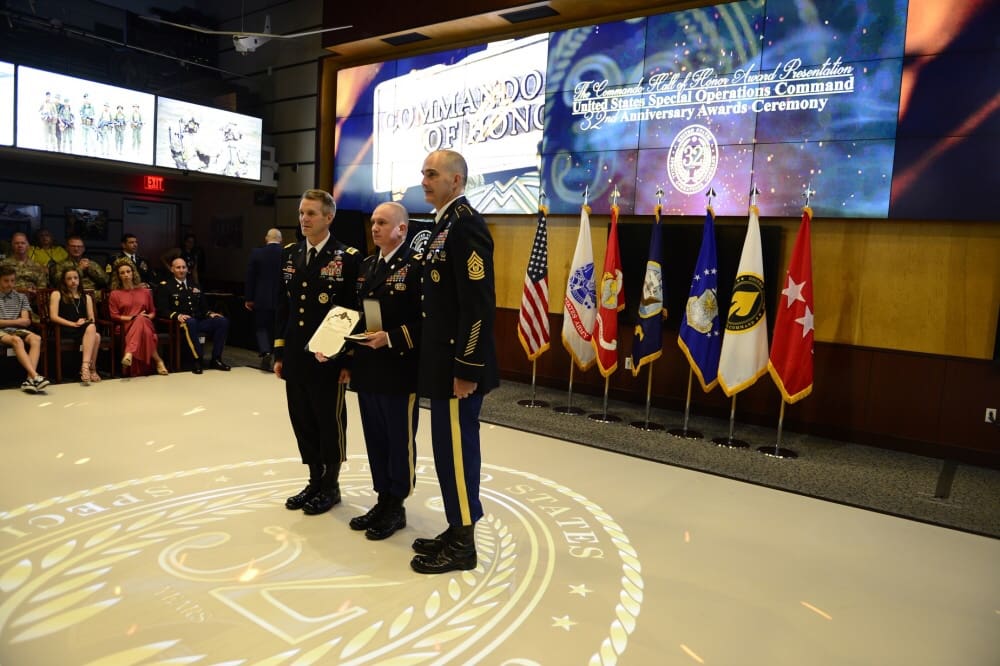
Munske’s lengthy Civil Affairs military career began on Dec. 14, 1914 when he enlisted in the 13th Coast Defense Command, New York National Guard. His first exposure to Civil Affairs/Military Government activities was as a sergeant and interpreter for the postwar Engineer Operations Division of War Damages in Allied Countries section of the American Commission to negotiate peace in Paris.

Munske received a commission on June 7, 1920 as a second lieutenant in the New York National Guard serving until 1940, when he joined the active Army. After being stuck in the U.S. as a Coast Artillery officer in 1944 Munske made a career change to get overseas. He volunteered to attend the School of Military Government at the University of Virginia in Charlottesville. He next attended Harvard’s Civil Affairs Training School from before going to the Civil Affairs Staging Area at The Presidio, California.

In November 1945, he was sent to Japan to serve as the Assistant Chief of Staff G-5 (Military Government) of the 98th Infantry Division, headquartered in Osaka. Much of his time was spent administering civil matters, including jump-starting Japanese local industry. To do this effectively, he learned the language and culture, and attended many meetings and social events in order to make inroads with the local civilian population. His assistance to more than six million inhabitants of the Osaka Fu, Mie, Wakayama and Nara prefectures, would earn him a Legion of Merit and the Army Commendation Ribbon.

In October 1950 and Munske was assigned to the Pyongyang Civil Assistance Team of the United Nations Public Health and Welfare Detachment. He accompanied the victorious UN forces north to Pyongyang, which fell to UN forces on Oct. 19, 1950. He became known as the “Mayor of Pyongyang” when he and his fourteen-man military/civilian team achieved dramatic success when they found resources to reestablish infrastructure, resumed trash collection, established a fire brigade, made sure city workers were paid, immunized 3,500 people against typhus and another 4,000 against smallpox, reestablished the police force and law and order, organized a rudimentary health care system and set up insecticidal dusting stations to prevent and control the spread of lice and flea-borne infectious diseases. They also repaired two power plants, fixed the streetcar and telephone system and began reconstructing the key railroad bridge across the Taedong River. However, all of this hard work was for naught.

By late October 1950, the UN forces had pushed the North Korean Army across the Yalu River, the northern border with China. It was then that massive infiltrations of volunteer Communist Chinese forces attacked behind UN lines. This human onslaught quickly overwhelmed the strung out UN forces forcing them to retreat across enemy occupied territory. By the beginning of December, Communist forces were at the gates of Pyongyang. Munske had no choice but to order the destruction of what his team had recently rebuilt and join the retreat.

His next assignment was as Executive Officer of the Kyongsang-Namdo (Pusan) Provincial Civil Assistance Team where he helped administer the sizeable refugee population in and around Pusan. After UN forces again pushed the Communists north, Munske headed the Kyonggi­ Do Province (Seoul) Civil Assistance Team. He was instrumental in rebuilding the major metropolitan areas of Seoul, Inchon, and Suwon, all of which had suffered greatly having been twice occupied by the Communists.

The last phase of Munske’s CA career was as Inspector General of the New York Military District, with concurrent duties as Legal Assistance Officer and Senior Advisor for Military Government units. He inspected reserve Military Government units and Reserve Officers Training Corps (ROTC) programs.

Munske retired Feb. 28, 1958 with 20 years of active service while serving nearly 43 years in the military. The 95th Civil Affairs Brigade has named their headquarters building after him.

He passed away on Nov. 14, 1985 at the age of 88, and is buried at Arlington National Cemetery.

OSS operator to Green Beret plank holder
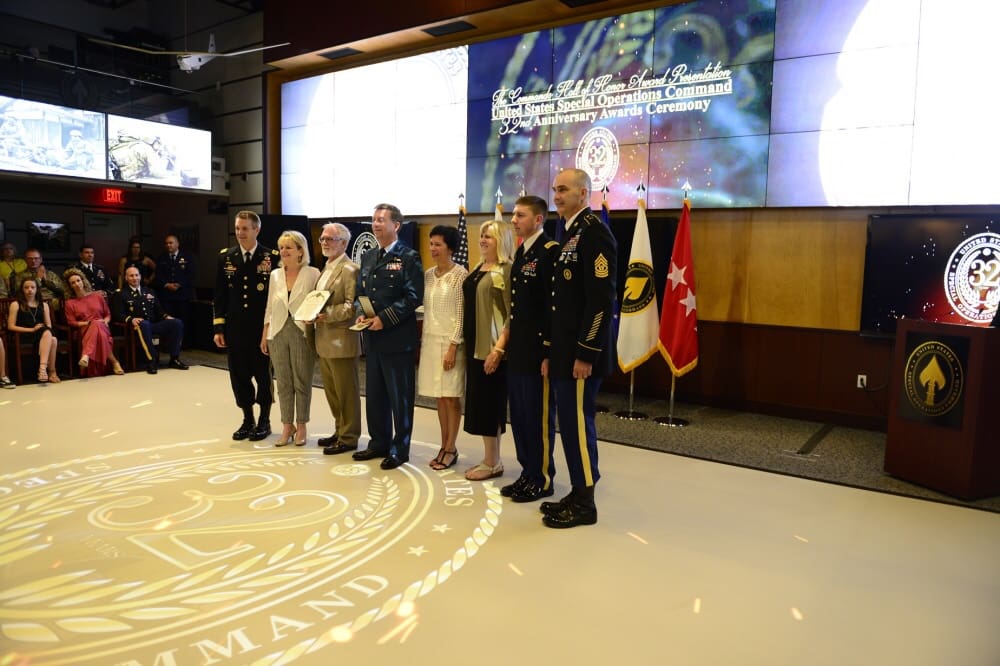
Born in Denmark in 1918, Leif Bangsboll was the son of Danish Navy Rear Admiral Frederick Christian Bangsboll who commanded the Danish submarine fleet. In 1935, he volunteered for the Royal Danish Naval Air Force and trained as an observer prior to joining the merchant marine. In September 1940, he joined the Norwegian Air Force (in exile) in Canada, where he trained as a flight sergeant. Knowing that he would not see action he volunteered for the U.S. Army, joining as a Private First Class on March 22, 1943.

Fluent in Danish, Norwegian, and Swedish, and able to speak French, German and Greenlandic, the Office of Strategic Services recruited him in September 1943. At first, the OSS employed him as an instructor at RTU-11, otherwise known as the Farm, a school for teaching the methods of secret intelligence work. He was then sent to the Danish operations section of the OSS Special Operations branch. Because he was unable to get a U.S. Army commission at the time by agreement with the OSS the British Army gave him a commission as a first lieutenant. He eventually got his U.S. commission on Nov. 6, 1944.

On the night of Oct. 5, 1944 Bangsboll parachuted into occupied Denmark near Allborg, and was “the only American officer serving as an agent” in that country. Until the end of the war, he lived as a civilian- subject to execution as a spy if caught- and helped arm, train, and lead the Danish resistance while reporting on conditions in the country. He also engaged in several sabotage missions, including blowing rail and communications lines seriously delaying German troop movements. While in Copenhagen in May 1945, Bangsboll led a resistance force that captured German artillery pieces and machineguns leading to the surrender of the entire garrison. For his extremely dangerous assignment in a country with a robust enemy counter-intelligence network. Bangsboll received the Distinguished Service Cross and a number of Danish awards. After the war in Europe ended. He then briefly served in Germany with the OSS successor, the Strategic Services Unit.

After returning to the U.S., Bangsboll attended Intelligence Officer’s training at Camp Holabird, Maryland, and served in airborne units at Fort Bragg, NC. Before deploying to pre-war South Korea. There, he served as a Public Safety Officer in the 59th Military Government Headquarters and Headquarters Company. He then became an intelligence and reconnaissance platoon leader in the 187th Airborne Infantry Regiment.

When this unit was sent to Korea as the Regimental Combat Team Bangsboll again went to war. For an action on Nov. 16, 1950 he received the Silver Star for leading a small force behind enemy lines near Pyongwon-ni, North Korea. His platoon overwhelmed a North Korean garrison and discovered the location and contents of a food storage warehouse. Later ordered to destroy the warehouse, Bangsboll once again led his numerically inferior force in killing the enemy defenders, demolishing the warehouse with its estimated 100 to 150 tons of dried food all with no friendly casualties.

When he returned from Korea Bangsboll briefly served with the Central Intelligence Agency before coming to the Psychological Warfare Center at Fort Bragg, North Carolina, with further assignment to the newly-established I0th Special Forces Group (Airborne). Bangsboll taught guerrilla warfare and clandestine operations and helped develop the initial program of instruction. As an instructor, he excelled. He also attended the Psychological Warfare course at Georgetown University thus being qualified in both of the Army’s special operations fields.

Bangsboll retired from the U.S. Army April 30, 1963 and passed away Nov. 20, 2001.

Lifetime of service to naval special warfare
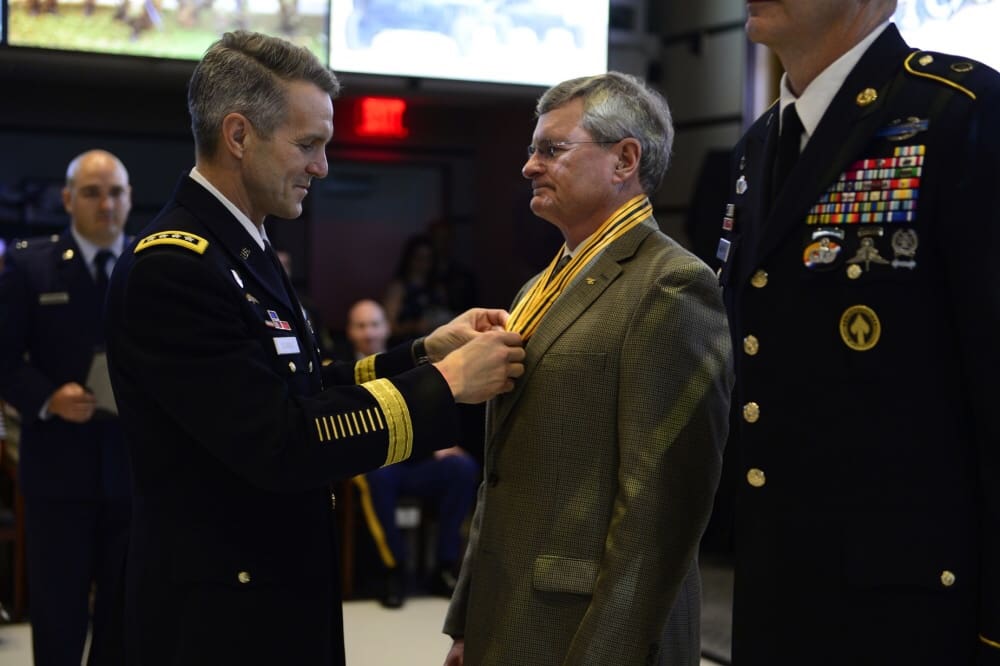
Retired Command Master Chief Petty Officer Richard Rogers, (SEAL), spent 31 years of active duty in elite special operations forces taking countless assignments from platoon point man ultimately becoming the senior enlisted leader for USSOCOM from August 2000 to August 2003.

Rogers also has an extensive resume of military experience within the Naval Special Warfare community. He joined the Navy in July 1972 and completed Basic Underwater Demolition/SEAL training in May 1973. Moving through the ranks he started as SEAL platoon point man and communicator at SEAL Team ONE; as an instructor at BUD/S; as a platoon cartographer/intelligence specialist, the intelligence department head, the ordnance department head, the command career counselor, and a platoon chief petty officer at SEAL Team FIVE; and as a boat crew leader at SEAL Team SIX. Rogers also served as an Operations Chief Petty Officer, Assistance Current Operations Officer at Naval Special Warfare Development Group. He studied Spanish at the Defense Language Institute. Additionally, he served as the Command Master Chief at Naval Special Warfare Unit EIGHT in Panama; Naval Special Warfare Group ONE in Coronado, California; and Special Operations Command, Europe in Stuttgart, Germany.

An expert in a variety in special operations skills, Rogers was qualified as an open and closed circuit scuba diver, open and closed circuit diving supervisor, static line and free-fall parachutist, static line and free-fall jumpmaster, small arms range safety officer, close quarter combat range safety officer, and helicopter castmaster. He trained and mentored recruits aspiring to become SEALs and Special Warfare Combatant-craft Crewman, trained indigenous forces throughout southwest Asia.

A seasoned combat veteran he held leadership positions in combat Operations Just Cause in Panama and Allied Force in Bosnia, and he became the first Theater Special Operations Command-Europe senior enlisted leader.

As the senior enlisted leader of USSOCOM he ushered in a new era for SOF, when the command transitioned from peacetime engagement to the War on Terrorism.

Rogers retired from the Navy in 2003 and continues to work to improve the training and professional development of naval special warfare personnel as a civilian at the Center for SEAL and Special Warfare Combatant-craft Crewman. He became the driving force in the development of the new SEAL and SWCC ratings for enlisted personnel. Rogers also successfully negotiated additional senior enlisted billets from the Navy to ensure proper force structure for the community.

In May 2006, he assumed the N3 (Operations directorate) position at the Center for SEAL and SWCC, a learning center to manage the new SEAL and SWCC ratings, where he continues to improve the training and professional development of naval special warfare personnel.

In total, Rogers has dedicated 47 years to naval special warfare and special operations. Mentoring the special warfare community for nearly half a century, his contributions will have a lasting impact for future generations of naval special operators.

Story by Michael Bottoms, USSOCOM