Pirata Series from OTB Boots - Coming March 2026!

Archive for the ‘Guest Post’ Category

Corps Strength – Listen for Success

Saturday, April 13th, 2019

As you might guess, people approach me all the time about working out, diets, losing weight, getting in shape, etc. These are people I know: friends, family, students and many more I don’t know; Those who have read my book, or my posts here on SSD. 9 times out of 10 they want to get my take on the latest diet, supplement or workout routine they’ve heard of, or want to relate their recent experience with the same. What they always want to talk (ask) about is the specifics: calories, carbs, sets, reps, mileage, etc. Which frankly, is the last thing I want to discuss, as I always start off with questions; What is their long-term goal, their work schedule, their present routine and diet? Any heath issues or injuries? Then I try to bring this all around to how they’re thinking about this. While people are normally very happy to discuss themselves (as we all are), you can tell that they’re aren’t really listening when I start talking about how to get their mind around this in the right way, as they normally will bring it quickly back to sets, reps, meals, fat, protein, etc., etc. I’ve had this conversation 100’s of times and they’re all so similar that I can probably provide both sides of it myself.

   You know, human nature is a funny thing. It’s immensely powerful and yet completely unbiased. Meaning that it will work equally as well for, or against you and while most people will say they get that, they don’t seem to really understand it. Certainly not to the degree required to harness it for long term success. I’ve found that much of this disconnect is really due to a lack of listening. Learning to listen and hear what’s important vs. what is the loudest, newest or false, is something we all can have a hard time with. About 40 years ago my first squad leader told me. “Roarkey (he always called me that to break my balls), if you’re ever going to be a good Marine, you need to learn how to tell the difference between fly shit and pepper”. When I asked how? He said; “Get the mud out of your ears numb nuts, pay attention and listen” In other words, BS and the truth often look a lot alike and to tell the difference you need to pay close attention and that means listening. The fact is all the information you could ever need about losing weight and getting in shape is out there, but to make it work is secondary to how you think about it. That is the main thing I try to get people to listen too, with mixed results. 

   Right about this time last year, my son were in Nepal making the Everest Base Camp Trek. It was a great experience and everything we hoped it would be. Besides the unbelievable scenery and the physical challenge of hiking above 17,000 ft, another great part was the people. We met people from all over the world there making the trek, a few professional climbers going for the summit and a lot of locals. However, my most memorable meeting I had was with a retired Sherpa guide. His name was Aang Dawa and he is now retired from climbing and owns a “Tea House”. Which is their name for a hostel. His place was our first stop, just up the trail from the airport at Luka. When we were having dinner, I noticed there were a lot of pictures of a local Sherpa on the summit of Everest and some of the other high peaks of the Himalayas. There was also several framed newspaper and magazine articles about him. I asked our guide who he was and he told us that he was the owner. Later than night he came and sat down with us. He was in his 40’s, with the typical bright smile, cheerful nature and muscular build of a Sherpa. His English was very good and for the next few hours (over a few strong local beers) we had one of the most interesting conversations I’ve ever had.

    His story was that he started as a porter in his early teens, then later attended the famous Nepal mountaineering school in Katmandu and progressed to become a high-altitude guide, (that’s where the good money is). Over the next 20 years he guided for numerous international climb teams to summit all the major Himalayan high peaks, including making Everest 3X. He didn’t boast about his climbing, but spoke like how a man who lays bricks for a living, would tell you how he built a retaining wall, very matter of fact. Even so, he related many very interesting stories about his experiences. As a PT guy, I questioned him a lot about the physical aspect of climbing. He was a firm believer that actual climbing and hiking at altitude were the best physical training for climbing, not cross training. However, interestingly enough he had a lot more to say about the mental aspect of climbing. He had quite a few stories about people who had mental breakdowns during climbs and why some people could handle the extremes of weather and altitude while others couldn’t. Some of his stories were dark humor. Like the time he helped lead a group of climbers to the summit of Everest and once there, one climber told him, “He wasn’t going down”. That he just wanted to make top and now that he had, he just wanted to stay and die there. Aang told the guy he must come down alive, or as his guide he wouldn’t get paid and his family needed the money. So he convinced him to come down as a favor to him. After going lower, the man regained his senses and thanked him for bringing him down, as he had obviously been suffering from altitude sickness and was out of his head.

    The other story that I found very interesting was the time that he was hired by the British military to take a group of about a dozen “special forces”, (what ever that means; SAS, Royal Marines?) to the summit of Everest. They were climbing from the Tibet side and they were a huge party of people that brought in all the best equipment. He said they were all big, tough looking and motivated guys, but in the end, not a single member made the summit after a few hard weeks of trying. Why? I asked, bad weather? No, not really. They wouldn’t listen about the proper process of acclimatization for altitude, they all wanted to rush through it. They all got sick and had to turn around, some having to be airlifted out. I asked if that surprised him? No, he said, they didn’t follow the most important rule of climbing. What is that? You must “listen to the mountain”. The mountain will always tell you when it’s ok to come to the top and when it’s time to stay down. The mountain has rules and you have to listen and they didn’t listen. They thought because they were tough guys they could climb on their terms, not the mountain’s. But they were lucky though, they didn’t die. Many people who don’t listen, do die. It’s the most important thing about climbing. You can learn everything about ropes, equipment, weather and be in the best of condition, but if you don’t listen you may die. At the very least you won’t be successful. I asked him what did they say after nobody made it to the top? Not much, but he added with a grin, they brought “barrels full of money”, so it was a very good trip, they had good food too.
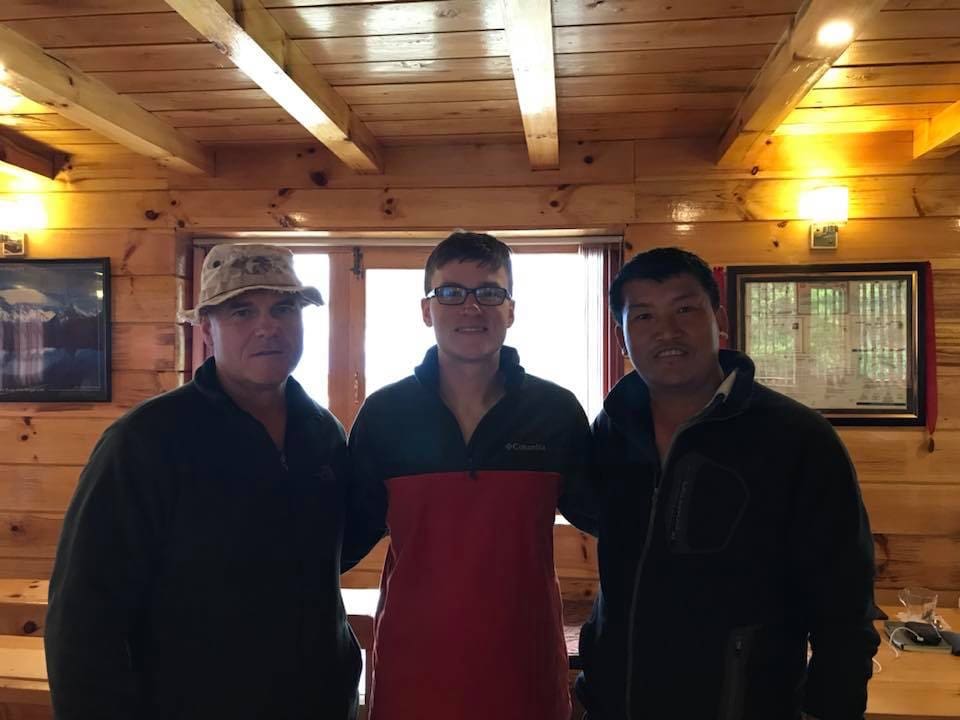
That’s Aang Dawa on the right, me on the left, my son in the center. 

    It was the best night we had on our trip and his advice left an impression on me. It’s a funny thing about many people I’ve met from poor countries. While they don’t have everything that we have here. They don’t have the education, the medical, and certainly not the economic opportunity. They often do have an intuitive feeling about life and living that sometimes seems much more dialed in than ours. I’ve always thought that’s because as they don’t have all the material distractions we have, they actually tend to think about basic things more than we do. In any case I found it to be sound advice and not just related to climbing. 

  I think his advice can apply to many areas of our lives and trying to stay in shape is no exception. Getting in shape and losing weight has rules that you just can’t avoid. You can’t rush it, go in half ass and expect success. You have to listen to those rules, or you are sure to fail. I have learned over the years that your mental state is much more important for success in this area than money, technology or routines. I say all this as I’m convinced that listening to the right guidance and getting the rights thoughts in your head will get you there. A lot of things in life are hard. Getting and staying in shape for many people is very hard, so hard they think it may be impossible, it’s not. Not when you listen for and find the right guidance. You then need listen to yourself and trust that you have the will to do it. Because you do, if you listen. 

I’m off to climb Mt. Rainer in a few weeks and will probably have something to share with you about it next month. 

Till then: “Be safe always, be good when you can”. 

Semper Fi 

MGunz  
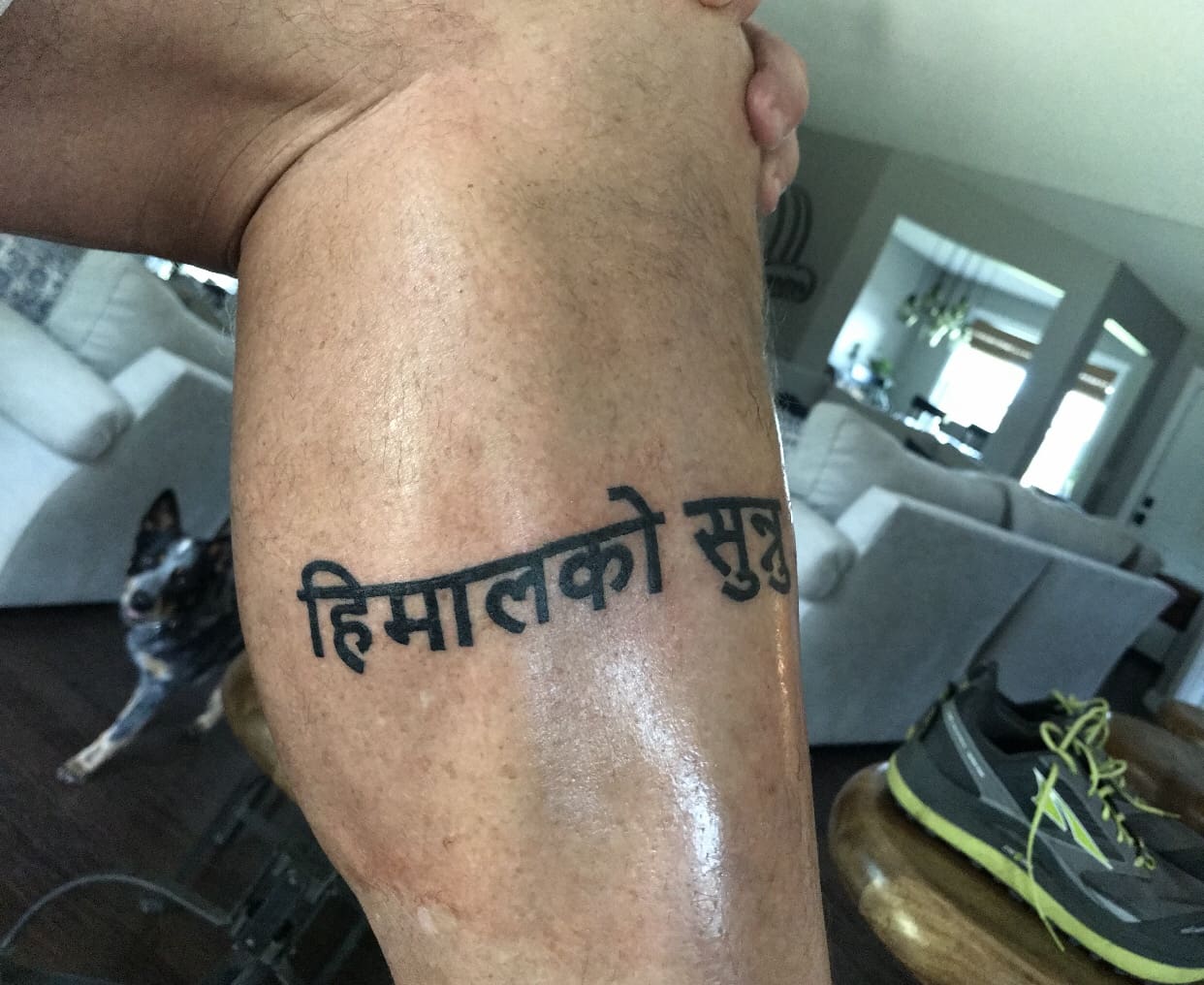
BTW I thought his advice was so good I had it tattooed on my calf so I wouldn’t forget.

“Listen to the Mountain” in Nepali
Allies to Join Army Futures Command

Saturday, April 13th, 2019

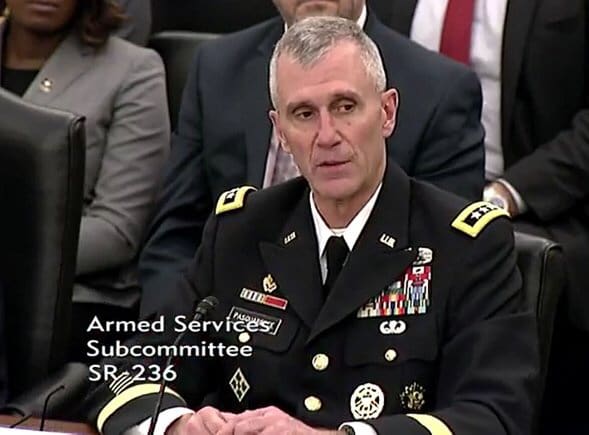
FORT MEADE, Md. — U.S. military allies have been embedded into the Army’s eight cross-functional teams to strengthen the force against potential adversaries, Army leaders told lawmakers Tuesday.

Lt. Gen. James Richardson said representatives of these allied nations will also be stationed with Army Futures Command, headquartered in Austin, Texas. The general, who serves as the command’s deputy commander, did not specify which countries but said both officers and non-commissioned officers have already joined some cross-functional teams.

Allied cooperation will be crucial for future success on the battlefield, Richardson said during a Senate Armed Services Committee hearing.

“Interoperability is huge for our Army,” he said. “We fight as a coalition and we fight as joint partners and it’s been one of [AFC Commander Gen. John Murray’s] top priorities to ensure that we’re interoperable, not only across the joint force, but our coalition forces.”

Joint exercises such as Balikatan and Cobra Gold help foster good relations between partner nations. Balikatan is an annual military exercise between U.S. and Philippine forces. In February the Army participated in the annual Cobra Gold exercise, a joint-combined venture that includes Thailand, Singapore and Japan.

Additionally, Randall Schriver, assistant defense secretary for Indo-Pacific Security Affairs, told an audience at the Center for Strategic and International Studies Wednesday that the U.S. would like to strengthen relations and enhance military ties with Vietnam.

“[Interoperability] is one of the three tenets of both the National Defense Strategy and our Army strategy,” said Lt. Gen. James Pasquarette, Army G-8, emphasizing the importance of allies and partners.

“So we have a robust exercise program in both Europe and [the Indo-Pacific] our two focus theaters that help us deepen those bonds,” he added. “We believe it’s making a big difference and we believe in the future. It’s our way of countering the two threats we’ve been talking about here today, Russia and China.”

The Army created the newly-formed Futures Command to streamline the acquisition process and to lead the Army’s modernization efforts. In addition to placing partner nation representatives within the command, the Army hopes to reach small businesses and innovators.

Last fall, the service stood up the Army Applications Laboratory in Austin, which focuses on helping deliver innovative technologies from small businesses and young developers.

“[They’re] bringing technologies that we otherwise would not have seen,” Richardson said.

With Army representatives stationed within “incubator” hubs in Austin, the Army plans to encourage contributions to its modernization efforts from small businesses, said AFC leaders.

Story by Joe Lacdan, Army News Service

Photos by SGT Alvin Reeves and DVIDS

SureFire Field Notes – Ep 42 Kyle Lamb on Using a Hand-held Light with a Handgun

Friday, April 12th, 2019

In this video, Kyle Lamb discusses some methods of using a handheld light in conjunction with a handgun.

Sergeant Major Kyle E. Lamb (retired), spent more than 21 years with the United States Army, more than 15 years of which were with the U.S. Army Special Operations. SGM Lamb has conducted combat operations in numerous theaters of operation, including Mogadishu, Somalia (Black Hawk Down Incident), and has served numerous tours in Iraq (the current war as well as Operation Desert Storm) and Bosnia. SGM Lamb is now the Founder and President of Viking Tactics, Inc. as well as the author of “Green Eyes and Black Rifles: The Warriors Guide to the Combat Carbine.” Lamb is a highly sought after military and law enforcement trainer, conducting Leadership Training Seminars, Team Leader Planning Courses, Tactical Commanders Course, Active Shooter Courses, Dynamic Tactical Entry Courses, as well as Carbine and Pistol Courses.

www.surefire.com

FirstSpear Friday Focus – 2019 Best Ranger Competition

Friday, April 12th, 2019

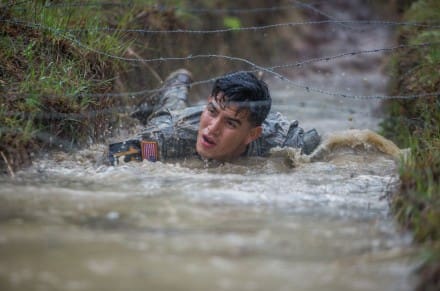
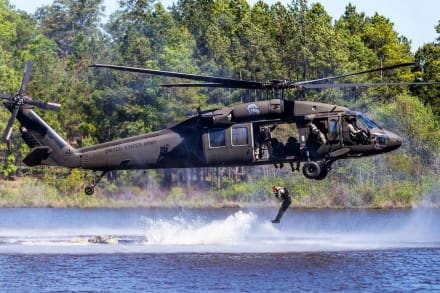
Today marks the opening ceremony and official start of the 36th Anniversary of the Best Ranger Competition where 50 2-man teams will test their speed, strength, skill and endurance through a grueling three day competition at Fort Benning, Georgia. The competition itself takes over 62 hours and involves intense tests of physical fitness and marksmanship. 100 competitors enter only two leave Best Ranger!

EF7D538C-3F22-4800-B431-52E8E126A417

FirstSpear is a proud sponsor for this years competition and has teamed up with Oakley Standard Issue to kick off the event with an online giveaway (details on FirstSpear Instagram Account). Tune in to FirstSpear TV (@firstspear_tv on instagram) for live coverage from the competition this weekend.

For more info on the event: www.bestrangercompetition.com

Scientist Joins Soldiers to Study Cold Weather Gear in the Arctic

Thursday, April 11th, 2019

NATICK, Mass. — There are very cold environments and then there is Arctic cold.

In the Arctic, a single mistake or mishap may be only minutes from disaster. A lost glove system, an ignored cold foot, heavy sweating from overexertion without clothing management, or a skidoo accident can result in rapidly progressing injury without hope for a quick evacuation to warmer surroundings or even cover from wind in a tree line.

“A military mission in the Arctic involves more than just survival,” said Dr. Karl Friedl, senior research scientist for physiology, from the U.S. Army Research Institute of Environmental Medicine, or USARIEM. “Agile performance requires a high level of preparation and training, as well as every advantage that the Army research community can provide.”

Friedl added that the best way to find out what Soldiers need to fight and win in the unforgiving cold is to experience the cold first-hand and learn from cold-dwelling experts.

Last month, Friedl had that opportunity when he joined a small team of cold-experienced Soldiers from the Vermont Army National Guard on a Guerrier Nordic field training exercise, which was under the leadership of the 35th Canadian Brigade Group. Researchers from the Combat Capabilities Development Command Soldier Center, or CCDC SC, and Defence Research and Development Canada-Toronto, or DRDC-Toronto, also accompanied the field exercise in order to test new protective clothing concepts and equipment.

“I was privileged to accompany the U.S. and Canadian soldiers to the Arctic as a ‘fusilier,’ or rifleman, in the second platoon, in order to gain first-hand understanding of the performance challenges that might be addressed by Army researchers,” Friedl said. “It was also an opportunity for me to learn from the native cold dwellers, the Canadian Inuit rangers, who accompanied and guided the exercise.”

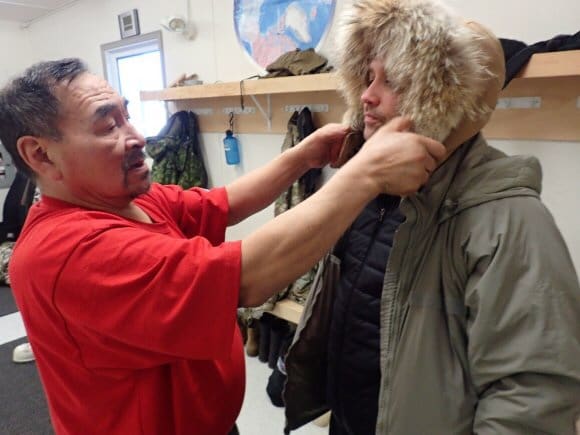
Friedl noted that the Inuit use modern technologies where they provide an advantage. Skidoos and GPS systems have replaced traditional sled dogs and navigating by the terrain and stars. Yet, the protective clothing they have worn for centuries, particularly the mittens, animal fur and tight-fitting hoods of their anoraks, remains unchanged.

Clothing is not only the component Inuit rangers use to stay warm. They have also retained their traditional dietary preferences, especially seal, caribou and Arctic char. According to Friedl, the rangers assert that nutrition is just as essential as clothing when it comes to performing in extreme cold conditions. Friedl noted that more research is needed to address U.S. Soldiers’ nutrition and hydration needs in the cold.

“On rest stops during the Arctic exercise, plain hot water from a thermos never tasted so good,” Friedl said. “Maintaining hydration is one of the many challenges Soldiers face during Arctic operations, both because canteens sometimes freeze and because the cold actually suppresses thirst. Thermogenic dietary components–food that helps your body produce heat–will also be further investigated as a potential performance enhancer.”

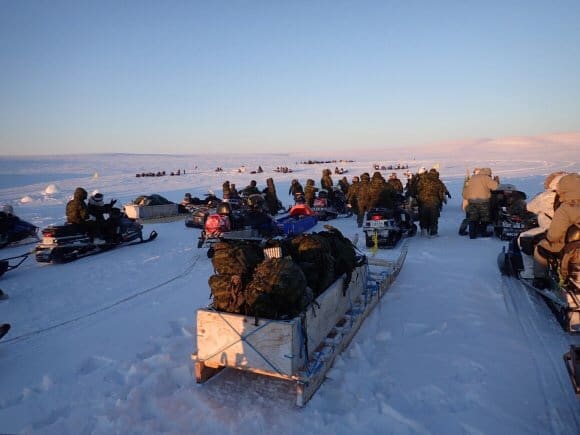
The U.S. and Canadian squads established camp near Resolute, Nunavut, Canada, where daily temperatures (minus the wind chill) typically hovered at minus 40 degrees Fahrenheit. U.S. Soldiers bundled up in the third generation Extended Climate Warfighter Clothing System, or the Gen III ECWCS, which consisted of seven layers of protective clothing. Their Inuit partners wore fewer layers. Friedl noted that the Inuit are an extreme example of people who have learned how to be “comfortably cold.”

“The Inuit possibly have an upregulated metabolic response from living in the cold,” Friedl said. “This provides them advantages such as improved manual dexterity, due to having increased blood flow in the hands. Since they are not restricted by multiple layers and complex clothing systems, they have a reduced energy cost. Some of these advantages may also be due to genetic adaptations, such as having higher layers of brown fat, which helps keep the body warm and is stimulated by cold. But this postulated difference has not been studied.”

Military operations require teams that have mastered survival and can perform with agility in unpredictable weather and mission conditions. Arctic operations, in particular, require an experienced team with skill, confidence and motivation. Friedl said the Vermont Army National Guard is such a group due to their extensive experience in Arctic operations.

Behind every Arctic Soldier, there is a team of Canadian and U.S. Army researchers who are collaborating to enhance Soldier lethality in the Arctic while ensuring Soldiers will safely come home.

“There are several lessons the U.S. Army can learn from the Canadian Inuit rangers in order to be a lethal Arctic force,” Friedl said. “Some aspects of the Inuit advantage, particularly clothing systems, thermogenic rations and metabolic responses, may be modifiable for the U.S. Army. Most importantly, the role of great leadership and preparation in such an unpredictable environment, as well as learning how to be comfortably cold, is vital to success.

“USARIEM’s cold research team has been extensively collaborating with the CCDC SC and DRDC-Toronto in order to evaluate and develop predictive models for cold weather clothing systems.

USARIEM is also leading a research effort in developing a forearm heating device that could be used in future clothing systems. With these research labs working together, the U.S. Army Arctic task force is heading in the right direction.”

Story By Mallory Roussel, USARIEM, photos by Dr. Karl Friedl, USARIEM.

New Direction for Female-Specific Flight Equipment

Wednesday, April 10th, 2019

NELLIS AIR FORCE BASE, Nev. (AFNS) —

The Air Force is working to redesign the gear used by female pilots across the force after facing challenges with current flight equipment.

“We have women performing in every combat mission, and we owe it to them to have gear that fits, is suited for a woman’s frame and (one) can be in for hours on end,” said Air Force Chief of Staff Gen. David L. Goldfein at a Defense Writers Group breakfast, March 2018 in Washington, D.C.

The majority of the equipment currently worn by pilots was built off anthropometric data from the 1960s, a time when only men were in aviator roles.

The lack of variety and representation in the current designs have caused multiple issues for women, said Col. Samantha Weeks, the 14th Flying Training Wing commander, assigned to Columbus Air Force Base, Mississippi.

Many of the uniform issues circulate around G-suits, flight suits, urinary devices and survival vests.

“The challenges other female aviators and I face are the fit and availability of our flight equipment,” said Capt. Lauren Ellis, 57th Adversary Tactics Group executive officer.

Limited sizes and accessibility often force aircrew to order the wrong size and have it extensively altered to fit properly, taking time and money away from the mission, Ellis said.

“All of the bladders on my G-suit need to be modified,” Ellis said. “It’s a lot of work for the Aircrew Flight Equipment, or AFE, Airmen. Even after they’re modified, the proportions don’t fit.”

G-suits are vital anti-gravity gear for aviators. The bladders in the suit fill with air and apply pressure to the pilot’s body to prevent a loss of consciousness during high levels of acceleration. Not having a properly fitted G-suit could lead to hypoxia followed by unconsciousness.

Ellis said ill-fitting flight suits are a common problem for men and women. Aircrew who are significantly above or below average height have a hard time finding suits that fit their body type.

Even if a woman found a flight suit close to her size, the flight-suit zipper is designed for men—not women. Female aircrew struggle with relieving themselves during flights because the flight-suit zipper isn’t designed low enough for them to properly use their urinary devices.

“There are flight suits that were designed with longer zippers for women, but they’re almost never available,” Ellis said. “It’s common for females to have to wait months to receive the flight suit they’ve ordered which causes them to have to wear the male one.”

Along with the possibility of injury and discomfort associated with G-suits and flight suits, women struggle to get their life-saving gear to fit accordingly. The process of ejecting is so powerful, even pilots with well-fitting gear are at a serious risk of injury. It’s important for aviators to be heard and the modernization of equipment for everyone continues, Ellis said.

“In certain situations, having ill-fitting gear, such as harnesses and survival vests, can result in a loss of life,” Ellis said. “If an aircrew member ejects from the aircraft with equipment that doesn’t fit, they can be severely injured or lose their life.”

The Air Force and Air Combat Command are working to find a feasible solution for aircrew members.

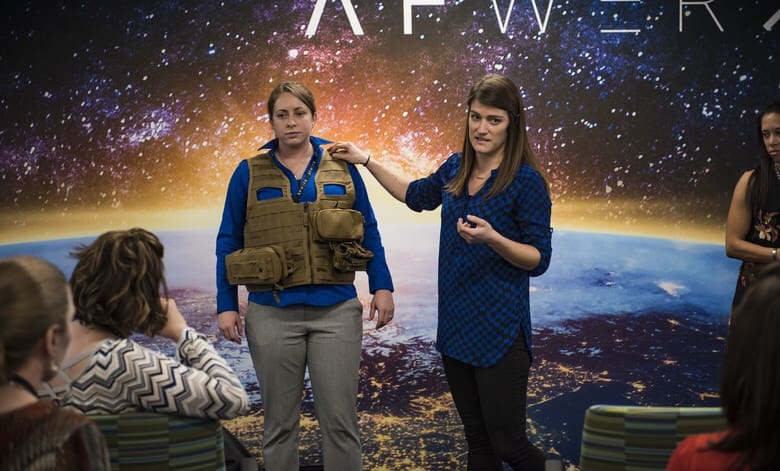
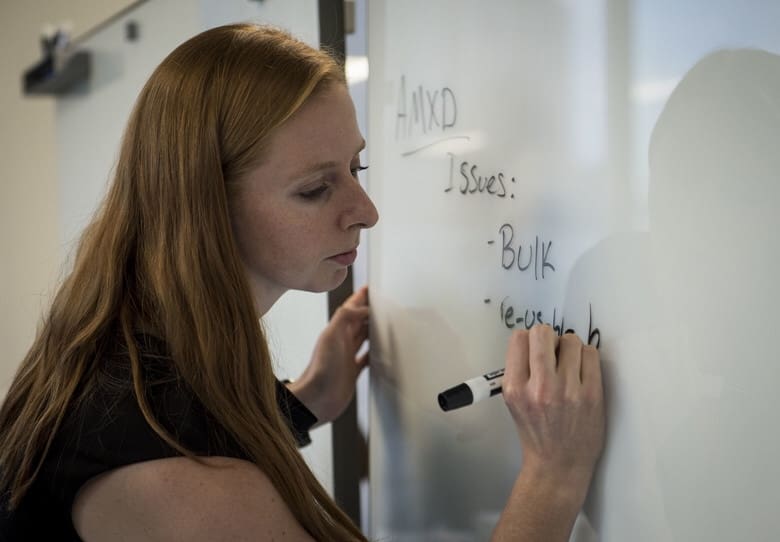
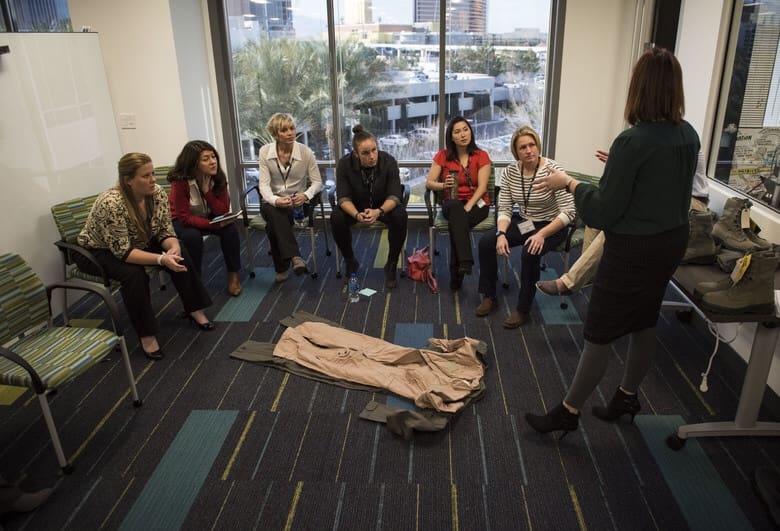
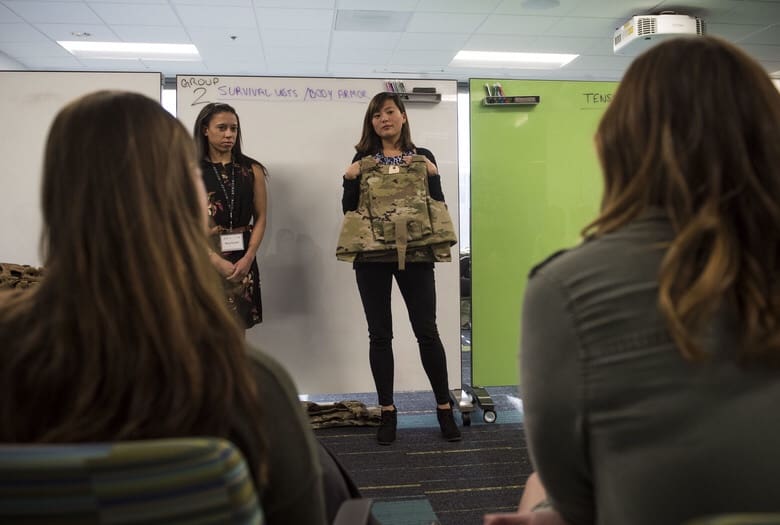
Part of the strategy to correct the uniform problem was to take part in several collaborative Female Flight Equipment Workshops at AFWERX Vegas. Female Airmen stationed across the globe traveled to the innovation hub and attended the workshops to explore areas of opportunity and come up with proposed solutions.

“The purpose of the workshops is to bring together female aviators, Aircrew Flight Equipment, Human Systems Program Office personnel and subject matter experts to understand the current products, the acquisition process and the actual needs from the field,” Weeks said.

Throughout the workshops, aviators participated in briefings, as well as discussions and exercises with the agencies involved in the design and distribution of their gear.

“The Human Systems Program Office acquires and sustains all equipment for male and female Airmen,” said Lt. Col. Elaine Bryant Human Systems Program Office deputy chief, assigned to Wright-Patterson Air Force Base, Ohio. “We are committed to hearing our consumers’ voices, and we will make the changes necessary to our current process to meet their needs.”

The workshops established the communication needed between the consumer, designers and suppliers to reach a mutual goal of understanding and development.

“We now have some pretty clear actions coming out of the Female Flight Equipment Workshops,” Bryant said. “We’ve heard the feedback, and we want to make sure we have actionable things we’re accomplishing within specific time frames for our consumers.”

The Human Systems Program Office will strive to make progressive changes within their operations and better their acquisition process, explained Bryant.

“We will take the field up on their offers of coming out to the units and meeting the aircrew for whom we supply,” Bryant said. “We’ll ensure we maintain the lines of communication needed to better our program.”

Another major improvement for female aviators is the adoption of the Battlefield Airmen Rapid Resource Replenishment System, a centrally managed equipment facility. BARS is capable of shipping needed resources directly to female aircrew. Using this system will allow women to acquire the proper fitting equipment they need within an acceptable timeline.

“BARS is a step in the right direction,” Ellis said. “Everyone deserves to have equipment that fits them. There are certain things we have to adapt to, but as long as we’re trying to improve and modernize our gear, we can be a more ready and lethal force.”

“The Air Force has evolved over the years and continues to evolve,” Weeks echoed. “Female aviators entering the Air Force now will not have the same issues I had over the last 21 years.”

Information from an ACC news feature was used in this story.

By Airman 1st Class Bailee A. Darbasie, 99th Air Base Wing Public Affairs

Brigantes Presents – High Angled Solution – Team Wendy Ballistic Helmets

Wednesday, April 10th, 2019

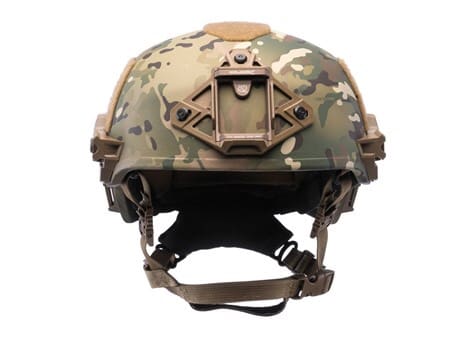
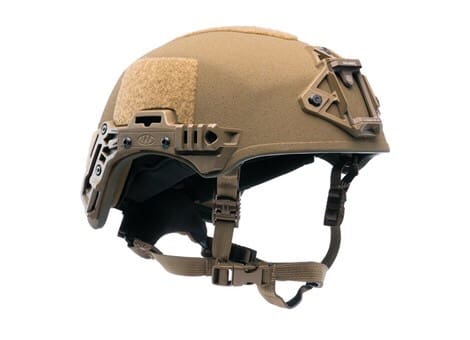
After 15 years of developing leading-edge products that protect against serious and potentially life-threatening injuries, Team Wendy introduces the EXFIL Ballistic helmet for military and law enforcement operators.

Available since November 2018, the EXFIL® Ballistic features a hybrid composite shell for increased strength with a unique geometry for optimal fit. An innovative, boltless CAM FIT™ retention quickly adjusts to individual head shapes, providing a comfortable and stable fit.

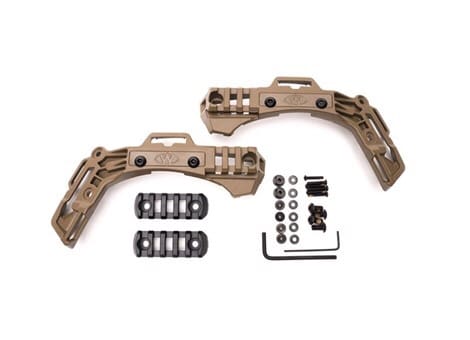
A Zorbium® foam liner protects against impact and allows for an overhead communications headband. Customizable fit is achieved through a set of moveable comfort pads.  A lanyard compatible Wilcox® shroud secures any standard NVG mount. The EXFIL® Rail 2.0 accessory mounting system is compatible with all EXFIL® accessories and features T-slots for custom mounting. The EXFIL® Rail 3.0 accessory mounting system is compatible with standard EXFIL®accessories.

For more information contact international@brigantes.com

For UK enquires contact warrior@brigantes.com

Max Talk Monday 17: Immediate Action Drill: Fight Through! Live Fire Drill

Monday, April 8th, 2019

This is the seventeenth installment of ‘Max Talk Monday’ which shares select episodes from a series of instructional videos. Max Velocity Tactical (MVT) has established a reputation on the leading edge of tactical live fire and force on force training. MVT is dedicated to developing and training tactical excellence at the individual and team level.

This video is a drill from the Texas Class 2019. It may look a little different from what many would expect for an immediate action drill, but specific training objectives are being exercised. This drill simulates, using a five man team, an aggressive immediate action drill for surprise enemy contact, in this case flank (right), best for use in close country. In this drill, there are eight mannikin targets hidden in positions of cover / concealment – there are no typical targets, simply the manikins concealed in natural firing positions beside / behind trees and scrub. .

The specific training sequence / objectives of the drill are:
-React to contact (flank right).
-Conduct a ‘cover shoot’, designed to kill enemy in their concealed positions.
-‘Fight Through’ to the limit of advance (LOA).

Specifically, the fight through is being conducted as a skirmish line, with buddy pairs operating independently but in conjunction with each other, controlled by the centrally located team leader.
‘Move / Fire’ is being conducted, a different technique to standard fire and movement, where fire is generated continuously both when static and while advancing. In close country, Move / Fire is a technique that in this case is used to generate a large amount of continuous fire to aid a smaller team in winning the firefight.

Detailed explanations can be found in the MVT Tactical Manual: Small Unit Tactics.

Max is a tactical trainer and author, a lifelong professional soldier with extensive military experience. He served with British Special Operations Forces, both enlisted and as a commissioned officer; a graduate of the Royal Military Academy Sandhurst. Max served on numerous operational deployments, and also served as a recruit instructor. Max spent five years serving as a paramilitary contractor in both Iraq and Afghanistan; the latter two years working for the British Government in Helmand Province, Afghanistan.

Website: Max Velocity Tactical

YouTube: Max Velocity Tactical