TYR Tactical

Archive for the ‘Guest Post’ Category

FirstSpear Friday Focus – Product Reviews

Friday, August 23rd, 2019

Leave a review on one of your favorite FirstSpear items and you will automatically entered to win a FS gift card for a future purchase! You must have an account to leave a review.

First-spear.com

Army Futures Teaming with Industry on Advanced Robotics, Sensors

Tuesday, August 20th, 2019

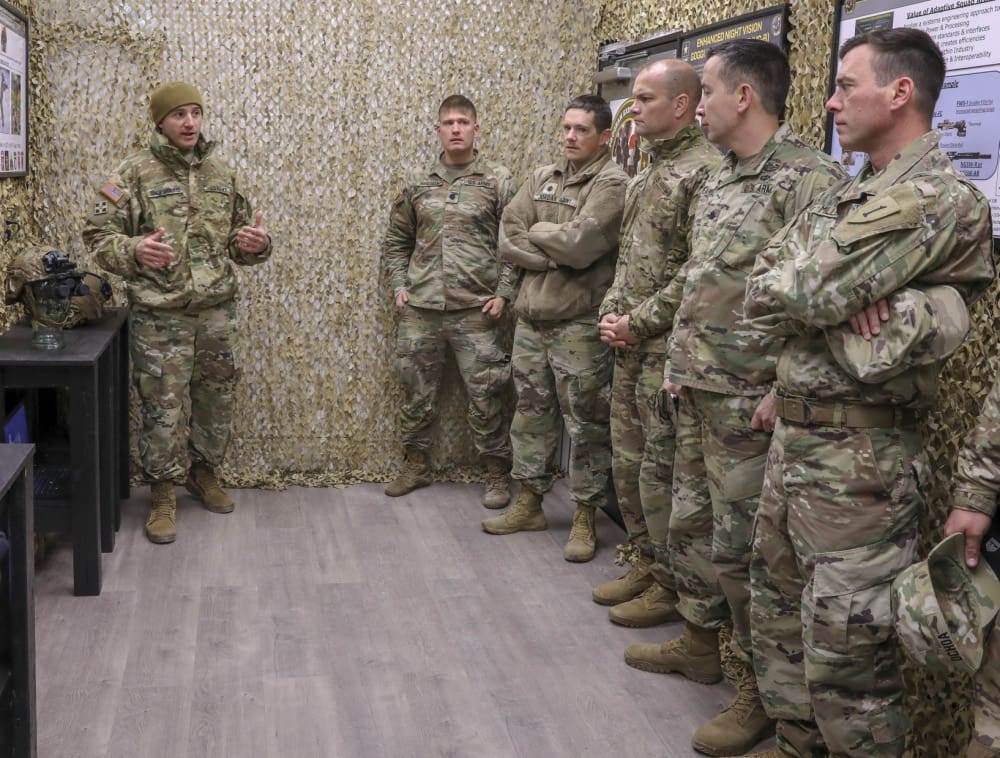
ABERDEEN PROVING GROUND, Md. — Army Futures Command is soliciting industry for information on emerging technologies in robotics and sensors to enhance the targeting capabilities of Army small tactical units.

Researchers are in the initial stages of the Smart Targeting Environment for Lower Level Assets, or STELLA, program that will enable Soldiers to operationalize robotics to rapidly employ, build and share target data in multi-domain operations. The goal is to shorten the amount of time it takes for Soldiers to detect, acquire and identify a target before they engage the enemy.

AFC’s major subordinate command, the Combat Capabilities Development Command, or CCDC, is leading the effort and will issue a request for information, or RFI, in August 2019. The RFI will help the Army to gauge current capabilities, ongoing research and development, and emerging trends.

“We’re developing an efficient system so there is a Soldier in the loop making a decision much more quickly on what needs to be engaged. The future battlefield will include a large number of sensors detecting targets and high-value assets. With higher volumes on information, we need to ensure the Soldier isn’t overwhelmed,” said Osie David, a chief engineer within CCDC’s center for Command, Control, Communications, Computers, Cyber, Intelligence, Surveillance and Reconnaissance — or C5ISR.

Several areas of science and technology expertise will converge for the STELLA program, Osie said. C5ISR Center will use the findings from the RFI to inform future efforts in support of the Army’s manned-unmanned teaming concept.

C5ISR Center anticipates releasing a request for proposal, or RFP, in early 2020. The STELLA program is scheduled to begin in fall 2020.

Story by Dan Lafontaine, CCDC C5ISR Center Public Affairs

Graphic illustration by Jamie Lear, CCDC C5ISR Center

Max Talk 34: HEAT 1 Combat Tactics 8 – 11 Aug 2019: Compilation

Monday, August 19th, 2019

This is the thirty fourth installment of ‘Max Talk Monday’ which shares select episodes from a series of instructional videos. Max Velocity Tactical (MVT) has established a reputation on the leading edge of tactical live fire and force on force training. MVT is dedicated to developing and training tactical excellence at the individual and team level.

A compilation of footage taken during the August 8 – 11 HEAT 1 Combat Tactics Class, originally for upload to Instagram. This is by no means all of the drills that are run at these classes, simply what I was able to capture on my phone during the training. HEAT 1 Combat Tactics is a 4 day class, 2 days on the flat range doing work-up training and drills to ready the students for the 2 days on the tactical ranges. The classes are held at the Velocity Training Center (VTC), Romney WV. The facility is purpose built to offer the best in Live Fire and Force on Fire Tactical Training.

Shown in the video are portions of tactical Ranges 1 & 2, the main movement ranges used for HEAT 1. Mobile classes are also available. Day 3 of the tactical range portion sees students working up from pairs to team assault and then break contact drills, repeated in more complexity on Day 4, starting with a pairs jungle walk, break contact drills, and a final team assault.

This is the fourth installment of ‘Max Talk Monday’ which shares select episodes from a series of instructional videos. Max Velocity Tactical (MVT) has established a reputation on the leading edge of tactical live fire and force on force training. MVT is dedicated to developing and training tactical excellence at the individual and team level.

Max is a tactical trainer and author, a professional soldier with extensive experience in British elite forces and as a paramilitary contractor. Max was enlisted and later commissioned, via the Royal Military Academy Sandhurst, into the Parachute Regiment. The Parachute Regiment is an elite airborne infantry unit, comparable to the U.S. 75th Ranger Regiment, accessible only via the renowned ‘Pegasus Company’ Selection course. Max served in 1 and 2 PARA. Of the three PARA battalions, 2 and 3 PARA serve in 16 Air Assault Brigade as the UK’s elite Rapid Response Force, with one battalion at permanent high readiness for worldwide intervention operations. Max served in Para Reg when it was utilized to provide elite airborne infantry support to UKSF, as the forefathers of the SFSG. With training and operations validating the concept, including Op Barras (Sierra Leone), 1 PARA was placed permanently in role as part of the SFSG.

Additionally, Max served on a number of deployments, to include multiple tours in Northern Ireland, the Balkans and Afghanistan. Additional overseas assignments saw the opportunity to train, or train with, allied nations, including the U.S. Military. Roles which Max filled included rifle platoon commander, patrol leader, recruit instructor (platoon commander) at the PARA Training Depot, anti-armor platoon commander (fire support company), operations officer and command on deployments. Reaching a career point facing staff college and moving away from command of paratroopers, Max made the decision to resign from the service. After leaving the British Army, Max spent a further five years working operationally as a paramilitary contractor in both Iraq and Afghanistan; the latter two years based in Helmand Province working alongside the UK Military.

Since 2013, Max has run Max Velocity Tactical (MVT), a training company conceived to offer professional combat training for responsible citizens. As the Velocity Training Center (VTC) has grown into a state of the art training venue, MVT also took on pre-deployment training for U.S. SOF. This runs the spectrum from facility rental to tailored training packages specializing in Small Unit Tactics.

Website: Max Velocity Tactical

YouTube: Max Velocity Tactical

SCUBAPRO Sunday – Mask Cleaning, Defogging, and Storage

Sunday, August 18th, 2019

Dive mask preparation

When a SCUBA mask is made, it leaves a lot of film and residue on it. If not cleaned off properly, you will never get your mask to stop fogging. You can search the Internet for lots of different ways to clean your mask. I am going to walk thru one of the easiest and safest methods to do it. With some of the other methods, if not done correctly, you can break your mask glass or damage your frame.

Toothpaste or Soft Scrub (without bleach)

Your first step will be to take some toothpaste (not gel) and with your finger dab some on both sides of the inside of the lenses and the inside of the mask.  Rub the toothpaste thoroughly and then let it sit to dry. Try to wait an hour or two before you rinse it out; however, if you don’t have the time, just go ahead and rinse it right away; there’s a good chance it will still work. You should do this every couple of months to make sure your mask is clean. Make sure you clean the interior inside of the mask, skirt and all.  There are also commercial cleaners you can use that clean and defog. A mask is like the inside of your car window. It gets a film on it because all the plastic and rubber are off-gassing.

Put your dive mask under running water to rinse out the toothpaste.  You can use your fingernail or a toothbrush to get around the skirt that touches the lens. In some cases, some of the toothpaste can seep under there. Make sure you get it all out. 

Different ways to defog your mask before every dive

Commercial Defogger

This is the type of defogging you can buy at any dive shop.  There are a ton of different types, but they are basically all the same.  If you would like to go this route, making sure it is safe for the reef and environmentally friendly. This is a good practice as your face will be in there. If you are diving O2 make sure it will not interact with the O2 and cause a burn or reaction. Usually, divers will put this inside their mask, swish it around with their finger and then rinse and go.

SCUBACLEAR, 30CC

Baby Shampoo and dishwashing soap

This is a very economical choice in the world of defogging your mask.  Many dive boats will carry an empty plastic water bottle container with a hole in the top and fill it about a quarter full of baby shampoo and the rest water.  Even just a little bit of soapy water will be enough to defog your mask.  Always remember to rinse your mask thoroughly; otherwise, the residue soap will sting your eyes underwater, even the baby shampoo will cause some tears if you use too much. 

You can also spit into your mask. If you use spit, the mask should be completely dry.  If you take off your mask in the water and then spit into it, it is very likely to become foggy during the dive.  Remember – dry mask, spit, rub, rinse with water, and put on your mask.

Preventing a foggy mask even if you have defogged it

If your face is sweaty and hot, it is a good idea to splash some cold water on it to give it a quick rinse before you put your mask on. 

Before putting your choice of defogging on your mask, ensure that the lens is dry. You can apply to defog to your mask anytime before jumping in the water; however, you should rinse the defog out only moments before jumping in.  If you have rinsed it out, but then are delayed jumping in, and you are not ready to put your mask on your face, leave a layer of water in your mask until you are prepared. Once you have defogged and rinsed your mask, put your mask on your face, and don’t take it off.  Moving your mask to your forehead, neck, or into the water basically eliminate any defogging you had just put onto your mask. Keep in mind if you are jumping into a dive or have to wait before you get to where you will leave on your dive. For long transits to insertion points, try and keep your inner mask dry, you can store it in a zip-lock bag as it is easily collapsed and store. Lastly, you can always leave a little water in your mask during the dive and swish it around to help keep the fog at bay.

Summary

You should clean your mask every couple of months depending on its use. It should be kept in a clean, dry place. Most masks come in boxes that are designed for you to store it in. Make sure it is dry before you store it away. Clean your mask after every use; make sure to clean around the outside edge of the mask, especially the part close to your mouth. Because it is close to your mouth, it can smell like food, and that can attack bugs. If this happens, they will eat your mask, and it will look like it is dry rotted. Most masks are made of high-quality rubber and can resist dry rot. A good dive mask can last for years if taking care of properly.  

Lastly, I am going to say this, and if you have never done this before, ask someone who has… The best way I have found to get a new mask ready to dive is and again DO NOT TRY THIS IF YOU HAVE NEVER DONE IT BEFORE. Do not do this on a tempered mask. I know all masks are tempered. I am putting this out as a warning that mask companies tell you, ”Do not burn the mask” If you do it wrong, it will destroy your mask. So, what I do is, I burn my mask, (I know I said don’t do it) then clean it with soft scrub (without bleach) with a green scrubby pad, not too hard, so you don’t scratch the glass. Clean the total inside of the mask, let it dry, burn it again then soft scrub again. Then I use Jaw spit anti-fog. I use the gel, not the spray, (I have never tried the spray).

I know everyone has a way to do this and just want to share what has been working for me. If you read this and say. “I can burn my mask” never stop moving the flame and only let the very top of the flame touch the glass, lastly never ever touch the rubber sides. AGAIN, DON’T DO THIS IF YOU DON’T KNOW HOW. I know the bold writing will hold up in court if you burn your mask and it breaks, and you can decide to sue me.


Strike Hold! Presents: Operation Dragoon 75 – Dispatch from the Front

Friday, August 16th, 2019

Operation Dragoon, the Allied invasion of southern France, was originally supposed to be launched simultaneous to the invasion of Normandy – thus catching the Nazi forces in France and Western Europe between the horns of a two-pronged assault. However, due to there not being enough ships, aircraft, crews, and materiel to allow both invasions to happen simultaneously, the southern invasion was postponed.

Sometimes known as “The Forgotten D-Day”, Operation Dragoon (earlier known as “Operation Anvil”, whilst the Normandy invasion was known as “Sledgehammer”) was re-scheduled for mid-August 1944. By that time it was also clear to the Allied High Command that another way into, and through, France was necessary because the Normandy ports could not cope with the volume of supplies needed to keep the armies fed, armed, fueled, and moving.

The goals of Operation Dragoon were to secure the vital ports on the French Mediterranean coast and increase pressure on the German forces by opening another front. After some preliminary commando operations, the US VI Corps landed on the beaches of the Côte d’Azur under the shield of a large naval task force, followed by several divisions of the French Army B.

Allied forces were opposed by the scattered forces of the German Army Group G, which had been weakened by the relocation of its divisions to other fronts and the replacement of its soldiers with third-rate Ostlegione outfitted with obsolete equipment. Hindered by total Allied air superiority and a large-scale uprising by the French Resistance, the weak German forces were swiftly defeated.

The remaining German forces withdrew to the north through the Rhône valley, to establish a stable defense line at Dijon. Allied mobile units were able to overtake the Germans and partially block their route at the town of Montélimar. The ensuing battle led to a stalemate, with neither side able to achieve a decisive breakthrough, until the Germans were finally able to complete their withdrawal and retreat from the town. While the Germans were retreating, the French managed to capture the important ports of Marseille and Toulon, putting them into operation soon after.

The Germans were not able to hold Dijon and ordered a complete withdrawal from Southern France. Army Group G retreated further north, pursued by Allied forces. The fighting ultimately came to a stop at the Vosges mountains, where Army Group G was finally able to establish a stable defense line. After meeting with the Allied units from Operation Overlord, the Allied forces were in need of reorganizing and, facing stiffened German resistance, the offensive was halted on 14 September – one month to the day after the invasion.

Three days after the end of Operation Dragoon, on the 17th of September 1944, “Operation Market-Garden” was launched. With Operation Market-Garden the Allied Command sought to leapfrog over the German forces in The Netherlands – using airborne forces to capture key bridges over the Rhine – and then punch through into the industrial heartland of Germany.

Operation Dragoon was considered a success by the Allies. It enabled them to liberate most of Southern France in a time span of only four weeks, while inflicting heavy casualties on the German forces. Although a substantial part of the best German units were able to escape, the captured French ports were put into operation, allowing the Allies to solve their supply problems.

Article features some text and photos from Wikipedia.

This week marks the 75th Anniversary of Operation Dragoon, and once again our friends from the WWII Airborne Demonstration Team are on the ground and in the air doing what they do best – commemorating the brave troops of the Airborne Forces who were critical to the Allied victory. They recently posted a “Dispatch from the front lines” on their Facebook page, and we’d like to share that with you:

Dragoon Update—Photos from the front!

U.S. Army Airborne, British Airborne, and U.S. Marine Corps Airborne attached to the Office of Strategic Services—we’re privileged to be honoring them all! These units were part of the Allied 1st Airborne Task Force represented by our team members here.

The 1st Airborne Task Force was a short-lived airborne unit created specifically for Operation Dragoon–the invasion of Southern France. The combined unit strength was 9,000 men. It consisted of a near-random grouping of parachute infantry regiments, many of which had served in Italy and which were accustomed to the mountainous terrain of Southern France. During Dragoon, most landed in drop zones like the one seen here. Forests and mountains made the area dangerous, but also forced units to be split apart, testing their true abilities as Airborne infantry.



Among the units we honored during our jump on Monday was the 551st Parachute Infantry Regiment. Virtually nothing of the 551st’s history was known to the American public until a renewed interest in the unit in the 1990’s prompted veterans to seek recognition for it. The 551st was originally commissioned to capture the French Island of Martinique which was being used as a supply station for Nazi U-Boats. The 551st trained in secret in Panama far away from the more famous Airborne regiments. The invasion of Martinique was called off, but Operation Dragoon put the 551st on French soil, nevertheless.

On the fog-blanketed morning of August 15th, the 551st parachuted into a drop zone not far where we are shown here. Immediately the 551st liberated the town of Draguignan and a week later, Nice.

During the Battle of the Bulge this outlier within the Airborne community was summoned to take the fight to the enemy in the north. Assigned to move through the American lines and infiltrate four miles into Nazi occupied territory, the 551st achieved every objective assigned—but at a terrible cost. It entered the battle on January 3, 1945. By January 6, it had lost 85% of its troops. Of its 643 men only 14 Officers and 96 men lived to see the 551st’s victory.


The unit was famous for an acronym that many on our team take pride in sharing: GOYA. We’ll let you look that up. But it sums up a simple formula for life success. Of all the motivational messages and themes out there, we think the 551st had it right—one of the many reasons we admire them and want to make sure that their story stays alive to inspire others.

Special thanks to our friends and brothers at French Airborne Command for inviting us to join them and for making this jump possible. To the memory of all who served in 1st Airborne Task Force and to the 551st, we salute you! Airborne All The Way!

Photos by WWII ADT, Ville du Muy and by Jean-michel Maurel via Airborne Command

Originally published by strikehold.net.

FirstSpear Friday Focus – New Apparel

Friday, August 16th, 2019

Today’s Friday Focus we are announcing the popular FirstSpear Wind Cheater is now available in size 3X and back by popular demand is the “No Bubbles No Troubles” t-shirt that was originally debuted as a giveaway at ADS Warrior East in the FS booth. Grab this limited run shirt while supplies last!

www.first-spear.com/technical-apparel/no-bubbles-no-troubles

Palmetto State Armory’s AK-V 9mm Folder

Wednesday, August 14th, 2019

Palmetto State Armory has announced a new AK pistol product release. The AK-V 9mm with triangle side-folding brace and hammer-forged parts is based on the Vitayaz-Sn Russian submachine gun.

All are:
-Rated for 9mm +P+ ammunition and reportedly perform well suppressed.
-Using a Nitride 4150 barrel with 1/10 in. twist, threaded 1/2×28 for use with common 9mm muzzle devices and suppressors.
-Shipping with a U9 35 round patterned magazine (which will work in CZ Scorpion 9mm firearms) where allowed by law.

All feature:
-Forged trunnion, bolt, and bolt carrier.
-Picatinny railed hinged dust cover, designed to co-witness common low mount red dot optics with the front and rear sight(s). The dust cover is flared to prevent the safety selector from riding above the dust cover.
-PSA AK Picatinny stock adapter to replace the M4 stock adapter found in other PSA AK pistol models, allowing use of the left-side folding brace.
-PSA design utilizing the Palmetto State Armory U9 35 round magazine, and also features last round bolt hold open. The PSA AK-V will accept CZ brand scorpion magazines.

This is not as likely to cause ptyalism as LAV’s SOF-AK, but it’s still interesting.

PSA (a part of JJE Capital) advises these firearms are currently available for Pre-Order only and are expected to ship within 6-9 weeks of purchase. PSA is online at palmettostatearmory.com. Learn more about Palmetto State Armory on Breach-Bang-Clear. Connect with PSA Instagram, @palmettostatearmoryofficial.

Further details, with links to each model, below.

1 | PSA AK-V 9mm Red Wood Triangle Side-Folding Pistol

Although based on the Vitayaz-SN Russian submachine gun, the AK-V (side-folding) 9mm pistol features several modern improvements. It’s a blowback-operated system to ensure smooth cycling, features forged front trunnion, bolt, and bolt carrier, and utilizes both the PSA U9 35-round magazine (with last round bolt hold-open). The PSA AK-V will accept CZ brand Scorpion magazines.

-Single stage, single hook trigger
-Red wood upper and lower receiver
-Red wood AK grip

Additional AK-V 9mm Red Wood Pistol specs:
        Forged Front Trunnion
        Forged Bolt/Carrier
        Stamped 1mm Steel Receiver
        10.5” Nitrided 4150 Steel Barrel
        9x19mm
        1 in 10″ Twist
        2 Port “Tanker Style” Muzzle Brake
        Picatinny Top Railed, Hinged Dust Cover
        Fixed Rear Sight
        Enhanced Extended Safety Selector
        Fire Control Group: Single Stage, Single Hook
        Red Wood AK Grip
        Red Wood Upper/Lower Handguard
        PSA AK Picatinny Stock Adapter with Triangle Side Folding Brace

2 | PSA AK-V 9mm MOE/ALG Railed Triangle Side Folding Pistol

Also based on the Vitayaz-SN Russian submachine gun but built with a more modern aesthetic, the AK-V MOE/ALG utilizes an ALG AKT Enhanced Trigger with Lightning Bow and a 2-port tanker style muzzle brake. It has an enhanced aluminum M-LOK upper/lower handguard with top pic-rail an a Magpul AK polymer grip.

The weapon ships with a U9 35 round patterned magazine (which will work in CZ Scorpion 9mm firearms) where allowed by law.

Additional AK-V 9mm MOE/ALG Specs:
        Forged Front Trunnion
        Forged Bolt/Carrier
        Stamped 1mm Steel Receiver
        10.5” Nitrided 4150 Steel Barrel
        9x19mm
        1 in 10″ Twist
        2 Port “Tanker Style” Muzzle Brake
        Picatinny Top Railed, Hinged Dust Cover
        Fixed Rear Sight
        Enhanced Extended Safety Selector
        Fire Control Group: ALG AKT Enhanced Trigger With Lightning Bow
        Magpul AK Polymer Grip, Black
        Enhanced Aluminum M-Lok Upper/Lower Handguard with Picatinny Top Rail
        PSA AK Picatinny Stock Adapter With Triangle Side Folding Brace

3 | PSA AK-V 9mm MOE

Like its brothers described above, the AK-V 9mm MOE follows in the footsteps of new PSA AK-47 GF3 models. It also forged front trunnion and bolt/carrier.

Additional AK-V 9mm MOE Specs include:
        Forged Front Trunnion
        Forged Bolt/Carrier
        Stamped 1mm Steel Receiver
        10.5” Nitrided 4150 Steel Barrel
        9x19mm
        1 in 10″ Twist
        2 Port “Tanker Style” Muzzle Brake
        Picatinny Top Railed, Hinged Dust Cover
        Fixed Rear Sight
        Enhanced Extended Safety Selector
        Fire Control Group: Single Stage, Single Hook
        Magpul AK Polymer Grip, Black
        Magpul AK Polymer Handguard, Black
        M4 Stock Adapter with Triangle Side Folding Brace

TYR Tactical Tuesday – Daniel Horner Joins TYR Family As Sponsored Shooter

Tuesday, August 13th, 2019

Please join us in welcoming champion shooter, Daniel Horner, to the TYR Tactical® family as our newest Brand Ambassador.

“I’m thrilled to be an ambassador of TYR Tactical because I’ve had the opportunity to use their equipment for several years and it has never let me down,” said Daniel. “The quality is the best in the world, as are the people who work there.”


Daniel is undoubtedly the best multi-gun shooter in the world. Over his 20 years of competitive shooting, Daniel has accumulated hundreds of wins under his belt. During his 13 years at the prestigious United States Army Marksmanship Unit, he dominated the multi-gun circuit and won several of the most elite team sniper matches is the United States. After leaving active duty, Daniel is excited to continue his unrivaled performance in the shooting sports.

Daniel’s competitive edge and skills cross over to all types of shooting. He has taken the lessons learned from competitive shooting and has used them to prepare soldiers, sailors, Marines, and airmen for combat.


When Daniel isn’t shooting, instructing, or assisting with product development, he enjoys duck hunting with his best boy, a black Labrador retriever, named Zeus. Daniel lives in South Georgia with his wife, step-daughter, and four dogs. “I look forward to bringing the TYR Tactical brand even more visibility; I use Tyr Tactical products just about every day either hunting, training, or competing,” said Daniel.