Colt

Archive for the ‘Guest Post’ Category

Army Showcases New Ground-Based PNT, Electronic Warfare Tech

Tuesday, August 27th, 2019

ABERDEEN PROVING GROUND, Md. — The Army is advancing its ground-based precision navigation and timing, or PNT, technology to counter spoofing threats and improve operations in a multi-domain environment.

While GPS continues to be the “gold standard” for PNT capabilities, it can be disrupted from a number of frequency interferences such as weather, and man-made or natural terrain, said Col. Nick Kioutas, the PNT project manager.

Near-peer competitors have also demonstrated an ability to “spoof” current GPS technologies. Spoofing can generate position and timing inaccuracies on a battlefield, he said Friday at a media event hosted by Program Executive Office Intelligence, Electronic Warfare and Sensors, or PEO IEW&S.

The Army has taken a layered approach to ensure accurate position and timing data, he said. This approach includes the integration of non-radio frequency technologies on the battlefield, such as inertial-based navigation systems, chip-embedded atomic clocks, and Soldier-worn or vehicle-mounted odometers.

For example, industry officials are currently developing and testing a boot-sensor prototype that tracks a Soldier’s rate of movement, he said.

“It is like a pedometer,” Kioutas said. “If you knew you were walking at a certain pace and all of a sudden your system jumped a kilometer — you know you’re being spoofed.”

The Army also looks to secure access to alternative sources of PNT data through other GPS networks. Program officials have also considered the use of anti-jam antennas on vehicles to ensure access to GPS and PNT signals, Kioutas said.

“Our systems will integrate all these data sources to determine which one we can trust the most,” he said. “If our GPS is spoofed, we can look at our inertial navigation system [or other layered systems], and compare it to one of these alternative signals” to get accurate PNT data.

ELECTRONIC WARFARE

Along with improved PNT capabilities, PEO IEW&S is currently developing an Electronic Warfare Planning and Management Tool, or EWPMT, to manage and control electronic warfare assets in support of unified land operations.

Through the EWPMT, the Army can now visually synergize its EW attack, targeting, and surveillance capabilities to enable the maneuverability of forces. The tool also improves spectrum management operations and assists with the intelligence-gathering process.

Operators can streamline the process between the EWPMT and fires support, in addition to being able to configure their system to generate automated responses to a variety of signals or alerts, officials said.

Once a EWPMT system is triggered, the program will initiate its automated workflow, often distributing information throughout a tactical operations center. Depending on the engagement, operators can initiate a fire mission and provide tactical graphics for support.

“Operational units can now visualize the electromagnetic spectrum,” said Lt. Col. Jason Marshall, product manager for Electronic Warfare Integration.

“EWPMT is the commander’s primary tool to integrate multi-domain operations into their military decision-making process,” he added.

While still under development — EWPMT increment one, capability drop three — is leveraging user feedback to allow EWPMT to support the electronic warfare officer’s techniques, tactics, and procedures, Marshall said. A pool of electronic warfare Soldiers and electromagnetic spectrum managers, or 25Es, from across the Army are involved in the program.

Instead of waiting for EW to become an official part of the targeting process, program officials are trying to get ahead of the curve to fulfill a future requirement, said Capt. Daniel J. Nicolosi, EWPMT assistant product manager.

Currently, EW operators “have nothing,” added Chief Warrant Officer 2 Will Flanagan, senior electronic warfare targeting officer, who is assigned to the operations group at the National Training Center at Fort Irwin, California.

As an operator, Flanagan is highly involved in the EWPMT’s ongoing developmental process.

“With the EWPMT in front of me, I can show the commander where we’re at, and what we can do,” he said. “This will give us that spot on the TOC floor. This is the first tool to allow us to do our jobs.”

Future iterations of the EWPMT program, officials said, will focus on pacing the threat’s capabilities within a disconnected, intermittent, and latent environment. In turn, the program will help refine the Army’s ability to conduct cyberspace electromagnetic activities in support of multi-domain operations and enable the Army to fight and win on a complex battlefield.

VMAX

For the EWPMT to be effective, it relies on fielded communications sensors and other EW transmission devices.

The Versatile Radio Observation and Direction, or VROD, Modular Adaptive Transmission system, known as VMAX, have already been fielded to meet mission requirements.

“VMAX is a lightweight man-portable electronics support and offensive electronic attack system. It is used to find, monitor, locate, and jam RF emitters in real time during tactical operations,” said Ken Gilliard, team lead of the Rapid System Applications Team, which falls under the Command, Control, Communications, Computers, Cyber, Intelligence, Surveillance, and Reconnaissance Center, or C5ISR.

“Its purpose is to create that advantage in the electromagnetic spectrum to provide Soldiers a window to maneuver on the battlefield,” he added.

When VMAX is operating in a support capability, operators can monitor the electromagnetic environment and determine what frequencies an adversary is operating on. Further, Soldiers can use multiple VMAX systems to geo-locate a signal, he said.

Similarly, if VMAX is supporting offensive EW capabilities, it can be used to jam or interfere with the signal within specific frequencies.

VMAX is a self-contained, battery-powered device, which weighs approximately 25-30 pounds, Gilliard said. Soldiers can tether VMAX to a vehicle, a building, or some air platforms. The device can be remotely operated and configured with a wide range of antennas to fulfill mission requirements.

The Army currently owns more than 200 VMAX nodes and 100 VROD nodes, he added. Majority of these devices are already deployed around the globe, many of them supporting operations in Europe and the Middle East.

Story by Devon L. Suits, Army News Service
Illustration by Justin Rakowski
Photo by 1st Lt. Jordan Linder

The 13th ASOS Conducts Combat Mission Training

Tuesday, August 27th, 2019

PETERSON AIR FORCE BASE, Colo. —

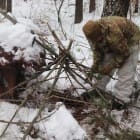
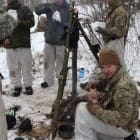
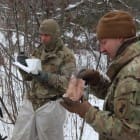
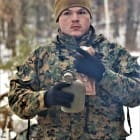
Ten Airmen from the 13th Air Support Operations Squadron went through a tactical air control party mission qualification training exercise July 15-18, 2019 on Fort Carson, Colorado.

The training is a way to gauge each Airman’s deployment readiness, test how the Airmen can perform as a team and is also one of the final steps of upgrade training for new Airmen. The training is for both newly assigned junior enlisted Airmen and officers.

0ABF6B10-3A80-4725-92C2-A491AB58D703

The group of Airmen went through multiple scenarios put together by more experienced TACPs and joint terminal attack controllers, to include clearing a building, securing a village, injured personnel rescue and handling a hostage situation.

PETERSON AIR FORCE BASE, Colo.

The exercise started Monday, July 15, and did not end until early Thursday morning, but for the students, preparations started the week prior.

“We tried to model it after real world operations,” said 2nd Lt. Stephen Stein, 13th ASOS TACP officer and chief of training. “So last week, before they started, the students received an operations order, which is something we would receive from the U.S. Army for an up and coming mission. After that, they started planning. So they had to start preparing the equipment, get the vehicles ready and then from there they had a timeline of when they would start the mission.”

During their exercise, the students were critiqued on their skillsets to make sure they would be ready in any contingency operation, ultimately deciding if they are deployable.

“I think this really showed us what we can expect in the future,” said 2nd Lt. Parker Gray, 13th ASOS TACP officer and exercise team lead. “ We were completing objectives and missions with criteria all throughout the week, all with minimal sleep, and I think that really showed us how we may react in the future, when we are in that kind of environment.”

Although the exercise was only for ten Airmen, approximately 30 TACPs and JTACs were involved with organizing the training exercise, participating as instructors, playing the role of an opposing force or helping set things up.

After the exercise, both Gray and Stein said they took away a lot from these events.

Stein, having done his training about 12 years prior as an enlisted TACP, said he was impressed with the effort the squadron put into it, and believed this set the new standard for MQT.

“The amount of hard work that was put into this by the instructors to set it up and make sure the scenarios were realistic and made sense, was phenomenal,” said Stein.

PETERSON AIR FORCE BASE, Colo.

Gray, as the student, said he took away lessons of leadership and how to work with his teammates.

“I think the biggest lesson as a team lead was I started out the week making decisions fast just trying to get everything done, but later on in the week I started involving the team a little bit more in the decision making process,” said Gray. “When we had a question, we took a few more minutes to get the team together, and we came up with better decisions. We really came together as a team, worked together as a team and were able to help each other out.”

By A1C Andrew Bertain, 21st Space Wing Public Affairs

Max Talk 35: Advanced Patrolling 3: Multiple Enemy Firing Points – Break Contact

Monday, August 26th, 2019

This is the thirty fifth installment of ‘Max Talk Monday’ which shares select episodes from a series of instructional videos. Max Velocity Tactical (MVT) has established a reputation on the leading edge of tactical live fire and force on force training. MVT is dedicated to developing and training tactical excellence at the individual and team level.

A return to the sand table for this video, the third in the Satellite Patrolling series, examining advanced patrolling tactics. This time, examining and running a sand table scenario for multiple enemy firing points (ambush), resulting in the need for the patrol to break contact. Utilizing a sand table model with figurines, as a method of introduction to explain these advanced patrolling techniques.

More of these instructional videos can be found by subscribing to the Max Velocity Tactical YouTube Channel. Detailed explanations can be found in the MVT Tactical Manual: Small Unit Tactics.

Max is a tactical trainer and author, a professional soldier with extensive experience in British elite forces and as a paramilitary contractor. Max was enlisted and later commissioned, via the Royal Military Academy Sandhurst, into the Parachute Regiment. The Parachute Regiment is an elite airborne infantry unit, comparable to the U.S. 75th Ranger Regiment, accessible only via the renowned ‘Pegasus Company’ Selection course. Max served in 1 and 2 PARA. Of the three PARA battalions, 2 and 3 PARA serve in 16 Air Assault Brigade as the UK’s elite Rapid Response Force, with one battalion at permanent high readiness for worldwide intervention operations. Max served in Para Reg when it was utilized to provide elite airborne infantry support to UKSF, as the forefathers of the SFSG. With training and operations validating the concept, including Op Barras (Sierra Leone), 1 PARA was placed permanently in role as part of the SFSG.

Additionally, Max served on a number of deployments, to include multiple tours in Northern Ireland, the Balkans and Afghanistan. Additional overseas assignments saw the opportunity to train, or train with, allied nations, including the U.S. Military. Roles which Max filled included rifle platoon commander, patrol leader, recruit instructor (platoon commander) at the PARA Training Depot, anti-armor platoon commander (fire support company), operations officer and command on deployments. Reaching a career point facing staff college and moving away from command of paratroopers, Max made the decision to resign from the service. After leaving the British Army, Max spent a further five years working operationally as a paramilitary contractor in both Iraq and Afghanistan; the latter two years based in Helmand Province working alongside the UK Military.

Since 2013, Max has run Max Velocity Tactical (MVT), a training company conceived to offer professional combat training for responsible citizens. As the Velocity Training Center (VTC) has grown into a state of the art training venue, MVT also took on pre-deployment training for U.S. SOF. This runs the spectrum from facility rental to tailored training packages specializing in Small Unit Tactics.

Website: Max Velocity Tactical

YouTube: Max Velocity Tactical

SCUBAPRO Sunday – History of Wetsuits

Sunday, August 25th, 2019

 Wetsuits go back to the commercial fishing and salvage industries of the 1910s. Before wetsuits divers used grease to help keep them warm (tuff bastards) The development of the wetsuit started as military research in the early 20th century. The first underwater suit was the Mark V suit (I know there were other types thru the ages) It allowed divers to go deeper into the ocean than ever before. It was developed for the U.S. Navy, primarily for use in deep-sea and salvage operations. Early versions of the wetsuit proved to be useful insulation garments, but with the discovery of neoprene, resulting from research throughout the Second World War, there was a big leap forward and the real turning point for the wetsuit as we know them. After World War Two, sport diving became more popular in the United States.  The popularity of movies like the “Frogmen,” (I have heard a lot of Vietnam Frogman joined after seeing the Frogman) the Cousteau book and film adaptation of “The Silent World” and the magazine “Skin Diver.”

The modern wetsuit dates back to 1951 – 1952. Hugh Bradner is mostly credited in invented it, (credited as the inventor of the contemporary wetsuit depending on who you ask) a physicist associated with the University of California, Berkeley looking to improve on the equipment used by the U.S. Navy. Early wetsuits sandwiched the relatively thin neoprene between layers of spandex or nylon. The earliest versions of the wetsuit worked by trapping a small amount of water between the body and the suit. The water is heated by the body’s temperature and acted as insulation. These modern wetsuits also had improved stitching and seams that kept the outfit watertight and prevented the outside water from entering the suit and cooling the diver. When Bradner first showed the Navy, they were not that happy with it. The Navy was concerned that the gas inherent in neoprene would make divers more visible on sonar.

This program was taken over Jack O’Neill in 1959; he started producing early neoprene wetsuits in his Santa Cruz garage. His company, called O’Neill began selling these suits in 1959 with the motto, “It’s always summer on the inside.” Around the same time, Bob Meistrell started producing a similarly-designed wetsuit under the company name Body Glove.

Bob & Bill Meistrell and Jack O’Neill (better known as the founders of Body Glove & O’Neill) have also staked their claims as inventors of the modern wetsuit.


The first neoprene suits were not easy to put on and could be easily torn by pulling and stretching. This led to the practice of divers sprinkling talc on their bodies before donning their wetsuit. After a few years, wetsuits began being lined with nylon so they could be put on easier. Many different techniques were employed over the evolution of the wetsuit design some of these were seam taping, seam gluing, and eventually blind stitching. Seam taping provided relief for some problems; this technique involved melting tape into the nylon which sealed the seam and prevented water from entering the suit. Seam gluing was another technique where they fixed the slabs of neoprene together, which resulted in a smooth, flat surface; however, the neoprene and the glue was often not a strong enough mix and easily tore. The eventual outcome was blind stitching, and this is the technique used predominantly in all wetsuit types and designs. The blind stitching technique is where a curved needle that is used for blind stitch sewing is designed not to go all the way through the neoprene but just under the surface of the material and comes back up on the same side. Using this technique, the neoprene is sewn together without having to puncture a hole through the entire piece of neoprene. As a result of this, no holes in the neoprene means no water flushing out the suit. Due to the nature of blind stitching, it creates a flat seam which increases the comfort of the wetsuit.

Body Glove designed the very first non-zip wetsuit, (there are two different years that I have found 1970 and 1989) But there are a lot more options today. There are several closure options to choose from (front, back & cross zip).  Spandex, for flexibility and titanium and other thermoplastic materials, for insulation, have been introduced to the fabric for improved performance. Eventually, they became lined with nylon, which decreased the sticky texture of the neoprene; however, nylon decreased the flexibility of the wetsuit. It was not until the 1970’s that double-backed neoprene was being sewed together; it was simple but not very effective. The result of punching holes through the double layers of neoprene opened the inside of the wetsuit to the environment. This resulted in lots of flushing through the seams, so the result of this was new techniques in seam binding.

Even today’s wetsuits are mostly made from foamed neoprene and are worn by just about every person that is in the water for extended periods from surfers, spearfishes, divers, windsurfers, and a wide range of other sports. Wetsuits are also used to help prevent abrasion and provide thermal insulation as well as assisting in buoyancy.

Capt Mbaye Diagne Medal Awarded Posthumously to Peacekeeper’s Widow

Sunday, August 25th, 2019

Pvt. Chancy Chitete, a Malawian peacekeeper assigned to MONUSCO, was killed in action near Kididiwe during contact with the ADF (Allied Democratic Forces) last November. He has now been awarded the Captain Mbaye Diagne Medal for Exceptional Courage, the UN’s highest award for valor. MONUSCO is the United Nations Stabilization Mission in the Democratic Republic of the Congo.


Pvt. Chancy Chitete of Malawi

Pvt. Chitete’s unit, a joint formation including Tanzanian and Malawian soldiers, came under heavy fire during an operation conducted to prevent disruption to local Ebola response efforts. While providing cover for evacuees, a Tanzanian NCO, Cpl. Ali Khamis Omary, was hit and unable to move to cover or escape approaching militia forces. Pvt. Chitete dragged Cpl. Omary clear and began administering aid but was himself struck by enemy fire. Both soldiers were evacuated, but Pvt. Chitete did not survive.


A memorial conducted for Pvt. Chitete at a UN outpost in Beni, DRC.


Cpl. Ali Khamis Omary of Tanzania.

The eponymous Diagne Medal was created by the UN Security Council in 2014 in honor of Capt. Mbaye Diagne of Senegal. Capt. Diagne was a UN military observer credited with saving hundreds of lives in Rwanda during the 1994 genocide before being killed in action.


Capt. Mbaye Diagne of Senegal.

UN Secretary-General António Guterres’ presented the award posthumously to Pvt. Chitete’s widow, Mrs. Lachel Chitete Mwenechanya, at a ceremony in late May. It is the first time the Diagne Medal has been awarded since it was presented to the widow of Capt. Diagne in 2016. You can read the Secretary-General’s remarks online here.


Mrs. Lachel Chitete Mwenechanya at the UN Building, New York.

More on Pvt. Chitete’s actions during the mission can be found on the UN website.

Eight other peacekeepers serving in the DRC and Mali were also nominated by their respective missions, including SAAF helicopter pilot Lt. Col Stefan King, below. No armed CAS aircraft being available, Col. King and crew responded to a request for assistance for Guatemalan peacekeepers under attack nearby. Flying their unarmed Atlas Oryx helicopter by NVGs, King and crew sortied to assist. Upon arrival they began using flares to distract militia fighters pressing the Guatemalan soldiers.

Col. King later advised, “We did numerous runs and each time set off flares to deter enemy fire. Each run saw the helicopter come under fire and at least two RPGs (rocket-propelled grenades) passed close enough to make our NVGs useless for a while. After just over an hour of orbiting and flare runs our fuel situation reached the stage where we had to abort.”


Col. Stefan King in Africa. (He is wearing Hill People Gear.)

The Guatemalan unit was able to break contact and return to friendly lines.

At another ceremony, another award was presented. There the Dag Hammarskjold Medal was presented posthumously to the 119 United Nations military and police personnel, national staff, and other U.N. Volunteers killed last year. Those 119 people, from 38 countries, had served in 12 separate UN peace operations around the world. (AP News)

MONUSCO Mission Specs at Peacekeeping.org.

Imagery from the UN Mission to the DRC on Instagram with hashtag #monusco.


Pvt. Chancy Chitete, in pace requiescat.

By David Reeder

Connect with the author on IG, @ReederWrites.

The Baldwin Files – Talent Management – Part 3 of 3

Saturday, August 24th, 2019

At the end of Part 2, I had taken command of F Company of the Training Group’s 1st Battalion at Camp Mackall, NC. For those that do not know, Mackall is a small installation, occupied by elements of the Special Warfare Center and School (SWCS) about 30 miles west of Fort Bragg. It is home to several components of the Special Forces Qualification Course (SFQC). At the time, F Company ran 2 Phases of the SFQC. One (Phase II), focused on land navigation and small unit tactics and the other (Phase IV), conducted Unconventional Warfare training and the culminating Robin Sage Exercise. I was living the dream and enjoyed every day of that assignment. Of course, the Army’s personnel management system has the mission to make sure that nothing good ever lasts long.

It started indirectly. Although I had not known him before, I got along very well with the Battalion Commander (BC) who had hired me. As luck would have it, he came out on a Special Mission Unit (SMU) Command List shortly after I took command – and he was gone. It was a great opportunity for him – but turned out not so good for me. Another Lieutenant Colonel was activated off the Alternate Command List to take the Battalion. As it happens, he and I had been Majors together in 3rd Group (96-98), although I did not know him well. The mission at Mackall was clear for my cadre and me; however, as I wrote in an earlier article, there were many ill-conceived initiatives for the SFQC being considered at SWCS during this period. I quickly found out that my new BC and I were philosophically on opposite sides of these plans. That naturally led to friction between us. Moreover, as often happens in these situations, that friction eventually evolved into one of those annoying ethical dilemmas I have written about ad nauseam.

Long story short, in May of 2001, I was Relieved of Command by that BC, a.k.a. fired, sacked, dismissed. However, since that episode is convoluted and not germane to the subject at hand, I will save that part of the story for another time. Suffice to say, getting fired is considered a sub-optimum outcome to any assignment. That is also how I became personas non grata at the Training Group and, indeed, all of SWCS for the second time. I spent the next few months fighting the accusations made against me to justify my firing. I will mention just one here because it is the only accusation that was based on a kernel of truth. Allegedly, I had been “insubordinate” to the BC. For what it is worth, I have found that it is all but impossible to tell your boss something he really, really does not want to hear without him perceiving it as insubordination.

As a practical matter, there is an administrative process to appeal those sorts of negative personnel actions and I took immediate advantage of that mechanism. Bottom line, I made my case to the Army and achieved a partial vindication in a matter of 9 months or so. I received my promotion orders to Lieutenant Colonel in March 2002, backdated with an effective date of 1 January of that year. I purposely held my promotion ceremony in front of the Bull Simon statue across from the SWCS HQ. Then Brigadier General Stanley McChrystal did the honors. He was one of those SF qualified infantrymen I mentioned in Part 1. As he put the rank on my collar, he asked me, “Terry, is it true that you commanded three SF Companies?” I replied, “Yes Sir, twice successfully!” We all got a chuckle out of that.

That was not the end of the story; I also had to spend a considerable amount of money to hire lawyers who spent years getting the associated “bad paper” removed from my records. Oddly enough, that was not my biggest career management problem going forward. With my promotion orders came a letter from Department of the Army (DA). The letter stated that since I had more than 24 years of combined service I was ineligible to be considered for War College attendance. In effect, I was non-select for the school before I even pinned on that silver oak leaf. In turn, that meant that I was instantly non-competitive for Battalion Command or promotion to Colonel. Unfortunately, there was no waiver or appeal process for that verdict – and, yes, I looked.

However, in the interim, 9/11 happened and I had little time to dwell on it myself. I wanted to get into the fight ASAP. For that first few months, I was in assignment limbo at Fort Bragg. SF Branch wanted nothing to do with me and DA was indifferent. I came to realize that essentially I had been ejected from the system. I had not jumped ship, I had been pushed off. That was fine with me. I still knew a lot of people and started doing my own independent talent management. The pattern for the next 9 years went like this. I would call commanders I knew directly, or have a mutual friend introduce us and ask for work. I was not often rejected. I did a number of jobs: J3 (Operations), J5 (Plans), Chief of Staff, and Deputy Commander for example. Additionally, I did Liaison work between HQs on occasion and even commanded a couple of ad hoc organizations in theater.

I do not want to exaggerate my contributions to the mission. I am not pretending to be a hero. I took my share of risks, but I have no medals for valor or purple hearts. Nevertheless, I carried my share of the burden and then some. I am proud of that. The reasons I was able to do that for an extended period are directly related to the idiosyncrasies built into the current personnel management system. First, because I was a “free agent,” I could go where I pleased and no one at DA or SF Branch cared – or interfered. Second, the system was consistently failing commanders in the field. Almost everyone else was “locked” into his or her current assignment and even the system itself had no pre-existing mechanism to meet fluctuating personnel demands from the field commanders. Never mind “talent management,” there is something fundamentally wrong with a system that has to ignore its own rules to even try to support the warfighter. The result was that commanders – by necessity – had to make off the books “handshake deals” with their peers who were not deploying for critical manpower fills.

It was a heck of a way to run a railroad. Still, it worked for me for a long time. Of course, the system could not abide that sort of autonomous freedom of action indefinitely. Toward the end, I was involved in planning for the drawdown of all SOF in Iraq. In February 2011, I had briefed the plan for approval to all the senior leadership in the theater and beyond. Afterwards, I decided to take some down time back at Bragg with my wife. That is when SF Branch sprung their ambush. About 10 days after I got home they hit me with a “Request for Orders” (RFO) sending me to a Branch Immaterial (BI) assignment with the 8th Army HQ in Korea. BI simply means that the job required only a warm body to move papers. As usual with the system, my training, expertise, experience, and / or “talent” was entirely irrelevant to the job parameters.

To be certain, I could have dodged this RFO. Technically, I was “on leave” and could have got on the first thing smoking back to Iraq. The 1-Star Commander of the HQ I had been working for had asked me to come back as soon as felt like it anyway. I doubt that Branch would have even tried to “extradite” me out of theater. That is why they did not drop the RFO earlier. I also could have gone to a number of 3 or 4-Stars I had worked for and asked for a favor. I did not do either. My last boss in Iraq in 2011 was a Colonel (O-6) who had worked for me as a Major in 2004. One of my peers had already pinned on his first star and another was about to. I did not envy their success, but all were glaring reminders that professionally I was just treading water. Objectively, I had done all that I could do and then some from outside the system. And, just as obviously, the system saw no further value in me. I did not leave because I was tired, disillusioned, or discouraged but I also had no interest in just killing time. Therefore, I came to the conclusion that while I was still having fun and did not want it to end, just as clearly, it was the right time to go.

So I told SF Branch to find someone else and I dropped my retirement packet. Frankly, I do not think they cared. I believe that they offered that crap job as my one and only assignment option because they wanted to force me out. I may not be anyone special, but I am not Joe Shit the Ragman either. I thought that it was insulting and told them so. They certainly made no effort to dissuade me from leaving. They were convinced that I was “excess to the Regiment’s requirements” and needed to go. The sooner the better as far as the system was concerned. The funny thing is that when someone takes retirement “in lieu of PCS,” DA does not let you quit honorably; rather, they make it abundantly clear that that you are being fired as punishment for your transgression.  In other words, after 36 years of mostly exemplary service, DA itself declared me persona non grata! Somehow, that seems entirely appropriate.

In terms of military careers, in typical American style, today we have made promotions (and the resulting pay raises) the single measure of professional success. You either get promoted on a strict timetable or you are forced out. No matter how good you are in your current job, you must always keep moving with the herd. Therefore, the system persists in pounding ill-fitting human pegs into holes they are not suited for to temporarily fill spaces. And, I do mean temporarily. In a year or so we pull out all of the pegs and start pounding every one of them into new holes! In the process we disillusion far too many and they vote with their feet and leave. How exactly does a personnel system that facilitates and perpetuates high turnover help sustain unit combat readiness? It does not. That does not make much sense today. I would argue that it never did, and it is past time to overhaul our system.

I submit that the current system is actually optimized not to retain talent, but rather to deprive the Army of soldiers and officers – just as they are seasoned enough to be of real value to a unit. In effect, the system is fratricidal and designed to encourage the majority of our junior officer and NCO leaders to self-select out at the end of their initial contracts. In turn, we spend enormous time, money, and effort, bringing newer people into the front end of the pipeline to replace our loses. There is no real logic or military necessity that drives this dysfunctional methodology. We allow that nonsense to continue simple because that is the way we have always done it – at least since WWII. If an enemy had such a devastating casualty producing capability, we would be working tirelessly on an effective countermeasure. We certainly must stop doing it to ourselves – and soon.

Managing talent effectively takes more effort than what we are doing now. To make the best blades, you have to hammer the steel. The harder the metal, the more you have to hammer. It takes extra work, but those harder heads – if hammered properly by a good leader – often make great soldiers. I was lucky that some good leaders took the time and effort to hammer me. Here are some of the old-fashioned mallets used successfully on me over the course of my career. Rehabilitative transfers, “acting” rank (call it a test run), and Article 15s – used old school style to punish, educate and shape, not to terminate. Leaders must be provided these kinds of tools if talent management is ever going to be a reality. True talent cannot and will not be centrally managed and mass-produced by DA. Rather, it must be handcrafted by the individual soldiers themselves and their leaders at the lowest levels. The Army must push down the right tools and authorities to them and would be better served by removing the bulk of those “personnel management” responsibilities and decisions from PERSCOM.

Epilog: one of the foreseeable consequences of having been rogue for almost a decade is that I did not really belong to anyone at Fort Bragg. SF Command and later USASOC had carried me as “excess” on the books for that entire time. The HQ G1s had kept accountability of me, but none of the Staff Directorates owned or owed me. Therefore, there was no one obliged to even consider putting me in for an end of service award or to sponsor a retirement ceremony of some kind. Therefore, it is no surprise that I got neither. When I signed out on my last duty day in the Army, one of the Specialists at HHC USASOC gave me a folded American flag in a triangular display case and thanked me for my service. I thanked her back and left. I must say, it was an anticlimactic conclusion to a professional career I consider very well spent. Moreover, I will not deny, I thought the occasion was fully deserving of a wee bit more pomp and circumstance.

I did have one last “official” duty to perform. Two days after my retirement date, I returned to Camp Mackall one last time to take a student team’s Robin Sage Briefback. After interacting with the students, I sat down with a couple of the Cadre Team Sergeants and reminisced about the Q-Course for an hour or so. Although I did not remember him, one of the NCOs had gone through the course when I had been out there. It was a pleasant afternoon. Of course, I had to eventually let them get back to work; so, I said my goodbyes and headed home. Although I was driving east and it was mid-afternoon, I had no doubt that I was riding into the sunset. That is, after all, exactly the way a story like this is supposed to end. De Oppresso Liber!

LTC Terry Baldwin, US Army (Ret) served on active duty from 1975-2011 in various Infantry and Special Forces assignments. SSD is blessed to have him as both reader and contributor.


Soldiers “at the heart of” Modernizing Warfighter Gear

Friday, August 23rd, 2019

This is the Army News Service’s take on the Adaptive Squad Architecture industry day I attended earlier this week. I’m always interested to see what others take away from these meetings.

SPRINGFIELD, Va. — Army leaders met with industry partners Tuesday to focus on new ways to outfit Soldiers with lighter weight, wireless, and tech-compatible systems, looking at revamping the Adaptive Squad Architecture.

“For years, dismounted Soldiers have been overburdened by equipment which, while highly effective, often isn’t integrated with other equipment,” said Brig. Gen. Anthony Potts, PEO Soldier.

The restructure pinpoints Soldiers, at the individual and squad level, as the linchpin for ASA’s future modernizations. It’s one of the largest reconstructions conducted by PEO Soldier, Potts said

A Soldier’s lethality, mobility, and overall safety is “at the heart of the matter,” he said.

Potts, who took over PEO Soldier last year, unveiled his organization’s new vision to more than 100 industry leaders Tuesday in Springfield, Virginia. The goal is harmonizing Soldiers and squads as an integrated combat platform, similar to a Black Hawk helicopter or Abrams tank.

“(The Army) wouldn’t buy a tank piece by piece,” said Col. Travis Thompson, Soldier Lethality Cross-Functional Team chief of staff, to stakeholders. “So why would you buy a Soldier’s kit that way?”

The Adaptive Squad Architecture targets tomorrow’s battlefield, and creates ways to modernize, train, and structure ground forces within the architectural framework laid out by the Army, Potts said, adding, “The goal is to collaborate with private companies to provide next-generation capabilities and increase the lethality, mobility, and survivability, while countering emerging threats.”

“This is a collective venture (with the Army and industry partners) to change the paradigm of bringing capabilities to Soldiers,” Potts said, adding, “I’ll own the architecture. I just want the ability to plug in and plug out.”

Although the broad view doesn’t initially affect Soldiers, in the future their daily lives will change as modernized equipment becomes standard in their kits. The framework provided will “deliver capabilities to the field, faster, more effective, and cheaper” than before, according to Thompson.

In a grassroots effort to ensure effective modernization of new capabilities, Potts has welcomed input from ground-level Soldiers who are impacted by their decisions the most.

Tapping into how Soldiers feel about their equipment helps leaders develop an architectural path forward.

“Soldiers designing systems for Soldiers is dependent on [Adaptive Squad Architecture,]” Potts said, adding, the “from the bottom up” path to an integrated combat platform depends on the thoughts and ideas of every Soldier.

Potts, along with other senior leaders, has traveled the nation listening to Soldier’s needs, giving them a voice of change regarding their equipment.

Dismounted Soldiers may carry from 50 to 70% of their body weight in gear. In the past, with each piece of new technology a Soldier received, came the burden of more weight to carry around, along with the challenge to find more space to secure it.

Lighter gear will be found by eliminating excessive power sources and heavy cords currently lugged around, and streamlining multiple tech capabilities through a single hardware device.

“Our lethality comes from improving Soldiers’ kits,” said Potts.

This is a “new approach formed by old failures,” said Col. Troy Denomy, Soldier Warrior project manager. “Ultimately, this will get us very quickly to a point of sustained overmatch against our adversaries.”

Story by Thomas Brading, Army News Service

Photo by SSG Carmen Fleischmann

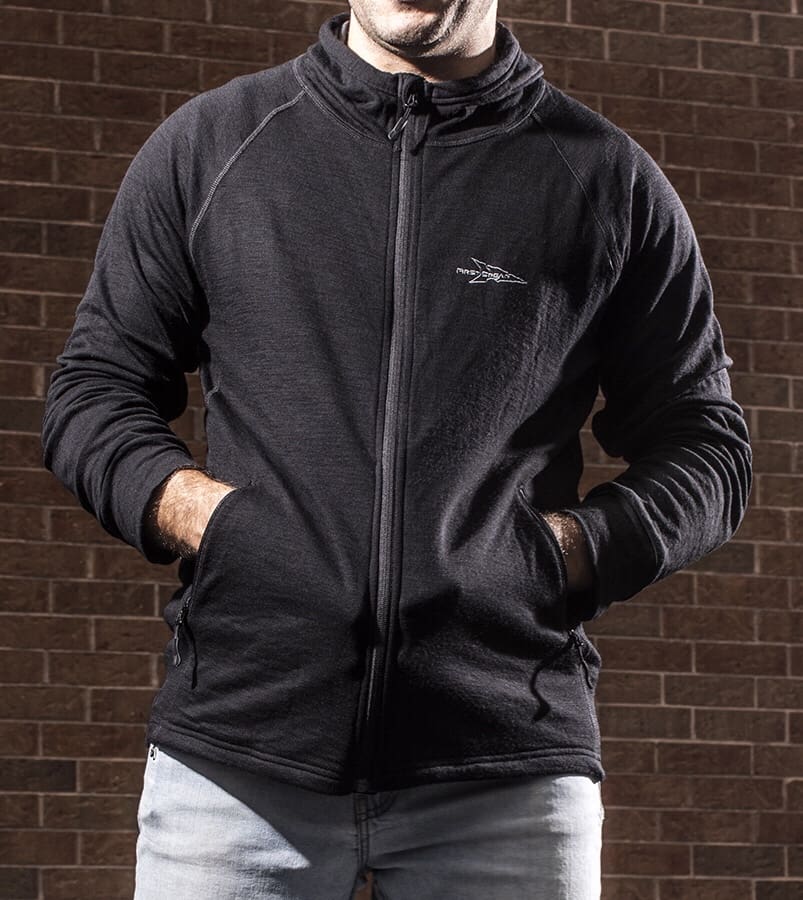
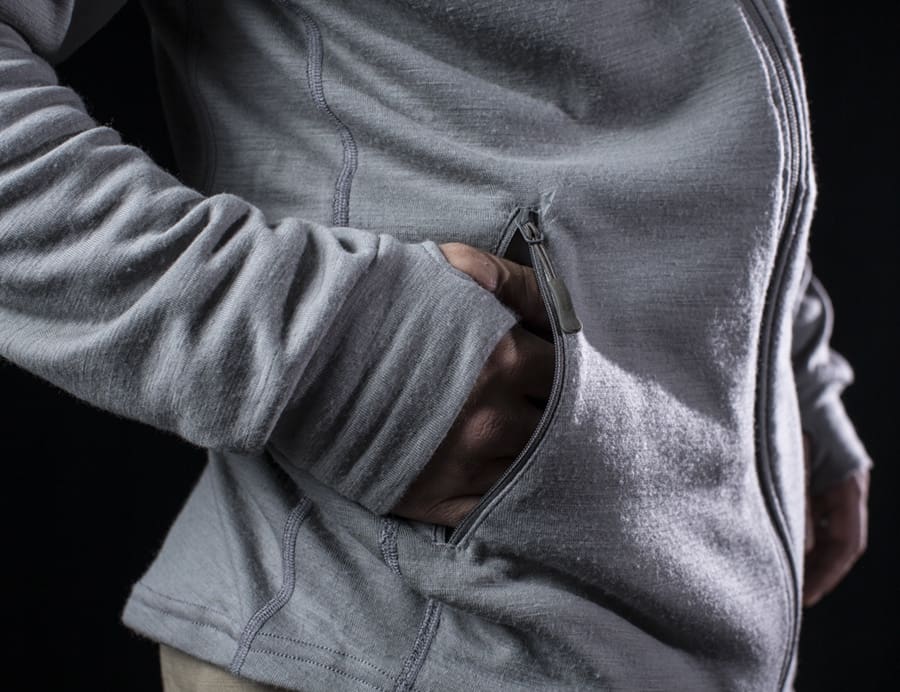
FirstSpear Friday Focus – Product Reviews

Friday, August 23rd, 2019

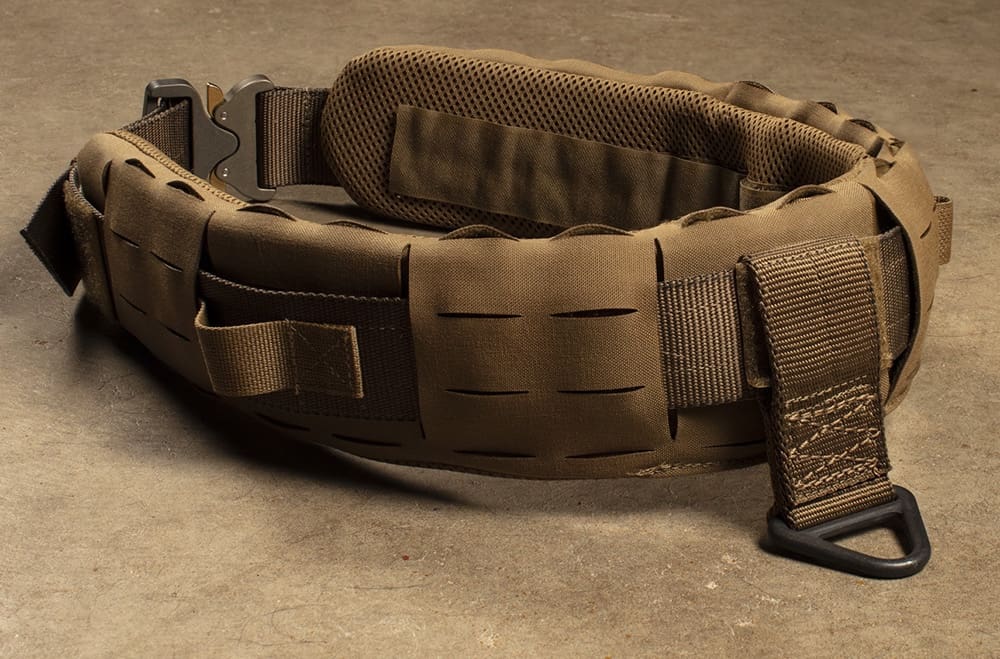
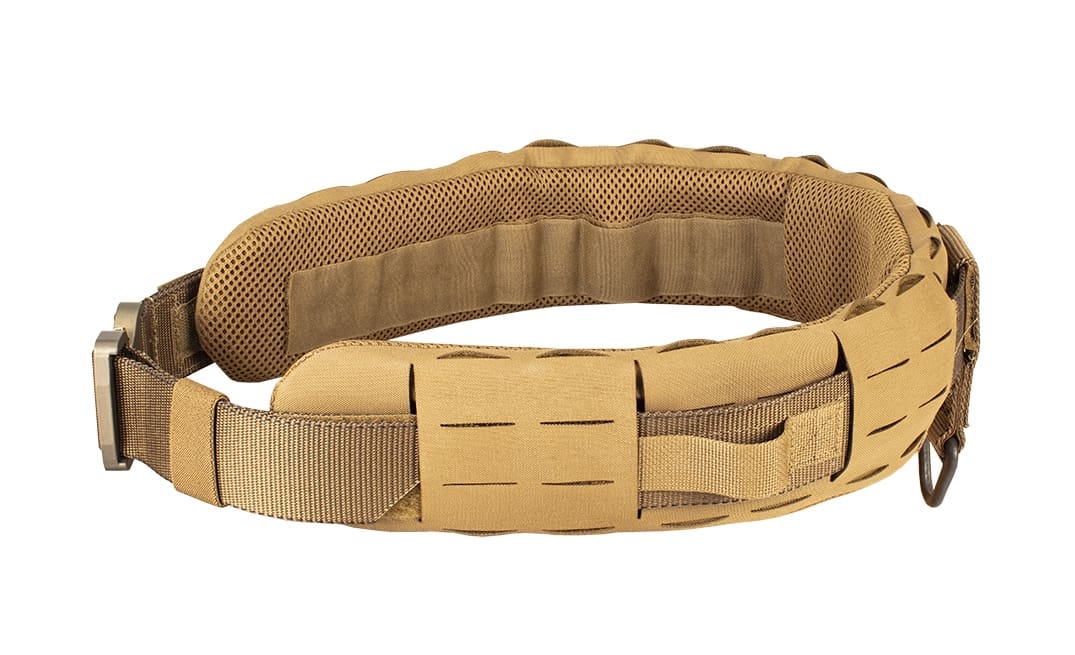
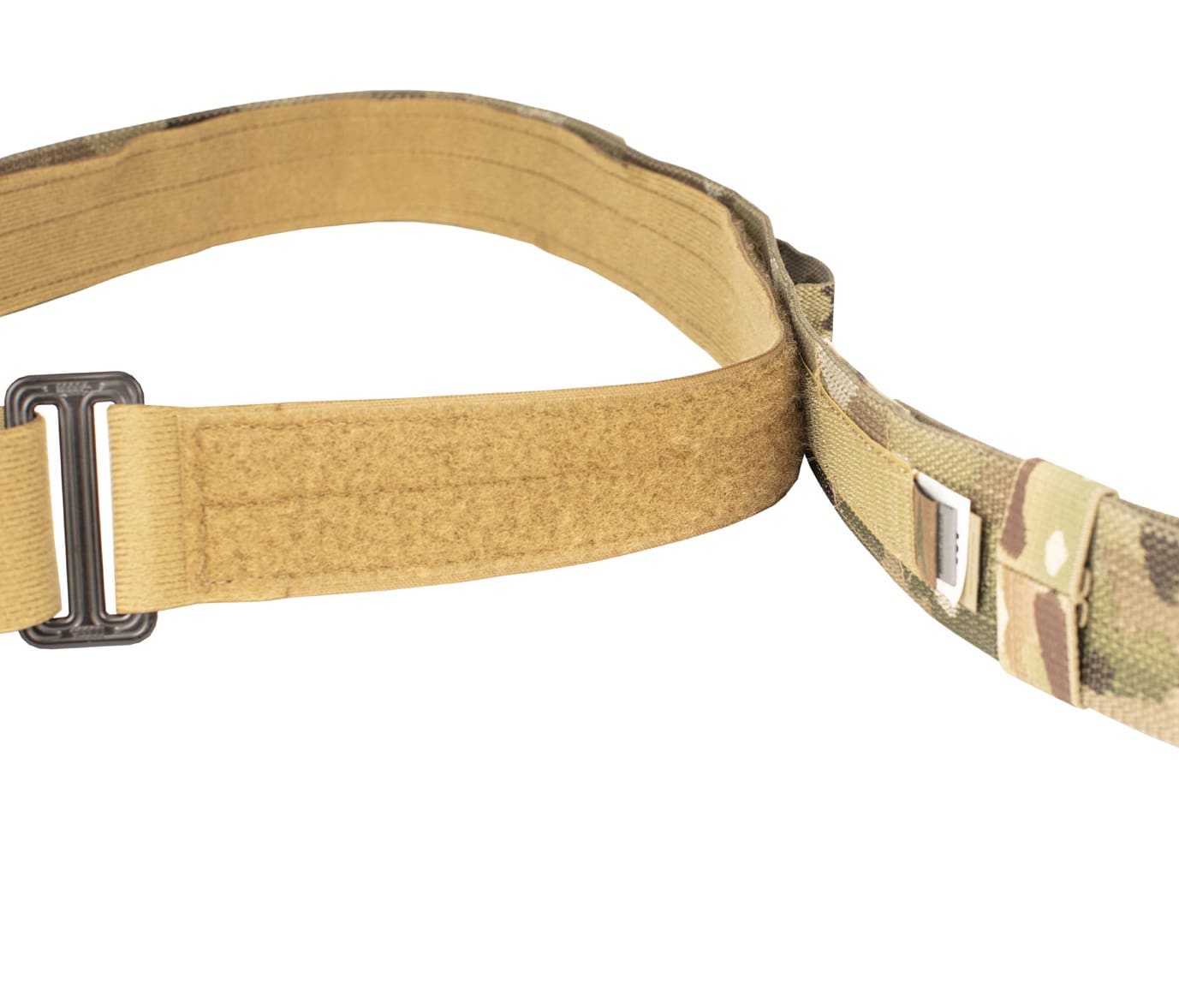
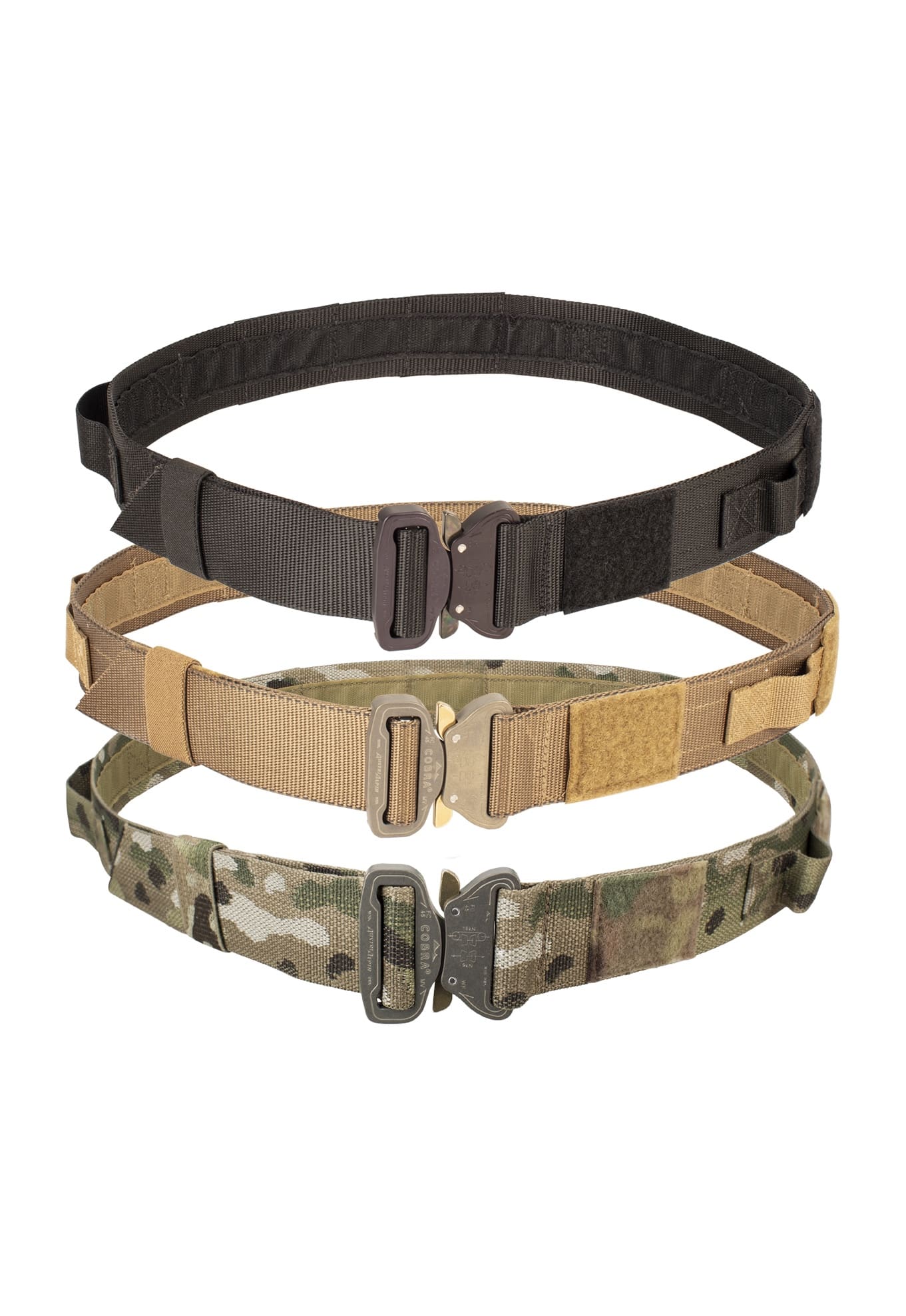
Leave a review on one of your favorite FirstSpear items and you will automatically entered to win a FS gift card for a future purchase! You must have an account to leave a review.

First-spear.com