GORE-TEX Professional

Archive for the ‘Guest Post’ Category

EW 25.2: AFSOC Heightens Warfighting Readiness During Landmark DLE Series

Saturday, August 30th, 2025

HURLBURT FIELD, Fla. —  

Air Force Special Operations Command tested its warfighting readiness during Emerald Warrior 25.2, the command’s premier operational exercise held across Arizona and California from July 21 – Aug. 11, 2025.

EW 25.2 was part of the first-in-a-generation Department Level Exercise series, incorporating more than 12,000 personnel and integrating various forces into joint, coalition, and multinational training. The DLE series advanced the way operations were achieved in a contested, dynamic environment to build capabilities and make a stronger, more lethal deterrent force.

“Emerald Warrior’s integration into the DLE series reinforced our critical role in preparing our forces for the scope and intensity of future operations,” said Lt. Gen. Michael Conley, AFSOC commander. “This iteration provided the opportunity to test our capabilities within a larger strategic context. The training we completed during those three weeks demonstrated the exceptional full-spectrum readiness of our Air Commandos.”

Emerald Warrior provides the venue for realistic joint, combined special operations training to prepare U.S. Special Operations Command forces, conventional enablers, partner forces, and interagency elements to respond to various threats across the spectrum of conflict.

The exercise incorporated multi-domain training designed to give Air Commandos the opportunity to find innovative solutions to tactical problems and experiment with emerging capabilities.

“Our goal is to match the speed and scale of large, real-world operations where command and the areas of operation are distributed,” said Conley. “Creating these dilemmas is how our teams can best learn to adapt so they can excel in future combat environments and help set conditions for the joint force to win.”

Air Commandos completed a wide range of training scenarios that validated their ability to integrate aviation, special tactics, medical and mission sustainment functions. A key objective was executing Agile Combat Employment (ACE) to demonstrate a flexible aerial advantage.

“ACE has become a requisite ability to our operations and readiness,” said Brig. Gen. Clay Freeman, AFSOC director of operations. “We must be prepared to deploy rapidly and operate from austere environments with potentially limited resources. A contested venue does not change the need to generate airpower at any place, any time, anywhere.”

International collaboration was a key element of EW 25.2. The integration of partners in the Royal Air Force was highlighted by the RAF A400M Atlas facilitating transport and military free fall training for Special Tactics teams. Additionally, Czech Republic Special Operations Forces worked alongside special operations medical elements and surgical teams, honing collaborative abilities in humanitarian and disaster relief scenarios.

“Emerald Warrior strengthens our international relationships and interoperability”, said Freeman. “AFSOC is committed to fostering combined training opportunities with partners where we integrate our diverse skillsets and build shared capabilities to strengthen our collective security. For this iteration, we were grateful to grow our collective readiness with our RAF and Czech Republic partners.”

Along with international allies, Air Commandos trained with units from the U.S. Space Force, U.S. Marine Corps, and U.S. Army, among other interagency partners. This collaboration strengthened AFSOC’s capacity to deliver decisive effects in alignment with future force employment requirements.

EW 25.2 solidified AFSOC’s warfighting functions and underscored its commitment to adapting to succeed in today’s dynamic strategic environment.

Air Force Special Operations Command

MCB Quantico Live Fire of Scorpion Light Mobile Mortar System

Friday, August 29th, 2025

Last week, Global Military Products and Polaris Government and Defense were invited to participate in a live-fire demonstration on Marine Corps Base Quantico in conjunction with the Marine Gunners Symposium.

On one of Quantico’s 43 live ranges, a group of Marine gunners witnessed the Scorpion Light mobile mortar system in action, demonstrating the shoot and scoot capabilities of the system. Mounted on the Polaris MRZR Alpha 6×6, the fully integrated platform provides mobility, lethality, operator safety and air transportability. The rapid-fire control system is designed to elevate operational efficiency, while the expanded payload of the MRZR Alpha 6×6 variant allows for 48 mortars to also be transported.

More on the Scorpion Light

The Scorpion Light – known internationally as the Alakran – mobile mortar system has been combat proven across countries in Europe and the Middle East, showing its reliability and effectiveness in diverse and hostile environments. Built with durable materials and rugged construction to withstand extreme temperatures, dust, and harsh conditions, its robust design and resilient technologies make it a durable weapon that can withstand the rigors of combat and remain effective. The mobile mortar system can fire 8 rounds and relocate in under 2 minutes. The dual system can integrate 120mm and 81mm smoothbore or rifled mortars in a very simple operation, providing high firepower and making it a powerful tool for neutralizing enemy targets.

More on the MRZR Alpha 6×6

The MRZR Alpha 6×6 is a two-seat platform with a 65 percent larger cargo bed optimized for heavier systems and payloads, like the Scorpion Light. The vehicle has 3,600 lbs (about 1632.93 kg) of payload available, with 3,000 lbs (about 1360.78 kg) of that available in the extended cargo bed. The third axle and short wheelbase also have a positive impact on mobility, decreasing the contact pressure per tire for enhanced performance in soft soil, mud and bogs. The MRZR Alpha 6×6 maintains top speed and air transportability and has more than 90% parts commonality with the base MRZR Alpha. Expeditionary warfighters operating worldwide in austere environments require modular platforms that can adjust to multiple environments and modes of transport – tactical air, fixed wing plane and ship – now more than ever.

FirstSpear Friday Focus: Woodland Camo Speartip Trucker Hat

Friday, August 29th, 2025

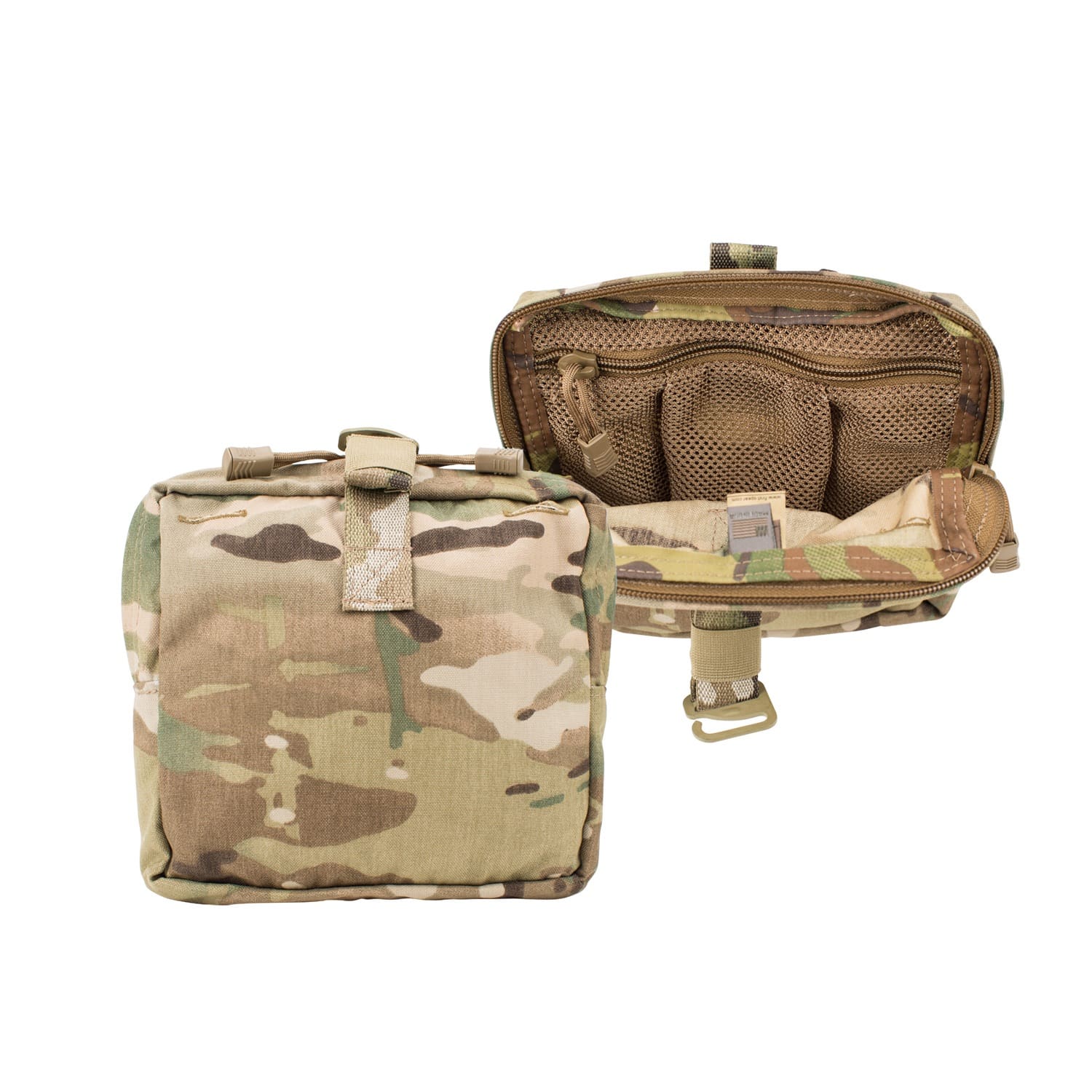
The WOODLAND CAMO SPEARTIP TRUCKER HAT is a no-nonsense, range-ready piece of kit designed with function and form in mind. Built on a structured six-panel chassis, it offers a mid-profile fit that works well with a variety of head shapes and helmet hair situations.

The mesh back keeps airflow steady, making it a solid choice for extended wear in hot or humid environments. Whether you’re running drills or just moving between locations, the breathable design helps regulate heat without sacrificing durability.

The Permacurv visor holds its shape under pressure, giving you a consistent brim curve that shields glare without flopping or warping. With a snapback closure, it’s easy to adjust on the fly—even one-handed. The offset Icon Speartip PVC patch adds a subtle nod to your tribe without screaming for attention, keeping the profile professional and purpose-built.

The woodland camo pattern gives it a classic, field-forward look that blends into both operational and everyday settings. Whether you’re spotting for a shooter or grabbing chow, this lid holds its own without getting in the way. The mid-profile structure also fits comfortably under over-the-ear hearing protection, making it ideal for time on the range. Rugged where it counts, breathable where it matters, and always mission-ready.

To request an estimate click image above or visit First-Spear.com/Request-For-Estimate. FirstSpear is the premier source for cutting edge-tactical gear for military, law enforcement and those who train. For more information visit First-Spear.

Army’s New Cyber Advisor Sets Tone for Priorities

Friday, August 29th, 2025

WASHINGTON — Bringing innovative technologies to Soldiers and incorporating next generation software and capabilities will be among the priorities of the Army’s new top cyber strategist.

Brandon Pugh outlined his duties as the Principal Cyber Advisor to the Secretary of the Army during a discussion in Augusta, Georgia, Thursday.

Pugh, a Rutgers Law School graduate, not only boasts the cybersecurity experience and education to advise service leaders but Pugh, an officer in the Army reserve, can relate to the Soldiers his leadership will influence, having served as a paratrooper, international law officer and now as a national security law professor while in uniform.

Pugh was a non-resident fellow at the U.S. Military Academy and served as legislative counsel at the New Jersey General Assembly Minority Office, managing policy and legislation related to cybersecurity.

Pugh became the third person to be named PCA after President Donald Trump nominated him June 16, becoming the first political appointee to the role.

Pugh said that bolstering the Army’s cyber capabilities and cybersecurity aligns with the service’s continuous transformation priorities, where the service will leverage the latest technologies to keep pace with adversaries.

“I truly believe in the direction the Army is going,” Pugh said. “The Army’s continuous transformation is really a unique window in transforming the Army overall to the current battlefield, as well as where the future one is. And I think cyber is a key part of that.”

Pugh said his goals for Army cyber include pushing AI capabilities to the warfighter and fulfilling the president’s priority of defending the homeland. He said national defense can be achieved by bolstering the service’s cyber offensive and defensive capabilities.

“Transformation is really delivering capabilities to the warfighter in a quick speed. That’s just not a buzzword. How do I interpret that for our office?” he said. “It’s really looking at the nexus of AI and cyber. ARCYBER is doing a great job under [ … Army Cyber Command Science Advisor and Chief Analytics Officer Mark A. “Al” Mollenkopf’s] leadership, but I think that’s the direction we need to go in.”

Pugh will lead his office from the Pentagon and collaborate with Leonel Garciga, the Army’s Chief Information Officer, and other senior leaders. Pugh’s council comes at a critical time as Secretary of Defense Pete Hegseth identified cyber among the Army’s top areas to invest.

This fall, Army Cyber Command, based at Fort Gordon, Georgia, will form the first of its three Theater Information Advantage Detachments, which will focus on U.S. adversaries in the realm of cyber information. Pugh visited Fort Gordon, Georgia, in late July including meeting with Army cyber capability developers at the 11th Cyber Battalion.

Pugh said that further incorporating the National Guard and his fellow reservists into ARCYBER and broader cyber efforts will be among his priorities. He said that many members of the guard and Army Reserve boast skills in the areas of cyber and technology that could benefit the Army’s cyber capabilities.

The Army established its Cyber Direct Commissioning Program, or CDCP, for those who possess key experience in the cyber field or education to be appointed to the Army’s Cyber Corps in the ranks of lieutenant to colonel.

“I see this as a total Army. We need our active-duty Soldiers, but we also need our Reservists and our Guardsmen, and I’ll add civilians on top of that,” Pugh said. “I think we see awesome examples of the Guard and Reserve being utilized.”

Pugh added that Guardsmen work in local communities where they can contribute to critical infrastructure defense.

“Some of these Reserve and Guardsmen have incredible skill sets. They’re in C-suite (top cyber strategy) positions sometimes in their civilian world [positions]. To make sure we’re leveraging them, I think is key.”

By Joe Lacdan Army News Service

Army Begins Production of Second Tranche of Short Range Reconnaissance UAS

Thursday, August 28th, 2025

Redstone Arsenal, Ala. 20 August 2025 – The U.S. Army has initiated production of the second tranche of its Short Range Reconnaissance (SRR) UAS (Unmanned Aircraft Systems), marking a significant step forward in modernizing battlefield capabilities. The Army selected Teal Drones and their Black Widow system as one of two vendors to manufacture the SRR system, which will equip the Army’s Transformation in Contact (TiC) units with advanced, networked communication systems designed to address emerging threats.

Initial fielding of SRR tranche one began in September 2022, and to date the Army has fielded over 16 brigades with this capability. Critical lessons learned and Soldier feedback from tranche one were incorporated in tranche two. This strategy will continue to incorporate new technologies into future tranches to provide the very best UAS capabilities on an accelerated schedule.

The TiC initiative is part of a broader Army effort to evaluate how personnel, tactics, and technologies align to meet the demands of modern warfare. The Program Manager for Uncrewed Aircraft Systems remains committed to delivering essential equipment to soldiers in time to support the Army’s strategic objectives. These systems act as force multipliers, enabling precise fires, supporting ground operations with timely intelligence, and enhancing operational flexibility and agility. SRR systems use cutting-edge sensors that integrate with Uncrewed Vehicle Control and Android Tactical Assault Kit capabilities. These capabilities provide real-time intelligence, reconnaissance, and target acquisition, empowering commanders with the tools to make rapid and informed decisions. Additionally, SRR systems continue to improve Soldier survivability by detecting threats, identifying safe routes, and minimizing exposure to hazards, making these systems indispensable assets on the modern battlefield.

The Army’s investment in SRR systems underscores its commitment to advanced technologies that improve combat effectiveness and protect soldiers in increasingly complex operational environments.

By Matthew Ryan

NZ Army Embraces Race to Latest Drone Technology

Wednesday, August 27th, 2025

The New Zealand Army is using local technology as it explores the rapidly expanding field of drone warfare and tackling FPV (first-person view) technology with the capability for offensive strikes.

26 AUGUST, 2025

Drones, or uncrewed aerial systems (UAS), have become a critical part of the NZ Army’s intelligence, surveillance, target acquisition and reconnaissance (ISR) capabilities in recent years, and perform a crucial role in its overall combat system.

“UAS are now a ubiquitous part of modern military operations, from humanitarian assistance operations to high-intensity combat,” said the NZ Army’s UAS lead, Captain Richard Adams.

“We must continuously adapt with urgency to ensure our personnel are given the tools they need.

“Based on reporting from Ukraine, drones now account for approximately 70 per cent of casualties on the modern battlefield. The ability to both effectively operate drones, and protect against them, is crucial.”

Drones were increasingly considered to be as common as a rifle, however they were only one platform within a system, and the NZ Army was working to integrate them alongside more traditional systems and other emerging technology, Captain Adams said.

The NZ Army is an active participant in and supporter of the Ukrainian Drone Capability Coalition, for which the New Zealand Government has contributed $8 million to date.

“Our participation in that coalition has been key to understanding this technology as it rapidly evolves,” Captain Adams said.

Last week, 10 qualified drone pilots were trained on FPV platforms at Burnham Military Camp on a course led by 2st/1st Battalion, Royal New Zealand Infantry Regiment (2/1 RNZIR).

New Zealand-based drone companies Kiwi Quads and Fenix provided drones that could be 3D printed and assembled on site.

Course instructor Sergeant Lachlan McDonald said they were low-cost, easy to build and offered an additional effect to ISR – they could deliver an offensive strike on a target.

“It is an exciting time, with new technology rapidly emerging around the world and changing the way combat occurs on the modern battlefield – we want to keep pace with that innovation and find ways to deliver the most effective warfighting unit,” he said.

Captain Adams said while the NZ Army currently did not operate FPV systems, their impact on the modern battlefield was clear.

“We are actively looking to introduce these systems. The work being done at 2/1 RNZIR is a key step in identifying those soldiers who have the aptitude and ability to operate these systems.”

Next month, NZ Army personnel will test their drone-piloting skills against the best in the world, with a tri-Service team heading to the United Kingdom to compete in the 14-nation Military International Drone Racing Tournament.

Such competitions allow NZ Army personnel to enhance their skillsets across a variety of platforms.

“Providing the necessary training to develop their skills further puts us in the best possible position to adopt this capability at pace,” Captain Adams said.

Via NZDF

DLA Troop Support Uses 3D Printing to Provide Safer Testing

Tuesday, August 26th, 2025

The Defense Logistics Agency Troop Support’s Product Test Center Analytical has developed an artificial hand to improve safety during glove testing.

The 3D-printed hand allows researchers to test the integrity of gloves without risking exposure to hazardous materials. 

“A while back, we were asked to test some gloves that are specifically designed to protect the hands of people who work with jet fuel,” said Edward Dalton, a test center general engineer, who had the idea to create the 3D model. “One of the tests dictated that a tester put on a glove, put their hand in a bucket full of jet fuel, then flex their fingers repeatedly. If the glove leaks, it fails the test.” 

The results of a failed test could be detrimental to the tester. 

“A leaking glove also means the tester just got jet fuel all over their hand, which is a significant safety concern,” Dalton said. “This got me thinking that maybe we could create an artificial hand with the ability to flex its fingers. This would give us the capability of still performing the test without putting a tester at risk.” 

The project, which took several months to complete, now decreases unnecessary risk situations while saving time. 

According to the report, “Health Effects of Jet Fuels Used by Armed Forces,” skin exposure to jet fuels can result in symptoms such as dry skin, itching, redness, rashes, scaling, cracking, and blisters. 

Mike McClain, test center supervisory chemist, has experience testing gloves using previous safety precautions that included putting plastic gloves over his hands and arms. 

“I experienced firsthand failing fuel handler’s gloves,” McClain said. “Even with the efforts to protect my hand and arm, there was still some that got on me and the smell permeated through the protective plastic.” 

Creating these artificial hands has given the team insights into their 3D printing flexibilities that have not been realized until now. 

“The fuel handler’s gloves are specific sizes, and you must find an individual who has a hand that fits that size”, McClain said. “[Dalton] can scale the surrogate hands to match what we need for testing and adjust finger lengths to fit the design of the gloves versus the natural variation in human finger length we would normally deal with.” 

Experimenting with the 3D printing options not only provides safety for the staff but also creates excitement for the possibilities this new testing method can achieve. 

“I was motivated to use the tools we have access to in order to enhance the safety of our testing,” Dalton said. “Honestly, once it was all put together and I got it to work, it was really cool. I had poured a lot of effort into this, and it was very satisfying to see them finally living up to their intended purpose.” 

The team conducted one experiment using the artificial hand and anticipates conducting further tests soon. 

By Maurice Matthews, Defense Logistics Agency

New Production Facility Opens to Streamline Army Artillery Production

Monday, August 25th, 2025

ROCK ISLAND ARSENAL, Ill. — Since 2022, the Army has nearly quadrupled its monthly production of the 155mm M795 projectile artillery and is driven by efforts to improve readiness, respond to global demands, and incorporate lessons learned from current conflicts.

Ryan Oliver, contracting officer and Corey Schaefer, contract specialist, from the Munitions Readiness Directorate at Army Contracting Command – Rock Island were responsible for awarding a $44.9 million contract to General Dynamics Ordnance and Tactical Systems for a new load, assemble and pack facility in Camden, Arkansas.

They managed the pre-award and post-award requirements, ensuring the contractor was meeting their contractual deadlines through detailed coordination between the government and contractor, allowing the facility to begin operating in a timely manner.

Schaefer explained construction for this state-of-the-art facility began in April 2023 when General Dynamics Ordnance and Tactical Systems provided an integrated master schedule and began hiring their team. Immediately thereafter, employees started leveling the site to perform construction pre-activities and the facility opened on April 22, 2025.

“This [integrated master] schedule shows all the main critical paths and how it all works,” said Schaefer. “The different buildings are on there, the ordering of the equipment, the different reviews get tracked as a schedule, and then it gets updated as needed upon agreement of the contractor and the government. As developments or changes take place that gets tracked as well.”

The construction of the facility was designed to significantly boost the Army’s production of 155mm artillery munitions, a key component in modernizing artillery capabilities and to restore and expand the domestic defense industrial base. This new facility will focus on the final stage of artillery shell production, where the metal bodies of 155mm projectiles are filled with explosives, assembled, and packed for shipment.

The facility also exemplifies how the Army is investing in modernization to ensure essential munitions are produced efficiently and on time, enabling U.S. forces as well as allies and partners to maintain a strategic advantage. Because of this expansion, this new facility is designed to streamline the production process, enhancing the Army’s capacity to meet increasing demands for high-explosive artillery projectiles.

When fully operational, the new Camden facility will produce 50,000 completed projectiles per month, which marks a significant leap forward in artillery production. The U.S. Army’s larger objective is to double the monthly output of 155mm rounds to 100,000 by leveraging advanced automation, digital quality tracking systems, and environmentally conscious processes such as a next-generation air-cooling system for explosive curing.

By increasing production of these essential munitions, the Army and Marine Corps are not only preparing for current military engagements but also positioning for future conflicts that may require rapid and sustained artillery support.

Schaefer stated General Dynamics Ordnance and Tactical Systems had never produced this specific 155mm M795 projectile load, assemble and pack before.

“It’s kind of like the new fish in the pond,” said Schaefer. “We gave them the technical data package, which required a lot of document reviews, giving feedback, government personnel going there in person and seeing what they’re doing and telling them they need to get this produced quickly. But they wanted to provide a solution, so they employed automation.”

Oliver had the opportunity to tour the facility and was impressed by how clean and efficient everything was.

“Granted it was a new facility, but all of the processes were automated,” said Oliver. “Everything was machine driven, with very few operators and it was nice to be able to watch the process unfold. Seeing the entire process in action brought the contract and its associated meetings and discussions to life.”

As global security challenges continue to evolve, this expansion is a critical step in ensuring the U.S. military remains equipped and ready for rapid deployment in various conflict scenarios. 155mm produced at the Camden facility will play a pivotal role in the Army’s broader defense strategy, bolstering military readiness and maintaining a technological edge over adversaries.

By Elizabeth Urbaniak