SIG SAUER - Never Settle

Archive for the ‘Guest Post’ Category

State of the Infantry: Updates to Marksmanship, Training

Monday, May 7th, 2018

FORT BENNING, Ga. — The U.S. is being challenged by a number of near-peer adversaries and, to a certain extent, terrorist organizations, said Brig. Gen. Christopher T. Donahue, Infantry School Commandant, Maneuver Center of Excellence.
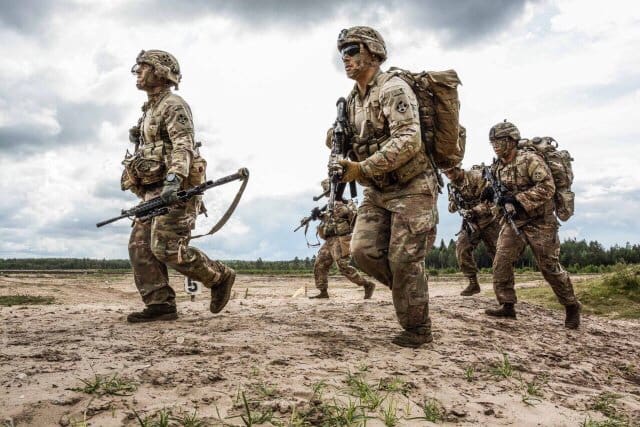
Riflemen with 4th Infantry Division at Rukla Training Area, Lithuania, Aug. 24, 2017. T (Photo Credit: Photo courtesy of Lithuanian Land Forces)

“We still have the capability to defeat them all but we are at a point where we have to improve the mental and physical toughness of the infantry and ensure we’re incorporating new technologies and capabilities to ensure we remain the decisive force for the military,” he added.
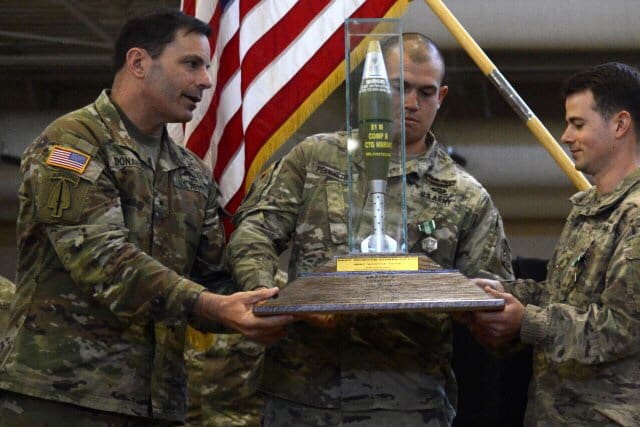
Brig. Gen. Christopher T. Donahue, Infantry School Commandant, Maneuver Center of Excellence, congratulates Soldiers of the 82nd Airborne Division, who won the Best Mortar Competition during Infantry Week, April 2018 at Fort Benning, Ga. (Photo Credit: David Vergun)

Donahue spoke after attending the April 16 awards ceremony for the inaugural Best Mortar Competition. The competition was part of the April 13-20 Infantry Week here.

The general addressed several initiatives that the Army is taking to ensure the infantry retains overmatch.

One of the most fundamental responsibilities the Army has is ensuring that the right people are being selected for the Infantry Branch, he said, describing the infantry as “the 100,000 who close with the enemy.”

The Army is doing that through reform of its talent management system, he said. “We want intelligent, physically fit people who are capable of enduring hardships against a near peer.”

At higher echelon, the Office of the Secretary of Defense is also examining the attributes of a successful infantryman with its Close Combat Lethality Task Force, he added.

Once these people are recruited into the Infantry Branch, it’s important that they master infantry basics right off the bat, he said. “You can’t do anything without mastering the basics. You have to be very good at that.”
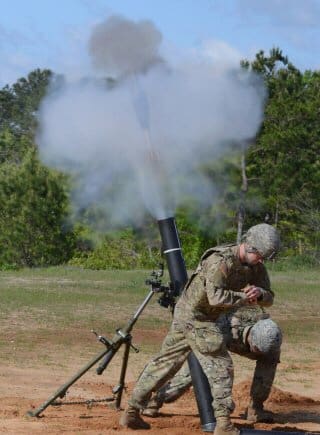
Soldiers compete in Best Mortar Competition during Infantry Week, April 2018 at Fort Benning, Ga. (Photo Credit: David Vergun)

In July, the Army will run a pilot to extend the Infantry One-Station Unit Training out to 21 weeks, he said, explaining that OSUT is the equivalent of Basic Combat Training and Advanced Individual Training.

Lengthening OSUT “will help ensure we’re producing the right person that can walk into a unit, ready to fight, win and survive,” he said.

In another initiative, the Army will be transitioning to a new marksman qualification test, he said. Soldiers will still be given 40 rounds, but instead of just shooting prone and from a foxhole, they will shoot prone, prone unsupported, kneeling and then standing — all within six minutes. “It will reflect what we think you’ll be doing in combat.”
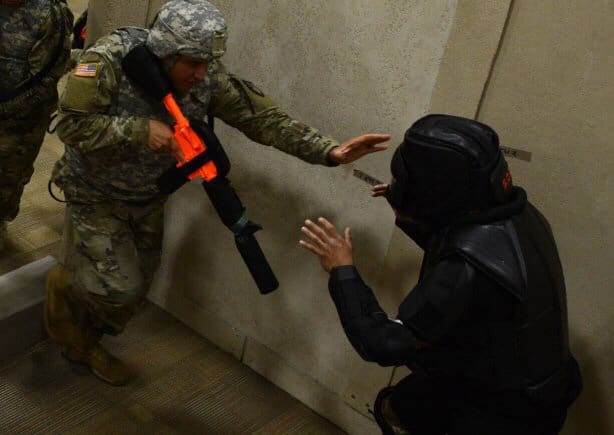
Soldiers compete in the Combatives Tournament during Infantry Week, April 2018 at Fort Benning, Ga. (Photo Credit: David Vergun)

Soldiers will also be trained to fight in austere environments where communications is degraded or denied, he said, terming it a “multi-domain environment” that includes space, cyber, urban and even subterranean battle.

Donahue noted that when he was a lieutenant going through infantry training, Soldiers were taught how to continue the fight despite severed communications with headquarters. “We’ve got away from that, but we’re going back to doing that.”

What he didn’t learn as a lieutenant, he said, was how to deal with social media that the enemy will use to gain an advantage. That too is being incorporated into the schoolhouse.

To fight and win also means equipping Soldiers with the right technology and capability, he said. Cross-functional teams will be going after that in the new Futures Command.

For instance, virtual reality will enable Soldiers to get a lot more training in than they normally would with live-training only. Virtual training environments allow commanders to run Soldiers through many more repetitions, at no extra cost, before going to validate in a live environment.

Col. Townley Hedrick, deputy commandant for the Infantry School, said that the Army is developing a functional fitness test that will better prepare Soldiers for the rigors of combat.

Hedrick spoke after attending the Combatives Tournament awards ceremony, another Infantry Week event, held concurrently with the Best Mortar and Best Ranger competitions.

While vigorous and repetitive training is important, “when you compete at anything, it makes people up their game to the highest level,” he said. “You can train and train and train, but it’s actually competition that takes you to that final level of precision and perfection.”

Hedrick predicted that there will be more competitive events coming throughout the Army similar to those featured here during Infantry Week.

By David Vergun, Army News Service

(Follow David Vergun on Twitter: @vergunARNEWS)

The Art of the Operational Advisor

Monday, May 7th, 2018

The U.S. Army’s Asymmetric Warfare Group (AWG), headquartered at Fort Meade, Maryland, selects, trains, and prepares the most qualified applicants to become Operational Advisors (OAs). Operational Advisors are subject matter experts in their field. They are seasoned warriors who support Army and Joint Force Commanders to enhance Soldier survivability and combat effectiveness, and enable the defeat of current and emerging threats in support of Unified Land Operations.

IMG_7025

Operational Advisors are senior enlisted Soldiers (Sgt. 1st Class and above), Officers (Capt. to Lt. Col.) and Consultants. Most of the consultant Operational Advisors are combat veterans with Special Operations background, who were once senior ranking enlisted and officers, and are now retired from the military. The consultants continue their service supporting AWG deployed in theater and stateside by mentoring, coaching, and providing guidance to the active duty Operational Advisors. These OA consultants are a critical asset to the organization and assist in the overall completion of the mission. All OAs communicate with each other to spread the knowledge from their observations past and present across the formation.

The Asymmetric Warfare Group has a worldwide focus with regionally aligned squadrons. Traveling in small teams, OAs must also be able to accomplish the mission individually with ambiguous instruction to meet the Commanders Intent. As the OAs prepare to conduct a mission, they will gather information that allows them to identify the initial threat situational template and understand the Operational Environment. The OA will then embed with units and gather first hand observations on enemy tactics, techniques, and procedures (TTPs) to increase their situational understanding of the threat. As an external observer, AWG OAs can then assist commanders with material or non-material solutions to provide a time sensitive upper hand in a complex and fluid environment. Operational Advisors will think, adapt, and anticipate ensuring mission success.

IMG_7026

It is clear that AWG places emphasis on readiness of all personnel prior to deploying into a combat zone. As a Combat Cameraman (COMCAM) in support of the Asymmetric Warfare Group, I received an extensive amount of training to prepare myself for most missions during my assignment. (This training is a requirement for all OAs, Operational Advisory Support Personnel, and consultants in the organization regardless if scheduled to deploy or not.) I attended the Combat Skills Training Course (CSTC) where advanced and refresher tactics such as shoot, move, communicate, and medicate skills are taught. In addition to immediate and remedial drills, transition drills from primary to alternate weapons, barrier shooting, and several shooting positions are enforced through scenario driven events. I received a class on different communication platforms and their tactical applications in combat. The medical training was an introduction to mass casualty situations and how to categorize patients for treatment and evacuation if an event became catastrophic. I also attended an IFAK (Individual First Aid Kit) 101 class to get familiarized with all equipment in the personal medical aid kit and how to properly use it. The medic cannot save everyone, but with helping hands from combat lifesavers many battlefield deaths have been prevented simply by someone stopping the bleeding of a casualty. First Aid is a high pay off task and Operational Advisors and OA support personnel go through extensive training to maintain proficiency on this skill.

Integration is a major component of becoming part of the team. After completing CSTC, Charlie Squadron members provided further mentoring to complete additional training and prepare for deployment. Additionally, I attended weekly briefings alongside senior members of the squadron to gain situational awareness of the areas I could be providing support. The squadron’s logistician ensured I was ready to deploy and coordinated for issue of AWGs equipment and weapons. They worked hand in hand assisting me to make sure I had everything I could possibly need in combat and so I could be outfitted and look similar to the advisor I would be shadowing. They helped me coordinate the shipment of my equipment overseas; thus making the deployment official.

IMG_7027

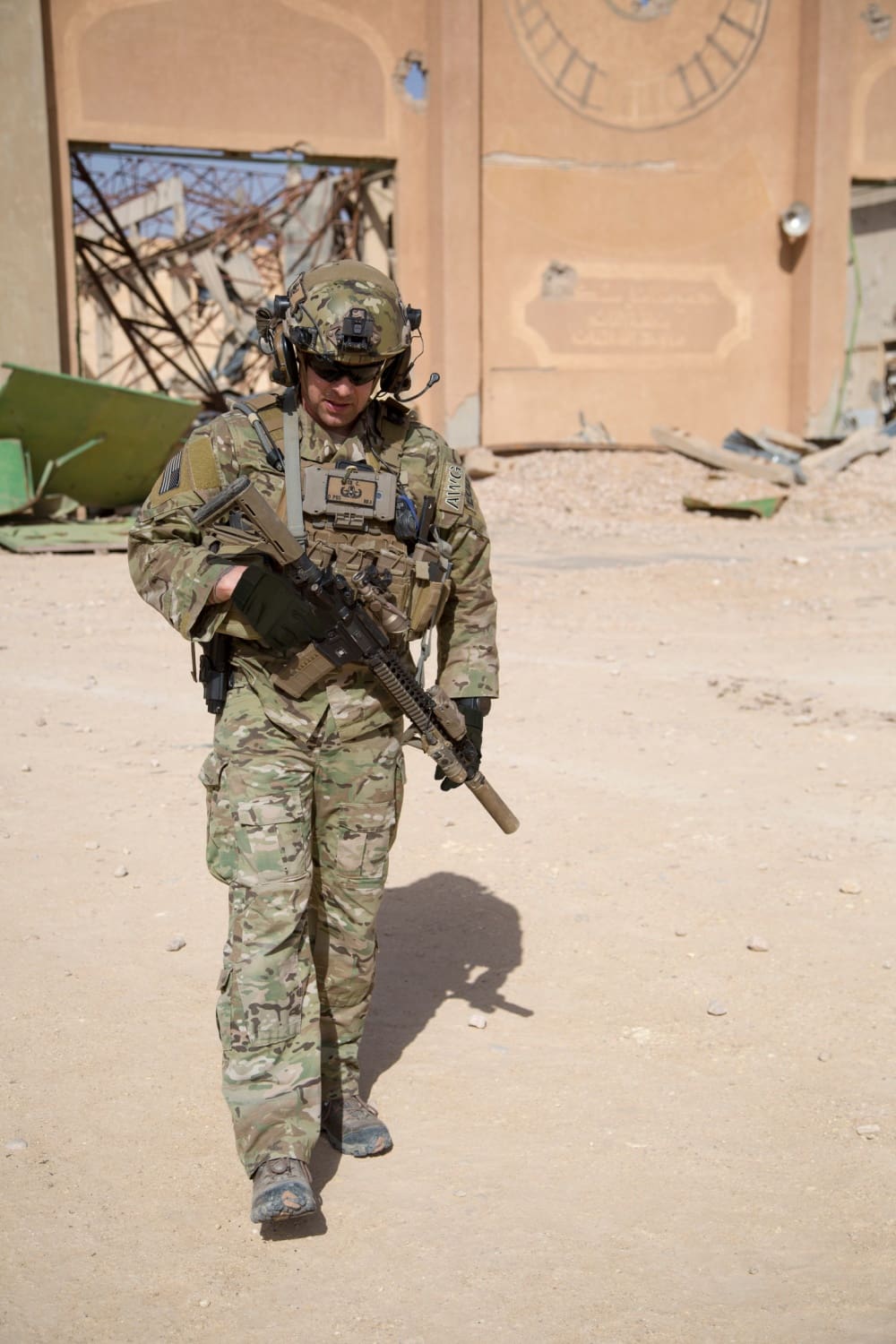
I had the unique opportunity to deploy in May, 2018 with Sgt. 1st Class Roberto (Rob) Crull, an AWG Explosive Ordnance Disposal Advisor from Charlie Squadron to Iraq, as he supported units during Operation Inherent Resolve (OIR). I was able to witness first hand how an advisor works from getting into country, to coordinating embeds with an operational element. Prior to departure from the AWG hub in Iraq, we prepared equipment to be self-sufficient so that we would not be a burden on the supported unit. I learned that AWG has the capability to establish expeditionary communications via BGAN (Broadband Global Area Network) for secure communication in remote locations. Sgt. 1st Class Crull established a point of contact with the unit to make sure that they could accommodate our stay in their area of operations. Sgt. 1st Class Crull stated that “an OA should never be a hindrance to a unit he/she embeds with. An OA brings everything they need to establish all forms of communications to include solar kits for power for when in austere environments.”

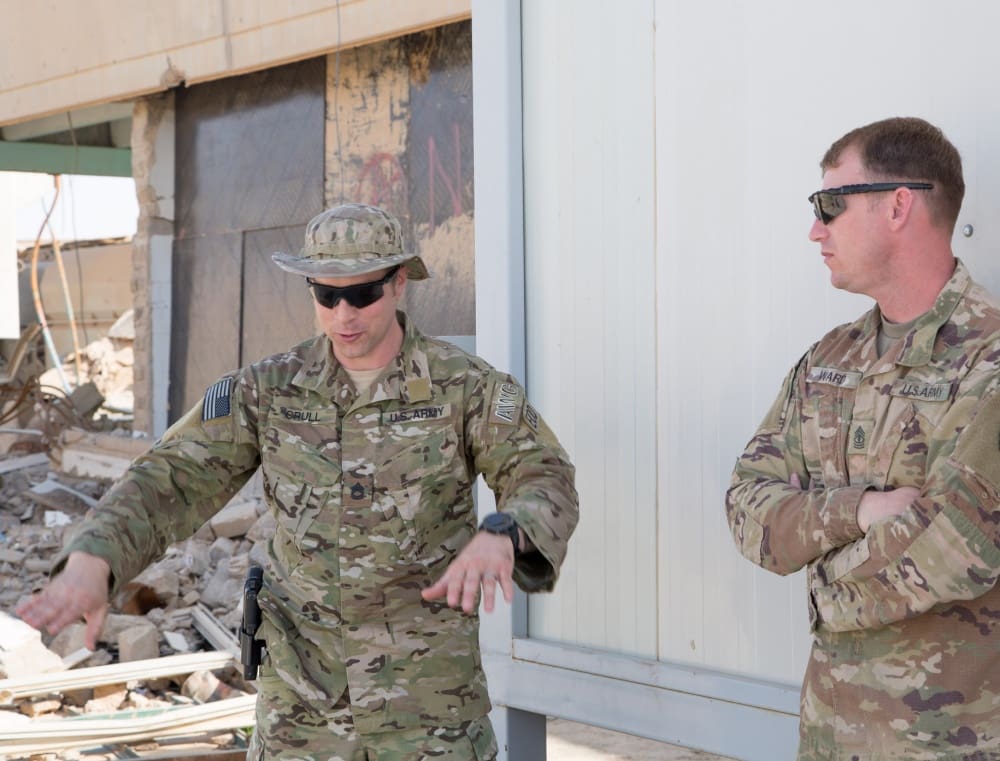
Upon arrival to the unit we were supporting, Sgt. 1st Class Crull met with leadership, introduced himself, gave a capabilities brief on his role, why he was in their area of operations, and presented an overview of what he was looking to accomplish. Once communication was established within the unit, I witnessed the relationships immediately grow between Sgt. 1st Class Crull, unit leaders, and the Soldiers around the area. Sgt. 1st Class Crull quickly became an icon as many Soldiers opened up to him with the many challenges they faced. Sgt. 1st Class Crull and I made ourselves a part of that team by sleeping in the transient tent with the Soldiers versus being in a VIP tent away from unit members, which is what the camp mayor was trying to do out of generosity. A humble servant spirit is necessary to operate with AWG.

IMG_7028

An incident occurred during my time with him where the supporting unit had to respond to a Fallen Angel crisis in their area of operations. Sgt. 1st Class Crull’s past experience in Fallen Angel incidents and mine in forensic photography to assist investigators played a vital role in this unfortunate situation. Sgt. 1st Class Crull was able to integrate us into the flow of operations to assist during the crisis. We loaded into vehicles and moved out with the Quick Reaction Force (QRF) to the site. My initial impression was that this was enemy related and my training prepared me to respond with force if necessary. I was ready to perform my duties as a Soldier and secure the site. My training allowed me to be confident in my abilities and calm under stress, but also to respond accordingly. Nothing can prepare you mentally for how to respond to all situations. It is true what they say, in stressful situations your training will kick in and it’s like you automatically know what you have to do. Once the scene was secure and all heroes were recovered from the site, I switched from rifleman to a combat photographer. I began to take photos of the scene to paint the picture for the investigators before the scene could have been contaminated from wind or operational disturbance.

Unit members in the supported unit, valued the knowledge that Sgt. 1st Class Crull presented. Before our departure from the unit, Sgt. 1st Class Crull was able to provide advice and “Make the Unit in Contact Better”. I learned that an Operational Advisor has extensive resources and reach back capabilities, providing the units in contact with rapid solutions. Everything the OA does is based on building relationships within units and earning their trust. The supporting unit was very thankful and opened the doors for him to return. Sgt. 1st Class Crull bolsters the term “quiet professional” and is a great representation of AWG. This was a great experience and I was able to see how AWG operates from a tactical and operational perspective.

The OAs job is never-ending. Upon returning to the states they must gather their observations from the duration of the deployment for post mission dissemination. Those observations are non-attributable towards any specific unit, and identify ways to properly assist the fighting force to defeat current and future threats. The process then starts over and the OA will engage with units during home station training and also at the Combat Training Centers (CTC) to support the next deployment.

When talking to Sgt. 1st Class Crull during one of my days with him, he stated the Charlie Squadron Commander’s vision and in his own words what an AWG Operational Advisor does:

“We strive to make units in contact better by understanding the enemy and the complex operating environment while moving to the sound of guns. AWG is not there to tell a unit they are doing things wrong, we are there to identify outdated doctrine and friendly TTPs so that units in contact can adapt. Successes of operational solutions can then be carried forward to units deploying and currently deployed across the globe” Lt. Col. Kirk Liddle, Charlie Squadron Commander.

Earning the title of an Operational Advisor is not for everyone. The job is very demanding, but the rewards are endless. Once you are part of the Asymmetric Warfare Group, you become part of the AWG family. Families make lifelong bonds through the unique experience of a high operations tempo environment. If you wish to make a difference and be part of the solution, apply for selection at www.awg.army.mil.

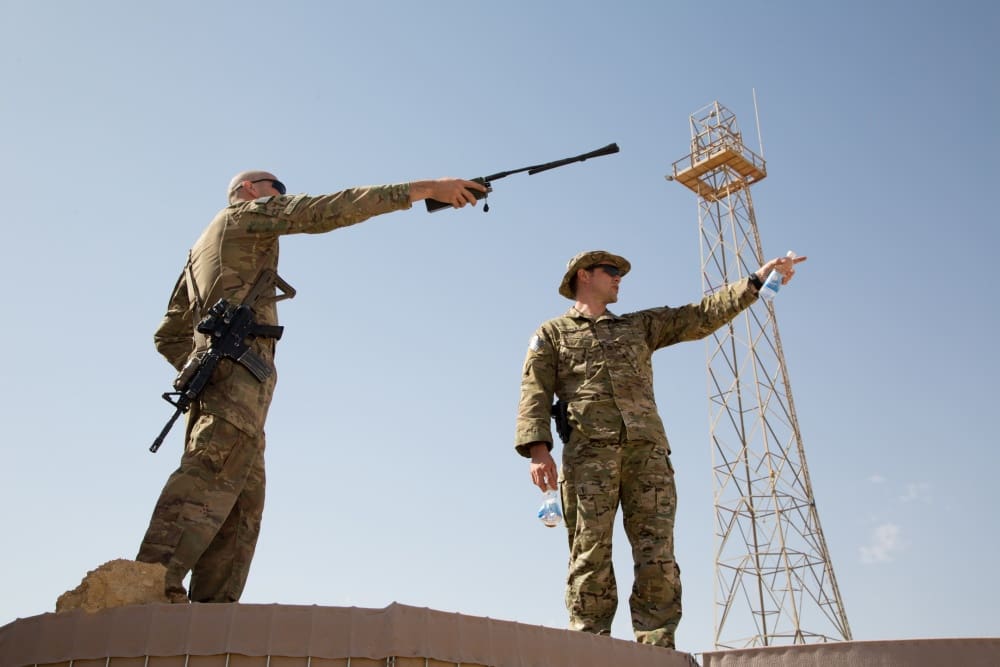
Photos feature U.S. Army SSG Jeremiah Hall and SFC Roberto Crull, an Explosive Ordnance Disposal (EOD) Operational Advisor with Charlie Squadron, Asymmetric Warfare Group, waits at a landing zone for transport at a Forward Tactical Assembly Area in Al Anbar Province, Iraq, Mar. 22, 2018. AWG provides operational advisory support globally and rapid solution development to enhance survivability and combat effectiveness, and enable the defeat of current and emerging threats in support of Unified Land Operations. (U.S. Army photo by Sgt. Randis Monroe)

Story by SGT Randis Monroe, AWG

Need It Fast? Marines Can Print It

Saturday, April 28th, 2018

MARINE CORPS BASE QUANTICO, Va. —

In the last few years, the Marine Corps has increased its exploration of additive manufacturing, or 3D printing, to quickly replace parts for weapons, vehicles and equipment.

Most recently, Marines at the Mountain Warfare Training Center and the AM Team at Marine Corps Systems Command came up with a solution to print out same-day snowshoe clips.

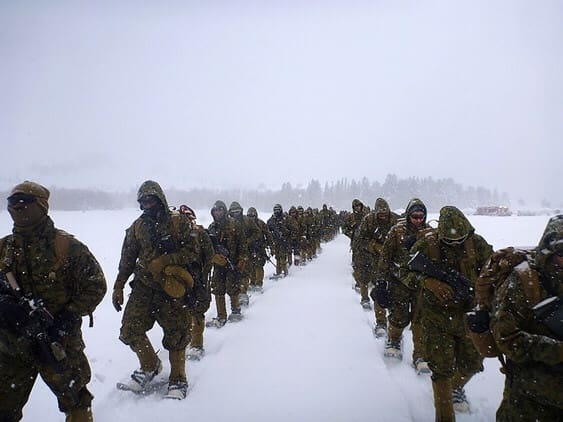
Marines at the Mountain Warfare Training Center in Bridgeport, California, train in freezing temperatures to get comfortable with their gear and prepare for future missions. MWTC Marines worked with the Additive Manufacturing Team at Marine Corps Systems Command to print out same-day replacement clips for their snowshoes. (Courtesy photo)

The MWTC, located in northern California, is tasked with the mission of training Marines in mountain and cold weather operations. During the winter season, snow accumulation can reach six to eight feet with temperatures as cold as 20 degrees below zero.

“If a Marine is attacking a position in the snow while in combat, and the clip on their boot breaks, it makes it difficult for the Marine to run forward with a rifle uphill to complete the mission,” said Capt. Matthew Friedell, AM project officer in MCSC’s Systems Engineering and Acquisition Logistics. “If he or she has a 3D printed clip in their pocket, they can quickly replace it and continue charging ahead.”

MWTC and MCSC worked together to print a newly designed snowshoe clip made out of strong and flexible resin at a cost of only five cents per clip. The team created and printed the clip within three business days of the request.

“The capability that a 3D printer brings to us on scene saves the Marine Corps time and money by providing same-day replacements if needed,” said Capt. Jonathan Swafford, AM officer at MWTC. “It makes us faster than our peer adversaries because we can design whatever we need right when we need it, instead of ordering a replacement part and waiting for it to ship.”

Another innovative product the team created for MWTC is an insulated radio cover. The radios the Corps uses have lithium ion batteries that die quickly in the cold, so the AM Team designed a 3D printed cover to keep the batteries warmer and help the charge last longer in cold temperatures.

“Just like the Commandant says, it’s important we continue innovating at all levels to remain ahead of our adversaries,” said Swafford. “Even our youngest Marines should be focused on innovation. The more of us who know how to use and design with this process, the better off we will be.”

AM Marines collaborate and share files using the Marine Makerwebsite. They communicate and share ideas so other Marines can easily build upon them, Swafford said.

In addition to creating replacement parts, additive manufacturing is used to design models and prototypes. Before the Modified Full Width Mine Plow prototype was developed, the AM Team created a 3D model with foldable tines to demonstrate how the Assault Breacher Vehicle could more easily deploy from a Navy Landing Craft Utility boat onto the shore.

“More than ever before, we are able to use 3D printing as a catalyst to spark everyone’s imagination for quick-fix solutions,” said Friedell. “The Marine Corps is leading the way in additive manufacturing, and we have to continue to use AM in every level of our warfare to fix equipment and weapons faster than the enemy and stay in the fight.”

By Kaitlin Kelly, MCSC Office of Public Affairs and Communication | Marine Corps Systems Command

US Army MOLLE 4000 – Your New Airborne Ruck

Sunday, April 22nd, 2018

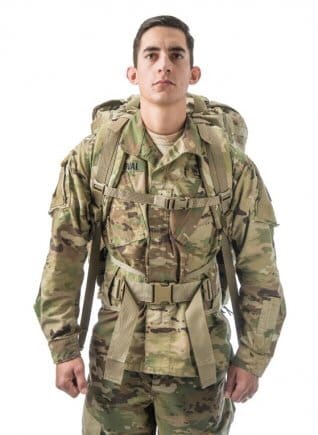
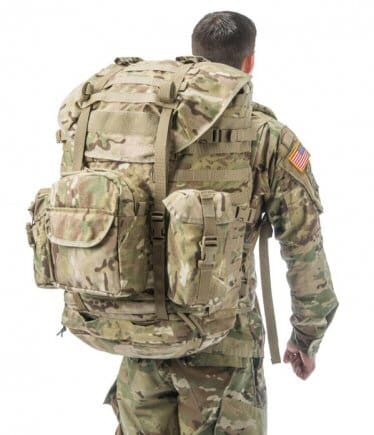
When the 82nd called in a request, Natick delivered. The response: the latest iteration of the Army’s airborne rucksack, the Modular Lightweight Load-Carrying Equipment (MOLLE) 4000. Formatted to address the needs of the 82nd Airborne Division, the mid-sized rucksack has been designed, tested, and is now slated for limited distribution. Fabricated with both sewn-on and removable pouches, the MOLLE 4000 should be versatile enough for Army-wide utilization of the system.

Operations Sergeant, Human Resources Development Division (HRDD), Staff Sgt. Anthony Sandoval, demonstrates the redesigned Modular Lightweight Load-Carrying Equipment (MOLLE) 4000. Developed by Load Carriage Systems, Product Manager, Solider Clothing and Individual Equipment at Natick, Soldier Systems Center, the mid-size ruck has a larger top flap and more spacious leg storage pockets than previous versions of MOLLE. Additionally, the MOLLE 4000 has an internal radio/equipment pocket and a lengthened back pad for increased comfort. (Photo Credit: Mr. David Kamm (RDECOM))

“The beauty is, we designed a rucksack specifically for the airborne community, however, non-airborne units can use this rucksack just as effectively by just not being issued the airborne harness components, ” said Rich Landry, Individual Equipment Designer with Load Carriage Systems, Product Manager, Solider Clothing and Individual Equipment.

A former Pathfinder with the 82nd, Landry understands the needs of the Airborne community. Through communication with the 82nd, and other Army units, Landry obtained the feedback necessary to improve the rucksack, a critical tool for deployed Soldiers. This final design borrows elements from the old ALICE pack, and earlier versions of MOLLE. After listening to critiques of previous equipment, Landry determined adjusting weight distribution was key.

“One of the critical design issues is, you must distribute the weight onto the hips, the ideal load carrying surface on the body. The original ALICE pack only distributed the weight onto the shoulders and lower back — which was a real problem. Then we started talking about the science of load carriage. And that’s what MOLLE is all about. Getting the weight off the shoulders and onto the hips — a modular approach to the design of the rucksack.”

Members of the 82nd had even more specific requests. “One of the requirements that the 82nd had was that the harness that attaches the rucksack to the parachutist be sewn directly to the pack — because they didn’t want to lose any of the parts of it. This was the one requirement we didn’t agree with. We decided it would be better and more practical if the harness that supports the pack to the parachutists harness is removable but can be set up in a configuration that is seamless in how it attaches, and therefore, doesn’t require a long rigging process. Normally rigging a rucksack up to this type of harness can be a 5 min or longer process, depending on the Soldier. With this, it’s about a 1 min. process. But, it’s still completely removable when need be,” said Landry.

With a durable, yet light-weight frame, sewn-in pouches for organization of equipment, a pouch for airborne components (harness and lowering line), and MOLLE-webbing for attaching additional pouches, Landry believes the versatile MOLLE 4000 is both balanced and adaptable.

The MOLLE 4000 will begin fielding later this year. Around 6,000 packs are expected to be distributed to members of the 82nd Airborne Division. A large contingent of the conventional deployed force is also expected to receive a full-scale fielding of the rucksack in the near future.

By K. Houston Waters, US Army

Kit Badger Presents – NightFighter 101

Thursday, April 12th, 2018

In this post from Kit Badger, Ivan shares this video he created while attending the Viking Tactics NightFighter 101 course at SIG Academy.

He sent us this note:

This is the first shooting course review I have done, but I plan to do more. Shooting courses are one of those high ticket items between tuition, ammo, travel, etc. And I think by bringing some honest reviews of them I can hopefully save some people time and money by pointing them in the direction of the training / experience that they will get the most out of.

We’ve hit the highlights, check out the whole post at kitbadger.com/nightfighter-101-with-viking-tactics.

Marine Corps Systems Command to Showcase Tech, Innovation at Sea Air Space

Sunday, April 8th, 2018

MARINE CORPS BASE QUANTICO, VA. —

As the Marine Corps presses towards modernization to meet the demands of the strategic environment, Marine Corps Systems Command will showcase some of its latest gear at the 53rd annual Sea Air Space Exposition April 9-11 at the Gaylord Convention Center in National Harbor, Maryland.

“This year’s exhibit demonstrates a slice of what our Command is doing to equip our Marines,” said command spokesperson Barb Hamby. “The future maritime environment and threat landscape requires the latest advances in technology to outperform our competitors in lethality, speed, maneuverability, and fires.”

The following systems and equipment will be showcased in the MARCORSYSCOM booth #2705:

Target Handoff System Version 2

The Target Handoff System Version 2, or THS V.2, is a portable system designed for use by dismounted Marines to locate targets, pinpoint global positioning coordinates and call for close air, artillery and naval fire support using secure digital communications. Marine Corps Systems Command will feature the THS V.2 along with other equipment at the Sea Air Space Exposition April 9-11. (U.S. Air Force Photo by Staff Sgt. Joe Laws)

The Target Handoff System Version 2 is a portable system that uses commercial off-the-shelf smart phones designed for use by dismounted Marines to locate targets, pinpoint global positioning coordinates and call for close air, artillery and naval fire support using secure digital communications. The upgraded system includes a laser range finder, video down link receiver and a combat net radio.

An upgrade to the current system, THS V.2 reduces the system’s total weight by half and includes more intuitive software.

Additive Manufacturing

In the last few years, the Marine Corps has continued its exploration of additive manufacturing, or 3D printing, to quickly repair and replace parts for weapons, vehicles and equipment.

The Corps uses additive manufacturing to reduce maintenance costs, increase equipment readiness and improve combat effectiveness. Additionally, it offers Marines opportunities to solve day-to-day and low-risk challenges, such as those encountered on aircraft, weapons, vehicles and communications equipment, by offering the capability to repair and replace individual parts onsite.

Indoor Simulated Marksmanship Trainer III

The Indoor Simulated Marksmanship Trainer III has three added weapons, 3-D imagery, and enhanced training modes, giving Marines a better, more realistic training experience as they prepare for the complexities of modern warfare.

ISMT III ups the ante by providing wireless connectivity to the M9 service pistol, M4 carbine and adding three new wireless weapons—the M27 Infantry Automatic Rifle, M32A1 Multi-Shot Grenade Launcher and M72 Light Anti-Tank Weapons. ISMT helps to build fundamentals of muscle memory for Marines so that when they hit the range, they are ready to respond to real-life scenarios.

Away from the exhibit floor, Brig. Gen. Joseph Shrader, commander, MCSC will participate in the “Accelerated Acquisition” panel April 11, to discuss Marine Corps initiatives to speed delivery of systems and equipment to the fleet.

As the systems command of the Marine Corps, MCSC equips Marine forces with ground weapon and information technology systems to accomplish their warfighting mission.

By Kaitlin Kelly, MCSC Office of Public Affairs and Communication | Marine Corps Systems Command

Frag Out! Presents – Sport MSBS / GROT

Thursday, April 5th, 2018

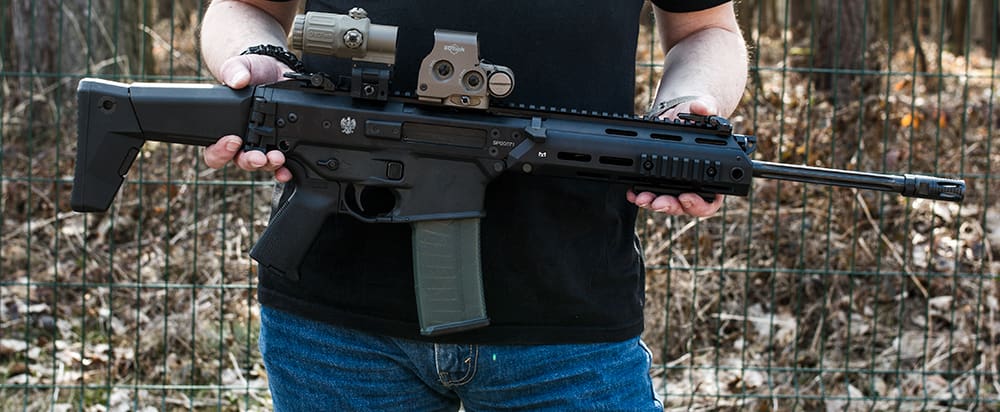
Our friends at Frag Out! Magazine have been gracious enough to allow us to share their exclusive look at the Sport variant of the Polish MSBS/GROT rifle.

Civilian MSBS/GROT S16 FB-M1 coming soon
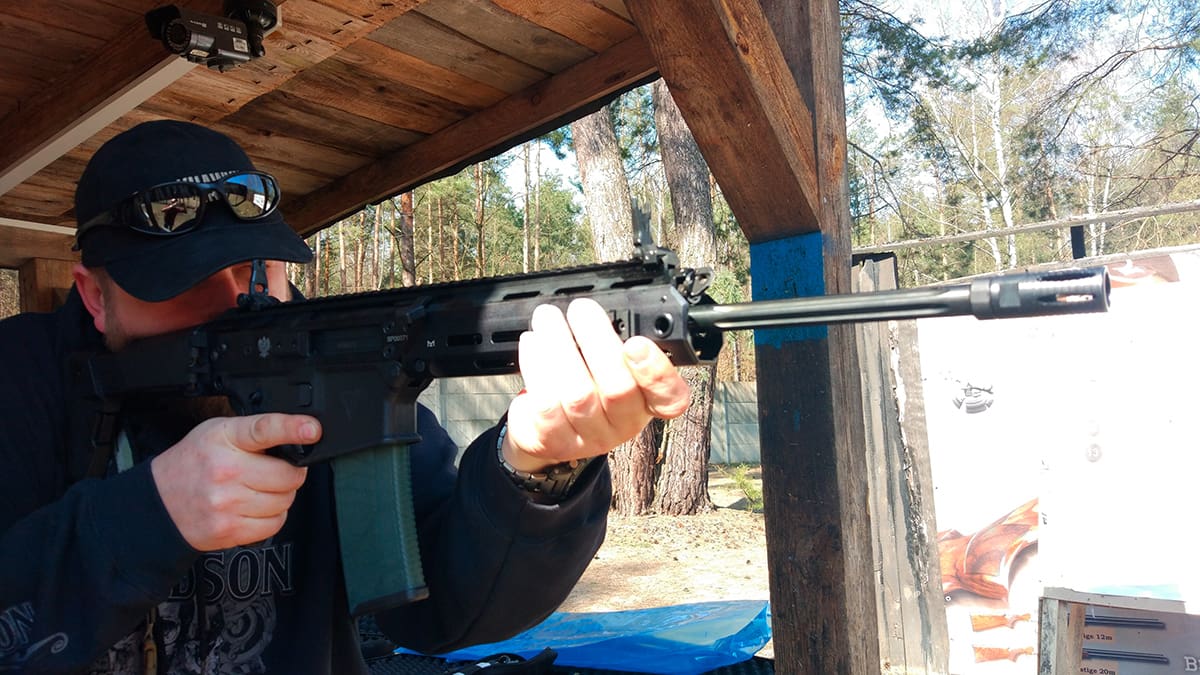
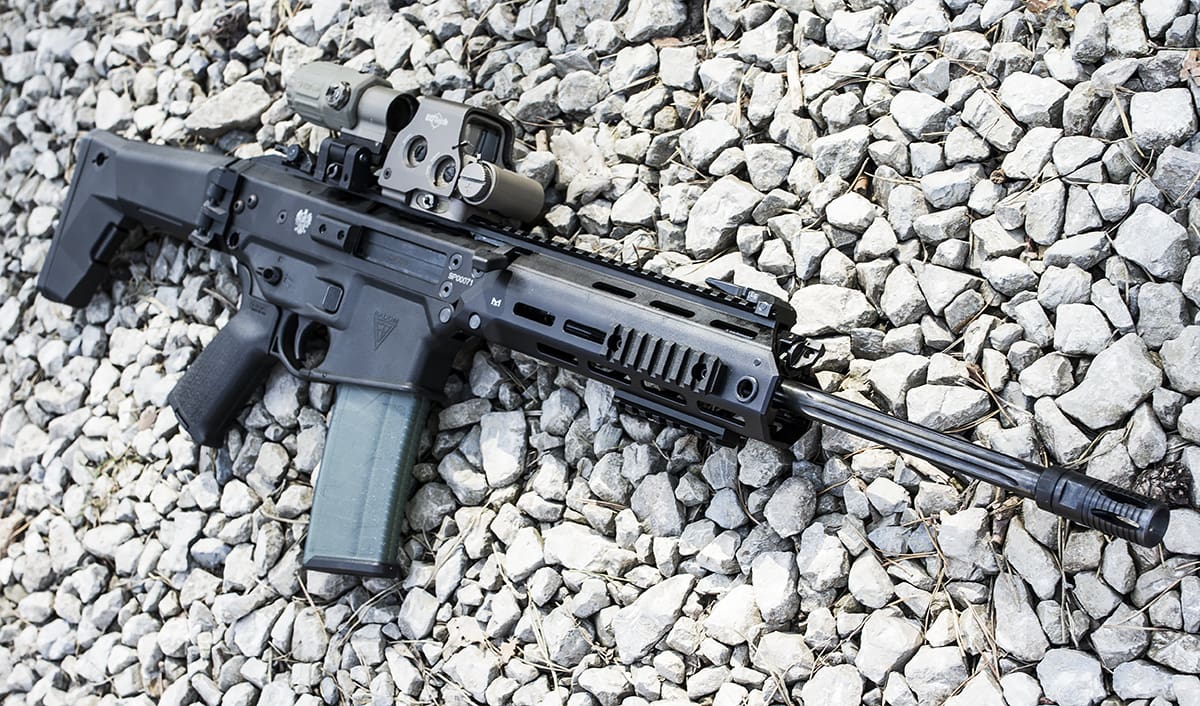
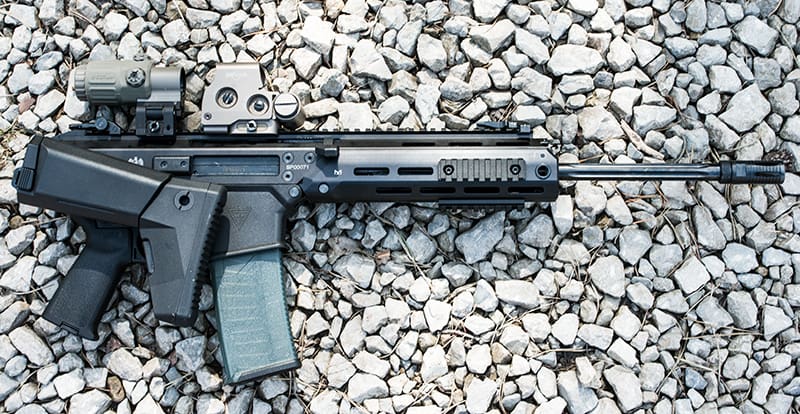
Today we had an opportunity to pick up one of the first .223 Rem GROT S16 FB-M1, the long-awaited civilian-legal version of MSBS/GROT.

9294E87A-9F86-43ED-91AC-F8E68EF71BF8

223 Rem GROT S16 FB-M1  is semi-automatic version 5.56×45 NATO Fabryka Broni ?ucznik-Radom MSBS/GROT C16 FB-M1 assault rifles, initially adopted by Polish Armed Forces in 2017. The Fabryka Broni ?ucznik-Radom announced that rifles will be available for sale next week.

74218F87-5261-44E9-9735-BBCBAA7FBA17

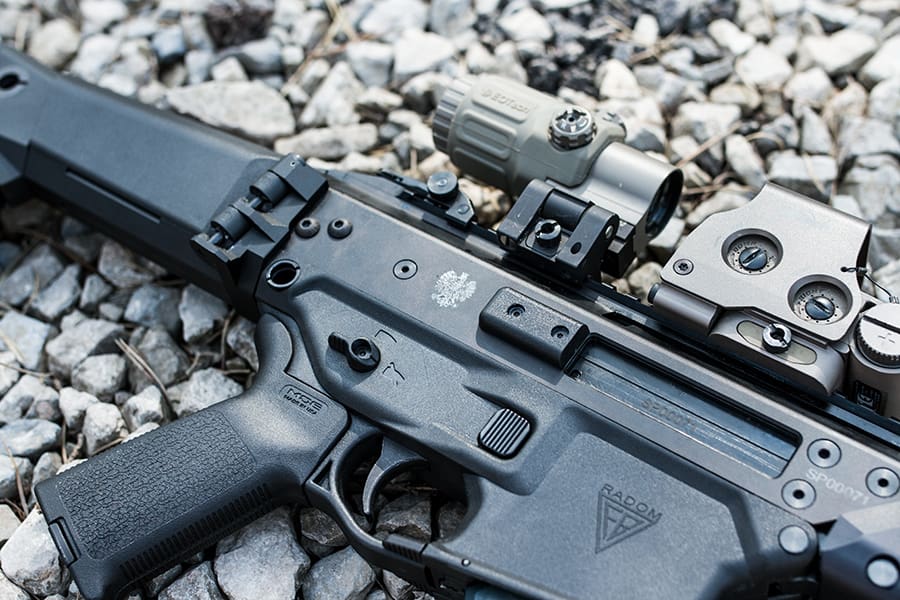
The pictured GROT S16 FB-M1 comes from the first production run of 500 pieces. First 100 pieces will be limited, to commemorate Polish Independence (regained in 1918), edition which will have some special laser-engraved markings and certificate. Every rifle will come with engraved Polish White Eagle on the right side of the upper receiver.

2B1D97C3-0A4F-4930-9F4F-D8E48C9C00A1

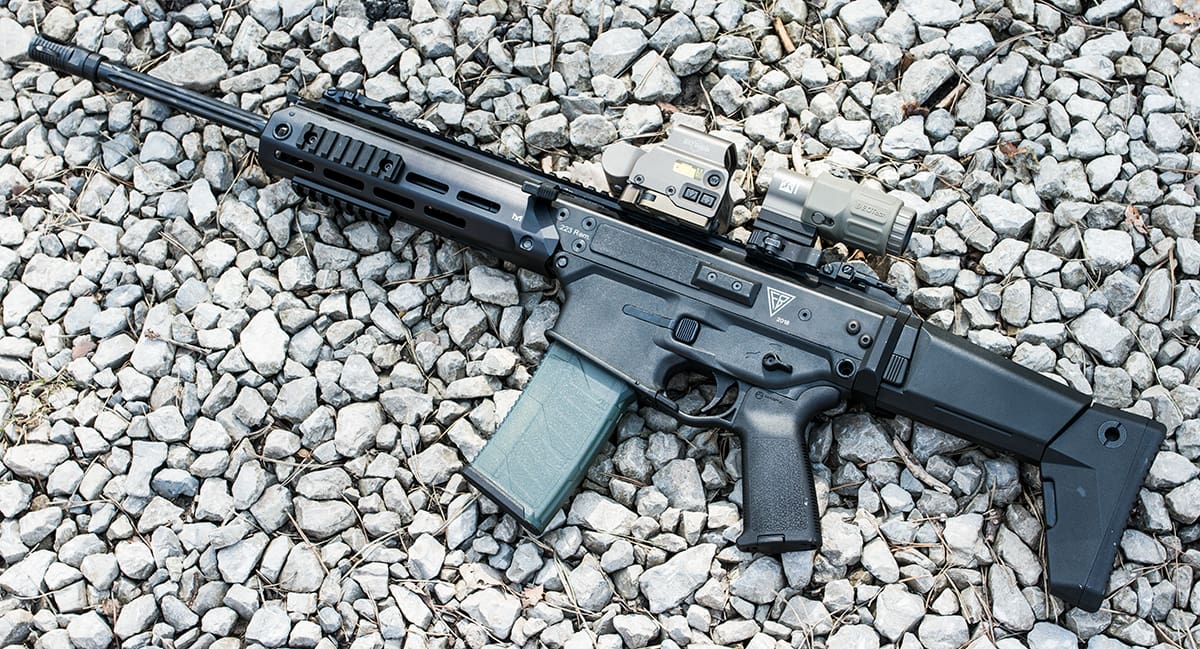
Semi-automatic GROT S16 FB-M1 comes assembled with side-folded collapsible stock, Magpul M-LOK attachment system handguard (officially licensed by M-LOK) with three short MIL-STD-1913 rails, folded ironsights, Magpul MOE handguard, green translucent polymer 30 round magazine, cleaning kit, manual, warranty card, etc. The rifle comes factory wrapped in anti-corrosion foil (in the past, rifles were packed in paper…, future is here!) and packed in the hard case.

F92E2224-D8F9-4DA9-B701-3095DC36512A

What are the differences between the  GROT S16 FB-M1 and GROT C16 FB-M1, except being a semi-only rifle? Of course, the standard fire control group was replaced with two-position (Safe & Single) selector lever (90 degree rotation). Icons are stamped, but not painted. FCG is ambidextrous. Next thing is the above mentioned M-LOK handguard with four mounting slots at the 3, 5, 6, 7 and 9 o’clock and three at 2 and 11 o’clock. The 16” MIL-SPEC quick-changeable fluted barrel with 1:9 twist has 1/2-28-UNEF-2A thread, so the users can easily change the muzzle device. The GROT version adopted by Polish Army has muzzle device which can be only removed by armorer. Rifle is compatible with .223 Rem and 5.56×45 rounds.

2D71F571-D89E-4103-A2D7-EBD73AE6278F

The civilian version of the rifle does not feature the bayonet lug. Since the bayonet in military rifle is attached to the lug and to the muzzle device itself, it is impossible to fix it to the S16 FB-M1. The QD sling attachment point location was changed accordingly to the feedback from military users.

D4D60257-5D05-43D6-B17B-E0DE2842447D

There were also some changes in the internals of the rifle – except the lack of full-auto capability. The bolt carrier was modified and the six wolfram plunges were removed. The S16 FB-M1 trigger works different too, it’s not MIL-SPEC one either the Match. The trigger reset is quite long, so no quick double taps. Unfortunately, it is not modular and cannot be replaced without some serious modification of the rifle.

78238E50-9749-4797-97C4-8BF269952B71

Driving home from the FB Radom, we decided to have a short trip to shooting range to check this piece out. Well, basically it shoots close to the military rifle. It is stable during shooting, fully ambidextrous and comes with the 90 degree rotation fire control group. The selector switch has quite strong resistance, but we hope it will soon go on. There was some wobbling in the collapsible stock. We were using cheap GGG rounds and there was no stoppages. According to the manual, the S16 FB-M1 is compatible with almost all STANAG magazines, except the Magpul PMAG M3… In upcoming days and months we will see how the rifle will perform when we will get it some serious use.

493829A5-1986-4BEC-9E28-090F81DC2B03

Some tech specs:

Caliber: 5.56×45 mm NATO/.223 Remington

Overall length: 681 mm (26.81”) with folded stock or 903 mm (35.55”) with stock fully extended

Barrel length: 406 mm (16”)

Barrel twist: 1:9

Weight: 3.7 kg (8.16 lbs)

Unmanned Technology: Breaching the Battlefield

Wednesday, April 4th, 2018

GRAFENWOEHR, Germany — U.S. Soldiers, Marines, Department of Defense civilians, and troops from the United Kingdom observed and tested a series of unmanned, remote-controlled ground vehicles during a combined training event at Grafenwoehr Training Area, Germany, April 2, 2018.

CD9CEEA3-68EA-4444-9EFF-259B46EE4724
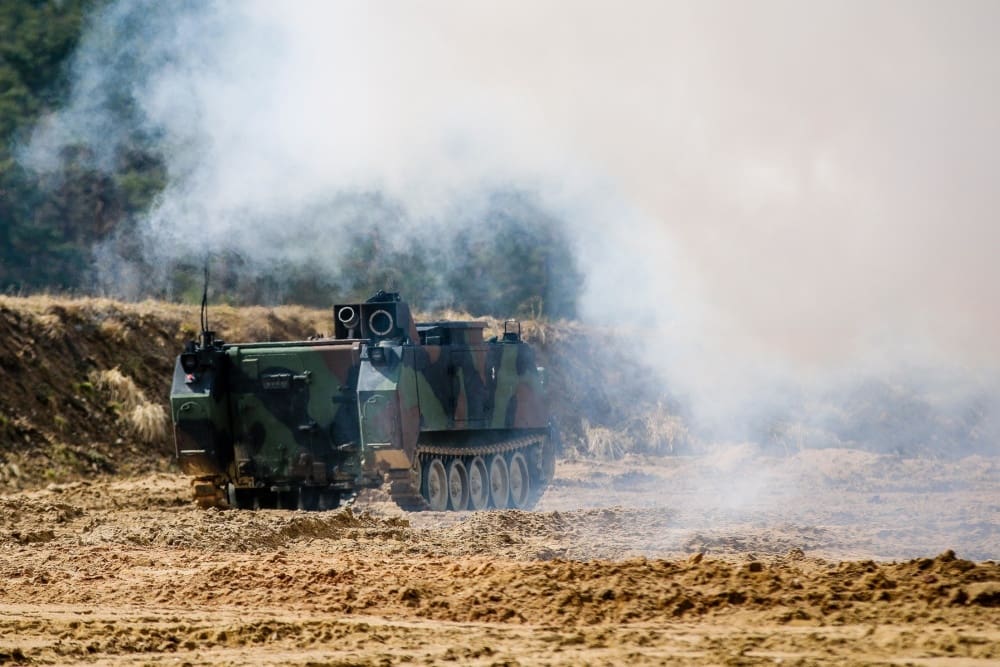
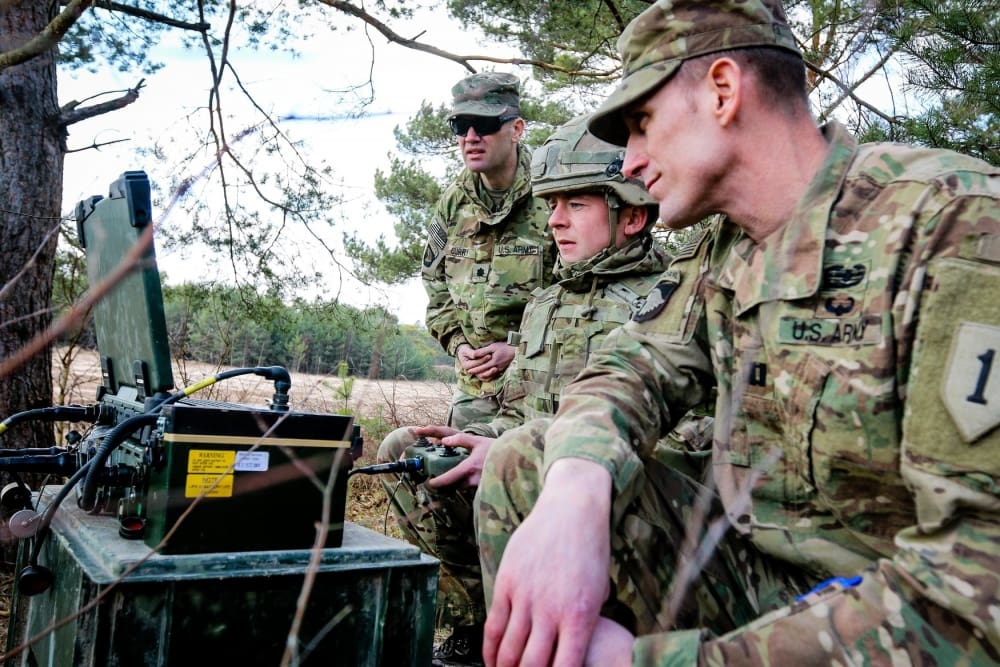
A M58 Wolf is remotely controlled to release a cloud of smoke during a multinational joint equipment U.S. military training exercise at Grafenwoehr Training Area, Germany, April 2, 2018 in preparation for a Robotic Complex Breach Concept demonstration.

The training event was conducted in preparation for a larger demonstration of unmanned capabilities, called the Robotic Complex Breach Concept, scheduled for later this week.

E7A45898-0C0B-4D9A-8DA4-1A2A31BF98CC
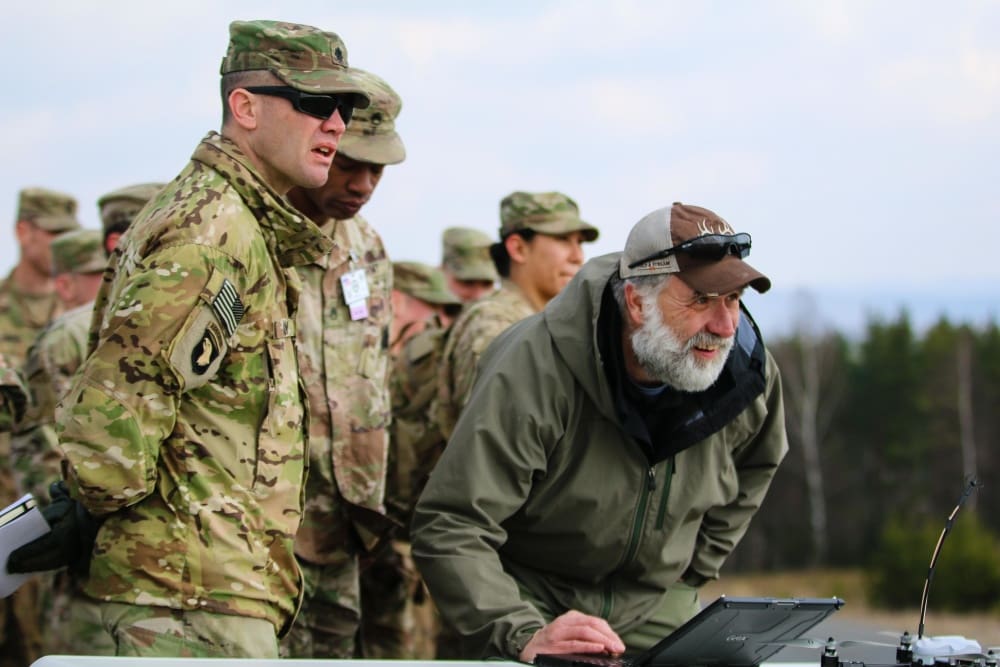
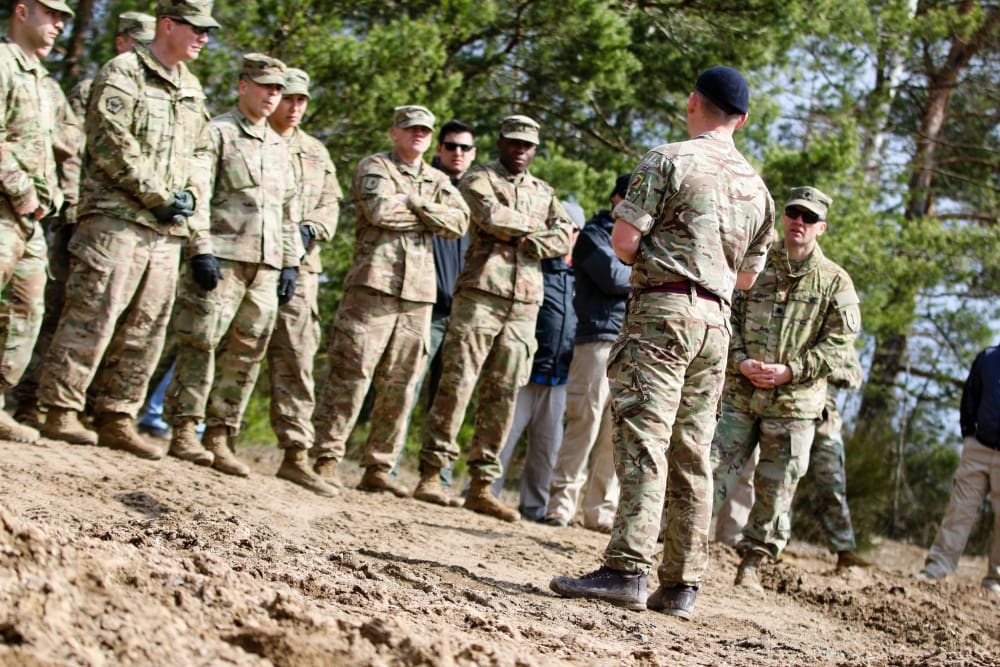
Ray Moldovan (left), a senior product management specialist with General Dynamics, explains to a group of U.S. Army Soldiers how to remotely control a M58 Wolf during a multinational joint equipment training exercise.

“Being able to take Soldiers out of harm’s way and accomplish the mission is very an attractive option to any commander,” said Curry. “It’s a capability that the enemy will not know how to counteract when we implement it. This type of technology enables us to stretch further while conserving resources,” said U.S. Army Lt. Col. Jesse Curry, commander of the 82nd Brigade Engineer Battalion, 2nd Armored Brigade Combat Team, 1st Infantry Division.

AB02890D-84DA-4748-A276-AC007E9B71EE
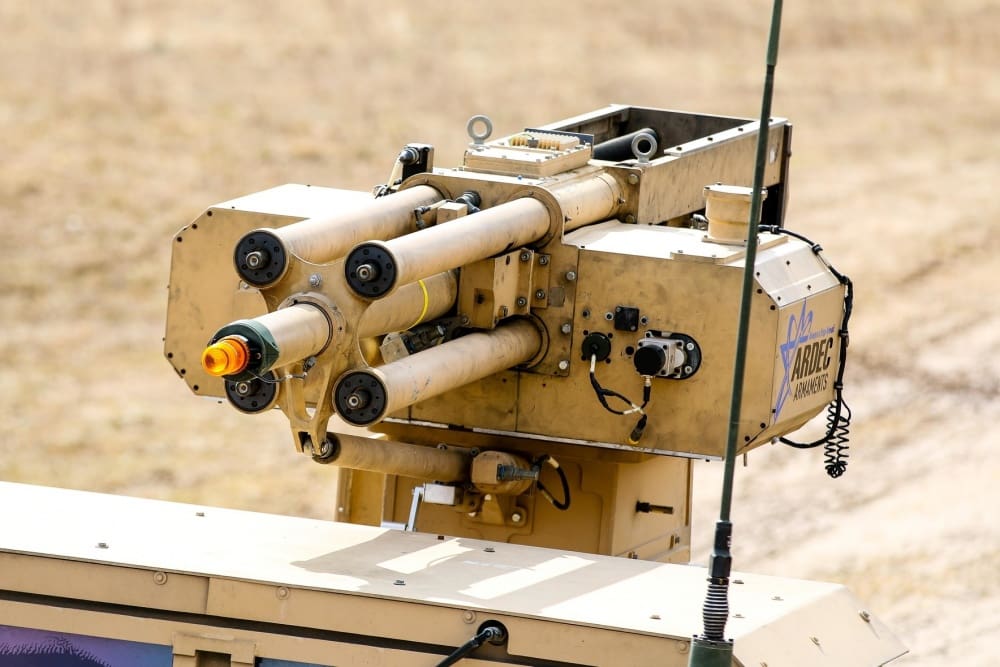
An automated direct and indirect mortar system is operated from a distance by U.S. Soldiers during a multinational joint equipment training exercise with the U.S. military.

The military-vehicle mounted Automated Direct and Indirect Mortar, the M58 Wolf Smoke Generator, and the ‘Terrier’ armored digger were some of the existing technologies used throughout the exercise. All were outfitted with new technology that allows them to be remotely controlled.

F80ADF90-08D9-4B0C-B09B-232820122053
An automated direct and indirect mortar system is operated from a distance by U.S. Soldiers during a multinational joint equipment training exercise.

“This has been a great opportunity to show each other how to work on new systems, as well as each other’s systems,” said U.K. army Staff Sgt. Joe Ferries, a combat engineer with the U.K. 22nd Engineer Regiment, 8th Engineer Brigade. “All the lessons learned here are going to have massive benefits for our armies and the next mission.”

B410FE07-5451-4427-BBE8-9354495BB832
Mike Mackiewicz (right), demonstrates to U.S. Army Lt. Col. Jesse Curry (left), the commander of the 82nd Brigade Engineer Battalion, 2nd Armored Brigade Combat Team, 1st Infantry Division, the capabilities of an automated direct and indirect mortar system.

Ferries, the U.K. soldier who supervised a portion of the training, said he believes this kind of training is a natural part of improving any military.

32372FF2-F4C9-4055-8457-E26FA2189E3D
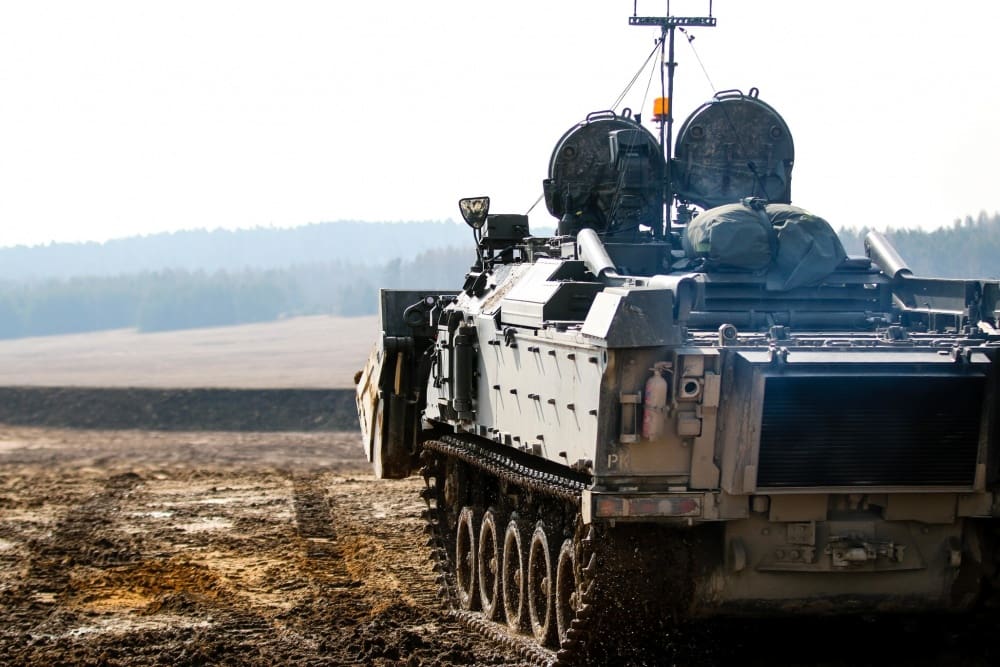
A “Terrier” armored digger from the United Kingdom’s 22nd Engineer Regiment, 8th Engineer Brigade is remotely controlled to secure an area.

“This training its quite relevant,” said Ferries. “We will always have to compare and improve our procedures and technologies.”

00B7D4C6-4140-47A9-B861-54AB97708E6B
U.K. army Staff Sgt. Joe Ferries, a combat engineer with the 22nd Engineer Regiment, 8th Engineer Brigade, instructs a group of U.S. Soldiers, Marines, and Department of Defense civilians on how to remotely control a Terrier armored digger.

The U.S. Army’s 1st Battalion, 63rd Armor Regiment, the 82nd BEB, and the Maneuver Support Center of Excellence, and the U.S. Marine Corp’s Engineer School were among some of the units observing the training. Each unit’s service members got a chance to test the equipment and provide feedback to developers.

27F0B557-256A-4C7B-BD8E-7C48E0B11D45
U.K. Lance Cpl. Tom Alexander (center), a combat engineer with the U.K. 22nd Engineer Regiment, 8th Engineer Brigade, shows U.S. Army Lt. Col. Jesse Curry (left) and Capt. Nick Hyde, both with the 82nd Brigade Engineer Battalion, 2nd Armored Brigade Combat Team, 1st Infantry Division, how to remotely operate a Terrier armored digger.

The Robotic Complex Breach Concept exercise will further test the capabilities of the new equipment, which is designed to enhance existing intelligence, suppression, obscuration, and reduction capabilities for breach operations.

4468C59C-46ED-42BC-91FD-CF009C3659F5
A “Terrier” armored digger from the United Kingdom’s 22nd Engineer Regiment, 8th Engineer Brigade, is remotely controlled during a multinational joint equipment training exercise with the U.S. military.

“This was testing of genuine and unique technology, partnered with cutting-edge development to address a complicated problem,” said Curry, who has served in the military for over 20 years. “Our potential enemy’s goal is to counteract what we have in our inventory, so we need to incorporate additional technology to enable our Soldiers to be successful in their jobs.”

Story and photos by SPC Hubert Delany
22nd Mobile Public Affairs Detachment