Phantom Lights

Archive for the ‘Guest Post’ Category

FirstSpear Friday Focus – Multi Climate Glove

Friday, December 14th, 2018

Introducing the all new Multi Climate Glove (MCG) from FirstSpear. Built for maximum dexterity and tactile performance using an incredibly soft carbon infused goat skin palm that offers exceptional feedback with a digital texture for enhanced grip. The back of the MCG is built with a premium poly soft shell material that has a perfect amount of stretch with minimal weight making this glove feel like its not even there.


Features
• Maximum Manipulation for Peak Performance Feel of Essential Weapon Controls
• Improved Breathability, Low Water Uptake, and Soft Drying
• Digital Texture Enhances Grip
• Strong and Technically Advanced, Remains Comfortable and Flexible
• Pittards Digital Goatskin Palm, with Premium Polyester Soft Shell back

Now shipping in black and coyote.

www.first-spear.com/technical-apparel/handwear/multi-climate-glove-mcg

Brigantes Presents – High Angle Solution – Black Crows, Orb Militari Skis  

Wednesday, December 12th, 2018

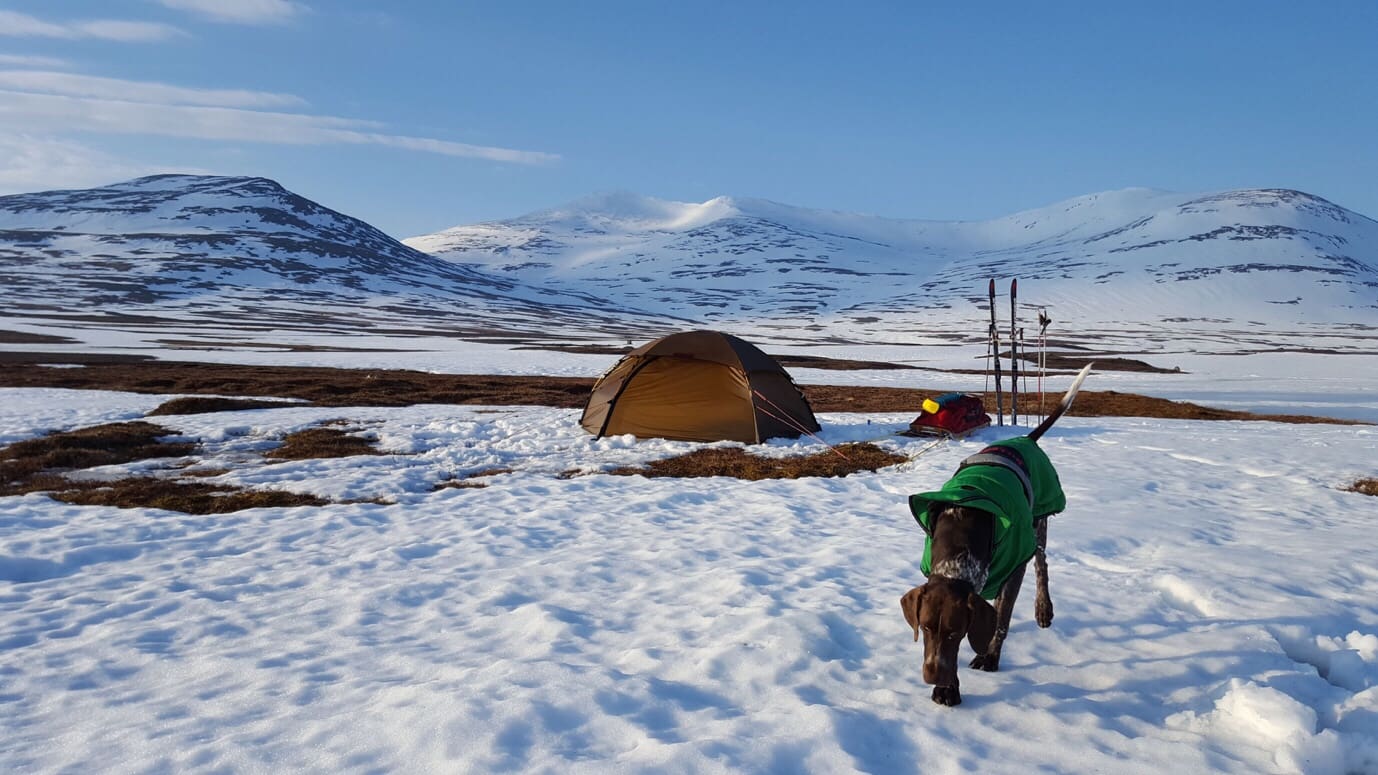
Everyone once I a while you get to play in a project that is ultra exciting.  We have just delivered our first winter warfare Black Crows skis.  Based on the Freebird Orb, the Orb Militari offers the perfect balance of functionality and ease of use.

Made with a white top sheet and base they are ready to go for Arctic operations.  The skis themselves can be fitted with a classic 75mm Telemark binding or with a pin binding for more mountainous use.  The ski itself is more rigid than its civilian relative in order to better deal with the large loads that winter troops carry.  All white skins and poles have also been produced to accompany it.

Initially made in very limited numbers there is only a few pairs left that are available to troops heading out in to the snows this winter.  If you are interested in pbtaining a pair then please email.

For more information get in touch by email on international@brigantes.com or for UK customers warrior@brigantes.com.

www.brigantes.com

Quiet Professionals

Tuesday, December 11th, 2018

DUKE FIELD, Fla. — From an airfield that once served as the training grounds for the famed Doolittle Raiders, Citizen Air Commandos from the 919th Special Operations Wing, Duke Field, Florida, are working daily to deliver superior airpower around the world.

img_0296.jpg
Master Sgt. Joseph Kimbrell (left) prepares his equipment for a future C-145A training mission while Master Sgt. Brian Schultz assists Tech. Sgt. Matthew Massey with adjustments to his pro gear. All are special mission aviators assigned to the 919th SOW.

The “Quiet Professionals” of the 919th SOW offer specialized skills to Air Force Special Operations Command made even more distinct by the fact that this “part time” unit is providing a full-time capability for a mission that never stops.

“At any minute on any day, members of the 919th are likely helping to get equipment and special operations forces where the warfighter needs them most,” said Col. Frank L. Bradfield, 919th SOW commander. “While they’re doing that, others are providing surveillance of the battlespace ready to deliver precision strike capabilities to those who wish to do America harm. It’s a no-fail mission and one we’re proud to support.”

D951D82F-2B3B-4274-8523-005AD1123FAD
Maj. Kevin Riegner, 5th Special Operations Squadron pilot, takes a few minutes for a photo prior to a recent U-28 training mission at Hurlburt Field, Florida. The 5th SOS is one of 13 squadrons assigned to the 919th Special Operations Wing at nearby Duke Field. The wing’s diverse mission and ability to fulfill a wide range of requirements for Air Force Special Operations Command places its members in high demand for critical operations at home and at distant points around the globe. (Master Sgt. Jasmin Taylor)

These 1,500 Reservists are part of the Air Force Reserve’s only special operations wing. They are fully integrated with their active duty counterparts in the 492nd SOW operating from a small base in a densely wooded area in the Florida panhandle.

The 919th’s members are focused with laser-like intensity on employing innovative practices and standards to support four distinct mission sets—enhancing partner nation capacity, training future AFSOC aviators, conducting Remotely Piloted Aircraft operations and performing specialized mobility—all geared toward increasing AFSOC’s efficiency and lethality.

COMBAT AVIATION ADVISORS

In a desolate and austere airfield thousands of miles from U.S. soil, a small team of Citizen Air Commandos is having a global impact by enhancing partner nation aviation capabilities, yet most Americans don’t even know they exist.

These combat aviation advisors, or brown berets, are highly trained in specialized skills needed for hands-on, adaptive, advisory missions with foreign military partners. Their goal: to conduct special operations activities by, with and through foreign aviation forces.

As one such team of CAAs prepared to land the last training sortie of a recent two-month mission in North Africa, many took a moment to reflect on the experience.

The mission involved 60 days of intense training and constant coordination with seven separate combat units. An unimaginable amount of collaboration and teamwork contributed to the success of this final sortie. Shoulder-to-shoulder with their foreign colleagues, the CAAs prepared their partner nation for their first simulated joint event between its air and ground forces.

CAAs are an elite group of carefully selected, well-experienced Airmen with diverse backgrounds.

They deploy in 16-member Operational Aviation Detachments which are comprised of 12 different Air Force Specialty Codes, specifically trained to assist the partner nation force with joint operations.

“The OAD composition allows the CAA team to be self-reliant and contains the diversity of skills required to problem-solve and be adaptive,” said Lt. Col. Benjamin Griffith, commander of the 711th Special Operations Squadron.

8AEAD9D9-4785-4CAC-9C6E-197A7B773A9D
TSgt Brandon Bass, an aircrew flight equipment specialist CAA with the 711th Special Operations Squadron, practices individual tactics during a training exercise. (TSgt Jodi Ames)

From security forces and communications, to maintenance and sensor operators, the types of career fields represented by the CAA community are quite diverse.

“The impact of a small OAD on the security and stability of a nation should not be underestimated,” said Lt. Col. Warren Halle, 711th SOS assistant director of operations.

“Any type of operation lives or dies, sustains or fades by an integrated team effort,” said Halle. “Special operations forces Airmen have been well-educated that ‘joint’ is not just a buzz word. Joint operations lead to the gold standard of integration effectiveness.”

By design, the 919th’s CAAs are supported by an entire wing that lives and breathes that standard of integration.

ONE-OF-A-KIND FORMAL TRAINING UNIT

As a Reserve unit, the 919th SOW blends with its active-duty partners not only to accomplish the mission but also to support the training of future air commandos.

The 5th SOS is home to the formal training unit for all Air Force special operations platform education, where they provided instruction on eight different platforms and conducted 6,800 student events in fiscal 2018 alone.

“This schoolhouse mission is a lot more diverse than any other FTU,” said Master Sgt. Joseph Kimbrell, CAA instructor and evaluator for the 5th SOS. “We are teaching the entire CAA aspect of the mission which considers the OAD team to be the weapon system.”

The training conducted by members of the 5th SOS is critical to the accomplishment of the AFSOC mission.

“We are the only FTU in the only special operations wing in the Reserve and we provide the preponderance of AFSOC with its aviators,” said Kimbrell. “We are the tool that sharpens the tip of the spear.”

THE SUN NEVER SETS ON THE 919TH

Not only does the 919th sharpen the spear, wing members also launch it. The 2nd SOS offers round-the-clock support to the warfighter through remotely piloted aircraft missions, taking the fight directly to the enemy.

“RPA missions continue to be the number one most requested capability of combatant commanders around the world,” said Col. Roland Armour, 919th SOG commander. “RPAs are in high demand and ours operate on a 24/7 basis.”

Another 919th unit, the 859th SOS, similarly runs a global mission that never rests. The 859th flies an aircraft not found anywhere else in the Air Force inventory, the C-146A Wolfhound.

Offering light and medium airlift capabilities, the Wolfhound allows the 919th to reach forward deployed special operations forces in locations large aircraft simply cannot.

“Within the past 12 months, the 859th SOS has provided crucial airlift for the AFSOC mission in more than 40 countries and four combatant commands contributing vital airlift for nation building and stabilization across the globe,” said Armour.

Meeting the unique demands and needs of special operations airlift missions requires constant innovation and problem-solving. More often than not, the 919th’s aerial delivery specialists must figure out how to conform a load to meet the requirements of the air commandos down range.

EBAE7161-9F60-4AD5-B221-452D2C3EA04E
TSgt Bradley Moore, 919th Special Operations Logistics Readiness Squadron, returns from loading Army airborne soldiers into a C-17 Globemaster III at Duke Field, Florida, in preparation for their qualification jump. The 919th SOLRS provides integrated logistical support to the 919th Special Operations Wing, 7th Special Forces Group and Air Force Special Operations Command. (MSgt Jasmin Taylor)

“We are capable of dropping anything, anytime,” said Senior Master Sgt. Clarence Greene, 919th Special Operations Logistics Readiness Squadron. “Most aerial delivery shops drop standard loads, such as water and basic supplies, but with us it could be anything from a radio to a motorcycle…anything to support the air commandos on the ground.”

SPECIAL SUPPORT FOR SPECIAL OPS

The unique platforms and missions at the 919th SOW have required the unit to adapt a culture of “outside the box” thinking reflected in every facet of its operations.

Even functions as “basic” as aircraft maintenance have had to be tailored to the Duke Field mission. The aircraft flown and maintained at the 919th SOW are commercial aircraft requiring specialized training not offered through traditional pipelines.

1ABE8A82-655D-4802-9174-CE0189B829AC
TSgt Michael Resseguie, 919th Special Operations Maintenance Squadron, manufactures washers for the C-146A Wolfhound on the OMAX Jetmachining Center at Duke Field, Florida. The 919th SOMXS provides round-the-clock maintenance support for the 919th SOW’s global mission. (Capt Monique Roux)

“One of the unique ways our unit ensures we are providing the most relevant training for our Airmen is through our in-house training program,” said Senior Master Sgt. Michael Tomi, 919th Special Operations Aircraft Maintenance Squadron. “We sent a cadre of maintenance personnel to receive training from the [aircraft’s] commercial manufacturer and that cadre came back and developed a school house specific to our mission.”

The 919th’s security forces and communications Citizen Airmen have also had to adapt to the unique needs of special operations forces.

“Our agile combat support demonstrates the expeditionary nature of the 919th SOW,” said Lt. Col. Kelly Gwin, deputy commander of the 919th Special Operations Mission Support Group.

One critical component of that agile combat support is the Deployed Aircraft Ground Response Element, a mission managed by the 919th Special Operations Security Forces Squadron. DAGRE members are specially trained to meet the unique security and force protection demands of special operations forces, supporting AFSOC’s global mission.

Its global mission also requires constant and reliable communication, often in unfamiliar and rapidly changing environments while air commandos are engaging the enemy. To tackle that challenge, the 919th Special Operations Communications Squadron consistently pushes the barriers of communications technology.

“They train, maintain and deploy some of the most technologically advanced cyber systems in the Air Force,” said Gwin.

SPIRIT OF COOPERATION

Support for special operations forces is the backbone of the 919th SOW mission of providing America’s citizen air commandos…anytime…anyplace.

Another OAD is just weeks away from commencing its next mission. RPAs are flying in undisclosed areas, providing valuable protection for joint coalition partners who are constantly under attack. New pilots are getting ready to join the AFSOC team. And somewhere in a remote and austere location, Airmen are receiving much-needed relief and supplies.

The Doolittle Raiders would be proud.

By Capt Monique Roux, 919th SOW public affairs office. Published in Citizen Airman magazine.

US Army Futures Command Unveils New Insignia

Monday, December 10th, 2018

FORT MEADE, Md. — The Army Futures Command now officially has a shoulder sleeve insignia and distinctive unit insignia that its Soldiers will wear while they work toward modernizing the Army.

With a golden anvil as its main symbol, the shoulder patch and unit insignia are a nod to former Gen. Dwight D. Eisenhower’s personal coat of arms that used a blue-colored anvil.

The command’s motto “Forge the Future” is also displayed below the anvil on the unit insignia, while both the patch and unit insignia have black and white stripes stretching outward from the anvil.

“Symbols mean things just like words do,” said Robert Mages, the command’s acting historian. “It’s a reminder to the Soldiers that wear the patch of the mission that they’ve been assigned and of the responsibilities that come with that mission.”

A patch ceremony is expected to take place Friday during the transfer of authority of the Army Capabilities Integration Center, ARCIC, to the Army’s newest major command.

Since last year, the four-star command has been at the heart of the most significant Army reorganization effort since 1973.

In July, senior leaders picked Austin, Texas, for the AFC headquarters. Cross-Functional Teams were also stood up within the command to tackle the Army’s six modernization priorities: long-range precision fires, next-generation combat vehicle, future vertical lift, network, air and missile defense, and Soldier lethality.

The patch and unit insignia represent the command’s most recent move toward full operational capability, which is expected next summer.

Andrew Wilson, a heraldic artist at The Institute of Heraldry at Fort Belvoir, Virginia, worked with command leadership since last December to finalize the designs.

“This is something that is supposed to stand the test of time and just to play a part in it, it’s an honor,” he said.

The main piece — the anvil — is meant to represent fortitude, determination and perseverance. The black, white and gold resemble the colors of the U.S. Army.

Wilson said he got the idea for the anvil during a design meeting that mentioned the command’s new motto — Forge the Future.

Wilson, who once took a blacksmithing course in college, was immediately reminded of reshaping metals on an anvil.

“Taking away from the meeting, I tried to come up with something that would play off of that,” he said. “The first thing that popped in my head with ‘forge’ was blacksmithing and one of the key features of that is an anvil.”

Once he spoke of his idea, Charles Mugno, the institute’s director, then advised him to look at the anvil used in Eisenhower’s coat of arms.

“And from there the spark of creativity just took off,” Wilson said.

The Institute of Heraldry was also involved in the organizational identity of the Security Forces Assistance Brigades, one of which just completed its first deployment to Afghanistan.

“Whenever you have a new Army unit, you do end up doing a heraldic package of shoulder sleeve insignia, distinctive unit insignia and organizational colors,” Mugno said.

Heraldic conventions, he added, is a time-honored process that dates back to the 12th century.

With a staff of about 20 personnel, the institute also helps create the identity of other federal government agencies. Most notably is the presidential seal and coat of arms.

“We have a very unique mission,” Mugno said. “We all share a sense of honor and purpose in being able to design national symbolism for the entire federal government.”

Until the new patch was created, Soldiers in Army Futures Command wore a variety of patches on their sleeves. Those assigned to ARCIC, for instance, wore the Army Training and Doctrine Command patch and those in research laboratories had the Army Materiel Command patch.

Now, the golden anvil has forged them all together.

“It’s a symbol of unity — unity of effort, unity of command,” said Mages, the historian. “We no longer report to separate four-star commanders. We now report to one commander whose sole focus is the modernization of our Army.”

By Sean Kimmons, Army News Service

Grit and Determination: AFSOC Airmen Slide with Team USA Bobsled

Monday, December 10th, 2018

Hours, days, weeks, months and even years of training have prepared two Airmen for one moment – four explosive seconds at the top of a winding icy track in a city that once hosted the 2002 Winter Olympics.

(From left) Capt. Chris Walsh, a Special Tactics officer with the 24th Special Operations Wing, and Capt. Dakota Lynch, a U-28A pilot with the 34th Special Operations Squadron, are push athletes who are competing for a spot on the U.S. Olympic bobsled team in 2022. As push athletes, both Airmen train vigorously on sprinting and strength to accelerate a bobsled up to 24 miles per hour in close to four seconds while the pilot focuses on navigating hairpin turns in a choreographed chaos down the ice. (U.S. Air Force photo by Staff Sgt. Ryan Conroy)

Early days of sprinting, heavy lifting, box jumps and squats have faded into late nights of sanding runners, making countless adjustments and pushing through frustrations to shave off hundredths of a second pushing a 500-pound sled 60 meters.

The goal? A chance to make a team in four years. A chance for a medal. A chance to represent their nation and the Air Force. A chance.

Two Airmen within Air Force Special Operations Command were selected to compete with the USA Bobsled team this year. Capt. Dakota Lynch, a U-28A pilot with the 34th Special Operations Squadron, and Capt. Chris Walsh, a Special Tactics officer with the 24th Special Operations Wing, are push athletes who are ultimately competing for a spot on the U.S. Olympic team in 2022.

“If you want it bad enough, you’re going to do whatever it takes to be successful … that’s the grit of this sport,” said Walsh. “It takes four years of commitment to make yourself better with every opportunity and even then you’re never really quite there … you have to keep grinding.”

As push athletes, both Airmen train vigorously on sprinting and strength to accelerate a bobsled up to 24 miles per hour in close to four seconds while the pilot focuses on navigating hairpin turns in a choreographed chaos down the ice.

“It’s a metal and carbon fiber bullet rifling down an ice track at speeds of 85-95 miles per hour,” said Lynch on the experience. “It’s like a fast-moving jet with a monkey at the controls while getting in a fight with Mike Tyson … it can be incredibly violent.”

Preceding the countless hours in the gym and on the track, the ride begins with a dream to succeed at the highest athletic level. For Walsh, it was an article in a magazine and for Lynch, it was a challenge from friends while deployed to Africa. For both, it would begin a journey of bruises, scrapes and exasperation that would lead them to Park City, Utah, for the International Bobsled and Skeleton Federation North American Cup.

The first steps of their journey was a gauntlet of tryouts and selection beginning with an open combine. From there, standout athletes were invited to rookie camp and then push championships in Lake Placid, New York. Both Lynch and Walsh excelled once again and were invited to national team trials to continue to the next phase — competition.

“It relates pretty closely to the job because there’s days where you know it’s going to be tough,” said Walsh. “Every workout, every time I’m in the garage with the team, every step I take is either taking me closer or further away from my goal. If I’m lazy and I decide to slack one day … that workout may mean the difference between me making the Olympic team or not.”

Both Airmen attribute their time in AFSOC to their success on their bobsled journey. Walsh is a member of Air Force Special Tactics, which is a special operations ground force comprised of highly trained Airmen who solve air to ground problems across the spectrum of conflict and crisis.

“The qualities that Special Tactics fosters in individuals translates very well to bobsledding,” said Walsh. “ST operators are mature, responsible and disciplined and need to be squared away as an individual. If they’re not, the team as a whole is weak … so having that grit and determination to see the mission through is a big piece of what makes me successful here.”

For Lynch, the team mentality of a four-man bobsled loosely correlates to responsibilities of piloting an aircraft. The U-28A aircraft Lynch flies provides an on-call capability for improved tactical airborne intelligence, surveillance and reconnaissance in support of special operations forces.

“In AFSOC I am responsible for the aircraft, the men and the women on that aircraft and ensuring the mission is executed properly, safely and precisely,” said Lynch. “Things aren’t going to get handed to you – conditions are going to suck, you’re going to get your crap punched in, but you’re going to have to have the strength and resiliency to drive through it and press forward.”

As active-duty Airmen, both Lynch and Walsh have had to negotiate service commitments with leadership support. Both have been granted permissive temporary duty by their respective commanders to vie for a chance at being accepted into the Air Force World Class Athlete Program.

WCAP provides active duty, National Guard and reserve service members the opportunity to train and compete at national and international sports competitions with the ultimate goal of selection to the U.S. Olympic team while maintaining a professional military career.

“I wouldn’t be here without my squadron and group commanders taking a chance on me and giving me a shot,” said Walsh. “It makes me want to do really well to represent my country, the Air Force and AFSOC in a good light.”

Story by SSgt Ryan Conroy, 1st Special Operations Wing Public Affairs

SCUBAPRO Sunday – The Go FIN

Sunday, December 9th, 2018

The SCUBAPRO’s GO fin is designed for traveling or when you need a smaller fin with a lot of power. Lightweight, comfortable, durable, and a fast and agile performer, the GO is the ideal fin for divers, snorkelers and is also great for command PT as it is a great surface fin also. The Go Fin comes in two styles. The Go fin is perfect for when you want to just wear the fin with nothing else. The Newer version is the GO SPORT. It is the same great fin but with a bigger foot pocket for use with shoes or dive boots. When it comes to premium travel fins, nothing compares to the GO and GO SPORT (boot fit) when integrating high quality with lightweight. For example, a pair of size M-L GO fins weighs in at a mere 1.2 kg/2.6 lbs, including bungee straps — again, that’s for a pair. This translates into convenience and weight savings when they have to be carried, and comfort and ease of use in the water. The replaceable self-adjusting bungee heel strap allows for a versatile fit — one diver can wear multiple sizes. The strap also makes it easy to don and doff the fin, and it fits comfortably against a barefoot is needed.

While extremely comfortable, the GO is also virtually indestructible. Its strong 100% Monprene® construction avoids the problems of de-lamination, broken blades and torn foot pockets that tend to plague average thermoplastic fins. This enables the GO to stand up to long-term, heavy-duty use. The GO fin excels in strength, comfort, and convenience, but where it really shines is in kicking performance. The GO is built with a 25-degree pre-angled blade with a Central Power Panel that provides longitudinal rigidity and creates a channeling effect. Power Bars on the underside of the rails prevent over-flex; this helps maintain the optimum angle of attack under high load conditions. The result is you get a lightweight fin that delivers speed, power, stability, and maneuverability with a minimum of effort. Being lightweight is always a plus when traveling, but so is compactness. GO fins are designed to fit comfortably in IATA carry-on compliant luggage. Even better, they pack exceptionally well due to an innovative Piggy Back Stack system. An interlocking tooth on one fin blade hooks into the second fin, and then the bungee strap from the second fin hooks the heel of the first fin into place. It’s a snug pairing that makes packing and traveling that much easier. They are perfect for when you have to carry a pair of fins with on patrol. They pack light and right; the GO fin is lightweight, comfortable and virtually indestructible. This is an excellent fin for surface swimming, SAR, diving in confined spaces and just everyday diving.

www.scubapro.com

21st Annual Randy Oler Memorial Operation Toy Drop Wrap Up

Saturday, December 8th, 2018

The annual Randy Oler Memorial Operation Toy Drop was held last weekend at Fort Bragg. It combines an international parachute operation with an opportunity to give back to the local community.

FORT BRAGG, N.C. — About 260 jump masters from 14 partner nations landed on Fort Bragg’s Drop Zone Sicily, officially commencing the 21st annual Randy Oler Memorial Operation Toy Drop, Wednesday. These jump masters will lead the anticipated 3,000 paratroopers who will jump Friday and Saturday.

The annual Fort Bragg international event, hosted by the U.S. Army Civil Affairs and Psychological Operations Command, has collected more than 100,000 toys for children since then-Staff Sgt. Randy Oler established the combined training event in 1998.

Upon establishment of the first jump with 1,200 participating Soldiers, Oler included toy collection and distribution as a charitable component of the collective training that strengthens bonds among partner nation paratroopers. Toys have remained a voluntary component since that first event, yet the number collected has steadily increased since those first 500 toys. Each year, volunteers distribute the donated toys to participating regional charities.

In 2017, almost 4,000 Soldiers participated in Operation Toy Drop, and about 4,500 toys were donated for children in need throughout the region. Planners anticipate similar participation in 2018, with continued support from U.S. Army Reserve medical, administrative, logistics, transportation, quartermaster, combat camera and others.

PARTICIPATING COUNTRIES

– Cote d’Ivoire
– Italy
– Poland
– Canada
– Germany
– The Netherlands
– Latvia
– Sweden
– Colombia
– Singapore
– Brazil

COUNTRIES SENDING JUMP MASTERS TO OBSERVE TRAINING

– Chile
– United Kingdom
– Denmark

TYPES OF AIRCRAFT

– C17 Globemaster
– C130H Hercules
– C27 Spartan

AIR WINGS INVOLVED

– 910th
– 179th
– 934th
– 97th
– 437th
– U.S. Army Special Operations Command Flight Company

TYPES OF PARACHUTES

-T11 and MC6 for standard paratroopers (without combat equipment load)
-RA-1 for military free fall

FORT BRAGG UNITS INVOLVED

– U.S. Army Civil Affairs and Psychological Operations Command
– XVIII Airborne Corps
– 82nd Airborne Division
– U.S. Army John F. Kennedy Special Warfare Center & School (SWCS)
– 3rd Special Forces Group (Airborne)
– 528th Sustainment Brigade (Airborne)(Special Operations)
– 95th Civil Affairs Brigade (Airborne)
– Joint Special Operations Command
– U.S. Army Special Operations Command
– 824th Quartermaster

TOYS

The organizations below requested categories of toys in 2017 to accommodate the interests and abilities of each gender by age group. The numbers by each non-profit represent the aggregate number of toys provided.

– Cumberland County DSS – 1,000
– Cumberland County Family Violence Care Center – 50
– Lee County DSS – 250
– Hoke County DSS – 150
– Hoke County H.E.L.P. – 280
– Fayetteville Urban Ministries – 300
– Falcon Children’s Home (Falcon, NC) – 35
– Moore County DSS – 300
– Harnett Co. Kiwanis – 320
– Masonic Childrens Home (Oxford, NC) – 45 (this was one of the original recipients)
– Methodist Home for Children (Raleigh, NC) – 800
– Montgomery County DSS – 50

By MAJ Carter Langston, 352nd Civil Affairs Brigade Public Affairs Officer

FirstSpear Friday Focus – Maritime Buoyancy Compensator Technology

Friday, December 7th, 2018

FirstSpear is well known for high quality body armor systems and performance technical apparel. What you may not know is they also develop specialized gear for some of the most highly trained amphibious military and law enforcement professionals all over the world. The AAC Frog Kit, for example was developed for the combat diver and specifically designed to integrate with a rebreather system. Today we are looking at just one of the unique features that makes FirstSpear Maritime equipment a top choice by the professional.

The FirstSpear Buoyancy Compensator Kit is designed to be installed inside the plate bag behind the front and back plate pockets. Orally inflated at the operators discretion, you can achieve a maximum of 5lbs (2kg/22N) of lift on each front and back insert in a size Medium – XL to help offset a combat load on the surface in sea water.

Buoyancy Compensators Kits are user configured and can be set up for not only right or left handed users but also single and dual inflate options which give the Operator even more control on how they can trim their system while in the water.

This video shows how to set up your BC kit and the user configurations available. Law Enforcement and Military credentials required for purchase. Contact us for more info.

Learn more about FirstSpear industry leading manufacturing and technology integration for personal protective and load bearing equipment on first-spear.com

To learn more about FirstSpear Technology Group visit First-spear.tech