Celebrate 20 years of the TLR-1

Archive for the ‘Guest Post’ Category

Tactical Tuesday: Vertx Releases New RLT Duffel Bag Series

Tuesday, August 20th, 2024

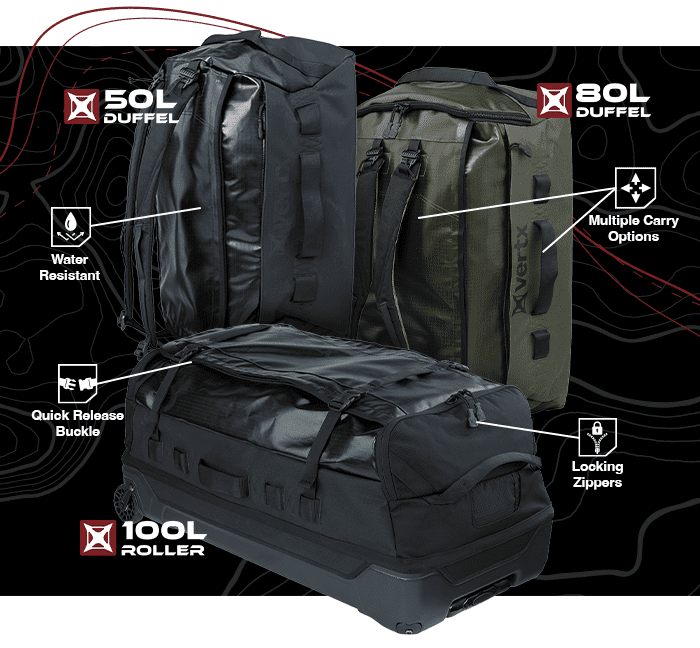
Vertx introduces the new RLT Duffel Bag series, designed for those who embrace the “Road Less Traveled.”

These exceptional duffels are engineered for individuals who dare to venture where others won’t, embodying the spirit of the (R)oad (L)ess (T)raveled and the journey to get you there. Unlike conventional duffels, these are reliable companions for remote trails, bustling terminals, and every destination in between. Crafted from water-resistant, wipe-clean, ripstop fabric, these robust bags are built to withstand any challenge thrown their way. The RLT Duffel series stands ready for action in any environment.

Two standard duffel sizes (50L and 80L) offer versatile carry options and are infused with Vertx DNA, allowing users to customize their carry experience. The 100L model features a durable bottom pan and wheels, catering to those who seek adventures beyond airport terminals.

No matter the road you choose, these bags are built to get your there. Because Vertx knows that being prepared isn’t merely a preference – it’s a way of life.

The RLT Duffel series is now available for those ready to gear up for the unexpected at vertx.com.

919th SOW Faces, Overcomes Adversity in Readiness Exercise

Tuesday, August 20th, 2024

EGLIN RANGE, Fla. —  

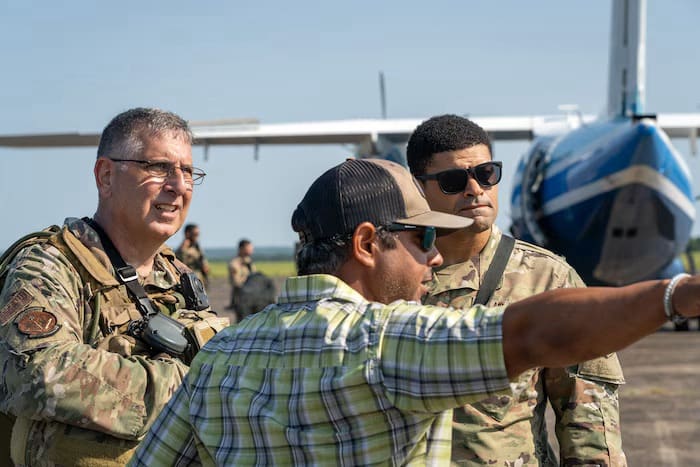
Citizen Air Commandos took to the air, traversed the ground and braved rough water during a readiness exercise on the Emerald Coast Aug. 5-9, 2024.

Specialties across the 919th Special Operations Wing fought brutal summer heat, logistical challenges, and terrain across a range of scenarios they might encounter in a future fight.

“There were a lot of moving parts to this dual hat exercise and a substantial amount of planning that went in to making it happen,” said Maj. David Hornsby, 711th Special Operations Squadron chief of training. “It highlighted some areas in which the Wing did really well, and a few in which there is some room for improvement.”

Responding to scenarios that demanded an efficient and organized response for a notional country amid chaos and upheaval required exceptional planning and logistics across numerous capabilities.

These challenges allowed the wing to complete the required certification of their Special Operations Task Group and a Special Operations Task Unit in the simulated response.

The SOTG functioned as the command component of the response, tasking the SOTUs with providing specific capabilities to help mitigate the ongoing crisis. The 859th Special Operations Squadron utilized the C-146 A Wolfhound to move two Special Operations Mission Sustainment Team (SOMST) elements and their equipment between airfields.

SOMST members used the exercise to refine their skillsets, equipment, and procedures. Challenges such as heat and coordinating career specialties provided insight on how to further develop sustainment capabilities.

“It was important for us to have this integrated support team thrown into an unfamiliar environment together,” said Tech. Sgt. Michael O’Callaghan, 919th Special Operations Security Forces Squadron resource and training manager. “In a real-world scenario they would need to combine their skills in less-than-perfect conditions to accomplish the mission.”

Sustainment Airmen narrowed down their footprint by reducing the size and scope of equipment, utilizing portable items that could be hand-carried. They opted for tents, air conditioners, and other tools that are smaller than what would traditionally be used and occupied less space on the aircraft.

“We’re pressurizing the system to see where we can improve. We were able to identify needed improvements to our SOMST organization, training, and equipment that will help shape the capability moving forward,” said Col. Olivia Nelson, 919th Special Operations Mission Support Group commander.  “Perhaps most importantly, we leaned into the weather and gave our Airmen a chance to experience what deployment in the heat and humidity of the INDOPACOM theater would really be like. We identified the need for greater levels of personal fitness and an emphasis on hydration and work-rest cycles that will make us more ready if called upon to face a peer threat.”

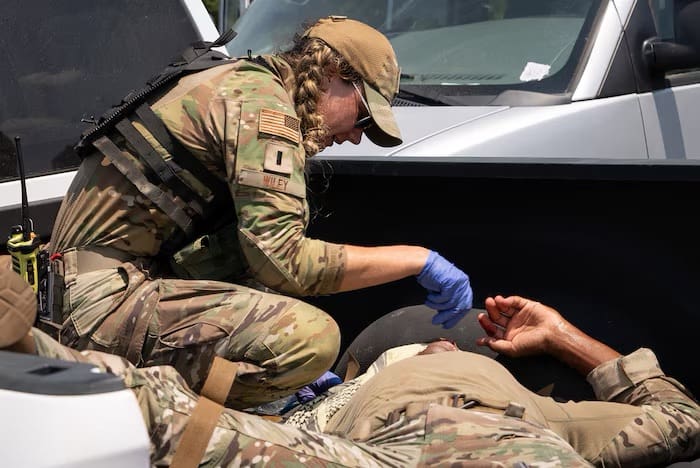
The mission support Airmen stayed in-place overnight throughout the exercise. Controller Observers from throughout the Wing placed them in a variety of scenarios and then assessed the effectiveness of their response. Some of the situations Airmen faced included unrest outside the compound, medical emergencies, and engagements with regional media.

“The team handled everything from small inconveniences like dealing with customs to larger problems like medical crises,” said O’Callaghan. “The differing levels of difficulty and engagement challenged them and encouraged them to be mindful of how they deal with adversity.”

While the SOMST maintained their encampments, the SOTU aviators also faced challenges that could parallel real-world scenarios. A simulated aircraft down left four aircrew members stranded aboard a raft in the Choctawhatchee Bay.

A C-146A Wolfhound crew coordinated rescue of the castaways with the U.S. Coast Guard. The team surveyed the bay to provide details on the rafts location and maintained communications between the raft and the Coast Guard vessel.

By the end of the exercise, the 919th SOW successfully completed various aspects of Air Force Special Operations Command warfighting model. Organizers coordinated the SOTG, SOTU and mission support elements in a way that could be reflected in real-world scenarios.

“The amount of work and time that went into all the unseen portions of the planning of this exercise, going back months, was significant,” said Hornsby. “Everyone on the planning cell did a commendable job. The [exercise] was successful and provided an excellent bellwether as to where the wing’s combat capability currently stands. It should help to provide the command a good direction in which to move forward.”

By Staff Sgt Dylan Gentile, 919th Special Operations Wing

Savage Arms 42 Takedown Now Available in FDE and OD Green

Monday, August 19th, 2024

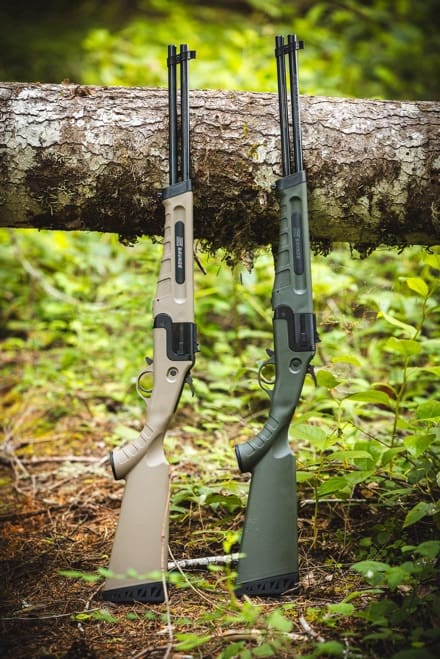
WESTFIELD, Massachusetts – August 14, 2024 – Savage Arms®, an iconic firearm manufacturer, now offers the must-have survival, truck, camping and more rimfire-shotgun combo in Flat Dark Earth and OD Green. A reliable and versatile hunting and general-use firearm, the updated Model 42 Takedown has proved to be a top choice for those in the market. 

“The updated Model 42 Takedown is a game-changer, now available in two classic colorways,” said Savage Arms’s Rimfire Product Manager Brett McKenna. “With its combination rifle/shotgun design, simple break action and adjustable rifle sights, it offers unparalleled convenience and performance for a wide range of applications.” 

The 42 Takedown rimfire-shotgun combo breaks down with the simple push of one button and includes a bug-out bag so you can easily transport it anywhere. The break-action combo fires rimfire rounds from the top barrel and .410 bore shotgun shells from the bottom. The Model 42’s length-of-pull is short enough and, its recoil is light enough, to make a perfect starter gun for young shooters. The barrels are matte black to prevent glare and the sleek synthetic stock is weatherproof. The Model 42 is available in .22 LR over .410 and 22 WMR over .410. 

The Updated Savage Model 42 Takedown features: 

• Combination rifle/shotgun

• Simple break action design

• Adjustable rifle sights

• Simple one-button takedown

• Included takedown carry case

• Removable rear sight to allow optic mounting

• 2 sling studs 

Part No. / Description / MSRP 

23001 / OD Green Magnum 22WMR/410 20” Barrel / $579 

23002 / OD Green 22LR/410 20” Barrel / $579 

23003 / FDE Magnum 22WMR/410 20” Barrel / $579 

23004 / FDE 22LR/410 20” Barrel / $579 

For more information about Savage Arms and its extensive line of leading firearms, visit savagearms.com.

MATBOCK Monday: Raider Back Pouch

Monday, August 19th, 2024

The Raider back pouch is a low-profile waterproof backpack that mounts directly to the back of your plate carrier with MOLLE attachment points. It can also mount to MATBOCK’s GRAM insert and is worn as a removable pack making access to your back pouch even easier. Keeping your gear waterproof and sand-free without the bulk makes OTB and maritime operations so much more efficient.

Features:

• Tested to 92′ (28m) for 4 hours

• Easy attachment system to any plate carrier with MOLLE.

• Made with a heavy-duty waterproof zipper and lightweight waterproof material.

• Slim/low profile back pouch stays out of the way of the operator but adds huge capability and efficiency to maritime operations.

Checkout other products within the raider line here: www.matbock.com/collections/maritime/raider

US Army Soldiers Assemble Across NATO’s Eastern Flank for Norwegian Foot March

Monday, August 19th, 2024

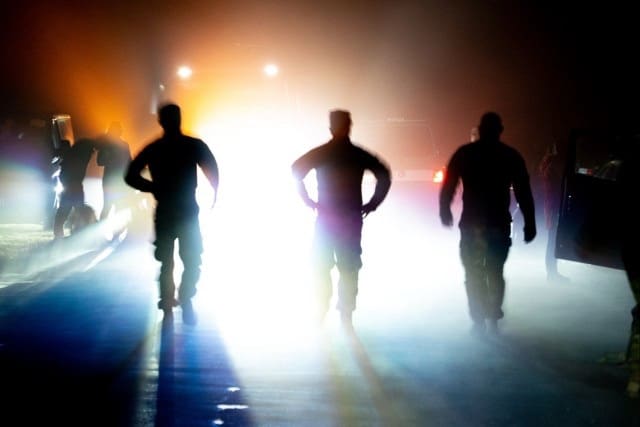
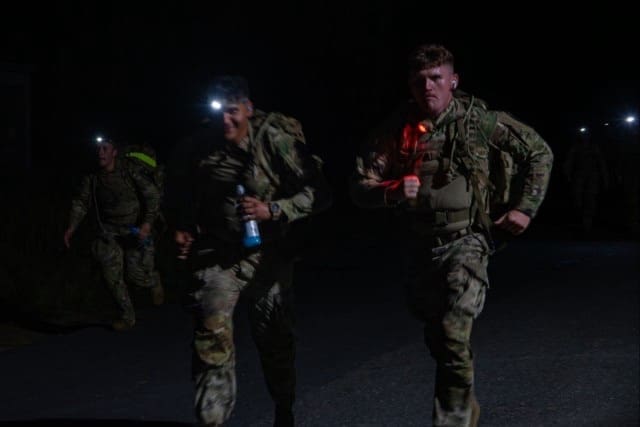
FORWARD OPERATING SITE POWIDZ, Poland — From as far out as Romania to Estonia, Soldiers who support NATO missions across NATO’s eastern flank arrived at the 33 Baza Lotnictwa Transportowego (33rd Air Transport Base) of the Polish Air Force to conduct the 30 km (18.6 miles) Norwegian Foot March.

The march was first held in 1915 as a test of marching endurance for soldiers in the Norwegian Army, with the goal being to move a large number of troops over a great distance and have them be combat-ready even after completing the march. The Norwegian Foot March has since evolved into a coveted foreign service badge that can be earned by U.S. service members due to its challenging nature.

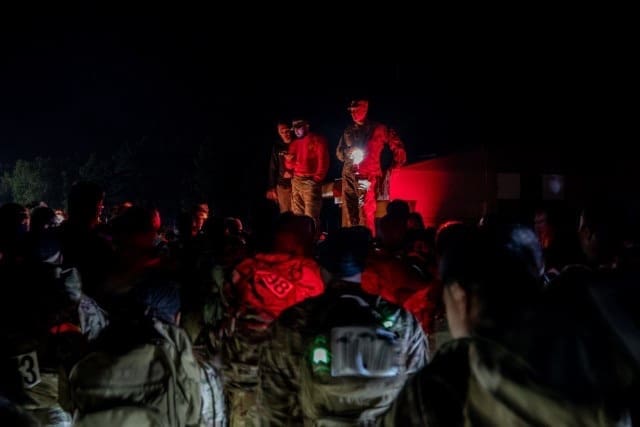
Spearheaded by Staff Sgt. Ramon Figueroa and Staff Sgt. Letzy Williamsperez of Alpha Company, 553rd Division Sustainment Support Battalion, ‘Task Force Gunslinger,’ of the 1st Cavalry Division Sustainment Brigade, the ‘Task Force Wagonmaster’ organizers successfully assisted more than 300 candidates overnight across two days. The candidates, ranging in age from 18 to 53, came from permanent stations in Poland to rotational forces deployed across NATO’s eastern flank.

Candidates had to march 30 km with an 11kg (24 lbs.) rucksack and complete the march within a designated amount of time, depending on the candidates’ age group and gender. There are seven age groups, with the second age group having the largest age range (21-34-year-olds) and the most demanding time standards (five hours, 15 minutes for women, and four hours, 30 minutes for men).

For some, this was an exciting new challenge.

“It’s a mental challenge, it’s a physical challenge, and without challenges, there’s no fun,” said Spc. Malaika Lukata, a human resources specialist with the 53rd Transportation Battalion, 593rd Expeditionary Sustainment Command, home stationed in Joint-Base Lewis-McChord, Washington.

For Lukata, whose unit is forward deployed to Forward Operating Site Powdiz, this was her first attempt at the Norwegian Foot March, and she successfully completed it in five hours and eight minutes.

“I think the people around me definitely helped,” said Lukata when asked about her experience during the Norwegian Foot March.

The camaraderie and everybody coming together and helping one another was what Lukata found most enjoyable about this experience.

Upon completion of the event, Lukata is authorized to wear the NFM badge in Bronze, which is a badge given to those who have completed the NFM their first time.

Participants who have completed the march two to four times are authorized to wear the badge in Silver, whereas those who have completed the march five or more times will have earned the badge in Gold.

For others, this was an opportunity for redemption.

1st. Lt. Carson Deushane, an armor platoon leader with 2nd Battalion, 12th Cavalry Regiment out of Fort Cavazos, Texas, first attempted the Norwegian Foot March while a cadet in the Reserve Officers’ Training Corps but missed the time mark for a gut-wrenching reason.

“One of the paths actually branched off to the right where there’s a straightaway, and I accidentally went down the straightaway about a mile and a half before I realized that was the wrong way,” said Deushane, whose unit is currently deployed to Bemowo Piskie Training Area (BPTA), near the Poland-Lithuania Border.

Despite ‘booking’ it back to the finish line, to complete the march in time, the additional three miles proved to be too costly.

“I missed the time by about five minus,” Deuschane recalled.

Deushane commenced the planning and execution of this NFM. “I just appreciate them hosting this and actually reaching out to our battalion,” he said.

This time around, Deushane successfully completed the NFM and earned his badge in Bronze, finishing with a time of four hours and 16 minutes.

In addition to Deushane, there are Soldiers like Capt. Huayra Ferrufino, the sustainment (S-4) officer assigned to the 529th Combat Sustainment Support Battalion, with the Virginia National Guard. She was the first female to finish the ruck march, with an astonishing time of four hours and 27 minutes. What makes it more remarkable is that she did not extensively train for it.

“I tried to train [for it], but the most I’ve gotten is six miles, to be honest,” said Ferrufino when asked what kind of training she did to prepare for the NFM. “It was a great experience [and it] definitely tests your endurance throughout … I loved it.”

Ferrufino, whose unit is currently deployed to Forward Operating Site Karliki, Poland, not only earned an NFM Badge after completing the event, but she also went away with a medal around her neck. After the event, organizers awarded her the title of fastest female finisher. The first-place male finisher was also given an award.

Nearly all participants who completed this event said that other Soldiers should take this challenge head-on and test themselves. Even if they are unsuccessful in meeting the time requirements to earn their respective badge, the camaraderie of the event and the potential growth Soldiers could experience by pushing themselves to their limits is an opportunity that ought not to be squandered.

By CPT Zemas Andargachew

Political Activity Dos and Don’ts for Airmen, Guardians, DoD employees

Sunday, August 18th, 2024

ARLINGTON, Va. (AFNS) —
In our democracy, elections are quite common, and with a presidential election this year, we can expect many opportunities for citizens to participate in the democratic process. With this in mind, it is important to be aware of specific guidelines that apply to service members and federal employees on acceptable behavior. 

Military personnel and civilian employees are encouraged to carry out their obligations of citizenship, which include the right to participate personally in the political process. These rights are protected by the U.S. Constitution that all military members have taken an oath to support and defend.

Because of that oath, service members and civilian employees also have a duty to ensure that their personal activities do not imply official endorsement by the Department of Defense or Department of the Air Force. As individuals, we do not have to be politically neutral, but the Air Force and Space Force do. These rules help to ensure the DoD does not influence or appear to be partisan in our nation’s electoral process. 

Department of Defense Directive 1344.10, Political Activities by Members of the Armed Forces, and individual service regulations outline permitted and prohibited political activities by active duty, Reserve component and retired service members. These rules regulate how and when service members are able to participate in the political process. Service members who violate these directives could face punishment under the Uniform Code of Military Justice and/or other criminal or administrative penalties. The Hatch Act of 1939 (5 U.S.C. 7321-7326) applies to civilian employees and similarly regulates how and when individuals can conduct personal political activities.  

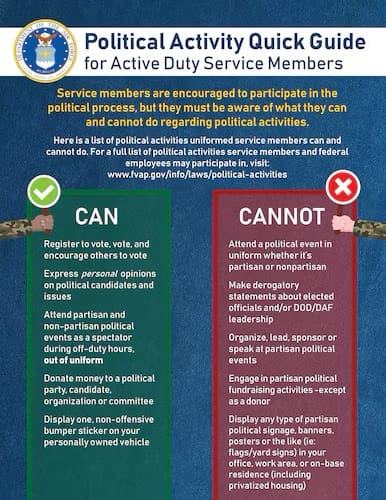
Service members and federal employees are encouraged to participate in the political process, but they must be careful about not engaging in political activities in the workplace and not using their official positions to advocate for or against political issues. With the directives set forth in DoDD 1344.10 and other regulations in mind, service members should be aware of what they can and cannot do regarding political activities. The below do’s/don’ts are not exhaustive, and service members and employees should consult with their servicing legal office with any questions regarding their personal political activities.

Active duty service members CAN: 

· Register to vote, vote and encourage others to vote. 

· Express a personal opinion on political candidates and issues. 

· Write a letter in a newspaper, blog or social media expressing personal political views. However, if you identify yourself as a service member (for example, if you have a photo on your social media of yourself in uniform) you must include a statement that your views do not represent those of the Department of Defense or Department of the Air Force. 

· Attend partisan or non-partisan political rallies and clubs as a spectator during off-duty hours. However, service members (including retirees) may not be in uniform. 

· Serve as a non-partisan election official while off-duty and not in uniform. However, this requires Department Secretary (e.g., Secretary of the Air Force) approval. Contact your servicing Legal Office for more information. 

· Sign petitions for legislative action or to place a candidate’s name on the ballot, if done as a private citizen and not as a representative of the armed forces. 

· Donate money to a political party, candidate, organization or committee. 

· Display one non-offensive bumper sticker on your personally owned vehicles. 

· Wear political t-shirts or buttons when not in uniform, performing military duties or when it could give the appearance of DoD or DAF endorsement. 

Active duty service members CANNOT: 

 · Attend a political event (meeting, rally, fundraiser, debate, convention) in uniform, whether it is partisan or nonpartisan. 

· Express personal opinions as if they are service branch or DoD policy. 

· Make derogatory statements about elected officials and DoD/DAF leadership – a potential UCMJ violation. 

· Organize, lead, sponsor or speak at partisan political events. 

· Engage in partisan political fundraising activities – except as a donor. 

· Place large political signs on your vehicle (bigger than a bumper sticker). 

· Display any type of political sign, banner, poster or similar device in your office, work area or on-base residence (including privatized housing). 

· Engage in the public or organized recruitment of others to run for political office. 

· Run for political office without Secretary of the Air Force approval. 

· Attempt to influence the view, position or vote of any subordinate.

The Hatch Act governs political activities by DoD and other federal civilian employees. The Hatch Act provides restrictions that are similar, but not identical, to those imposed on active duty service members, and restrictions on civilian employees are broken down into “Further Restricted” and “Less Restricted” categories. Most DAF employees will be “Less Restricted,” meaning, GS-15 and below, and Schedule C employees. Federal civilian employees who violate these rules and restrictions are at risk of disciplinary actions, including reprimand, suspension, removal, debarment from federal employment for up to 5 years, and a $1,000 fine.

All federal civilian employees CAN: 

 · Register to vote, vote and encourage others to vote. 

· Express a personal opinion on political candidates and issues. 

· Write a letter in a newspaper, blog or social media expressing personal political views.  

· Attend political fundraising functions, rallies and clubs during off-duty hours. 

· Serve as a non-partisan election official. 

· Sign petitions for legislative action or to place a candidate’s name on the ballot, if done as a private citizen. 

· Donate money to a political party, organization or committee. 

· Display one non-offensive bumper sticker on your personally owned vehicles. 

· Be candidates for public office in nonpartisan elections in accordance with Office of Personnel Management requirements. 

· Display or wear political signs, stickers, t-shirts or buttons when not on-duty, in a government building or using a government vehicle.

All Federal Civilian Employees CANNOT: 

 · Use official authority or influence to interfere with or affect an election. 

· Solicit, accept or receive political contributions. 

· Use an official title while participating in political activities. 

· Engage in political activity while: on duty, in a government building or vehicle or wearing an official uniform. 

· Become a candidate in a partisan election. 

· Host or sponsor a political fundraiser (though merely attending one is permitted).

Less Restricted Civilians CAN: 

· Volunteer to work for partisan political campaigns 

· Attend and be active (including speaking) at political rallies and meetings 

· Join and hold office in a political party or organization 

· Work the polls on election day for a candidate for partisan political office 

· Assist in partisan voter registration drives (but not in the workplace). 

· Organize and speak at a political fundraiser (but cannot solicit or receive funds).

Service members are encouraged to review DoDD 1344.10 and Department of the Air Force Instruction 51-508, Political Activities, Free Speech and Freedom of Assembly to understand permissible political activity.

DoD civilian employees are encouraged to visit osc.gov/Services/Pages/HatchAct-Federal for more information on the Hatch Act.

All members are encouraged to review the Deputy Secretary of Defense’s 15 February 2024 memorandum on Political activities, available at: dodsoco.ogc.osd.mil

Secretary of the Air Force Public Affairs

The information in this article is provided for informational purposes and is not intended as legal advice. For further assistance or if you have questions or concerns, please contact your installation legal office. 

National Guard Rifle Team Clinches Dogs of War Trophy

Saturday, August 17th, 2024

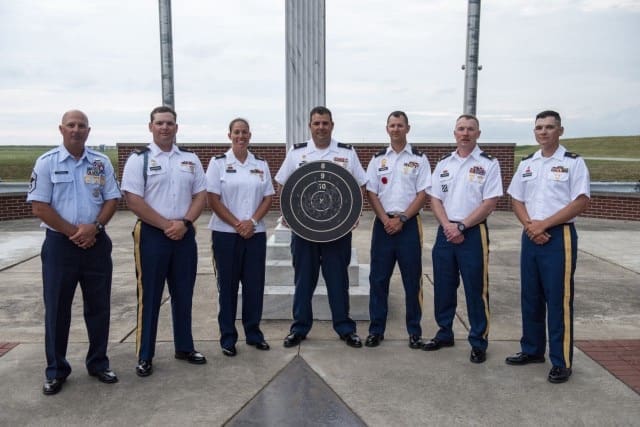
CAMP PERRY, Ohio – The All National Guard six-person marksman team won the National Trophy, also known as the Dogs of War Trophy, at the National Matches in August. It was only the third time the National Guard has won this prestigious award, with previous wins in 1986 and 1977.

The National Trophy, a revered symbol of excellence in marksmanship, represents more than individual prowess; it embodies the collective discipline, skill and dedication of a team working in harmony.

“The greatest thing about it is that we are all from different states and at some point in time, every state has been part of the all-Guard rifle team,” said Sgt. 1st Class Amanda Elsenboss of the Pennsylvania Army National Guard, a shooter and coach on the team. “Those Soldiers and Airmen are taking back to their units the knowledge that they’ve gained from these national matches, and they’re sharing that wealth of knowledge with those Soldiers and Airmen back at their bases.”

The atmosphere at Camp Perry, steeped in history and tradition, was charged with patriotism and honor, reflecting the connection between military service and the art of marksmanship.

Maj. Kirk Freeman, a shooter and coach from the South Carolina National Guard, emphasized the impact and difficulty of the achievement.

“This is demonstrating the lethality that we are gaining here, being able to engage a target at 600 yards,” Freeman said. “We were able to make the correct wind call to get a hit 119 out of 120 times with six different shooters, shooting off a sling, not off a bi-pod, not off a bag, this was off elbows and a sling.”

Individual achievements and another team award further highlighted the team’s success.

During the award ceremony, Freeman presented Sgt. Jonathan Wood of the Louisiana National Guard with the U.S. Army Distinguished Rifleman Badge. Elsenboss was awarded the Women’s Rifle Trophy. The team also won the Hilton Trophy given to the highest scoring reserve component team in the National Trophy Rifle Team Match, adding to the National Guard’s legacy in the competition.

“To win this is really a big achievement,” said Master Sgt. Michael Hester, an Arkansas National Guard gunsmith and machinist for the team. “The shooters did exactly what they were supposed to do and the coaches were absolutely on point this year. It’s almost a 40-year try for this match, and this year we secured it.”

As the team members return to their respective units, they carry not just the trophy but the pride of having contributed to a tradition that spans generations. Their achievement at Camp Perry is a reminder of the National Guard’s enduring role in both national defense and the preservation of America’s marksmanship heritage.

By Shawn Monk, 171st Air Refueling Wing

FirstSpear Friday Focus – NEW ACM 150 Short-Sleeve Field Shirt

Friday, August 16th, 2024

• American sourced Wool
• Made in the USA
• Antimicrobial
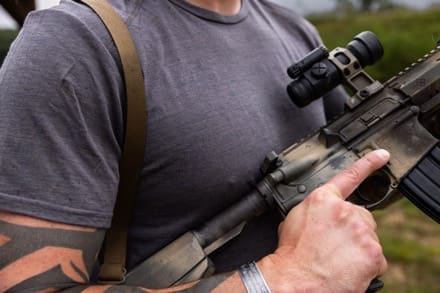
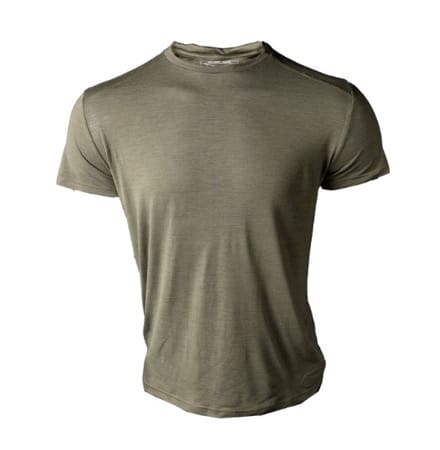
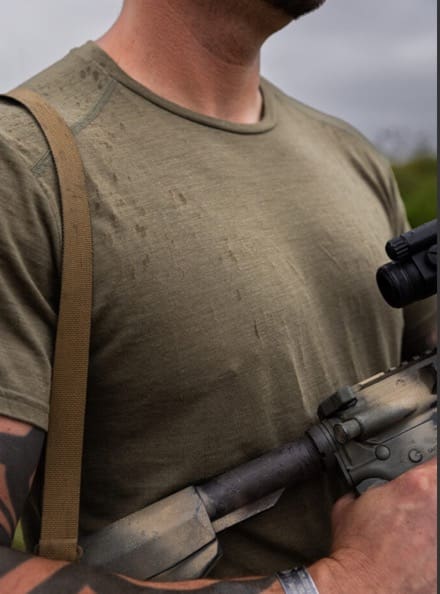
Don’t be fooled by its lightweight feel – the ACM Base 150 wool fabric offers unparalleled performance and durability. Updated with 55% Lenzing, 33% wool and 12% nylon, the new Field Shirts offers the perfect blend of synthetic and wool.

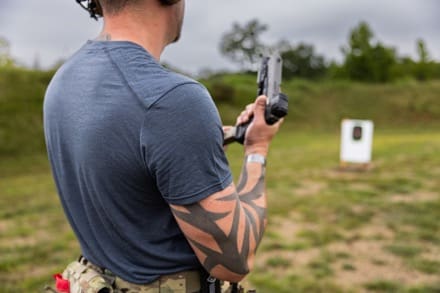
Use it as a base layer or standalone, no matter which way you choose, it will be a year-round go-to. The moisture-wicking properties of wool, means it’s perfect in all seasons. Whether its protection from the sun or a base layer in inclement weather, the ACM 150 Weight Short Sleeve Field Shirts get it done. Available sizes are S-2XL and colors include Midnight Blue, Black, Charcoal, Commando Green and not in stock, but coming soon is Stone Grey.

FirstSpear is proud to partner with Texollini in the creation of the Field Shirt. They are a fully vertically integrated company who specializes in yarn and fabric capabilities, and have a long-standing history of quality fabrics, specifically in their wool offerings. They have been in the military industry for decades and are well versed with Berry Compliant offerings such as the Field Shirt. Check them out here: www.texollini.com.

For more information, check out www.first-spear.com.