SIG SAUER - Never Settle

Archive for the ‘Helmets’ Category

SCHUBERTH GmbH Presents New T100C Training Helmet

Friday, November 21st, 2025

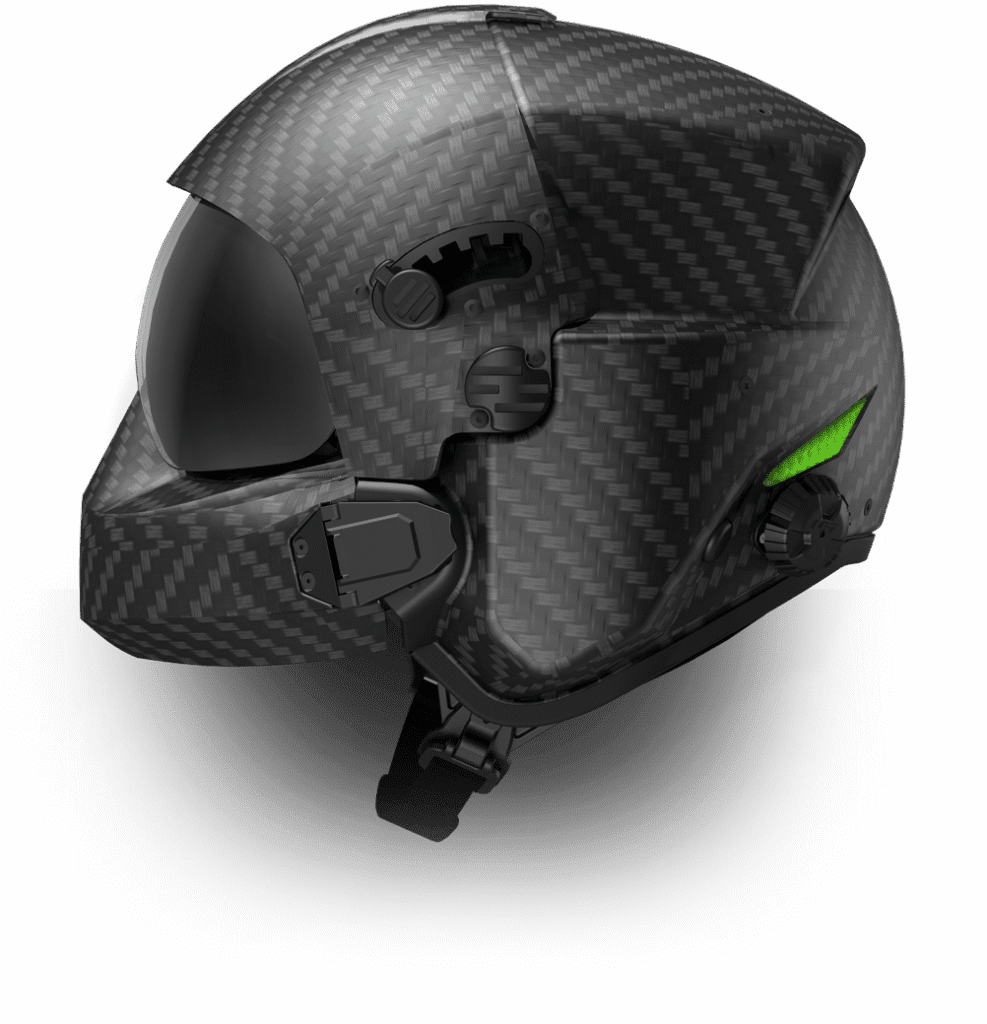
Magdeburg, 18 November 2025 – Head protection specialist SCHUBERTH GmbH from Magdeburg is presenting the new T100C training helmet at Milipol Paris 2025. The helmet was developed specifically for training as well as operational scenarios in military and law enforcement settings, combining low weight with maximum protection and modularity. With this, SCHUBERTH expands its portfolio of tactical head protection systems with another practical, field-oriented model.

Optimized for Training and Real-Condition Operations

The T100C is the training variant of the proven M100 combat helmet and features the same interfaces (rails, shroud, etc.) and identical interior components, ensuring that operation remains unchanged for the user. The newly developed multilayer carbon-composite shell provides maximum shape stability and durability while significantly reducing weight.

Weighing just 750 g (sizes XS–M) and 790 g (sizes M–XL), the T100C is the lightest training helmet in its class. For the first time, a tactical training helmet meets the requirements of the mountaineering helmet standard EN 12492 and the whitewater helmet standard EN 1385.

The EPP inner shell with 4-point chin strap and neck cushion provides optimal comfort and shock absorption. Thanks to the new adjustable interior system, the helmet can be individually adapted to head shape and wearing preference and is compatible with all tactical hearing protection systems available on the market.

Flexibility Through a Modular Accessory System

Like all modern SCHUBERTH system helmets, the T100C features a fully modular design. The integrated rail system with three attachment points allows simultaneous mounting of oxygen or respiratory masks, communication systems, cameras, or IR/IFF identification modules. Additionally, the helmet is equipped with the Enhanced Connection Device (ECD) system, which provides extended interfaces for additional accessories—from artificial camouflage material to tactical add-on components.

Design and Safety According to International Standards

The T100C meets the relevant safety standards for training and exercise helmets:

• Mountaineering helmet EN 12492

• Whitewater helmet EN 1385

It is available in Black, Bronze Green, and Sand Brown. The helmet shell features a high-cut design.

“With the T100C, we are offering our military and police partners a training solution that replicates the handling and ergonomics of our combat helmets exactly—at significantly reduced weight and with maximum wearing comfort. This closes the gap between realistic training and operational deployment,” explains Milad Youkhanna, Head of Military & Law Enforcement at SCHUBERTH GmbH.

Milipol 25 – MSA Gallet TC 901

Wednesday, November 19th, 2025

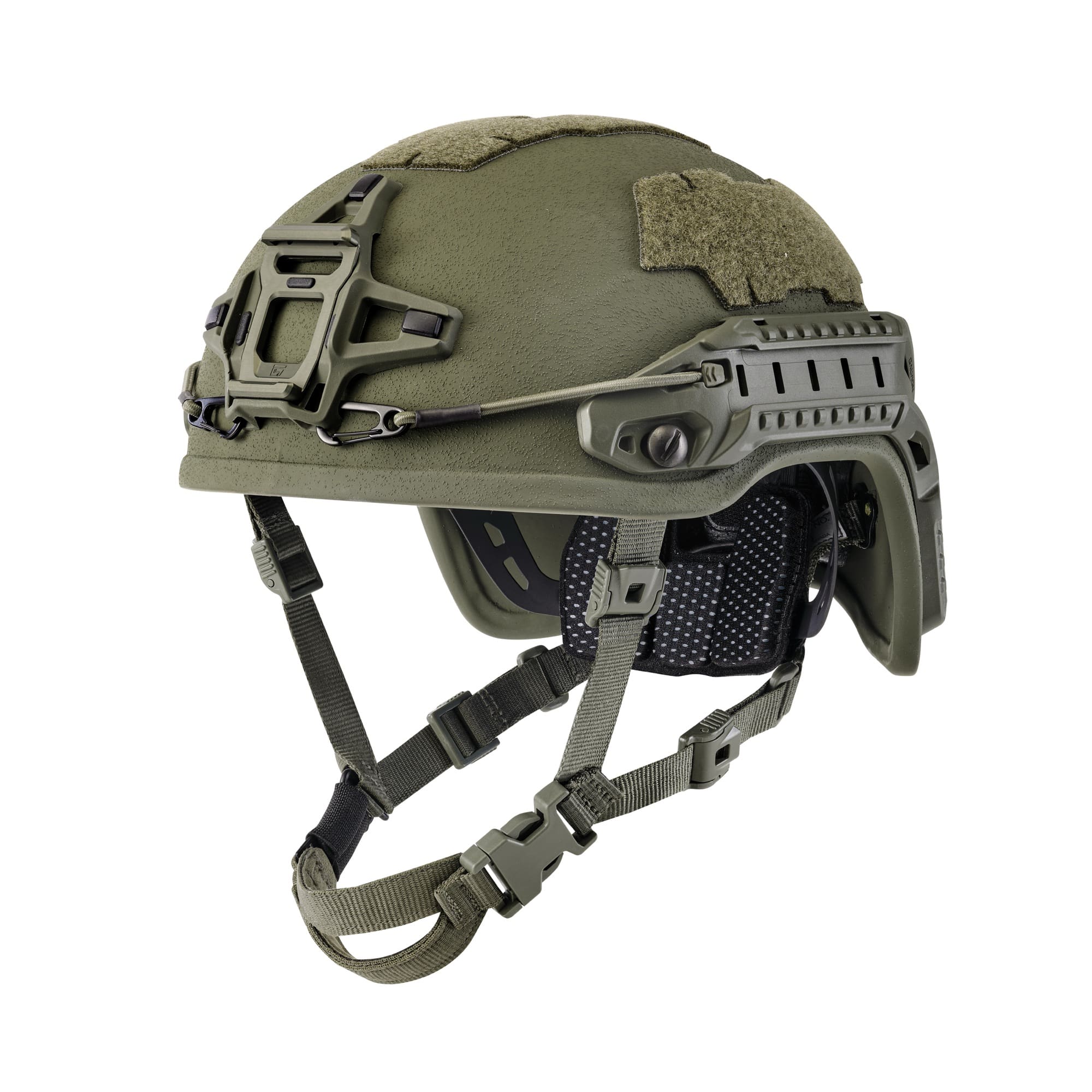
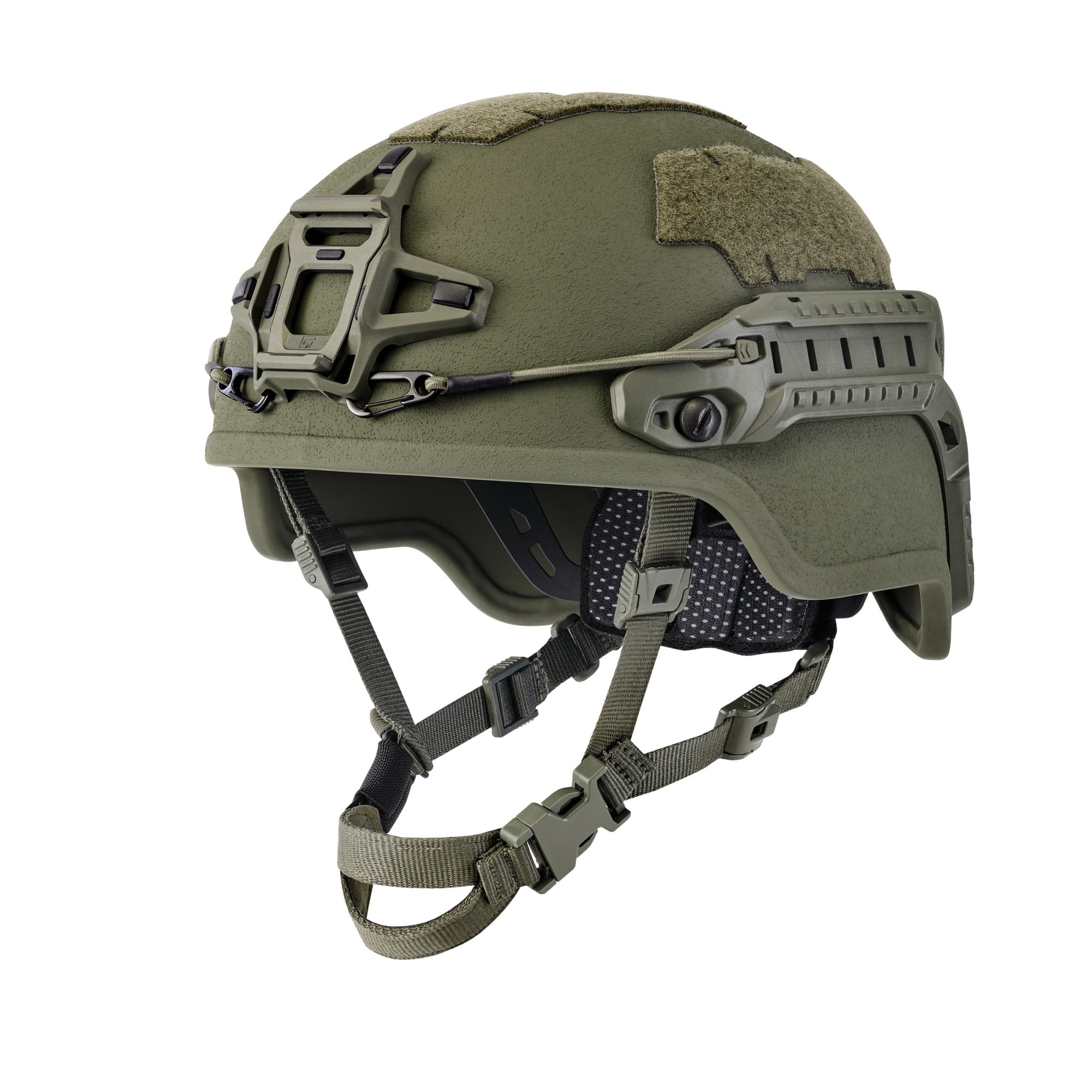
MSA unveiled the new TC 901 helmet by Gallet at Milipol in Paris, France. This new helmet design is made from Polyethylene and rated for 9mm and frag protection. Offered in three sizes, Small, Medium, and Large, the TC 901 is modular and scalable.

Additionally, the helmet can easily be disassembled by removing a single bolt at the rear of the ARCH, which loosens the ARCH first and then the edge molding. You will recognize the ARCH rail system from the TC 800 series helmet as well as the ratchet headband. The new liner system is removed by unclipping the chinstrap from its upper sockets within the helmet.

Seen below are concepts of future helmet accessories for the TC 901.

Sentinel Skin for Raptor Tactical’s Sentinel Inside Helmet Skullcrusher System

Monday, November 17th, 2025

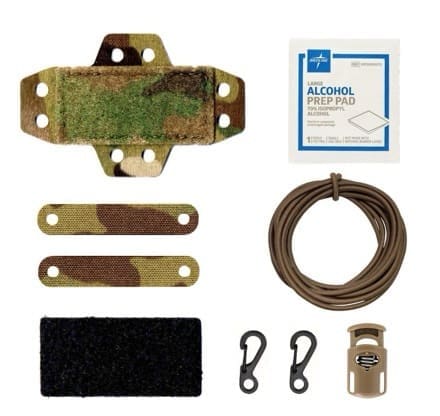
Raptor Tactical has introduced an accessory for their Sentinel Inside Helmet Skullcrusher System, Sentinel Skin which serves to offer MultiCam camouflage to the Black foam forehead pad.

Designed to replace the liner of Ops-Core high-cut helmets or ACH, the Sentinel Inside Helmet Skullcrusher System seamlessly integrates with the shell, eliminating bulk and redundancy while delivering stability for stand alone use of NVG and optics support.

raptortactical.com

Gentex Corporation Secures Third Year Option on its Advanced Combat Helmet Generation II Contract Worth $38.4 Million

Thursday, November 13th, 2025

CARBONDALE, PA, November 13, 2025 — The Defense Logistics Agency (DLA) has exercised the third one-year option period of the Advanced Combat Helmet Generation II (ACH Gen II) production contract (SPE1C1-23-D-0004) awarded to Gentex Corporation. Valued at up to $38,376,425, this latest action extends through October 16, 2026 with the U.S. Army, ensuring America’s soldiers continue to receive advanced ballistic protection with a significant 22% reduction in weight compared to the legacy ACH helmet system.

Building on decades of innovation, the ACH Gen II helmet integrates ultra-high-performance materials and advanced manufacturing processes to deliver superior ballistic protection and blunt-impact performance while reducing overall weight. This results in greater comfort, agility, and mission endurance for today’s warfighter.

“Gentex is proud to continue our close partnership with the U.S. Army and the Defense Logistics Agency through the ACH Gen II program,” said Kevin Reilly, Close Combat Segment Directorat Gentex Corporation. “This award reaffirms our mission to deliver lightweight head protection to America’s warfighters, built with pride by the skilled workforce of Northeastern Pennsylvania.”

“Gentex Corporation continues to be a cornerstone of our region’s defense-manufacturing strength,” said Congressman Rob Bresnahan (PA-08). “The company’s recent recognition as a Best Place To Work in PA for 2025 confirms their commitment to their employees. This contract not only supports the safety and readiness of our nation’s soldiers but also sustains hundreds of high-quality jobs here in Northeastern Pennsylvania.”

The ACH Gen II is a key part of Gentex Corporation’s portfolio of U.S. military ground-combat helmet programs, including the Enhanced Combat Helmet (ECH), High-Cut ECH, Next-Generation Integrated Head Protection System (NG-IHPS), and the USSOCOM Family of Tactical Headborne Systems (FTHS). Gentex continues to advance mission-critical technologies that enhance survivability, comfort, and communication for military personnel around the world.

Dry Land, Wet Work, Same DNA: New EXFIL Rescuer Helmets from Team Wendy Are Born from the Field, Built for SAR

Wednesday, November 12th, 2025

CLEVELAND, Ohio – Nov. 12, 2025 – Team Wendy®, a leading provider of innovative head protection systems, introduces EXFIL® Rescuer bump helmets for search-and-rescue (SAR) missions spanning terrain to tide. Developed directly from field feedback, the new product platform reflects Team Wendy’s “listen first, adapt fast” approach to design and features two purpose-built models: the EXFIL® Rescuer for on-the-ground operations, and the EXFIL® Maritime Rescuer for maritime, hurricane and swift-water response.

The EXFIL Rescuer delivers advanced protection and everyday adaptability for land-based missions, while the EXFIL Maritime Rescuer extends that performance into the water with a liner engineered for neutral buoyancy and quick drying. Both models feature liner systems with Zorbium® foam technology—combining blunt-impact mitigation with comfort—and both helmets are available in high-visibility red or yellow.

“We wanted to give agencies and public-safety teams a unified system that works across multiple rescue environments,” said Garson Greathouse, Regional Sales Manager (Southeast) at Team Wendy. “Starting with the same shell used in our popular EXFIL LTP (Lightweight, Tactical, Polymer) bump helmets, we expanded that foundation by closing the loop with SAR crews, until the platform reflected the realities of the way they actually work onshore and offshore.”

Built light, built right

The EXFIL Rescuer weighs just 1.59 lbs. (varies slightly by size and pad configuration) to give first responders the freedom to move fast, stay sharp and keep their focus where it counts. Designed for the rigors of wilderness rescue, structural collapse and urban interface, among other dangerous scenarios, it offers a full roster of mission-ready features including:

  • An aluminum shroud designed to handle helmet lights for hands-free illumination, night vision and thermal imaging products.
  • A lightweight, impact-modified polycarbonate shell with signature EXFIL geometry.
  • A Velcro® pattern designed for top led lights or IR strobes, attachments and patches.
  • The handmade CAM FIT™ retention system featuring Team Wendy’s signature BOA® fit integration (a micro-adjustable dial helps distribute light, even pressure around the head).
  • Rails compatible with EXFIL accessories including face shields, visors and Peltor™ adapters.
  • A sport-style chin strap for a low-profile, secure fit.

For water rescue

Retaining the same core hardware and base weight, the EXFIL Maritime Rescuer builds on the landward model with a marine-grade liner, while the under-the-chin retention system stays clear of snorkels, comms and hoods upon water entry.

“SAR swimmers told us that an over-the-chin or cup-style strap can scoop water and yank the helmet, so you’re constantly retightening it instead of focusing on the rescue,” Greathouse said. “Or, if the liner floats, you get ‘bucketing,’ where the helmet lifts or pulls your head back, and that can break your seal.

“The EXFIL Maritime Rescuer is our answer to those concerns. It uses an under-the-chin strap that stays clear of the airway and a moisture-shedding, neutrally buoyant liner that won’t fight you in the water. It’s about achieving a mission-ready fit rather than pushing a tactical helmet into rescue work it wasn’t intended for.”

A new spin on SAR

Search and rescue work is not served well by repurposed gear, and helmets that prioritize fire or other hazards often miss the adaptability that SAR missions demand. That’s why Team Wendy’s applied science program focuses on understanding the blunt and rotational impacts (e.g., debris strikes, wall collisions, head-to-ground falls) that are the primary drivers of concussion and traumatic brain injury (TBI).

To evaluate helmets beyond legacy linear drop tests, the team developed DREW (Dummy for Rotational Evaluation of Wearables), a biofidelic (behaves like the human body) rig that captures both linear and rotational head motion. At Team Wendy, this work contributes to the development of advanced liner systems, foam chemistries and pad geometries that can benefit the men and women who put their well-being on the line every day—innovations like those found in new EXFIL Rescuer helmets.

On a Mission to Measure What Matters, Team Wendy Shares New DREW Data

Wednesday, October 29th, 2025

CLEVELAND, Ohio – Oct. 29, 2025Team Wendy®, a leading provider of innovative head protection systems, presented at the recent Personal Armour Systems Symposium (PASS) held in Bruges, Belgium, where company researchers shared new findings on DREW (Dummy for Rotational Evaluation of Wearables), including a paper published in the proceedings. Aiming to advance helmet testing from traditional linear drops to encompass rotational events, Team Wendy is on a mission to change the way the industry measures head impacts.

Who’s DREW?

Developed by Team Wendy, DREW is a biofidelic (behaves like the human body) helmet-test rig built to simulate real head-to-ground falls and capture both linear and rotational head motion (something legacy linear-drop tests miss). It uses a 50th-percentile Hybrid-III head, neck and torso on a pivoting assembly to recreate front, rear and side impacts, as well as to study both head-direct and whiplash-induced events.

“We want to measure how the brain responds to complex impacts, in ways that we still don’t understand well enough, so we can inform better products and standards going forward,” said Ron Szalkowski, head of R&D at Team Wendy and co-author of the PASS paper. “DREW helps move that conversation beyond linear drops to the rotational forces associated with concussion and other forms of traumatic brain injury (TBI).”


What Team Wendy Discovered

The PASS paper compared Team Wendy’s standard EXFIL® Ballistic helmet liner to a high-density foam ballistic liner tuned for DOT/monorail drops (where the helmeted head form is guided straight down onto an anvil at relatively high impact speeds). Using DREW in a rear, whiplash-induced configuration, as well as a front, direct impact configuration, the foam ballistic liner produced higher head loads (peak linear and angular acceleration) with no meaningful gain reduction in peak angular velocity.

“The foam liner was associated with more jolting to the head, both straight-on and in a twisting motion,” Szalkowski said. “Think of it like tuning a car’s performance on a treadmill, only to learn that it struggles with bumps and turns in the road. The danger is that a helmet design can look good on paper, but increased rigidity, for instance, does not necessarily help you in a real fall.”

The PASS poster also showed how DREW can mimic a real parachute landing. Researchers used sensor data from mouthguards worn by paratroopers to study the rotational dynamics linked to concussion-inducing, head-to-ground impacts. Then they tuned the rig (adjusting the drop angle and whiplash distance) until DREW matched the data within 4%.

“This gives our engineers a realistic target to design helmets against, and it could go so far as to inform future revisions to test procedures and performance criteria,” Szalkowski added.

Headstrong for Safety

Team Wendy’s initiatives at PASS showcase a profound commitment to comprehensive, peer-reviewed research that raises the benchmarks for head protection. Based on these insights, the company is advancing with DREW evaluations across different helmet categories and is supplying data to aid standards development efforts in partnership with academic and governmental entities. To request the PASS paper and poster, please reach out to Sara Jonas, global director of marketing, atsjonas@teamwendy.com. The paper is also available via PASS proceedings.

This material is founded on research funded by the U.S. Office of Naval Research through PANTHER award number N00014-21-1-2916. Team Wendy expresses gratitude to the partners at Robert Morris University for their contributions to FEA modeling and for the RISE3D injury metric utilized in DREW studies.

Headborne Systems – State of the Industry

Wednesday, October 29th, 2025

Anduril’s launch of Eagle Eye during the recent AUSA Annual Meeting created quite a bit of discussion among those in the helmet industry as well as those who wear them. In response, we received this “State of the Industry” report from an inside who we will keep anonymous. The perspective is their’s and will hopefully serve to educate our readers.

The recent reveal of Anduril’s Eagle Eye helmet system at AUSA 2025 sparked a lot discussion regarding helmets and where the industry is with regards to what the user wants.  Anduril did not present any performance specifications for the helmet.  All we know now is that they are in collaboration with Gentex to optimize the helmet.  At first glance, the helmet looks very close to the head with a relatively thin shell.  Comments have been made that is essentially comparable to an exotic car prototype being revealed at a car show to spark interest in that manufacturer.  But what is the rest of the helmet industry doing?  Are they in step with what users are expecting?  Have they made any progress in terms of protection over the last ten years or is it more of the same.  This article discusses those topics by branch of service and manufacturer.

United States Army

The United States Army Next Generation Integrated Head Protection System is probably one of the most criticized helmet programs in the industry.  This program dates way back to 2012 when it was originally called the Soldier Protection System.  At that point in time, the helmet consisted of a shell and a fairly large ballistic applique to stop the small arms threat that was relevant to the Army.  This was a very big and very bulky helmet that was competed between Gentex and Ceradyne.  Note that Ceradyne was ultimately purchased by Avon so this became an Avon program.  Ceradyne won the SPS program with a unique shell and rail design.  The rail was a custom Ceradyne design that did not have any accessories ready to connect to it, unlike the Gentex/Ops-Core rail which is now industry standard. Around 2018, the two key domestic polyethylene providers had a break through in performance which provided protection from the small arms threat WITHOUT the need for the ballistic applique.  To the Army’s credit, they scrapped the SPS program and released the IHPS program which drove down the areal density shell requirements to give the soldier a lighter more comfortable helmet.  This was followed up by the NG-IHPS program which is now the formal program of record for the Army with both Avon and Gentex producing helmets likely through 2027 and a plan to onboard LTC in the near future as a third supplier.

With regards to performance, the NG-IHPS helmet is actually very impressive and offers more ballistic protection then the ECH at a lower areal density.  It is a huge leap forward in terms of the weight to protection ratio and this achievement consistently get lost under other criticisms. What draws criticism from the user community is the rail, which nothing other than an enormous mandible attaches to, the visor, which has to connect to the NVG bracket, and the comfort and lack of stability of the liner and the chinstraps which need two hands to adjust.  The liner is considered to be outdated, featuring Team Wendy Zap pads, which have been around for over a decade and a D30 crown pad. The liner pad design is driven by a 14fps requirement, which is double the impact energy of the SOCOM 10fps requirement.  This requires a thicker stiffer pad which is partially the reason the liner is so uncomfortable. Furthermore, there is growing sentiment that the Army needs a high cut version of this helmet system.

These concerns have not fallen on deaf ears. The Army has asked industry to provide new liners to increase comfort and is considering the 10fps requirement instead of 14fps. In addition, the Army has requested custom pads from industry for hot and cold weather pads. Furthermore, the Army has requested updated rail designs from both Avon and Gentex to allow for better integration of accessories such as flashlights, cameras etc.

At AUSA, Gentex pulled out all the stops and show cased what the NG-IHPS helmet could be with a new rail, new liner, new chinstrap, new visor, integrated communication headset through rail arms and even a version of the helmet featuring the Gentex RaiLink Power and Data System.   Unfortunately, it was only shown to key customers like program managers.

Marine Corps

The Marine Corps recently competed the Integrated Helmet System between Galvion and Gentex with Galvion being down selected as the awardee. This of course has led to a protest from Gentex which is typical of the Galvion / Gentex rivalry, more on that later.  The IHS helmet also features small arms threat protection but to a lesser degree than the NG-IHPS helmet.  It also features a power and data system, which in this case may be the Galvion Cortex system after this winds its way through the protest process, which can take months and even years.

SOCOM

The Program Management for SOCOM has driven innovation in the head protection space, more than any other government organization, period. They were the first Government organization to full adopt a high cut polyethylene helmet with rails and continue to drive down weight and drive up performance using a five year cycle of competition for the Family of Tactical Headborne Systems.  Gentex is the incumbent provider of this helmet, having beat out Galvion in 2019, which of course was followed by a Galvion protest.  Gentex and Galvion have competed directly against each other on helmet programs and in court more than any other pair of companies in the industry.  They have competed against each other for every major helmet program in North America and Europe.  They recently went to court for violations of intellectual property with Gentex winning a decision that Galvion had indeed violated Gentex IP with their version of the helmet rail.  Currently the two companies have both submitted helmet systems for the current FTHS competition which should be downselected to a winner in the first quarter of 2026.  Both helmets systems are elite in terms of the weigh to performance ratio, offering 9mm protection at an areal density of roughly 1 pound per square foot.

Ironically, Team Wendy did not compete for FTHS in 2019 and has declined to compete for FTHS in 2025.  Team Wendy is a division of AVON, and the AVON mantra of “simpler is stronger” may have cost them this opportunity as they were not willing to tool up the required four sizes of shells. Team Wendy only has two sizes of shells while Galvion has 5 and Gentex has 4.  

SOCOM continues to pace the industry not only with the best helmet systems available but also technology upgrades such as Gentex’s RaiLink Power and Data rail system which has been purchased by the Army Special Missions Unit.  

Overseas

The largest overseas program was competed in 2024 and awarded in 2025 by the NATO Support and Procurement Agency.  Again, Galvion and Gentex were the two main competitors for this program and each company was awarded different tranches of the tender.  Galvion has an inside edge on the rapidly growing European Helmet Market now that they are producing helmets in Poland while Gentex continues to produce helmets for Ground applications solely in the United States.

Anduril

This brings us back to the Eagle Eye Helmet System.  Anduril took a “first principles” approach towards their new helmet design, rejecting industry knowledge to bring something lighter and higher performing to the market. This might make sense in a software context where the rules of physics are not constraints.  Every branch of service has improved their ballistic protection to weight ration substantially over last ten years and in some cases reduced their weight burden by 50% while still offering the same levels of protection.  Industry has provided these customers what they asked for and then some.  

With regards to Visual Augmentation Systems, if you are lucky enough to use the L3 F-PANO or Elbit ENVG-B, you will experience the very best of what the VAS industry has to offer and it is incredible.  The thermal outline mode is just one of the features that these production tubes offer now that will impress even the most jaded user and it is a real thing that L3 is selling now.  This is one of the key difference between Eagle Eye and the current systems that it says it outperforms. L3 and Elbit just don’t feel the need to go on the Joe Rogan Experience to discuss their technical breakthroughs.

So then, who is the customer for Eagle Eye?  It is not a program of record. Neither Army, USMC or SOCOM have asked for it and none of them are funding it. However, they are buying NG-IHPS, FTHS, F-Pano and ENVG-B because those programs have delivered on what the user community has asked for.  And where the programs have fallen short (IHPS Liner for example) the program offices have reacted to improve their systems.  The customer for Eagle Eye is the general public, and what’s for sale is shares in Anduril when and if they become publicly traded.  Anduril is not creating a system to benefit the user, they are creating a system to draw interest in their company.  Joe Rogan has never purchased or influenced a Government Program Acquisition.  This is not intended to answer the mail for the user community but rather spark the interest of the general public.

Gentex Corporation Selected by Czech Ministry of Defence for Integrated Headborne Systems, Reflecting Global Trust in Proven Ops-Core Integrated Ballistic Helmet Solutions

Tuesday, October 28th, 2025

CARBONDALE, PA, October 27, 2025 – Gentex Corporation has been selected by the Czech Ministry of Defence to deliver next-generation Ops-Core integrated ballistic helmet systems and AMP® Communication Headsets to soldiers across the Czech Armed Forces. This order was placed through the NATO Support and Procurement Agency (NSPA) under the NATO Logistics Stock Exchange (NLSE) contract, which is available to all NATO member nations strengthening interoperability across allied forces. The contract valued at over 1 billion CZK is scheduled for completion by October 2026. The official announcement of the selection by the Czech Ministry of Defence can be viewed here, with additional Q&A information here.

“As a global leader of integrated headborne systems, this selection reinforces what all our NATO customers already know, that Ops-Core systems deliver unmatched modularity, reliability, and operational flexibility,” said Tom Short, Senior Vice President of Global Defense at Gentex Corporation. “The Czech Republic is investing in a combat-proven solution with a global pedigree and strong NATO user base. We’re proud to be a trusted part of that modernization effort.”

The contract includes Ops-Core’s lightweight ballistic helmets, engineered for modern tactical operations, paired with a full suite of advanced, interoperable accessories including AMP Communication Headsets with Push-to-Talk capability, ballistic visors, full-face shields, mandible protection, and SOTR respirators with integrated microphones for contaminated environments. Together, they create a fully modular headborne protection system that enhances soldier safety, communication, and mobility in demanding combat conditions and are trusted by elite forces worldwide. This acquisition marks a significant step in the Czech Armed Forces’ modernization efforts, replacing legacy helmets with Ops-Core’s state-of-the-art protective solutions that deliver the next level of mission readiness and battlefield performance.
“Gentex was selected for our proven ability to deliver reliable, mission-ready solutions that meet the highest standards of protection and performance,” said Jim Clarke, EMEA Ground Systems Sales Director, Gentex Corporation. “We offer more than just advanced equipment, we deliver confidence on the battlefield. Our systems are already fielded across multiple NATO forces, ensuring seamless interoperability, simplified training, and streamlined sustainment.”

The purchased helmets and accessories are designated for brigade task forces within the 4th Rapid Deployment Brigade and the 7th Mechanized Brigade, as well as for personnel across the ground forces, support elements (including cyber and information forces, air forces, and medical units), special operations forces, the Military Police, and the Cyber and Information Operations Command. Their considerable variability ensures that each set can be adapted to the specific needs of the individual user, enhancing operational effectiveness across diverse mission profiles.

Program Highlights

Customer: Czech Ministry of Defence (via NSPA competitive procurement).
Products and Integrated Accessories: Ops-Core ballistic helmet systems in two color variants, AMP headsets, AMP PTTs and radio cables; Step-In® Visors; SOTR respirators; ballistic mandible protection; and additional compatible mission accessories.
Operational Flexibility: Scalable from routine ground operations to contaminated/CBRN environments (compatible with protective masks and oxygen equipment).
Delivery Timeline: Program completion targeted by October 2026.
Procurement Transparency: Managed through NATO’s NSPA, which aggregates allied demand, runs international competitions, negotiates pricing, and addresses intellectual property considerations on behalf of member nations.

Fielding to the Czech Armed Forces will occur under the schedule coordinated by NSPA and the Czech Ministry of Defence. Gentex Corporation will support fit, training, sustainment, and lifecycle needs as defined in the program agreement. Organizations interested in similar integrated headborne solutions should contact Gentex Corporation.