XC3 Weaponlight

Archive for the ‘International’ Category

Invictus Games 2017

Sunday, August 27th, 2017

0001

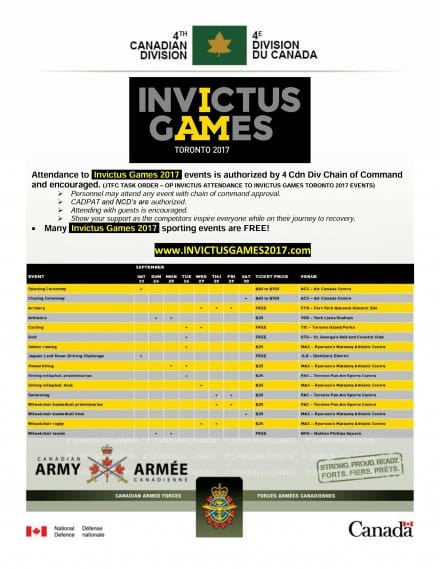
Click to view .pdf

The Invictus Games is an international Paralympic-style multi-sport event, where wounded and/or injured Armed Forces personnel and associated Veterans participate in sporting events. The event, inspired by the Warrior Games held here in the States, is taking place in Toronto, Canada this year. If you’re in the area, check out the schedule above for the full range of events taking place at this year’s Invictus Games.

invictusgamesfoundation.org

Additionally, there will also be a Multi-Faith Celebration being held at St. James Cathedral on September 19th. Tickets for which can be claimed at the link below:

www.eventbrite.ca/e/invictus-games-2017-multi-faith-celebration-tickets-36871303060

Canadian Forces Seeks Sniper Body Armour System

Thursday, August 24th, 2017

Public Works Canada has issued a tender for a Sniper Body Armour System. The details are below, but they only want 319 systems with an option for up to an additional 240 systems over the following 36 months. With numbers that low, it seems like a waste of resources to issue a tender. Just buy something off the shelf from a five eyes partner.  However, they are looking for Canadian content here, so if two or more Canadian companies bid, they won’t consider outside bids.

They explain thier requirement:
The sniper community currently has access to the in-service Fragmentation Protective Vest (FPV) that is worn by all Canadian Forces (CF) members. The in-service FPV is an all-in-one system, meaning the soft armour and in-service Bullet Resistant Plate (BRP) pockets are part of one garment. While the in-service FPV provides excellent ballistic protection, it hinders the snipers ability to operate effectively due to its bulk and restricted range of motion. Therefore it was determined that snipers require a less restrictive garment that allows flexibility of protection and movement based on operational needs.

The Sniper Body Armour System (SBAS) to be delivered under this contract is composed of three components. The first component is the SBAS External Carrier (SBAS EC) that will hold the SBAS Ballistic Panel (SBAS BP). The second component is the SBAS Plate Carrier (SBAS PC) that will hold the in-service BRP. The third component is the Bilingual User Instructions Card that provides important information related to sizing and wearing/caring for the SBAS.

The SBAS will provide ballistic protection to members of the sniper community with improved flexibility of movement and protection options. The sniper will wear individual components or both to maximize ballistic and fragmentation protection.

Quatities:
Item 01 – Sniper Body Armour System (inclusive of all related components) – quantity: 319 units

Options:
This requirement also includes options to purchase additional quantities as follows:
Item 02 – External Carrier Rear – estimated qty: 140 units
Item 03 – Ballistic Panel Rear – estimated qty: 140 units
Item 04 – External Carrier Front – estimated qty: 140 units
Item 05 – Ballistic Panel Front – estimated qty: 140 units
Item 06 – Plate Carrier Rear – estimated qty: 140 units
Item 07 – Plate Carrier Front – estimated qty: 140 units
Item 08a – Sniper Body Armour System (inclusive of all related components) – estimated qty: 240 units

One of the things I really appreciate about Public Works is that they are very specific about how they will evaluate a candidate’s bid proposal.  For example, go take a look at this Technical Evaluation Workbook.  If only the American acquisition community were so transparent.

Read the full details of the solicitation here.

CANSOF Seeks Advanced Special Operations Forces Combat Uniform

Wednesday, August 23rd, 2017

In a solicitation published to Public Works, the Department of National Defence (DND) has issued a requirement for Commercial-Off-The-shelf Advanced Special Operations Forces (SOF) Combat Uniforms (ASCU) to be supplied in accordance with DND specifications.

It is a two stage procurement:

Step I (Initial Contract): each Bidder deemed compliant will be awarded a contract for the supply of a quantity of twenty (20) Shirts and quantity twenty (20) Pants. These Combat Uniforms will be subjected to a User Acceptance performance Evaluation.

Step II (Main Contract): Following the User Acceptance Performance Evaluation result, one contract will be awarded for the Combat Uniforms. The Requisition on contract (ROC) will be for one (1) year with the option to extend for four (4) additional one (1) year period. The Bidder must supply and deliver the Combat uniforms as specified in Individual Requisition on Contract.

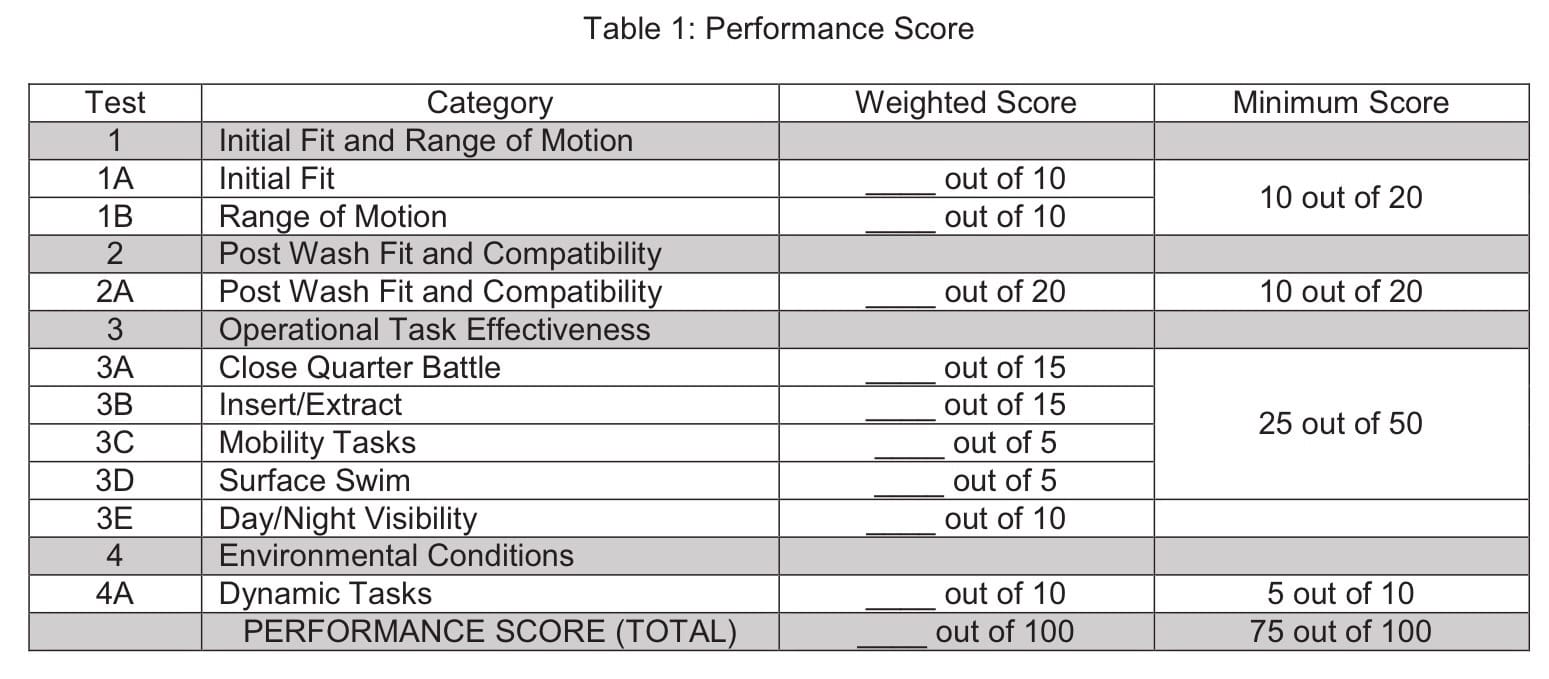
The candidate uniforms will be manufactured from No Melt No Drip fabric in the MultiCam print. The uniforms will be trialled by 10 wearers and their technical merit will be evaluated based in these factors:

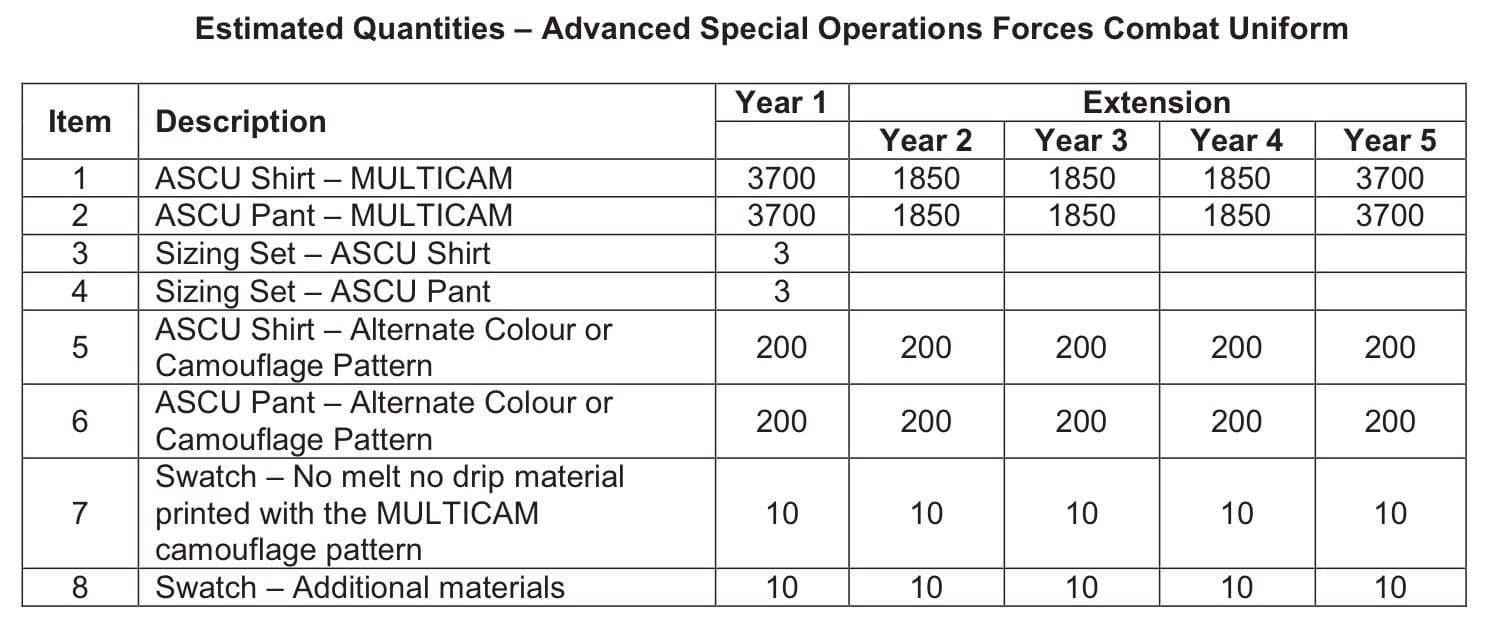
Although they want samples in MultiCam print, they’ve included a place holder for other colors and patterns in the solicitation.

Have an exterior finish as follows:

a. Printed with the MULTICAM® camouflage pattern; and

b. Other finishes as available including white, black, tan and alternate camouflage patterns;

Another interesting requirement for potential bidders:

Expertise and Proven Design
The Bidder must be an experienced military uniform manufacturer by having been in the business of developing, manufacturing and/or selling military uniforms for a minimum of three (3) years and having sold a minimum of five hundred (500) uniforms to an American, British, Canadian or Australian (ABCA) military force in the last five (5) years.

It will be interesting to see if this solicitation gets CANSOF away from the Peerless manufactured uniforms they are currently using.

Australia’s Diggerworks Studies Exoskeletons

Tuesday, August 22nd, 2017

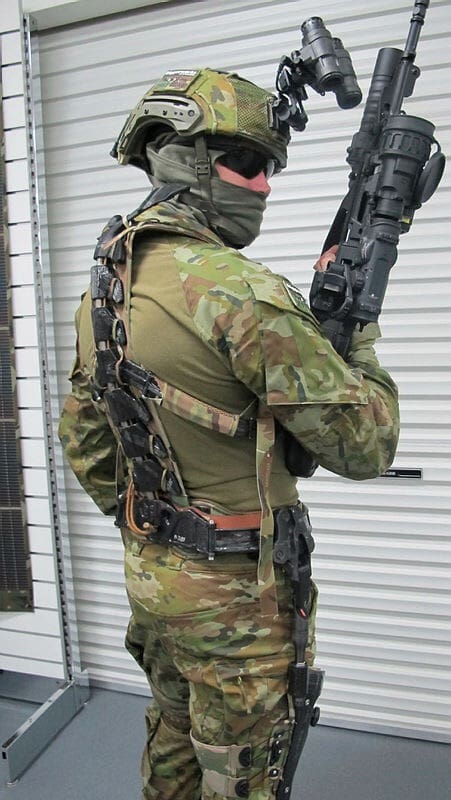
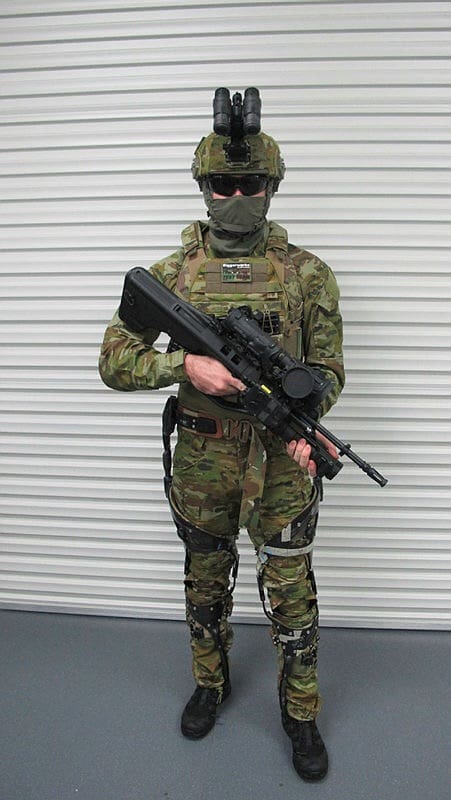
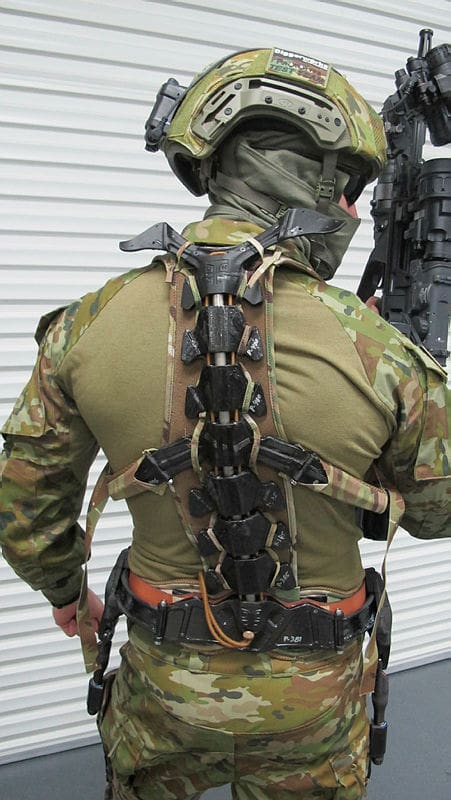
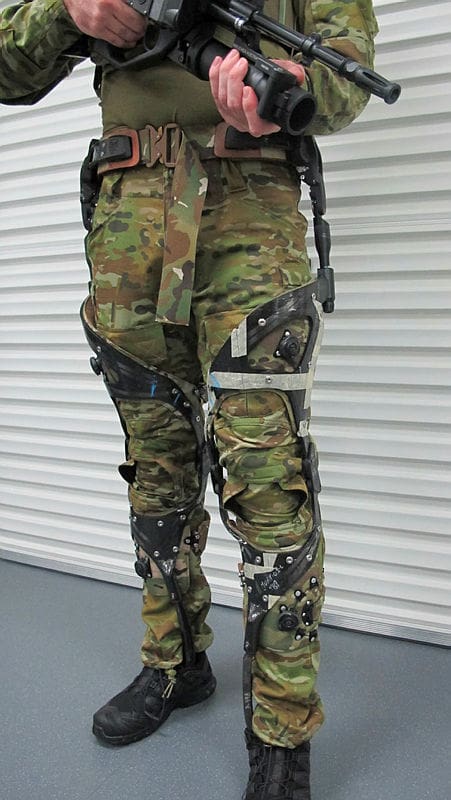
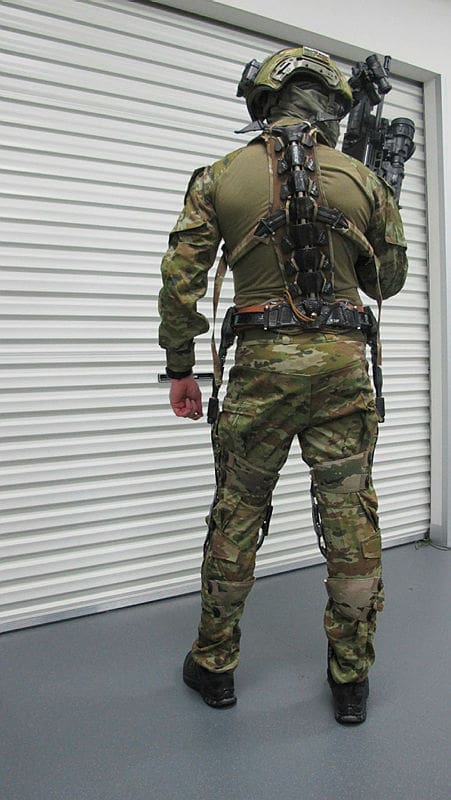
Diggerworks is undertaking a feasibility study to determine the potential utility of a passive exoskeleton for ADF dismounted close combatants. The intended purpose of the systems is to transfer the weight burden of the soldiers’ carried equipment directly to the ground, helping the dismounted soldier arrive at their destination less fatigued and ready for battle.

As part of the exoskeleton trial, participants were fitted with a surrogate suit made of 3D printed plastic. The surrogate suit was fitted to ensure measurements were correct prior to manufacturing titanium suits.

img_3593.jpg

This looks to be the Mawashi UPRISE Tactical Exoskeleton we recently covered.

© Commonwealth of Australia, Department of Defence, Photo: CAPT Brendan Gilbert

MAPA Camo Pattern Under Consideration For Polish Territorial Defence Forces

Tuesday, August 22nd, 2017

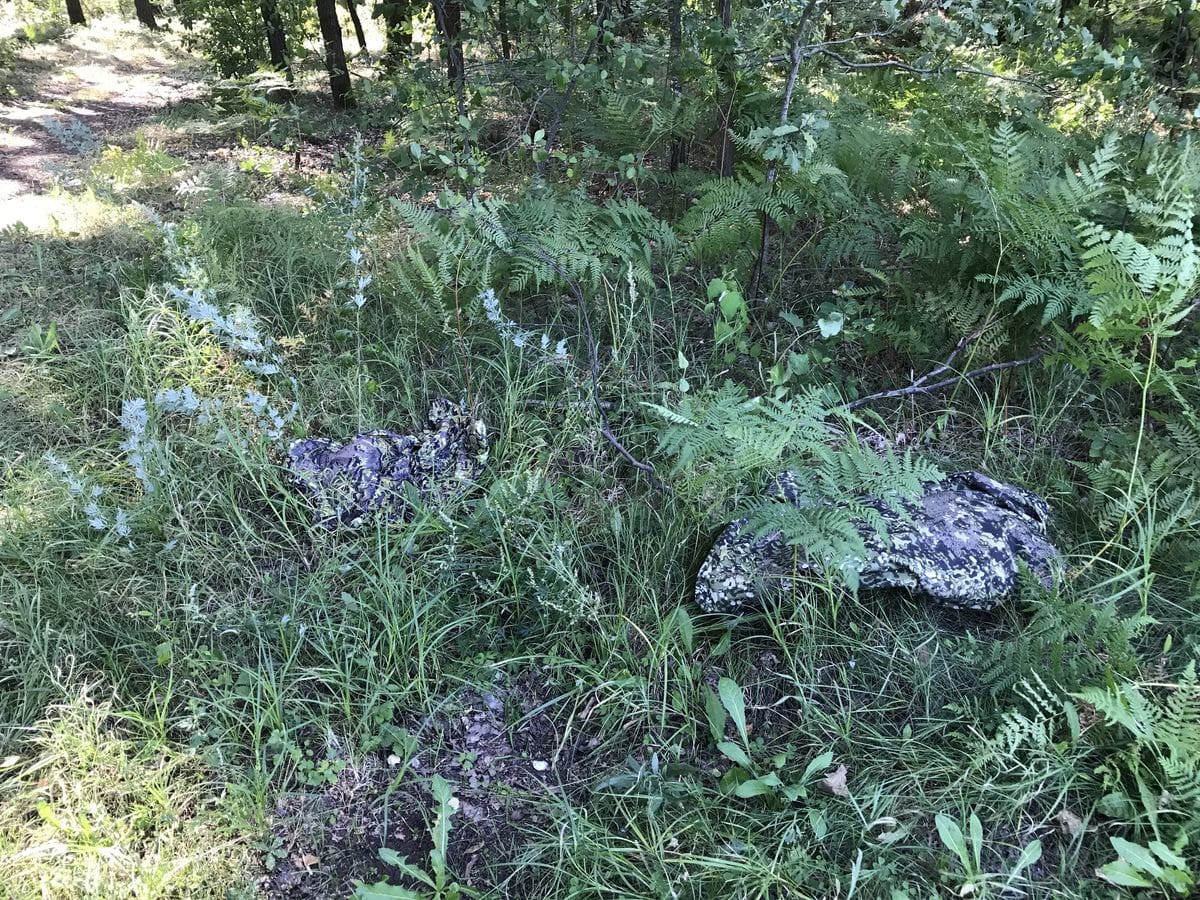
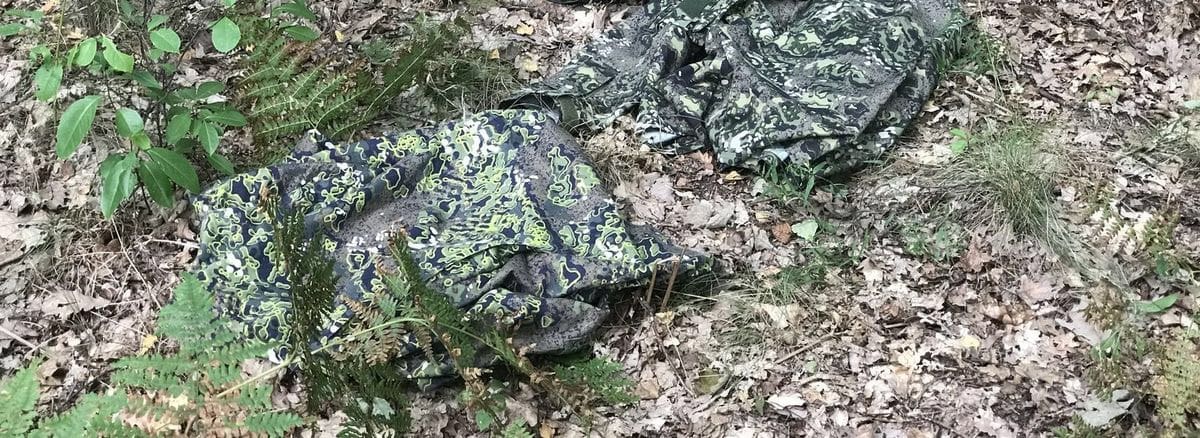
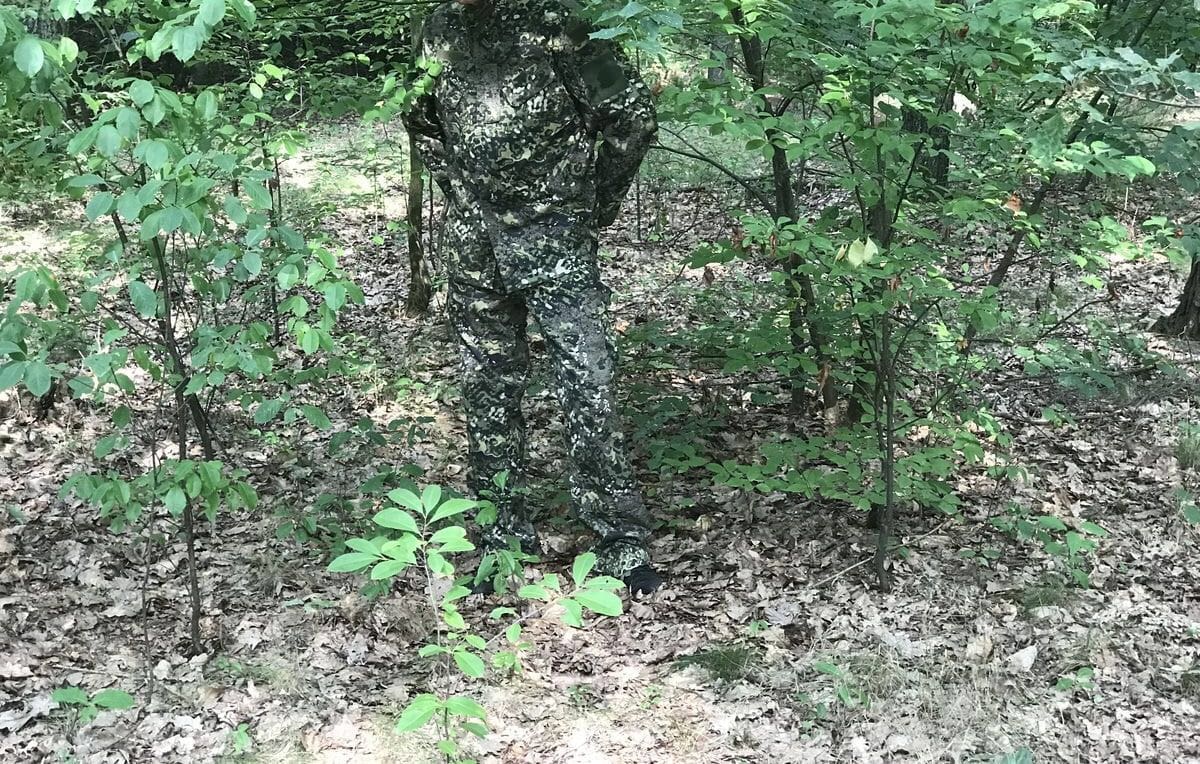
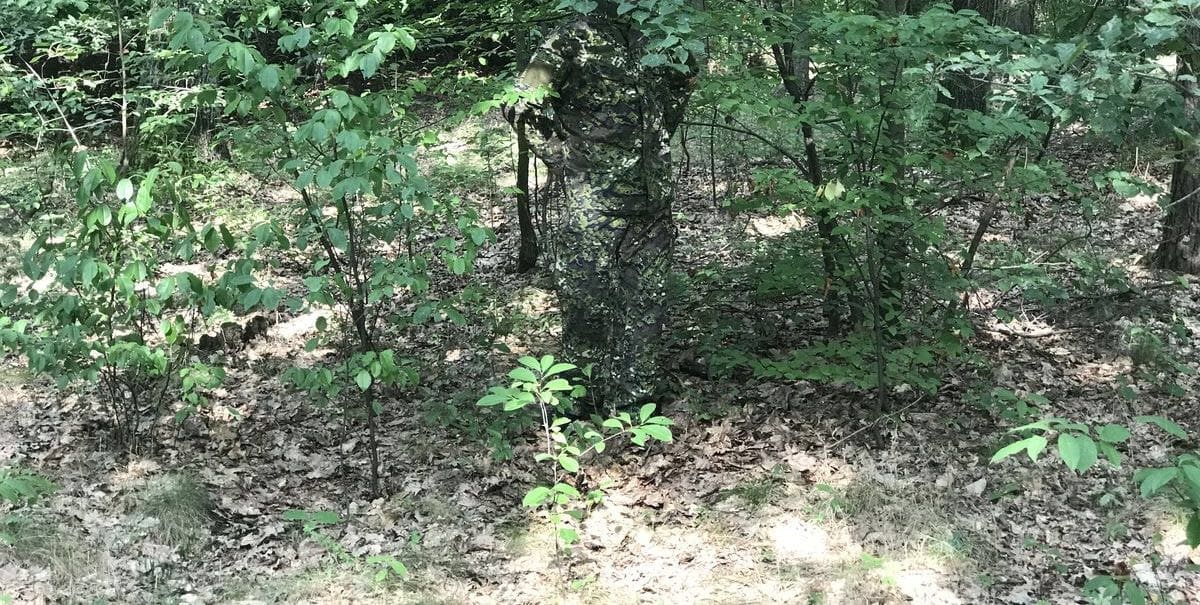
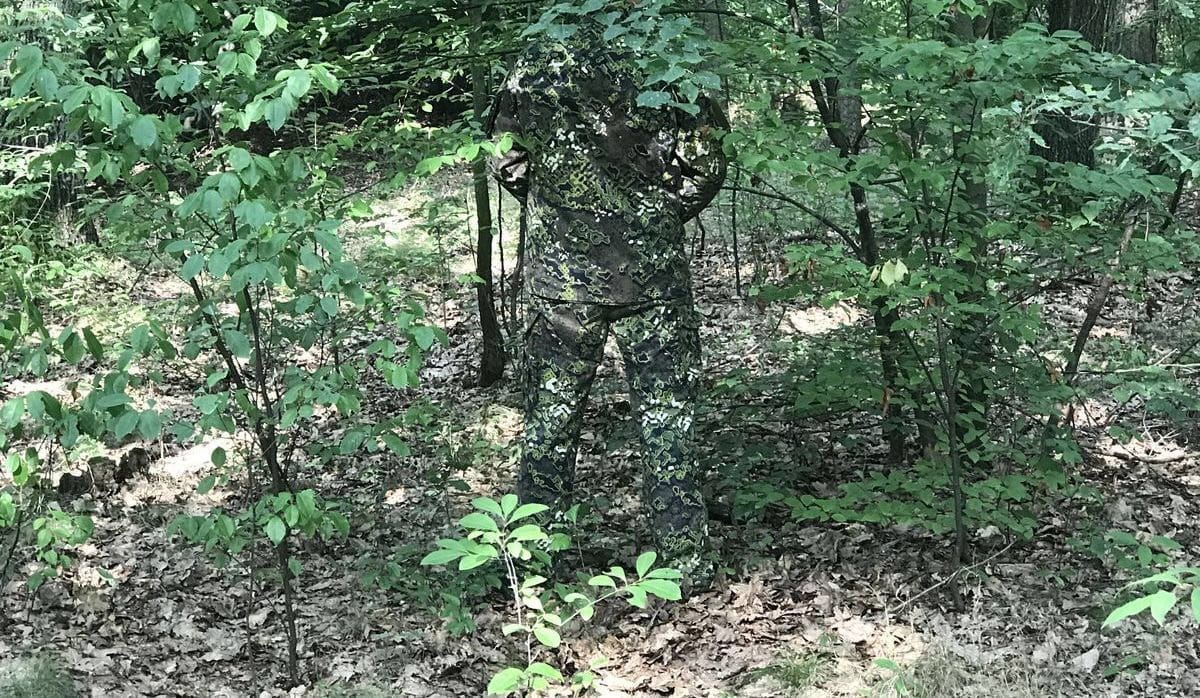
We’ve received a report that the MAPA camouflage pattern we shared back in 2012 is under consideration for adoption by Poland’s Territorial Defence Forces under project code name EICHENLAUB / “LI?? D?BU”. Developed by Mr. Maciej Dojlitko, MAPA (“map” in Polish), the pattern matches the terrain and vegetation of Poland.


Royal Air Force JTACs Integrate with US Counterparts

Monday, August 14th, 2017

MOODY AIR FORCE BASE, Ga. – Members of England’s Royal Air Force recently spent time immersed with the 93rd Air Ground Operations Wing at Moody Air Force Base, Georgia.
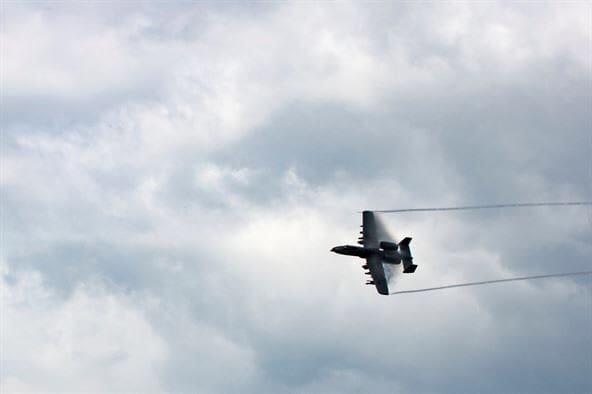

An A-10C Thunderbolt II conducts a show of force maneuver during training, July 26, 2017, at Grand Bay Bombing and Gunnery Range, Ga. The range features a moving target system, which is on a 1,000 foot long track that is remotely controlled by the control tower and can move back and forth to assist in training. (U.S. Air Force photo/Andrea Jenkins)

The NATO allies visiting were Joint Terminal Attack Controllers tasked with building stronger ties with the 93rd AGOW in hopes of future integration opportunities.

“All the missions overseas aren’t integrating just the U.S. Armed Forces, but also our NATO forces,” said Master Sgt. Francisco Corona, the 93rd AGOW NCO in-charge of weapons and tactics. “So all the NATO forces are trying to train with us. I’d rather integrate in (training) where we can make mistakes and learn from them instead of making mistakes in a deployed location.”

Since 2001, U.S. and foreign JTACs have been in high demand as liaisons between Army ground commanders and Air Force assets.
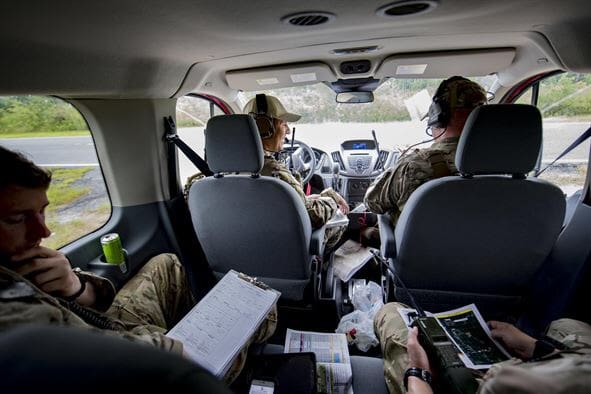

U.S. Air Force and Royal Air Force joint terminal attack controllers communicate with 23rd Fighter Group A-10C Thunderbolt IIs during a close air support training exercise, July 26, 2017, in Lakeland, Ga. Two Royal Air Force members recently spent time with the 93rd Air Ground Operations Wing to compare and contrast how each entity conducts business and to plan future coalition training events. (U.S. Air Force photo/Airman 1st Class Daniel Snider)

“As air-to-ground experts, we advise, assist and control for the ground commander to meet his intent, whether its kinetic effects, like bombs on targets, or getting smarter at cyberspace,” said Corona.

Both groups of JTACs said they’re no stranger to operating in coalition settings while deployed.

“While I was a JTAC in Afghanistan, the vast majority of our aircraft were U.S. aircraft,” said Squadron Leader Neil Beeston, the officer commanding Air Land Integration Cell. “It was great working with the U.S. Armed Forces, especially with the A-10s; it’s a fantastic aircraft. The troops on the ground know that when you’ve got a pair of them above you, you’re in pretty safe hands.”

While the JTACs and U.S. aircraft are skilled professionals, sometimes communication barriers exists between countries. Beeston’s colleague stressed the importance of hashing out common issues.

“The whole worldwide JTAC community has the same struggles,” said Flight Sergeant Simon Ballard, the chief instructor from the ALIC. “Since we’re going to be working together, we need to practice together before we go do that in the real world.”

Not having the allied JTAC community in sync and on par with each other could potentially lead to less-than-optimal situations, which in turn risks lives.

“We don’t want to learn how to work together in a war area of operations,” said Corona. “We’re flexible though, whether it’s [English] JTACs or whatever joint force JTACs, we make things happen and we’ll make it work.”
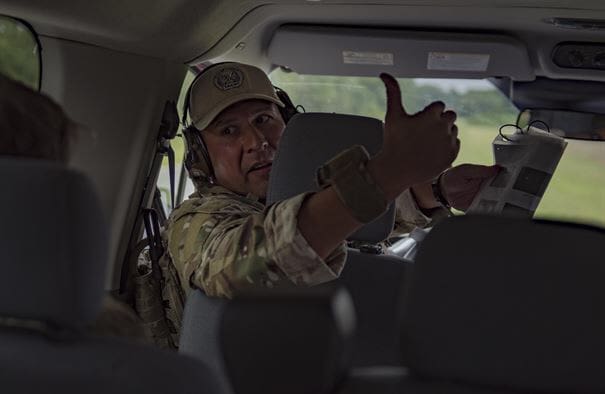

MSgt Francisco Corona, the 93rd Air Ground Operations Wing NCO in charge of weapons and tactics, communicates with a fellow Joint Terminal Attack Controller during a close air support training exercise, July 26, 2017, in Lakeland, Ga. Two Royal Air Force members recently spent time immersing with the 93rd Air Ground Operations Wing to compare and contrast how each entity conducts business and plan future coalition training events. (U.S. Air Force photo/Airman 1st Class Daniel Snider)

After the gathering, troops returned to their leadership with proposals and plans to further integrate training scenarios, whether it be academic courses or mixing into each country’s exercises to further synchronization.

“The bonus for them is they’d be integrating with different Army divisions because the 93rd AGOW is spread over at least six Army divisions,” said Corona. “They’d get that opportunity, where there’s not many divisions they work with over in [England].”

While Corona is confident in U.S. JTACs, he said it’s all about continuing to get better, to maintain leading from the front.

“We’re figuring out how we go to the next level to continue to be the best JTACs in the world,” said Corona. “We’re going forward with a proficiency mindset, of ‘how do we get better,’ because at the end of the day, the better trained individuals are going to be the winners.”

By Airman 1st Class Daniel Snider, 23rd Wing Public Affairs

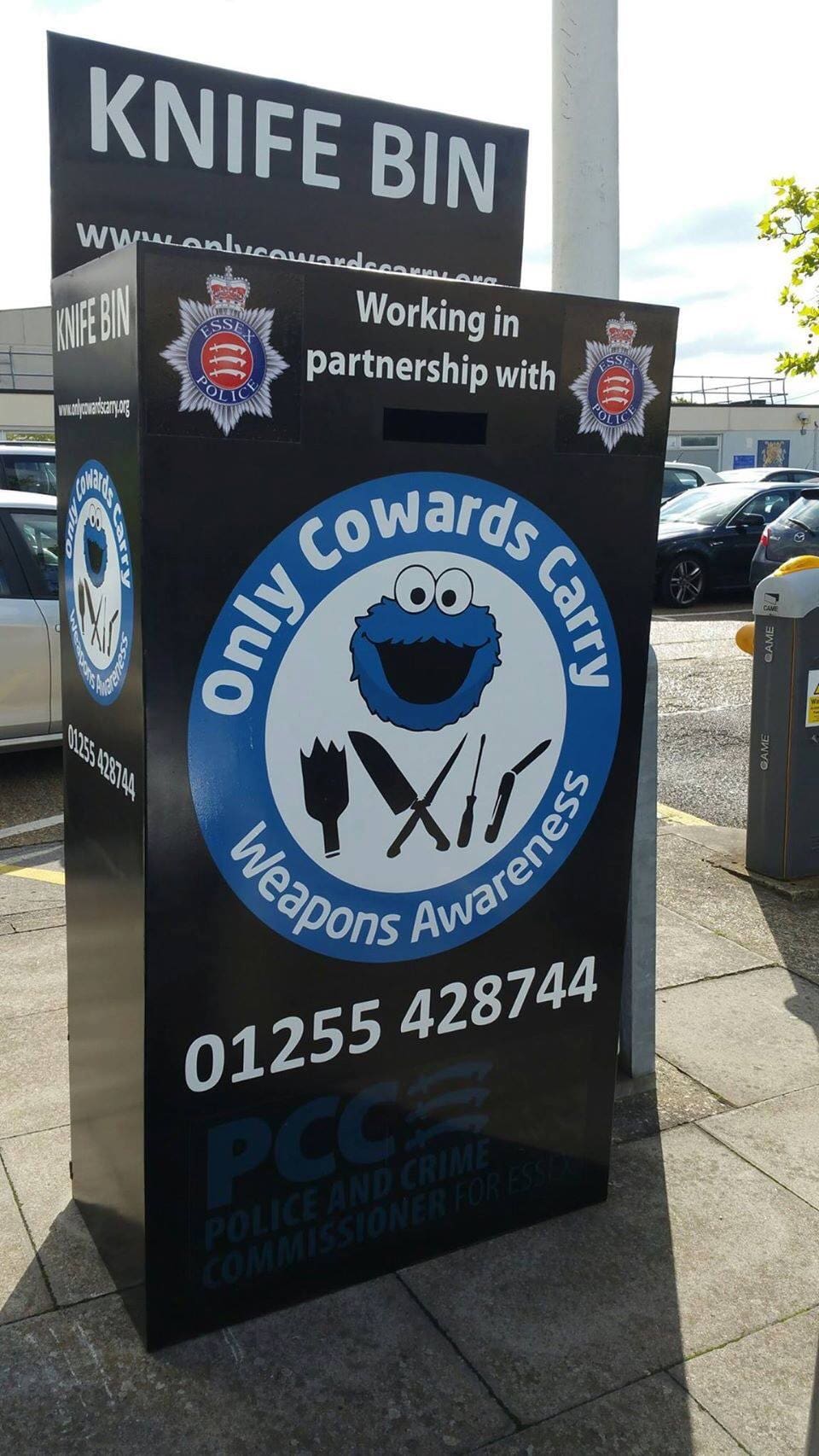
This Is Real

Saturday, August 5th, 2017

It is located outside of the Harlow Police Station in Essex. The photo wasn't taken by a concerned party, aghast by the shear existence of such a device, but rather was posted to Facebook by the Essex Police, who are quite proud.

Operational Use Of Russian K2 Exoskeleton

Wednesday, August 2nd, 2017

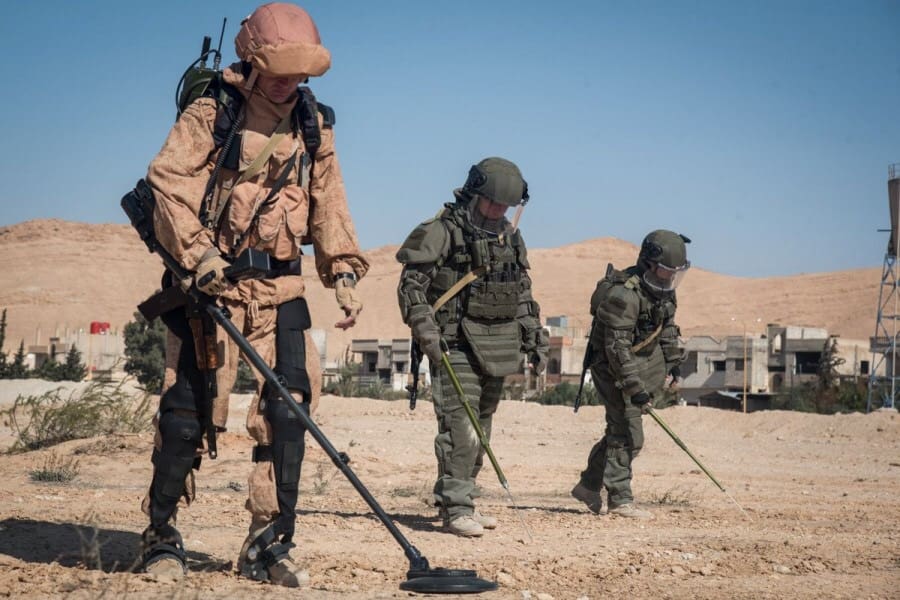
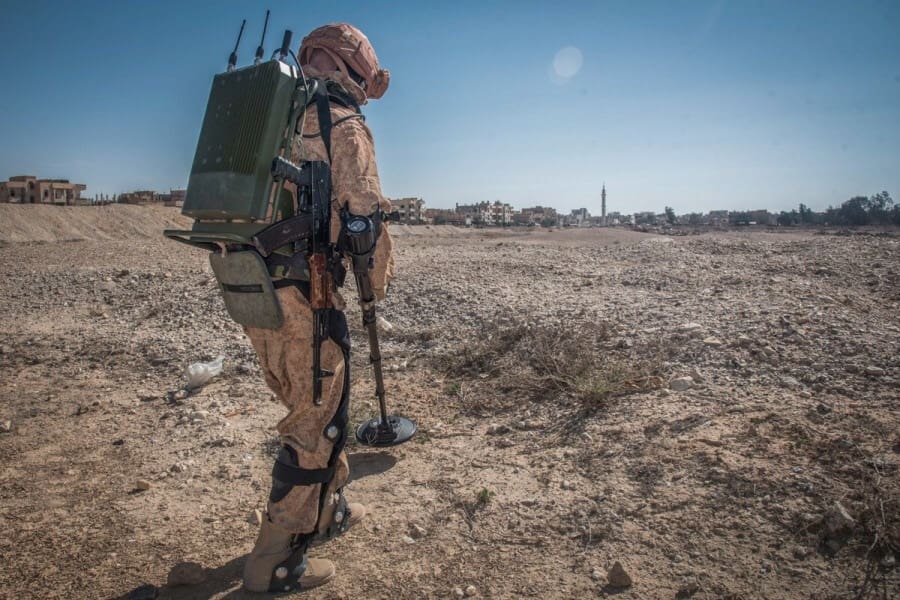
Over the past few weeks we've shown you the Mawashi UPRISE Tactical Exoskeleton as well as a model under development by the US Army, called the Warrior Web physical augmentation suit. Both are unpowered with the commercially developed Mawashi product much closer to operationalization. We suggested during our coverage of the Army program that our troops may well face foes equipped with unpowered Exoskeletons long before the Army version was ready for use. As we now have evidence of Russian Sappers using the K-2 unpowered Exoskeleton during mine clearing operations in Syria, the probably Of that prediction just went up.



Weight 2 kg, the K-2 will support up to 50 kg, and like the UPRISE, the load is transferred down the spine, into the lower extremities and to the ground through a plate in the footwear.

Here are some demonstration videos.