Danner Reckoning GTX

Archive for the ‘International’ Category

Canadian Armed Forces Selects Avon Protection MITR-M1 Half Mask

Wednesday, May 13th, 2026

13th May 2026, Melksham, UK: The Government of Canada has awarded Avon Protection a five-year contract for the MITR-M1 Half Mask, MITR-PF Compact Particulate Filter, and accessories. The contract provides a framework agreement under which the MITR-M1 Half Mask and MITR-PF can be ordered for the Canadian Armed Forces.

With this contract, Canada has become the first FVEY nation defence force to award a contract for the MITR-M1 Half Mask, ensuring its personnel are equipped with a lightweight, flexible respiratory solution for tactical low- to mid-level threat environments.

Designed for fast-evolving operational scenarios that are unsuited to single-use face masks or full-face respirators, the MITR-M1 can be carried in cargo pockets or gear pouches and donned in seconds. It gives the wearer protection against respiratory particulate contaminates such as explosive gunfire residue; as well as oil and non-oil based contaminates such as lead, asbestos, fentanyl and lubricant mist. These contaminates are commonly found in tactical environments, from crowd control operations to high-risk interventions, and are known to have a detrimental effect on the respiratory health of personnel. 

CE and NIOSH-certified, MITR-M1 Half Mask integrates seamlessly with ballistic and bump helmets via a strap or clip system, as well as tactical systems including night vision goggles, eye and hearing protective devices. With a sleek flush-fitting curved profile, the wearer retains weapon sighting ability and maintains communications via voice amplification/projection units.

The MITR-M1 Half Mask has been deployed in a range of operational settings with customers identifying its use for respiratory protection against a wide range of particulate hazards including explosive gunfire residue, lead, asbestos, fentanyl and riot control agents both during training and live operations. Its versatile protection has made it a trusted choice for organisations facing a range of airborne hazards in dynamic and high-risk environments.

“The research is clear: long term exposure to airborne particulate hazards is a major contributing factor to the negative health effects being experienced by military operators in later life,” Steve Elwell, President, Avon Protection, said. “In selecting the MITR-M1 Half Mask, the Canadian Military is focused on protecting the health of its operators so they can do their jobs and get home safely.

“MITR-M1’s convenient and low-burden respiratory protection is redefining protection levels for this fast-evolving market, and we look forward to seeing this system enter service with Canada’s world-class defence force.”

Salaknib 2026: 25th Infantry Division, Multinational Allies Launch JPMRC-X in the Philippines

Tuesday, May 12th, 2026

FORT MAGSAYSAY, Philippines— The U.S. Army’s 25th Infantry Division, in close partnership with the Armed Forces of the Philippines and multinational allies, has officially commenced the Joint Pacific Multinational Readiness Center-Exportable exercise.

Operating as Part II of the bilateral Exercise Salaknib, JPMRC-X runs from May 8 – 20, 2026. This rotation brings a premier, immersive combat training center experience directly into the Indo-Pacific theater, allowing forces to train in the complex, archipelagic environments where they operate.

“Our alliance with the Philippines is steeped in history for over 75 years as the oldest treaty ally,” said New Zealand Army Col. Aidan Shattock, deputy commanding general for interoperability of the 25th Infantry Division. “This is playing out with deep trust and understanding as we rehearse together during Operation Pathways.


During JPMRC-X, the 25th Infantry Division will execute complex, multi-domain operations. The exercise is designed to strengthen the division’s tactical proficiency and partner interoperability through tough, realistic training conducted across diverse and challenging terrain.

The training rotation will feature the 25th Infantry Division’s role as the spearhead of Army modernization. Participating units will leverage human-centered technology, including the integration of Unmanned Aircraft Systems to enhance situational awareness and the fielding of the Army’s Next Generation Squad Weapons the M7 rifle and M250 automatic rifle to advance squad-level modernization and mission effectiveness.

“Exercises like JPMRC-X demonstrate our enduring commitment as the land partner of choice, strengthen our allies, and deter aggression together,” Shattock added.

In addition to bilateral operations with the Philippine Army’s 7th Infantry Division, JPMRC-X features the integration of multinational partners, including forces from Australia, New Zealand, and Japan. This international coalition demonstrates a united, enduring commitment to maintaining a free and open Indo-Pacific region.

All operations during JPMRC-X are conducted in close coordination with the Philippine government and local officials to ensure the safety of the civilian population and promote the strong, enduring US-Philippine partnership.

Salaknib highlights the enduring U.S.-Philippine alliance, enhancing interoperability and readiness through combined arms operations, multi-domain integration, and humanitarian assistance efforts for regional stability.

Saab Strengthens RBS 70 NG with New Bolide 2 Missile

Monday, May 11th, 2026

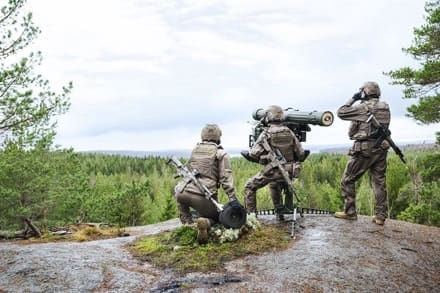
Saab has launched the new Bolide 2 missile for the RBS 70 short-range air defence missile system. Bolide 2 brings a larger warhead and better terminal flight performance for superior capability, and an improved modular design to allow for future updates.

Bolide 2 retains the unjammable guidance method used by RBS 70 with its previous missile generations. Deliveries are starting in 2027 and this new missile will become the standard ammunition for RBS 70 NG.

“With Bolide 2 we are ready to provide our customers with an even more capable missile, ready to be adapted for any new threats in the sky. RBS 70 users can benefit from improvements including a more powerful warhead, whether they are operating in the man-portable role or, as is increasingly common, from a vehicle firing unit,” says Stefan Öberg, head of Saab’s business unit Missile Systems.

Bolide 2 can be fired from the latest RBS 70 NG or prior generations. A series of successful test firings have already been conducted as part of the missile’s development. 

Rheinmetall and Telekom Plan to Develop a Drone Defence Shield

Monday, May 11th, 2026

•    Hybrid threats from drones and sabotage are increasing
•    Multi-threat protection aims to secure critical infrastructure
•    Rheinmetall and Telekom combine their expertise to deliver effective protection
•    Joint presentation at the AFCEA security trade show starting May 12, 2026, in Bonn

Rheinmetall and Telekom plan to jointly develop a defence shield against drones and acts of sabotage. The companies intend to work together to protect cities and critical infrastructure across Germany. They reached this agreement ahead of the upcoming AFCEA security technology trade show in Bonn.

The current geopolitical situation has placed the protection of critical infrastructure (KRITIS) in sharp focus. Hybrid threats from sabotage and drone activity are steadily increasing. In response, the companies are pooling their expertise.

The partners aim to develop capabilities and technologies to counter a wide range of potential attacks on KRITIS sites—a multi-threat protection approach. This includes cybersecurity technologies as well as physical site protection, commonly referred to as perimeter security. Further details of the collaboration will be announced at a later date.

Armin Papperger, CEO of Rheinmetall AG, says: “The threat posed by drones is highly digital. This is why effective defence requires a combination of sensors, effectors, and secure communication networks. Rheinmetall and Deutsche Telekom bring together precisely these capabilities.”
Tim Höttges, CEO of Deutsche Telekom AG, says: “Sovereignty is achieved not only through discussion but through action. Telekom is taking responsibility: With our expertise in connectivity, cloud, and data analytics, we are elevating drone defence to a new level. Together with Rheinmetall, we are strengthening sovereignty and helping to alleviate public concerns.”

Telekom detects drone flights during the European Football Championship in Germany
Since 2017, Telekom has been a system partner to government agencies and companies in the field of drone security. The Group has already secured critical infrastructure, facilities, and major events against drones both in Germany and abroad. For example, Telekom successfully and reliably detected illegal drone flights on behalf of the police during the 2024 European Football Championship.

Drone detection and defence are technically demanding. Depending on the location and terrain, different sensors are more suitable. Since 2017, the company has therefore tested a range of sensors from international manufacturers in customer projects and field trials at international and regional airports such as Tannheim in Baden-Württemberg, integrating them into its product portfolio. Telekom continues to advance its technical capabilities in drone defence and its sensor suite. Today, video, audio, radio frequency (RF), Remote ID, and drone radar sensors are used in customer deployments.

RF detection proven in customer deployments
Most drones on the market are flown within visual range using a radio remote control. Drones and controllers communicate via radio frequency (RF). RF sensors can detect these signals—and thus the position of both drone and controller. RF is considered one of the most common methods in drone detection. RF sensors currently make more than 90% of all drones in low-altitude airspace detectable.


The RF sensors used by Telekom operate passively and do not transmit an active search signal. This allows them to be installed on cell towers without interfering with sensitive mobile communications technology. According to Telekom’s customer experience, RF sensors mounted high on cell towers have proven particularly effective in densely built-up urban areas.

Rheinmetall: Specialist in drone defence and autonomous systems
Rheinmetall is one of the world’s leading systems providers in air defence—including close-range and short-range applications. Effectors from the Düsseldorf-based technology group are currently in use in Ukraine and the Middle East. In addition, Rheinmetall is a specialist in autonomous systems across all domains—land, sea, and air—including drones and airborne reconnaissance systems. The Group also develops sensor and data processing technologies used in both civilian and security-related applications.
In December 2025, Rheinmetall, the Hamburg Police, and the Hamburg Port Authority (HPA) agreed on a strategic partnership to further develop drone detection and defence concepts for the Port of Hamburg. The focus is on developing forward-looking technologies to protect maritime, civilian, and critical infrastructure. 
From a technical standpoint, the Port of Hamburg is considered a particularly challenging environment: diverse radio sources, maritime conditions, and dense infrastructure place high demands on detection systems. As a leading industry partner, Rheinmetall contributes its expertise to this alliance to develop tailored solutions for complex threat scenarios, forming part of a supraregional security strategy.
More drones are flying via mobile networks
A new challenge arises from drones controlled via mobile networks. While the vast majority of pilots use RF and a remote control, the number of drones operated via cellular networks is increasing. Real-world applications in Germany and abroad show that both commercially available and homemade drones are increasingly being controlled via mobile networks. Telekom is collaborating with Helmut Schmidt University/University of the Federal Armed Forces Hamburg (Uni-Bw: Universität der Bundeswehr) to research how these drones can be located.

Mobile network becomes a large-scale radar system
In the future, the mobile network itself will act as a sensor—a large-scale radar system—by detecting changes and anomalies in data traffic that indicate drone control or communication. This will make drones visible to emergency responders, for example in temporary no-fly zones. The basis for this is the 5G standalone high-performance network installed by Telekom on the Uni-Bw campus, based on Ericsson technology.

Drone violations constitute serious interference with air traffic
Controlling drones via mobile networks is not yet widespread in Germany. By law, pilots must keep their drone in sight at all times (line of sight). Those who operate drones beyond visual range often do so for commercial purposes, such as inspecting power lines or pipelines. These pilots must apply for permission to fly. Anyone who does not apply but still controls a drone via mobile network is committing a criminal offence.
Drone flights in restricted areas are by no means a minor offence comparable to a speeding violation, but a dangerous interference with air traffic. Despite repeated police warnings, many continue to fly recklessly beyond visual range, risking unexpectedly severe penalties. Telekom systems have already pinpointed prohibited drone flights on a large scale at the request of customers, enabling emergency responders to locate pilots quickly.

RAF Regiment Counter-UAS: Defending the Airspace and Turning Threat into Intelligence

Saturday, May 9th, 2026

A modern threat, a measured response. Across the world, the use of small, often commercially derived drones has become a defining feature of modern conflict. Cheap, adaptable and increasingly capable, these systems are used for surveillance, targeting and attack by both state and non-state actors.

In response, the RAF has developed a layered Counter-Unmanned Aerial System (UAS) capability, delivered on the ground by specialist RAF Regiment teams. Their role is clear: detect, track, identify and defeat hostile drones – while exploring opportunities to gather intelligence where possible.

How RAF Regiment Counter-UAS operates 

RAF Regiment Counter-UAS capability forms part of a wider UK and coalition air defence system. At its core are systems such as ORCUS, Ninja and Rapid Sentry, designed to address the full spectrum of drone threats.

Detect and track 

  • Sensors, including radar and radio frequency (RF) systems, are used to detect and track drones operating at low level and often provides the location of the drone operators
  • These systems help build a recognised air picture in complex environments

Identify and assess

  • Operators analyse signal data, flight behaviour and patterns and visually identify threats using an Ultra Long Range Electro Optical Surveillance System (or Daylight and Thermal Imaging Camera) 
  • This enables rapid assessment of whether a drone is benign, unknown or hostile 

Defeat or disrupt 

  • A mix of electronic warfare and, where required, kinetic options are used to counter the threat 
  • Electronic systems can interfere with the communications links used by many drones 

Can they take control of drones?

This is where precision matters. RAF information confirms that systems such as Ninja can:

Interfere with or disrupt control links used by many types of drones

Take control of the drone providing multiple options including redirecting the drone and even forcing it into a safe landing

This is not guaranteed in every case, and depends on:

The type of drone

How it is controlled

The operating environment

From threat to intelligence opportunity

Where a drone can be safely brought down and recovered intact, it becomes more than a neutralised threat.

Recovered systems may allow:

Analysis of onboard data and components

Insight into operating methods and technical capabilities

Potential understanding of launch points or networks involved

This turns a defensive action into an intelligence advantage – informing future operations and improving force protection.

Operational context: the Middle East 

RAF Regiment Counter-UAS teams No. 2 Counter-UAS Wing, have been deployed across the Middle East in support of UK and coalition operations.

Their role includes:

  • Protecting personnel, aircraft and infrastructure 
  • Countering persistent drone threats from hostile actors 
  • Contributing to a coordinated, coalition-wide air defence effort 

Part of a layered defence system 

Counter-UAS is one layer within a broader RAF approach: 

  • Ground-based air defence (RAF Regiment) – countering drones and low-level threats 
  • Combat air – providing high-end air dominance and response 
  • ISR and enablers – delivering intelligence, surveillance and operational coordination 

Together, these elements create a layered defence system capable of responding across the full spectrum of aerial threats.

RAF Regiment Counter-UAS operations reflect a deliberate shift in modern warfare:

  • From simply destroying threats 
  • To understanding, disrupting and, where possible, exploiting them 

Crucially, official RAF language is careful and precise: 

  • Control of hostile drones is possible in some cases, not all
  • Safe landing and recovery is conditional, not routine and the capability to destroy hostile drones using kinetic effects remains if they remain a threat

That realism underpins a capability that is both credible and operationally effective.

Bottom line

RAF Regiment Counter-UAS teams are delivering a critical role in today’s operational environment:

  • Protecting UK and allied forces from evolving drone threats
  • Denying adversaries freedom of action in the airspace
  • And, where conditions allow, turning hostile systems into valuable sources of intelligence

In a battlespace where drones are constant, control – when achievable – becomes a decisive advantage.

See Hudson Supplies at OTAB’s Canadian Tactical Conference

Friday, May 8th, 2026

Hudson will be exhibiting at Ontario Tactical Advisory Body’s Canadian Tactical Conference, May 13-14 at the Blue Mountain Conference Centre.

Streamlight TLR-7 X Selected as Standard Issue Pistol Light by Canadian Federal Police

Thursday, May 7th, 2026

EAGLEVILLE, PA, May 5, 2026 – Streamlight® Inc., a leading provider of high-performance lighting and weapon light/laser sighting devices, announced that its TLR-7® X weapon light is included in a $39 million CAD contract awarded to Canadian distributor Rampart Corporation to supply Canadian Federal Police with a new duty pistol system.

The new system includes the Glock 45 MOS 7 pistol, the TLR-7 X, a red dot sight, and duty holster. It is expected to be widely deployed across Royal Canadian Mounted Police personnel, Canada’s primary federal police force. Rampart was awarded the contract following a competitive procurement process led by Public Services and Procurement Canada. 

Designed to maximize visibility and targeting capabilities in a variety of tactical applications, the exceptionally lightweight TLR-7 X delivers 550 lumens for extreme brightness. It features a special optic that produces a concentrated beam while also optimizing peripheral illumination. It also features switches that can be customized to match users’ shooting styles.

“Streamlight is deeply honored that the TLR-7 X has been selected as the issued pistol light of the Royal Canadian Mounted Police,” said Streamlight Regional Sales Manager – Brian Osborn. “This milestone reflects not only our commitment to excellence in professional lighting, but also the tremendous partnership and hard work over several years with our sales agency representatives at Kolder Canada and Rampart International. We are proud to provide the RCMP with our lighting solutions and to support the law enforcement professionals who serve and protect their communities.”

Galvion Invests in Sentinel Photonics to Accelerate Frontline Laser Threat Protection

Wednesday, May 6th, 2026

Farnborough, UK, 6th May 2026Galvion, a leader in integrated soldier systems, has announced a strategic investment in Sentinel Photonics to accelerate the deployment of advanced laser detection and protection technologies to allied forces.

The partnership combines Sentinel’s operationally proven laser threat detection and protection technology with Galvion’s expertise in soldier system integration and its global defence relationships. 

The investment will support continued product development and the integration of laser defence capabilities into soldier systems and broader defence platforms. It is also expected to deepen North American engagement with laser defence as a critical capability for NATO and coalition forces operating in contested environments. 

Christoper Burgess, CEO at Sentinel Photonics, says, “Laser threats are already active across multiple theatres, and demand for effective detection and protection is increasing quickly. Partnering with Galvion allows us to speed up the integration of laser awareness into soldier systems and allied platforms, and get proven capability into the hands of warfighters faster.”

Jonathan Blanshay, Executive Chairman at Galvion, comments, “Galvion is focused on enhancing the performance and survivability of the world’s most demanding military and tactical teams. With Sentinel, we can give frontline operators earlier warning of hostile laser activity, protecting them and their equipment while maintaining mission effectiveness.”

Both Sentinel Photonics and Galvion have deployed systems in operational theatres across multiple allied nations, providing these capabilities to personnel and platforms operating in high-threat environments.