FirstSpear

Archive for the ‘International’ Category

Tactical Photonics Presents Europe’s Most Precise Laser Targeting Payload for Drones, Free of US Export Controls

Thursday, June 18th, 2026

At under 2 kg and nearly half of the cost of US equivalents, it is the most accurate European payload in its class with the longest targeting range, designed for off-the-shelf integration across drone platforms.  As Russia’s GPS jamming spreads across the region, laser designation offers the only targeting solution that does not rely on GPS at all.

June 17, 2026 – Vilnius, Lithuania. When GPS guidance fails, a drone can drift off course by as much as 100 km. Over the last month, at least six drone incidents across Europe have been linked to GPS jamming and spoofing – and the problem is spreading. For ordinary Europeans, it means air raid sirens, evacuation orders, and, in Romania’s case, waking up to a drone embedded in your apartment building.


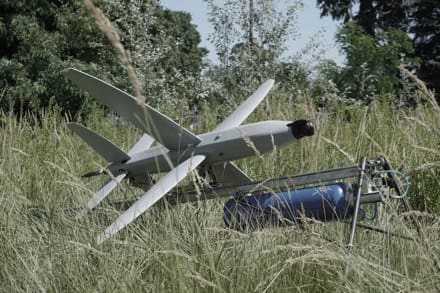
3D-printed plastic prototype of a payload mounted on a real-size drone, Eurosatory 2026 (Source: Tactical Photonics )

Russian electronic warfare (EW) demonstrated the scale of this problem when Ukrainian strike drones were diverted across the region within 48 hours, one striking the chimney of an Estonian power plant.

When a drone is knocked off its course, it does not stop flying. It can wander hundreds of kilometers and deliver whatever payload it carries wherever it happens to land.

However, Europe has an emerging solution to this. Current targeting systems rely on GPS or radio links, both of which Russian jamming has shown it can disrupt. Laser targeting designators don’t need GPS at all. They  work on fundamentally different principle: light cannot be intercepted or spoofed. Until now, similar high-tier systems had to be acquired through US-based companies, controlled by the US authorities.

Tactical Photonics, part of Aktyvus Photonics Group, is changing that by presenting the most accurate laser targeting payload in its 2 kg class, with the longest targeting range. To do so, the company joined forces with Lithuanian talents and built a separate entity powered by Aktyvus Photonics laser technology. A key benefit of laser designation is precision strike capability – ensuring guided munitions hit exactly where intended.

The payload functions as a laser designator, it marks targets with a laser spot, which laser-guided munitions then home in on to strike with precision. The payload does not carry or launch munitions itself, but determines exactly where they land.

“We built this because we were asked to – by Ukrainian and Baltic national forces. Europe has invested billions in the next generation of tactical drones, but it has not solved the targeting problem. And the payload is usually what determines whether the drone is useful or not,” says Laurynas Šatas, CEO of Aktyvus Photonics Group.

“Lasers are key here, as they turn a surveillance drone into a precision strike platform, and these are still US-made, ITAR-controlled, and out of reach for programmes that cannot wait for a US State Department approval. There were no commercially viable companies in Europe providing laser payloads, and we intend to change that.”

According to the company, the payload weighs under 2 kg and is designed to hit small moving targets at ranges beyond 3 km. This is enabled by 4-axis mechanical stabilisation – a critical differentiator in this class of system. Most payloads in this weight category rely on 2-axis stabilisation and digital image processing, which limits both range and accuracy. Four mechanical axes maintain a stable targeting lock on small moving targets even as the drone itself manoeuvres, replicating the performance of much larger systems in a fraction of the weight.

4 axes. 3 km range. 2 kg. 1 system. For comparison, the equivalent US system from L3Harris WESCAM weighs approximately 15 kg and costs two times more. With this component, a drone can guide the full range of laser-guided STANAG 3733 NATO munitions.

Beyond precision, the system significantly increases situational awareness for the operator. It enables forces to operate beyond line of sight (BLOS), requires less crew training than comparable systems, and is designed for rapid deployment across multiple drone platforms.

“Military experts ask how can a European company build this better and cheaper than established American suppliers. Well, the answer is where we come from. Lithuania has been a global hub for laser science for decades. Some of the world’s leading laser companies were and are being built here. We have extremely well-trained scientists and engineers. The knowledge is here, the supply chain is here, and the cost base reflects that. It is not a surprise that this technology gets cheaper when it is built in the country that helped invent it,” adds Šatas.


The system is compatible with fixed-wing drones and helicopter-type drones. It can also work alongside loitering munitions – which carry a SAL seeker that homes in on the laser-marked target, rather than marking targets themselves.

European defence investment grew by 14% last year, faster than any other continent, reaching €739 billion, the steepest climb since the 1950s and double the level of a decade ago.

“As spending increases, Europe needs to become more independent in every area and own different parts of the supply chain,” continued Šatas.

“We are not building drones. We are building the part that determines how precise a drone can be, and making that part available in Europe at a price and scale that procurement officers can actually work with.”

The payload made its public debut at Eurosatory 2026, one of the world’s leading defence and security exhibitions, displayed on a small drone at the Lithuanian national stand. Production is set to scale to 600 units per year from 2027.

INEOS Grenadier Delivers for the UK Ministry of Defence (MOD)

Thursday, June 18th, 2026

We have joined forces with military vehicle specialists SMT Defence and New Military Solutions to form Team Grenadier, a UK-anchored industrial collaboration. The partnership delivers on the core requirements of the MOD’s Light Mobility Vehicle programme, by combining a world-leading 4X4 vehicle platform with deep-rooted special operations and systems integration expertise.

At the heart of the programme is the Grenadier — a purpose-built, highly durable vehicle designed for exceptional reliability and off-road performance. Its ladder-frame chassis, permanent four-wheel drive, beam axles and high payload capacity provide a robust foundation for military adaptation across multiple roles and operating environments.

The Grenadier Multi-Role Light Vehicle is one of nine applications showcasing the versatility of the platform, which is already supporting fire, police and rescue services in highly demanding conditions around the world.

Engineered to be robust, adaptable and easy to maintain, it’s a vehicle designed to keep working when it matters most.

Built to adapt. Built to work. Built for more.

ineosgrenadier.com

Marconi Technologies Selected to Deliver Orion X650 Tactical Radios to Polish Military

Wednesday, June 17th, 2026

Capability will deliver secure, mobile connectivity on NATO’s eastern flank

MONTREAL, Canada —Tuesday, June 16, 2026 — Marconi Technologies and Polish defense integrator Enamor International have been selected to deliver Orion X650 high-capacity MANET radios to the Polish military, providing a survivable, mobile backhaul for 5G-enabled communications. Multi-year deliveries will begin later this year.

The contract directly supports Poland’s defense investment priorities under the EU’s Security Action for Europe (SAFE) instrument, accelerating the country’s military modernization along NATO’s eastern flank. 

The Orion X650 is a sixth-generation software-defined tactical radio built for high-throughput communications in contested environments. It’s designed for missions demanding frequency agility and survivability, whether on the move or at the quick halt. With four RF ports, it can be configured as either two independent radio channels – replacing two networked radios – or a single channel supporting 4×4 MIMO to maximize performance and resilience. Its ruggedized design ensures reliable operation across air, land and sea. 

For the Polish defense forces, the X650 will serve as the data transport backbone connecting 5G-enabled C2 nodes, extending mobile broadband capability to forward and dispersed units while maintaining resilience against electronic warfare threats.

“Poland’s commitment to building sovereign, resilient defense capabilities matches our outlook as a Canadian-headquartered company,” said Alain Cohen, CEO of Marconi Technologies. “Selecting our Polish partners Enamor International to deliver the Orion X650 on NATO’s eastern flank is not simply a contract win for both companies; it is a statement that like-minded allies, investing seriously in their own defense, can find real partners across industrial bases.” 

The selection follows extensive in-country trials, during which Orion radios operating on drones, vehicles, and fixed positions validated interoperability, throughput, and operational flexibility across dispersed locations throughout Poland. 

The partnership between Marconi and Enamor International positions both companies to support Poland’s broader tactical communications modernization as SAFE-funded programs advance through 2030.

Milrem Robotics Demonstrates Robotic C-UAS and Combat Systems for Eastern Flank Defence at Eurosatory 2026

Tuesday, June 16th, 2026

At Eurosatory 2026, Milrem Robotics, the world’s leading robotics and autonomous systems developer, is showcasing systems designed to counter drone threats and support a layered, unmanned-first approach to modern warfare.

Building on its Robotised Eastern Flank Deterrence Initiative (EFDI), the company highlights that unmanned ground systems with integrated sensors and Counter-UAS capabilities can form a persistent defensive network in which robotic platforms assume the most dangerous roles.

“At Eurosatory 2026, we are showcasing how robotic and autonomous systems are becoming a central element of modern layered defence. Integrated unmanned platforms equipped with Counter-UAS, surveillance, and combat capabilities enable armed forces to extend operational reach, sustain high-readiness operations, and reduce soldiers’ exposure to frontline threats,” said Stefan Behre, Chief Sales Officer at Milrem Robotics.

At the centre of the display is ARCOS, the Autonomous & Robotic Control Suite, Milrem Robotics’ modular command-and-control system enabling the coordinated operation of unmanned systems and payloads. ARCOS is designed to integrate into broader battle management architectures, enabling synchronised operations across unmanned and manned forces.

Connected through ARCOS, the showcased systems demonstrate how autonomous platforms can operate as part of a coordinated defensive network. Among them is the THeMIS unmanned ground vehicle, which, since its deployment to Ukraine in 2022, has been updated with lessons learned.

THeMIS is available in multiple combat configurations, including a dual-Buria remote weapon station configuration developed by Ukraine’s Frontline Robotics for remote fire support, delivering enhanced combat effectiveness while keeping operators at a safe distance.

The system provides mobile, protected fire support to engage enemy positions, support manoeuvre forces, and strengthen defensive operations.

Additionally, Milrem is showcasing THeMIS integrated with EOS’ R400 Slinger Counter-UAS Remote Weapon Station. Equipped with a 30×113 mm cannon and specialised ammunition designed to minimise collateral damage, the system can detect, track, and engage hostile drones at ranges beyond 1,000 metres.

Milrem Robotics is also presenting the HAVOC Robotic Combat Vehicle (RCV), an 8×8 hybrid-electric platform combining mobility, firepower, and advanced mission systems. Equipped with a 30×113 mm cannon with proximity-fused ammunition, SHORAD missile options, and electronic warfare systems, HAVOC is designed to address both aerial and ground threats in contested environments. The platform can also integrate counter-UAS capabilities to support layered air defence operations.

An integrated Elistair Khronos tethered UAV provides persistent overwatch and enhanced situational awareness, enabling continuous surveillance and target acquisition from an elevated position.

Additional integrations showcased at Eurosatory include the TerraHawk RWS by MSI, the Flexible Mission Platform (FMP™) by Moog and KNDS’ modular payload module for ISR, in cooperation with Thales France.

Together, these capabilities demonstrate how robotic systems can deliver sustained surveillance, immediate response, and combat power—supporting a defence model where unmanned platforms absorb risk and extend operational reach.

Hyde Definition Ltd. and WidePlus International Showcase New PenCott-GreenZone Camouflage Fabrics at Eurosatory 2026

Tuesday, June 16th, 2026

New range of fabrics in production and ready to order

Paris—15 June 2026—Hyde Definition and WidePlus are proud to announce that the new range of mil-spec, nIR-compliant, PenCott-GreenZone® camouflage fabrics at WidePlus’s Eurosatory booth – Hall 5B-A38.

First announced at Enforce-Tac 2026, the new range of fabrics is now in production and WidePlus are ready to order from stock. Having been absent from the market for far too long due to global supply chain issues, Eurosatory marks the exciting return of this legendary British-designed camouflage pattern, which is ideal for European homeland operational environments.

Driven by customer feedback and market demand, Hyde Definition and WidePlus are proud to present this new range of GreenZone® fabrics.

• 50/50 N66 nylon-cotton ripstop

• 500D nylon with DWR and back-coating

• 4-Way Stretch nylon-spandex

• Single Jersey Polyester Knit

• 50D lightweight plain weave nylon

• 500D nylon with DWR or pure finish (by special request – MOQs apply)

Additional PenCott colorways and fabrics are also in development.

——

For further information about GreenZone fabrics and prices:

sophia@wideplustex.com

For more information about the PenCott camouflage series:

www.PenCottcamo.com

Savox Launches MissionCore to Transform Fragmented Battlefield Data into Actionable Awareness

Monday, June 15th, 2026

Espoo, Finland – 12 June 2026 – Savox Communications, a global leader in mission-critical communications and hearing protection solutions, today announces Savox MissionCore, an open and interoperable mission platform ready for new or existing battlefield networks to modernize with limited disruption. Based on a software-defined modular, IP-based architecture, MissionCore integrates voice, video, and data into a scalable C4ISR solution.

Modern defence operations are being critically constrained by fragmented system landscapes and outdated legacy technologies undermining interoperability, stalling scalability, and preventing the timely integration of actionable data. Savox MissionCore addresses these challenges with an open, modular architecture that orchestrates mission data feeds into a unified operational environment. Fusing fragmented data streams into coherent, actionable awareness, reducing cognitive burden, simplifying integration, and enabling modernization without replacing existing systems.

By combining voice, video, and multisensory inputs, MissionCore enables the transformation of complex information into actionable situational awareness, to empower defense operations to modernize without disrupting existing systems. The platform supports a multi-sensory user interface that uses both audio and visual elements to provide critical information and reduce cognitive load in demanding operational environments.

Unlike closed or system-bound solutions the software-defined IP-based architecture supports VoIP, broadband and narrowband military networks, video feeds and sensors to facilitate integration into battle management and AI systems, aligning with NATO Generic Vehicle Architecture (NGVA) standards and ensures scalability and long-term adaptability.

 The platform is now supported by new Savox system components, including data processing (DPU) and data routing units (DRU), which enable low power, efficient processing routing, and integration of mission-critical voice, video, and data across battlefield environments.

“MissionCore removes the barriers created by fragmented systems,” says Jerry Kettunen, CEO of Savox Communications. “It gives defence forces a unified platform to integrate existing assets, accelerate decision-making, and modernize on their own terms without being locked into closed architectures.”

For more information about Savox MissionCore and our solutions, visit us at Eurosatory in Paris, France, at our booth (Hall 6, Stand G138).

www.savox.com

ACTinBlack Unveils DTNVX Advanced Binocular Night Vision System

Monday, June 15th, 2026

Trusted through years of field deployment, ACTinBlack’s core night vision platform, DTNVS, has established itself as one of the industry’s most respected and combat-proven systems, recognized for its reliability, durability, and performance across demanding mission environments worldwide.

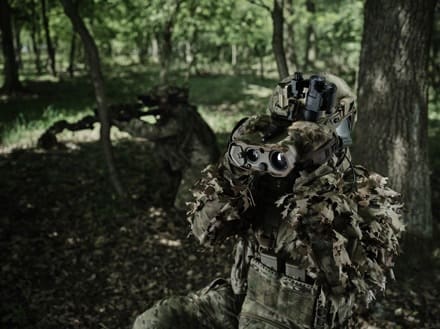
Now, ACTinBlack unveils DTNVX – a modular binocular night vision system designed to expand the proven DTNVS ecosystem with enhanced flexibility, improved ergonomics, and optimized system architecture tailored to evolving operational requirements.

“DTNVS continues to represent a proven and trusted capability within the ACTinBlack product portfolio. With DTNVX, we have built on that proven foundation through close collaboration with professional end users – enhancing adaptability, optimizing the power architecture, and improving overall usability and sustainment while maintaining the reliability and durability expected of a combat-capable night vision system.”

Lumi Ritter, Head of Business Development at ACTinBlack

Designed for modern operational environments, DTNVX reflects ACTinBlack’s commitment to continuous innovation driven by real-world user experience and mission-focused engineering.

KEY FEATURES

Flexible Power Architecture

DTNVX is available in either 1 × CR123A or 1 × AA battery configurations, providing deployment flexibility and simplified logistical support across diverse mission sets. Integrated external power capability enables extended-duration use, delivering a minimum runtime of 22 hours on internal batteries and more than 40 hours when paired with the dedicated external battery pack or compatible external power source.

Mission-Configurable User Programmability

DTNVX enables end-users to configure mission-specific system behavior directly in the field without dedicated programming equipment or external tools. Programmable functions – including automatic power management and activation sequences – can be adjusted to support changing operational requirements and individual user preferences.

PVS-14 Optics Compatibility

Fully compatible with the PVS-14 optics platform, DTNVXsupports long-term sustainment for maintenance, repair, and accessory integration while offering users a broad range of optical configurations, including lightweight 40° FOV to 50° FOV optics.

Lightweight Ruggedized Construction

Combining European electronics with high-strength fiber-composite construction, DTNVX achieves an optimized balance of durability, weight reduction, and ergonomic integration. Its compact, lightweight design minimizes operator burden while maximizing compatibility with modern helmets, mounts, tactical equipment, and soldier systems.

Maintenance-Oriented System Design

DTNVX incorporates a dedicated maintenance interface accessible through the external power connector, enabling runtime diagnostics, advanced configuration access, programmable feature management, and streamlined firmware updates. This architecture reduces maintenance complexity while supporting long-term mission readiness and lifecycle sustainment.

Availability

Further technical information, product demonstrations, and evaluation opportunities are available upon request through ACTinBlack Business Development.

info@actinblack.com
www.actinblack.com

Allen-Vanguard Secures Over $3 Million Worth of New Contracts in Africa

Saturday, June 13th, 2026

Allen-Vanguard, a global leader in Cyber Electromagnetic Activities (CEMA), has secured over $3 million worth of new contracts for its vehicle-based Electronic Countermeasure (ECM) system (3XXX) and highly adaptable man-portable ECM system (SCORPION 2) to enhance the force protection and C-IED capability of two African nations. Allen-Vanguard will be at Eurosatory, Hall 5a – DE345 to discuss all their integrated RF protection products and capabilities to defeat modern threats.

Allen-Vanguard are experts in delivering integrated, platform-agnostic RF electronic warfare, counter-RCIED and counter-UAS solutions. It has over 25 years of operational experience in the design, development and deployment of integrated, platform-agnostic systems tailored to counter evolving threats in high-risk environments. Its capabilities enable the detection, disruption and protection of personnel across complex battlespaces, supporting defence, security and public safety organisations worldwide. Allen-Vanguard combines proven technology with comprehensive training, threat-informed updates and through-life support to ensure sustained effectiveness and mission readiness in high-risk operational scenarios.

Due to the sensitivity and security risks associated with the customer’s theatre of operations, it is not possible to disclose the purchasing nations or specify the deployment plans for this new capability. However, these initial orders are a major force protection capability uplift for the end user. It will deliver enhanced individual, vehicle and vulnerable point protection to security forces operating in high-risk Radio Controlled Improvised Explosive Device (RC-IED) environments and, in addition, help mitigate the increasing threat posed by the use of Uncrewed Air Systems (UAS), such as drones, to conduct aggressive ISTAR activity or deliver lethal effects.

The contracts come with a full support package, including training for users, technicians and mission-fill development. This support includes the deployment of Field Service Representatives to ensure the development of indigenous ECM capability and reach back to the Threat Management Team.

This team of RF experts optimise algorithms specific to the end user’s needs to combat evolving threats specific to their region of operations. This comprehensive wrap-around support maximises the protection offered by the ECM systems, both from a physical capability perspective but also from the essential changes to tactics, techniques and procedures necessary to keep operators safe.

Stuart Wilson, Director Business Development & Marketing at Allen-Vanguard, said: “We have a long history of providing force protection capability to African nations and associated peace-keeping forces, and we are extremely pleased to secure these new contracts to maintain and enhance this important relationship with the region. Unfortunately, the significant threat to security forces in Africa from UXOs, IEDs, RC-IEDs and other RF hazards remains high, and has only been exacerbated by the growing threat from UAS. Our systems are not only market leading in relation to their technology and capability, but our support packages also ensure purchasing nations improve their wider ECM capability and remain updated with the latest algorithms and software to maintain their protection. For this reason, we are trusted and operationally proven with NATO countries and peace-keeping forces globally.”