Wilcox Ind

Archive for the ‘Maritime’ Category

HII/MetalCraft Marine Autonomous ROMULUS USV with HII Autonomy Successfully Passed a Critical DoW Test

Thursday, August 13th, 2026

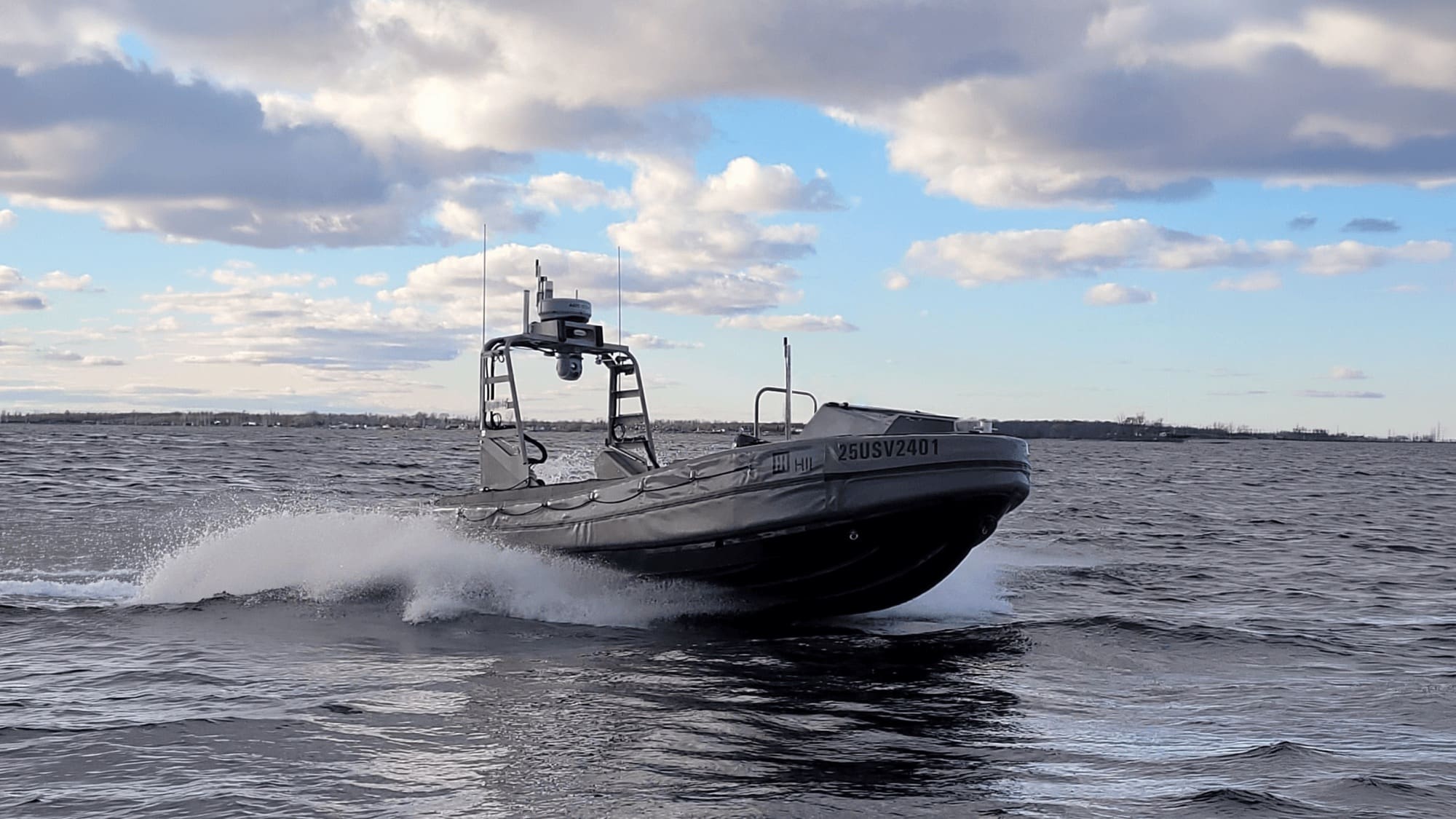
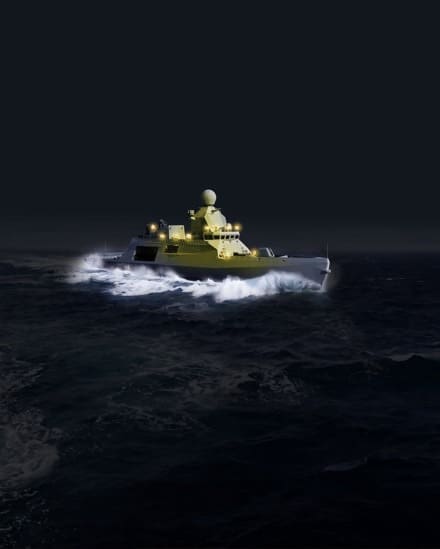
MCLEAN, Va., Aug. 11, 2026 — HII (NYSE: HII) announced that the U.S. Defense Innovation Unit (DIU) has officially recognized the successful completion of the company’s Production-Ready, Inexpensive, Maritime Expeditionary (PRIME) prototype project, featuring the Watcher small Unmanned Surface Vessel (sUSV), which is based on HII’s ROMULUS-25 Unmanned Surface Vessel and powered by HII’s Odyssey Autonomous Control System (ACS).

The DIU recognition follows HII’s delivery and successful sea testing of two autonomous Watcher ROMULUS-25 vessels in December 2025 under a DIU contract to develop smaller-form-factor autonomous surface vessels for the U.S. Marine Corps.

Developed in partnership with MetalCraft Marine, the Watcher sUSV successfully met the program’s technical objectives and is now positioned for a potential transition to production.

HII’s Odyssey ACS modular open systems architecture (MOSA) enables intelligent navigation, mission planning, collaborative behaviors, and multi-domain autonomous operations while allowing operators to rapidly integrate autonomy across multiple vehicle types and increasingly complex missions in contested environments. Its service-based design enables seamless integration with other mission-enabling technologies, enhancing mission effectiveness through AI-enabled contact recognition, identification, and edge-based decision-making.

In a memorandum to HII, DIU stated: “The HII Watcher sUSV has successfully demonstrated its appropriateness to address the Department of the Navy’s operational need for sUSV interceptors, capable of autonomously transiting hundreds of miles through contested waterspace, loitering in an assigned operating area while monitoring for maritime surface threats, and then sprinting to interdict a noncooperative, maneuvering vessel.”

The memorandum further concluded that HII achieved the prototype’s key technical goals and success metrics, supporting a potential transition to production under Other Transaction Authority (OTA) prototype agreements.

“This milestone is another example of HII’s strategy to rapidly transition innovative technologies from concept to operational capability,” said Duane Fotheringham, president of the Unmanned Systems group within HII’s Mission Technologies division. “As demand for autonomous systems continues to grow, HII remains focused on delivering proven, mission-ready autonomous solutions that strengthen naval readiness and provide our customers with greater operational flexibility.”

Mike Reed, General Manager of MetalCraft Marine, said, “This milestone is a significant accomplishment for the entire MetalCraft team and a strong validation of what can be achieved when our experienced boatbuilders combine their expertise with HII autonomy capabilities. The Watcher was engineered and built to deliver the speed, seakeeping, strength and reliability demanded by this mission. Successfully completing the government-led autonomy, seakeeping, performance and degraded-environment assessments confirms the quality of the aluminum platform and the discipline behind its design and construction. MetalCraft has built its reputation on high-performance aluminum vessels that perform when needed most, and this milestone positions the Watcher for the next step, from successful prototype to production”


The two ROMULUS-25 autonomous vessels completed extensive at-sea testing, successfully demonstrating advanced autonomous mission behaviors across a range of operational scenarios, including contractor demonstrations, government-led autonomy assessments, seakeeping and performance evaluations, and degraded-environment testing.

The PRIME initiative challenged industry to deliver commercially available, production-ready autonomous surface vessels capable of supporting maritime expeditionary operations. Following a full and open competition that attracted 116 solution briefs, HII was selected to design, build, and demonstrate its solution.

The ROMULUS-25, part of HII’s expanding family of autonomous unmanned surface vessels, is a high-speed interceptor capable of carrying payloads of up to 1,000 pounds and operating at ranges of up to 1,000 nautical miles.

HII is the world’s leading producer of autonomous underwater vehicles through its REMUS family of unmanned underwater vehicles (UUVs), which are deployed by the U.S. Navy and allied partners worldwide for mine countermeasures, underwater reconnaissance, intelligence collection, environmental assessment, and critical seabed operations.

Together, Watcher, ROMULUS USV, REMUS UUV, and Odyssey ACS form an integrated ecosystem of autonomous maritime capabilities that can operate independently or collaboratively to extend fleet reach, enhance maritime awareness, and increase mission effectiveness across the full spectrum of naval operations.

The successful completion of the PRIME prototype further reinforces HII’s position as a leader in autonomous maritime systems and demonstrates the company’s ability to deliver production-ready autonomous capabilities that meet the evolving needs of the U.S. Department of War and allied navies.

Watershed Launches Instagram Account

Friday, July 31st, 2026

In order to reach end users with product information and updates, Watershed has launched a new Instagram account.

They will share mission applications, field testing, product updates, trade show appearances, and stories from the men and women who depend on their gear when failure isn’t an option.

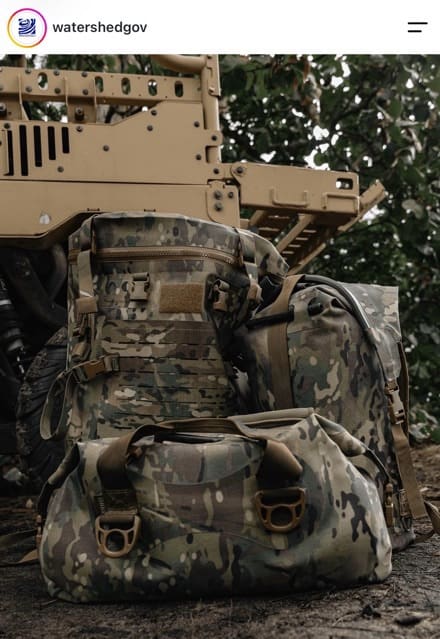
With over 40 years of industry experience, Watershed has been designing and manufacturing waterproof bags for U.S. and Global SOF since 1998. Their Maritime Backpack Suite is part of USSOCOM’s SPEAR Program.

The new account can be found at @watershedgov.

Please follow and share.

Project Convergence Capstone 6 Experiments with Hammer of the Gods

Monday, July 27th, 2026

Fort Irwin, Calif. – A key highlight of Joint experimentation during Project Convergence Capstone 6 is the Army, Navy and Space Force coming together on the west coast to experiment with the effects of a technology called Hammer of the Gods.

Although Hammer of the Gods is a relatively new technological capability, it has already begun to play an important role in military experimentation. Hammer of the Gods is an emitter that provides an expanded suite of command-and-control (C2) and operational capabilities in a highly deployable, low-electromagnetic-signature, electronic warfare platform, delivering multi-domain effects at the forward edge of operations.

Land-based versions of the system have been featured in various exercises and demonstrations during the past two years, helping warfighters across the joint force explore new ways to operate in the electromagnetic spectrum. More recently, the maritime variant made its debut during PC-C6, marking the first time the technology was tested at sea in mid-July 2026. This milestone represents another step in the system’s ongoing development as military leaders continue evaluating how it can enable future operations across multiple domains and enhance Next Generation Command and Control and electronic warfare capabilities.

“Joint experimentation is how we prepare for future fights,” said Lt. Col. Darrin Hall, Chief, Modeling, Simulation and Integration (S7/8), U.S. Space Forces Pacific. “By integrating space, cyber and conventional forces into realistic scenarios, we strengthen our ability to operate as one joint team in contested environments.”

PC-C6 serves as a critical venue for Army, joint, and multinational allies and partners to integrate and experiment with future warfighting capabilities.

The original plan for Hammer of the Gods was ambitious. Organizers intended to demonstrate both the land and maritime-based versions of the system while supporting learning objectives from the U.S. Army Space and Missile Defense Command and U.S. Space Forces Pacific.

The experiment successfully proceeded with support from U.S. Space Forces Pacific and Naval Base San Diego, enabling the integration of the maritime variant into PC-C6. Their collaboration highlighted the value of joint experimentation, demonstrating how multiple forces can work together across multiple domains to test new electromagnetic spectrum capabilities and gather insights for future operations.

“This experiment proved that counter-PNT capabilities can be deployed, controlled and recovered in real-world maritime operations while extending operational reach through resilient mesh networking. It demonstrates the value of joint collaboration in advancing operational readiness,” Hall said.

A key focus of the experiment was understanding Positioning, Navigation, and Timing, a capability that underpins many of today’s operations. From helping troops navigate and synchronize communications, to enabling precision-guided systems and supporting uncrewed platforms, reliable PNT information is essential across nearly every domain of modern combat.

“Positioning, Navigation and Timing is the foundation of modern military operations. Understanding how to protect and operate through PNT disruption ensures our forces can continue to shoot, move and communicate effectively,” Hall said. “Counter-PNT effects enhances lethality by impacting the backbone for pinpoint targeting via long range artillery, guided missiles, and cruise munitions. Without PNT data, modern weapon precision drops sharply, resulting in delayed missions, missed objectives, or severe collateral damage.”


Recent conflicts have highlighted just how dependent military forces have become on these capabilities. When GPS signals or other PNT services are disrupted, the effects can ripple across communications, navigation, and overall mission effectiveness. As a result, leaders are increasingly exploring how forces can continue to operate in environments where these services are degraded or unavailable.

Experiments during PC-C6 provide an opportunity to study those challenges in realistic operational settings. By testing technology like the Hammer of the Gods, commanders can better understand how to shape the electromagnetic environment, improve resilience against PNT disruptions, and refine concepts for operating effectively in contested environments.

Story by SGT Sar Paw, 5th Mobile Public Affairs Detachment   

Elistair and Exail Bring Persistent Aerial Surveillance to Unmanned Surface Vessels

Thursday, July 23rd, 2026

Persistent aerial surveillance delivered by a tethered drone launched from an unmanned surface vessel, for coastal security, port protection, and wide-area maritime monitoring.

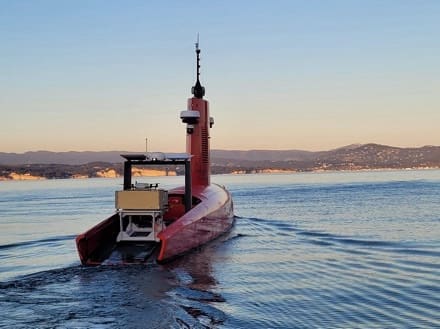
Elistair and Exail have partnered to integrate the Khronos automated tethered DroneBox on Exail’s DriX unmanned surface vessel (USV), giving maritime operators a persistent “eye in the sky” launched directly from the vessel. The combination extends surveillance well beyond the range of the platform’s surface sensors, while keeping personnel safe on shore.

Launched directly from the deck of the DriX, Khronos provides persistent, continuous aerial surveillance. Its autonomous deployment and “follow-me” capability keep the drone stationed above the vessel while under way. Powered through its tether, Khronos flies for up to 24 hours at a height of 60 m. It streams live, encrypted video over a secure data link, delivering real-time imagery even in contested, GNSS-denied environments.

By adding a tethered drone to a long-endurance autonomous vessel, the pairing pushes the surveillance horizon far beyond the reach of surface radar and cameras. Both the vessel and the drone can be operated remotely from shore. The configuration is suited to coastal surveillance, port and critical-infrastructure protection, counter-trafficking operations, and search and rescue.

“Integrating a tethered drone on an autonomous vessel marks a major step forward for maritime surveillance,” said Guilhem de Marliave, CEO of Elistair. “Surface sensors stop at the horizon; flown from the DriX, Khronos lifts that limit with a persistent, mobile view that stays airborne for hours. For operators, that means wider coverage and earlier detection, with no crew at sea.”

DriX was designed as an open platform, able to integrate new payloads as operational needs evolve,” said Stéphane Vannuffelen, Maritime Autonomy Solution Technical Director at Exail. “The integration of Khronos adds a persistent aerial perspective to the vessel’s existing surveillance capabilities, significantly extending the monitored area.

elistair.com

Ghostworks Unveils MRLN, the Multirole Remote Littoral Node

Wednesday, July 15th, 2026

Developed with General Atomics Aeronautical Systems, Inc. and Mercury Marine, MRLN enables Ghostworks’ M-Hull and powercat vessels to perform multiple missions from a single platform, without trading off speed, range, or payload.

CARLISLE, PA — July 14, 2026 — At the 2026 Pennsylvania Defense and Innovation Summit, hosted by U.S. Senator Dave McCormick at the U.S. Army War College, Ghostworks today unveiled MRLN (Multirole Remote Littoral Node), a remote-pilot autonomy system that equips a single vessel to take on multiple mission types under human-in-the-loop command and control. MRLN is not a vessel; it is the mission systems layer that deploys across Ghostworks’ proprietary M-Hull and powercat hull forms, turning each vessel into a multirole platform.

Minerva, Ghostworks’ 40-foot carbon fiber M-Hull, under way. Minerva carries MRLN, the Multirole Remote Logistics Node, a remote-pilot autonomy system developed with General Atomics Aeronautical Systems and Mercury Marine and unveiled July 14 at the 2026 Pennsylvania Defense and Innovation Summit.

MRLN was developed with three partners, each contributing a core piece of the system:

  • Ghostworks designed, engineered, and built a 40′ carbon fiber Minerva-class M-Hull, with speed, range, and payload currently unrivaled in the industry.
  • General Atomics Aeronautical Systems, Inc. (GA-ASI) brought decades of autonomy and sensor experience from remotely piloted aircraft and adapted it to the maritime domain.
  • Mercury Marine contributed its drive-by-wire propulsion technology and Command Gateway product, giving MRLN the endurance to transit contested and congested environments and to maintain station for extended periods in demanding conditions.

Command of the iron triangle: the long-standing tradeoff between speed, range, and payload has quietly dictated naval procurement for a generation. Rather than optimizing for one at the expense of the others, Ghostworks designs its vessels to maximize performance across all three metrics. Ghostworks’ Minerva-class vessel can carry 17,500 lbs at a cruise speed of 30 knots and handles sea state 4. Minerva is the first to employ MRLN, allowing operators to control the craft remotely, mission to mission, whether delivering fuel to an isolated craft, carrying a high-value load, or racing to conduct a rescue. Deployed across Ghostworks’ proprietary hull forms, MRLN provides granular control over that performance tradeoff for the first time.

MRLN pairs its modular, subsystem-agnostic architecture with a proven, serious payload capacity. The system is human-in-the-loop: a human operator retains situational awareness even as the vessel runs autonomously and can take control of the craft at any time. Operators can reconfigure mission profiles in the field, giving commanders a platform that adapts to the fight instead of forcing the fight to adapt to the platform. That freedom is the point. MRLN was built to function anywhere, anytime with its own connectivity.

“For decades, naval planners have had to accept that speed, range, and payload pull against each other. Optimize for one and you sacrifice the others,” said Brooke Kerschbaumer, CEO, Ghostworks. “Our vessels were architected to break that constraint. MRLN gives operators human-in-the-loop command and control over that tradeoff space, mission to mission, without changing platforms.”

“Leveraging our development of world-leading autonomy for air-vehicles into the maritime domain is a natural progression,” said Jeff Hettick, vice president of GA-ASI’s Agile Mission Systems. “This partnership really highlights how bringing together the best in the defense industry can yield exciting new capabilities for our warfighters in a timescale that is relevant.”

“Our role was to prove that MRLN could meet the control and reliability demands of sustained surface operations,” said Carl Greiner, Director of Government & Advanced Maritime Systems, Mercury Marine. “This integration expands what’s achievable in a remote-piloted maritime system.”

Five Missions, One Platform

MRLN-equipped vessels are designed to support:

  • ISR: persistent, low-signature surveillance in contested littoral zones
  • Logistics resupply: autonomous delivery of materiel to forward-deployed forces
  • Mine countermeasures: detection and neutralization without placing crews at risk
  • Communications relay: extending network connectivity across dispersed operating areas
  • Littoral combat support: direct integration into combat operations in shallow, contested waters

Summary

MRLN is a remote-pilot autonomy system, developed with GA-ASI and Mercury Marine, that equips Ghostworks’ M-Hull and powercat vessels to perform five distinct missions from one platform. By letting commanders reconfigure mission profiles in the field, MRLN breaks the traditional tradeoff between speed, range, and payload, delivering flexibility that the littoral battlespace has not had before.

www.ghostworksmarine.com

ThayerMahan’s Outpost Acoustic Intelligence Payloads Selected for Large-Scale Deployment

Sunday, June 28th, 2026

GROTON, Conn., June 25, 2026 — ThayerMahan, Inc. has been awarded a contract to deliver dozens of Outpost® acoustic intelligence payloads, along with TransparenSea® processing software, to an international defense customer. The award represents one of the largest fielded deployments of unmanned acoustic sensing systems supporting persistent undersea surveillance and USW (Undersea Warfare) missions.

ThayerMahan to deliver dozens of Outpost acoustic intelligence payloads to international defense customer.

The selection followed a rigorous, multi-phase evaluation that included controlled validation, extended at-sea deployments, and head-to-head comparative trials against multiple payloads under representative mission conditions. Testing focused on detection performance, tracking reliability, system endurance, power efficiency, and integration with unmanned platforms.

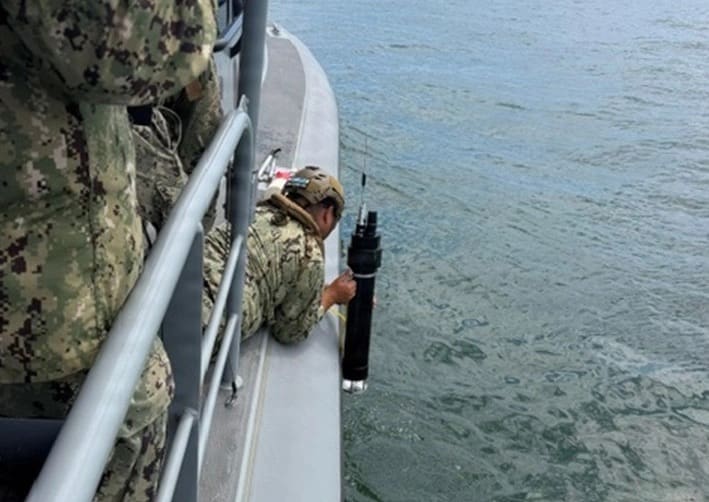
During multi-month deployments, Outpost® and TransparenSea® demonstrated continuous wide-area acoustic surveillance, detecting, classifying, and tracking targets of interest at operationally relevant ranges, with near-real-time delivery of actionable acoustic intelligence to shore-based Maritime Operations Centers. The systems met or exceeded performance expectations for both surveillance and USW missions while operating within constrained power and size profiles typical of small, unmanned platforms.

Key factors supporting selection included:

  • Persistent coverage: Continuous operation over extended deployment periods
  • Detection and tracking performance: Reliable target hold and classification at range
  • Low power consumption: Enabling long-duration unmanned operations
  • Ease of integration: Minimal platform modification required
  • Near-real-time data delivery: Actionable data landed in shore-based Maritime Operations Centers for rapid decision making
  • Analyst usability: Intuitive interface reducing operator workload and training burden

“Persistent, wide area acoustic sensing requires consistent performance over time, which is why we spent the last decade perfecting our capability,” said Mike Varney, President Products & Engineering, ThayerMahan. “ThayerMahan sets the global benchmark for unmanned acoustic intelligence. Outpost and TransparenSea have been repeatedly validated under operational conditions, which was a key factor in this selection.”

The contract reflects increasing demand for scalable, unmanned acoustic sensing solutions that can rapidly be deployed to extend maritime domain awareness without reliance on traditional crewed assets.

“This award aligns with the need for operationally relevant, fielded capability that delivers consistent surveillance and USW performance,” said Mike Connor, Chairman and CEO. “The focus is on systems that work as deployed – reliably, at scale, and with immediate mission impact.”

The awarded systems are exportable and production-ready, supporting rapid fielding timelines and broader adoption of distributed, unmanned sensing architectures for undersea domain awareness.

Dräger DOB 200 ECO Oxygen Filling Station Earns Authorized for Navy Use Listing

Thursday, May 28th, 2026

Authorized for Navy Use listing expands access to the Dräger DOB 200 ECO, giving U.S. military teams across the joint force a compact oxygen filling station for deployed, shipboard, and remote operations.

Authorized for Navy Use

Dräger’s DOB 200 ECO oxygen filling station is now listed on the Authorized for Navy Use (ANU) List, giving U.S. military teams across the joint force access to a compact system designed for high-pressure oxygen filling in deployed, shipboard, remote, and space-constrained environments.

The listing marks an important step for military teams that need oxygen filling capability closer to the point of operation. Designed as a complete oxygen filling station in a compact, deployable format, the Dräger DOB 200 ECO supports oxygen cylinder filling for military diving teams, rebreather support, parachutist oxygen programs, ship maintenance crews, and expeditionary units.

Built for Operational Oxygen Support

Military oxygen logistics are often shaped by space, mobility, and time. During deployment, teams may already be moving with dive rigs, flotation devices, oxygen bottles, tools, support equipment, and mission-specific gear. Traditional oxygen filling setups can involve multiple separate components that need to be packed, moved, connected, monitored, and maintained.

The DOB 200 ECO helps reduce that burden by combining the pump, gauges, valves, and fill panel into one rugged, transportable system. Its compact design supports teams working outside fixed infrastructure, bringing oxygen-fillingcapability closer to the mission.

Deployable by Design

The system is packaged as a complete oxygen filling station for movement and storage in demanding environments. Its rugged Pelican™ case format supports the way military equipment is transported, whether by vehicle, aircraft, vessel, or hand carry.

For teams working aboard ships, in pierside support areas, or at remote field locations, the DOB 200 ECO can help make oxygen filling more practical and accessible. The compact format helps units move oxygen support where it is needed, rather than relying only on fixed filling infrastructure.

Designed for High-Pressure Oxygen Use

Built for high-pressure oxygen use, the DOB 200 ECO is designed with oxygen safety in mind. Its oil-free configuration helps reduce the risk of contamination in oxygen service, an important consideration when filling high-pressure oxygen cylinders.

The system also supports controlled filling, including automatic shutoff when the target pressure is reached. For military teams filling oxygen bottles in operational environments, that control can help make the process more repeatable and practical.

Configured for the Mission

The DOB 200 ECO can be configured to support the unit’s mission profile, whether the requirement is mobile oxygen filling in the field or a more permanent setup in a support facility. The fill panel can be integrated with the transportable unit for deployed use or mounted separately for workshop, shipboard, or maintenance operations.

The system can also be configured around operational power and cylinder requirements, including 120V and 220V options based on destination and infrastructure. Depending on the setup, the DOB 200 ECO can support simultaneous filling for four to six oxygen cylinders, helping teams reset bottles more efficiently after dive operations, jump preparation, shipboard support, or daily readiness cycles.

Operator Focused on Field Conditions

For operators, simplicity matters. Oxygen filling in the field may be handled by team members who are also managing equipment resets, cylinder rotations, dive support, jump preparation, or maintenance activities.

A system with fewer loose components and a more straightforward setup can help reduce manual oversight and support a more disciplined filling process. For units operating away from fixed infrastructure, that flexibility helps keep oxygen support aligned with the mission’s pace.

Supporting Joint Force Applications

The DOB 200 ECO can support a range of military oxygen applications, including military diving, rebreather support, parachutist oxygen programs, shipboard operations, ship husbandry, submarine maintenance support, remote oxygen logistics, and expeditionary operations.

With its ANU listing, the Dräger DOB 200 ECO provides military teams with a vetted oxygen filling solution that aligns with the realities of modern operational support. It bridges the gap between large fixed filling systems and smaller, limited-capability boosters by bringing high-pressure oxygen support, mobility, and simplified operation into one compact system.

For military teams planning oxygen support needs, the listing provides a direct path to evaluate a complete oxygen filling station built for deployment, shipboard operations, and field use.

Learn more: t4.life/QxI.

Maritime Soldiers Earn Mariner Badge

Tuesday, May 26th, 2026

JOINT BASE PEARL HARBOR-HICKAM, Hawaii – Maritime Soldiers assigned to the 8th Special Troops Battalion, 8th Theater Sustainment Command, were recognized during an Army Mariner Badge pinning ceremony aboard the U.S. Army Vessel Maj. Gen. Robert Smalls, LSV-8, on Joint Base Pearl Harbor-Hickam, recognizing their expertise and service as Army mariners.

Hosted by Lt. Col. Micah J. Hall, commander of the 8th Special Troops Battalion, the ceremony honored Transportation Corps port watercraft and seaport operations mariners for achieving significant professional milestones through certification, operational experience and sustained service aboard Army watercraft. During the ceremony, one Soldier received the Army Mariner Senior badge and 11 Soldiers received the Army Mariner Basic badge.

The Army Mariner Badge symbolizes the technical expertise, discipline and operational readiness required of Soldiers serving within Army maritime occupational specialties. Approved in October 2024, the badge recognizes Army mariners who demonstrate proficiency in nautical logistics and sustainment operations while supporting missions across the Indo-Pacific region and beyond.

The badge is awarded based on certification and years of operational maritime service. Soldiers awarded the basic badge must complete required certifications and serve at least one year aboard an Army vessel, while the senior badge recognizes mariners with a minimum of five years of service and demonstrated expertise within their maritime field.

“This badge is more than a uniform item,” said Hall during the ceremony. “It represents technical competence, operational experience, discipline and commitment to the Army’s maritime mission.”

Hall emphasized the critical role Army mariners play in enabling sustainment and transportation operations throughout the Indo-Pacific theater, including interisland logistics, joint exercises and strategic sealift missions. He recognized the professionalism and resilience required to operate Army watercraft in demanding maritime environments far from home station.

Maj. Gen. Gavin Gardner, commanding general of the 8th Theater Sustainment Command, also addressed attendees and highlighted the longstanding legacy of Army mariners throughout military history, from supporting operations during World War II to modern-day joint logistics over-the-shore missions.

“This is not earned in port,” Gardner said. “This is earned underway.”

Gardner further noted that Army mariners continue to play a vital role in projecting and sustaining combat power across the Indo-Pacific region, particularly as the Army modernizes maritime sustainment capabilities in austere environments.

For many Soldiers, the ceremony represented more than professional recognition — it represented visibility for a uniquely specialized field within the Army.

“Being awarded the Army Mariner Badge means a lot to us because it’s the first visible identification the Army has given us that is unique to being a mariner,” said CW2 George Schwarz, one of the mariners recognized with the 8th Theater Sustainment Command. “We’re a really small field within the Army that doesn’t always receive a lot of recognition.”

As the ceremony concluded, the newly badged Army mariners were recognized not only for their technical qualifications but for their continued role in sustaining and moving combat power across the Indo-Pacific region.

SGT Deneisha Owens-McParland