GORE-TEX Professional

Archive for the ‘Materials’ Category

ACW Expands with New Facility and Additional Hires

Sunday, April 10th, 2011

Established in 1917, ACW (American Cord and Webbing) is a custom design manufacturer of plastic and metal fasteners as well as elastic and non-elastic narrow textile webbing and cord products. In addition to expanding their custom design and manufacturing facilities to bring all of these efforts under one roof, they have also added two key team members, Wendy Horowitz and Stephan Yardan who will support their custom design product development effort.

Mark Krauss, ACW president, commented, “Providing customers with product solutions that help them meet industry challenges means formulating a highly skilled team that understand business trends, can anticipate customer’s needs and deliver innovative products. Wendy and Steve complement our custom design, problem-solving approach in the best possible way.”

ACW had this to say about Ms Horowitz and Mr Yardan:

Wendy Horowitz is an expert on specialty fibers for narrow fabric applications. A textile engineer and business development specialist, she has helped ACW enter highly technical, performance driven markets. Her clear understanding of customers’ needs, along with her creativity, has led to the developments of several new product lines. Wendy is also Chairperson of the Safety & Technical Products Division of IFAI.

ACW has had a long standing relationship with industrial designer Steve Yardan. Steve’s design and business understanding has helped ACW co-develop fresh concepts into product realities. As a result, this strategic alliance allows ACW to service customers with in-house, rapid product development followed by production for numerous markets including categories for military use.

www.ACW1.com

Yato Technology from UTE

Saturday, March 26th, 2011

Unleashed Tactical Equipment revealed their new Yato thermal management technology at the recent IWA in Germany. Essentially, Yato reflects thermal energy with the added benefit of anti-microbial and anti-static properties. It can be added as a third layer in laminated fabric solutions.

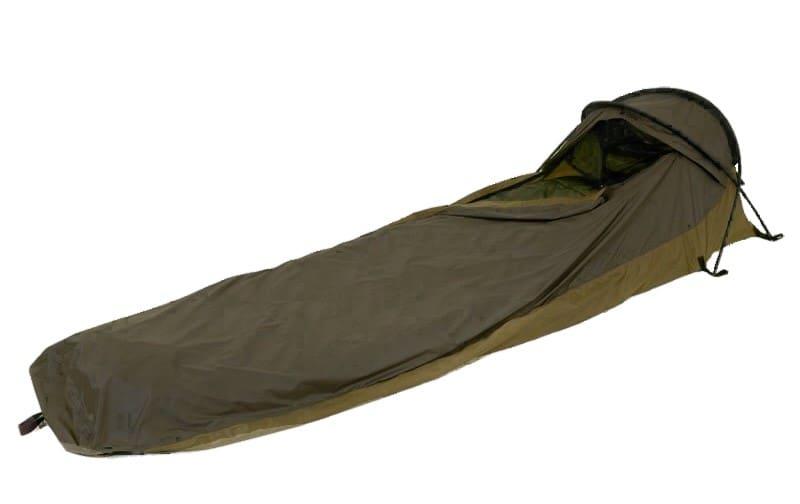
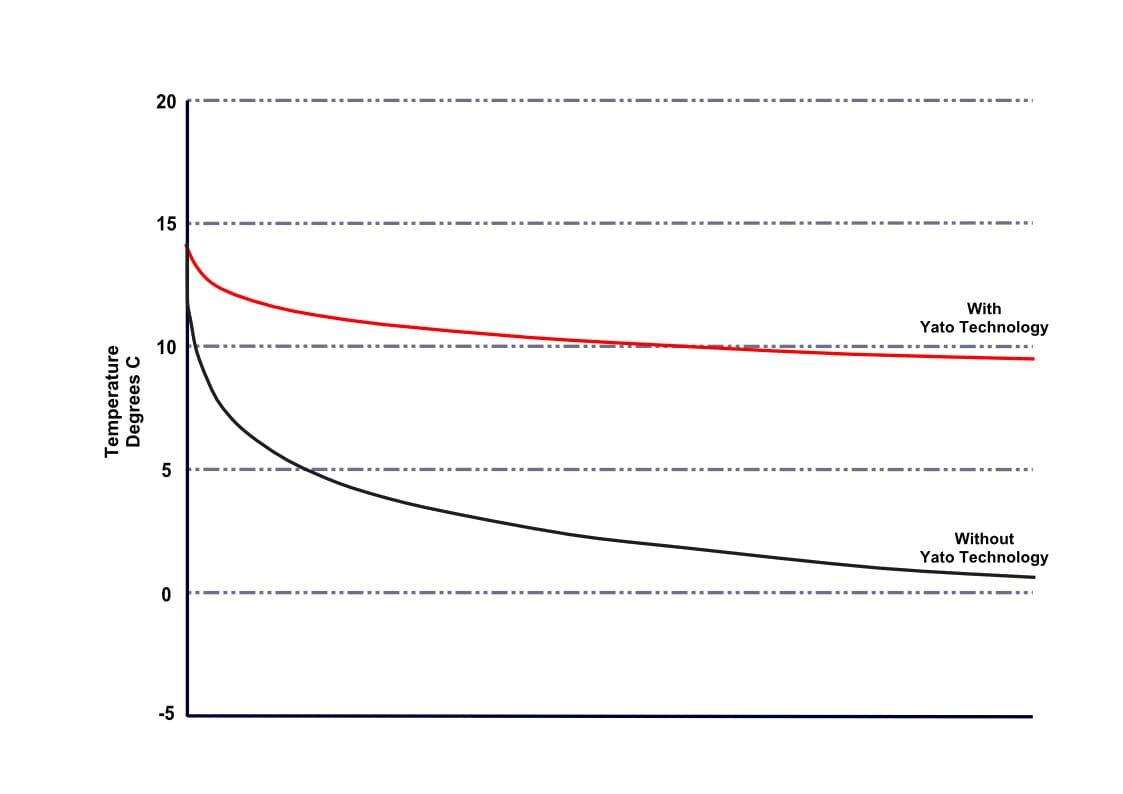
Yato can be built in to a variety of products. For example, the hooped bivy was manufactured with Yato. During testing in a -4 deg C environment, the ambient air temperature within the bivy remained significantly higher than in a bivy without Yato thermal management.

The thermal management properties go both ways. If you are in a hot environment, Yato will reflect heat away from the fabric and help keep the inside cooler. It also offers some RF suppression properties as well. This brochure from UTE tells a little more of the Yato story.

Yato Product Data

www.unleashed-tactical.com

The Latest MultiCam Knockoff

Friday, March 25th, 2011

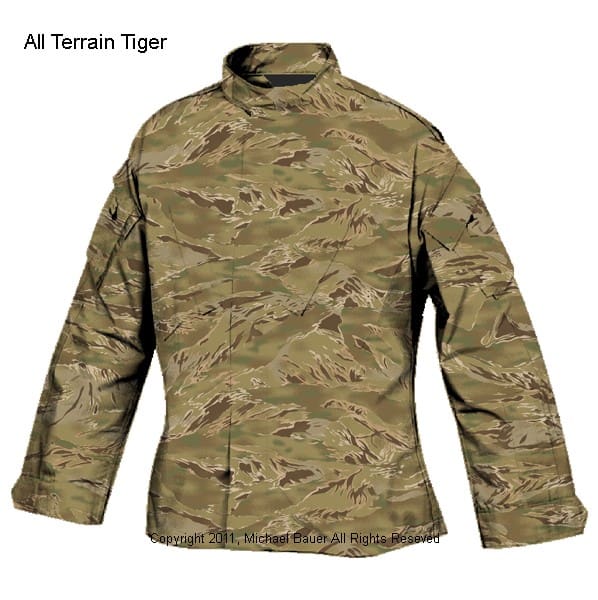
MultiCam was developed by Crye Precision and is currently one of the most popular camouflage patterns on the market. It’s been adopted by numerous countries including the US, UK, and Australia. Consequently, we run across MultiCam knockoffs all of the time. Readers send them to us often asking if they are authentic or not. In fact, we received one yesterday that really caught our eye. Generally, copycat patterns are intended for the MilSim or consumer markets which are often more driven by price than performance. But this one was different. It was developed by the US Army and oddly enough, for much the same reasons. Intended as a cost savings measure and yet still be MultiCam compatible, we’re not too sure they have succeeded at either goal. Take a look, and you’ll see what we mean.
(more…)

ICE Tactical Raising the Bar – Again

Saturday, March 12th, 2011

Canada’s ICE Tactical is a small company that keeps a low profile. ICE is also well tied in to the latest materials and very much on the edge of new idea development. Consequently, you see things like this; a medium GP Pouch made from 500D Cordura with MultiCam printed pile and and slide fastener. No word yet on when these new materials will be cut completely into the line.

www.icetactical.com

Lamination Technologies

Monday, March 7th, 2011

The Firefighter suit shown in this video is made from a new fabric from Lamination Technologies can protect its wearer from flames at 1100ËšC for seven seconds and even after seven seconds the wearer will only sustain second degree burns over 17% of his body. If you add a second layer the protection increases to 12 seconds with 16% burns! Don’t forget, as we learned last year during our visit with DuPont, when you are talking FR clothing you can’t rely just on the rating of the fabric. Protection is determined based on the material as well as design.

Working with Prime Contractor Penn State University Electro Optics Center, Lamination Technologies has been developing lightweight FR solutions for the Department of Defense.

ltprotect.com

New Cut Resistant Fabric from the UK

Sunday, March 6th, 2011

PPSS Group has released a new cut resistant fabric called Cut-Tex Pro. They are using it to produce “cut resistant gloves and cut resistant clothing for police, prison, emergency services, social and health care, animal welfare as well as metal pressing and glass handling companies.” The fabric has been independently certified to BS EN 388:2003 Blade Cut Resistance Level 5 which is the highest level.

It is important to point out that this material is cut or slash resistant and not stab resistant. A stab involves a pointed object like an ice pick or a knife penetrating point first into an object. All of the force is directed behind the narrow entry point allowing it to go deeper. On the other hand, a slash or cut is what is being demonstrated in the photo above. The force is spread out across the blade making it more difficult to penetrate through protected layers.

Most corrections professionals wear cut and stab resistant armor, but short of full riot gear the arms and sides are generally unprotected. Particularly in the UK, LE is more likely to be cut than shot. Despite the efforts of government, threats can’t be legislated away, they just adapt.

While most cut and stab resistant solutions are of aramid (Kevlar) construction, according to PPS Group, Cut-Tex pro is a “combination of ultra-high molecular weight polyethylene (UHMWPE) and other technical fibres weaved by special high-density knitting machines”. They use this weave to to manufacture under garments that are inherently cut resistant so everything that is covered by the fabric is protected from cuts. Unfortunately, one of the downsides of polyethylene construction is its resistance to dyeing. Hence, colors like the Grey you see. So it will still have to be covered by other garments, but this does mean that it is a covert protective solution. No one will know you are wearing it and it will not get in the way of normal duties.

This looks to be a great technology for protecting from cuts and slashes and is available as garments or fabric. Please let us know if anyone gets their hands on any of it.

For more info visit www.cut-tex.com.

Line of Fire’s TEG Grip System

Friday, February 11th, 2011

We first met Line of Fire at SHOT Show 2008 in Las Vegas. They were in an unassuming 10 x 10 booth out in one of the circus tents set in a parking lot across the street from the convention center. At the time they were working on a uniform designed specifically for contractors working in the Middle East which we found innovative. But it was an early TEGS prototype that really caught our eye. In fact, about a year ago we mentioned “Gecko Tape” in an article. We have kept in touch infrequently over the past few years and last year LOF sent us a pair of gloves to try out.

Technology Enhanced Grip System (TEGS) is a patented micro-replication technology developed by 3M. It provides superior grip in both wet and dry conditions. As you can see, it is optimized to be used in concert with itself (TEGS on TEGS) but enhances the grip even if used on conventional materials. The illustration below gives you an idea of how the technology works. The hooks are tiny and mesh with one another. Because they are so small there are more per square inch (300 to be exact) which translates to more surface area in contact. If you are familiar how strong the bond is when you interlace the pages of a phone book, you will get the concept of TEGS. Nothing locks, so you can release anything with TEGS immediately.

We received a pair of Stryker Extrication Gloves. They are also a good choice for Breachers. Made from 4-way stretch Kevlar, it’s over-the-wrist design protects the hands from cuts, abrasion and flame due to Kevlar’s inherent FR properties. All of the models feature impact-resistant polyurethane knuckle and finger guards. Additionally, the gloves are of an ergonomic cut that naturally fits the hand.

In addition to the Stryker, LOF also produces the Flashover, a gaunlet-style glove as well as the Pointman and Pointman LE which are shorter length models. The LE model differs from the Pointman in that it is a stretch nylon rather than Nomex.

It is important to note that LOF considers this a Grip System. In this system, the handwear is component A and the TEGS tape, component B. They are intended to work together. However, as you can see above, even if you use TEGS with standard surfaces, you still realize a 43% increase in grip. In addition to full Grip Systems they offer TEGS as individual adhesive backed sheets. This allows you to modify your existing equipment. Line of Fire has also mentioned to us working to license the technology to produce purpose built pistol grips, knife handles, and other similar items.

TEGS works. Wet or dry, regardless of material, TEGS improves the grip. It almost feels sticky. The grip is very solid and the item you are holding doesn’t move around in your hand. But, like we said before, there is no problem letting go. There really isn’t much else to say on that. There is a slight loss in tactility, but we see that same issue with virtually any gloves. We can’t pinpoint the cause to TEGS and feel it is more of a problem associated with handwear in general. Our only critique is that we would like to see TEGS available in additional colors than Black.

www.loftactical.com

New Balance Introduces Merino Wool Clothing ADS

Monday, February 7th, 2011

Wool really makes sense for military garments but a couple of things have happened over the years that have pushed it to the back of the line. In the late 1980s new, man-made fabrics began to come on the military scene that out performed the issue wool garments which dated back to before WWI. Troops were more than happy to ditch the itchy long johns that their great grandfathers had worn into battle on the Western Front. But then came the IED. Unnaturally (pun intended), the answer was to develop new man made FR performance fabrics since the recently adopted polypropylene and polyester fabrics used in military base layers are very flammable. This was a very costly undertaking. So where was wool, nature’s performance fiber through all of this? Quite frankly, it wasn’t quite ready to make a return.

Traditionally there have been several criticisms of the use of wool:

-Comfort (that itchy feeling)
-Limited domestic availability of Merino wool (considered the best wool for next to skin use, not itchy)
-Shrinkage
-Smell
-Lack of domestic treatment due to EPA guidelines

Despite these generic criticisms, the benefits of Merino wool are myriad:
-Warm even when wet
-Comfortable in a wide range of temperatures as well as against the skin
-Antimicrobial
-Inherently FR (No Melt, No Drip)

We are now at the point where we have almost an entire Army that has never used wool undergarments, and those that have probably don’t have the fondest of memories. Truthfully, current military attention towards wool has been driven by troops with an interest in the outdoors, as commercial wool garments have gotten better and better of the past few years. This has been combined with a concern by those who keep the Army’s purse strings, as they are constantly seeking more economical ways to accomplish the mission.

To mitigate the common criticisms of wool, New Balance has combined Merino with FR Rayon to increase performance and durability. This also increases the FR properties of wool and facilitates field laundering. Then, they have treated the resulting fabric with X-static to further enhance wool’s natural anti-microbial properties to reduce stink. Additionally, there is finally an environmentally green US-based wool treatment facility. Treatment is critical to improving the comfort and performance of the wool. While the US Merino herd is small, as with all things “domestic textile”, the military is a prime customer. In fact, all of the components have just recently aligned in order to allow New Balance to produce a Berry compliant product.

New Balance has developed several garments including Base Layer long and short-sleeved T-shirts, Briefs, light and mid-weight Long Underwear Pants, and a Performance 1/4-zip Shirt. Initially, the plan was to have the Merino products available by July, but user feedback from the test items has been so strong that New Balance is looking to accelerate their schedule.

Units interested in New Balance military products should contact ADS.