TYR Tactical

Archive for the ‘Materials’ Category

TWN Industries Releases Tiger Stripe Products ATT Water Transfer Printing Film

Tuesday, June 24th, 2014

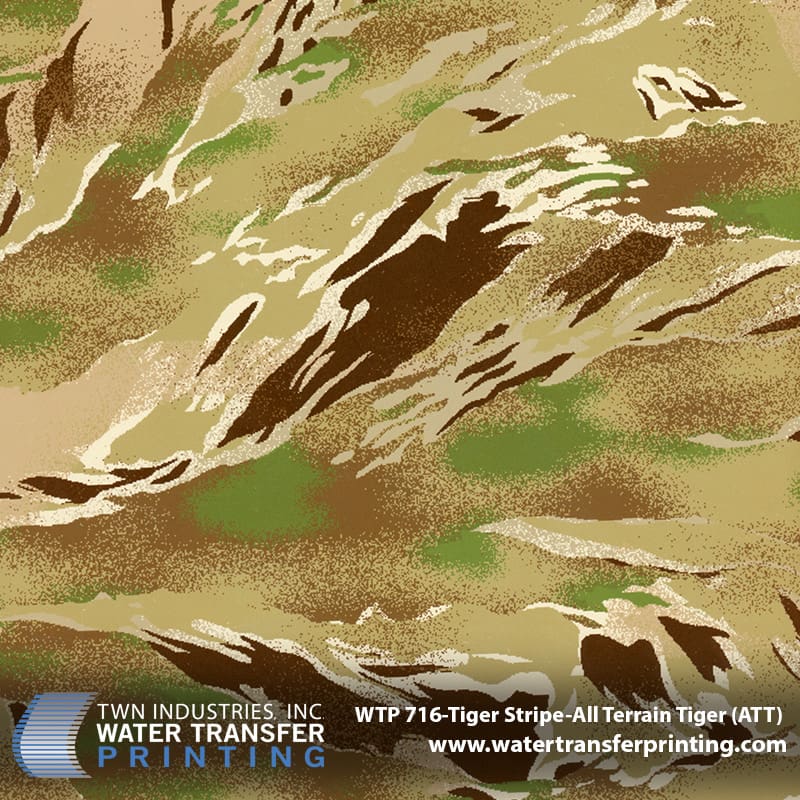
Princeton, Florida – June 24, 2014 – TWN Industries, Inc., the leading water transfer printing film developer and equipment supplier, has joined forces with Tiger Stripe Products to release the anxiously awaited All Terrain Tiger™ hydrographic film pattern. ATT™ is a complete re-design of TSP’s classic Tiger Stripe pattern. This outstanding design provides the optimum combination of contrasting shapes and coloration’s to effectively disguise a person’s silhouette, resulting in maximum concealment within a wide variety of environments. Any Military, Government Agency, Law Enforcement Department, or Professional Security Force can now deliver an extremely high- level of camouflage effectiveness to its personnel with this outstanding new Tiger Stripe camouflage design. The pattern has also gained tremendous popularity among hunters and Airsoft /paintball players.


WTP-716 Tiger Stripe-All Terrain Tiger

“We worked very closely with Tiger Stripe Products for the past year in order to achieve an accurate depiction of the All Terrain Tiger™ pattern. Our team is extremely satisfied with the outcome and feel confident that fans of previous Tiger Stripe patterns will feel the same,” stated Mike Richards, Director of Business Development at TWN Industries.

Tiger Stripe Products® All Terrain Tiger™ water transfer printing film is available exclusively through TWN Industries, Inc. Three-meter accessory packs are available immediately. The part number for All Terrain Tiger™ is WTP 716. To find a TWN Certified Decorator who can decorate products for you, or to purchase film, call 305-258-9622.

www.watertransferprinting.com/news/all-terrain-tiger-hydrographic-film

What Do You Do With Billions Of Dollars Worth of UCP TA-50? Why You Dye It, Of Course

Monday, June 23rd, 2014

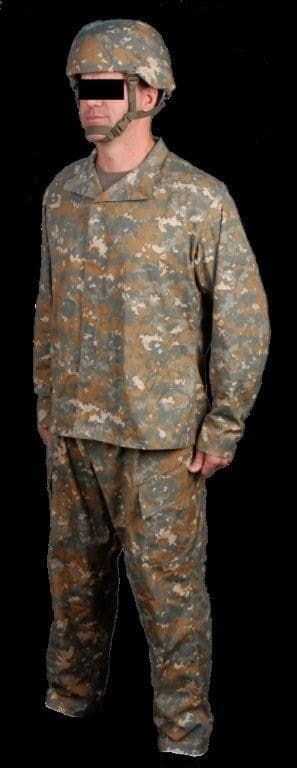
When the Army began its quest to identify a new camouflage pattern several years ago it also realized that it was going to have to do something with the several Billion Dollars worth of Organizational Clothing and Individual Equipment in the Universal Camouflage Pattern, already in its inventory. By PM SPIE, COL Robert Mortlock’s own assertion, the Army plans on an eight year period to fully transition from the current patterns to the new one. That UCP gear is going to be with some units, particularly TDA-based, for years to come.

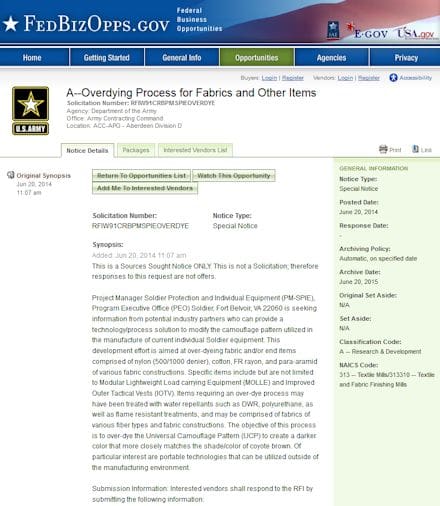
Last week, the Army issued a Sources Sought Notice to industry on behalf of Project Manager Soldier Protection and Individual Equipment (PM-SPIE), Program Executive Office (PEO) Soldier seeking a Overdying Process for Fabrics and Other Items.

OVERDYE

This isn’t the first time we’ve written about this and it isn’t the first time PEO Soldier has looked into the solution. Just last Fall they issued a similar Sources Sought but cancelled it in late November. To me, what the reissue of this notice signals is that the Army is finally moving forward with a transition plan. Although, they are stumbling through a couple of issues right now that should have been anticipated before the leadership selected a course of action.

In particular, they are seeking:

Project (sic) Manager Soldier Protection and Individual Equipment (PM-SPIE), Program Executive Office (PEO) Soldier, Fort Belvoir, VA 22060 is seeking information from potential industry partners who can provide a technology/process solution to modify the camouflage pattern utilized in the manufacture of current individual Soldier equipment. This development effort is aimed at over-dyeing fabric and/or end items comprised of nylon (500/1000 denier), cotton, FR rayon, and para-aramid of various fabric constructions. Specific items include but are not limited to Modular Lightweight Load carrying Equipment (MOLLE) and Improved Outer Tactical Vests (IOTV). Items requiring an over-dye process may have been treated with water repellants such as DWR, polyurethane, as well as flame resistant treatments, and may be comprised of fabrics of various fiber types and fabric constructions. The objective of this process is to over-dye the Universal Camouflage Pattern (UCP) to create a darker color that more closely matches the shade/color of coyote brown. Of particular interest are portable technologies that can be utilized outside of the manufacturing environment.

I was told long ago that a solution had been identified, but it’s always good to see if industry has come up with anything new. Also, did you notice that they are interested in a solution that closely resembles Coyote Brown? The big challenge here is getting everything dyed to a common shade. With different wear and substrates, dying is as much art as science. As it is, getting the same production run or the same material, dyed to the same shade is a challenge because Cordura, webbing, NYCO, FR rayon, and para-aramid all absorb dyes differently and the concentration of dye is as much an issue as the wear to the fabric’s fibers. And that’s not to mention previous treatments which may also affect the absorption of dye. Consequently, the kit may end up looking like various shades of this:

20131124-231905.jpg

Kevlar Inventor Stephanie L Kwolek Passes Away

Sunday, June 22nd, 2014

20140622-095852-35932936.jpg
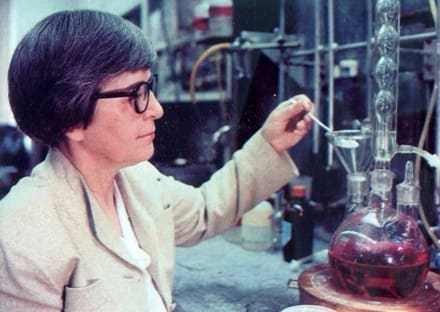
We all have much to owe Stephanie L Kwolek, who invented the basic Kevlar compound while working for DuPont in 1964. Amazingly, she was attempting to develop a material to replace steel radial belts in tires when a polymer she was working didn’t quite come out right. On a hunch, she had it spun into fiber that turned out to be five times as strong as steel as well fire resistant. Further development resulted in the Kevlar family of aramids we know today, although it took a decade for the material to be introduced into soft body armor. Eventually, Ms Kwolek was honored with a National Medal of Technology in 1996 for her work that has resulted in countless lives saved.

20140622-100631-36391744.jpg

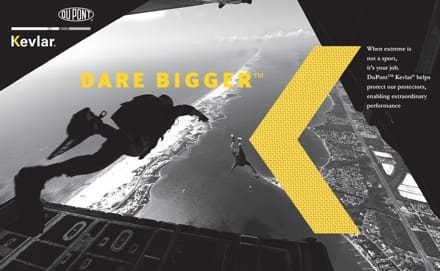
DuPont continues to develop the material discovered by Ms Kwolek. Just last week, they announced that the millionth vest made from Kevlar XP had been manufactured and they recently launched DuPont Kevlar AS450X, specifically engineered for greater comfort to the body armour wearer while protecting against multiple threats including bullets, knives, spikes, bullets and blunt objects as well as DuPont Kevlar XP S104, a water repellent fabric that offers enhanced bullet stopping power and reduced back face deformation, even in hot and humid climates and wet conditions.

Born on July 31, 1923, in New Kensington, Pennsylvania, Stephanie L Kwolek passed away in Wilmington, Delaware, on 18 June, 2014 at the age of 90.

Thank you for your hard work. Rest In Peace.

NFM Group – EC Paint

Thursday, June 19th, 2014

Norway-based NFM Group has come up with EC Paint, a weapon and equipment paint designed to fit both daylight and IR needs. EC paint dries in seconds, covering equipment with a smooth matte coating and no shiny spots. It is also durable and heat resistant without affecting the material structure, and can be used for covering plastics and textiles. NFM states that EC Paint is NVG compliant. This is pretty cool considering we’ve all been using krypton for years now and it wasn’t really designed for use on military equipment.

EC Paint is available in 8 colors: Grey, White, Black, Coyote Brown, Forest Green, Olive Drab, Mud Brown, and Sand. A dedicated stripper has also been developed for the paint, which they say provides easy and fast clean off. EC paint comes in 400ml spray cans and a 5 liter container for vehicle application.

EC Paint has been selected by the British Army to respray all weapons systems for issue in Afghanistan. Hint-hint, US Army.

www.nfm.no

Video concept by www.designedtofight.com.

World’s First Monster Silk Textile Created By Warwick Mills And Kraig Biocraft Laboratories Collaborative Effort

Wednesday, June 18th, 2014

Spider Silk Textile Development Breakthrough

LANSING, Mich., — Kraig Biocraft Laboratories, Inc. (OTCQB: KBLB) (“Kraig”), the leading developer of advanced spider silk based fibers, announced today Warwick Mills (“Warwick”), a leader in the engineering and development of advanced technical textiles and protective materials, created the world’s first textile utilizing Kraig’s genetically engineered spider silk, Monster Silk™.

The first Monster Silk™ textiles are knitted gloves and the first photos are available at the following link: http://www.kraiglabs.com/spider-silk-textiles/. They are considered to be the first of many textiles that are to be created as part of the Company’s joint development agreement with Warwick.

“We have been working with various types of Monster Silk™,” stated Charles Howland, President of Warwick. “We find that all of these fibers are compatible with existing yarn processing and textile formation methods. As is expected, fiber consistency is not yet at fill production levels. However, for the current stage of maturity, these silk materials already have good levels of quality and consistency. We have been making jersey knit samples and will start weaving shortly. These small scale trials are key to helping identify, for Kraig Labs, areas for development for upcoming fiber production trials. We are reviewing textile properties of the samples with Kraig staff and exploring the most attractive applications for this fiber. Overall the trails are well underway and we are making good progress toward commercialization.”

“One of the biggest issues facing our Company was creating our first textile and the open question of whether genetically engineered spider silk could be successfully processed using existing textile formation methods,” said Company founder and CEO, Kim K. Thompson. “With this successful test, and the creation of the first Monster Silk™ knits, we have established that our genetically engineered spider silk works well with existing manufacturing methods. The creation of these knits is a huge milestone in our progress toward making genetically engineered spider silk available for industrial and consumer applications. The fact that these advanced materials process well on existing machinery will help speed up the development of advanced spider silk textiles.”

www.warwickmills.com

Blade Show 2014 – Summit Materials Introduces HIPTiNite

Friday, June 6th, 2014

Duane Dwyer is well known for his association with a Strider Knives. His other project is Summit Materials and he has been working on the HIPTiNite material since 2006. Over the years, he’s given me updates on its progress and now, his patents have been granted, it’s being purchased for use in bearings and the first knives are being manufactured. The specialized commercial interest is really picking up. Imagine a knee prosthesis that never wears out from friction in addition to myriad aerospace and gas/oil industry applications. Amazingly, some of the biggest interest is in the F1 circuit.

20140606-150609.jpg

All of the materials that are PM grades (particle metallurgy) go through a process involving atomization individually and then as a combined material. They are all combined in a process called Hot Isostatic Press (HIP).

You’ll notice that Summit Materials’ new HIPTiNite material combines this HIP process as well as the atomic symbol for Titanium and Nickel because it’s a binary alloy of nickel and titanium. It’s extremely light and abrasion resistant. That’s right, it’s abrasion resistant. You just don’t normally test metal for abrasion resistance, especially a metal used in knives. In fact, after testing HIPTiNite, NASA had to extend the scale to accommodate the material’s performance. This measurement is called the Model Factor.

20140606-151425.jpg

It’s the world’s first through-hardenable material to achieve 60HRC+ in a non-ferrous matrix. I asked what it takes to sharpen this material and Duane said, “patience…” He feels that ceramic is the best bet.

Additionally, it has corrosion resistance unmatched by any other hardenable material in history. This includes sea water as well as acids and other corrosives.

Look for a more comprehensive report on this amazing new material next week.

www.SummitMaterials.com

Burlington Wins $2.2 Million Performance Fabric Contract For US Marine Corps Physical Training Uniform

Monday, June 2nd, 2014

GREENSBORO, NC, May 30, 2014 — Burlington Industries LLC, a division of International Textile Group (ITG), announced today it has been awarded a $2.2 million contract to supply micro denier polyester fabrics to the U.S. Marine Corps for use in their physical training (PT) shorts. These fabrics will be produced at the company’s facilities in Cordova and Burlington, North Carolina.

These advanced woven 100% micro denier polyester fabrics are part of Burlington’s MCS® family of performance fabrics. These lightweight fabrics are breathable and have inherent moisture management properties. Using Sorbtek® fiber technology made by Unifi, Burlington’s MCS® fabric works by absorbing moisture, moving it away from the skin, and releasing it on the surface of the fabric for quick evaporation. This allows the wearer of the shorts to remain cool, dry and comfortable. In addition, Sorbtek® fiber provides inherent soil release properties to protect the fabrics against everyday soils, like sweat and grass.

“We are focused on producing a variety of advanced fabrics that support and further the efforts of our U.S. Armed Forces,” said Burlington President Jeff Peck. “Our MCS® technology is the performance foundation of the U.S. Marine Corps general purpose trunk and provides our Marines the physical training apparel that can withstand the rigors of Marine use.”

Burlington has been an integral part of the defense supply chain for more than 50 years and is uniquely positioned as one of today’s most diversified R&D centers for performance and technical fabrics for the military. “We continue to explore new opportunities to equip and protect our U.S. Armed Forces,” said Peck. “Our products range from basic innovations that elevate the performance of PT, battle and dress uniforms to the newest advanced technologies in infrared, insect repellant, cold weather, fire, and battle protection.”

Several years ago, to expand its military business, ITG combined the resources from four of its business units, Burlington, Safety Components, Narricot, and Carlisle, to create an extensive military products platform of diversified fabrics developed to service the specific needs of the military market. Products include fabrics for camouflage combat and utility uniforms, Class A dress uniforms, physical training and extreme cold weather wear, flame resistant and fire fighting protective clothing, high performance equipment, ballistic fabric and webbing for body armor and load carrying equipment, and other specialty items.

Burlington has been awarded a total of eight military contracts over the past 12 months totaling more than $238 million over a five-year period. Awards include dress uniform and physical training uniform fabrics for the U.S. Air Force, U.S. Marine Corps and the U.S. Navy.

www.itg-global.com/companies/bww_apparel

Murdock Webbing Unveils Kryptek Line

Friday, May 30th, 2014

Murdock Webbing is now officially licensed to offer jacquard woven webbing in the popular Kryptek family of camouflage patterns and they look great.

Murdock Webbing 1

Murdock uses specialized jacquard looms that weaves the camouflage pattern directly into the webbing. This not only provides a durable, double-sided product in the webbing, but also meets or surpasses all performance requirements for A-A-55301 Berry Compliant mil-spec webbing.

Murdock Kryptek

Murdock Webbing’s jacquard webbing can be ordered in standard widths of .75″, 1″, 1.5″, and 2″, with custom widths and weights available upon request. Highlander and Mandrake webbing are currently available, with Typhon and Yeti colorways in development, and to be released soon.

www.murdockwebbing.com/camo