SIG SAUER - Never Settle

Archive for the ‘Materials’ Category

Climashield Adopted as Part of PCU

Thursday, September 27th, 2012

Climashield announced that their signature COMBAT continuous filament insulation was selected for the new and improved SOCOM-issue Protective Combat Uniform (PCU) Level 7 designed by Massif.

In extensive laboratory and field evaluations, Climashield repeatedly provided the right combination of technical elements to achieve greater warmth at lighter weights, significantly reducing the weight of the PCU. Designed specifically for use by SOF, the jacket, pants and vest boast a new, sleek design from Massif paired with Climashield COMBAT performance insulation. Along with superior ratings in thermal efficiency, Climashield COMBAT is durable, maintaining warmth throughout the life of the product even when stretched, packed or washed multiple times.

“When Massif was tasked with designing elements for the new PCU 18 months ago, the challenge was to increase functionality and reduce bulk while maintaining thermal efficiency in the process,” said Sarah Sameh, President and COO at Massif. “Climashield met our needs and we are grateful to have their brand and experience on board for these PCU garments.”

“From the zipper to the fabric, every element in the design of gear for the military is essential in providing the best protection for our troops,” said Brian Emanuel, General Manager at Climashield. “Massif is meticulous with each detail and Climashield is proud to be part of a superior product used around the world by the men and women serving in the U.S. Special Forces.”

Climashield insulation is manufactured in the U.S.A. in an ISO 9001-certified facility.

For a full look at the latest version of PCU check out our story at soldiersystems.net/2012/01/26/pcu-block-2-preview
www.climashield.com

MDM – Gore Military

Wednesday, September 26th, 2012

20120926-144649.jpg

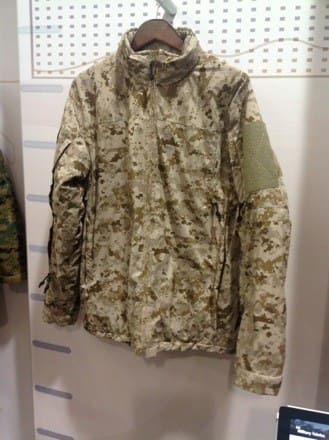
Gore Military’s Lightweight Loft technology is a combination of PrimaLoft’s Fusion insulation (80g) hang in a Gore 2-layer Fast Pack membrane laminate. A comfortable softshell, it is also water resistant. It is not only wind proof but it can also quickly be packed. Because of the breathability it dries quickly and can be used to layer over wet garments to help dry via convection.

The Lightweight Loft has been adopted by USSOCOM as level 3B of PCU. The garment was designed by Patagonia and has been printed in several camo patterns including nIR protection.

www.goremilitary.com

MDM – DRIFIRE

Tuesday, September 25th, 2012

20120925-131131.jpg

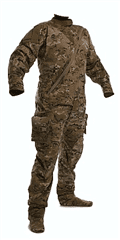
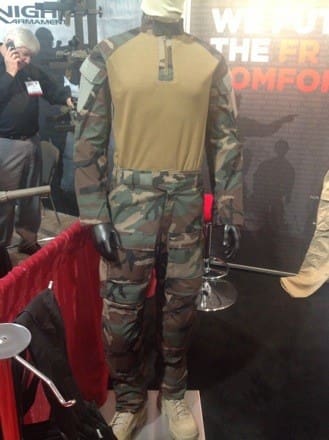
This uniform, is a design concept for MARSOC of an FR combat garment (yes, thats Woodland Camo) featuring DRIFIRE’s Foretrex fabric. Not only is it FR, but it also incorporates Drifit’s moisture management and anti-microbial features. Recently developed, it’s an alternative to currently fielded FR materials.

www.drifire.com

Gore Military – Woodland Combat Desert Jacket

Monday, September 24th, 2012

In this third of our coverage of WL Gore’s various technologies and their military applications our subject is the Woodland Combat Desert Jacket. While we are all familiar with the popular GORE-TEX brand, many do not know that WL Gore has worked extensively with the military since the mid-1980s to develop specific fabrics for various purposes.

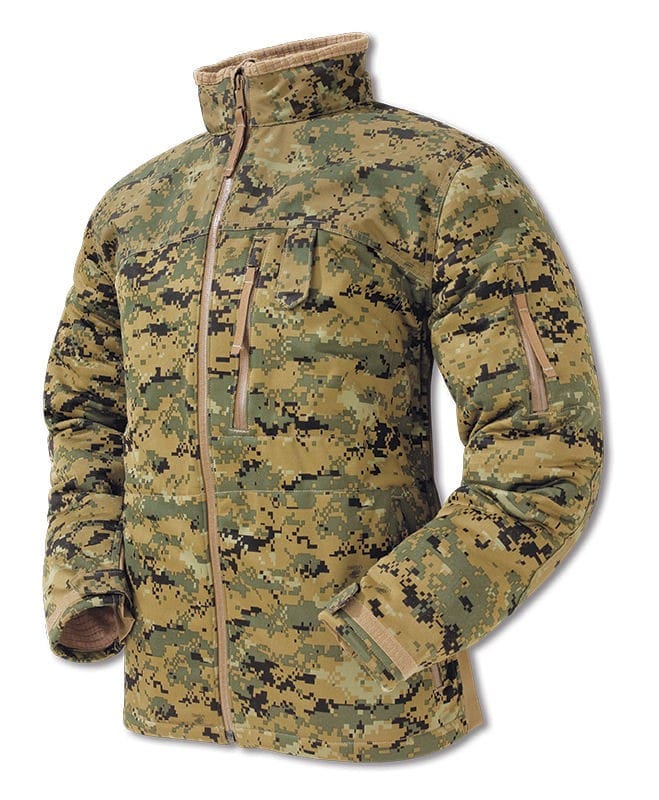
The Marine Corps has adopted a woodland MARPAT variant of the popular Combat Desert Jacket. It’s an interesting garment. Based on the name alone you’d probably realize that it was originally issued in Desert MARPAT. Other than being developed specifically for use in South West Asia, another thing that you don’t normally see with military garments is that it is made up of multiple types of fabrics. It’s a softshell garment featuring a lightweight, water-resistant fabric with a Gore membrane that is engineered to withstand rain, wind, and sand. Additionally, there are strategically placed stretch zones for increased flexibility and mobility. There is also a moisture-wicking lining. The CDJ also incorporates 99.9 percent pure silver in the gridded fleece lining to inhibit the growth of odor-causing bacteria and fungi in the garment. Early in the production of the original CDJ there were issues getting the printing to match on all of the different fabrics, but they long ago mastered that issue and as you can see from the photo, it looks great.

This waist length jacket features a chest mounted rank tab as well as a single chest and bicep pocket. Finally, there are slash handwarmer pockets on either side.

www.GoreMilitary.com

Gore Military – FR Fuel Handler Coverall

Friday, September 21st, 2012

This is the second in a series of articles covering WL Gore’s various technologies and their military applications. While we are all familiar with the popular GORE-TEX brand, many do not know that WL Gore has worked extensively with the military since the mid-1980s to develop specific fabrics for various purposes. In this article we will cover the FR Fuel Handler Coverall.

Military fuel handlers face a dirty, dangerous job. Petroleum, oils, and lubricants (POL) are both flammable and corrosive. In cold weather, fuel handlers face increased threat of cold weather injuries due to the lower freezing temperature of fuel. Diesel can remain in its liquid state down to 15 deg F. At these temperatures, spills can exacerbate the danger of cold injuries. That’s not to mention the flame threat associated with POL. To counter these environmental dangers, the Army and Marine Corps set about to develop a new garment for fuel handlers. The answer is the Fuel Handler Coverall which has been adopted by both the US Army and Marine Corps. It features GORE-TEX construction offering a wide variety of attributes. Not only does it integrate penetration-resistant against JP-8, DEET, and POL but it is also flame-resistant (thanks to Nomex technology), anti-microbial, durably waterproof, windproof and breathable and dissipates electrostatic charges. Additionally, it provides this protection for more than 25 wash/dry cycles. Finally, it is available in Coyote as well as UCP and includes n-IR signature reduction technology.

www.GoreMilitary.com

USIA and NanoSonic Integrate Pioneering Technology into Diving Products

Friday, September 21st, 2012

Oregon-based USIA (Under Sea Industrial Apparel) and Virginia-based NanoSonic, Inc have combined their manufacturing and technical expertise to transition NanoSonic’s HybridSil FR technology to dry and wet suit ensembles. Developed under a Small Business Innovative Research grant, the diver armor equipped dry and wet suits will be initially available for the military and public safety sectors, and as many next-generation defense technologies have in the past, may transition to the commercial and recreational diving communities.

Leveraging NanoSonic’s R&D 100 award winning HybridSil core technology, virtually any fabric may be infused with a molecularly engineered ceramic nanocomposite for drastic gains in environmental durability and chemical resistance with negligible influence on drape and weight. The primary focus for the first generation of dry and wet suit materials has been enhanced laceration, abrasion and puncture protection over current state-of-the-art materials. These fabrics are 15 times stronger than steel and 40% stronger than aramid fibers such as Kevlar and Nomex.
USIA was chosen by Nanosonic as its exclusive Phase III transition partner due to its extensive experience within the military and recreational diving business and immediate synergy with NanoSonic’s HybridSil technical team.

USIA is led by its founder Kim Johns, who has more than 28 years of experience in the military and public diving industries. “The bottom line benefit is a novel material that creates real dive armor,” said Johns. “For over 30 years we have all been making drysuits and wetsuits from the same types of materials – usually laminated materials (tri-lams and bi-lams), which can delaminate and separate under stress.” This technology infuses a coating on the material that changes the chemical composition and creates a innovative composite material – in this case, drysuit exposure protection. These new nanocomposite materials are fantastic. They are highly flexible and lightweight, yet extremely durable, tough and chemically resistant.

“In the short term, this new material will replace overlays for high wear areas in drysuits and wetsuit,” Johns stated. “High-use places like knees, elbows and shoulders will get an overlay that will add an extremely lightweight, pliable, yet tough layer to protect the diver. In the long term, we will be making entire suits out of these materials.”

According to Vince Baranauskas, PhD, Vice President of Polymer Science and Engineering at NanoSonic, HybridSil Dive Armor crosslinks molecules across the matrix, fiber and host ceramic particle interfaces to create an innovative product that merges the best qualities of any fabric with otherwise unobtainable performance enhancements. Imagine a light fabric that feels like paper but is 10 times stronger than any other product available. Vince Baranauskas received his Ph.D. in Macromolecular Science and Engineering at Virginia Tech, with a focus on the synthesis and characterization of siloxane functional block, random, and graft copolymers for use as durable oxidative barriers for metallic nanoparticles. Baranauskas co-invented the core technology, HybridSil, an advanced copolymer nanocomposite technology that is currently under evaluation on multiple military and commercial platforms.

PenCott-Snowdrift Fabric Available

Thursday, September 13th, 2012

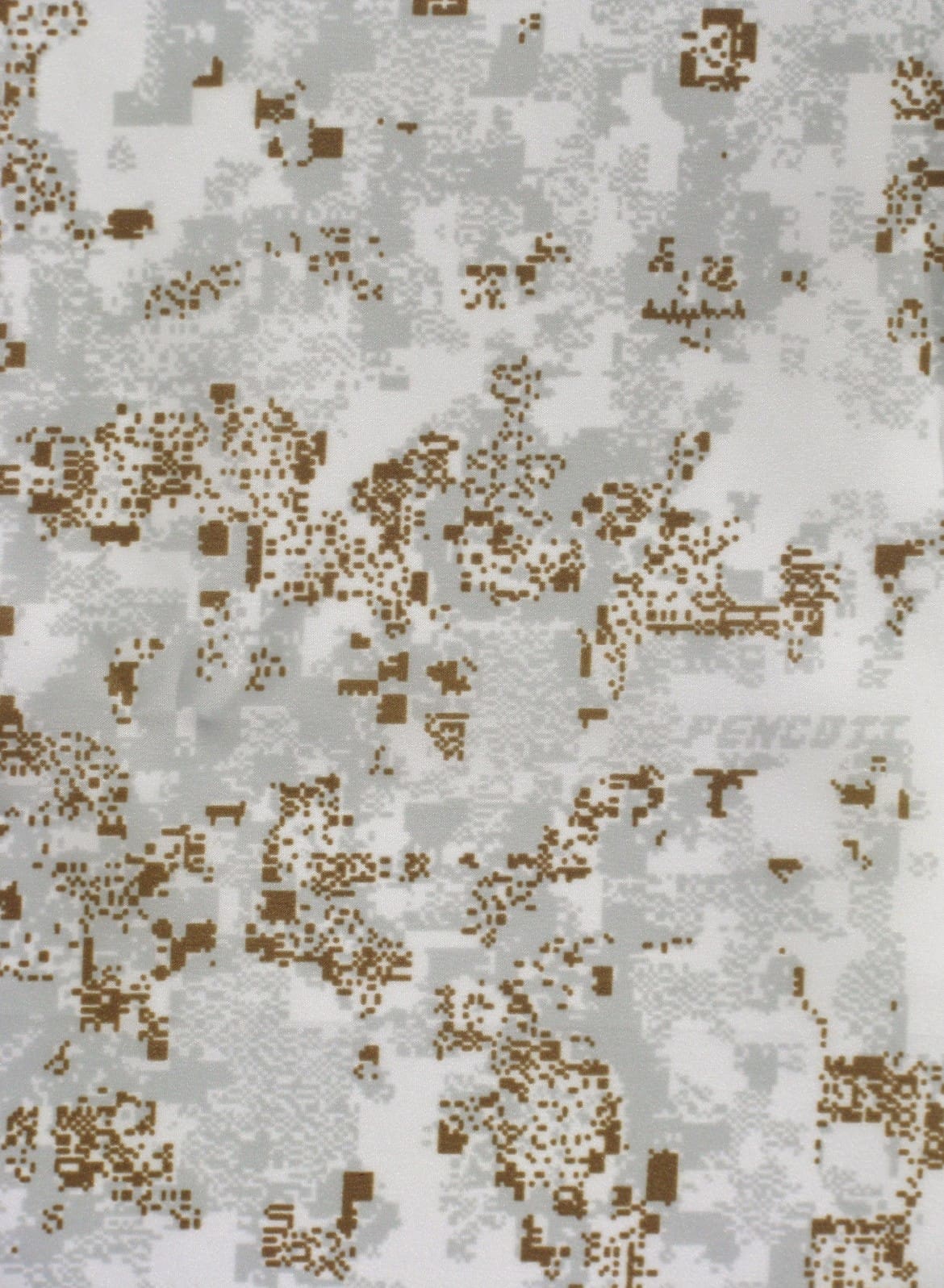
Hyde Definition has announced that the PenCott-Snowdrift camouflage pattern is now available to order on the first of three planned fabric types.

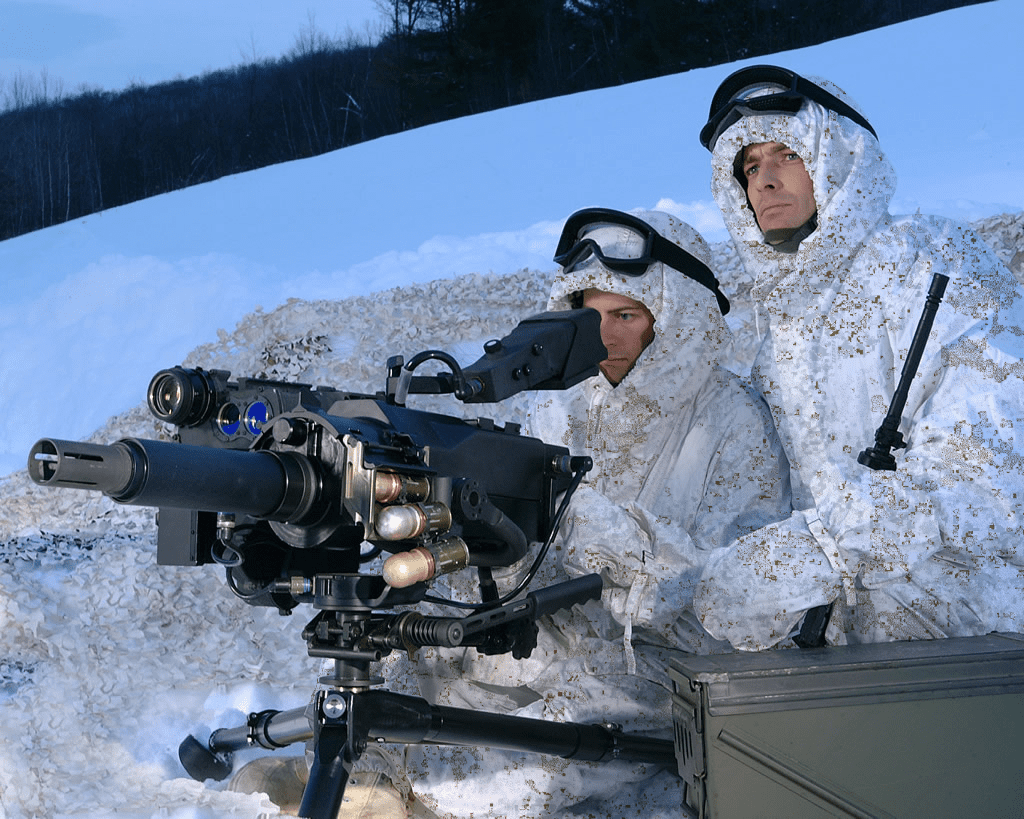
The current fabric is a lightweight, packable, quick-drying and water-resistant 100% polyester shell fabric. They are using the same fabric, finish and nIR spec as used by the US Marine Corps for their snow camouflage overwhite suit. All Hyde Definition fabrics are printed by Duro Textiles LLC in Fall River, Massachusetts, USA – and orders are shipped from their warehouse.

FABRIC specifications:
• Construction: 108 warp / 94 fill
• Weight: 4.40 linear yards per pound
• Fiber Content: 100% Polyester
• Features: water resistant, quick drying
• Finished Width: 62”

Due to popular demand, the next 2 fabrics offered in this pattern are Quarpel-treated 50/50 NYCO ripstop and DWR-finished and Urethane-backed 500D Cordura nylon.

www.hydedefinition.com

MultiCam Materials – TenCate Defender M

Thursday, September 13th, 2012

SSD regularly showcases a different MultiCam print fabric from Duro Textiles LLC. This week, we are covering the Defender M fabric from TenCate. MultiCam is a single camouflage pattern designed to hide the wearer in varied environments, seasons, elevations, and light conditions. After a great deal of commercial success and adoption by elements of US Special Operations Forces, in 2010 MultiCam was selected for use by the US Army as its Operation Enduring Freedom Camouflage Pattern (OCP).

TenCate‘s Defender M is a 6.5 ounce fabric that balances durability, breathability, and comfort. Additionally, it provides FR protection at the fiber level meaning it won’t wash or wear out. Not only does it not melt or drip but also extinguishes in the event of an explosion or flame threat. Manufactured from Lenzing FR Rayon fibers which originate in Austria, TenCate mills the fibers along with other materials to create Defender M. It is then printed by Duro in the MultiCam pattern and used by finished goods producers.

Defender M is used in the manufacture of the US Army’s Fire Resistant Army Combat Uniform (FR ACU) as well as the Australian Army’s Operational Combat Uniform.

Duro will soon stock Defender M in the MultiCam print making the manufacture of FR garments easier than ever. They offer progressive pricing based on the number of yards ordered. For more information on this or any of the full line of MultiCam fabrics visit www.multicamfabric.com or email Galpen_Ben@DuroLink.com. Also, stay on the look out for an updated MultiCam fabric website soon.