Phantom Lights

Archive for the ‘Press Release’ Category

SIG SAUER Introduces Limited Edition P220 LEGION CARRY SAO to LEGION Series Line-Up

Tuesday, September 8th, 2020

NEWINGTON, N.H., (September 8, 2020) – SIG SAUER, Inc. is pleased to announce the addition of the P220 LEGION CARRY SAO (.45 cal) to the exclusive SIG SAUER LEGION Series product line of pistols.

“The introduction of the P220 LEGION CARRY SAO is both a unique and exclusive opportunity and brings several firsts to the market for our LEGION Series pistols. Most notably this is the first introduction of both a carry size pistol and the availability of a .45 caliber for a LEGION Series pistol,” said Tom Taylor, Chief Marketing Officer, and Executive Vice President, SIG SAUER, Inc. “Additionally, this is a rare opportunity to either become a member of the exclusive SIG SAUER LEGION or expand your collection as a current LEGION member, due to the fact that this is a limited run pistol.”

The SIG SAUER P220 LEGION CARRY SAO is a carry-size .45 caliber, hammer-fired pistol, featuring a Legion Gray stainless steel slide and frame, with X-RAY3 Day/Night Sights, single action only flat trigger, and ambidextrous manual safety. LEGION enhancements include a solid steel guide rod, enhanced checkering on the front strap and under the trigger guard, front cocking serrations for easy slide operations, black G-10 checkered grips with LEGION medallion inset on the grips, LEGION Chevron engraved on the slide, and includes three (3) 8-round magazines.

P220 LEGION CARRY SAO Specs:

Overall Length: 7.1 in.
Overall Height: 5.5 in.
Overall Width: 1.5 in.
Barrel Length: 3.9 in.
Sight Radius: 5.7 in.
Weight (incl. magazine): 30.4 oz.

By registering a SIG SAUER LEGION Series pistol owners become a part of the SIG SAUER LEGION. This includes members-only access to free gear and premium merchandise, in addition to exclusive LEGION Member-only communications and events. To learn more about the SIG SAUER LEGION visit sigsauer.com.

Contact your local SIG SAUER retailer for the availability of this limited run SIG SAUER P220 LEGION CARRY SAO. Complete product specs and information for the P220 LEGION CARRY SAO are available at sigsauer.com.

Announcing the XSC Family of Micro-Compact Handgun Weaponlights from SureFire

Tuesday, September 8th, 2020

Fountain Valley, CA—SureFire, LLC, manufacturer of the world’s finest—and most innovative—illumination tools and tactical products, is proud to announce the release of the all-new XSC family of micro-compact handgun weaponlights.

We all know violent crime happens at night, and yet a premium-grade weaponlight for the best concealment guns on the market didn’t exist. Until now. Extremely compact and virtually indestructible, the new rechargeable SureFire XSC family delivers intense white light, allowing you to face the dark with confidence. Its micro-footprint doesn’t hamper concealability, so you’ll have it with you when you need it most.

There are three models in the lineup, each precisely engineered and purpose-built for a seamless & secure fit to each host handgun. The XSC-A is made for the Glock 43X & 48 with accessory rail, the XSC-P365 is for the SIG SAUER P365 &amp P365 XL and the XSC-HELLCAT is for the Springfield Armory Hellcat line of handguns. Less than 2 inches long and weighing under 2 ounces, the XSC provides an immense force multiplier to each host handgun with no compromise in concealability.


Intuitive, ambidextrous switching provides ease of momentary-or constant-on activation with one or two hands. The XSC’s premium LED delivers 350 lumens of intense white light via a parabolic reflector, creating a concentrated hot-spot with significant throw and surrounding spill. Made from rugged aerospace aluminum, the body is Mil-Spec hard anodized for scratch and corrosion resistance. The XSC is gasket sealed for weatherproof and waterproof reliability, and it is IPX7-rated.

The XSC is rechargeable via a quick-detach lithium polymer battery, and can be changed without removing the XSC from the host pistol. The battery charger is included with purchase, and it is capable of charging two batteries simultaneously. Each battery features a LED fuel gauge that displays charge level with the press of a button. If you’re serious about personal protection, there’s no excuse. The XSC is your only option.

Learn more: www.surefire.com/products/illumination/weapon-lights/xsc-weaponlight

SCUBAPRO Sunday – Global Positioning System (GPS)

Sunday, September 6th, 2020

In 1959, the Navy built the first real satellite navigation system, which was called TRANSIT. The system was designed to locate submarines and started out with six satellites and eventually grew to ten. The subs often had to wait hours to receive signals from the satellites, but the model set the stage for accurate GPS with continuous signaling from satellites in space. The GPS project was launched in the United States by the Military in 1973 to overcome previous navigation systems’ limitations, integrating ideas from several predecessors, including classified engineering design studies from the 1960s.

In 1983 shortly after the Russians shot down Korean Air flight 007 after it wandered off course into Soviet airspace over the Kamchatka Peninsula, president Reagan offered to let all civilian commercial aircraft use the GPS (once it was completed) to improve navigation and air safety.

The original system used 24 satellites. It was initially developed for use by the United States military and became fully operational in 1995. When I first joined the Military in the late ’80s, the first GPS I used was the AN/PSN-8; you had to put it on an Alice pack frame and carry it by itself like it was a radio. Because it basically was the size of one. We would use a cargo strap to secure it to the back of the bolster seats on the RHIBS. It was used until after the 1st Gulf War. Later it was replaced by the AN/PSN-11 Precision Lightweight GPS Receiver (PLGR, “plugger”) that was used during the invasion of Somalia.

The network now consists of about 30 satellites orbiting the Earth at an altitude of 20,000 km. Not all 30 are in use; some are set aside as spears.

Since 1993, the US Air Force has made its Global Positioning System (GPS) available to the world, and ever since then, that technology has found its way into our everyday lives. Once it has information on how far away at least three to four satellites are, your GPS receiver can pinpoint your location thru trilateration (it also uses cell towers if close enough). The system is made up of three parts: satellites, ground stations, and receivers. Satellites act like the stars in constellations—we know where they are supposed to be at any given time. The ground stations use radar to make sure that you are where you think you are. The receiver is continuously listening for a signal from satellites. Just about everything, today can tell you your position on the Earth from your phone to your watch and dive computers. 

I remember when the first GPS watches came out, you had to make sure it had a clear view of the sky. You would also have to make sure the older military GPS’s had the most updated crypto in them, or it didn’t work and had to carry dead weight with you. Today there are a lot of options for handheld or even dive mask mounted. The SCUBAPRO Galileo HUD Pro can hold up to 31 GPS waypoints and a full dive computer. It will give you a compass heading, tell you the time and distance to your target. The one bad thing about all the civilian GPS is if there ever is a full out war, they will be the first things turned off. So, don’t forget the basics of time, speed, and distance.  

With two new satellites in orbit and eight more in various stages of development, the latest, GPS III, is already being built. The next generation of GPS should go fully operational around 2023.

The first GPS III satellite launched by Lockheed Martin cost an estimated $529 million to build. The satellite’s outstanding longevity will offset some of this upfront cost. Unlike the early GPS satellites, which have a design life of 7.5 years, the new GPS III satellites will last 15 years — twice as long as the oldest satellites in orbit and 25 percent longer than the latest satellites in the GPS fleet. The new GPS III satellite system is designed to adapt to new technology, and its mission objectives change. The next generation of GPS will be up to 3 times more accurate than existing GPS technology. That means the 5 to 10-meter accuracy you see now with current GPS technology will be more like 1 to 3 meters.

With all these improvements aimed at the civilian side of things, it’s easy to forget that GPS is first and foremost a military technology. There will be new command centers capable of controlling the existing GPS satellite and the new GPS III satellites from the ground. The next generation of GPS is expected to be available by 2022-2023.



General Dynamics Mission Systems and Dedrone Enter Strategic Partnership to Provide Counter-Drone Technology to Defense and Civil Customers

Friday, September 4th, 2020

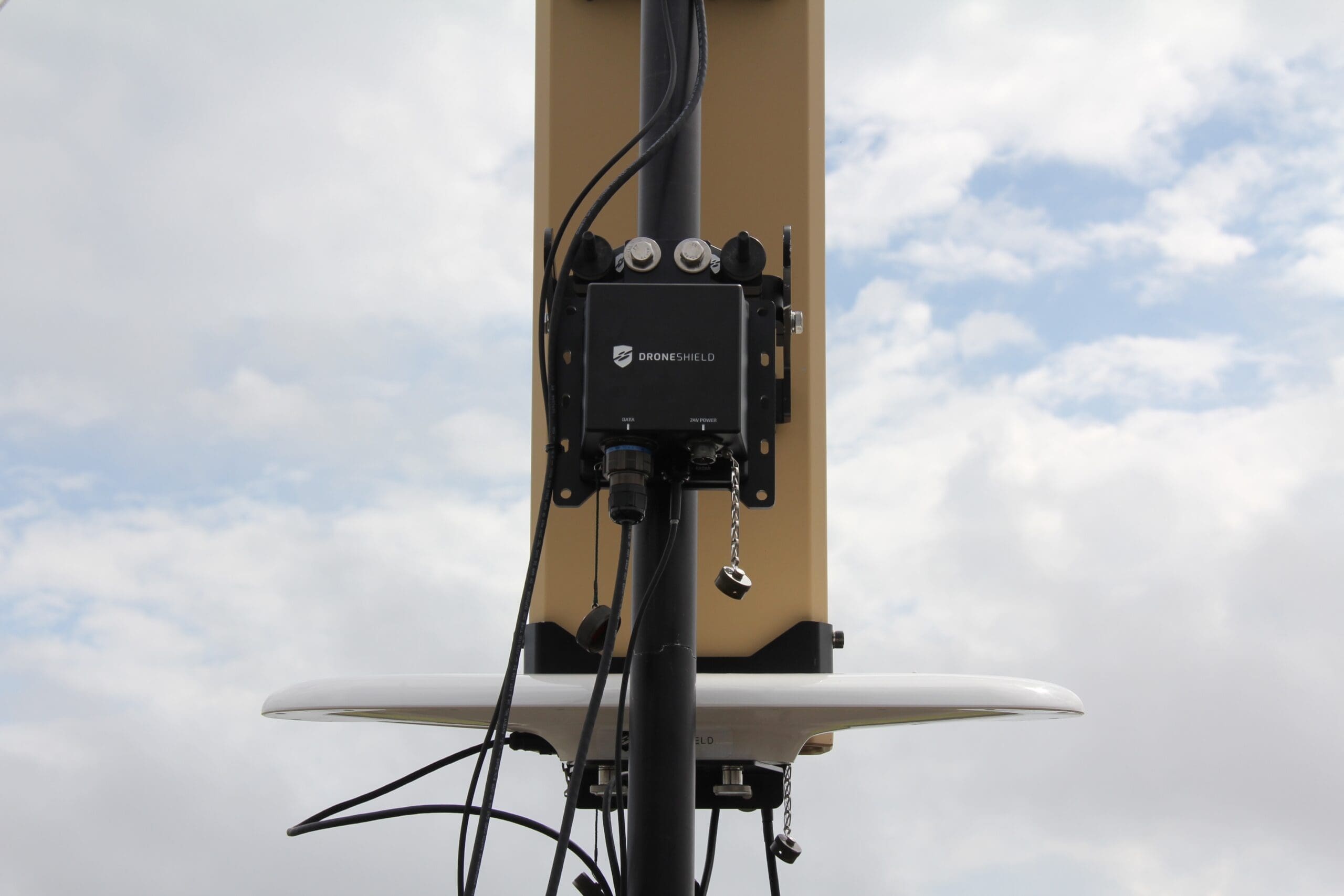
FAIRFAX, Va. – General Dynamics Mission Systems and Dedrone, the market leader in airspace security, announced today their strategic counter-drone partnership, providing General Dynamics’ global network with access to Dedrone’s complete drone detection and defeat technology. As part of this strategic agreement, General Dynamics Mission Systems becomes a value-added reseller for Dedrone’s counter-unmanned aerial system (C-UAS) capabilities and has made a significant equity investment in Dedrone. General Dynamics will exclusively supply Dedrone’s counter-drone technology to their global defense, civil government, intelligence, and critical infrastructure customers.

“The intrusion of private and restricted airspace by unmanned aerial systems is one of the fastest-growing threats facing our customers, and Dedrone’s counter UAS technology platform is the market-leading solution to defeat those threats,” said Chris Brady, president of General Dynamics Mission Systems and a newly appointed member of Dedrone’s advisory board. “We’re excited to partner with Dedrone to provide counter-drone capabilities to our global customer base.”

In the counter-drone technology market, Dedrone’s exclusive focus on C-UAS detection and defeat have enabled them to become the industry leader with the rare distinction of having production systems fielded and in operational use worldwide. The Dedrone C-UAS technology portfolio combines machine-learning software with best-in-class hardware sensors, electronic attack methods such as smart jamming, and defeat weapons to provide early warning, classification of, and mitigation against drone threats. Dedrone’s capabilities are used by hundreds of customers globally, including the U.S. military, allied and coalition forces, correctional facilities, airports, utilities, and corporations, as well as other public and private organizations.

“Dedrone is thrilled to be partnering with General Dynamics Mission Systems, a leader in building smarter mission-critical products and systems,” shares Aaditya Devarakonda, CEO of Dedrone. “With General Dynamics, Dedrone’s technology will reach a broad, global customer base, opening opportunities to provide mission-critical airspace security systems to customers both in the U.S. federal and defense sectors, as well as their global critical enterprise security customers.”

dedrone.com

Tectonica Australia Secures Over $25 Million in Land 400 Phase 2 and Global Supply Chain Contracts

Friday, September 4th, 2020

Tectonica is pleased to announce that it has secured a major contract with Rheinmetall Defence Australia for the manufacture of sophisticated camera technology for Army’s new Boxer 8×8 Combat Reconnaissance Vehicles (CRVs) delivered under the Commonwealth of Australia’s Mounted Combat Reconnaissance Capability project (LAND 400 Phase 2).

Under this contract, Tectonica will deliver its ALTERA Local Situation Awareness System (LSAS) on all BOXER 8×8 CRVs to be manufactured at Rheinmetall’s Military Vehicle Centre of Excellence (MILVEHCOE) from 2021.

The LSAS uses visual technologies to provide vehicle crews and operators with improved situational awareness by enabling them to see their surrounding environment by day and by night while remaining protected under armour.

This is the second LAND 400 Phase 2 contract awarded to Tectonica, following on from the September 2019 award to install LSAS on vehicles on the early capability delivery fleet of BOXER 8×8 CRVs currently being built in Europe.

Contributing to the Australian Government’s focus on becoming one of the world’s top 10 defence exporters, Tectonica has also secured a significant export contract to design, develop, manufacture, and export its BANTAM data and power distribution system to the German Army under a contract with Rheinmetall Electronics. The technology will be deployed through the Bundeswehr’s Very High Readiness Joint Task Force (VJTF) and is fitted to every soldier wearing a computerised backpack.

Developed in Australia, with the support of the Defence Science Technology and Australian Defence Force to reduce the bulk and weight carried by soldiers, the BANTAM power system distributes power from a central source and gives the dismounted soldier the freedom to concentrate on their mission, confident that the modular high-tech power management device will last the duration of their mission.

The total value of these contracts awarded to Tectonica is over $25 million.

Tectonica’s Managing Director, David Levy said, “Our partnership with Rheinmetall is a great example of industry working together to strengthen the Australian Defence Force and build sovereign industry capability”.

www.tectonica.net

Shield Sights, Pioneer of Compact Micro Red Dot Optics Is Pleased to Announce the New “Glass Edition” RMSc

Thursday, September 3rd, 2020

For Immediate Release – Dorset, England, U.K. – Shield Sights, Pioneer of compact micro red dot optics is pleased to announce it is teaming up with legendary Glock Inc. to present the new “Glass Edition” RMSc.

The Glass Edition of our RMSc standardizes the popular, ultra clear and scratch resistant glass lens that was previously only available as a custom option. The new Glass Edition also features a strengthened lens housing and upgraded electronics with improved battery contacts to further enhance reliability under all conditions.  

“Collaborating with great companies such as Springfield Armory, Smith & Wesson, Walther, Canik, and Sig Sauer on creating subcompact optic ready platforms has been a strengthening experience for our brand and has driven users to recognize our unique features and the high quality products that we offer,” said James White, CEO Shield Sights. “I feel the latest collaboration with a company I respect greatly, Glock inc., solidifies the Shield footprint as the new industry standard for sub-compact optic ready pistols.”

RMSc Glass Edition Features:
Shield footprint
All glass lens
Strengthened lens housing
Updated electronics
4 MOA and 8 MOA dot options
1-3 year battery life

MSRP: $500

The RMSc Glass edition is currently available for sale through the Shield dealer network or on the Shield website: www.shieldpsd.com

Registration Now Open for AUSA

Thursday, September 3rd, 2020

Registration is now open for AUSA Now, the 2020 virtual annual meeting of the Association of the U.S. Army that will be held Oct. 13-16.  

A combination of live and prerecorded programming is planned, including an opening day address from Secretary of the Army Ryan McCarthy. Defense Secretary Mark Esper, Army Chief of Staff Gen. James McConville and many other Army leaders also will speak.  

A splashy opening ceremony is planned for Oct. 13, beginning about 10 a.m. The schedule for other programs will be set to accommodate live viewing in most time zones.

Several contemporary military forums are planned, as well as special programs for NCOs and soldiers featuring Sgt. Maj. of the Army Michael Grinston, military family seminars and a town hall meeting with Army leaders, and programs aimed at the Army National Guard, Army Reserve and for cadets at the U.S. Military Academy, ROTC and Officer Candidate School.  

Retirement planning and benefits presentations are also in the works.  

The final day of AUSA Now is set aside for AUSA chapter and region events. 

Simultaneous streaming is planned over multiple channels to accommodate the varied programing, which will include Warriors Corner presentations from the Army, xTechSearch briefs from competitors in the Army’s innovation competition, and seminars for small businesses, including the ability to speak directly to Army representatives.  

Virtual exhibits will also be part of AUSA Now, including industry engagement opportunities.  

Registration is required to view programming and visit the exhibit halls. There is no fee. Membership in AUSA is encouraged but not required, and some member-only promotions are expected.  

For more, click here.

ATLANTIC SIGNAL Receives Order for Custom Tactical Communication Systems from ATF Special Response Teams

Wednesday, September 2nd, 2020

Atlantic Signal recently received a significant order from the BATF Special Response Teams for 440 custom tactical communication systems.

Having been a long-time customer, the ATF Special Response Teams once again turned to Atlantic Signal to address their newest tactical comms requirements. The ATF had updated radios and helmets and, as a result, needed to address those updates with communications gear that worked with both the new radios and helmets. Further, the selection of the company’s new VIPER 1 push-to-talk, gives the Bureau the flexibility to add more capabilities in the future including additional/different radio models, vehicle and aircraft intercom communications, smartphone integration, radio cross-banding and chat programs.

The Bureau chose two push-to-talk solutions; the company’s popular single comm Invictus push-to-talk with hard-wired Motorola APX coiled cable as well as the previously mentioned VIPER 1 PTT including plug and play APX radio cables.

Head worn systems ordered include the exclusive Atlantic Signal 3M/Peltor ComTac V headset in Olive Drab featuring an ambidextrous, noise canceling boom microphone, over-the-head removeable band & Team Wendy EXFIL helmet mounts with quick release back plate. The ComTac V is the next generation Peltor ComTac headset featuring an Atlantic Signal custom manufactured downlead cable with PTT interface. The Bureau also ordered both single and dual comm Atlantic Signal Lo-Vis R23 kits. The kits were designed for use as a ruggedized upgrade to the traditional 2 and 3 wire kits traditionally used by law enforcement. Both kits can be used with both push-to-talks purchased. The dual comm/dual ear Lo-Vis kit can be connected to the company’s single comm Invictus PTT, allowing the end-user to receive incoming radio comms in both ears. The same Lo-Vis kit can be connected to the VIPER 1 PTT and when a single radio is connected, the end user will receive incoming radio transmissions in both ears and when two radios are connected to the VIPER 1PTT, the incoming audio will automatically be split (right worn radio in right ear / left worn radio in left ear).  

“It is a privilege to have the continued trust of the Bureau of Alcohol and Firearms Special Response Teams. The ATF has been purchasing from us going all the way back to the 1990s. Obviously their communication needs have changed dramatically over the past 25 years that we’ve been doing business with them and we have worked tirelessly to keep up with their ever-changing requirements, just as we have with literally thousands of other customers. At this crucial and unprecedented time in our nation’s history, it is truly an honor to have the continued trust of this Federal Law Enforcement agency. We will continue to strive to meet their expectations throughout the coming years,” stated Randall Hedrick, President and Managing General Partner of Atlantic Signal.

Atlantic Signal is based out of Topeka, KS where they develop, design, manufacture and sell tactical communications and accessories. The company started in 1989 with a focus on tactical law enforcement (the company was then known as New Eagle International). Today, thirty-one years later, the company’s clients include US Customs and Border Patrol, Naval Special Warfare, NYPD ESU, DEA, MARSOC, US ARMY, US Marine Corps, AFSOC, US Coast Guard and US Secret Service among thousands of military and law enforcement clients around the world.

www.atlanticsignal.com