XC3 Weaponlight

Archive for the ‘Press Release’ Category

DroneShield Secures $8.2 Million Contract Supporting Western Military Operations

Thursday, January 1st, 2026
  • DroneShield has received a contract totaling $8.2m for a western military end-customer.
  • This hardware is on-the-shelf with delivery expected to be completed prior to 2025 year end or in early Q1 2026, and payment expected in Q1 2026.

30 December 2025 – DroneShield (ASX:DRO), a global leader in counter-drone technology, today announced it has secured an $8.2 million contract to supply counter-drone capabilities to a Western military end customer through an in-country reseller.

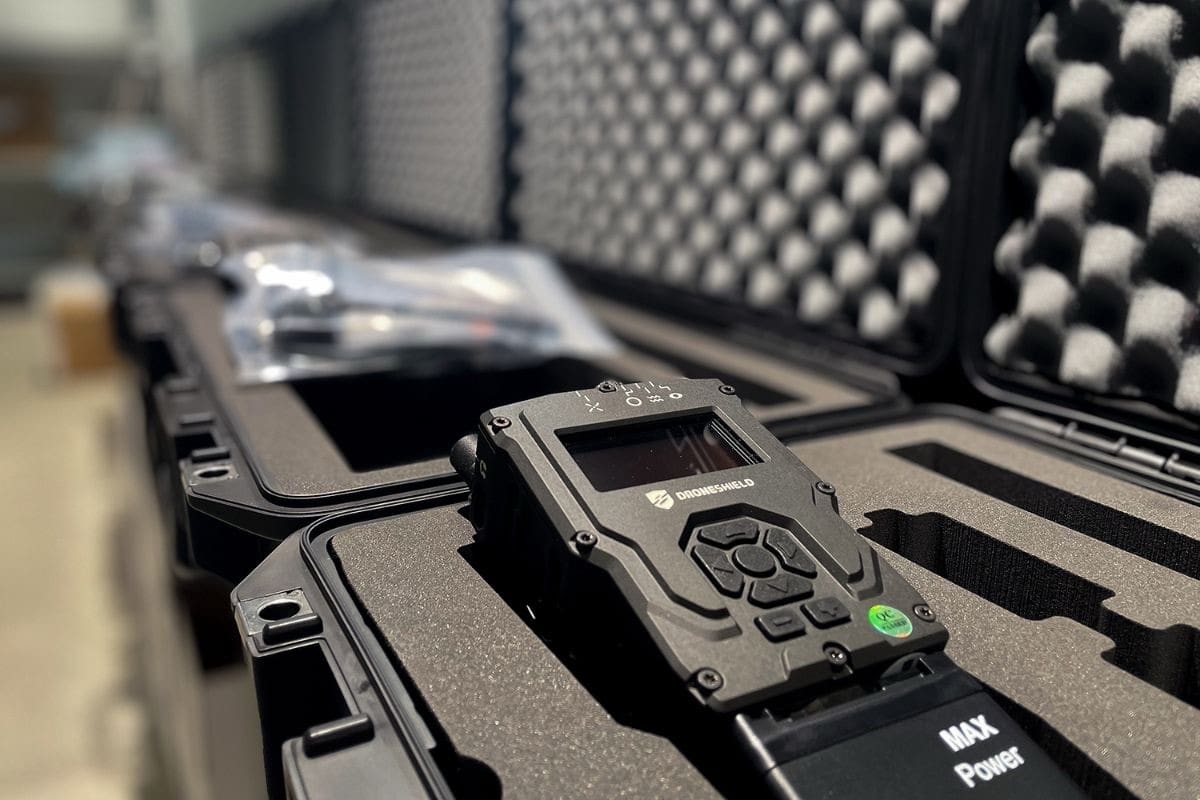
The contract, placed through an in-country reseller, includes handheld counter-drone systems, associated accessories and spare kits, and ongoing software updates. The reseller is a wholly owned subsidiary of a global, publicly listed defense and technology organization responsible for distribution to the military customer within the region.

The award builds on a long-standing relationship between DroneShield and the reseller, with multiple programs supported over the past seven years. The continued engagement reflects DroneShield’s ability to deliver reliable, field-ready counter-drone solutions that can be deployed quickly and integrated into existing force structures.


Image: DroneShield RfPatrol Mk2

Handheld counter-drone systems remain a critical capability for modern military operations, particularly for dismounted units operating in dynamic and contested environments. These solutions provide immediate situational awareness, identification, and protection against uncrewed aerial threats, supporting force survivability and operational freedom across a wide range of mission profiles.

The contract also highlights broader trends shaping military procurement, including the need for scalable counter-drone solutions, accelerated delivery timelines, and technologies that can adapt to rapidly evolving threat environments.

As DroneShield enters 2026, the company continues to see strong global momentum across defense and security markets, driven by increased focus on airspace protection, layered counter-drone architectures, and the growing role of unmanned systems in modern conflict.

Lee Wise Named President of W.S. Darley & Co.

Wednesday, December 31st, 2025

Paul C. Darley Continues as CEO and Chairman, Ensuring Strong Leadership, Continuity and Seamless Transition

Paul C. Darley

Itasca, IL, December 31, 2025 – W.S. Darley & Co., a leading provider of firefighting, emergency, and defense equipment, is proud to announce a decade-long succession plan with the appointment of Lee Wise as its new President effective January 1, 2026. Lee Wise succeeds Paul C. Darley, who has served in the role for 30 years. Lee will continue to report to Paul in his on-going roles as Chief Executive Officer and Chairman of the Board, guiding the company’s strategic vision and long-term growth.


Lee Wise

Lee currently serves as the Chief Financial Officer for Darley. His promotion to President marks a significant milestone in the company’s storied history, as the first non-family member to assume this role in 118 years. Recognized for his extensive industry experience at Rockwell-Collins and Brunswick and steadfast alignment with the company’s core values, Lee has earned the full support of the Darley Board, management team, and the entire family.

“Our succession plan has been in progress for over a decade. Lee brings the perfect blend of corporate and defense experience, coupled with a passion for driving growth. His leadership style and ethical approach align perfectly with our professional family culture,” said Paul Darley. “He has demonstrated an unwavering commitment to our mission and to the communities we serve. The Darley family, most notably our fourth generation, stands united behind Lee as he steps into this important role.”

Audrey Darley Welch, Vice President of Defense Supply Chain added, “All fourth-generation family members working in the business are fully united in our support of Lee. His outside perspective and proven leadership will play a critical role as we continue to professionalize the organization and pursue our next phase of growth. We look forward to learning from Lee and working together to advance the legacy our family has built over generations.”

“I am honored to step into the role of President at Darley, and deeply grateful for the trust placed in me by our Board of Directors, shareholders, and colleagues. Their confidence inspires me, and I am committed to honoring our values and driving meaningful progress together,” comments Lee.

As President, Lee will oversee daily operations, drive innovation, and continue to strengthen relationships with customers, partners, and employees. His appointment ensures that Darley remains at the forefront of the industry, delivering excellence and reliability to those who depend on its products and services. Lee resides in Lincolnshire, IL with his wife, Nicole, and their three children. For more details, visit our Inside Darley video series.

Dedrone by Axon’s 10th Annual Airspace Security Report 2026

Monday, December 29th, 2025

As the global leader in airspace security, Dedrone by Axon is at the cutting edge of how drone technology is reshaping public safety, enterprise operations, and defense. The sky is becoming one of the most dynamic and contested domains in modern life, that now demands continuous awareness and coordination. 

The coming years will redefine who protects our airspace and how, as drones become inseparable from daily operations and security missions. The line between “drone use” and “drone defense” is disappearing. 

This 10th Annual Report includes Dedrone by Axon’s predictions for how this new era of airspace will evolve — and how agencies, enterprises, and nations will adapt to a world where awareness and control of the sky defines safety and security.  Airspace is the new front line.

We have examined both counter-drone (AKA counter uncrewed aircraft systems or CUAS) trends as well as positive drone usage across public safety and defense sectors.

Public Safety & Enterprise CUAS

Prediction 1: Exponential Increase in CUAS Adoption Across Public Safety Agencies

From stadiums to state fairs: airspace defense becomes part of every security plan.

Counter-drone systems will expand far beyond airports and stadiums into every major public venue—from outdoor concerts to parades, sports arenas, and civic gatherings. The World Cup in 2026 and 2028 Los Angeles Olympics will be the catalysts that normalize counter-drone as part of every large-scale security posture. Expect state and local agencies to begin mandating airspace security audits for any event over a specified attendance threshold.

Prediction 2: Airspace Security Becomes an Enterprise Compliance Standard

In 2026, airspace security will move from emerging technology to corporate requirement. Major facilities—especially those related to energy, logistics, and technology—will begin including drone detection and tracking in routine physical security audits. Insurance providers and risk assessors will start requiring proof of airspace monitoring, just as they do for cybersecurity today. Airspace intelligence will become a built-in layer of enterprise security infrastructure. Counter-drone sensors will integrate into real-time awareness systems that unify land, air, and perimeter data into a single operational picture. Building automation, access control, and video analytics platforms will all ingest airspace telemetry as a standard data stream, giving enterprises continuous visibility from the ground to the sky.

What changes inside the enterprise:

• Airspace security added to compliance checklists for insurance and risk audits.

• Integration into real-time awareness systems connecting land, air, and perimeter monitoring.

• APIs and interoperability standards emerging across physical security, building automation, and video analytics platforms.

Prediction 3: The Great Convergence of Positive and Protective Airspace

Public safety agencies and enterprises will no longer separate “drone use” from “drone defense.” DFR fleets, delivery operators, and counter-UAS systems will operate within a shared airspace layer where detection, authorization, and deconfliction happen automatically. Airspace awareness will evolve into a common operating picture, connecting public safety, commercial, and enterprise users through shared data and trust protocols. This will blur the line between response and protection—enabling legitimate missions while automatically isolating unknown or unsafe flights.

Prediction 4: The Sky Gets Low Altitude Highways

Governments and industry will begin establishing structured drone corridors — fixed routes in the low-altitude airspace that function like highways for autonomous flight. The first versions will appear near major metro areas and logistics hubs, coordinated between the FAA, state authorities, and major operators like Amazon, Wing, and Zipline. Each corridor will rely on integrated UTM and counter-UAS technology to manage traffic and prevent incursions.

Over time, these drone highways will form a national low-altitude transportation grid, complete with right-of-way rules, altitude tiers, and enforcement mechanisms — the foundation for safe, scalable drone operations in shared airspace.

Drone Usage: Drone as First Responder, Delivery, Inspection and More

Prediction 5: Drones Become Standard Equipment for Law Enforcement

Drones will evolve from a specialized resource into standard patrol gear. Every officer or patrol vehicle will have a small, easily deployable drone for close-quarters and indoor operations—giving officers immediate eyes on a scene during building searches and other confined-space incidents. At the same time, dock-based patrol drones will handle the majority of calls for service and situational awareness. These highly automated systems will launch, recharge, and redeploy on their own, providing continuous overwatch and rapid response across an agency’s coverage area. Together, they will deliver layered aerial support that shortens response times and extends visibility without adding personnel.

Prediction 6: Shared Air Support Across Agencies

Public safety agencies will begin pooling Drone as First Responder (DFR) resources into local airspace networks. Cloud-based tasking, shared flight zones, and unified command dashboards will let police, fire, and EMS access the same docked drone fleets across neighboring jurisdictions. AI-based flight management will enable one operator to supervise multiple drones simultaneously across active incidents, extending real-time coverage citywide without adding staff. Expect the first public-private DFR consortiums to emerge, delivering local mutual-aid coverage for emergencies, pursuits, and natural disasters.

Prediction 7: Part 108 Opens the Skies and Drives the Need for Integrated Airspace Management

In 2026, the US FAA will finalize Part 108, unlocking routine BVLOS operations and fuelling mass drone adoption across delivery, inspection, and DFR programs. The rule will clarify right-of-way responsibilities and legitimize autonomous flight at scale. Yet as more authorized drones take flight, airspace deconfliction and counter-UAS will become more critical than ever. Part 108 will expand the need for integrated airspace management, blending drone operations, UTM, and counter-UAS into one connected ecosystem. Additionally, these new standards in the US will encourage other countries to follow suit. The EU, UK, and Australia will begin harmonizing around similar right-of-way and BVLOS standards to enable commercial drone corridors. Global companies like Amazon, UPS, and Zipline will demand consistent counter-UAS frameworks at the same time, creating new opportunities for exportable airspace-security tech.

Defense CUAS

Prediction 8: UAS Types & Usage Shifts

In 2026, the concept of “airspace defense” will expand into multi-domain defense of uncrewed systems, transforming how militaries and public safety agencies think about threat detection and response. Expect increased operational use of Uncrewed Underwater Vehicles (UUVs), Uncrewed Surface Vehicles (USVs) and Uncrewed Ground Vehicles (UGVs), all of which are capable of intelligence, surveillance and reconnaissance (ISR) and payload delivery missions within their respective operational environments. Micro-sized drones, including insect-like “cybugs” and bio-hybrid platforms, will move from prototype to field testing, offering near-undetectable capabilities for espionage, sabotage, or facility infiltration. Simultaneously, nations will accelerate investment in autonomous or semi-autonomous interceptor drones designed to disable or capture hostile drones in midair, bridging the gap between electronic warfare that disrupts signals and traditional kinetic countermeasures. These will include net-based, kinetic, and energy-based systems, purpose-built to operate safely over populated or sensitive areas. As RF-based defenses become ubiquitous, adversaries will shift toward RF-silent and fully autonomous drones, rendering legacy RF-controlled systems obsolete. 

Prediction 9: Defense Primes Will Begin to Operate with More of a Startup Mindset 

Long development  timelines and proprietary hardware / software will become increasingly unacceptable to defense customers.  With speed to field becoming a procurement requirement, traditional defense primes will begin to operate more like startups, leveraging open architecture designs and making decisions to buy versus build more often. 

Prediction 10: Shift from CUAS “Air Walls” to Fully Networked & Integrated CUAS Systems

Air walls which exist only at the border are no longer sufficient. We have seen that drones can be smuggled into a country while powered off and then take off once they are well past the air wall – in depth – conducting devastatingly effective missions. These incidents will not only push nations to expand their internal detection networks but also to form multi-country CUAS collaborations, beginning in Europe and later extending through NATO and Indo-Pacific partnerships.  These networks will expand on the initial air wall concept by establishing comprehensive networked CUAS systems which exist not only at the border, but also deep within each country.  These CUAS coalitions will leverage shared airspace intelligence protocols, enabling the exchange of drone signatures, RF telemetry, and incident data in real time.

Prediction 11: AI-Mediated Engagement Decisions

The next evolution of counter-UAS systems will pair AI decision-support with human oversight, mirroring missile-defense frameworks. Automated sensors and targeting algorithms will evaluate speed, flight path, and threat behavior to generate real-time “shoot/no-shoot” recommendations, placing humans on the loop rather than fully in control. This model will enable faster, safer responses in complex airspace and reduce the cognitive burden on operators managing multiple threats at once. Ethical and policy debates will intensify as militaries test the balance between automation and accountability in kinetic engagements.

This year’s predictions highlight the rapid convergence of drone operations and airspace security. Public safety agencies are integrating drones into daily response. Enterprises are expanding their use of aerial data. Governments are redefining airspace policy while preparing for new classes of threats.

Drones now serve every mission — and challenge every boundary. The next phase of airspace security is about managing coexistence and countering threats across defense, public safety, and enterprise domains.

Boneyard

Prediction 8: Airspace Defense Becomes Multi-Domain Defense

The counter-drone mission will no longer be isolated to the air. In 2026, we’ll see increased use of underwater, surface, ground-based and micro-sized uncrewed systems, requiring integrated command and sensor layers across domains.

• Uncrewed Underwater Vehicles (UUVs) used to surveil or conduct attacks on maritime vessels or infrastructure.

• Uncrewed Ground Vehicles (UGVs) adapted for intelligence, surveillance and reconnaissance (ISR) and payload delivery missions.  

• Uncrewed Surface Vehicles (USVs) used for surveillance or to conduct attacks on maritime vessels or critical infrastructure.

• Micro Uncrewed Vehicles such as Insect-sized “cybugs” and bio-hybrid drones will move from experimental to operational testing.  Their small size, low heat output, and biological camouflage will make them nearly undetectable to conventional sensors, enabling new forms of espionage, sabotage, and infiltration inside secure facilities

Prediction 9: Rise of ‘Drone-on-Drone’ Interceptors

Expect an explosion of interceptor drone programs — autonomous or semi-autonomous UAS designed to physically disable or capture hostile drones midair. They will bridge the gap between “soft kill” electronic measures and conventional firepower. Methods will include net-based, kinetic, and energy-based interceptors that can operate safely over populated areas.

Prediction 10: Radio Frequency (RF) Controlled Drones Will Become Obsolete on the Battlefield

As RF-based counter-drone technology is fully integrated at the tactical edge, adversaries will all but abandon traditional RF controlled drones, instead focusing on RF-silent, autonomous technology.

Orqa Scales Global Production Capacity to 1m Drones

Monday, December 29th, 2025

Orqa’s New Global Manufacturing Program Expands Proprietary Drone Production to 1 Million Units Annually

Osijek, Croatia / California, US — December 2025: Orqa, Europe’s leading developer of FPV (first-person view) and unmanned aerial systems (UAS), today announced the launch of its Global Manufacturing Partnership Program, a strategic initiative that will expand Orqa’s production capacity to more than one million drones per year through collaborations with the US Army and with trusted partners worldwide.  This game-changing move will create, for the first time, a resilient global supply chain for the industry, wholly independent of China.

Building on its proven ability to produce 280,000 drones annually at its European headquarters in Osijek, Croatia, Orqa is now extending this robust production model globally through a decentralised network of strategic manufacturing partners. 

Partnerships are already established across key territories in North America, Europe, the Middle East, and the Indo-Pacific, with additional agreements in progress to further expand Orqa’s global footprint. Together, these facilities will form a distributed and resilient production network that meets rising global demand for defence-grade UAS platforms while supporting re-industrialisation and creating high-value manufacturing jobs in local markets. 

“We are a rapidly growing business with the capacity to produce 280,000 drones at our headquarters alone,” said Srdjan Kovacevic, CEO of Orqa. “Our Global Manufacturing Partnership Program extends this capability by enabling allied markets to produce the same high-performance systems using Orqa’s standardized components. The agreements we’ve already secured put us on track to achieve our target capacity of one million drones per year, a significant milestone at a time when global security challenges are evolving rapidly.”

Through this model, Orqa combines world-leading engineering with localized manufacturing agility, ensuring that each manufacturing partner can deliver drones and components to the highest standards while reducing lead times, logistics complexity, and regulatory barriers. By increasing global production to 1 million per year, allied territories will have the means to level up their defence tech capabilities significantly.

orqafpv.com

Schiebel Successfully Concludes Initial Camcopter S-300 Flights in France

Sunday, December 28th, 2025

Vienna, 18 December 2025: Schiebel has successfully completed the first CAMCOPTER® S-300 flight test campaign in France, marking an important milestone in the programme’s progression. The flights were conducted at the CESA Drones test site in Sainte-Hélène near Bordeaux, where the S-300 further expanded the operational envelope, reaching a total of 100 flight hours.

The flight activities in France build on previous experience gained with the CAMCOPTER® S-300 and represent a further step in expanding the aircraft’s operational flight envelope. Conducted in a military environment, the flights focused on verifying key flight characteristics and overall system performance.

“France has been a trusted partner for Schiebel for many years, making it a natural location for the next phase of CAMCOPTER® S-300 flight activities,” said Hans Georg Schiebel, Chairman of the Schiebel Group. “Our long-standing relationship with the French Navy and our local presence through Schiebel Aéronaval SAS reflect our deep roots in France, while the S-300 is being developed to meet the requirements of international military and government users worldwide, building on Schiebel’s global experience in unmanned aviation.”

During the flights, the CAMCOPTER® S-300 demonstrated stable and controlled behaviour while undergoing typical evaluations for an unmanned air system at this stage, including handling qualities, flight control response and overall aircraft performance.

The CAMCOPTER® S-300 builds directly on Schiebel’s extensive experience with the CAMCOPTER® S-100, a maritime-proven unmanned helicopter with several hundred thousand flight hours accumulated worldwide. Drawing on this operational heritage, the S-300 is designed to deliver increased payload capacity, extended endurance and enhanced mission flexibility for demanding military and government applications.

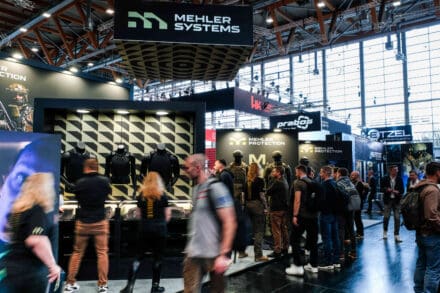
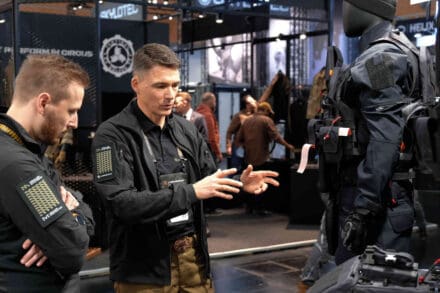
Daniel von Chamier, Group Director of Sales, on Scaling Growth at Mehler Systems

Sunday, December 28th, 2025

FULDA, GERMANY (18.12.2025)

In a recent interview, Daniel von Chamier, Group Director of Sales at Mehler Systems, reflects on market dynamics, growth priorities, and the importance of execution as demand across global defence and security markets continues to rise.

Q: The global defence and security sector is experiencing a surge in investment and modernisation. How is Mehler Systems positioning itself to respond to this growing demand?

A: What you’re seeing now is the result of decisions we started making quite a while ago. As requirements evolved and projects became larger and more complex, it became clear that relying on existing structures alone would not be sufficient.

We are continuing to expand production, and at the same time we are further strengthening the sales organisation. A key part of this is our increased focus on international markets. For a long time, we were very strong in German-speaking regions. That remains important, but it is no longer enough on its own.

Today, we work with customers who have very different ways of procuring, very different expectations, and very different operational realities. That’s why building international teams remains a priority. People who understand the language, the culture, and how things really work on the ground make a huge difference, especially as demand continues to grow.

Q: From your perspective, what are the main factors behind Mehler Systems’ strong market performance in recent years?

A: It’s never just one factor. What has worked well for us is that several things came together at the right time and were executed consistently.

One key element is our in-house capability. We can develop, test, and validate solutions internally across different product areas. This gives us speed and flexibility when customer requirements change or when new operational needs emerge.

Experience also plays a big role. We’ve been doing this for more than 40 years, so we understand materials, suppliers, and production realities very well. We know where risks are and how to manage them. On top of that, customers increasingly look for complete systems rather than individual products. Being able to align protection, clothing, and equipment within one group gives us a clear advantage.

Q: Which markets are currently driving growth, and why?

A: Right now, Europe and the Asia-Pacific region stand out very clearly. What’s driving this is a change in mindset. For many years, defence planning was focused on expeditionary missions. That has shifted.

There’s a renewed focus on territorial defence and readiness. That naturally leads to more investment and more procurement. And it’s not just about buying more of the same. Customers are looking at complete systems, how things work together, how fast they can be delivered, and how sustainable the supply chain is.

From what I see, this isn’t a short-term reaction. It’s a longer-term adjustment to a changed security environment.

Q: Trust is critical in this industry. How do you build and maintain trust with customers and end users?

A: Trust is built through performance, not through talking. That means being transparent about what works, what doesn’t, and where the limits are. We test a lot, and we don’t hide the results. Durability, comfort, integration, all of that matters in real use.

We don’t treat testing as a sales argument. We treat it as responsibility. At the end of the day, someone is wearing this system in a situation where things can go very wrong very quickly. If you keep that in mind, a lot of decisions become very clear.

The same applies to partnerships. We work long-term. We look for partners who think the same way and who understand that this is not about quick wins, but about reliability over years.

Q: Mehler Systems works with a number of long-term defence and security partners across different regions. What defines these relationships?

A: What really defines our long-term partnerships is continuity. These relationships are built over many years, often across several generations of equipment and changing operational requirements. It’s not about delivering one solution and moving on, but about staying relevant as needs evolve.

Working with the same partners over a long period forces you to adapt. Requirements change, threats change, and operational concepts change. Being a trusted partner means listening carefully, adjusting solutions, and sometimes rethinking established approaches rather than simply repeating what worked in the past.

Another key element is discretion. In this industry, not everything that creates value can or should be communicated publicly. Respecting that is part of building trust. The real measure of these partnerships is not visibility, but longevity and consistency.

For Mehler Systems, these long-term relationships are essential. They create stability, provide honest feedback, and help us develop integrated systems that are grounded in real operational experience rather than assumptions.

Q: How do you manage growth without neglecting long-standing customers?

A: Honestly, that’s one of the hardest parts. We don’t want to tell long-term customers that they have to wait because something new and exciting came up somewhere else. At the same time, we don’t want to turn away new customers either.

The only way to deal with that is to grow properly. That means more people in sales, more capacity in production, and better coordination internally. We’ve invested a lot in all three areas.

It’s still a balancing act, and there are moments where demand is right at the edge of what’s comfortable. But with the expansions we’ve made, we still have room. That’s important, because reliability disappears very quickly once you start overstretching.

Q: Mehler Systems works closely with elite European special operations units such as KSK. How have these partnerships evolved over time, and how do they influence your work today?

A: They keep us honest. When you work with people who actually use the equipment in real operations, there’s no room for theory or marketing ideas that sound good on paper. That has shaped these partnerships from the very beginning.

Over time, the relationship naturally moved beyond a classic customer–supplier setup. We don’t just deliver products and wait for the next order. We stay in close contact, talk openly about what works, what doesn’t, and what needs to change. Having former operators within the organisation helps a lot here, because there’s a shared understanding of operational reality and no need to translate everything into theory.

The feedback we get is very practical. It covers protection levels, mobility, comfort, temperature management, weight, and how systems behave when someone is moving constantly, tired, and under pressure. That feedback directly influences how we develop ballistic solutions, tactical clothing, and equipment, and how all of it works together as a system.

Q: Large-scale programmes such as MOBAST have received significant visibility in recent years. What impact has this had on Mehler Systems’ position in the market?

A: One of the most important aspects is that this programme was delivered fully on time, which is far from common in large defence projects.

Successfully executing a programme of this scale demonstrates that we are capable of handling complex, high-volume requirements while maintaining quality and delivery discipline. It shows that we can manage both large framework programmes and smaller, more specialised projects at the same time.

It also proved something internally. That we can run a massive programme like that and still keep everything else going. Police contracts, other military customers, smaller projects, none of that stopped.

Q: What do projects of that scale say about Mehler Systems’ ability to adapt?

A: They show that we can adapt very quickly when we have to. For MOBAST, we had to ramp up production fast and even set up new facilities in a short time. That’s not easy, and it only works if people across the organisation are aligned.

What I’m particularly proud of is that quality didn’t suffer. Not a single system was rejected. That doesn’t happen by accident. It happens because people care about what they’re doing.

Q: The project in support of Ukraine has been one of the most complex undertakings in recent years. What can you share about Mehler Systems’ involvement and contributions?

A: What I can say is that this was a true group effort. We were asked to provide an integrated, head-to-toe solution, combining protection, clothing, and equipment.

Coordinating such a project under time pressure and across multiple entities is challenging, but it also shows what the group is capable of. Everything so far has been on track, and deliveries have started as planned.

Beyond the technical and logistical aspects, it’s a project where everyone involved understands the responsibility that comes with it.

Q: Looking ahead, what are your priorities for further strengthening Mehler Systems’ global presence?

A: Internationalisation remains the main priority. We want to be closer to customers in more regions, without losing what makes us reliable.

That includes strengthening sales channels, building the right partnerships, and selectively expanding know-how where it makes sense. Trade shows are part of that, because they allow direct conversations with users and decision-makers.

For me, growth only makes sense if it’s sustainable. Being able to say yes to a customer is easy. Being able to deliver on that yes is what really matters.

About Daniel von Chamier:

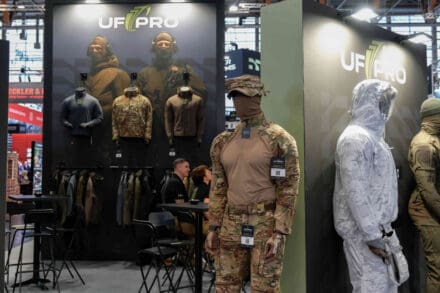
Daniel von Chamier is Group Director of Sales at Mehler Systems, overseeing global sales activities across the group and its brands, including Mehler Protection, Lindnerhof, and UF PRO. He brings extensive international leadership experience, having previously served as Managing Director and Group COO within the LHD Group, as well as Managing Director at the uvex group. His career spans senior sales and executive roles across the US, Europe, Africa, the Middle East, and the Asia-Pacific region. Earlier in his career, von Chamier held operational roles in emergency services and law enforcement, providing him with first-hand insight into the realities faced by end users.

For more information about Mehler Systems, please visit mehler-systems.com.

Rheinmetall and SATIM Sign Technology Supply Agreement: Support for German Bundeswehr in SAR Programme

Saturday, December 27th, 2025

The technology group Rheinmetall, based in Düsseldorf, and SATIM Monitoring Satelitarny, a Polish deep-tech company specialising in the AI-supported analysis of synthetic aperture radar (SAR) imagery, have signed a technology supply contract. The content is the support of the German customer’s satellite-based reconnaissance program. The agreement formalises SATIM’s role as a technology supplier to Rheinmetall for the delivery of intelligence, surveillance, and reconnaissance (ISR) capabilities for the Bundeswehr.

Under the contract, SATIM will supply AI-based capabilities that transform large volumes of complex radar imagery into actionable information. The agreement supports SPOCK-1, the German satellite reconnaissance program awarded to Rheinmetall ICEYE Space Solutions. SATIM will provide its technology as a supplier within the European Union, while Rheinmetall will operate the system independently in Germany.

Timo Haas, CEO of Rheinmetall Electronics: “Our partnership with SATIM marks another important milestone in advancing Rheinmetall’s strategy to strengthen our capabilities and footprint in an increasingly digital and connected battlespace. By combining our expertise and technologies, we are building a powerful foundation for faster, data-driven decision-making and superior situational awareness for our customers. This collaboration is another example of cutting-edge and combat-ready solutions at speed.”

Jacek Strzelczyk, CEO of SATIM: “The contract between SATIM and Rheinmetall combines the agility and innovation of a deep-tech start-up with the scale and mission experience of a global defence prime. Together, we will deliver effective solutions that support Germany’s national security priorities and will strengthen allied defence capabilities. This milestone demonstrates the maturity of our technology and its alignment with Germany’s ISR requirements.”

The technology supply contract brings together Rheinmetall’s system integration expertise and its established position in the German defence  market with SATIM’s AI-based data analysis capabilities. The collaboration is intended to enhance situational awareness, support informed decision-making, and enable timely operational responses in a complex and evolving security environment.

Savage Range Systems Names New Sales Director

Saturday, December 27th, 2025

WESTFIELD, Massachusetts – December 19, 2025 – Savage Arms®, an iconic firearm manufacturer, announces the appointment of Steve Thomas as Sales Director of Savage Range Systems, Inc.

Thomas brings over 25 years of experience in sales and business development within the shooting range industry. His extensive background includes directing projects for the U.S. military, as well as federal, state and local law enforcement agencies, and the recreational shooting sector. 

“We are very excited for Steve to join the Savage family,” said Beth Shimanski, Vice President of Marketing at Savage Arms. “His wide range of experience in the public and private sectors make him an extremely versatile addition to our operation. As we continue to grow and expand in the coming year, we are sure that this addition will allow our team to perform at the highest level.” 

Thomas also has experience in the International Ministry of Interior (MOI) and Ministry of Defense (MOD) markets. Based in Minnesota, Thomas is a lifelong sports enthusiast with a passion for all things Minnesota. 

Steve Thomas can be contacted at sthomas@savagearms.com or (801) 602-0014. For more information about Savage Range Systems’ leading line of range technology, systems, shoot houses and more, visit www.SavageRangeSystems.com