I wish this feature the from USSOCOM were longer, but it offers some great insight into an SF legend, LTC Bucky Burrus, a founding member of the Army SMU and a very well deserved recipient of the 2025 Bull Simon Award.


I wish this feature the from USSOCOM were longer, but it offers some great insight into an SF legend, LTC Bucky Burrus, a founding member of the Army SMU and a very well deserved recipient of the 2025 Bull Simon Award.
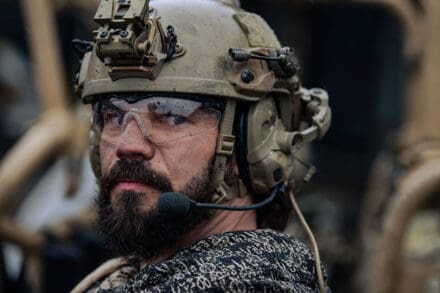
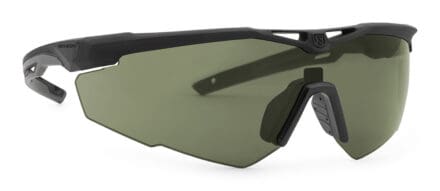
Essex Junction, Vermont (June 20, 2025) — Revision Military, a global leader in protective eyewear and integrated soldier systems, has been awarded a contract by the Czech Republic Ministry of Defense to supply the Czech Special Forces with its StingerHawk® Eyewear Systems. The contract includes delivery of 943 highly specialized 4-lens kits, engineered to support a wide range of operational requirements across diverse mission environments.
Each StingerHawk kit provides operators with maximum flexibility, including lenses for Clear, Smoke, I-Vis™ Verso, and laser protection applications. These advanced optical solutions deliver enhanced ballistic protection, visual performance, and mission adaptability, meeting the stringent operational standards of Czech Special Operations Forces.
“This award reflects the Czech Republic’s commitment to equipping its Special Forces with world-class protective capabilities and validates Revision’s ongoing investment in innovation and performance,” said Karan Rai, Chief Executive Officer of Revision Military. “We are honored to support the mission-critical requirements of our allied partners and to continue expanding our global footprint in delivering advanced soldier protection solutions.”
About I-Vis™
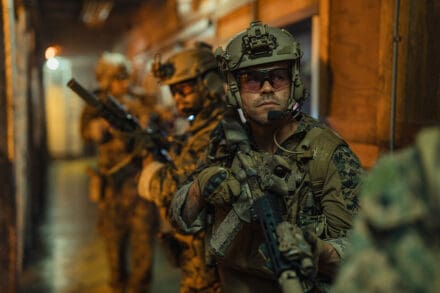
Revision’s I-Vis™ technology platform delivers enhanced visual clarity and target discrimination through selective light filtration and advanced color optimization. The I-Vis™ Verso lens provided under this contract improves contrast sensitivity, depth perception, and situational awareness in complex lighting conditions — enabling operators to identify threats and navigate terrain with greater precision and confidence.
About LazrBloc™
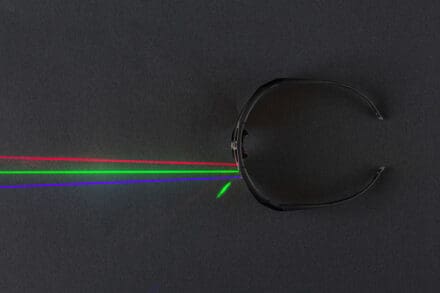
Revision’s LazrBloc™ laser protective lenses provide specialized defense against both accidental and directed laser threats, which are increasingly prevalent in modern operational theaters. LazrBloc™ lenses are engineered to block specific laser wavelengths while preserving visibility, allowing operators to maintain situational awareness without compromising safety.
About Revision
Revision Military designs and manufactures mission-proven protective solutions for military and tactical professionals worldwide. With advanced research, development, and manufacturing capabilities, Revision delivers protective eyewear, integrated head systems, and power management solutions trusted by military forces in over 45 countries, including numerous NATO member nations. Revision’s product portfolio reflects its commitment to protecting the vision, performance, and survivability of the modern warfighter.
For further information, visit: www.revisionmilitary.com
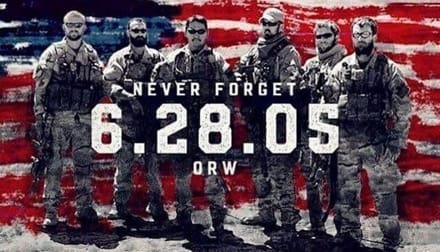
Today marks the 20th anniversary of Operation Red Wings, considered one of the greatest losses in the SOF community and darkest day in SEAL history.
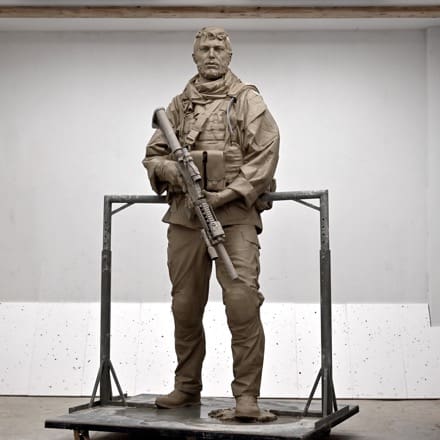
Among those killed was U.S. Navy SEAL Shane Patton, a native of Boulder City, Nevada and the final SEAL missing a memorial at home. Those days are over, as the memorial statue is complete and being unveiled today, Saturday 6/28/2025, at 4pm Vegas time.
Along with Shane Patton, We Honor:
Matthew G. Axelson, Petty Officer2nd Class E-5, U.S. Navy
Danny P. Dietz, Petty Officer Second Class E-5, U.S. Navy
Jacques J. Fontan, Chief Petty Officer E-7, U.S. Navy
Shamus O. Goare, Staff Sergeant E-6, U.S. Army
Corey J. Goodnature, Chief Warrant Officer 3 CW3, U.S. Army
Daniel R. Healy, Senior Chief Petty Officer E-8, U.S. Navy
Kip A. Jacoby, Sergeant E-5, U.S. Army
Erik S. Kristensen, Lieutenant Commander O-4, U.S. Navy
Jeffrey A. Lucas, Petty Officer 1st Class E-6, U.S. Navy
Michael M. McGreevy, Lieutenant O-3, U.S. Navy
Marcus V. Muralles, Sergeant First Class E-7, U.S. Army
Michael P. Murphy, Lieutenant O-3,U.S. Navy
Shane E. Patton, Petty Officer 2ndClass E-5, U.S. Navy
James W. Ponder, Master Sergeant E-8, U.S. Army
Stephen C. Reich, Major O-4, U.S. Army
Michael L. Russell, Sergeant First Class E-7, U.S. Army
Chris J. Scherkenbach, Chief Warrant Officer 4 CW4, U.S. Army
James E. Suh, Petty Officer 2nd Class E-5, U.S. Navy
Jeffrey S. Taylor, Petty Officer 1st Class E-6, U.S. Navy
We’d also like to thank TNVC’s founder, Victor DiCosola, a proud supporter of our US Military’s warriors and a good friend of Shane’s father, James Patton. When he heard of they were raising funds for a memorial, Vic pledged to support the Shane Patton Foundation to see this effort through to completion.
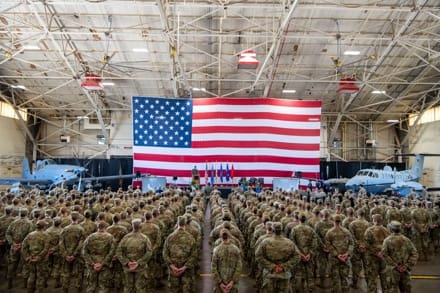
WILL ROGERS AIR NATIONAL GUARD BASE, Okla. —
The 137th Special Operations Wing held a welcome ceremony for the arrival of OA-1K Skyraider II aircraft to Will Rogers Air National Guard Base, June 07, 2025, Oklahoma City.
The Skyraider II is a cost-effective, versatile aircraft that will provide essential support for operations outlined in the 2025 Interim National Defense Strategy. WRANGB now serves as the home for the Skyraider II’s formal training unit under the 492nd Special Operations Wing.
“Seamless integration with total force partners has been the standard for the 137th Special Operations Wing,” said Col. Shelby Dreyer. “We are continuing that legacy as we usher in this Total Force Initiative alongside the 492nd Special Operations Wing to train for the multi-capable mission of the OA-1K Skyraider II.”
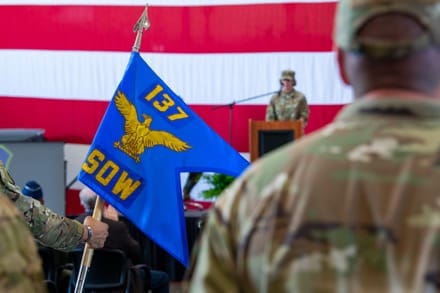
The ceremony introduced the Skyraiders II’s capabilities and mission set to 137 SOW Citizen Airmen. The Skyraider II is a new cost-effective crewed aircraft that supports geographically isolated Special Operations personnel in austere locations.
“The 137th SOW continues to build and preserve a force where human performance is our critical advantage – leaning into the advanced training and resource management that supports our preparedness in every environment, against every adversary,” said Dreyer. “With the partnership of our wings, this is the right time. Oklahoma is the right place.”
By SSgt Nicholas Swift
137th Special Operations Wing

Over the weekend, Japanese X account @teppoblog surprised us with a post listing National Stock Numbers associated with the Lightweight Intermediate Caliber Cartridge (LICC) Individual Weapon System (IWS), a novel weapon and ammunition manufactured by FN America. We reached out to several sources to validate the NSNs and they came back as real. We must point out that Teppoblog has a history of sharing correct info.
The LICC IWS project originated in 2019 from requirements provided to the Irregular Warfare Technology Support Directorate (IWTSD), a government office, which is responsible for conducting research and development in support of U.S. and allied organizations involved in Irregular Warfare. In fact, one of those sponsors of this system, Canada Special Operations Forces Command just nominated the program’s caliber, 6.5 x 43mm (.264) for NATO Standardization. FN America was awarded a development contract and we’ve kept up on the program with a couple of updates. Last November, FN delivered carbines, machines guns, suppressors, and ammunition to several SOF organizations.

The LICC IWS has four purpose-built components:
• Lightweight ammunition family
• Improved Performance Carbine
• 25-round purpose-built, polymer magazine
• Signature Suppressor
These new NSNs pertain to the three variants of the Improved Performance Carbine (11.5” Close Quarters Battle (CQB), 14.5” Carbine, and 18.5” Recce (Designated Marksmanship Rifle)) as well as two suppressors associated with the system.
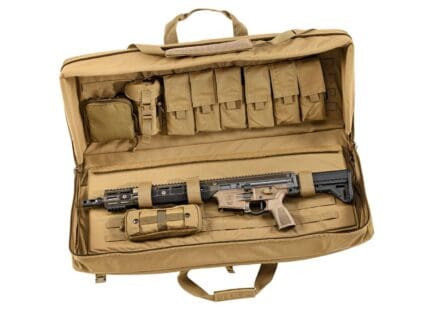
The NSNs are:
NSN 1005-01-729-0039, FN IMPROVED PERFORMANCE CARBINE 12.5 IN CQB WITH BII*
NSN 1005-01-729-0052, FN IMPROVED PERFORMANCE CARBINE 14.5 IN CQB WITH BII
NSN 1005-01-729-0046, FN IMPROVED PERFORMANCE CARBINE 18.12 IN REECE (sic) WITH BII
NSN 1005-01-728-9868, SUPPRESSOR, FLOW 264 FOR IMPROVED PERFORMANCE CARBINE
NSN 1005-01-728-9874, SUPPRESSOR, FLOW 7.62 FOR IMPROVED PERFORMANCE CARBINE
*Basic Issue Items
The suppressors are manufactured by HUXWRX.

The NSNs are managed by the Special Operations Forces Support Activity at Lexington Bluegrass Army Depot and are available for requisition by Army, Navy, Marine, Air Force and SOCOM elements and activities.
Coincidentally, they’ve added a belt-fed machine gun to the capability in the form of the FN Evolys, but we still haven’t seen an NSN. Logic goes, that if the carbines have them, it should as well.
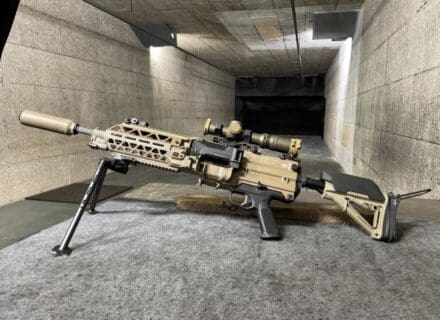
FN has also demonstrated versions of Evolys in 7.62 NATO and 6.5 CM in addition to the .264 model developed for this program. In fact, the first version of Evolys seen in the US was as the 6.8mm candidate for Next Generation Squad Automatic Rifle which rolled into NGSW. While it proved a desirable candidate for NGSW, it was too heavy for the specs spelled out in the requirement.
Due to the multiple caliber options, a forward leaning organization could buy the LICC machine gun and then arrange for the conversion kit from FN America for the desired caliber.
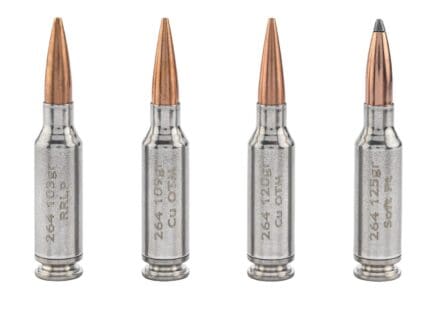
Likewise, we have not yet seen any Department of Defense Identification Codes (DODIC) for the ammunition. Not saying they don’t exist, but a reliable source of .264 ammunition is critical for adoption.
At any rate, these NSNs offer an opportunity for select DoD organizations (or perhaps Federal LE) to take advantage of the production contract associated with this program.
Although the U.S. Special Operations Command has embraced incorporating artificial intelligence into the 21st-century battlespace, one senior special operations forces leader noted that AI has non-tactical uses, which are proving very advantageous for the SOF community.

While speaking at the AI+ Expo in Washington today, Socom’s vice commander, Marine Corps Lt. Gen. Frank L. Donovan, said AI tools are helping the command build its budget and run more efficiently at the administrative level.
He admitted that talking about budgets “doesn’t sound exciting,” but it’s important to Donovan to “show that we have a good return on the investment” that American taxpayers make in Socom.
“We use this tool, integrating data from across multiple databases into a single pool, and [then] use generative AI to deliver insights and provide true courses of action to make sure that our baseline budget and our top line remains about constant,” he explained.
He added that such a process helps ensure the command is executing operations globally while cutting away excess and modernizing at the same time.
In terms of how human capital relates to budgeting, Donovan said the people who contribute to the process are still necessary for their valuable insights.
“We can have a large number of staff officers doing that type of work, and we want them still in the loop to provide their expertise,” he said. “But [with AI], we can move quicker — with more volume and data — to make a better decision.”
Socom has made significant AI-related inroads over the past year, particularly when it comes to software.
Last month, one industry expert said he would rate Socom’s overall progress on AI development as a “six or seven” on a scale of one to 10, noting that he sees areas where the command can continue to grow, including further integration of AI into legacy hardware systems.
Currently in its second year, the AI+ Expo is a forum for industry, government and academic research entities to exhibit some of the latest technological breakthroughs in AI, biotech, energy, networks, microelectronics, manufacturing and augmented reality, as well as discuss their implications for U.S. and allied competitiveness.
By Matthew Olay, DOD News
During my visit to Canada last week, I spoke with multiple people across the Army and industry and one topic dominated discussions, the 6.5 x 43 cartridge.
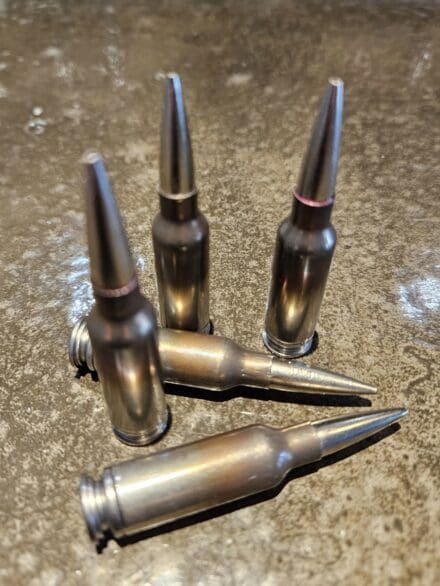
You probably know it by the designation of 264 USA, named when it was developed by the US Army Marksmanship Unit as an intermediate cartridge. Turns out, it’s a ballistic Goldilocks between 5.56 and 7.62 NATO and that term came up over and over in conversation. It offers additional range and lethality over both 5.56 and 7.62 NATO with a compromise in ammunition weight between the two. Additionally, it can also be used for both rifle and belt-fed applications.
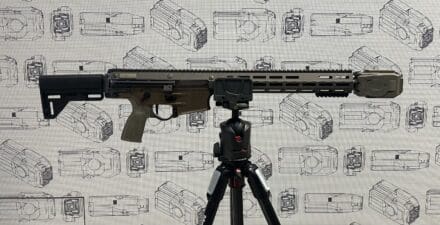
Those of you familiar with the FN America Lightweight Intermediate Caliber Cartridge (LICC) Individual Weapon System (IWS) developed for the Irregular Warfare Technology Support Directorate (IWTSD), will know the caliber which at one point has also been referred to as “264 International” as a nod to the program’s co-sponsor CANSOFCOM. They are so impressed with what they’ve observed during the LICC program that they have decided to press forward.
With an eye to the future, CANSOFCOM is pursuing a NATO Standardization Agreement (STANAG) for 6.5 x 43 mm in partnership with at least one additional NATO member. At this point, the other party has not been disclosed. However, I know it is not the US, which has been working on the 6.8 x 51mm common case cartridge as their path forward.
STANAG 4884. Technical Performance Specifications Providing For The Interchangeability of 6.5mm x 43 Ammunition.
With this new development, it seems that the caliber wars aren’t yet over. Hopefully, with NATO standardization, likely with brass and composite case designs, we will see more manufacturers of ammunition as well as additional weapon designs.
We will update this story as we learn more.
– By Eric Graves
HURLBURT FIELD, Fla. —
The 24th Special Operations Wing furled its flag May 16, 2025, marking the transition of the organizational structure of the Special Tactics enterprise, the latest change in Air Force Special Operations Command’s commitment to adapting to the evolving demands of the strategic environment.
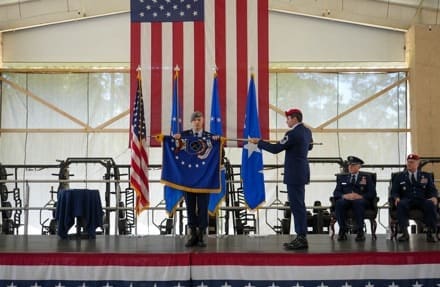
“The furling of this flag represents not an end, but another transition point for both the Special Tactics community and AFSOC,” said Lt. Gen. Michael Conley, commander Air Force Special Operations Command. “I truly believe that the best days of Special Tactics lie ahead, not behind us. Special Tactics remains vital to AFSOC and our Nation.”
Activated in 2012 as the ST functional wing, the 24 SOW was initially designed to maximize the effectiveness and advocacy of AFSOC’s air-to-ground integration force. However, the operational environment has evolved significantly over the past 13 years, impacting the role of ST within AFSOC.
“The 24th Special Operations Wing has not ended. It has simply passed into each of you. Wherever you go next, carry it forward. Lead with the quiet strength that built this wing. Fight with the heart that made it great. Honor those who cannot stand beside us today,” said Col. Dan Magruder, outgoing 24 SOW commander.
While the demand for small, self-sustaining, and distributed forces – the attributes inherent to ST units – are more valuable than ever, the integration of ST into the larger AFSOC enterprise has matured considerably. ST leaders, both officer and enlisted, now consistently fill key leadership positions across the command, SOF enterprise and joint force.
“This isn’t a division of labor. This is a unity of effort as we transition to the next phase,” said Col Joseph Gross, 720th Special Tactics Group commander. “I can’t wait to see the next two years as we move out with a new [organization],” he added.
The 720 STG will now report directly to AFSOC headquarters continuing to provide operational and administrative oversite of the 2-series special tactics squadrons, as well as the Special Tactics Training Squadron which is responsible for combat mission qualification for all ST operators.
“The evolving strategic landscape and advancing adversary capabilities underscore the invaluable nature of Special Tactics’ skills,” said Conley. “Innovation, ingenuity, boldness, and valor have been defining attributes of the ST community since its inception and are critical as AFSOC adapts to meet the challenges ahead.”
By AFSOC Public Affairs
AFSOC Public Affairs