TYR Tactical

Archive for the ‘UAS’ Category

AeroVironment Acquires Planck Aerosystems, a Leading Provider of Advanced Unmanned Aircraft Navigation Solutions

Thursday, August 18th, 2022

• Transaction significantly accelerates AeroVironment’s development of advanced autonomy capabilities for the company’s unmanned aircraft systems

• Embedded flight autonomy solution enables intelligent unmanned aircraft system capabilities for operations from moving vehicles and vessels on land or at sea


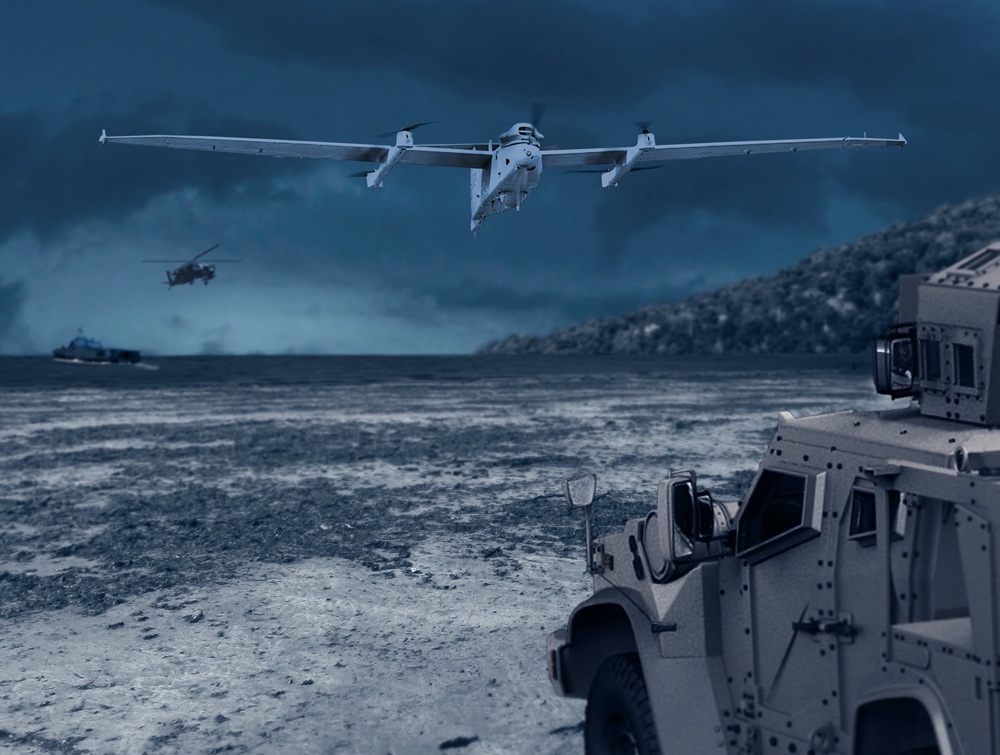
Planck Aerosystems’ advanced flight autonomy and navigation solutions will be deployed and integrated with AeroVironment’s existing portfolio of intelligent, multi-domain robotic systems, such as JUMP 20 medium unmanned aircraft systems. (Image: AeroVironment, Inc.)

ARLINGTON, Va., Aug. 17, 2022 – AeroVironment, Inc. (NASDAQ: AVAV), a global leader in intelligent, multi-domain robotic systems, announced today it has acquired Planck Aerosystems, Inc. (“Planck”), a leading provider of advanced unmanned aircraft navigation solutions. The acquisition will significantly accelerate AeroVironment’s development of advanced autonomy capabilities.

Founded in 2014, Planck has worked closely with customers from the U.S. Department of Defense, security agencies, allied governments and offshore industrials to develop customer-centric unmanned aircraft solutions. Planck’s products include embedded technologies and fully integrated unmanned aircraft systems (UAS) and leverage their deep technical expertise in UAS guidance and navigation, autonomy and artificial intelligence.

Planck is a small technology company based in San Diego, California and will be acquired by AeroVironment’s Petaluma-based medium unmanned aircraft systems (MUAS) business segment to focus on integrating its flight autonomy solutions, such as ACE™ (Autonomous Control Engine), into AeroVironment’s offerings to enable safe, autonomous takeoff and landing from moving platforms on land or at sea in GPS-denied environments. Other solutions include AVEM™, a fully integrated mobile tethered sensor platform designed for persistent autonomous operation from moving vehicles and vessels in any environment, and a suite of machine-learning object detection and tracking systems that are customized for specific end-user needs.

“Planck has a compelling product and technology roadmap with valuable capabilities that we plan to deploy and integrate with AeroVironment’s existing portfolio of intelligent, multi-domain robotic systems,” said Wahid Nawabi, AeroVironment chairman, president and chief executive officer. “The Planck team has developed advanced unmanned autonomy and navigation solutions for various defense and commercial customers and by working together, we believe we offer more compelling and differentiated solutions to our customers moving forward.”

“This transaction accelerates AeroVironment’s innovation in flight autonomy, increasing the effectiveness of our solutions in contested environments and reducing the cognitive load of operators, and adds a tethered SUAS to our portfolio of systems, creating exciting opportunities for upcoming programs of record,” Nawabi added.

“AeroVironment’s heritage of creating innovative solutions to meet customer needs is an ideal fit for the Planck team,” said Josh Wells, Planck chief executive officer. “We couldn’t be more excited about joining forces with AeroVironment to deliver innovative, multi-domain unmanned systems to the next generation of U.S. and allied warfighters. AeroVironment’s reach, technical capabilities and portfolio of unmanned systems will enable the Planck team to scale our products to more customers, and to provide better solutions in less time.”

Zenith AeroTech Delivers Two Tethered Aerial Vehicles to Federal Law Enforcement Agency

Friday, August 12th, 2022

Quad 8 long-endurance unmanned platforms to provide video, communications, and illumination for enhanced emergency response capability

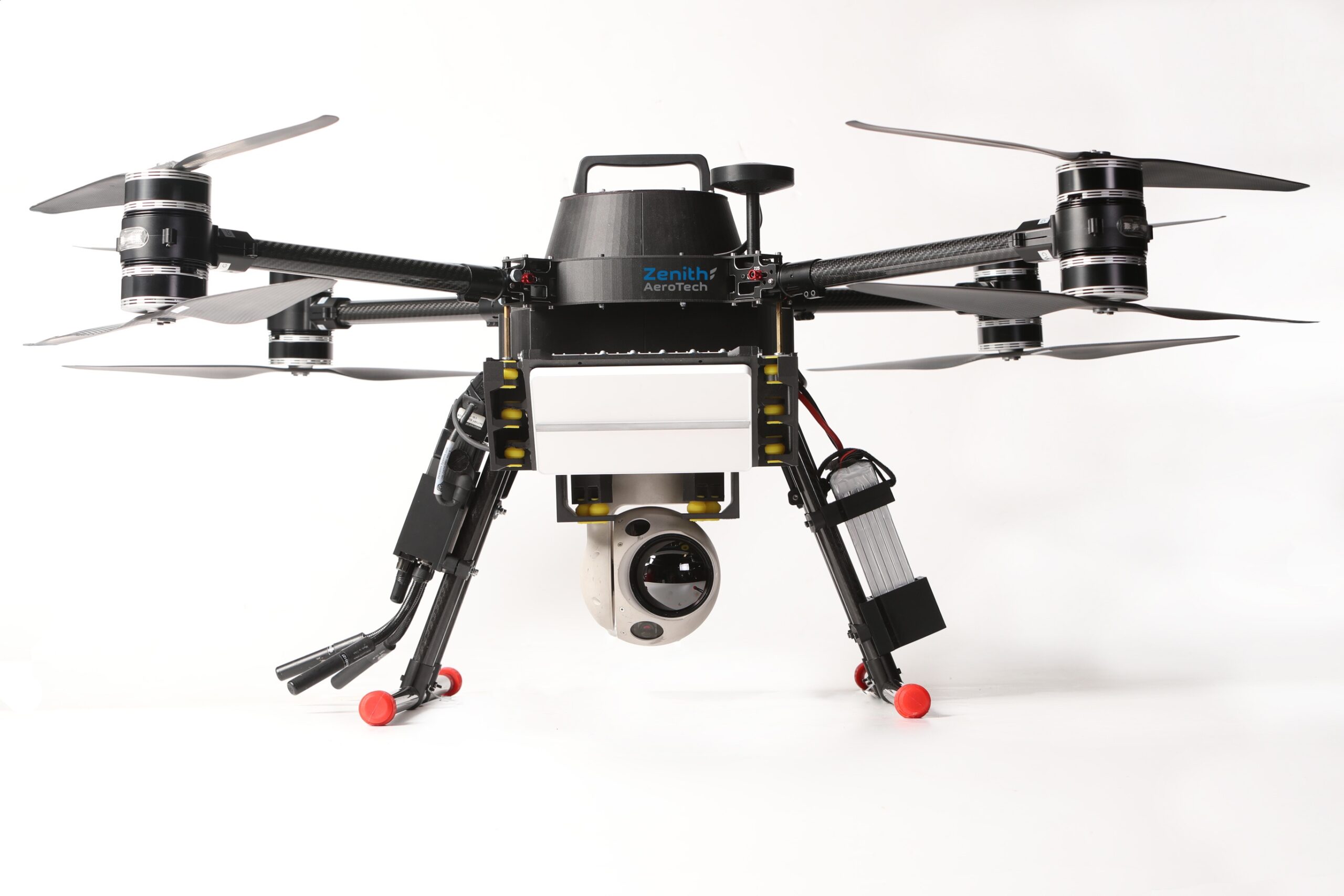
AFTON, Va.–Zenith AeroTech, a leader in heavy-lift tethered aerial vehicles (TAVs), announced today that the company has completed delivery of two Quad 8 TAVs to a Federal law enforcement agency for use as a command overwatch solution during emergency response missions.

Each Quad 8 was designed to meet the customer’s need for a long-endurance aerial platform that could carry electro-optical/infrared video (EO/IR) video cameras, a communications relay system, and overhead, high-intensity light panels—all at the same time.

“The client wanted an overwatch capability to help secure their area of operations during emergency response efforts,” said Kutlay Kaya, chairman of Zenith AeroTech. “And unlike regular, untethered drones, our TAVs can stay in the air for days at time while carrying a variety of payloads.”

The Quad 8 can lift up to 20 pounds of customer-defined payloads. That’s more than enough capacity to carry a long-range EO/IR camera, a communications relay, and two 17,000-lumen, weather-resistant LED panels.

“These high-powered lights are ground-controlled for intensity and on/off functions,” said Doganc Kucuk, lead designer for Zenith AeroTech. “And when they are activated, it becomes like daytime on the ground.”

Hovering at altitudes of 200 to 400 feet, the Quad 8 TAV draws its power from the Ground Power Unit (GPU), which converts AC voltage into high-voltage DC power for the TAV and its payloads. The GPU also runs an automated management system designed to operate even under inclement weather conditions.

“This smart tether system allows the operator to focus completely on the mission, which at the end of the day, is the most important thing,” Kaya said.

Zenith AeroTech has been engaged recently with universities, military organizations, and large communications providers. Company officials estimate the market for these systems will see rapid growth as more end-user applications are developed and successfully fielded.

zenithaerotech.com

DroneShield Delivers Handheld Counter-UAS Solutions to U.S. Government

Tuesday, August 2nd, 2022


Image: RfPatrol MKII body worn system antennas

Warrenton, VA — DroneShield (U.S. subsidiary of DroneShield Ltd – Australia) has received and delivered upon a follow-on order by a U.S. Government agency for the company’s portable and handheld Counter-UAS (C-UAS) solutions.

DroneShield, a leading developer of artificial intelligence based multi-mission solutions, known for its industry leading C-UAS (“Counter-drone” or “Anti-drone”) systems such as RfPatrol and DroneGun MkIII, has received previous contracts from DoD, DHS, Federal and State level Law Enforcement agencies.

Tom Branstetter, Director of Business Development for DroneShield, commented, “We’re grateful for the continued trust that this organization has placed in us to help address a unique set of operational challenges. Our customer relationships are what fuel our commitment to push the boundaries of what’s possible in the counter unmanned space,” he added. “Every teammate at DroneShield understands the significance of the problems we’re solving for our end-users and it’s something we’re proud to support.”

Matt McCrann, U.S. CEO of DroneShield added, “We’re a mission driven and user focused team here at DroneShield. Strengthening our partnership with an existing user and being able to deliver in full, within days, on an order like this is the direct result of that commitment to our users, their needs and mission.”

“Our team emphasizes operating with speed and purpose, and speed doesn’t just apply to tech development; it applies to the ability to deliver end to end, from factory to field,” McCrann added. “We look forward to continuing to work closely with our U.S. Government partners.”

DroneShield also recently announced deployments of its solutions for high profile events such as the World Economic Forum (WEF) in Davos, Switzerland, and IRONMAN Texas 2022.

Steadicopter Reports Winning Yet Another Significant Tender With Its Black Eagle Electric systems, For The Israeli Navy

Monday, August 1st, 2022

The Black Eagle Electric are the first unmanned helicopters to be powered by an electric motor and have a MTOW of up to 50 kg, adapted for use in advanced maritime missions, and many other applications.

27 July, 2022. Steadicopter – a leader in the Rotary Unmanned Aerial Systems (RUAS) industry – announces another win in a significant tender, this time for the Israeli Navy, for its Black Eagle Electric systems. The Black Eagle Electric family is the first family of unmanned helicopters that are powered by an electric motor, are capable of carrying several payloads and sensors, and can be adapted to diverse applications, including complex maritime missions. Just recently, the company announced the signing of a contract to supply the systems to another Naval customer.

The Black Eagle 5O Electric helicopter has a maximum take-off weight of 50 kg, a useful load weight of 30 kg – including payload and batteries, and a flight time of two hours. These capabilities enable high performance as well as maximum operational flexibility for military applications such as intelligence, coastal security, search & rescue, and advanced maritime missions.

The electrically-powered engine significantly reduces the weight of the platform, thereby enabling the installation of additional payloads that are required for a variety of missions. Weighing just 20kg as a platform, the helicopter can carry additional batteries for longer flights, heavier mission payloads, and more. As such, the system enables the widest variety of missions, including covert operations.

The dual-electric propulsion helicopter is economical, simple to operate, easy to maintain, and needs no fuel storage, making it environmentally friendly and safe. It is based on the proven capabilities of the gasoline-powered Black Eagle, including vertical take-off and land, long hover durations, and advanced mission sensors for any mission scenario, whether day or night. In addition, like other Steadicopter platforms, it is adapted to high-altitude flights.


“In the past year, we have expanded the Black Eagle family with the addition of a hybrid and electric system of up to 50kg,” says Noam Lidor, VP Sales, Marketing & Business Development at Steadicopter. “We are proud that just one year after the launch, we have already announced the winning of several significant contracts, for both systems, the latest of which is for the Israeli Navy – considered one of the most advanced forces in the world. There is a growing global need for unmanned systems with vertical landing and takeoff capabilities. The Black Eagle family meets this need with a unique low-weight technology, which enables it to carry several payloads, for flexibility and mission success. We expect that the company will be reporting further deals in the near future.”

www.steadicopter.com

DroneShield to Partner with Australian Missile Corporation

Monday, August 1st, 2022

DroneShield is pleased to announce that it has signed a collaboration agreement with The Australian Missile Corporation (AMC), as the $1bn Guided Weapons and Explosive Ordnance (GWEO) enterprise enters the next phase.

The AMC was one of the Australian-based GWEO enterprise panel partners invited by the Commonwealth Government in April to work with global missile manufacturing giants Lockheed Martin and Raytheon in establishing a local industry.

Considered areas of cooperation between AMC and DroneShield include counterdrone security, prevalent in current battlefield as seen with the Ukraine war, as well as Electronic Warfare and associated Artificial Intelligence work.

Rear Admiral Lee Goddard (Ret.), AMC’s CEO, commented “We are pleased to cooperate with DroneShield, with its Australian sovereign capability, as we progress our GWEO program. Its world-leading technologies combined with its expertise in engineering and physics would be critical to the development of guided weapons in Australia.”

DroneShield CEO, Oleg Vornik, added, “We are thrilled to work with AMC and its network of partners, to assist in delivering of this iconic Australian defence program.”

New Flight Milestone in Hexa Testing

Saturday, July 30th, 2022

EGLIN AIR FORCE BASE, Fla. (AFNS) —  

The LIFT Hexa, an electric, vertical takeoff and landing aircraft, or eVTOL, recently completed its first test flight at Duke Field.

The unmanned aircraft, piloted via remote control, used 18 motors and propellers to fly for approximately 10 minutes and reach a height of about 50 feet during the test flight.

The test was an important first step toward the incorporating the Hexa into operations at a controlled military airfield.  Duke Field is an auxiliary field located North of Eglin Air Force Base’s main base. This flight was completed by Hexa 09, one of two aircraft stationed at the installation. Hexa 05 was used for the first test flight at Eglin AFB in April.

The 413th Flight Test Squadron, the Air Force’s rotary wing developmental test experts, has partnered with AFWERX’s Agility Prime to advance eVTOL test and experimentation. The unit, located at Duke Field, provides the coordination, logistics and support for the LIFT team’s developmental ground and flight-testing operations.

“This is an opportunity to leverage some of the unit’s expertise with rotary aircraft and apply it to this new field of electric propulsion aircraft,” said Maj. Riley Livermore, 413th FLTS Futures Flight commander. “This flight was an important step in advancing the testing forward.”

By Samuel King Jr., Eglin Air Force Base Public Affairs

How Drones Will Transform Battlefield Medicine, Save Lives

Wednesday, July 27th, 2022

FALLS CHURCH, Va. (AFNS) —  

Blood loss or “bleeding out” is the leading cause of preventable death on the battlefield, military health experts say.

So, one of the best ways to save lives during combat operations is to provide blood products to forward-deployed medics and corpsmen as soon as possible.

During the wars in Iraq and Afghanistan, getting the needed blood products to injured warfighters was typically not a major challenge when the U.S. military controlled the skies and maintained a nearby network of medical facilities.

“We were pretty reliant on medevac ‘dust off’ to deliver our blood,” said Air Force Col. (Dr.) Stacy Shackelford, Joint Trauma System chief.

However, in future conflicts against a “near-peer” adversary, Shackelford said, that could be far more difficult. Injured troops may have to remain at the frontlines for days while needing blood transfusions or other major medical care.

The solution: Drones may become essential to combat medicine.

“I think it’s going to come down to drone delivery of blood by some type of unmanned vehicle that can fly in and drop off more blood or more bullets, whatever is needed,” Shackelford said.

Resupply by Drones

“We think that drone resupply of blood and immediate-need medical products are really just around the corner,” said Dr. Adam Meledeo, a research scientist for coagulation and blood research at the U.S. Army Institute of Surgical Research at Joint Base San Antonio-Fort Sam Houston, Texas.

“There are multiple off-the-shelf solutions that are being considered,” and the Defense Health Agency is funding several other innovations to optimize the ability to provide drones in the battle space, Meledeo said.

Yet using drones to resupply blood and other medical supplies will be challenging.

“There’s obviously trade-offs between some of these different platforms, such as making sure that we have a vehicle that’s fast, and somewhat stealthy … and has a very large battery that will be able to keep it airborne for a much longer period of time if it needs to loiter somewhere in anticipation of there being a problem,” Meledeo said.

“There’s also been some talk of outfitting some of our combat hardware drones that are already in use with alternative payloads that would be able to supply blood, medical supplies and really just about anything, such as MRE’s, ammunition, and water” to frontline medics or service members caring for wounded Soldiers, he explained.

Blood Resupply

“The primary issue with blood resupply is that it has to be maintained at specific temperatures, as do a number of pharmaceuticals including certain pain medications, and antibiotics,” Meledeo explained.

“The biggest technological hurdles right now are being able to maintain those temperatures inside those drone payloads very consistently, at a variety of altitudes, and a variety of different ambient conditions for potentially lengthy periods of time, without drawing too much power away from the system itself,” Meledeo continued.

The Marines Corps used drones for resupply during an exercise in Australia. Drones have also been used in Rwanda and Uganda to transport medical supplies to rural areas across mountain ranges and in bad weather, Meledeo said.

“I think that we’re going to get there much faster than we had initially anticipated,” he said.

The use of drones for future near-peer conflicts is starting to filter down into the operational forces as a potential solution in the near term, he noted.

Wounded Warrior Evacuation

“In the long term, there are a number of lines of effort, such as involving drones for the extraction of patients,” Meledeo said.

U.S. partner countries are examining some of these platforms that can evacuate a patient rapidly without risking other personnel in potentially contested airspace, he added.

How does one transport casualties stealthily?

“Part of it is marking the vehicles appropriately with standard medical nomenclature. That gives you the Geneva Convention protection. But obviously, we go up against certain enemies that will not care about that at all,” he explained.

Artificial Intelligence

Stealth technology continues to improve. When it comes to drones, “it may be just a matter of keeping the drones low to the ground, and that they’re being piloted by an artificial intelligence system,” Meledeo explained.

“So, hopefully, AI will be faster to react than a human would be. But even still, I think there are a lot of concerns about” the use of drones to extract wounded warfighters.

“The long-term goal … is to actually have some sort of robotics onboard these drones that would be doing medical care to the patient during transport,” he said.

DARPA AI Initiative

A new Defense Advanced Research Projects Agency initiative called “The In the Moment Program” aims to ultimately give AI systems the same complex, rapid decision-making capabilities as military medical staff and trauma surgeons who are in the field of battle based on algorithms of care and decision-making capabilities.

One example is smart tourniquets that will be able to detect whether they need to be released. Other automatically guided solutions include IV placement or catheter placement, Meledeo said.

“It sounds like science fiction. It is still a little bit science fiction, but it’s not as far off as it may sound,” he said.

“At least on a rudimentary level, the community is already pursuing a lot of automated solutions or artificial intelligence-derived solutions for automation of different medical processes.”

This research is underway but there’s no timeline on this concept.

“Hopefully, we’ll be able to get some confident results from some of these different technologies that are going to be packaged together in this system and enable the drones to then not only resupply at the point of injury, but also actually take care of the transportation and the management of patients during that transportation.”

By Janet A. Aker, Military Health System Communications

Schiebel Camcopter S-100 Delivers Enhanced Maritime Situational Awareness For The Icelandic Coast Guard

Friday, July 8th, 2022

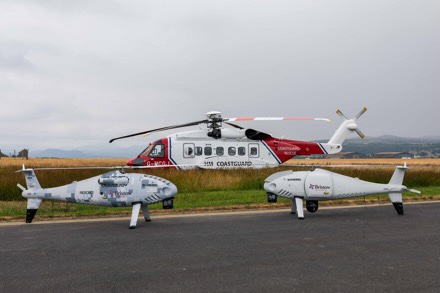
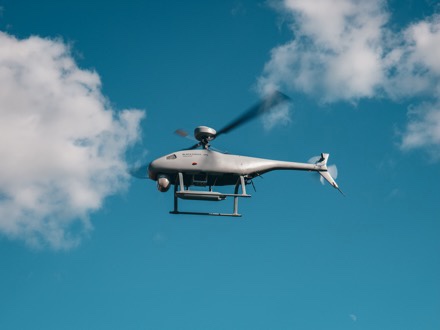
Vienna, 7 July 2022 – Schiebel’s CAMCOPTER® S-100 is supporting the Icelandic Coast Guard both day and night delivering enhanced maritime situational awareness for an array of operational tasks, through a contract with the European Maritime Safety Agency (EMSA).

Currently deployed from the patrol vessel ICGV Thor and from ICGV Freyja, the Remotely Piloted Aircraft System (RPAS) is operated by Schiebel. The CAMCOPTER® S-100 gives the Icelandic Coast Guard the possibility of gaining better coverage of its large Exclusive Economic Zone (EEZ). The main task is being able to identify vessels and activities of interest at a much greater range than normal, thereby substantially extending the ship’s situational awareness. The activities include fisheries inspection and control, maritime safety, ship and port security, environmental protection and response, as well as supporting Search and Rescue (SAR) when needed.

The S-100 executes these various tasks equipped with a Trakka TC-300 (and in future with an MX-10 Gen-4) Electro-Optical / Infra-Red (EO/IR) camera gimbal, an Overwatch Imaging PT-8 Oceanwatch wide area camera, a Becker Avionics BD406 Emergency Beacon Locator and an Automatic Identification System (AIS) receiver.

Hans Georg Schiebel, Chairman of the Schiebel Group, said: “This operation is delivered as part of our ongoing service contracts with EMSA. It is great to witness that ever more European maritime authorities are making use of the exceptional capabilities of the S-100. Especially in the maritime domain, the CAMCOPTER® S-100 is demonstrating its solid level of performance and experience.”