GORE-TEX Professional

Archive for the ‘UAS’ Category

DroneShield Announces Launch of Regional NSW Testing Facility

Thursday, October 6th, 2022

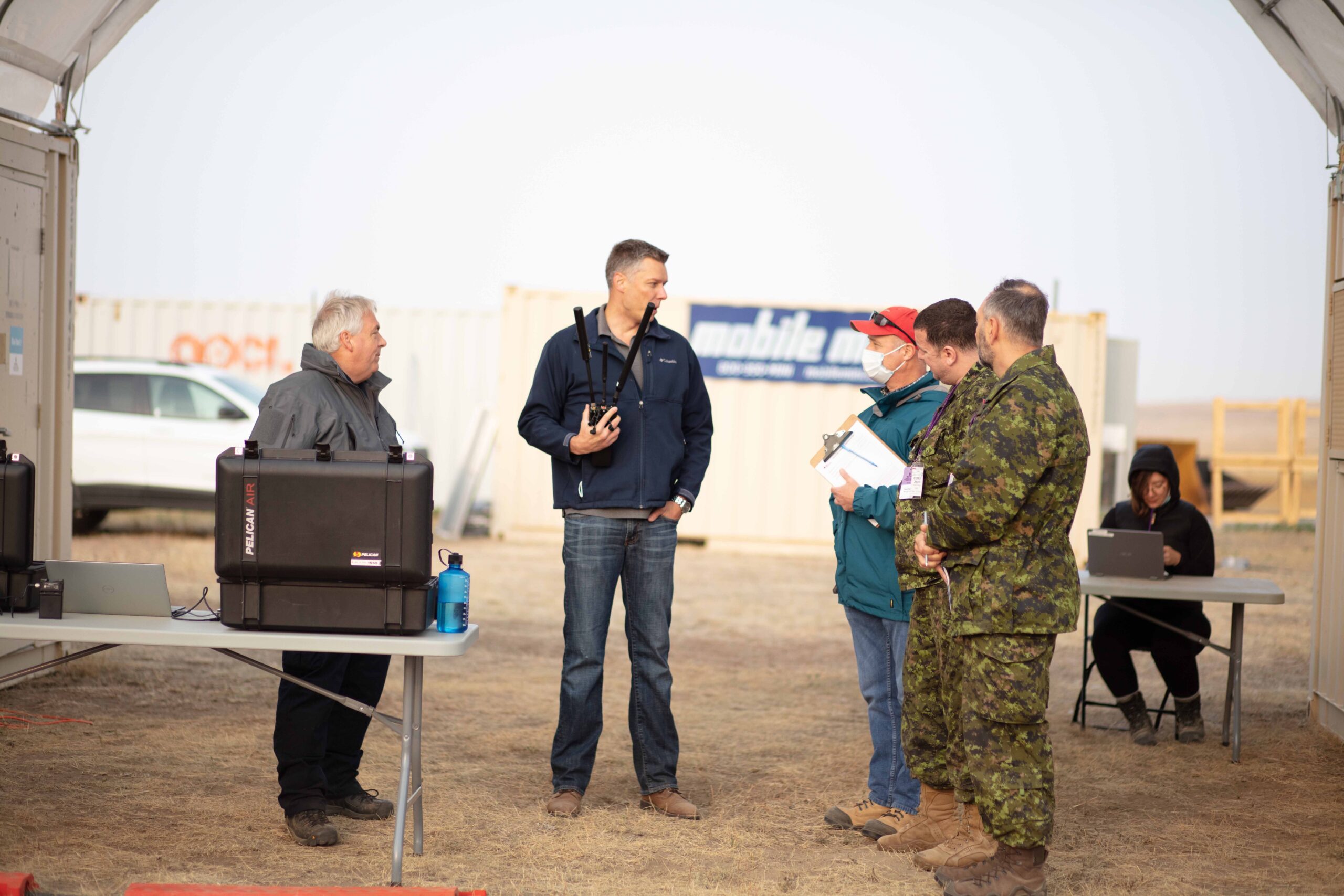
DroneShield is pleased to advise that it has launched a dedicated testing facility in regional New South Wales. The facility will significantly streamline the testing and release of advanced drone detection technologies in development by the Company.


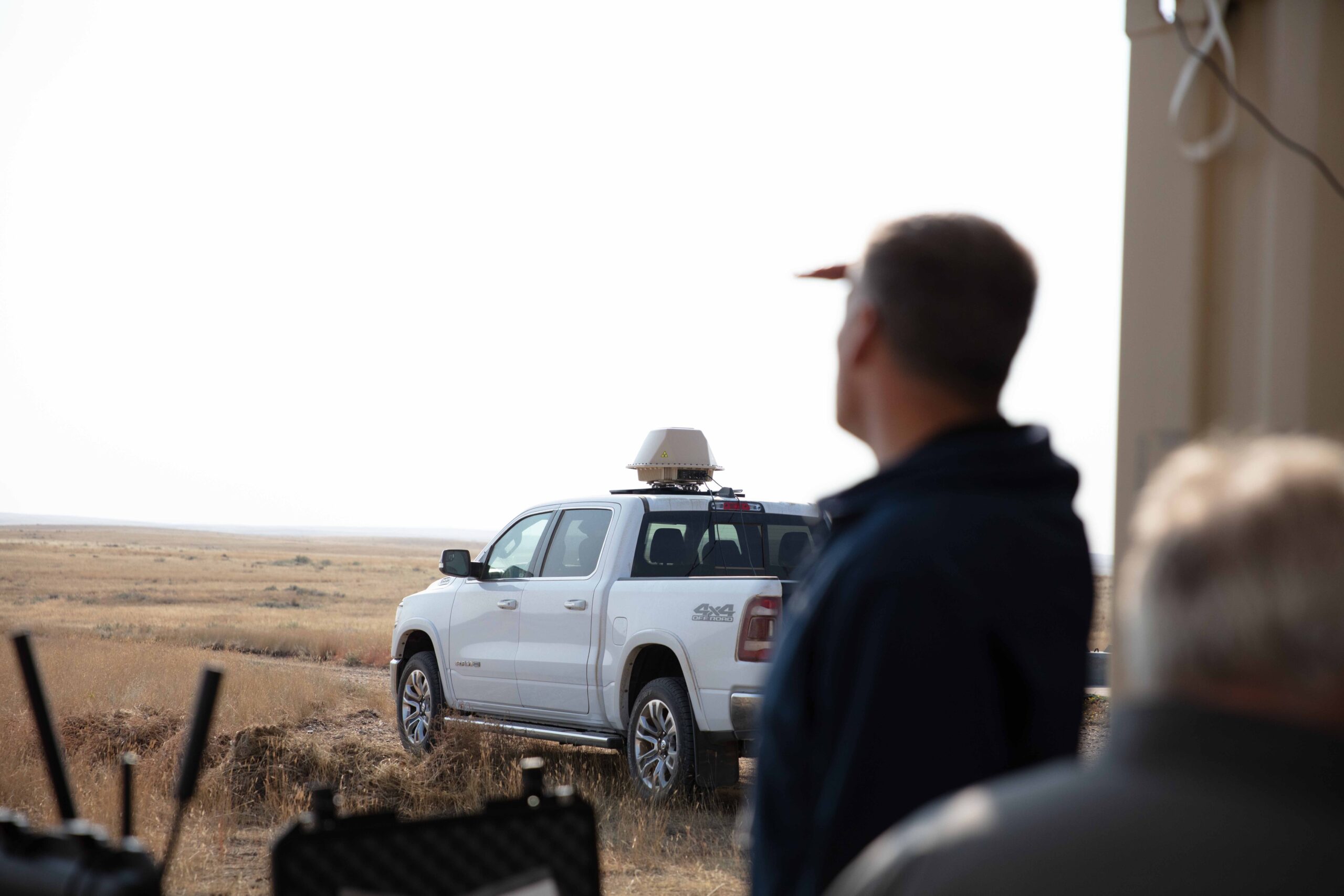
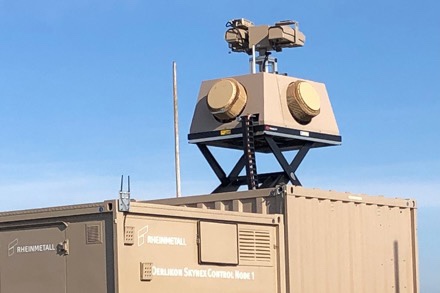
Image: DroneSentry system at DroneShield test site facility in regional NSW

This is DroneShield’s first dedicated testing facility in both New South Wales and Australia.

Oleg Vornik, DroneShield’s CEO, commented “As we continue to grow our advanced drone detection and defeat technologies, there is an increasing need for a locally based test site, that meets our operational requirements as well as being compliant with Government regulations.”

“This permanent facility enables fully remote testing by our engineering team, with real time data shared with our engineering headquarters in Sydney. This enables faster development cycles of our AI-enabled radiofrequency, image recognition, and sensorfusion technologies, which are pushed out to our subscribed customers on a quarterly release cycle.”

“Importantly, Australia is a key customer market for DroneShield, and having a dedicated local facility is expected to further enhance our work with Australian customers, both from a sovereign capability perspective and a way to conduct customer demonstrations.”

DroneShield Announces $1.8 Million U.S. Department of Defense Contract

Wednesday, October 5th, 2022

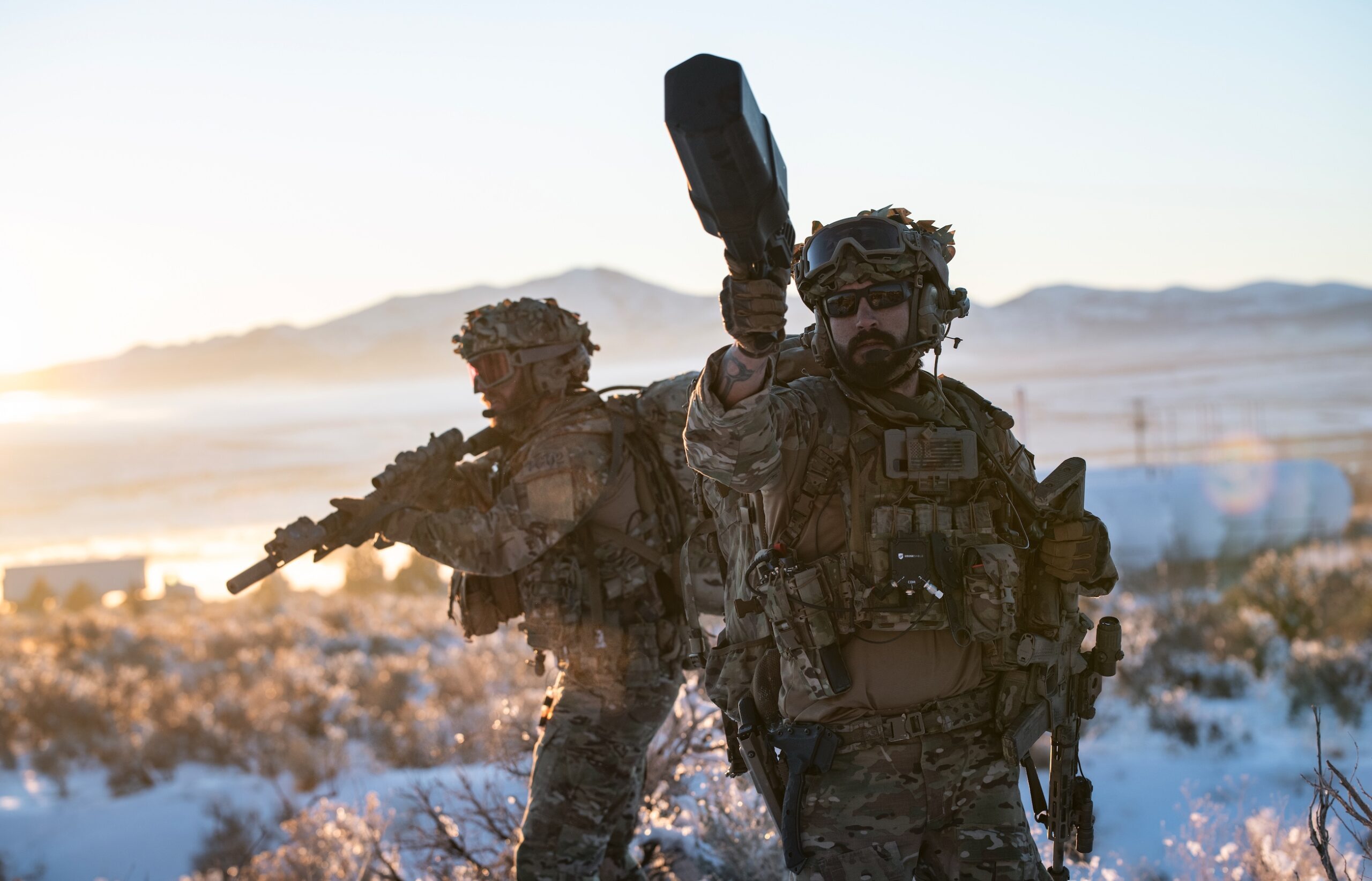
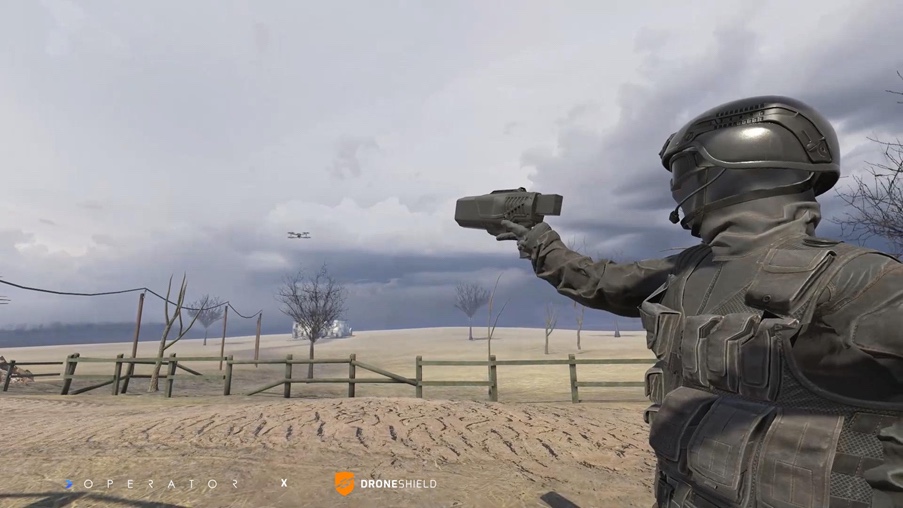
DroneShield is pleased to advise that it has received an $1.8 million contract for its DroneGun MKIII handheld counterdrone system from the United States Department of Defense (DoD).
 
Delivery will be completed this month, with full payment due to be received in the current quarter.

This follows a previous down selection of DroneGun MKIII for evaluation by the DoD’s Joint Counter-small Unmanned Aircraft Systems Office (JCO).

“It’s an honor to provide our DoD customers with advanced cUAS solutions to help address complex security requirements,” said Tom Branstetter, DroneShield’s Virginia-based Director of Business Development. “DroneShield is committed to delivering critical Force Protection technology that enables security personnel to rapidly respond to this growing threat,” Branstetter added.

Matt McCrann, U.S. CEO of DroneShield added, “As the threat of UAS continues to seemingly adapt in real-time, countermeasures need to be both effective and flexible.”

“DroneGun MKIII is that lightweight, flexible countermeasure that can go anywhere and serve as the ideal gap fill capability to protect personnel and assets wherever they might need to operate. We look forward to continuing to support our DoD end users wherever, whenever needed.” 

This contract is the largest US sale by DroneShield to date, and follows several recently announced contracts by DroneShield, including the $2 million European sale of DroneSentry fixed site systems and the initial US airport deployment. The Company is also progressing active discussions on sales to Ukraine, following the initial deployment at the start of the war earlier this year.

SOFWERX – Multi-Capable Distribution Platform Assessment Event

Tuesday, September 27th, 2022

Do you or your organization specialize in UAS cargo payload capabilities? If you answered, “YES,” check out SOFWERX’s latest effort!

SOFWERX, in collaboration with USSOCOM PEO Special Operations Forces Support Activity (PEO-SOFSA) will host an Assessment Event (AE) to identify solutions to provide long range resupply via a multi-capable distribution platform in a contested environment.

PEO-SOFSA will explore emerging capabilities to meet known capability gaps to provide long range resupply via an MCDP in a contested environment involving low observable characteristics, autonomous between launch and recovery, GPS-hardened (includes alternate navigation capability(s), that is air transportable and uses standard aviation (e.g., Jet A) or ground fuels. 

On 13 October, SOFWERX will host a virtual Q&A telecon to help interested offerors better understand the PM’s specific technology objectives. RSVP NLT 12 October to attend!

For more information, please visit: events.sofwerx.org/mcdp

United States Army Awards AeroVironment $20.6 Million Switchblade 300 Tactical Missile Systems Contract

Friday, September 23rd, 2022

• Combat-proven Switchblade with patented wave-off and recommit capability provides operators with increased lethality, reach and precision strike capabilities with minimal collateral effects


Designed for use in engaging beyond-line-of-sight targets with lethal effects, Switchblade 300 is deployed via tube-launch from land, sea, mobile or air organic platforms. (Image: AeroVironment, Inc.)

ARLINGTON, Va., Sept. 22, 2022 –AeroVironment, Inc. (NASDAQ: AVAV), a global leader in intelligent, multi-domain robotic systems, today announced it received a $20,602,464 firm-fixed-price contract award on Aug. 18, 2022 from the U.S. Army Tactical Aviation and Ground Munitions (TAGM) project office for the procurement of Switchblade® 300 tactical missile systems (TMS). The contract will be managed by the U.S. Army Contracting Command, Redstone Arsenal and is scheduled to be delivered by July 2023.

“Deployed by the U.S. Army for more than a decade, Switchblade 300 remains a critical force protection and soldier lethality solution for our customers, including Ukraine,” said Brett Hush, AeroVironment vice president and product line general manager for TMS. “It closes the gap between observation and action, giving soldiers the ability to identify threats and engage hostile beyond-line-of-sight targets from a greater distance with minimal collateral damage.”

AeroVironment’s combat-proven Switchblade 300 is back-packable and rapidly deployable from ground platforms, including a multipack launcher, providing warfighters with rapid-response force protection and precision strike capabilities up to six miles (10 kilometers) from its launch location.

AeroVironment Secures $20.86 Million in Puma 3 AE Unmanned Aircraft Systems Foreign Military Sales Awards for Allied Nations

Wednesday, September 21st, 2022

• Portable, rugged Puma 3 All Environment (AE) unmanned aircraft system provides immediate tactical reconnaissance capabilities for land and maritime operations

• Foreign Military Sales program promotes interoperability among U.S. and allied forces for joint operations

• Customers are among the more than 50 allied governments employing AeroVironment’s unmanned aircraft systems


The powerful propulsion system and aerodynamic design of the Puma 3 All Environment (AE) unmanned aircraft system makes it efficient and easy to launch for ISR missions in the most challenging environments. (US Marine Corps photo by Pfc. Audrey Rampton) Disclaimer: The appearance of US Department of Defense (DoD) visual information does not imply or constitute DoD endorsement.

ARLINGTON, Va., Sept. 20, 2022 –AeroVironment, Inc.  (NASDAQ: AVAV) a global leader in intelligent, multi-domain robotic systems , today announced it received two firm-fixed-price US Department of Defense Foreign Military Sales ( FMS) contract awards totaling $20,868,105 to provide Puma™ 3 AE small unmanned aircraft systems (SUAS), initial spares packages, training and Contractor Logistics Support (CLS) to two allied nations.

“Deployed for well over a decade, our Puma UAS have continued to be a low-cost, man-portable, easy-to operate UAS for our customers,” said Trace Stevenson, AeroVironment vice president and product line general manager for SUAS. “With each new generation of Puma, optimizations have been made for more robust flight, durability and operational flexibility but its purpose of providing reliable and persistent situational awareness, critical force protection and force multiplication capabilities to our customers remains the same.

“Our allies are continuing to adopt and deploy Puma 3 AE and other AeroVironment systems as they recognize the importance of equipping their frontline forces with lifesaving, force overmatch solutions,” Stevenson added.

AeroVironment’s Puma 3 AE delivers mission critical capabilities in all environments. Puma 3 AE has a wingspan of 9.2 feet (2.8 meters), weighs 15.4 pounds (7 kilograms) and can operate up to 37.2 miles (60 kilometers) with AeroVironment’s Long-Range Tracking Antenna (LRTA). Multi-mission capable, operators can easily swap Puma 3 AE’s payloads quickly, selecting between the Mantis™ i45 and the enhanced night variant, Mantis i45 N. Puma 3 AE is launchable by hand, bungee, rail, or vehicle, and is recoverable by deep-stall landing, providing class-leading capabilities in challenging environments around the world.

AeroVironment Introduces Puma VNS, a Visual-Based Navigation System That Enables GPS-Denied Navigation Across GPS-Contested Environments

Friday, September 16th, 2022

• System determines precise location of the aircraft during flight without relying on GPS

• Will enable increasingly advanced navigational capabilities, features and functionality through future software and hardware updates

• Available as an add-on option for new Puma 2 AE and Puma 3 AE system orders and as a retrofit kit for fielded systems


Operators can deploy Puma AE small unmanned aircraft systems across GPS-contested environments with Puma VNS, which will automatically transition to and from GPS-denied navigation mode without any input from operator for seamless connectivity. (Image: AeroVironment, Inc.)

ARLINGTON, Va., Sept. 15, 2022 –AeroVironment, Inc. (NASDAQ: AVAV), a global leader in intelligent, multi-domain robotic systems, today introduced Puma™ VNS, a visual-based navigation system for Puma 2 AE and Puma 3 AE small unmanned aircraft systems (SUAS) that will enable GPS-denied navigation across increasingly GPS-contested environments.

The system will provide operators with continually advanced navigation capabilities, features and functionality through anticipated software and hardware updates. The system will also enable the integration of future autonomy capabilities.

“Puma VNS gives operators an unprecedented advantage in the battlefield,” said Trace Stevenson, AeroVironment vice president and product line general manager for SUAS. “Operators now can execute missions with more confidence in GPS-contested environment with the system’s new navigational capabilities.”

The next-generation navigation system features a suite of down-looking sensors that gather imagery data and track features on the ground, as well as an embedded compute module to process and determine the precise location of an aircraft while it is in flight. Designed with the operator in mind, the system automatically transitions to and from GPS-denied navigation mode without any input from the operator.

Puma VNS is available as an add-on option for new Puma 3 AE system orders and as a retrofit kit for fielded Puma 2 AE and Puma 3 AE systems. To learn more about Puma VNS, visit www.avinc.com/pumaae.

AeroVironment Introduces Next-Generation All-Electric VAPOR 55 MX Helicopter Unmanned Aircraft System, Built for Heavier Payloads and Longer Distances

Wednesday, September 14th, 2022

• Next-generation VAPOR 55 delivers more simplified, modular design with performance improvements that optimize user experience

• Redesigned for increased levels of operational efficiency with 25 percent increased endurance and 20 percent increased payload capacity

• New payload interface and tool-free quick rail mount enables quick and easy field integration of both current and future payloads for increased mission flexibility


VAPOR 55 MX is more rugged and packable than its predecessor and can stay in the air longer, hover and cover more ground. (Image: AeroVironment, Inc.)

ARLINGTON, Va., Sept. 13, 2022 – AeroVironment, Inc. (NASDAQ: AVAV), a global leader in intelligent, multi-domain robotic systems, today announced the launch of the next-generation VAPOR® Helicopter unmanned aircraft system (UAS), VAPOR 55 MX. Delivering new levels of operational performance with a completely redesigned modular autonomy framework, VAPOR 55 MX enables increased endurance and expanded payload capacity to meet current and emerging needs of defense, commercial and industrial customers.

“The new VAPOR 55 MX is an easy-to-maintain system that incorporates a highly versatile modular architecture and tool-free rail system for simple, efficient integration of third-party or custom payloads, allowing users to adapt to multi-sensor, multi-mission requirements including utility inspection, aerial surveying, public safety and defense applications,” said Trace Stevenson, AeroVironment vice president and product line general manager for small UAS.

Built on the class-leading endurance and payload weight performance of its predecessor, VAPOR 55 MX features a new sleek and efficient low-profile design that enables the helicopter UAS to stay in the air 25 percent longer and operate in all weather. VAPOR 55 MX is heavy-lift capable and its increased usable payload capacity allows users to choose from single or multiple payload configurations.


This expansive modular payload bay can carry up to 12 pounds of payload with more than 70 minutes of flight endurance while still maintaining the 55-pound gross take-off weight (GTOW) restricted by the Federal Aviation Administration (FAA) for commercial customers.  For military customers that require more take-off weight, VAPOR 55 MX is capable of a 65-pound GTOW and can carry up to 22 pounds of usable payloads with a reduced endurance trade-off, nearing the edge of Group 3 weight class.

To learn more about the all-electric VAPOR 55 MX Helicopter UAS, visit www.avinc.com/uas/vapor.

Airman Accelerates Change Through Persistence, Develops Tool for RPAs

Tuesday, September 13th, 2022

CANNON AIR FORCE BASE, N.M. (AFNS) —

In 2015, the 3rd Aircraft Maintenance Unit was tasked with reducing cargo taken on an MQ-1 Predator alert package with the goal to decrease the need for two C-17 Globemaster IIIs to only one. Then Tech. Sgt. Bridget Carroll had an idea to help achieve this goal with the creation of a “bird-in-a-box” later known as the Digital Aircraft Link Emulator, or DALE.

Though Carroll created the solution, she was not met with instant success. Her journey took seven years.

Spring 2015 – Need was discovered.

July 2015 – First MQ-1 DALE prototype created.

September 2015 – Airman Powered by Innovation submitted.

Spring 2016 – Space Dynamics Lab at the University of Utah created two DALE MQ-9 Reaper prototypes.

August 2018 – Air Force Special Operations Command 2019 Spark Tank competition submitted.

October 2018 – API disapproval

October 2018 – Notified that MQ-9 DALE had won AFSOC Spark Tank Top 5.

February 2019 – DALE presented at Air Force Association Spark Tank.

Present – DALE Jr. developed and employed.

“If we could mobilize our capability without an actual aircraft then we could get down range and get operational faster,” Carroll said. “I had the idea to put the minimum amount of aircraft parts in a box to still do line-of-sight checks with our control stations after we set up a field site.”

During her planning phase of DALE, the Air Force was retiring the MQ-1, which resulted in a lower risk if the aircraft parts were damaged during the project’s initial stages.

“Once all the parts came in, I took the MQ-1 computer, gutted an electronics case that was awaiting DRMO, spliced cables, drilled mounting brackets, and pieced together the first “bird-in-a-box” prototype,” she said.

Before the existence of DALE, this process would require more than 10 Airmen to accompany the package, set it up and tow the remotely piloted aircraft around the airfield to ensure link connections were made.

Today, the DALE can be unloaded and ready for use with two Airmen in less than an hour. It is used to establish line of sight connections on a remote airfield and can be unloaded, set up and prepared for link checks in a more efficient manner.

Carroll’s idea and her creation of DALE serve as an inspiration for all Airmen to lean into innovation to accelerate change.

“Spark Tank is a chance to celebrate our Air Force risk-takers, idea makers and entrepreneurs who refuse to accept the status quo and have determined their own fate by developing solutions that make it easier for us to bring our very best to the fight,” said Lauren Knausenberger, Spark Tank director.

Innovation competitions like Spark Tank create an avenue for Airmen to think outside of the box and in Carroll’s case, put her idea in a box.

“Don’t give up,” she said. “There’s always people and other avenues out there that will help you.”

Staff Sgt. Chase Ward, 727th Special Operations Aircraft Maintenance Squadron avionics craftsman, began working alongside Carroll and the DALE jr. prototype last year and has witnessed the impact of her innovation. He said that the final version of DALE is in the process of being manufactured and sent out Air Force wide.

“I appreciate being able to watch this process go full circle,” Ward said. “It is awesome to know that our ideas do matter.”

Carroll’s journey and level of success is a testimony to hard work, dedication and the impact of empowering Airmen with a culture of innovation. She did not allow a hurdle such as not winning a competition prevent her from accomplishing her goals.

Story by TSgt Kaylee Clark

Photos by SSgt Candin Muniz

27th Special Operations Wing Public Affairs