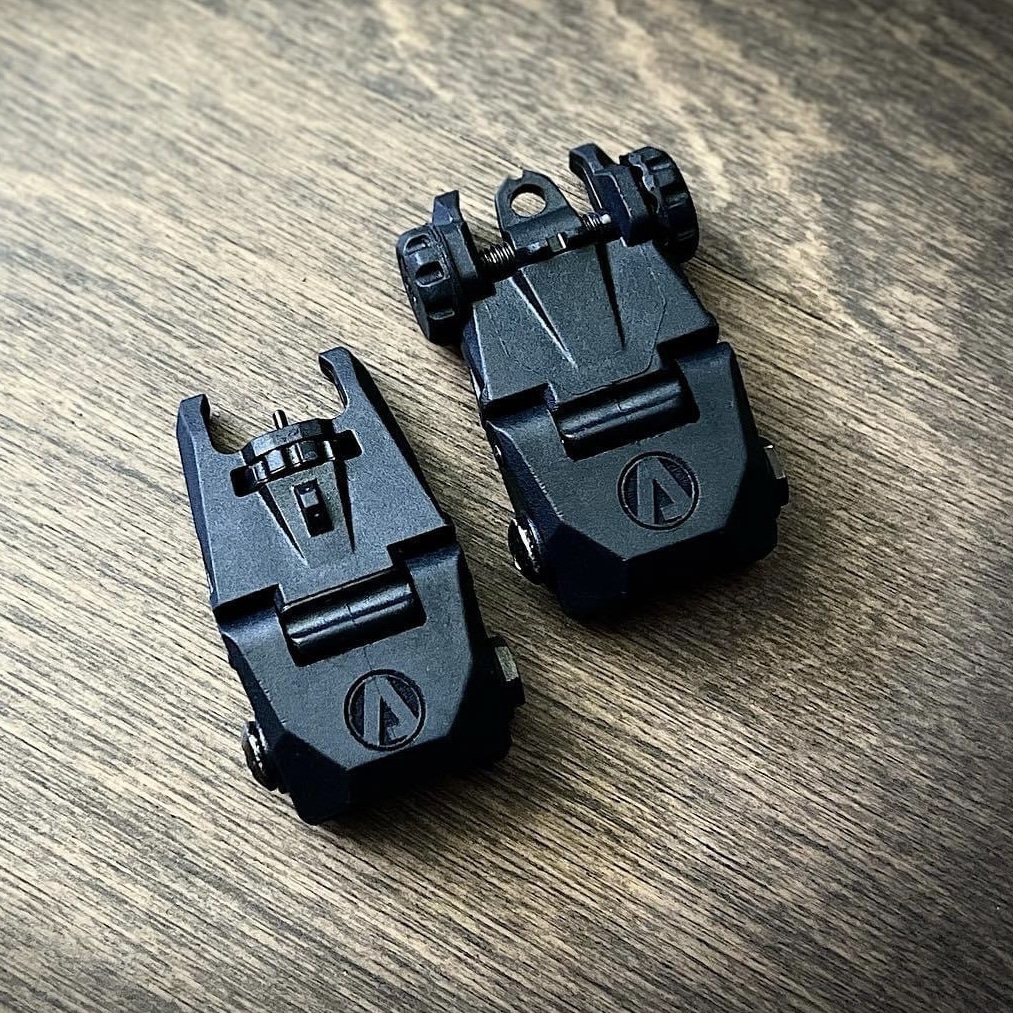


Tracer Tactical has introduced the Appendix Holster Mounting Panel based on a concept from idea came to them from Eric Foss of Howitzer Clothing.
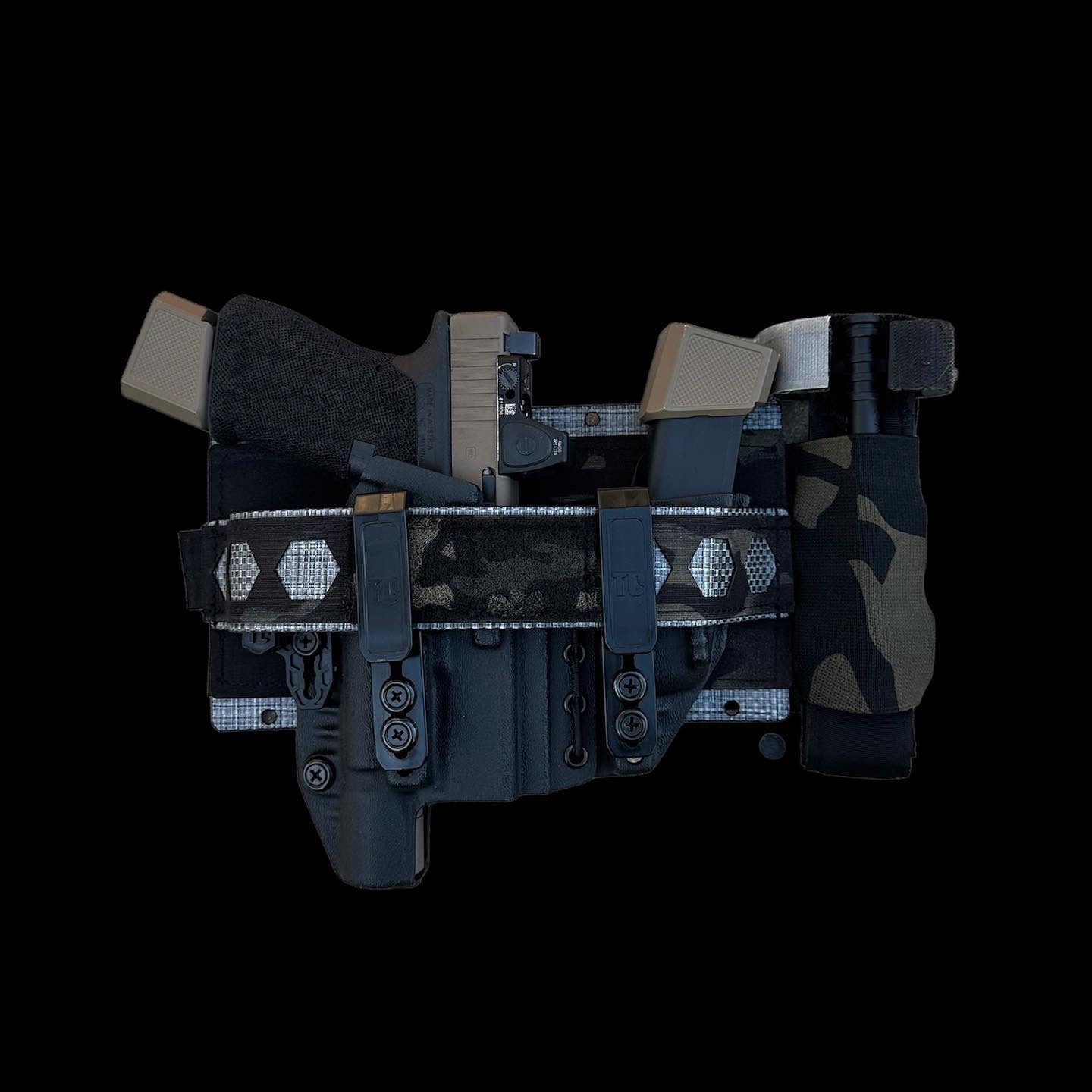
It consists of a Tegris panel with Squadron material that is hook Velcro backed for mounting inside a pack or concealed carry bag.
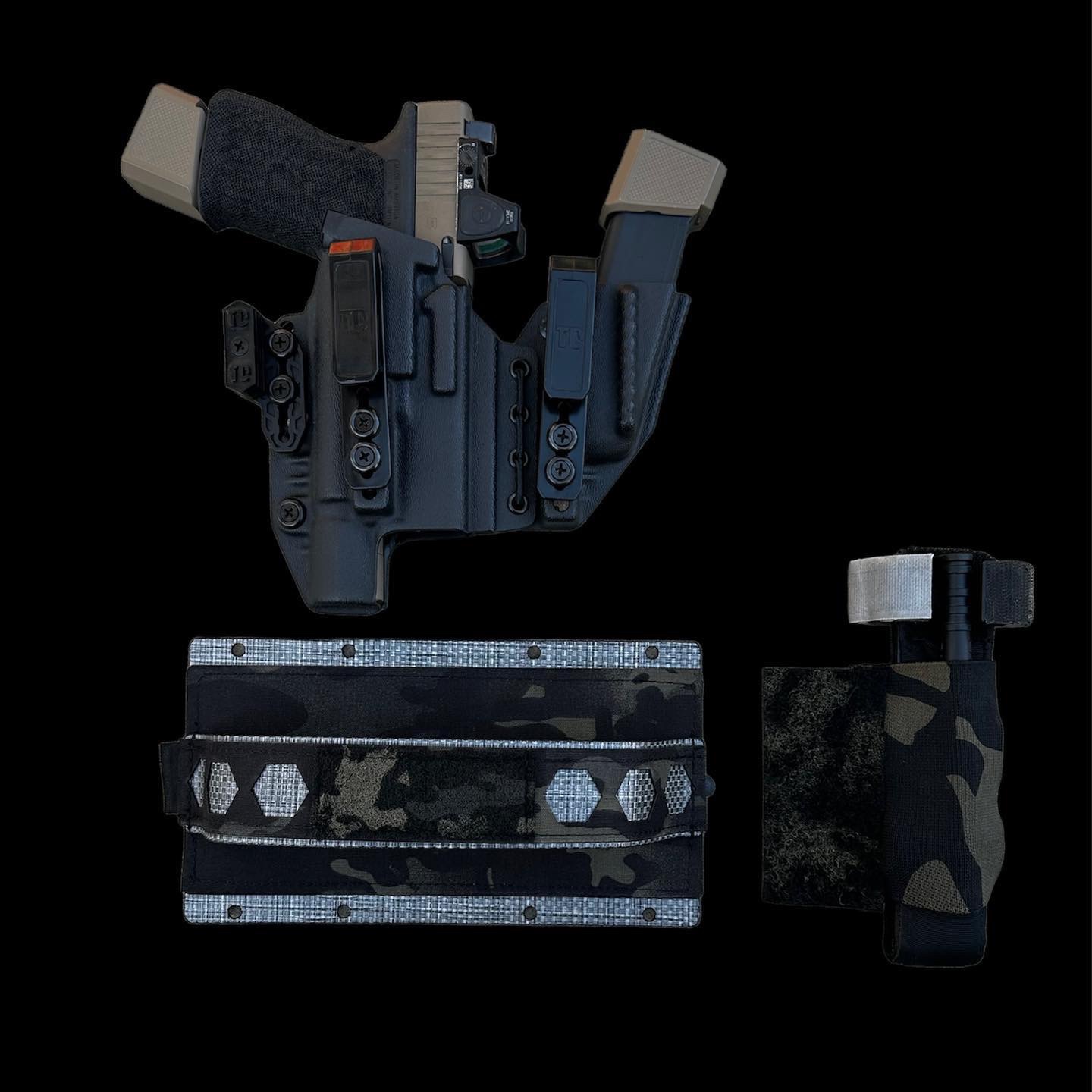
It accommodates an appendix holster which provides protection and keeps the firearm stored in a safe, easy to draw manner. Holes on the edges allow for shock-cording to backpack organization panels, etc.
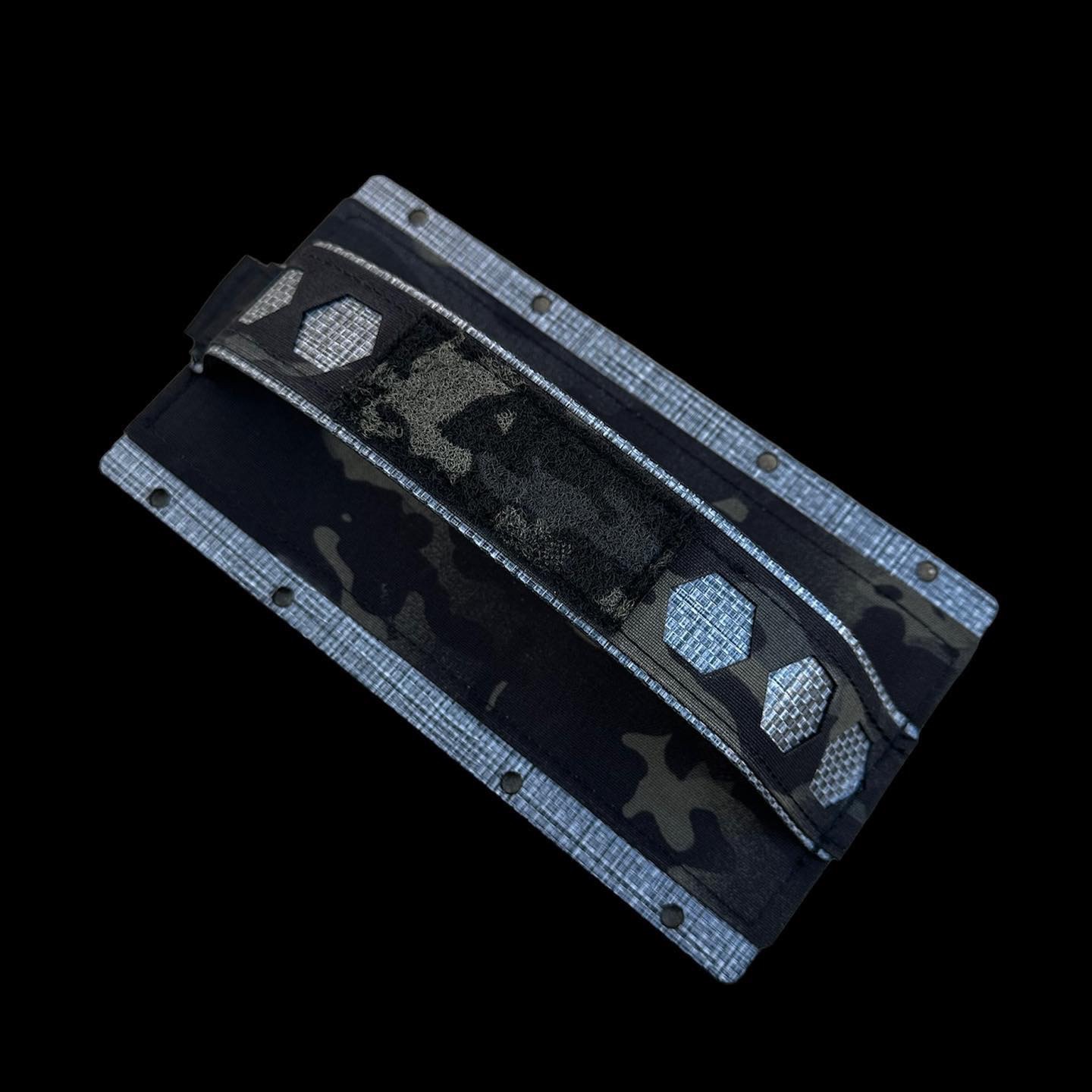
Ideal for those who carry concealed and want an option to remove the entire appendix holster and store in a bag when desired.
These will be made to order until they can build up some inventory.
Lantac UK unveiled an image of a rifle they developed for a UK SF weapon program.
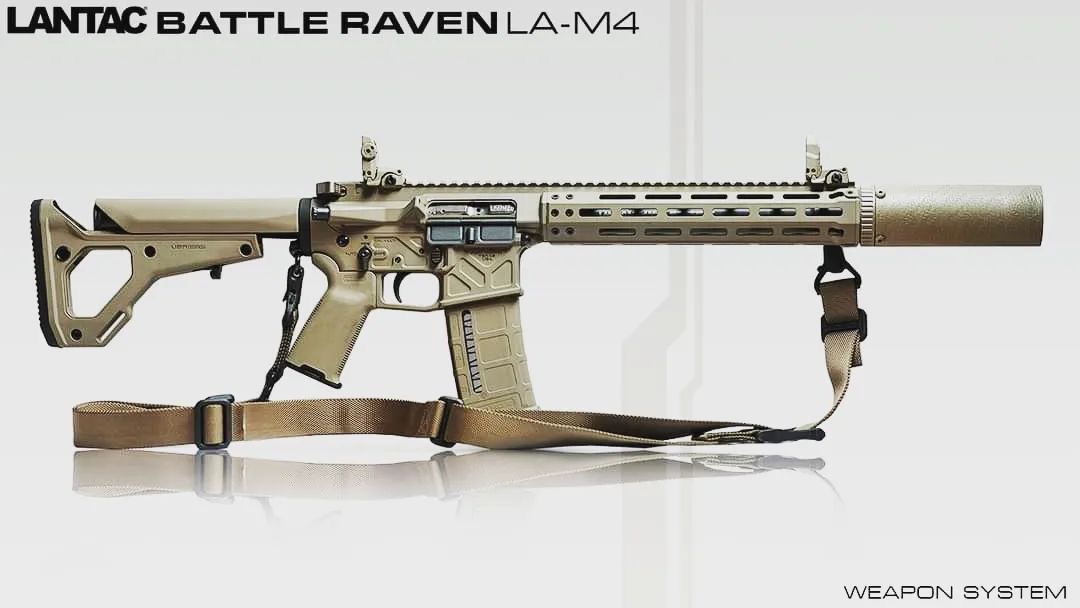
It employs new alloys, carbon fiber and other technologies for thermal and signature shielding that haven’t yet come to market.
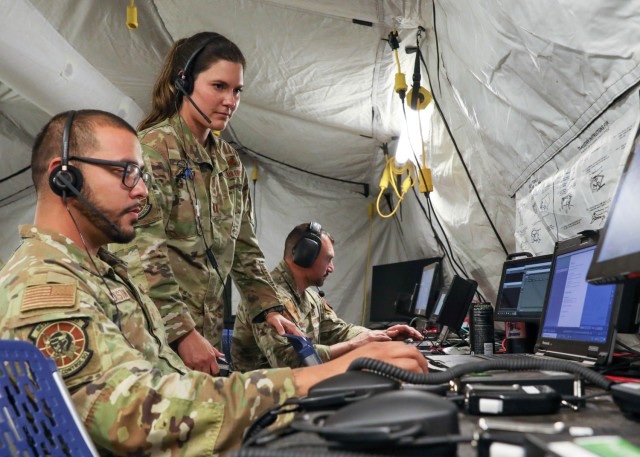
CAMP PENDLETON, Calif. — At Project Convergence 2022, a large-scale, all-service experiment focused on evaluating innovative warfighting capabilities, lightweight command posts are illustrating how the U.S. military will enable nimble tactical operations on future battlefields.
Staffed by Airmen and Soldiers, the command post prototypes, referred to in the exercise as Tactical Operations Centers — Light, are significantly smaller and more agile than previously fielded versions.
The U.S. Air Force provided the equipment that forms the centers — high-powered, ultra-secure servers and commercially compatible computing systems — following three years of iterative research and development with industry partners.
The effort originated from a desire to transform legacy Control and Reporting Centers (CRCs), which have for years served as the Air Force’s mobile command and control (C2) and communications radar centers in theater, while advancing distributed tactical C2 objectives.
While reliable and effective, CRCs are also heavy and large, making rapid relocation difficult.
“We’re just too big and clunky,” said Douglas Lomheim, deputy chief of Ground Battle Management Systems at the U.S. Air Force Air Combat Command.
The Air Force’s exploration of viable miniaturized alternatives has yielded multiple potential options for command centers with smaller footprints.
One option undergoing evaluation at Project Convergence 22 is the Modular Detachment Kit, which utilizes scalable, decentralized C2 and sensor nodes and remote voice and data communications to deliver a common operating picture.
The modular nature of the kit means warfighters can select and deploy only the capabilities they need for a specific operational environment, minimizing costs and optimizing transport efficiency.
A smaller, less detectable C2 center is also inherently a more survivable one, Lomheim explained, with the ability to establish a more dispersed setup, further improving operator safety.
The Modular Detachment Kit also leverages new technologies and open architecture framework to support increased data storage and an expanded range of data and communications assets, allowing for easier connection and integration with sister services and multinational partners.
“Anything that’s developed for [joint all-domain command and control] can easily be loaded on here,” Lomheim said, referring to the U.S. Department of Defense’s development of Joint All-Domain Command and Control.
The system’s diverse set of modules, which address various needs for C2, datalink, radio, radar and multi-mission operations capabilities, and ability to track air, land, maritime, space and cyber resources, make it well-equipped for deployment to a challenging, multi-domain environment – the precise type of environment that Project Convergence 22 is replicating.
As part of the experiment, the Tactical Operations Centers — Light are tracking simulated threats as well as real aircraft movements, conducting activities ranging from coordinating with Tactical Air Control Party members in the field to monitoring possible defense maneuvers by the Army’s Patriot Missile System and the Navy’s Aegis Weapon System.
“It’s a brand-new perspective,” said Air National Guardsman Master Sgt. David Joseph, Weapons Director with the 255th Air Control Squadron based in Gulfport, Mississippi.
“We’re kind of in that crawl, walk phase of it, mostly trying to just get a sense of how we’re all going to connect and how we’re actually going to integrate into the systems that we’re all using,” Joseph said, noting that the shift from having roughly 100 personnel manning a CRC to only a handful operating the new command post model has been interesting to see.
The dynamism of the system is also intriguing. “We’re essentially safeguarding both Air Force and Naval assets and airspace management,” said Staff Sgt. Caleb Kennedy of the Air Force’s 20th Air Support Operations Squadron at Fort Drum, New York.
Through the ongoing Project Convergence 2022 experiment, Joseph, Kennedy and fellow Airmen have worked alongside Army Air Defense Artillery Fire Control Officers and other specialists to amplify situational understanding and practice pairing sensors with the most appropriate shooters, harnessing the system’s potential to deliver improved battlespace awareness, decision advantage and information dominance.
“We’re learning a lot of additional roles, we’re seeing those roles and responsibilities meld together, and actually it’s really enhancing our team efficiency,” Kennedy said, adding that the experience is helping to build participants’ subject matter expertise on air power and execution.
“We’re showing that we’re able to connect in with any system that is provided from our other, sister services,” Kennedy said of the Air Force’s participation in Project Convergence 2022. “Having us here is giving just one more way to expedite battlefield effects and ultimately safe airspace management.”
“The further we go into the future, we’re going to be fighting a war a whole different way than we’re fighting it today,” Joseph said.
“I feel like this exercise here is going to be the baseline for how we go about fighting that war.”
By Maureena Thompson, Army Futures Command
Rheinmetall has won an order from the German Bundeswehr to supply additional rounds of its innovative 120mm practice ammunition for main battle tanks. The contract encompasses 10,715 DM98 cartridges and 10,000 DM88 cartridges. Issued in the second quarter of 2022, the order is worth around €42 million, including value added tax. Delivery began in August and is slated to be complete in October.
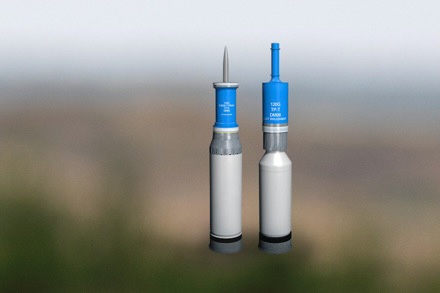
The German armed forces first took delivery of the new DM98 120mm practice round at the end of 2017. Developed by Rheinmetall Waffe Munition GmbH, this full-calibre practice round supersedes the earlier DM18 cartridge. Key features of the new round include above-average accuracy at ranges exceeding 2,000 metres as well as good observability during firing thanks to its continuously visible tracer under all daylight conditions.
The new round, dubbed the “RH88”, was qualified in 2015 by Denmark, the pilot customer, for all Leopard 2 main armament variants in response to an urgent operational requirement. In 2016 it was successfully qualified by the Bundeswehr with a second packaging system and introduced as the DM98. In English it is officially known as the “Cartridge 120mm x 570, DM98 TP-T”, with the last three letters standing for Target Practice-Tracer.
Qualified by the Bundeswehr in 2015/2016, the equally new 120mm DM88 subcalibre practice cartridge has been successfully used by the German military ever since. Developed by Rheinmetall as a successor to the DM78, it features an improved tracer as well as minor modifications due to altered materials specifications. Like the DM98, the DM88 features excellent accuracy, resulting in a highly realistic training experience. Its official English designation is “Cartridge 120mm x 570, DM88 TPCSDS-T”, short for Target Practice Cone Stabilized Discarding Sabot Tracer.
In their current state of design, the cartridges fully comply with the EU regulation on the Registration, Evaluation, Authorisation and Restriction of Chemicals (REACH).
WESTFIELD, Massachusetts – October 24, 2022 – Savage Arms has officially announced the Impulse Mountain Hunter as the newest model in their award-winning series of straight-pull rifles. Introducing faster speeds and lighter weights for big game treks, this rifle is a gamechanger for 2023.

“At Savage, we not only value the input of our customers, but we also listen to it. Since 2021 when Savage launched the first Impulse variant, the number one request we’ve received is for a lightweight version ideal for hunting in the mountains,” said Beth Shimanski, Director of Marketing at Savage Arms. “With extreme accuracy and breakthrough technology, the Mountain Hunter is light, sharp, and encompasses all that the Impulse family represents, thus giving our customers what they wanted.”
Key features include:
• American-Made straight-pull bolt action
• User-adjustable AccuTrigger (1.5-4lbs)
• Removable, multi-positional bolt handle
• Aluminum receiver with integral 1-piece 20 MOA rail
• AccuStock technology with three-dimensional aluminum bedding
• Adjustable length-of-pull
• Savage designed; Proof Research carbon fiber wrapped stainless steel barrel with muzzle brake
• 2 sling swivel studs
• 2-position tang safety
• Rugged, gray synthetic stock
Offering a wide variety of calibers, the Impulse Mountain Hunter is perfect for tough treks and big game bucket list hunts. For more information on the Savage Impulse series, visit savagearms.com.
Part No. / Description / MSRP
57894 / 308 WIN 22-inch barrel / $2,437
57895 / 6.5 Creedmoor 22-inch barrel / $2,437
57896 / 300 WSM 24-inch barrel / $2,437
57897 / 6.5 PRC 24-inch barrel / $2,437
57898 / 270 WIN 22-inch barrel / $2,437
57899 / 30-06 SPRG 22-inch barrel / $2,437
57900 / 28 Nosler 24-inch barrel / $2,437
57901 / 7mm REM MAG 24-inch barrel / $2,437
57902 / 300 WIN MAG 24-inch barrel / $2,437
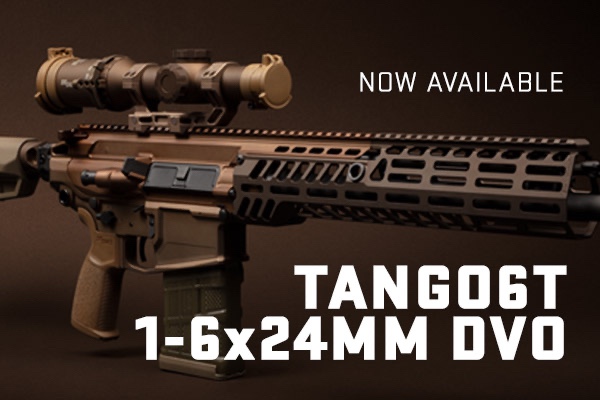
SIG SAUER’s TANGO6T series of riflescopes has rapidly become the U.S. Military standard for Low-Power Variable Optics (LPVOs), delivering fast target acquisition and extreme performance at both close and mid-ranges.
The TANGO6T DVO is the latest variant now available to shooters and hunters, designed for today’s common MSR/AR and bolt action platforms, featuring an illuminated Hellfire reticle as well as industry-leading light transmission and optical clarity.
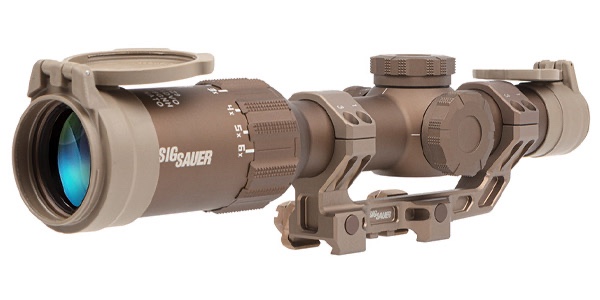
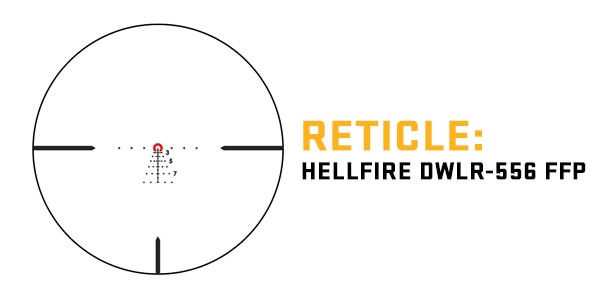
The TANGO6T is complete with our HDX optical system for extreme clarity and low-light performance, HellFire fiber optic and glass-etched illuminated reticles, and first or second-focal plane designs. The riflescope also comes with the ALPHA4 mount, lay-flat flip backs and Anti Reflection Device (ARD) to reduce glare and reflections when looking through the lens.
FEATURES:
HDX™ optics extra-low dispersion glass (ED) combined with high transmittance glass (HT) provide industry-leading light transmission and optical clarity for any situation
6x Super-Zoom Advanced Optical System
Fast Focus Eyepiece
Night Vision (NV) Illuminated reticle settings with locking illumination dial and much more
Assembled at the SIG SAUER Electro-Optics factory in Wilsonville, Oregon
www.sigsauer.com/tango6t-1-6x24mm-dvo