SIG SAUER - Never Settle

Mission Tailors – Jungle Knots with Pouches

September 7th, 2025

Pretty straight forward, includes 6 sets of 2 meter long jungle knots, with pouches to stash them away and stop you getting tangled. Jungle knots are used to create quick shelters with a poncho or basha.

missiontailors.co.uk/products/jungle-knots-with-pouches

Space Force to Accept Air Force Reserve Volunteers for Part-Time Positions

September 7th, 2025

ARLINGTON, Va. (AFNS) —  

Air Force Reservists in space-related career fields interested in volunteering to join the U.S. Space Force as Guardians serving in a part-time capacity can apply from Sept. 3 to Oct. 10.

This transfer option is part of the Space Force Personnel Management Act, which was signed into law as part of the Fiscal Year 2024 National Defense Authorization Act. The first phase of PMA, which selected Air Force Reservists for full time Space Force roles, was completed June 2025.

When fully implemented, PMA will enable the Space Force to create a new model of service that integrates active-component Guardians and Air Force Reservists serving in space-focused career fields into a unified service that offers both full- and part-time service options. This new construct will permit the Space Force to forego the use of Reserve component forces to fill steady-state, full-time requirements and will maximize talent alignment to service needs.

“This part-time opportunity is an important next step toward fully integrating the talent we need into a single component, best equipped to ensure readiness and achieve our nation’s warfighting missions,” said Chief of Space Operations Gen. Chance Saltzman.

Air Force Reserve eligibility includes:

· Air Force Reserve Officers who hold the following Core IDs: 13S; 17X; 14N; 6X.

· Air Force Reserve Enlisted Airmen who hold the following Control Air Force Specialty Codes: 1C6X1; 1N0; 1N1; 1N2; 1N3; 1N4; 1N8; 1D7X1; 1D7X2; 1D7X3.

· Eligibility outside of 13S and 1C6 must have space experience. The Transfer Board will review duty history to ensure at least one prior assignment in a space organization is reflected.

· Eligible service members must be fully trained in the career field in which they are applying.

Selected Airmen must transfer in their current career field, with the following exceptions: Officers selected from the 61X, 64P, and 65X career fields will re-core to 62E or 63A Space Force Specialty Codes. Enlisted E-8s and E-9s selected for transfer will re-core to the 5Z800 or 5Z900 SFSCs.

“The Space Force is about to integrate some of the most professional space operators,” said Chief of the Air Force Reserve and Air Force Reserve Command Commander Lt. Gen. John Healy. “I have no doubt they will be key to advancing security in the space domain.”

In time, the Air Force Reserve, like the Air Force, will no longer maintain space operations as career fields, meaning Reservists with 13S and 1C6 specialties must volunteer to transfer to the Space Force or re-train under a different Air Force Specialty Code.

Officers selected for transfer to part time duty positions incur a minimum three-year service commitment. Enlisted Airmen must enlist in the Space Force for a minimum of three years, maximum six years.

Air Force Reservists who transfer into the Space Force with 15-18 years satisfactory service will be allowed to remain in a part-time work role until they qualify for retirement. Once retirement eligible, the member must participate in the Guardian Assignment Timeline for a full time or part time work role. These members may elect to participate in the GAT at any time for a full-time work role prior to retirement.

Interested Air Force Reservists can apply via MyVector (Common Access Card-required) and can access additional application details and requirements on the Space Force Transfer page. It is important to note that the Air Force Reservist to part-time Space Force transfer opportunity is distinct and separate from the Air National Guard to full-time Space Force transfer opportunity.

Secretary of the Air Force Public Affairs

Impressum Media Inc. Releases New 16th Edition of Firearms Guide with Updated 2025 Guns and Calibers and Impressive 27,650 Gun Manuals & Schematics

September 6th, 2025

Impressum Media Inc., Los Angeles, CA – Septembermber 15.2025 – Impressum Media Inc. is proud to announce the upcoming release of the 16th Edition of the Firearms Guide by Chris Mijic! This new edition contains a significantly updated guns & ammo reference guide with 2025 guns and ammo calibers added along with 1,600 newly added gun schematics, blueprints, manuals, and old guns & ammo catalogs.

Special emphasis has been placed on adding original manuals and catalogs from iconic manufacturers such as Harrington & Richardson, Ithaca Gun Co., Iver Johnson, Merwin, Hulbert & Co., Hopkins & Allen, Remington, Mauser, Savage, Stevens, Winchester, Colt, Smith & Wesson, FN, Browning, Mossberg, and many others.

Published since 2009 at www.firearmsguide.com for both gun enthusiasts and shooting industry professionals worldwide, Firearms Guide is the world’s largest:

1. A Gunsmithing Library with 27,650 zoomable and printable hi-res gun schematics, blueprints, gun manuals, and old guns & ammo catalogs – for all types of antique and modern guns (1,600 newly added just in this 16thEdition)

• This huge Gunsmithing Library provides gunsmiths with 24/7 access to printable high-resolution gun schematics (exploded views, drawings, or diagrams) with gun parts lists with original parts numbers, blueprints with dimensions for complete guns or gun parts, cross-sectional views, printable complete original gun manuals for antique and modern guns, old guns and ammo catalogs from 1800s to today, and Ammunition Dimensions (Case & Bullet) Guide.

2. A Reference Guide that presents over 84,000 antique and modern firearms, air guns, and ammunition with Tech Specs, Hi-Res Color Pictures, Features, Ballistics, and Prices from 1,820 manufacturers from 62 countries.

• With its 14 search criteria like Year, Price, Action, Caliber, Country, Stock Type, etc., Firearms Guide enables fast, complex searches of 84,000 antique and modern guns and side-by-side comparisons of search results – more precise search results than Google.

• Guns are cross-referenced with the searchable Ammo Database with over 7,000 different rounds with ballistics and ammo pictures.

• Over 60,000 high-resolution color pictures of guns in resolutions up to 4000 x 1492.

3. A Gun Value Guide that presents antique and modern guns with gun values online based on 100% – 30% condition ratings

4. Gun Make Codes, Marks, Crests, Stamps, Proofs, and Trademarks Graphic Guide for easier antique and modern firearms identification

• Check visually over 880 Gun Make Codes, Marks, Crests, Stamps, Proofs, and Trademarks to find the same as on your gun and to identify the manufacturer

The New Firearms Guide Flash Drive 16th Edition is published as:

1. A cloud-based, searchable Online Edition – For desktop, laptop and tablets 

2. A Flash Drive Edition for Windows User

The Flash Drive Edition is an off-line standalone Windows app that runs from a flash drive and enables you to research guns and print our gun blueprints from the privacy of your home, without leaving browsing tracks online, while Online Edition comes with free updates and enables you anonymous activation and use, without any tracking or data collecting/recording as internet search engines do. Both Flash Drive and Online Edition provide 100% privacy to users.

The publisher made this new 16th Edition of the Firearms Guide available for gun shops’ retail distribution on 6-month Activation Cards.

“When purchased in the gun shop, these new Firearms Guide Activation Cards enable a buyer to anonymously activate and use the newest Firearms Guide Online Edition for 6 months,” says Chris Mijic, publisher of Firearms Guide. “Firearms Guide Online Edition Activation Card is a new way gun publications are now sold in gun shops and how gun shop owners can offer modern products to their customers and have repeated sales to raise shop revenue”.

Firearms Guide16th Edition is available at www.firearmsguide.com.

SK Customs Debuts “Kingdom of Atzlán” Series

September 6th, 2025

ST. AUGUSTINE, Fla. – August 29, 2025 – SK Guns®, the Nation’s only series-driven, limited-edition manufacturer of custom firearms, is proud to announce its new “Kingdom of Atzlán” series. Each installment of the new series will be a limited run of 500 Colt 1911s chambered in .38 Super, beginning with the inaugural “Huitzilopochtli” production. 

The Kingdom of Aztlán and the deity Huitzilopochtli occupy a central place in the mythology and identity of the Mexica, better known as the Aztecs. Aztlán, often described as a mythical homeland, was believed to be a paradise-like region located to the north of the Valley of Mexico. According to legend, it was from Aztlán that the Mexica people set forth on a long and arduous migration guided by divine signs, eventually leading them to establish Tenochtitlán in 1325.  

At the heart of this migration story was the god Huitzilopochtli, the powerful deity of the sun, war and patron of the Mexica. Depicted as a fierce and demanding god, Huitzilopochtli provided the Mexica with purpose and direction. He is said to have commanded them to leave Aztlán and promised them a destined land where they would find an eagle perched on a cactus devouring a serpent—an image that today forms the Mexican national emblem. 

“Huitzilopochtli’s influence extended beyond migration myths. In Mexica society, he embodied the struggle of light against darkness,” said Simon Khiabani, owner and founder of SK Guns. “Under his patronage, the Mexica transformed from wandering migrants into a dominant imperial power. Together, the legend of Aztlán and the guidance of Huitzilopochtli symbolized both the origins and destiny of the Aztec people.” 

Details on the left side of the gun’s slide include a scene of the Aztec migration as the sun rises behind the Chapultepec Hills, with the Mexican snake closest to the muzzle. The Mexican eagle watching over the migration and the iconic Colt serpent logo are featured on the rear panel. Subtle shading with traditional Aztec symbols decorates the slide, giving contrast to the 24k gold-plated art.    

The right side of the gun’s slide illustrates a hummingbird, which is a translation of Huitzilopochtli. AZTLÁN is embellished on the slide in stylized lettering, continued with shading in the background with matching Aztec symbols. The top of the slide reads the name Huitzilopochtli, with a matching Aztec codex. Closer to the rear sight shines bright a depiction of the Aztec union star, all in 24k gold. 

The frame, slide, barrel and hardware are all high polished and feature 24k gold plating of select areas and controls with a deep Colt Royal Blue finish. This historical masterpiece is made complete with an artistic image of an earlier portrayed Mexican Eagle with a snake in its talons, presented on engraved beechwood grips. 

“Huitzilopochtli” is a limited-edition production run of only 500 Full Size Government Model Colt 1911s chambered in .38 Super. Each pistol will include a special engraved edition number.  

To learn more about the Kingdom of Aztlán, visit www.skguns.com. Follow us on Instagram and Facebook to be the first to learn of our newest production launches. 

The New Playbook for Effective Multilayered Air Defence: Adaptation, Not Escalation

September 6th, 2025

By Ivor, Thales in the UK

The arms race was forged in an era of binary threats, when overmatch was measured in mass and tonnage. Today’s battlespace is asymmetric, accelerated and unbounded. As faster, more fragmented, more unpredictable threats take to the skies, the idea of outpacing them simply with larger numbers of heavier munitions grows increasingly obsolete.

The concept of an arms race assumes a finish line but in an environment of evolving, multi-vector threats, that assumption no longer holds.

Relevance, not dominance, is the new measure of air superiority

On today’s frontlines, a tactical advantage can expire in a matter of weeks. In Ukraine, where countermeasure cycles move fast and systems evolve in near real time, a capability that takes too long in transit may already be outdated on arrival. What matters isn’t the volume of the capability, but how fast it arrives, how easily it adapts, and how well it integrates.

This is a fast-moving operational reality with far-reaching implications. Modern threats – from hypersonic glide vehicles and autonomous drone swarms, to smaller, faster loitering munitions – have shifted the ground under traditional air defence, prompting nations to invest in multilayered systems that promise comprehensive protection – a dome guarding troops from above as well as in front. In the UK’s case, and as set out in its 2025 Strategic Defence Review, £1bn is being earmarked for Integrated Air and Missile Defence (IAMD).

Whether this investment turns promise into real deterrence depends on how ready, relevant and integrated those capabilities truly are. This often means adapting what we have rather than racing to replace existing capability with the shiniest kit that could be outmanoeuvred and outgunned before they leave the production line.

Technical integration as a strategic weapon

By adapting, I mean layering resilience into existing systems and platforms by ensuring they can communicate, adapt and respond as one – helping operators do the same.

While I don’t want to repeat myself, I do want to emphasise a point made in my previous article: just as no single service, government or nation can fend off the array of threats they face alone, no single product, capability or solution can hope to arm these entities with everything they need. Myriad threats require integrated, multilayered solutions which work seamlessly not only within but between Front Line Commands, across allies, domains, borders and time zones.

A NATO ally that goes beyond co-operation, to be truly integrated – capable, for instance, of firing another’s missiles – is one that can respond faster, adapt on the fly, and turn interoperability into a real-time strategic advantage. In this way, agile, agnostic technical integration fosters the kind of Integrated Force outlined in the SDR’s vision for 2035 – one that “deters, fights, and wins through constant innovation at wartime pace.”

Better connected and better protected, allied militaries can gain a competitive edge that’s out of reach of autocratic adversaries characterised by top-down, centralised control. They can exploit the imagination and experience of decision makers at every level by giving them the agility, ability and authority they need to move fast and strike first, augmented by integrated capabilities that can flex to meet any mission and be updated as the threat evolves.
Integration in action: the ACE advantage

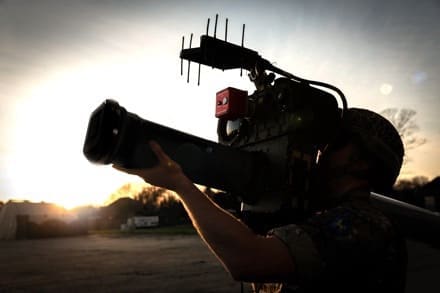
In partnership with L3 Harris Technologies, Thales is developing an integrated short-range air defence (SHORAD) Command and Control (C2) capability.

The new capability integrates L3Harris’ Target Orientated Tracking System (TOTS) into Thales’ Agile C4I @ Edge (ACE) system to enhance C2 capabilities. This collects, fuses and correlates data from sensors and effectors across the battlespace, providing a common operating picture and accelerating decision making.

Cultural adaptation as an enduring, evolving edge

Such capabilities are only as valuable as their perceived utility. Without a clear idea of their role within the wider kill chain, decision makers may struggle to deploy them effectively. Without the requisite training and support, end users likely won’t advocate for their adoption, instead leaving them to gather dust on the shelf in favour of what they’re comfortable and familiar using.

It’s why talk of effective technical integration must begin with a foreword that addresses the necessary cultural transformation: the mindsets, habits, incentives and partnerships that matter as much as the technology.

To start with, suppliers and customers must work hand in glove to foster a deeper understanding – on the part of industry – of what’s needed to drive change in the right direction, at the relevant pace. The palpable sense of trust and shared intent at joint hubs like Thales’ facility at Thorney Island is testament to what’s possible when one closes the distance between industry and defence. Here, our engineers, including some ex-service personnel, work side by side with MoD teams: training new air defenders, refining systems and gathering feedback from live experiences to ensure every solution is grounded in operational realities.

As service wrappers go, it extends from system design and kit delivery all the way through to mission support. More broadly, it’s the mindset and trust that makes a difference: availability, willingness, reliability and responsiveness on the part of industry fosters competence at the front line, continuity across operations, and a culture with backbone: confident, composed, and agile enough to evolve with the threat.

The arms race that never ends

New and emerging threats are relentlessly lapping procurement cycles. Traditional air defences are struggling to keep up with a landscape where threats multiply and adapt faster than they can be contained – where eliminating one threat leads to two more appearing in its place. Amidst it all, the imperative for the UK’s Armed Forces to stay ready, responsive and relevant is both an unignorable challenge and an unambiguous aim.

It is not, thankfully, an unattainable one. What’s needed is a mindset shift from periodic reinvention to continuous evolution: spiral development over wholesale replacement, cultural adaptability over rigid process and integration over isolation. The UK must not just be ready to fight tonight, but also able to adapt tomorrow with the systems and skills we already possess.


Integration in action: the ACE advantage

In partnership with L3 Harris Technologies, Thales is developing an integrated short-range air defence (SHORAD) Command and Control (C2) capability.


The new capability integrates L

USSOCOM Hosts a Change of Responsibility

September 6th, 2025

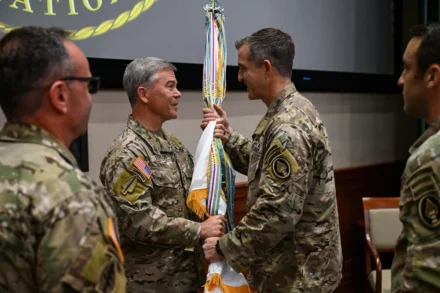
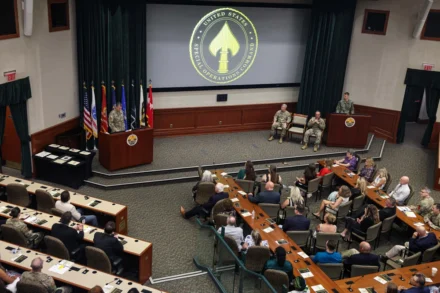
MACDILL AIR FORCE BASE, Florida — U.S. Special Operations Command held a change of responsibility ceremony, Sept. 5, 2025, at the Davis Conference Center.

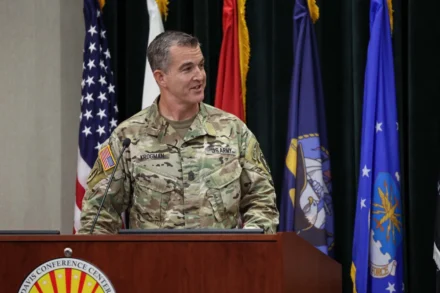
U.S. Army Command Sgt. Maj. Andrew J. “AJ” Krogman assumed responsibility as the U.S. SOCOM command senior enlisted leader from U.S. Army Command Sgt. Maj. Shane W. Shorter, who held the position for more than three years.

U.S. Army Gen. Bryan P. Fenton, commander of U.S. SOCOM, hosted the event and reflected on the importance of noncommissioned officer leadership.

“SOF [Special Operations Forces] NCOs are the manifestation of our first SOF Truth, humans are more important than hardware – and truly – they are SOF’s credentials,” said Fenton. “And as our credentials, they lead the largest part of the SOF enterprise, our enlisted force, and set the example through their decades of service, of competence, confidence and character.”

Shorter thanked senior leaders from across the joint force and international SOF allies who attended the ceremony.

“Special Operations Forces are known as pathfinders and trailblazers, but it takes courageous leaders like all of you to clear those paths,” said Shorter. “The way every senior officer in this enterprise empowers NCOs sets a gold standard not only for SOCOM but for the entire military and our partners across the globe.”

As he passed the colors, Shorter said he was confident about the future of the command.

“I can think of no one better suited to assume the responsibilities at the pinnacle of Special Operations NCO leadership, advising at the helm of a 70,000-person global enterprise, than Command Sgt. Maj. Krogman,” he said. “You exemplify the best of special operations leadership. SOCOM is incredibly fortunate to have you stepping into this vital role.”

Fenton echoed that confidence, noting Krogman’s extensive special operations experience, including his role as the Joint Special Operations Command senior enlisted leader.

“Command Sgt. Maj. Krogman, you are known as a creator, innovator, out-of-the-box thinker, atypical and non-traditional,” said Fenton. “You are exactly what SOF needs.”

Krogman thanked Fenton for his support and described the transition as seamless and the mission ahead as urgent.

“The significance of U.S. SOCOM’s role today cannot be overstated. In an ever-changing global landscape, the need for special operations is more critical than ever – these are America’s elite warriors at the tip of the spear, ready to respond to any challenge with precision, agility and unwavering resolve,” said Krogman. “As we look to the future, the importance of special operations will only grow, and I am honored to be part of this vital mission. I am eager to work alongside each of you, to listen, to learn, and to lead with compassion and determination.”

Story by Michael Bottoms, U.S. Special Operations Command

Photos by TSgt Marleah Miller

Rheinmetall Builds Facility for Destroying Legacy Ammunition

September 5th, 2025

For the future to come, Rheinmetall is planning to destroy large quantities of legacy ammunition in the district of Dillingen an der Donau, Bavaria/Germany. 

As part of explosive ordnance disposal projects in offshore and onshore areas, the Düsseldorf-based technology corporation intends to destroy not only legacy munitions from the two world wars, but also so-called ‘newer stockpiled ammunition’, and to take over the disposal of old stocks of the Bundeswehr and other NATO forces.

An estimated 1.6 million tonnes of legacy munitions are believed to be on the seabed of the North Sea and the Baltic Sea alone. These include artillery shells, land and sea mines as well as aircraft bombs. In addition, over 2 million tonnes of bombs were dropped on Germany and the occupied territories during World War II. In southern Germany alone, it is estimated that there are still more than 20,000 tonnes of old ammunition that needs to be deactivated and disposed.

Rheinmetall has acquired a site covering around 41 hectares on Lerchenberg, which is part of the Bavarian municipality of Zusamaltheim. The ammunition disposal facility is scheduled to commence operation in early 2026. The property, which also served as a Bundeswehr depot in the past, also has 32 bunkers that can store up to 900 tonnes of net explosive mass.

In April of 2025, Rheinmetall had already acquired the ammunition recovery company Stascheit GmbH, based in Gardelegen, Saxony-Anhalt. Its main activities include the detection, evaluation, recovery and destruction of explosive ordnances, for example in connection with offshore wind farms. Like the new facility on Lerchenberg, Stascheit GmbH will also be integrated into the Projects & Services business unit of Rheinmetall AG.

Combat Flip Flops Joins Spartan for Merchandise Collaboration

September 5th, 2025

ISSAQUAH, WA (09/04/2025) — Spartan, the world’s leading endurance sports and extreme wellness brand, is proud to announce a new partnership with Combat Flip Flops, a veteran-owned company known for its mission-driven approach to business and rugged, purpose-built footwear and apparel.

As a key pillar of the partnership, Combat Flip Flops and Spartan will collaborate to release co-branded Spartan Floperator flip flops, which will be available for sale at all U.S. Spartan events at the official merchandise tent, on the official Spartan website, and the Combat Flip Flops website.

The Floperator isn’t your average pair of flip flops. These flip flops are engineered with a fully contoured, zero-drop sole for maximum grip, support, and all-day comfort. Whether you’re trekking through rough terrain, crossing rivers, or chasing your trifecta, these sandals are designed to handle whatever comes next. Spartans will have the choice of two Floperator styles: a special edition black model with a red and white Spartan branded velcro patch, or Combat Flip Flop’s best-selling Coyote colorway: tan and black with a black Spartan branded velcro patch.

Like Spartans, Combat Flip Flops are tough, made for performance, and built for the long haul.

“This partnership is about more than just great gear — it’s about shared values,” said Brian Cox, General Manager of Partnerships at Spartan. “Combat Flip Flops is built by veterans and supports freedom through business, education, and empowerment. Their mission aligns perfectly with what Spartan represents — grit, resilience, and respect for those who serve.”“The willingness to tackle any obstacle and overcome any challenge is a fundamental tenet of Combat Flip Flops. The brand is more than footwear—it’s a mindset,” said Donald Lee, Co-founder and Chief Marketing Officer of Combat Flip Flops. “Teaming up with Spartan Race means joining forces with a community that embraces challenge, leads with heart, and never quits. This partnership enables our mission to reach like-minded individuals around the world that operate with the same determination to improve themselves, community, and planet.”

The Spartan and Combat Flip Flops co-branded Floperator line is available now, giving racers the opportunity to soak up the last few months of “flip flop season.” Grab a pair on-site at the official Spartan merchandise tent, online at www.Spartan.com, or CombatFlipFlops.com.