Come say hello to the Platatac team at the infamous flagship DSEI UK stand of our brothers from another mother, Edgar Brothers.
If you have the time please stop by N5-260 and say hello to our Founder & CEO Ben Doyle-Cox and our GM Nathan Mullins.


Come say hello to the Platatac team at the infamous flagship DSEI UK stand of our brothers from another mother, Edgar Brothers.
If you have the time please stop by N5-260 and say hello to our Founder & CEO Ben Doyle-Cox and our GM Nathan Mullins.

The Digital Manufacturing Centre (DMC), an industry-leading production facility and additive manufacturing (AdM) Engineering Research & Development centre, has announced the successful delivery of the largest AdM metal component the DMC has worked on to date – a 3D printed 90kg Mastiff suspension and differential carrier for NP Aerospace. The production process engineering and development, manufacture and certification of this innovative methodology proves DMC’s ability to pioneer large scale format AdM metal components to MoD’s exacting requirements, while reducing lead times and minimising expensive tooling costs. The part, engineered and developed by NP Aerospace and manufactured by DMC, will be on display at NP Aerospace’s stand N2-410 at DSEi 25, Excel, London (9-12 September 2025).
Working in partnership with NP Aerospace, DMC engineered, validated and compliance tested the AdM process to produce this complex large 3D printed metal structural component. It was manufactured using Wire Arc Direct Energy Deposition (DED) and each side is approximately 500mm in cube dimensions and weighs approximately 90kg each. Normally, AdM is known for complex geometries and lightweighting. However, for TAMPA Spiral 2 the requirement was to prove AdM could deliver large structural components (traditionally produced using casting, forging or fabrication) to specification.
There was no requirement for DMC to redesign to reduce weight or improve performance, in fact, it was critical that the existing performance criteria could be replicated with AdM. In this instance, the key advantages of using AdM were zero tooling (which is very expensive for low volume production) and reduced lead times (weeks instead of 6-9 months). The DMC AdM process design could also potentially support NP Aerospace to complete rapid development spiral activities for platforms in the future. With additional redesign, other benefits such as lightweighting could be achieved, which would reduce the total mass of the vehicle, allowing other key capabilities such as firepower, cargo capacity, mobility or protection to be increased.
David Wilson, Director of Engineering, NP Aerospace added: “As a key partner on critical UK MoD projects it is important we advance technology that has very real benefits in the field. By working with DMC on TAMPA Spiral 2 we are able to demonstrate significant platform availability improvements and reduced lead times and costs on part replacement. The part we have developed for Mastiff is safety critical and uses cutting edge direct energy deposition (DED) technology which also has the capability to repair and machine existing parts, so it would be possible to extend the life of existing components.”
Kieron Salter, Founder & CEO of DMC said, “At DMC we are very pleased to have been intimately involved with Project TAMPA from the outset to help UK MoD better understand the capabilities, potential and benefits that using AdM can bring to the defence supply chain and critically, what additional design and engineering expertise DMC can also deliver. In partnership with NP Aerospace, we have successfully proven the AdM engineering outputs required for both Spiral 1 and 2 which is fantastic news, but beyond that, I know the full benefits of what can be achieved are yet to be fully understood or realised across the defence sector.”
SOUTH BEND, Ind., Sept. 5, 2025 — Innovating today for tomorrow’s mission, leading global military mobility solutions provider, AMG General, will showcase the revolutionary HUMVEE Saber and the next generation Joint Light Tactical Vehicle (JLTV A2) protected mobility platforms at the Defence Security and Equipment International (DSEI) tradeshow held at the ExCel London Exhibition Centre September 09 – 12, 2025, booth S4-310 in the U.S. Pavilion. This comes as the Company prepares to finalize a partnership selection with a leading UK defense contractor in anticipation of the upcoming United Kingdom Land Mobility Programme (LMP) solicitation.

“We are extremely excited to attend DSEI this year as we announce our intent to participate in the UK’s LMP solicitation,” said Jim Cannon, AM General President and CEO. “We have the extraordinary opportunity to showcase our robust mobility portfolio and convey how AM General can support the UK’s defense readiness and operational safety for their troops. As we move to finalize our UK collaboration, we aim to demonstrate our commitment to long-term UK defense alignment through industrial, operational, and capability partnerships.”

On display will be the JLTV A2, a next generation light tactical vehicle that features over 200 improvements over the previous model, including better corrosion protection, significantly reduced exterior and interior operational noise, and a simplified electrical architecture for easier accessibility and maintenance. AM General will also showcase the Saber light tactical vehicle – built on the battle-proven HUMVEE platform that is transforming survivability with increased levels of protection from its patented cab design. The company’s proprietary technology allows the Saber to have 360-degree kinetic energy threat protection as well as blast threat protection with improved ride quality to excel in any terrain. Both vehicles along with the iconic and still-in-demand HUMVEE trucks will be a part of a demonstration for the UK MoD happening in October 2025.
NP Aerospace, a global armour manufacturer and vehicle integrator, has launched a new specialist women’s body armour range, at DSEI 2025. Designed and manufactured in UK, this new product has been approached from the ground up to meet the distinct needs of women operating in high-risk environments. At the same time, NP Aerospace is pleased to announce the placement of an order for their new product by a currently undisclosed customer, for 2000 sets in a range of women-specific sizes. The product will be on display at NP’s booth N2-410, at DSEI 9-12 September 2025.

Up until now, women across the defence and security environments, globally, have had to wear body armour that has been designed and validated for men. The resultant poor fit can compromise the protection offered and can be extremely uncomfortable for many women. For some time, NP Aerospace has been investing in an internal R&D project to assess the size and complexity of this challenge, to develop solutions to address the anatomical and operational needs of servicewomen and others in need of such protection.
The outcome of this programme is an optimised curved hard armour plate, that comes in a range of sizes and delivers an increase in both protection and comfort. Development and testing have confirmed that placing a curved plate in a standard men’s sized and configured carrier is not sufficient. The ‘system’ requires an integrated solution with a curved hard armour plate and a women’s specific soft armour insert, all worn within a women’s specific carrier – developed with NP’s partner, Logistik Unicorp. NP’s new product comes in a range of sizes with varying curvature and coverage. This ensures vital organs remain protected from all possible angles, irrespective of body shape. Being ‘comfortable’ also vastly increases effectiveness and endurance when worn for extended periods and in high stress scenarios.
James Kempston, CEO of NP Aerospace, commented: “feedback from women in combat and on security related duties has clearly identified a growing need for specially designed armour that enhances survivability, reduces injury and improves endurance. We’re delighted to be leading the way with our fully developed women’s body armour solution and pleased that we have also received the first order for 2000 sets.” He added: “NP Aerospace is a trusted supplier of body armour products globally, so it’s important that we remain at the forefront of development, maximising the effectiveness and operability of our protection products, for every type of user. This new product is particularly important as the number of women serving within armed forces and wider security services is increasing on a global scale.”

FlamePro, a company long associated with industrial and fire brigade PPE is launching their new Arcus clothing and load carriage system for military and LE during next week’s DSEI at the London ExCel Centre.
See it in person at stand N2-142 or keep an eye on SSD’s coverage of DSEI.
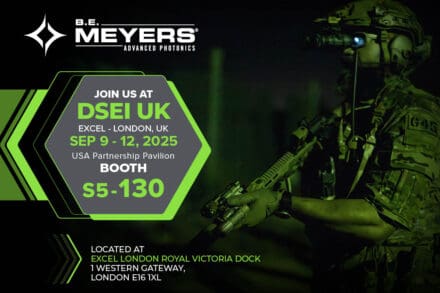
September 4, 2025 (Redmond, WA) – Join B.E. Meyers & Co., Inc., a Defense Technology Manufacturer specializing in advanced photonic solutions for military, law enforcement, consumer, and aerospace applications worldwide, at the 2025 Defense and Security Equipment International (DSEI) in London, UK. DSEI is the UK’s premier defense event running from September 9-12 and will have attendees from over 90 countries. B.E. Meyers & Co. will be in booth S5-130 in the USA Partnership Pavilion.
We will be showcasing our well known MAWL®, IZLID®, BOARS®and GLARE® series of products and bringing our latest innovations, the MILR®, VSLAP® and DAGIR®. This is a key opportunity for us to meet with our global allies and support warfighters around the world. We are excited to push the boundaries of photonic technology and showcase it on an international scale.
Don’t get left in the dark, schedule a meeting with B.E. Meyers & Co. by emailing us at sales@bemeyers.com. For more information on our products and capabilities, please visit www.bemeyers.com.
The SKIRMISHER FIREARMS TRAINING BAG is a purpose-built solution for organized, low-profile transport of firearms and training gear. It’s designed to hold one (1) AR-style take-down rifle using an internal retention strap, as well as three (3) full-sized handguns—including weapon lights—in padded, protective pockets.
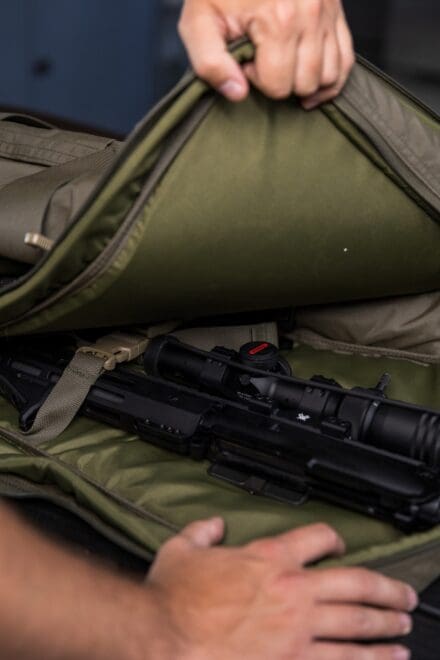
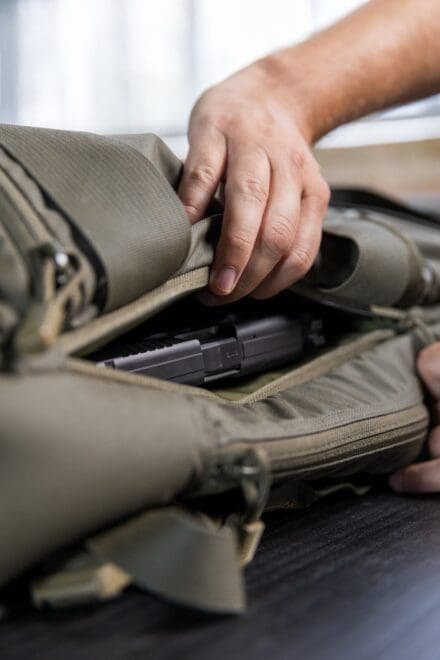
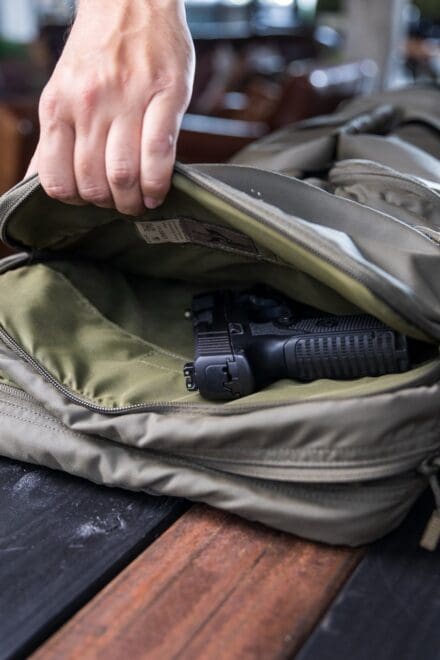
Designed with efficiency in mind, the Skirmisher includes four hook-and-loop magazine attachment straps, each capable of securing multiple magazines. The top center bin allows for quick access to loose “top-up” rounds, while additional spacious pockets accommodate ear pro, eye pro, boxed ammo, and other mission-critical accessories.
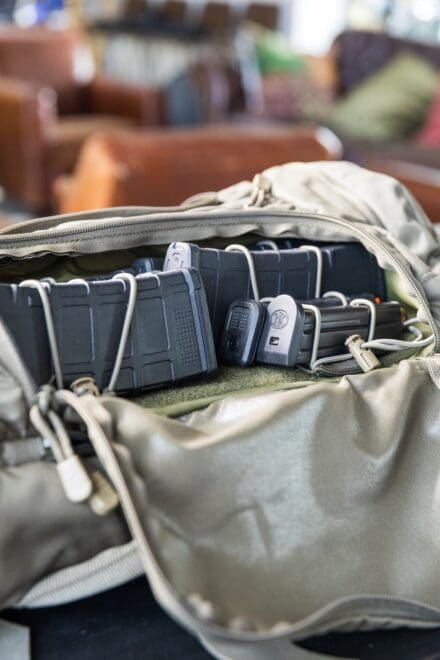

Constructed with padded protection in all the key areas, this bag ensures safe transport for your expensive optics, lasers, and lights while providing multiple carry options—backpack, single-strap sling, or grab-and-go using the continuous-length webbing handle. Its discreet exterior design keeps your loadout under the radar, ideal for those operating in non-permissive or urban training environments.
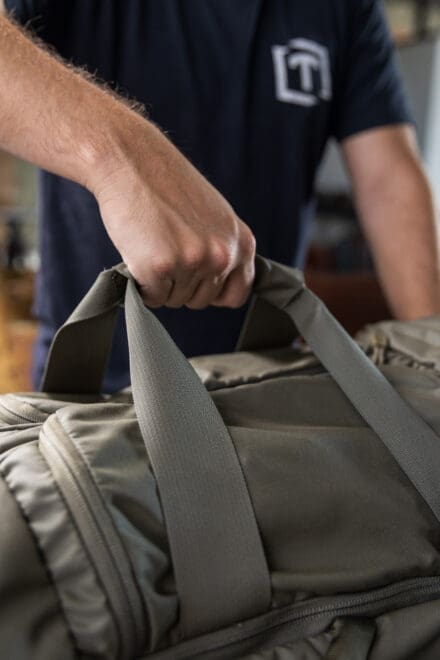
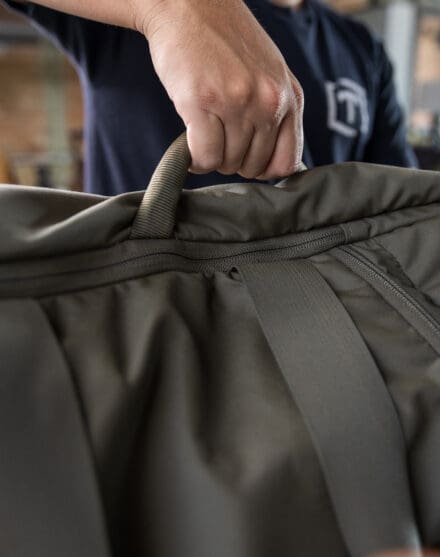
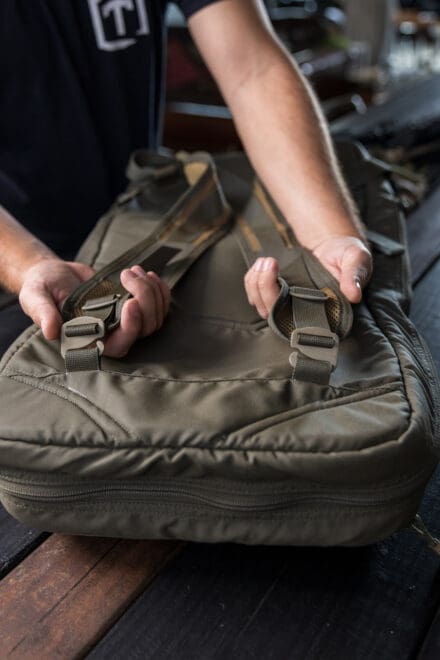
The Skirmisher’s versatile internal layout and secure compartments help streamline pre-range loadout and post-range teardown. Whether you’re running drills, attending a course, or keeping your tools at the ready for emergency response, the Skirmisher delivers rugged, adaptable performance.

Built for serious shooters who demand efficient capability without compromise, this bag blends durability with tactical practicality. The Skirmisher isn’t just a firearm transport solution—it’s a mobile command center for your range day.

To request an estimate click image above or visit First-Spear.com/Request-For-Estimate. FirstSpear is the premier source for cutting edge-tactical gear for military, law enforcement and those who train. For more information visit First-Spear.
SAN FRANCISCO–TurbineOne announced today it has been awarded a five-year, IDIQ contract with a $98.9M ceiling from the U.S. Army to deliver and demonstrate its Frontline Perception System (FPS) as part of the Army’s Intelligence Enterprise modernization.
With FPS, warfighters can build, retrain, and deploy custom machine learning models at the edge without coding, leveraging multiple sensor feeds in degraded communications environments.
Founded in 2021, TurbineOne successfully completed a Phase II Small Business Innovation Research (SBIR) contract which led to this SBIR Phase III IDIQ, a milestone reached by only a fraction of small businesses. In addition to successful completion of a Phase II SBIR, TurbineOne earned a Defense Innovation Unit (DIU) “success memo” for prototype performance, a key factor in the Army’s decision to award this contract.
TurbineOne will deliver AI/ML-driven automated target recognition, counter-UAS, and collaborative autonomy capabilities to accelerate intelligence and targeting cycles, including processing, exploitation, and dissemination (PED) to Army units. With FPS, warfighters can build, retrain, and deploy custom machine learning models at the edge without coding, leveraging multiple sensor feeds in degraded communications environments.
“We are grateful to partner with innovative Army units that pushed us through years of iterative exercises to deliver a software-first, hardware-agnostic capability ready for global distribution and rapid scale,” said Ian Kalin, CEO of TurbineOne. “We look forward to supporting the Army’s Transformation Initiative in collaboration with the innovative intelligence leaders in the Army G-2 and Program Executive Office-Intelligence, Electronic Warfare & Sensors.”
Editor’s note: we write about this technology in November 22 soldiersystems.net/2022/11/10/mww-23-turbine-one-frontline-perception-system.