Aquaterro

Steinel Ammunition Releases its First Premium 9mm Defensive Load

March 8th, 2020

Steinel Ammunition Co., known for their hard to source, unique MILSurp loads and premium hunting and target ammo, have designed a 9mm 124gr. Subcompact Carry SCHP round for EDC.

Twinsburg, Ohio (March 2020) – Steinel Ammunition, a premium manufacturer of self-defense, hunting, and target ammunition, has launched its first-of-its-kind premium defensive ammo for the 9mm with the 9mm 124gr. Subcompact Carry Solid Copper Hollow Point (SCHP).

“This 9mm Subcompact Carry round is our first mainstream round we’ve added to our product line-up,” Andy Steinel, president of Steinel Ammunition, explained. “Although we have come to be known for our premium MILSurp rounds, we figured, even though we all love to go to the range and shoot these amazing classic firearms, we also carry defensive firearms every day. So why shouldn’t we have the same quality ammunition in our EDC as we do in our fine military collectibles?”

The Steinel 9mm Subcompact Carry load is perfectly suitable for any 9mm, regardless of barrel length, but its performance is optimized for the shorter, subcompact and compact-sized pistols. Taking the standard “cup and core” jacketed hollow point typically used in 9mm rounds for decades, Steinel Ammunition added modern CNC and EDM technology to produce their premium SCHP bullet.

Steinel Ammunition’s 9mm Subcompact Carry bullets combine premium components such as Maker Solid Copper Hollow Point bullets, new Starline nickel-plated casings, Hodgdon powder, and CCI’s primers. The bullets expand to a diameter of 0.706” when fired from a 3” barrel at 960 FPS. Fired from a 4.7” barrel, the bullet expanded to a diameter of .857” with 1,050 FPS velocity.

Steinel Ammunition’s new 9mm 124 gr. Subcompact Carry SCHP round is available online for $19.99 for a box of 20 rounds.

For more information on Steinel Ammunition Co., visit www.steinelammo.com or follow along on Facebook or Instagram.

Ecological Defense Group

March 8th, 2020

The Ecological Defense Group, Incorporated or EDGE is a 501c3 which conducts African wildlife counter-poaching and conservation. They are an international collaboration between Special Ops experts and African Wildlife Rangers.

EDGE works directly on the front lines of African wildlife conservation to develop more effective, capable and equipped counter-poaching teams.

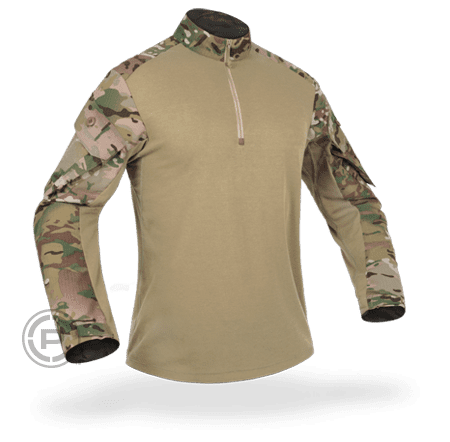
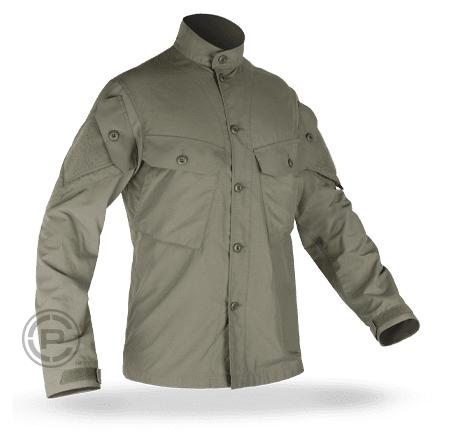
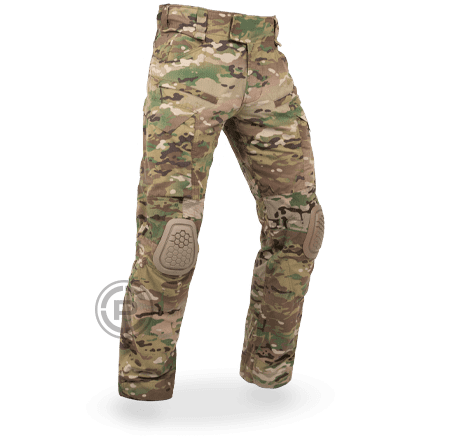
Our industry has really stepped up with MultiCam brand working with Crye Precision, Altama and 5.11 Tactical to help outfit these anti-poaching forces.

This year, EDGE plans to conduct training programs and invite partners to build community programs in the following countries:

• South Africa

• Malawi

• Uganda

• Botswana

• United States (Kruger-Texas Ranger Exchange Program)

EDGE’s first line of capabilities are the wildlife Rangers with the greatest success in the Rhino War. We employ and empower them, and then supplement their expertise with extraordinary international capabilities.

To support EDGE:

3638 Smith Ave. Suite A,

Acton, CA 93510

818-850-3343

edge@ecodefensegroup.org

www.ecodefensegroup.org

SCUBAPRO Sunday – Seawing Nova

March 8th, 2020

The SCUBAPRO Seawing Nova turns ten years old. The Seawing Nova appeared in 2009 and
immediately turned heads with its clean sheet streamlined design. The original Seawing fin inspired it with its radical blade profile.

This innovative fin caught the attention of designers and engineers worldwide. It won Popular Science magazine’s “Best of What’s New in 2009” award. Then it won the ScubaLab Testers Choice award for the best performing new fin of 2010. In 2011 the Seawing Nova won the prestigious, internationally- recognized Red Dot Award for product design, then in 2013, when a full-foot version came out, it won the Testers Choice for the best full-foot fin of the year. And in 2015, after benefitting from several upgrades to make a great fin even greater, the improved Seawing Nova won the Testers Choice award for the best fin of the year once again.

Built with a space-age Monprene elastomer that is virtually indestructible. (The Seawing Gorilla includes a special additive to enhance stiffness and increase feedback.) Spotlighting its proprietary G4 (4th Generation) articulated hinge with enlarged Pivot Control notches that enables the entire wing-shaped blade to pivot and generate thrust, the Seawing Nova produces a propulsive snap that can rocket you through open water at top speed or propel you along reefs or in and out of tight spots with total control—all with little to no ankle or leg strain. Pivot Control technology ensures that the most efficient 45-degree angle of attack is maintained no matter how easy, or hard you kick.


The Seawing Nova also excels in low-speed maneuvering, including frog kicks, reverse kicks, and turtle backing. Offers improved handling when making small directional adjustments. This is due in large part to a slight increase in rigidity across the trailing edge of the blade, which has ratcheted up responsiveness and thrust at full power while requiring no increased kicking effort in cruising mode. 

The fin features a well-engineered footplate that extends all the way to the back of the heel, maximizing power transmission while minimizing stress on legs and ankles. Co-molded Grip Pads provide efficient non-skid footing on wet surfaces. The famous bungee straps have been redesigned and updated, reducing overall weight and providing enhanced durability.

• Monprene Shroud is 35% lighter.

• Re-engineered with the injection gate relocated to provide enhanced durability.

• More flex means improved comfort.

• It’s the same bulletproof 8mm marine-grade bungee as in existing Seawing Nova Straps.

The fin also features the popular self-adjusting heel strap made of marine-grade bungee. This bungee is highly elastic, resistant to the elements, and the soft heel pad with an over-sized finger loop is comfortable and simplifies doffing and donning. It can also be fitted with a steel spring strap  that also fits on the twin jet fins


SEAWING NOVA FAMILY OF FINS

Seawing Nova Open Heel This high-performance fin delivers the power, acceleration, and maneuverability of a blade fin, with the kicking comfort and efficiency of a split fin. Available in five sizes (XS-XL).  

Seawing Gorilla Open Heel
While identical in design to the Seawing Nova, the Seawing Gorilla uses a special additive in its compound to provide more stiffness and snap to the blade. This results in more power, speed, and control for divers who like a stiffer fin with more feedback in their kicks. The more rigid blade also allows for more effective sculling, frog-kicking, and reverse-kicking, making it an excellent choice for tech divers. Available in five sizes (XS-XL) Graphite (while supplies last) Black is available by special order.


THE SEAWING NOVA ADVANTAGE

On a traditional paddle fin, during a typical kick stroke, as water flow hits the fin, the blade will curve along its length. This means that the blade’s angle of attack, relative to the water flow, is going to be different at different points on the blade. In such a case, the leading edge remains too flat to generate efficient thrust, while the trailing edge flexes too much. Consequently, only the midsection can produce dynamic thrust.  

The Downfalls of traditional fins

The Seawing Nova will always maintain the most efficient angle of attack along the entire length of its blade because instead of the gradual curve of a traditional blade, the Seawing Nova’s blade stays relatively flat due to the G4 articulated joint that allows the entire blade to pivot (like the tail joint of a whale or dolphin). Also, the blade is longitudinally reinforced by pronounced rails that help prevent curvature (this is supported by the monocoque effect that takes place when the Variable Blade Geometry wing tips arc upwards).


On a traditional paddle fin, the harder you kick, the more the blade bends. That means a soft fin will achieve the ideal 45-degree angle when it’s kicked gently but will over-bend and lose thrust when it’s kicked hard. Stiffer fins, on the other hand, achieve that ideal 45-degree angle when kicked hard but remain too flat to be efficient when kicked gently. Consequently, both types require the diver to compromise his or her kicking style to get any efficiency out of the fin.


On the Seawing Nova, by creating a fixed angle of attack, the unique G4 hinge also allows the blade to flex easily to that ideal 45-degree angle but prevents it from flexing further as kicking strength increases. Therefore, the angle of attack is close to the optimal 45 degrees at all times, regardless of kicking strength. Kicking easy or kicking hard, the Seawing Nova lets you always maintain the optimum angle of attack for maximum performance.

On a traditional paddle fin, that non-productive or “dead” section where foot pocket and blade meet creates a lot of drag without generating any thrust.

On the Seawing Nova, engineers eliminated this section, creating a “Clean Water Blade” where water flows cleanly onto the working part of the blade, reducing drag and increasing thrust. 

The ‘dead’ section between the foot pocket and the blade of a traditional fin generates drag but not thrust. We removed it! This means that water is free to flow cleanly onto the working section of the blade. Drag is reduced, and thrust is increased.

MATBOCK Skins, SCUBAPRO, has been working with MATBOCK to develop Skins for SCUBAPRO fins that will help you adapt your fins to every environment. Perfect for Over the Beach or River and Stream crossing. The patent Pending MATBOCK Skins is a multi-layer adhesive/ fabric laminate designed to give the user the ability to camouflage any surface desired. The Skins are waterproof, and oil resistant can be reused mutable times. Skins are designed and laser-cut specifically for the following fins, Seawing Nova’s, Gorilla, and SCUBAPRO Jet fins.

10th Special Forces Group (Airborne) Cold Weather Training

March 8th, 2020

Over the course of this winter, “The Originals” of 10th SFG(A) have conducted a wide variety of cold weather and mountaineering training both at their home base of Ft Carson, CO and in at various locations in Europe.

Congratulations D3

March 8th, 2020

We are very happy for you and your new bride!

Nuclear Survival: What Are the Odds?

March 8th, 2020

This 1982 TV special on nuclear preparedness was produced by a local station in the Jacksonville, FL area. Co-hosted by longtime WJXT anchors Tom Wills and Deborah Gianoulis, the special covers the Freeze movement and city planning for an attack. There’s even a segment on Survivalists.

Watch the video at kaltura.uga.edu.

LMS Gear – Flannel in Inferno Red

March 7th, 2020

Last Man Standing Gear has introduced an Inferno Red version of their Flannel Shirt.

Made in Portugal from 250 gram Cotton flannel, these shirts feature the same pocket layout as the original Grey version.

You’ll get a standard flapped shirt pocket on the left side of the shirt and a small pocket with pen slot on the right which is accessible through the armpit of an armor vest. At the rear, just behind the seam on either side, are low-profile pockets which will accept a single 30 rd magazine. Additionally, midway down the front opening is a slot for sun glasses. The elbows are also patched with double fabric.

Offered in Small – XXXLarge.

Get yours at lmsgear.net/shop/LMSGear-Inferno-Red-Flannels.

The AFSOC Air-Ground team in action: How Precision Strike turned the tide of battle against ‘ISIS-K Pentagon’

March 7th, 2020

The aircrew of Spooky 41, an AC-130U “Spooky” gunship from the 4th Special Operations Squadron, was awarded medals for their role in a nine-hour mission over Nangarhar, Afghanistan. These medals included two Distinguished Flying Crosses and 12 Air Medals.

Maj. Wright, an Air Force Special Tactics officer, led a seven-man Special Tactics Team (STT) in support of the Army Special Forces company conducting the operation on the ground.

The following is his account of the mission from his perspective on the ground.

Vignette by Maj Jeffrey Wright, 24th Special Operations Wing (Air Force Special Tactics)

I served as the lead joint terminal attack controller and fire support coordinator for a major assault against a notorious Islamic State – Khorisan (ISIS-K) stronghold in Nangarhar, Afghanistan. This operation took place from 1 April through 6 April 2019, and the events below took place on the night of 3-4 April.

It would be inaccurate to describe this target as a village. Rather, this was a military installation literally dug into the side of the mountains, with a single path through which friendly forces could assault. The enemy consolidated their forces here in a warren of interconnected command and control nodes, operations centers, staging areas, and ‘on-base housing’ for ISIS-K leaders. This was no low-level commander and his men: this place was ‘ISIS-K’s Pentagon.’

I am aware of at least three previous assaults against this position that were quickly defeated by virtue of the enemy’s elaborate defense, high degree of training and commitment, and skillful application of firepower against friendly forces.

In my 20-plus years of training and experience in the art of attacking and defending ground objectives, I have seen few more formidable defensive positions – or ones more daunting to attack. I would have to reach for examples like Normandy, Iwo Jima or Hamburger Hill to appropriately convey the degree to which the enemy were prepared and ready for our assault.

The enemy stayed hidden until the assault force drew close. The result was an intense firefight where the lead elements found themselves under fire from not only all sides, but also three dimensions. The enemy had prepared apertures in floors and ceilings, and used barricaded shooters to devastating effect. By using networks of subterranean passageways, the enemy would re-appear behind our forces even after they’d cleared buildings.

Despite our numerical superiority, the situation was dire. From my support-by-fire position, I could do little to help. The safe evacuation of the growing numbers of wounded was up to my Special Tactics teammates in close-range gun battles with the enemy – literally fighting room-to-room. During the fight, the combat controller with the lead element of the assault force reached out for help, and got Spooky41 on the radio.


In short order, I heard the bark of the AC-130U’s guns. I distinctly remember wondering whether they were shooting at the right target, given the speed of their reaction – in 10 years as a JTAC, I’d never seen any kind of fire support as responsive. Sure enough, the first rounds were right on target – a good thing, because the enemy was so close to the assault force.


The enemy now had a problem on their hands. They had probably figured that their proximity to friendlies would mitigate our ability to bring fires to bear on them. Now, they were being heavily attacked by the AC-130U’s weapons.

The precise application of fires allowed friendly forces to establish a defensive perimeter and turn to the task of evacuating the wounded. The terrain prohibited the helicopter from landing, so they performed hoist lifts of the most critical patients. This entailed coming to a hover within machine gun range of dozens, if not hundreds, of enemy fighters keen to press home their advantage.

I watched this unfold with a sense that ‘this is how it happens…this is how aircraft get shot down.’ Yet, the enemy wasn’t able to get a single shot off as the patients were extracted, one by one. The reason there will be no memorials for three separate medical evacuation aircrews is because Spooky 41’s fires were so responsive and so precise that the enemy was effectively neutralized.

At least three members of my team were relaying information on two different nets in an effort to coordinate air and ground movement. Looking back, I am amazed that Spooky41 managed to track everyone so effectively. Even with my high degree of situational awareness as the man on the ground and with my degree of experience, I had a hard time keeping it all straight. At several points they were engaging different targets simultaneously and on different nets. I had one net in each ear – I watched and listened as they delivered salvo after salvo of fires with zero error.

A co-located teammate directed a few F-16 strikes during this time and I worked with Spooky41 to integrate the fires. It felt almost like a weapons school exercise, in that the degree of difficulty was so high and the number of assets so numerous that it far exceeded normal training scenarios.

I don’t know exactly how many of the wounded would have died without immediate medical evacuation, but I can say with certainty that the medical evacuation aircrew would have been among the casualties if it weren’t for the fires provided by Spooky 41.

I personally took fire the following day and the enemy’s expert gunnery put the bullets within arm’s reach. Had they been allowed to get a shot off at the MEDEVAC helicopters, we’d have lost aircraft. But again – after the initial gunshots and IED blast injuries, no further harm befell Americans or our Afghan allies that night.

Spooky 41’s legendary airmanship is the reason why – period.

I resolved that the first thing I would do upon getting back to Bagram was to seek each of them out and thank them for what they did for us that night. I’ve been to far too many memorials and seen far too many folded flags. I didn’t have to do that on this trip because instead of Americans giving their lives for their country that night, Spooky41 made the enemy die for theirs – on time, on target, and in the most complex environment I’ve ever seen – training, or combat.

1st Special Operations Wing Public Affairs

U.S. Air Force photo by SrA Joseph P. Leveille