Pirata Series from OTB Boots - Coming March 2026!

ANR Design Introduces Breaching Tool Carriers

February 16th, 2026

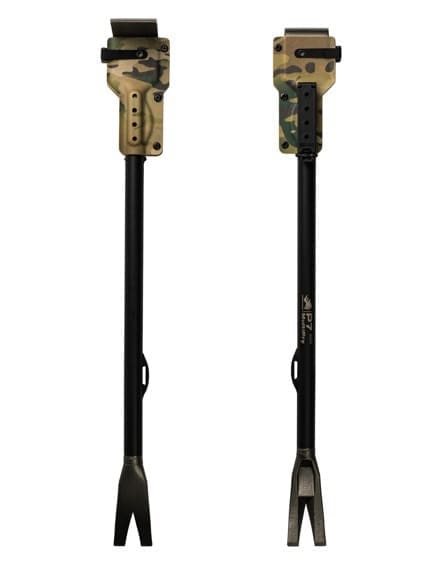
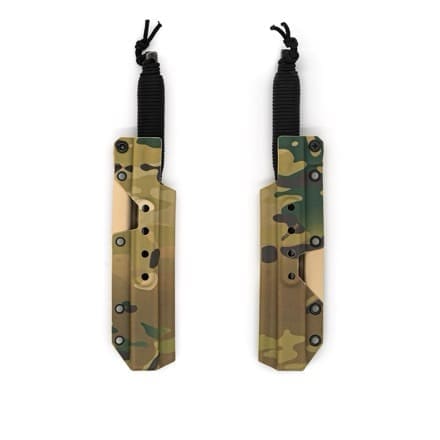
So far, ANR Design has added two new breaching tool carriers to their website. Made from Kydex, they are available in a variety of colors.

SET Breaching P7 MultiPry Tool Sheath

Broco JIMMY Tactical Pry Bar Sheath

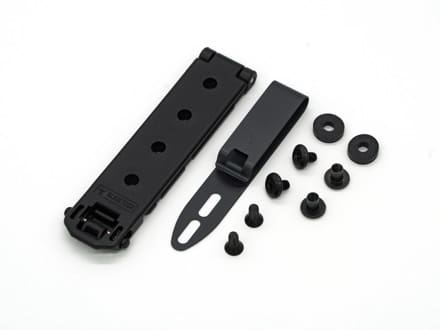
The carriers come with Blade Tech Molle Lok and DCC MOD 4 Belt Clip mounting hardware.

See the entire lineup at www.anrkydexholsters.com/product-category/soldier-systems/breaching.

Joint Interagency Task Force, FBI Deepen Drone Partnership to Bolster National Defense

February 16th, 2026

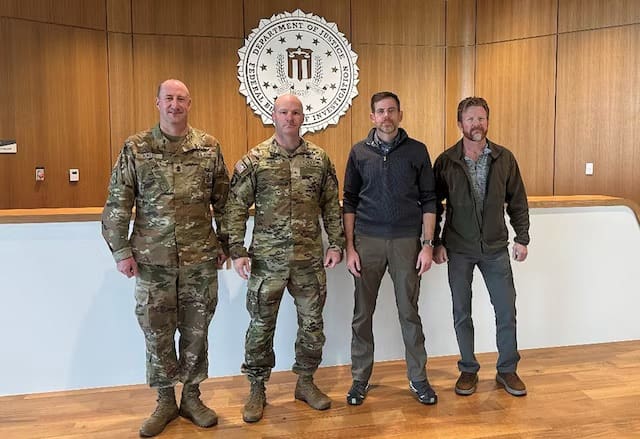
Army Brig. Gen. Matt Ross, Joint Interagency Task Force 401 director, visited the FBI’s National Training Center for counter-small unmanned aircraft systems in Huntsville, Alabama, yesterday to solidify a strategic alliance to protect the nation from unmanned aerial threats.

The visit centered on increasing collaboration between the War Department and the FBI to enhance homeland defense through joint training and the accelerated development of counter-UAS capabilities with federal interagency partners. 

A primary focus of the discussion was enhancing efforts to coordinate security preparations for this summer’s FIFA World Cup. Ross and Mike Torphy, FBI acting assistant section chief for UAS and counter-UAS, spoke with expert instructors who are teaching a specialized course for local law enforcement in each of the tournament’s eleven host cities across the nation. 

“The security of our homeland depends on a seamless, unified defense, and that is only possible through robust interagency collaboration,” Ross said. “The threats we face are shared, so our solutions must be as well. Our work with the FBI, to secure major events like the World Cup against the threat of drones, is a prime example of this strategy in action, but our goal is much broader: to build permanent, integrated [counter]-UAS capabilities across the federal government.” 

This synergy is foundational to building a more resilient national counter-UAS capability and ensuring state and local partners are effectively trained and equipped for any threat.  

Ross thanked Torphy for hosting the productive visit, which underscored the importance of combining JIATF 401’s lessons learned from the battlefield and expertise in joint training with the FBI’s critical law enforcement mission. 

“This is one example of how JIATF 401 is working with partners to enhance our counter-drone efforts,” Ross said. “No single person or agency can take on this task alone. It requires a whole-of-government coordination, and I am grateful that Mr. Torphy and the training center staff are supporting our mission to build a layered defense against the full spectrum of small UAS threats to the homeland.” 

The engagement in Huntsville signifies a deliberate move to formalize and expand the working relationship between the department and federal law enforcement. Future efforts will include the JIATF 401’s Joint Counter-Small UAS University in Fort Sill, Oklahoma, working closely with the FBI’s National Training Center to execute this shared mission.  

This partnership model, focused on joint capability development and shared training, will enhance security for specific events and serve as a blueprint for a more integrated national approach to all counter-UAS threats, Ross added. 

By Army LYC Adam Scher, Joint Interagency Task Force 401

GA-ASI Achieves New Milestone With Semi-Autonomous CCA Flight

February 15th, 2026

YFQ-42A Uncrewed Fighter Jet Executes Mission Autonomy Test
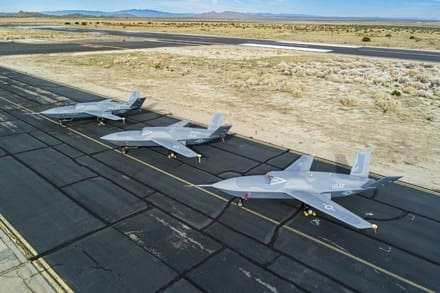
SAN DIEGO – 12 February 2026 – General Atomics Aeronautical Systems, Inc. (GA-ASI) passed a new milestone this month, successfully integrating 3rd-party mission autonomy into the YFQ-42A Collaborative Combat Aircraft to conduct its first semi-autonomous airborne mission.

            For this test, GA-ASI used mission autonomy software supplied by Collins Aerospace, an RTX business, to fly the new YFQ-42A CCA, designed and developed by GA-ASI for the U.S. Air Force. The Sidekick Collaborative Mission Autonomy software was seamlessly integrated with the YFQ-42A’s flight control system, utilizing the Autonomy Government Reference Architecture (A-GRA). The integration enabled robust and reliable data exchange between the autonomy software and the aircraft’s mission systems, ensuring precise execution of mission autonomy commands.

During the recent testing, autonomy mode was activated via the Ground Station Console (GSC). Once enabled, a human autonomy operator on the ground transmitted various commands directly to the YFQ-42A, which executed the instructions with high accuracy for more than four hours. This test highlights the effectiveness of Sidekick’s advanced mission autonomy capabilities and the flexibility of the A-GRA standard in supporting complex operational requirements.

“We are excited to collaborate with Collins to deliver enhanced autonomous mission solutions,” said David R. Alexander, president of GA-ASI. “The integration of Sidekick with our YFQ-42A demonstrates our commitment to innovation and operational excellence in unmanned aircraft technology.”

This achievement underscores GA-ASI’s dedication to advancing autonomous systems for defense applications. The combination of Sidekick autonomy software and YFQ-42A mission systems, connected through A-GRA, sets new benchmarks for combat autonomy, mission flexibility, operator control, and system reliability.

“The autonomy capabilities showcased in this flight highlight our dedicated investment to advance collaborative mission autonomy,” said Ryan Bunge, vice president and general manager for Strategic Defense Solutions, Collins Aerospace, an RTX business. “The rapid integration of Sidekick onto this General Atomics platform and its immediate ability to support a broad spectrum of combat-relevant behaviors underscores the strength and flexibility of our open systems approach.”

This first mission autonomy flight continues a robust YFQ-42A development schedule for GA-ASI that began in August 2025 with initial flights of YFQ-42A Tail One. In less than six months, GA-ASI has built and flown multiple YFQ-42A aircraft, including push-button autonomous takeoffs and landings.

GA-ASI has been building and flying uncrewed jets for nearly two decades, beginning with the company-funded, weaponized MQ-20Avenger® in 2008. Ongoing company investment in Avenger continues to yield results, as the aircraft routinely serves as a CCA surrogate for advanced autonomy development and testing in both government programs and company-funded research and development.

As a family-owned, privately held defense company for more than 30 years, GA-ASI is known as one of the original disruptors in the U.S defense industry, pioneering and inventing many of the technologies now considered ubiquitous in uncrewed aircraft operations around the world. The company re-invests more than 35 percent of annual revenue into internal research and design projects, building ahead of need and designing capabilities ahead of requirements.

In 2025, for example, an internally funded Avenger demo featured both GA-ASI’s TacACE autonomy software and Shield AI’s Hivemind software on the same flight, with the MQ-20seamlessly switching between AI pilots while still airborne. Later in the year, GA-ASI teamed with Lockheed Martin and L3 Harris for another Avenger flight demo, connecting the MQ-20 with an F-22 Raptor for an advanced manned-unmanned teaming mission that allowed the human fighter pilot to command the Avenger as an autonomous CCA surrogate via tablet control from the cockpit.

In 2024, GA-ASI first flew its XQ-67A Off-Board Sensing Station (OBSS) jet, developed in collaboration with Air Force Research Laboratory (AFRL). This early CCA prototype validated the “genus/species” concept pioneered with AFRL as part of the Low-Cost Attritable Aircraft Platform Sharing (LCAAPS) program, focused on building several aircraft variants from a common core chassis.

GA-ASI’s Gambit Series envisions multiple missionized variants from this common core concept, with XQ-67A already showcasing airborne sensing and YFQ-42A illustrating air-to-air combat. Using this novel manufacturing approach to drive overall customer value, GA-ASI can quickly pivot to diverse missions with less time and cost investment than building a clean-sheet aircraft.


SK Guns Named Title Sponsor for 2026 Law Enforcement Torch Run Benefiting Special Olympics Florida

February 15th, 2026

ST. AUGUSTINE, Fla. – February 12, 2026SK Guns®, the Nation’s only series-driven, limited-edition manufacturer of custom firearms, is proud to announce its role as the title sponsor for the 2026 Law Enforcement Torch Run (LETR) in support of Special Olympics Florida. This partnership underscores SK Guns’ commitment to community engagement and support for individuals with intellectual disabilities.

The Law Enforcement Torch Run is a global initiative that unites law enforcement officers in raising awareness and funds for Special Olympics athletes. In Florida, the LETR involves over 5,000 officers from more than 300 agencies, who carry the “Flame of Hope” across 67 counties, culminating in the Opening Ceremony of the Special Olympics Florida State Summer Games.

As part of its sponsorship, SK Guns is designing a custom firearm to be raffled, with all proceeds benefiting Special Olympics Florida. This initiative aims to generate significant funds to support year-round sports training, competition, health services and leadership programs for more than 75,000 athletes statewide. Winner must be of the legal age to own and operate a firearm in their state.

“Our partnership with the Law Enforcement Torch Run aligns with our dedication to community service and support for individuals with intellectual disabilities,” said Simon Khiabani, owner and founder of SK Guns. “We are honored to contribute to the mission of Special Olympics Florida and to stand alongside law enforcement in this meaningful endeavor.”

The 2026 LETR will commence in March and continue through May, featuring a series of runs and fundraising events across the state. The final leg will lead into the State Summer Games, where the “Flame of Hope” will be delivered to the Opening Ceremony, symbolizing the courage and determination of Special Olympics athletes.

For more information on the 2026 Law Enforcement Torch Run, including event dates and locations, or to learn how to participate or contribute, please visit Special Olympics Florida’s official website. To donate or purchase tickets, visit this page.

Follow SK Guns on Instagram and Facebook to be the first to learn of its newest production launches.

US and Panamanian Forces Kick Off Jungle Operations Training Course

February 15th, 2026

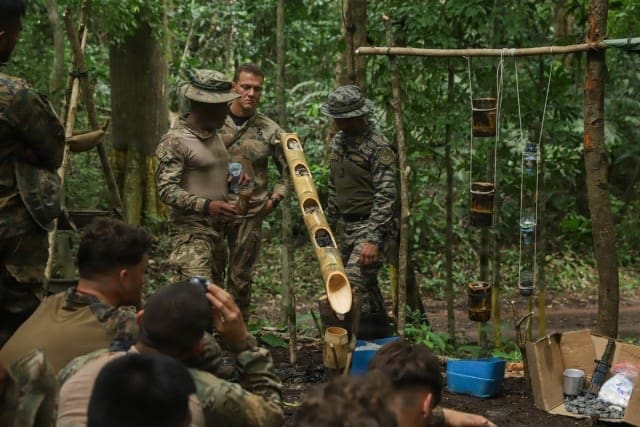
CRISTÓBAL COLÓN, Panama — U.S. service members and Panamanian security forces are set to hold the Jungle Operations Training Course-Panama, JOTC-P, Feb. 3–20 at Base Aeronaval Cristóbal Colón. The 18-day program will be conducted in a combined U.S.-Panamanian setting and focused on honing jungle warfare skills to enhance multinational interoperability.

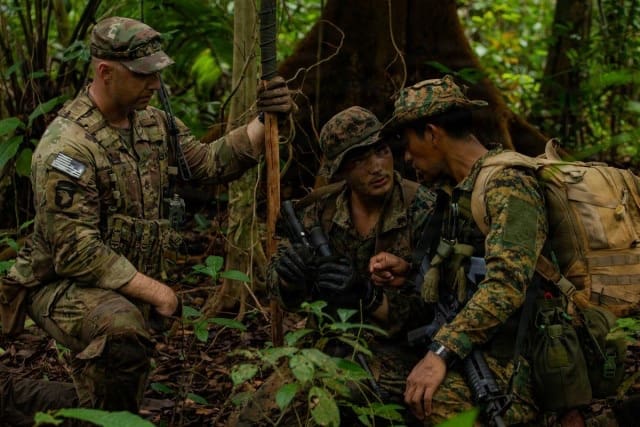
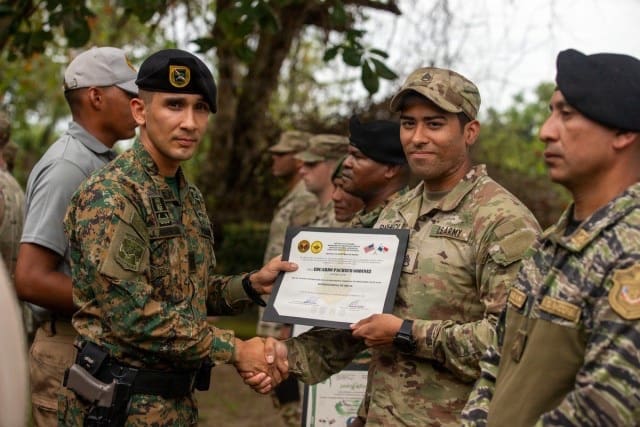
Coordinated by the Joint Security Cooperation Group–Panama, the course brings together U.S. Army Soldiers from the Army Security Cooperation Group – South and the 82nd Airborne Division — with support from Joint Task Force-Bravo — as well as U.S. Marines, training side-by-side with partners from Panama’s Servicio Nacional de Frontera, Servicio Nacional Aeronaval and Policía Nacional de Panamá.

This iteration marks significant growth, with increased student numbers and balanced teams featuring the continued representation from U.S. and Panamanian participants. The course will also feature the largest participation of U.S. Army personnel since the revitalized training began in August 2025. The blended teams foster collaboration, build interoperability and encourage joint problem-solving in challenging conditions.

JOTC-P integrates assets across services and nations, including dismounted tactics and aviation support, to prepare forces for operations in dense, triple-canopy jungle terrain. The training progresses through three phases.

In phase one, participants master jungle survival fundamentals, such as machete use, fire craft, water purification and building primitive shelters. Largely led by Panamanian instructors, this phase emphasizes adaptability, endurance and resourcefulness in austere environments.

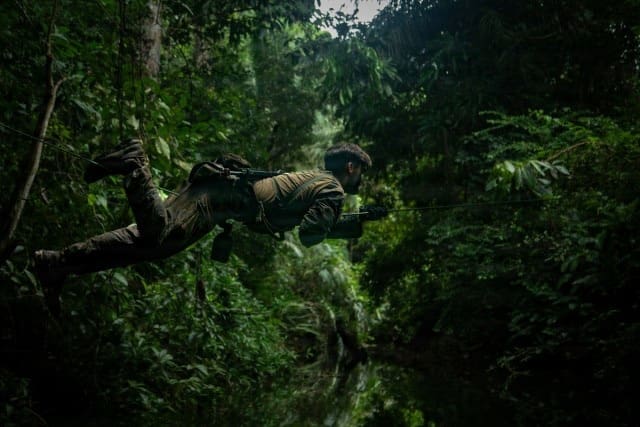
Phase two covers small-unit tactics, including movement techniques, ambushes, casualty evacuation and waterborne operations, largely led by U.S. instructors. These scenarios challenge decision-making under stress and strengthen communication in multinational teams.

Phase three features five combined missions — encompassing attacking a mortar firing point and conducting ambushes and reconnaissance missions — culminating in the grueling “Green Mile” endurance event and graduation. Instructors assess teamwork, leadership, and sustained performance in demanding jungle conditions.

By SPC Richard Morgan

Mehler Systems Among Germany’s TOP 100 Innovators

February 14th, 2026

FULDA, GERMANY (11.02.2026)

Mehler Systems has been awarded the prestigious TOP 100 seal for 2026, placing the company among the most innovative medium-sized enterprises in Germany. The TOP 100 innovation competition is the only one of its kind to assess the innovation capability of mid-sized companies on the basis of a scientifically grounded analysis, with a particular focus on innovation management, forward-looking strategy and sustainable competitiveness.

“We are very proud to be among the TOP 100 innovators in Germany. This award recognises the performance of our entire team as well as our ambition to anticipate market developments years in advance as a first mover,” says Dr. Mario Amschlinger, CEO of Mehler Systems. “The TOP 100 seal validates our path and is also an incentive to consistently pursue our innovation agenda. Our goal is to remain a reliable, forwardthinking partner for customers, suppliers and stakeholders along the entire value chain.”

The award as one of the TOP 100 innovators highlights Mehler Systems’ innovation strategy and its clear commitment to operational excellence. Innovations are developed in close dialogue with end users and development partners, with a focus on solutions that enhance protection, operational capability and resilience under real-world conditions.

Key developments across the Mehler Systems Group range from advanced personal and platform protection solutions to next-generation load-bearing and tactical clothing systems.

Mehler Protection advances personal and platform protection through solutions developed for real operational demands. Selected examples include ExoM, a new exoskeleton concept for efficient load distribution with integrated protection; ultra-light combat helmets for military users; face protection systems certified to VPAM 6 (international ballistic testing guideline); and short-range active counter-drone systems.

At Lindnerhof, product development is shaped by a functionality-first, operator-led mindset. Solutions such as the Shikari Series and modular load-bearing platforms prioritise intuitive handling, rapid adaptability and reliability in demanding environments. Lindnerhof’s patented Hakenschnalle quick-release system enables fast donning, doffing and emergency release, allowing equipment to be adapted or removed within seconds as operational conditions change.


UF PRO translates long-term research and close cooperation with end users into tactical clothing built for unrestricted movement and sustained comfort under load. Proprietary solutions such as air/pac® improve ventilation and reduce shoulder pressure, Hood/Harness® keeps the hood aligned with head movement and preserves field of view, and Waist/Flex provides adaptive lumbar support and a stable fit during dynamic movement. The Hybrid Design concept strategically combines different materials within one garment to deliver high comfort and long-term durability.


Innovation also extends to manufacturing. Rethought production concepts and highly automated lines increase efficiency, quality and reproducibility, underlining Mehler Systems’ ambition to set technological benchmarks in modern protection and equipment systems.

Mehler Systems’ innovation activities are supported by a structured and established innovation management framework. Open communication, cross-functional collaboration and targeted internal training ensure that expertise is retained within the company and continuously developed. The innovation strategy is defined in close coordination with specialist departments to integrate different perspectives and align projects with customer requirements.

“Innovation starts with a clear objective: our long-term ambition is to become the world’s leading player in our market,” Amschlinger emphasises. “For us, innovation means developing solutions that deliver real protection and genuine reliability. Our products are based on concrete operational requirements, combined with the continual optimisation of our production and operational processes.”

For more than 25 years, the TOP 100 seal has recognised companies with outstanding innovative strength, long-term profitability and forward-looking business practices. The winners are selected through a rigorous, scientifically grounded assessment. Project partners include the Fraunhofer Society and the BVMW, with manager magazin as media partner.

Charter Arms Introduces the New Boomer Revolver Series

February 14th, 2026

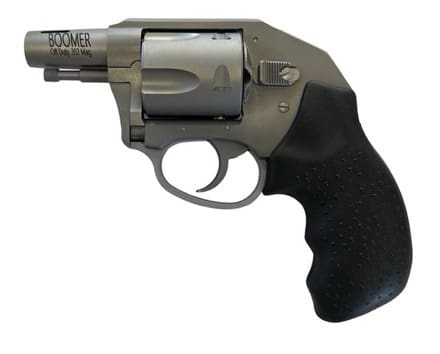
Shelton, CT. – (February 9th, 2026) – Charter Arms®, manufacturers of affordable, 100% American-made revolvers for more than 60 years, is proud to announce the introduction of the new Boomer Series of revolvers. This new series is based on the Bulldog model and includes 4 caliber choicesand two finish options per caliber.

“We couldn’t be happier to offer this updated version of our hugely successful Boomer Revolver,” said Nick Ecker, Owner, President and CEO of Charter Arms. “Customers have praised its concealability, accuracy, and design. This new series offers the ultimate in defensive revolvers.”

The Boomer is the ultimate carry compact revolver that is powerful enough to ensure your personal protection. Offered in 9mm, .38 special, .357 and .44 special calibers, these revolvers feature a 2″ extruded 416 stainless-steel portedbarrel with a trenched rear sighting system and a concealed hammer for snag-free performance. The frame and cylinder are also crafted from 416 stainless-steel for strength and durability. All models utilize stainless-steel components andhave a combat rubber grip. Offered in five-shot and six-shot capacity, these powerful, concealable revolvers have all the knock-down power you need for personal defense.

Available models include:

• 79959 – 9mm Stainless Steel – MSRP: $536.41

• 19959 – 9mm Black Passivate – MSRP: $541.84

• 13859 – .38 Special Black Passivate – MSRP: $454.93

• 73859 – .38 Special Stainless Steel – MSRP: $450.86

• 13559 – .357 Black Passivate – MSRP: $506.53

• 73559 – .357 Stainless Steel – MSRP: $499.74

• 74459 – .44 Special Stainless Steel – MSRP: $498.39

• 14459 – .44 Special Black Passivate – MSRP: $505.18

Boomer Specifications:

• Calibers: 9mm, .38 Special, .357, .44Special

• Capacity: .38 Special (6 rd. capacity), .357, .44 Special & 9mm (5 rd. capacity)

• Barrel Length: 2 inches

• Grips: Combat rubber

• Sights: Trenched sighting system

• Safety: Concealed hammer

Air Force Portfolio Acquisition Executive for Command, Control, Communications and Battle Management Takes Lead on Joint Fires Network

February 14th, 2026

NAVAL BASE POINT LOMA, Calif. (AFNS) —

The Department of the Air Force Portfolio Acquisition Executive for Command, Control, Communications and Battle Management stood up an integrated program office to lead the Joint Fires Network.

The Joint Fires Network is a revolutionary warfighting network that enables the joint force to realize the advantages of speed and unity of command. By fusing high-quality targeting data with cutting-edge command and control applications, JFN delivers data to warfighters when and where they need it. This network outperforms legacy networks by aligning fires tasks into an object-based common data layer, providing a common operating picture for the Joint Force.

“Our mission is to take the JFN prototype and wrap a layer around it that allows us to manage and scale it as a robust capability that will have all the appropriate supportability aspects that a program of record should have,” said Col. Alex Constantine, Joint Fires Network senior materiel leader.

The newly created IPO is meant to provide the infrastructure and oversight to transform the JFN from a successful prototype into a long-term, reliable, and strategically important asset for the Joint Force, according to Constantine.   

“The establishment of the IPO allows us to create structured interfaces and venues with the services and Joint Force that ensure integration of fires at the combatant command-level and below,” Constantine said. “We will be able to look at economies of scale, supportability, and warfighting efficiency as we continue to increase the footprint and capabilities of JFN.”

The future architecture of JFN will focus on how it delivers decision advantage to the Joint Force as well as how it feeds into the DAF Battle Network, by working collaboratively across the Department of War.

“The actual system itself touches multiple parts of planning, fires control, and execution,” Constantine said. “So, it will touch various aspects of the DAF Battle Network, but it’s really a tier 1 combatant command-oriented system that the planners and below at the lower echelons will use to collaboratively plan and execute fires.”

Constantine said developing JFN in a joint environment contributes to its overall success as service members from each branch bring unique perspectives and expertise.

“We have a Navy deputy and teammates from across the services who bring technical interchanges together to ensure that we’re touching Army, Naval and Department of the Air Force equities holistically, as well as those of the relevant combat support agencies, to truly deploy a better system,” he said.

JFN’s development will utilize the DOW’s Software Acquisition Pathway 5,000.87 so servicemembers can develop and deliver the capability quickly.

“To ensure JFN remains adaptable and responsive to evolving threats, the program office is leveraging software acquisition pathway, an approach designed to streamline the capability delivery process,” he said. “Our approach balances agility with acquisition rigor to continue our rapid fielding efforts while we address supportability in manner tailored to the system’s needs as we move forward.” 

The DAF Battle Network is the integrated system-of-systems connecting sensor, effector, and logistics systems enabling better situational awareness, faster operational decisions, and decisive direction to the force. It integrates roughly 50 programs of record across the department, ensuring resilient decision advantage needed by the Air Force, Space Force, joint and coalition forces to win against the pacing challenge. 

By Richard Blumenstein

DAF PAE C3BM Public Affairs