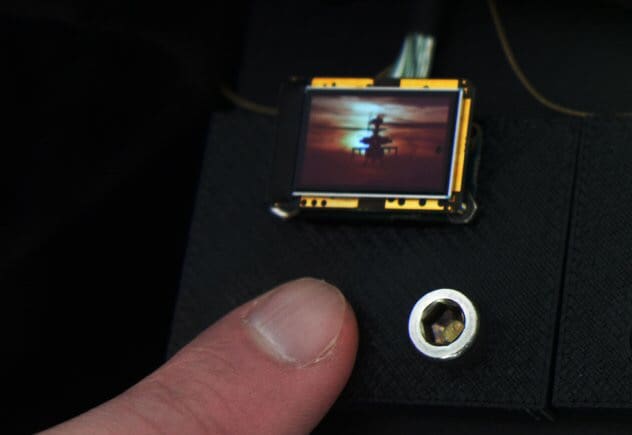
Lowa Zephyr Mk 2 GTX

During the US Small Arms Renaissance, “Best” Is The Enemy Of “Better”

May 25th, 2017

We are living in exciting times. It’s an era of small arms innovation; a renaissance if you will. Not since the late-50/early-60s have we seen the potential for such fundamental change in US military issue small arms. We have requirements from the services, but also products already developed by industry, ready to fit the bill. But most of all, we have will and that’s something we haven’t had in a long time. Our President is emphasizing defense and our Congress is actively engaged in hearings to determine what appropriations need to be made to modernize our forces. Exciting times indeed.

What’s happening?
IMG_1990

US Army, Marine Corps and Special Operations Command are all engaged in small arms improvement efforts, either on their own or in conjunction with one another. I’ve mentioned most of them over the past few months but I’ll offer a short summary here.

US Army has lead on a Joint effort for a new pistol. The 9mm SIG P320 was selected earlier this year as the M17/18 and will begin fielding soon.

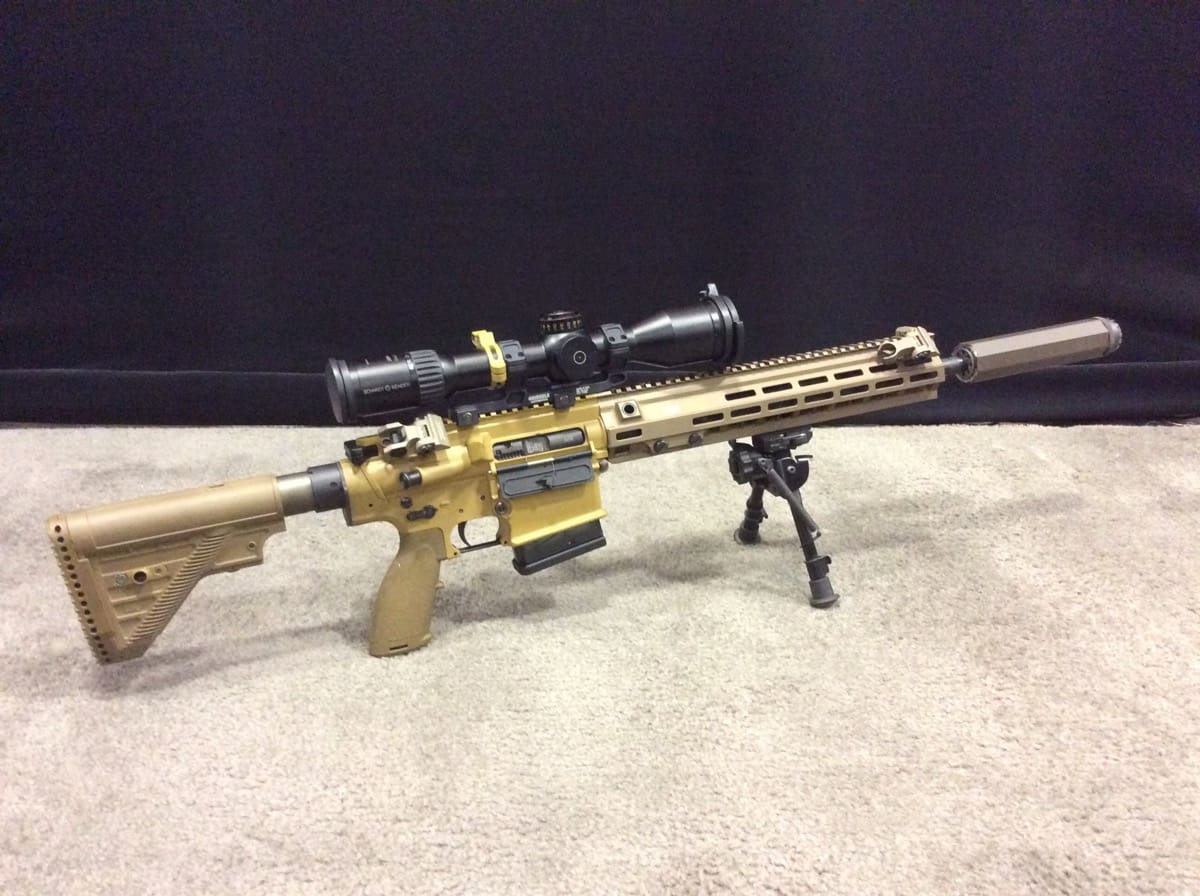
US Army has a directed requirement for over 6,000 Squad Designated Marksman Rifles based on the 7.62mm H&K G28. Additionally, the Army selected a G28 variant for the M110A1 Compact Semi Auto Sniper System.

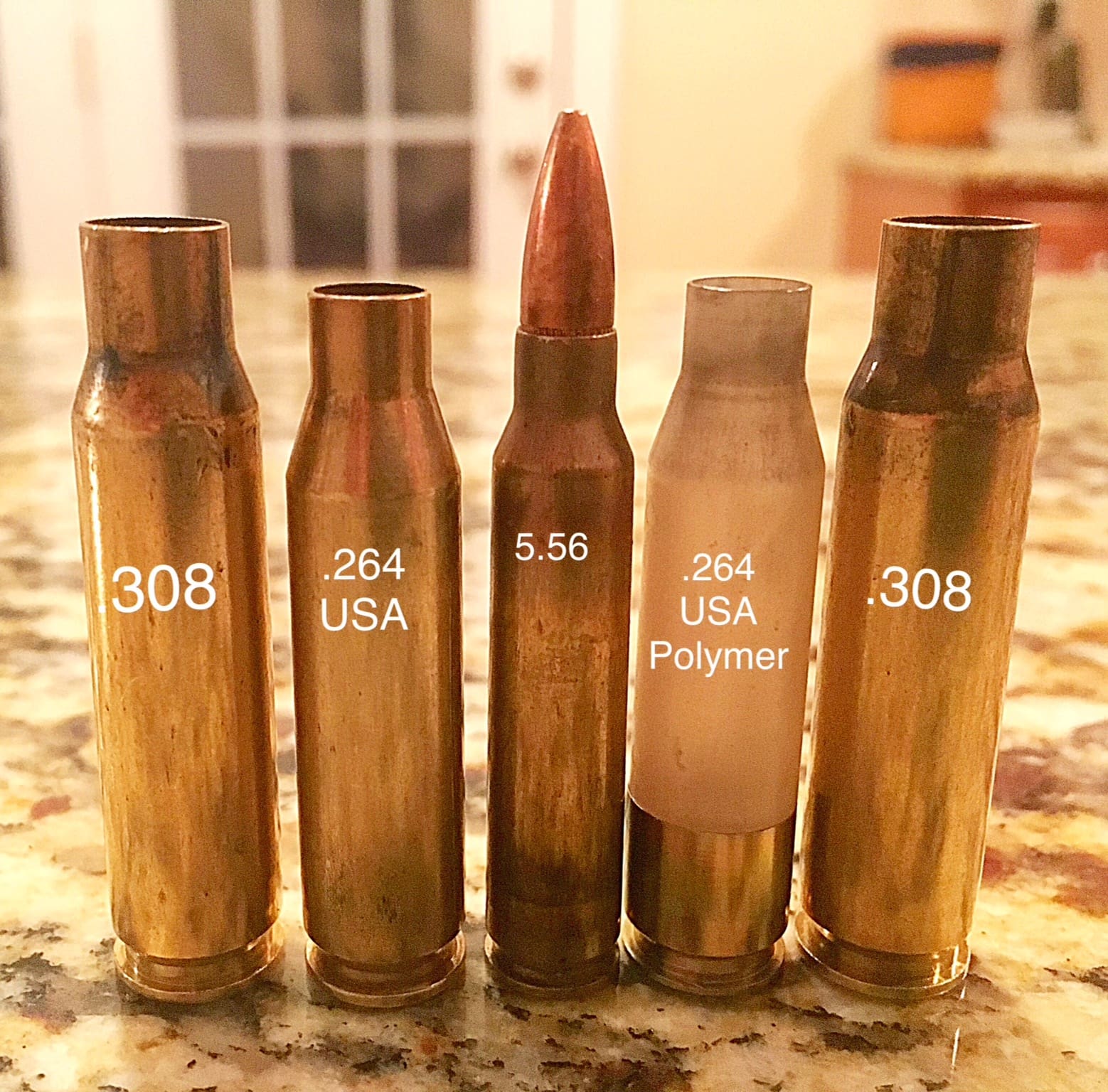
US Army Marksmanship Unit continues development of .264 USA cartridge.

Multiple programs work on development of polymer ammunition cases.

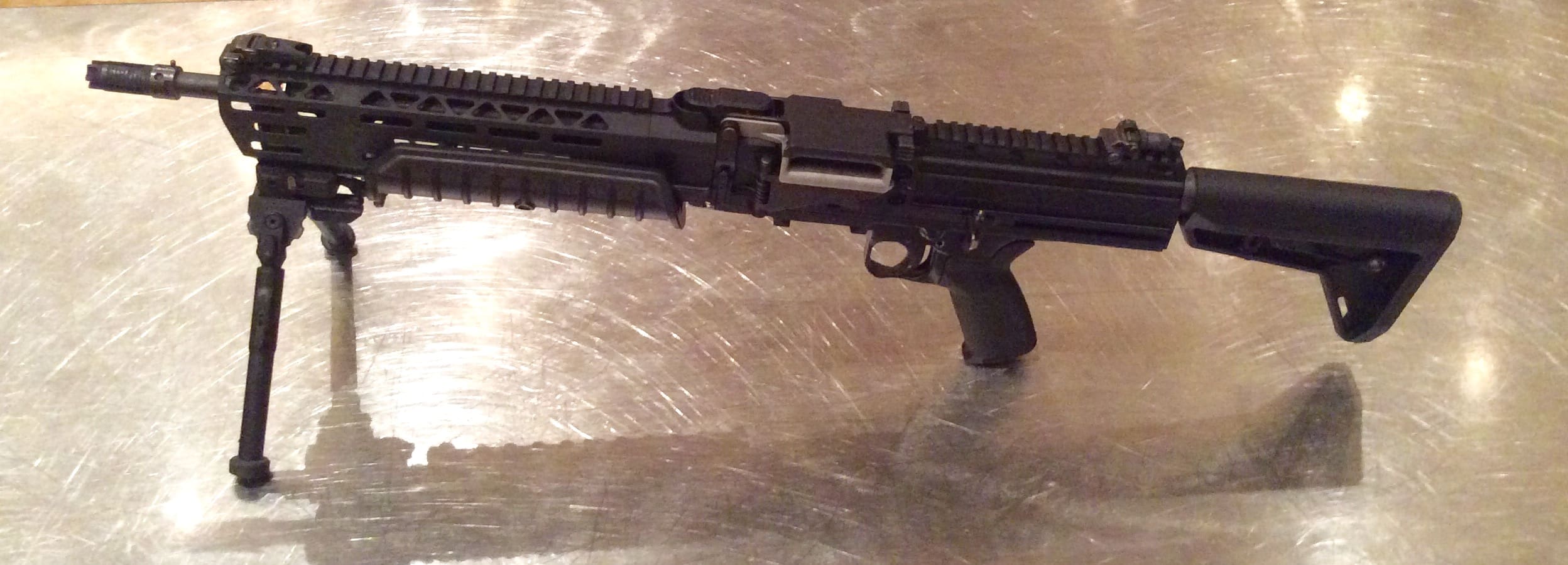
US Marine Corps is studying increased fielding of the 5.56mm M27 Infantry Automatic Rifle, based on the H&K 416. Outfitted with an optic, the M27 will soon be used to fulfill a Designated Marksman role at the Infantry Squad level and the Marines have issued a Sources Sought Notice to industry for production of additional rifles.

US Marine Corps is studying increased use of suppressors for small arms.

USSOCOM selected and fielded the 9mm GLOCK19 with mini red dot optic as their pistol.

USSOCOM has a requirement for a .300BLK Personal Defense Weapon kit for their SOPMOD M4A1 carbines.

USSOCOM has a requirement for a 5.56mm Suppressed Upper Receiver Group for their SOPMOD M4A1 carbines.

USASOC has stated an interest in an improved 5.56mm Upper Receiver Group with Mid-Gas system, M-LOK handguard and SureFire WarComp for their SOPMOD M4A1 carbines.

USASOC is conducting a 6.5mm family cartridge study in conjunction with the GPF US Army. They’ve already fired 23 different cartridges at a 2,000yd radar equipped Range at Aberdeen Test Center. The user evaluation will be conducted Fall 2017.

USSOCOM has stated an interest in a 6.5mm family Sniper Support Weapon/Carbine and Lightweight Assault Machine Gun once USASOC selects a cartridge.

USSOCOM and USMC have issued a Sources Sought Notice for a Lightweight Medium Machine Gun in .338 Norma Magnum.

USSOCOM has a requirement for an Advanced Sniper Rifle in .300NM and .338NM. The US Army is monitoring.

Additionally, there are numerous Laser and Optics programs in Army, Marine Corps, and SOCOM.

Best Is The Enemy Of Better
During last week’s Special Operations Forces Industry Conference I heard a lot of really knowledgeable people poking holes in every one of the modernization efforts mentioned above. They want the “Best”. Whatever that is, because everyone has a different opinion on just what constitutes the best. Sure, who doesn’t what our guys and gals to have the best equipment they can get? It sounds great on paper, but in practical terms, our troops generally get “Best Value” which means an analysis is made to determine what offers the best bang for the buck. Cost versus Effect. Take a look at the efforts above. There’s a lot of effect there. Some of it game changing.

Instead of seeking the ever elusive “Best”, we need to start accepting the notion of “Better” as in “Better than what we have now.” In each effort above, you can make the case that the proposed capability is better than legacy. Granted, some of the technologies aren’t 100% and may need some refinement, but we have synergy right now. Remember that will I mentioned earlier? Having the money to make these programs happen is essential and sometimes you’ve got to make it happen even if you aren’t completely ready. We can work on the rough edges as we field them. Every weapon system has issues which have to be worked out. If we hold out for “Best” we’ll never get “Better”.

But, What About NATO?
IMG_1896

Precisely. What about NATO? There are some who feel we shouldn’t adopt a new caliber because it will violate NATO standards. This isn’t true at all. Take for example .338 Lapua. Although it was initially developed in the US, once the Netherlands adopted it for their Sniper weapons, it became a NATO round. Any development we do here in the US, can and will benefit all of NATO in the future.

None of the efforts listed above threaten current NATO standards but rather work to supplement them. While USSOCOM is working hard to identify a cartridge in the 6.mm family (my money is on .260 Remington), they have no plans to abandon 5.56mm anytime soon, or 7.62mm, for that matter. Instead, the plan is to offer new capability in 6.5mm, .300NM, and .338NM. Once they fully understand how those calibers will effect the mix of small arms at the small unit level, then more informed decisions about the future of the carbine can be made.

Woulda, Shoulda, Coulda

Sure, we’ve squandered opportunities in the past, but that was then and this is now. We have to look to the future and not let history repeat itself. Too often we’ve embarked on a program for a new weapon only to decide there isn’t enough of a leap ahead. When the M16 was adopted over 50 years ago, no one imagined it would still be in use. While industry has developed a myriad of enhancements for the platform, that quest for a leap ahead has caused readily available improvements to stagnate. It’s time to move forward and adopt these new capabilities which will keep the US military at the top of its game and the envy of others around the globe.

Thank You Jim Schatz

If the small arms renaissance had a prophet, that man’s name was Jim Schatz. He carried the fire for small arms modernization for years, even when there was little interest in the services, let alone Congress. Look back on his briefings to NDIA and you’ll see a lot of what is happening now. Thanks Jim, we all owe you!

You Never Know Where They’ll Show Up

May 25th, 2017

IMG_1969
As you can see, XC was in Beijing.

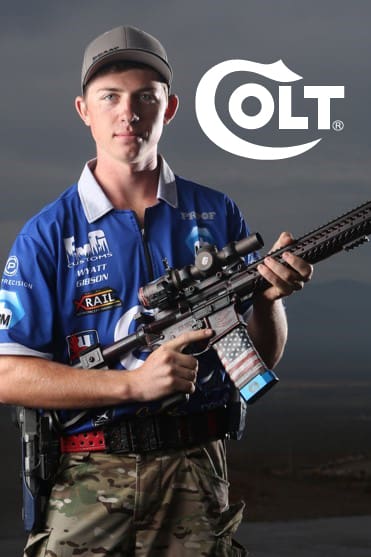
Colt Welcomes Wyatt Gibson to Team Colt

May 24th, 2017

WEST HARTFORD, Conn. (May 23, 2017) – Colt, the historic class-leading designer, developer, and manufacturer of firearms, is pleased to announce its sponsorship of national shooting sports competitor Wyatt Gibson. Gibson has a successful track record in many shooting disciplines, and already has a full schedule ahead with Team Colt in 2017.

IMG_1957

“Wyatt is an exceptional young talent,” said Paul Spitale, SVP at Colt. “His drive and determination exemplifies what the shooting sports mean to Colt. He sets a great example for young folks who want to get into competitive shooting, and we are so proud to bring him into the fold here with Team Colt.”

Gibson was introduced to the firearms industry at a young age by his father and grandfather, and helped as they tested target designs for MGM Targets. From there his love, familiarity, and proficient with firearms grew, and he had competed in his first USPSA match before the age of seven.

“Competitive shooting is in my blood,” said Gibson. “I grew up with firearms, and I pour my time, effort, and heart into the shooting sports. When Paul and the folks at Colt offered me the opportunity to shoot for Team Colt I was honored. My defensive pistol game is really strong thanks to my 9mm Gold Cup® Trophy – the way it sits in my hand is amazing. And I’ve relied on Colt AR-15® platform rifles for much of my shooting career. Nothing beats the real thing!”

Gibson regularly competes on a national level in 3 Gun competitions and occasionally in United States Practical Shooting Association (USPSA) action pistol matches. His recent wins include: MGM Ironman 2015-2016, Northwest Multigun Challenge 2016, Surefire World Multigun 2016, and 3 Gun Nation Texas Regional. Gibson placed third overall on the Sportsman Channel program The Big Gun II: Sin City.

Stay tuned to Colt for more info on Wyatt Gibson’s upcoming matches and appearances.

www.colt.com

Kit Badger – Body Armor Placement: Hard Plates

May 24th, 2017

Drawn from years of experience, including seeing those he worked with, and himself, wearing body armor incorrectly, Kit Badger released this video on how to properly wear hard plates in a plate carrier.

kitbadger.com/plate-placement-for-body-armor

Thyrm Supports C.O.P.S. Through Limited Edition Products

May 24th, 2017

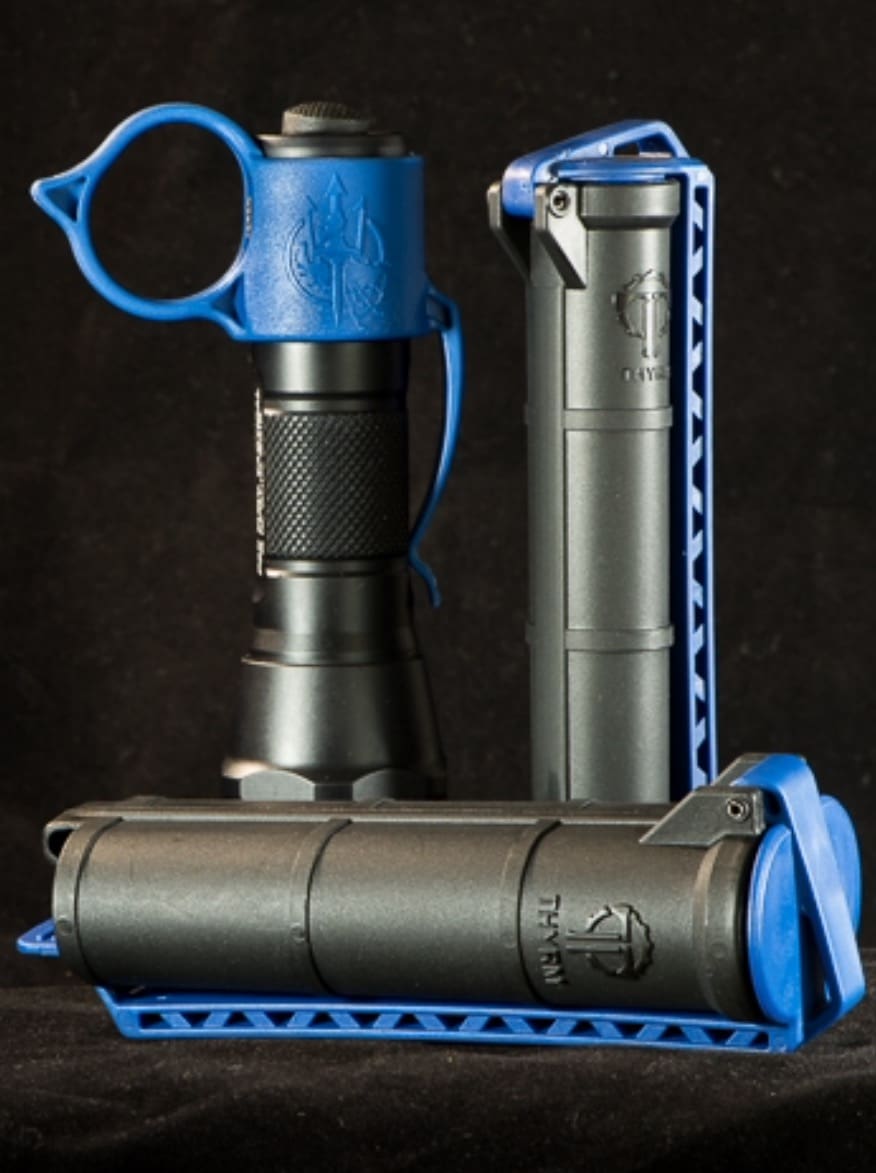
Sunnyvale, CA — Thyrm is offering Blue Line Editions of their popular CellVault and SwitchBack product lines featuring a law enforcement color scheme. Thyrm will donate $10 for each product sold to Concerns of Police Survivors (C.O.P.S.).

IMG_1962

Each year, between 140 and 160 officers die in the line of duty and their families and co-workers are left to cope with the tragic loss. C.O.P.S. provides resources to help them rebuild their shattered lives.

IMG_1963

The Limited Edition Blue Line items are Made in America and available exclusively at thyrm.com.

Polaris Wins Canadian Special Forces Ultra-Light Combat Vehicle Contract

May 24th, 2017

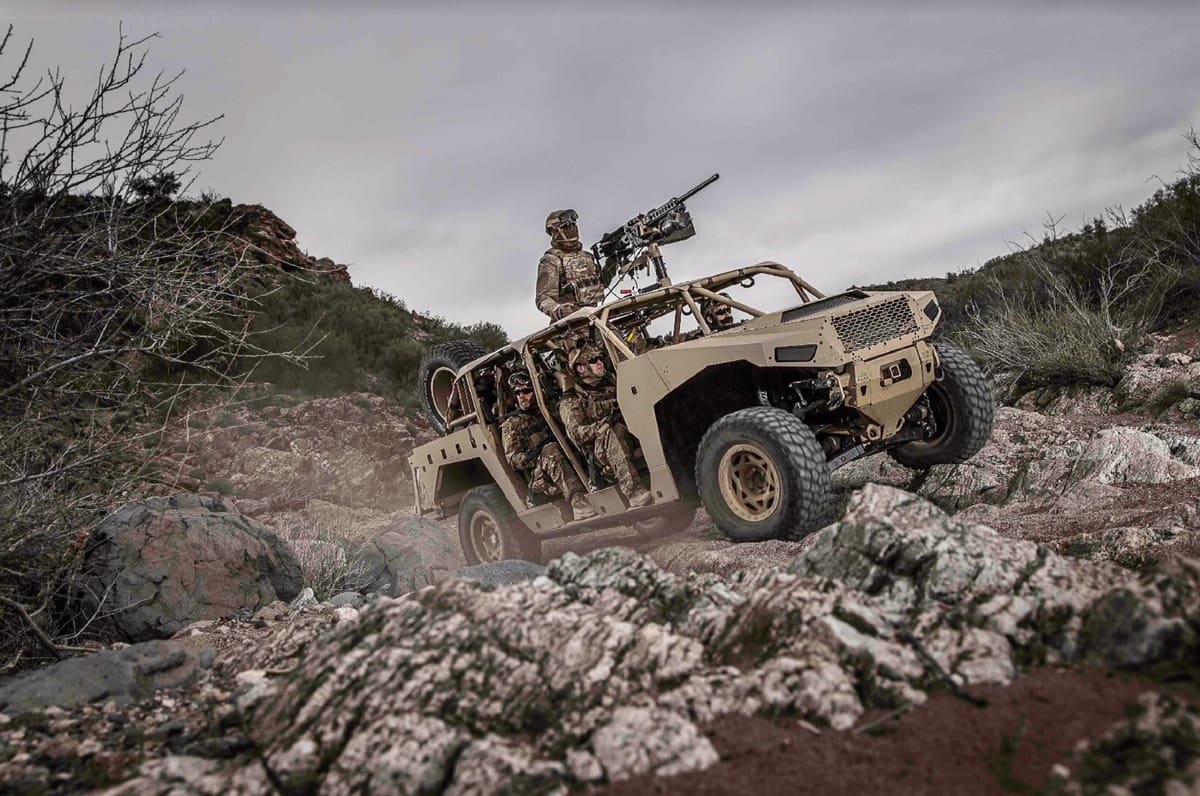
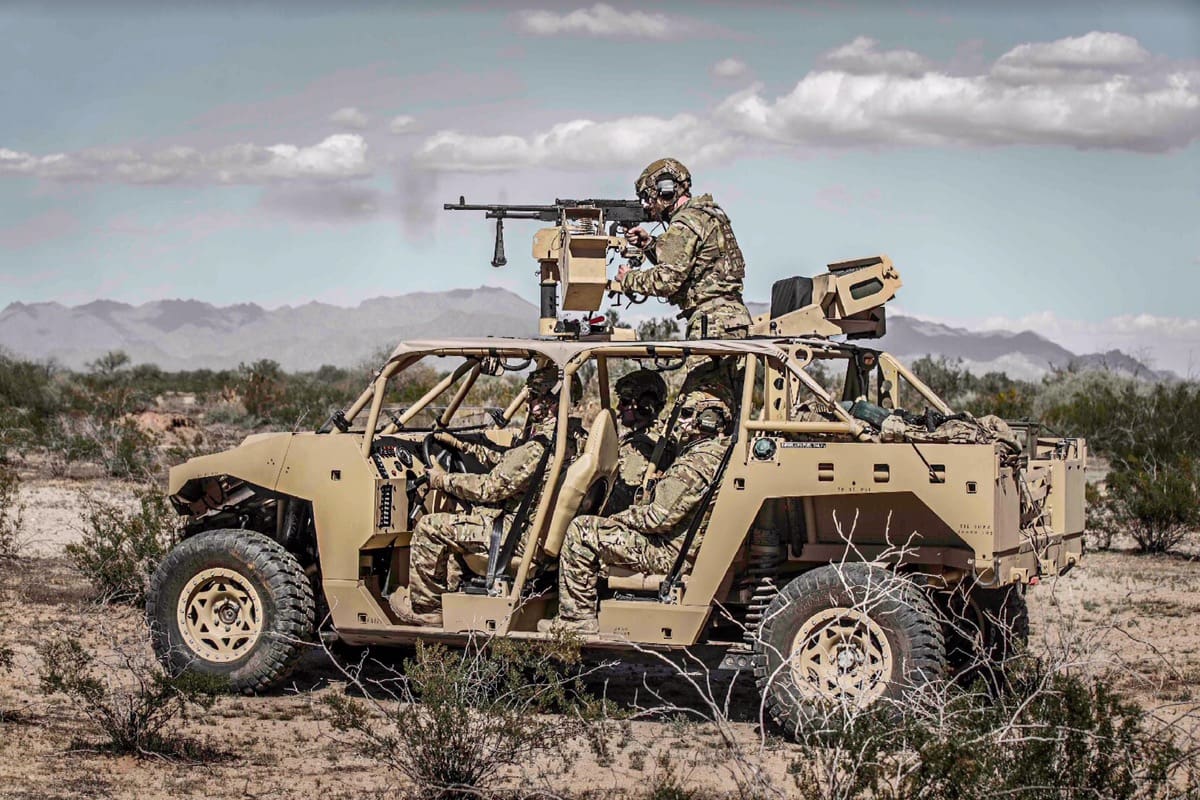
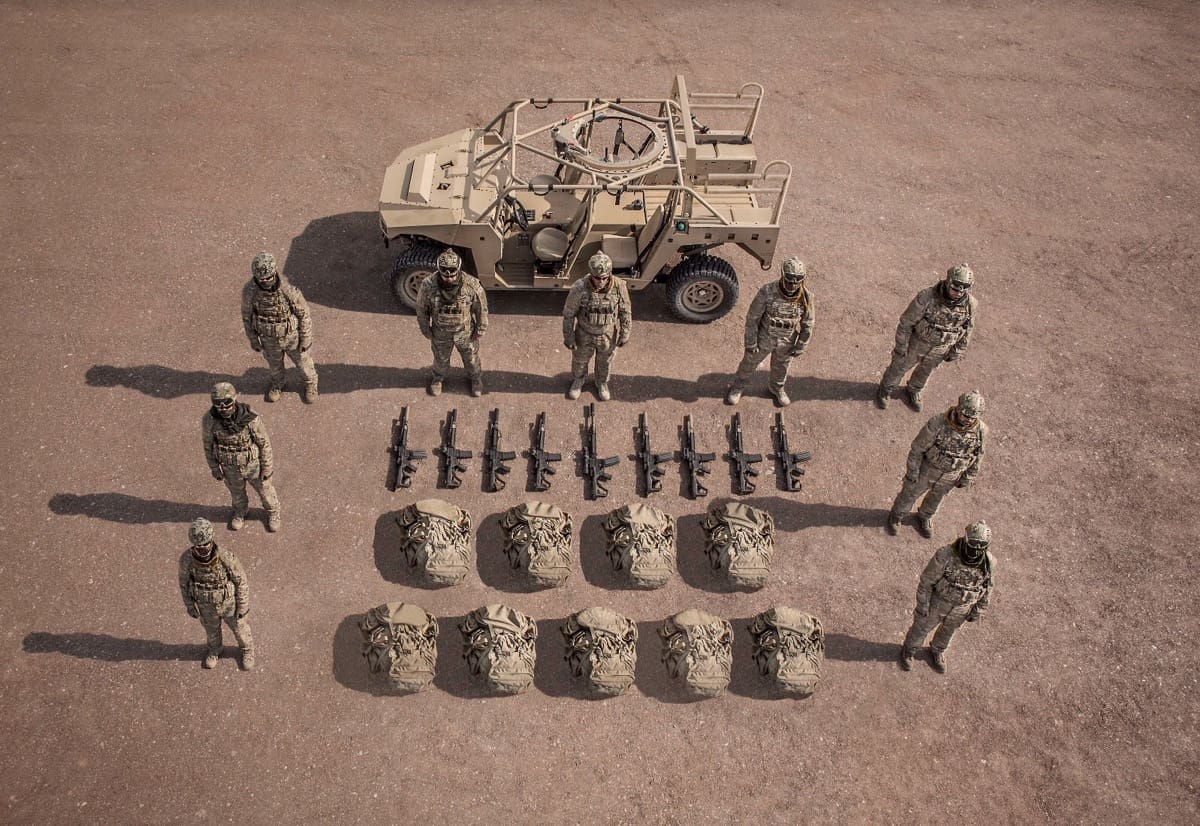
MINNEAPOLIS (December 20, 2016) — Public Works and Procurement Canada (PSPC) has awarded its Ultra-Light Combat Vehicle (ULCV) contract to Polaris, following an open and competitive bid process. The $15.5 USD million contract includes DAGOR vehicles, maintenance and operator training, spare parts, and the option for additional vehicles (at an additional cost) to meet the requirements of Canadian Special Operations Forces Command (CANSOFCOM).

Ultralight ground mobility is at the forefront of many military’s needs – especially the Canadian Special Forces, which can deploy on extremely short notice for counter-terrorism operations and other time-sensitive Special Operation Forces (SOF) missions. The DAGOR ultra-light combat vehicle is just as deployable and was designed to be modular and light-weight to support a variety of expeditionary missions.

The ULCV contract is structured to provide CANSOFCOM with a custom vehicle to meet Canada’s unique SOF requirement. The flexible DAGOR platform will undergo engineering and mission configurations to incorporate new features and capabilities, including redesigned payload configuration, weapons mounts, electrical system improvements, and integrated communication systems. The final vehicle configuration, testing, and production of the ULCV will be a collaborative effort with CANSOFCOM.

“We are extremely pleased to have won the contract following the competitive process to provide our DAGOR vehicles to CANSOFCOM as this major international program award builds on our strong current domestic base,” said John Olson, PhD, vice president and general manager of Polaris Government and Defense. “We are proud to partner with the Canadian government and industry to deliver this ground mobility capability and the lifecycle support to smartly sustain it. Our program management, engineering, operations, and logistics teams are looking forward to working closely with our Canadian customer.

Olson added, “We greatly appreciated PSPC’s professionalism and found the ULCV procurement to be rigorous, thorough and well-executed as they delivered clear requirements, were extremely responsive to industry questions, and crisply executed the entire effort.”

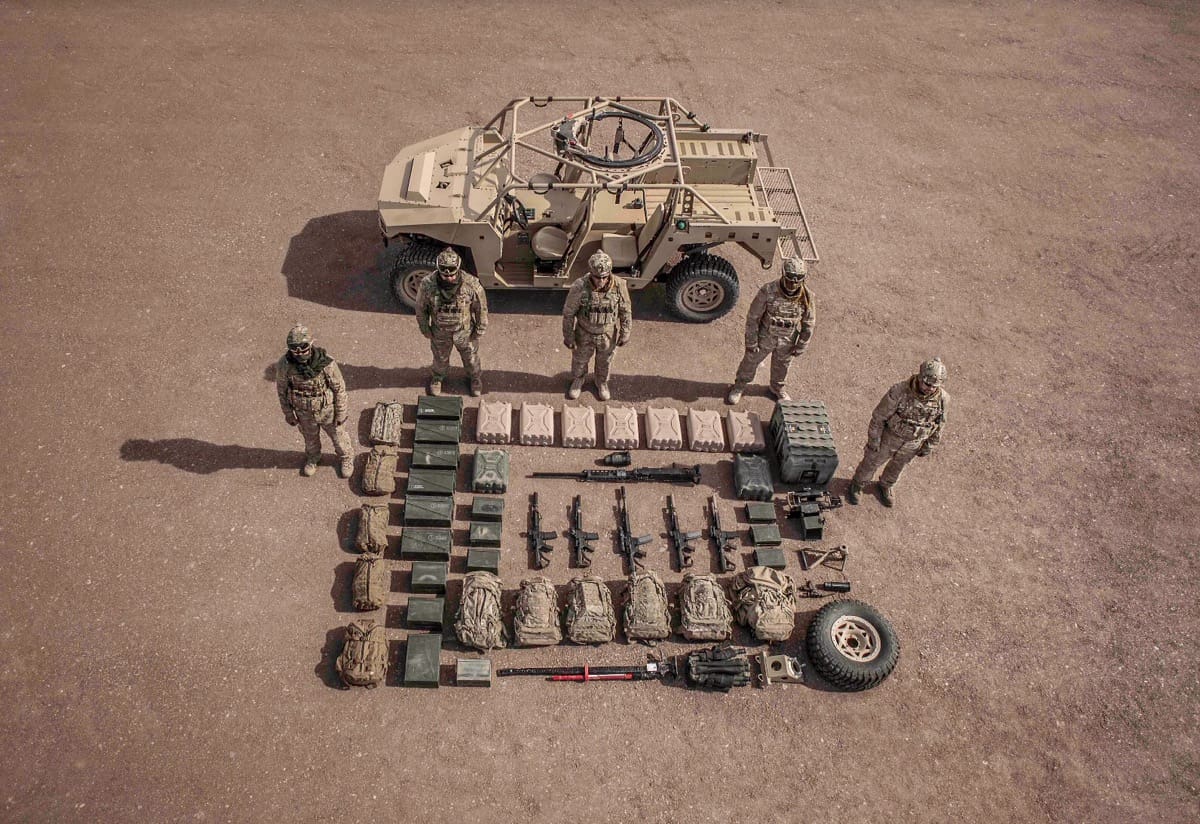
With seating for up to nine, DAGOR comprises the optimal balance of rapid air transportability, payload capacity and advanced mobility. DAGOR gives an advantage back to dismounted warfighters, allowing formations to move faster, carry more and significantly reduce combat fatigue. And its weight and size allow it to be internally transportable on a variety of in-service aircraft, including CH-47 and C-130.

Polaris Government and Defense vehicles deliver a coveted combination of deployability, versatility and off-road mobility, forged from more than 60 years of off-road vehicle experience that is simply unmatched. Vehicles include the rugged Sportsman MV 850, the modular and nimble MRZR, and the DAGOR, which expands upon the range, payload and off-road mobility of any previous tactical off-road vehicle. The enhanced tactical mobility provided by Polaris Government and Defense gives an advantage back to dismounted troops, allowing formations to move faster, carry more and significantly reduce combat fatigue. Polaris FSR support is scalable worldwide and includes military vehicle training, service and maintenance. It also can be supplemented internationally through the Polaris network of distributors. And because Polaris vehicles are in service throughout the world, there is a high degree of interoperability and commonality among U.S. and allied forces.

military.polaris.com/en-us

Join Quantico Tactical In Supporting The Duskin & Stephens Foundation

May 24th, 2017

What is the Duskin & Stephens Foundation?
The Duskin & Stephens Foundation was setup and is operated by team members of CW2 “Big Mike” Duskin and SFC Riley Stephens who were KIA in the Fall of 2012 in Afghanistan. The foundation supports the families and provides private educational opportunities for children of Special Operations Soldiers Killed In Action (KIA).

How Did the Duskin & Stephens Foundation Start and Who Runs it?
In 2013, after their teammates Mike Duskin and Riley Stephens were killed in action in Wardak Province, Afghanistan, two active duty Green Berets struggled with the best way to honor the memory and support the families of their fallen brothers.

What started as a plan to buy a keg, grill hamburgers and hotdogs and tell stories about Duskin and Stephens to their families, morphed into a highly organized community event, attended by over 1,000 Special Forces Soldiers, Sailors, Marines & Airmen & their families and raised over $84,000.

This one event grew into the Duskin and Stephens Foundation, a non-profit organization with multiple annual events that support the families of fallen members of Special Operations Forces and the educational needs of children of Special Operations Soldiers, Sailors, Airmen and Marines.

The annual Duskin & Stephens “Beef & Beer” event is held the Thursday before Memorial Day at the Pinehurst Fair Barn and attracts over 2,500 people from the Fort Bragg area Special Operations Community and their Supporters.

Why is Duskin & Stephens Different?
We have all grown tired of “Charities” which seem to have highly paid staff who spend money on extravagant trips with little money left over for those they purport to support. That is NOT Duskin & Stephens Foundation.

Duskin & Stephens is a true grass roots organiztion. 100% of the event is planned by active duty soldiers, their spouses and supporters, 100% of the items are donated by the surrounding community and 100% of the proceeds are given back to support the families of Special Forces Soldiers Killed In Action, mainly through private education of their children.

But Don’t All Troops KIA Deserve to be Honored and Their Families Supported?Absolutely. Quantico Tactical has chosen to make a difference by supporting the Duskin & Stephens Foundation which local to our Corp HQ and is part of our community. We encourage our customers, friends and family to find and support local grass-roots organizations to honor our fallen brothers/sisters and support their families. If you are unable to do so, we ask that your consider supporting Duskin & Stephens

What is Quantico Tactical Doing to Help?
Quantico Tactical is doing the following to help Duskin & Stephens:
-Donating 100% of our Store & Web Gross Profits from 25 May to 29 May to the Founation
-Coordinated with S&W, SIG Sauer and Beretta to Donate Weapons for the Beef & Beer Silent Auction. Special thanks to S&W, Sig and Beretta for donating the weapons.
-Special Thanks to Big Rock Sports who showed up at our corp HQ yesterday with two un-solicated Browning X-Bolt Rifles for the silent auction.
-Coordinated with Surefire to provide custom cups for the Beef & Beer
Assist in Planning of the Beef & Beer
-Taking Our Smoker of Awesomeness to Feed over 500 attendees at the Beef & Beer

What Can I Do to Help?
Glad You Asked!

-If in the Pinehurst/Ft Bragg Area, Attend the Beef and Beer
Buy a Beef & Beer T-Shirt
-Shop at a Quantico Tactical store or on their website
Buy and Duskin & Stephens Custom Benchmade Knife
Make a Donation

Duskin & Stephen’s Website duskinandstephens.org

Duskin & Stephen’s Facebook Page www.facebook.com/duskinandstephens

US Army Introducing Heads Up Display With Tactical Augmented Reality

May 24th, 2017

WASHINGTON (Army News Service) — A novel technology called “Tactical Augmented Reality,” or TAR, is now helping Soldiers precisely locate their positions, as well as the locations of friends and foes, said Richard Nabors.


(Photo Credit: David Vergun)

It even enables them to see in the dark, all with a heads-up display device that looks like night-vision goggles, or NGV, he added. So in essence, TAR replaces NVG, GPS, plus it does much more.

Nabors, an associate for strategic planning at U.S. Army Research, Development and Engineering Command’s Communications-Electronics Research, Development and Engineering Center, or CERDEC, spoke about TAR at the Pentagon’s Lab Day, Thursday.

Currently, most Soldiers use a hand-held GPS system that approximates their position, he said, but only if their device is geo-registered to their location.

Geo-registration is the alignment of an observed image with a geodetically-calibrated reference image.

TAR does the geo-registration automatically, he said.

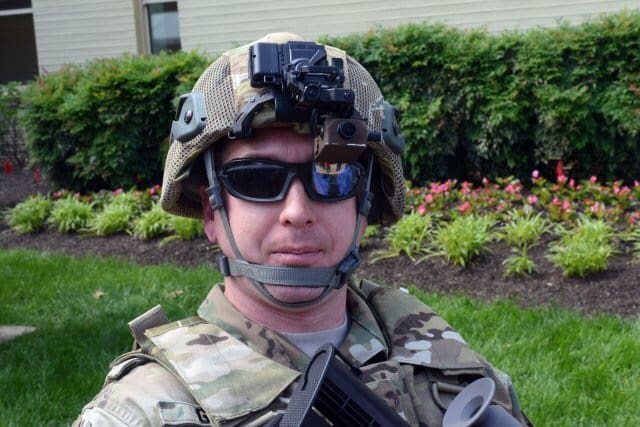
Staff Sgt. Ronald Geer, a counterterrorism non-commissioned officer at CERDEC’s Night Vision and Electronics Sensors Directorate, said that with TAR, Soldiers don’t have to look down at their GPS device. In fact, they no longer need a separate GPS device because with TAR, the image is in the eyepiece, which is mounted to the Soldier’s helmet in the same way NVG is mounted.

So what they would see, he said, is the terrain in front of them, overlaid with a map.

TAR is also designed to be used both day and night, he added.


A novel technology called “Tactical Augmented Reality,” or TAR, is now helping Soldiers precisely locate their positions, as well as the locations of friends and foes. The technology enables a tiny, heads-up display attached to the helmet, as modeled by Staff Sgt. Ronald Geer, a counterterrorism non-commissioned officer at CERDEC’s Night Vision and Electronics Sensors Directorate, during Lab Day at the Pentagon, May 18, 2017. (Photo Credit: David Vergun)

Furthermore, Geer pointed out that the eyepiece is connected wirelessly to a tablet the Soldiers wear on their waist and it’s wirelessly connected to a thermal site mounted on their rifle or carbine.

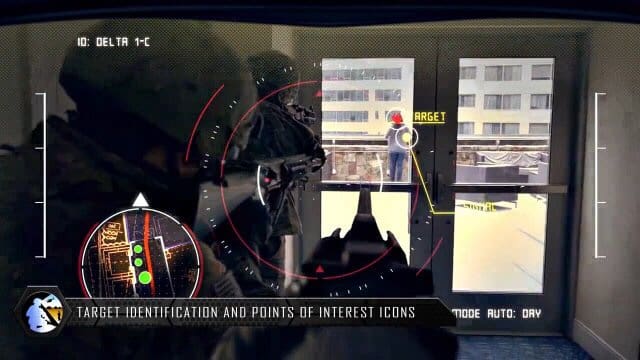
If a Soldier is pointing his or her weapon, the image of the target, plus other details like the distance to target, can be seen through the eyepiece.

The eyepiece even has a split screen, so for example, if the rifle is pointed rearward and the Soldier is looking forward, the image shows both views, he said.

Also, a Soldier behind a wall or other obstacle could lift the rifle over the wall and see through the sites via the heads-up display without exposing his or her head.

Finally, Geer said that TAR’s wireless system allows a Soldier to share his or her images with other members of the squad. The tablet allows Soldiers to input information they need or to share their own information with others in their squad.

TECHNOLOGY BREAKTHROUGH

David Fellowes, an electronics engineer at CERDEC, said that the key technological breakthrough was miniaturizing the image to fit into the tiny one-inch-by-one-inch eyepiece.


(Photo Credit: US Army)

Current commercial technology compresses images into sizes small enough to fit into tablet and cell phone-sized windows, but getting a high-definition image into the very tiny eyepiece was a challenge that could not be met with commercial, off-the-shelf hardware.

Since about 2008, CERDEC, the Army Research Laboratory and industry have been working to make this miniaturization happen, he said.

By about 2010, the image was compressed enough to be shown in black and white, as well as a greenish monochrome version, he said.

Those systems have already been fielded to certain units, he said.

Currently, CERDEC is working on producing more advanced versions that are in full color and have a brightness display that can even be seen in daylight. The current monochrome versions are also bright enough to be seen in daylight.

Fellowes said he’s not sure when those will be manufactured and fielded, but during user testing, Soldiers expressed their deep appreciation of the image sharpness and contrast.

He added that the TARs will provide Soldiers with a much higher level of situational awareness than they currently have and he said he fully expects that the devices will save lives and contribute to mission success