Colt

HFI Inc Expanding into Military & Tactical Market

August 25th, 2026

Leveraging Cut & Sew, Lamination, and Assembly Expertise Across Multiple U.S. Locations

CANAL WINCHESTER, Ohio HFI Inc., a leading North American manufacturer of soft goods and interior components, today announced its expansion into the military and tactical gear market. With more than 70 years of manufacturing experience, HFI brings proven capabilities in precision cut & sew, lamination, and assembly to support defense and tactical applications.

HFI specializes in converting technical fabrics and materials into high-quality soft goods through advanced cut-and-sew processes, multi-layer lamination, and complete component assembly. The company works with materials commonly specified in tactical and military programs, including Solution Dyed CORDURA®, VELCRO®, Curv®, MOLLE systems, mil-spec webbing, and mil-spec hardware. These core competencies, refined through decades of work with demanding automotive OEMs under IATF 16949 quality systems, are well-suited to the rigorous requirements of tactical gear and related soft-goods applications. HFI is also focused on supporting Berry Amendment-compliant production to meet domestic sourcing requirements.

With approximately 3,500 team members and 10 manufacturing locations across North America, HFI offers scalable capacity and geographic flexibility to serve military and defense customers efficiently. The company’s multi-site U.S. footprint enables responsive production, reduced logistics complexity, and reliable supply for both prototype and volume programs.

“HFI’s combination of technical soft-goods expertise, process discipline, and distributed U.S. manufacturing positions us to be a strong partner for the tactical community,” said Matt Kerchner, Director of New Business Development, HFI Inc. “We look forward to applying our capabilities in cut & sew, lamination, and assembly to support mission-critical soft goods needs.”

HFI invites defense contractors, OEMs, and tactical gear integrators to explore partnership opportunities.

About HFI Inc.

Founded in 1954 and headquartered in Canal Winchester, Ohio, HFI Inc. is a Tier 2 manufacturer specializing in cut & sew, foam processing, lamination, and assembly of soft interior and soft-goods components. With more than 3,500 employees across 10 North American locations, HFI delivers high-quality, process-controlled solutions for demanding industries, including support for Berry-compliant tactical and military soft goods.

Staccato 2011 Lifetime Warranty Now Follows the Pistol, Not the Owner

August 25th, 2026

Updated program covers every Staccato-built pistol for the life of the firearm, no matter how many owners it has had
FLORENCE, Texas – Aug. 24, 2026 – Staccato 2011®, creator of the 2011® pistol platform and a leading developer of precision firearms, ammunition and shooting facilities, today announced an important expansion of its Lifetime Warranty on handguns. Effective immediately, the warranty follows every Staccato firearm for its lifetime, regardless of where it was purchased or how many owners it has had.

“Lifetime should mean lifetime,” said Buck Pierson, CEO of Staccato. “The warranty should follow the firearm, not stop when ownership changes. Our customers invest in Staccato because they expect lasting support and performance. We intend to stand behind every Staccato we have built, support every owner who relies on it and earn that trust for life.”

The free lifetime warranty is included with every Staccato-built pistol at no cost and covers eligible defects and failures, including:

  • Issues affecting function or accuracy
  • Cracked frames, slides or barrels
  • Broken thumb/grip safeties, slide stops, ejectors, extractors or grips
  • Coating delamination caused by a factory preparation or application issue
  • Factory blending required to correct contact hot spots

Normal wear items are not covered under warranty. These include springs, magazine followers and coating wear caused by holster contact or hard use. Damage or malfunctions caused by aftermarket parts are also excluded.

Customers who have already registered their gun with Staccato do not need to update their warranty online; the updated warranty terms take effect immediately for existing handgun registrations. Customers who purchase a pre-owned Staccato are eligible for the lifetime warranty at no cost and must re-register the firearm under their name at www.staccato2011.com/warranty.

This lifetime warranty applies only to Staccato-branded firearms. Legacy STI firearms are not included. To review full warranty terms, activate coverage or submit a claim, visit www.staccato2011.com/warranty.

Horn & Heat Launches Chef-Crafted Hot Sauce Line Born in South Africa and Built Around Rhino Conservation

August 25th, 2026

New food brand debuts with three chef-crafted hot sauces and hot honey, bringing together layered flavor, real heat and support for baby rhino conservation in South Africa

Columbia, SC, August 25, 2026 – Horn & Heat, a new premium hot sauce and specialty food company born from an unexpected connection in South Africa’s Northern Cape Province, has officially launched its first collection of hot sauces and hot honey in the United States.

At the center of the launch are three hot sauces: Rhino Doctor Reserve, Rhino Gold and Rhino Baby, each developed around a flavor-first approach that treats hot sauce as more than a condiment. The collection also includes Rhino Nectar, a hot honey pairing natural sweetness with slow-building chili heat.

Horn & Heat began during the filming of the documentary Rhino Rescue: Battling Extinction in South Africa. While working on location at Rockwood Conservation, founders Fernando and Bri Coelho met South African wildlife veterinarian Dr. Liam Theuns Smit, known as The Rhino Doctor.

Smit oversees the health and care of more than 450 rhinos at Rockwood Conservation, a 33,000-acre reserve in South Africa’s Northern Cape Province. His work includes routine health checks and vaccinations, microchipping individual rhinos, treating injuries, assisting with the movement of animals across the property, and helping care for orphaned and vulnerable calves. Rockwood’s extensive security efforts have helped keep poaching incidents exceptionally rare, with only one reported incident during the reserve’s operation.

Recognizing the extraordinary cost of caring for orphaned calves, Smit and Rockwood Conservation founder Wicus Diedericks created the Rockwood Conservation Fund to help support their feeding and care. A single baby rhino can require more than $10,000 per year in milk alone.

Away from his veterinary work, Smit had also been making hot sauce by hand on his own farm using peppers he grew himself.

During filming, he shared the sauce with Fernando and Bri.What began as a bottle passed between friends eventually became the foundation for Horn & Heat.

When Fernando and Bri returned to Rockwood Conservation in 2025 to film the series A Taste of Africa, the idea took shape. Together with Smit, they began developing a food brand designed to preserve the character of the original sauce while expanding the concept into a broader collection.

“The whole thing started with the flavor,” said Horn & Heat co-founder Fernando Coelho. “We weren’t looking for a hot sauce company to start. Liam handed us a bottle of something he had made for himself and the folks at Rockwood, and it was completely different from the one-dimensional sauces we were used to. The conservation story came naturally because that is the world this sauce came from.”

Hot Sauce Built for Cooking

Horn & Heat takes a different approach from hot sauces built primarily around heat or vinegar.

The company’s sauces are developed using peppers, fruits, vegetables, herbs, spices and aromatics intended to create layers of flavor rather than simply increasing heat.

Chef and co-founder Bri Coelho developed Rhino Gold and Rhino Baby around the idea that hot sauce should work throughout the cooking process, not just as something shaken onto a finished meal.

Horn & Heat encourages customers to use its sauces in marinades, vinaigrettes, butter sauces, soups, chili, burgers, roasted vegetables, glazes, pasta sauces, dips and other recipes before using them as a finishing sauce.

“It’s really about rethinking what hot sauce can do,” said Bri Coelho. “Heat matters, but flavor has to come first. A good sauce should add depth to food, not just make it hotter.”

The initial hot sauce collection includes:

Rhino Doctor Reserve

The flagship sauce and the closest expression of Smit’s original hot sauce. Rhino Doctor Reserve is built around an eight-pepper profile and designed for customers looking for serious heat without sacrificing flavor.

Rhino Gold

A medium-heat, chef-developed sauce with a thick, complex texture and layered savory flavor. Rhino Gold is designed for everyday cooking and finishing without overpowering the food around it.

Rhino Baby

The mildest sauce in the collection, created for customers who want the flavor and versatility of Horn & Heat without aggressive heat.

The line is joined by Rhino Nectar, Horn & Heat’s hot honey, made with African piri piri peppers, giving it a flavor and heat profile rarely found in the category. The result is a distinctive, slow-building heat balanced by natural sweetness, ideal for pizza, fried chicken, biscuits, cheese, grilled foods, and more.

Heat With Purpose

The connection to South Africa did not end when the cameras stopped rolling. A portion of every Horn & Heat bottle and jar sold supports the Rockwood Conservation Fund, founded by Rockwood Conservation owner Wicus Diedericks and Dr. Liam Theuns Smit.

Rockwood Conservation protects more than 450 rhinos across approximately 33,000 acres in South Africa’s Northern Cape Province. Among them are orphaned and vulnerable calves requiring intensive care in Rockwood’s dedicated rhino nursery.

Feeding a single orphaned baby rhino can require more than $10,000 in milk alone.

Funds generated through Horn & Heat help support calf feeding, veterinary care and long-term rhino conservation efforts.

The company calls that philosophy Heat With Purpose.

“People should buy the sauce because it tastes great,” Fernando Coelho said. “But if something they were already going to put on their food can also help feed and care for an orphaned rhino, that gives the purchase another level of meaning.”

The story behind Horn & Heat and the conservation work at Rockwood is featured in the documentary Rhino Rescue: Battling Extinction in South Africa, available free through major streaming platforms including Amazon Prime Video and Tubi.

For more information about Horn & Heat, its products, recipes and the company’s work with the Rockwood Conservation Fund, visit hornandheat.com.

About Horn & Heat

Horn & Heat is a specialty food company founded by Fernando and Bri Coelho in partnership with South African wildlife veterinarian Dr. Liam Theuns Smit. Born from their work together at Rockwood Conservation in South Africa’s Northern Cape Province, the company produces chef-crafted hot sauces and specialty foods built around real flavor, real heat and real impact.

Horn & Heat’s flagship lineup includes Rhino Doctor Reserve, Rhino Gold, Rhino Baby and Rhino Nectar hot honey. A portion of every bottle and jar sold supports the Rockwood Conservation Fund and its work caring for orphaned and vulnerable rhinos in South Africa.


Digital Manufacturing Exchange Expands Manufacturing Options for Marines at the Tactical Edge

August 25th, 2026

Kyushu, Japan —

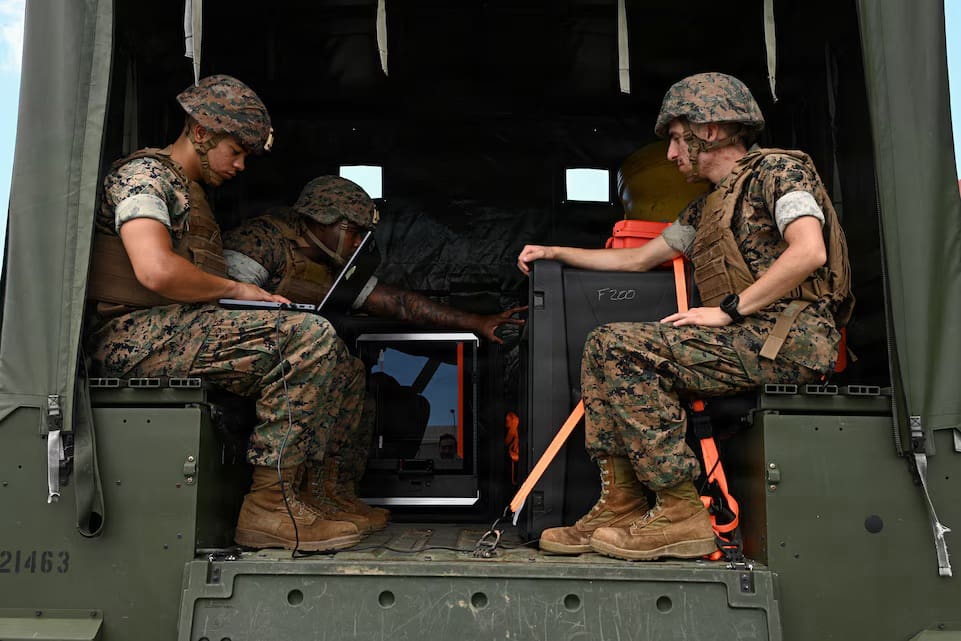
A Marine in Kyushu, Japan, initiated a manufacturing job on a printer nearly 400 miles away in Okinawa.

That single action demonstrated the larger promise of the Digital Manufacturing Exchange, or DMX: connecting technical expertise, approved data and available manufacturing capacity across geographically dispersed locations without requiring every unit to possess every capability at the point of need.

During Valiant Shield 26, Marine Depot Maintenance Command (MDMC) joined operating forces, other military services, original equipment manufacturers and regional industry partners to test how DMX could support a distributed sustainment network across the Indo-Pacific.

Seven Marine Corps printers were connected to DMX during the exercise. Participating organizations completed 19 prints representing 11 unique parts using streamed technical data from the Marine Corps, Navy, Army and an original equipment manufacturer.

The results showed that DMX can do more than move a digital file from one computer to another. It can connect a unit with an equipment requirement to technical experts, approved manufacturing data and production capacity located elsewhere in the region.

For Marines operating across the Indo-Pacific, that connection could reduce the effect of distance on readiness. Rather than waiting for every select component to move through a lengthy transportation network, units could gain another option for producing approved parts closer to where equipment is operating.

“DMX and distributed manufacturing give Marines across III MEF the tactical flexibility to make dynamic ‘make-or-buy’ decisions within a resilient regional supply network and closer to the point of need. Producing approved parts on demand can reduce theater transit times and help resolve critical shortages when traditional industrial sources cannot deliver high-demand readiness items quickly enough. DMX also strengthens joint integration and expands opportunities to partner with private industry to increase regional manufacturing capacity.”

Maj. Eric J. Mees, 3d Marine Logistics Group G-4 sustainment officer

One of the exercise’s central efforts involved a frequently damaged lower ladder step used on Heavy Expanded Mobility Tactical Trucks, Palletized Load System A2 vehicles and Logistics Vehicle System Replacement platforms. Oshkosh Defense authorized the controlled use of its proprietary technical data, allowing Marine Depot Maintenance Command and Marines supporting III Marine Expeditionary Force to manufacture the component while the company retained ownership and control of its intellectual property.

“Oshkosh Defense is pleased to partner with MDMC on this initiative because advanced manufacturing and secure digital delivery directly support what Warfighters need most: ready equipment, responsive parts support, and a sustainment approach built to perform over the full vehicle lifecycle,” said Pat Williams, Chief Programs Officer, Oshkosh Defense. “The successful printing and delivery of an Oshkosh repair part during Valiant Shield successfully demonstrated the DMX program’s commitment to protection of a manufacturer’s intellectual property while ensuring seamless support to the operating units, and we look forward to extending this capability to additional critical Class IX parts.”

A Department of State-approved export license enabled MadeHere K.K., a qualified industry partner in Japan, to support production using the Oshkosh data. Industry partners in Japan and South Korea also conducted post-processing and manufactured components using approved government-owned technical data.


“Every supply chain is a bet that the people, the knowledge and the tools will still be there tomorrow. When that bet fails, a part becomes unreproducible and a mission stalls. What was scattered, we gather. What was tacit, we make permanent. What was distant, we build here. Our partnership with MDMC through the DMX initiative demonstrates that sustainment in the Indo-Pacific doesn’t have to cross an ocean. It can happen right here.”

Alexander De Vore, CEO of MadeHere K.K.

The work included a hydraulic manifold manufactured by South Korean partner Partners Lab and an Assault Amphibious Vehicle driver’s vision enhancer latch produced by the Korea Institute of Industrial Technology. These efforts demonstrated how qualified regional manufacturers could supplement military production capacity closer to operating forces.

DMX also enabled approved technical data and manufacturing capacity to be shared across organizations and military services. Using Army Aviation and Missile Command data, Marines manufactured UH-60 components. MDMC supported the effort by providing approved technical data for additional components, helping expand the range of parts available for distributed manufacturing during the exercise.

In another demonstration, Marines in Kyushu initiated a manufacturing job on a printer in Okinawa. The effort showed how technical expertise, approved data and production equipment located in different places could be connected through a controlled digital process.

The exercise also tested how DMX could work with limited connectivity. Marines partnered with Naval Surface Warfare Center Carderock Division’s “Print on the Move” team to access technical data and produce a component without an active network connection. The demonstration showed how DMX could remain useful in remote or contested environments where reliable communications may not always be available.

DMX is designed to complement —not replace—the existing supply system, depot maintenance or direct support from equipment manufacturers. It gives commanders another option when an approved part is unavailable, has a long lead time or cannot reach the operating force quickly enough.

For Marines operating across a vast and contested theater, the value of DMX is ultimately measured at the tactical edge. By linking approved technical data, manufacturing capacity and expertise across the region, DMX gives commanders another way to overcome distance, respond to equipment shortfalls and keep critical systems in the fight. Valiant Shield 26 demonstrated how that network can move sustainment closer to Marines by giving the force more options when time, distance and availability matter most.

By Jennifer Napier | Marine Corps Logistics Command

Kongsberg to Deliver Remote Weapon Systems to Canada

August 24th, 2026

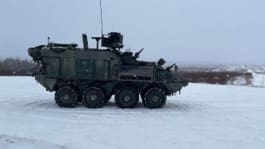
KONGSBERG, NORWAY – Aug. 20, 2026 – Kongsberg has signed a contract with General Dynamics Land Systems–Canada (‘GDLS-Canada’) valued at NOK 1.1 billion for the delivery of Protector RS4 Remote Weapon Systems. These systems will be integrated onto the Canadian Army’s Armoured Combat Support Vehicle (ACSV). 

The contract represents a continuation of the established partnership between Kongsberg and GDLS-Canada. This order is a follow-on procurement of RS4 systems for the ACSV program, building on previous deliveries to the same platform.

“This contract confirms our customer’s confidence in the Protector systems and further strengthens our long-term partnership with GDLS-Canada. We are proud that the RS4 continues to be selected as a key capability for the Canadian Armed Forces’ modern vehicle fleet,” said Kjetil Reiten Myhra, Executive Vice President, Kongsberg and President of the Defence Systems division.

Kongsberg has previously delivered RS4 systems to GDLS-Canada for integration on ACSV vehicles. The new deliveries will further enhance and expand the operational capabilities of the Canadian Army.

The RS4 is part of Kongsberg’s Protector family of Remote Weapon Systems, providing high levels of protection, flexibility, and situational awareness for vehicle crews.

The Protector RS4 is an advanced Remote Weapon System designed to enhance survivability, precision, and operational flexibility for modern military vehicles. The system is in service with defence customers worldwide and can be integrated onto a wide range of vehicle platforms.

CZ Honors a Defining Chapter in the Legacy of the CZ 75

August 24th, 2026

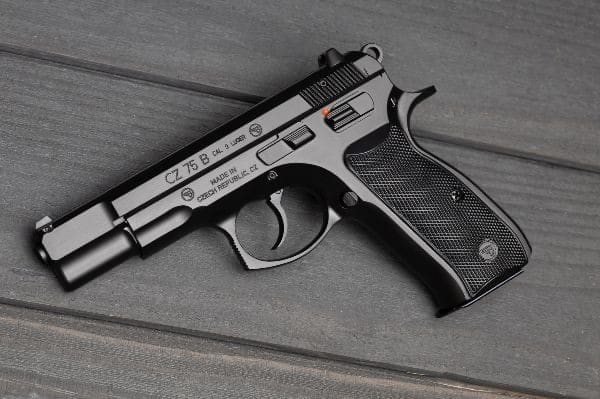
CZ is honoring a defining chapter in the legacy of the CZ 75. For more than five decades, the CZ 75 has stood at the center of the CZ story. Its distinctive design, innovation, and shooting characteristics helped establish CZ’s reputation with generations of shooters around the world and created a handgun legacy that continues to resonate across the firearms industry.

As CZ honors that legacy in 2026, the company will also conclude production of three longstanding members of the CZ 75 family: the CZ 75 B, CZ 75 BD, and CZ 75 Compact.

“Few firearms are as closely connected to the identity of CZ as the CZ 75,” said Chris Sprangers, Director of Marketing for CZ-USA. “For generations, this platform has introduced shooters around the world to what CZ stands for: innovation, thoughtful engineering, and exceptional shooting characteristics. The CZ 75 B, CZ 75 BD and CZ 75 Compact have each carried that legacy forward, and as their production comes to a close, we are proud to honor the role they have played in both our history and the experiences of CZ owners around the world.”

The CZ 75 B, CZ 75 BD and CZ 75 Compact have each played an important role in carrying the CZ 75 design forward. For decades, these pistols have been valued by shooters for their balance, craftsmanship and proven design, becoming lasting parts of the CZ lineup and of the shooting experiences of generations of customers.

While production of these select classic models is concluding, this moment should not be mistaken for the end of the CZ 75 story. The CZ 75 remains an important part of the CZ brand, with models including the CZ 75 SP-01, CZ 75 SP-01 Tactical, CZ 75 P-01 and CZ 75 D PCR continuing the platform’s legacy.

This transition is a meaningful one because of what these pistols represent. They are not simply longstanding models within the CZ catalog; they are part of a design lineage that helped shape the identity of the brand and build the reputation the CZ name carries today.

CZ remains proud of what the CZ 75 B, CZ 75 BD, and CZ 75 Compact represent and grateful for the generations of customers who have made them part of their shooting stories.

A lasting legacy, honored with respect. The legend of the CZ 75 will live on.

For more information, visit www.czfirearms.com/en-us.

Shadow Box Solutions Introduces the ShadowBox Charlie, Bringing Advanced Multi-Network Gateway Capability to the Tactical Edge

August 24th, 2026

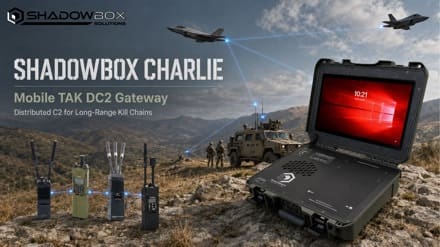
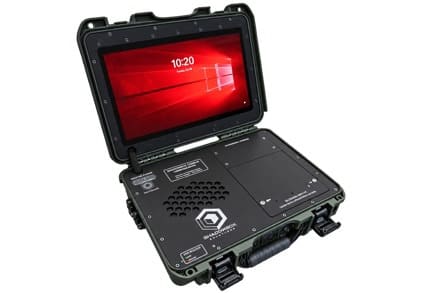
Shadow Box Solutions today announced the release of the ShadowBox Charlie, Mobile TAK DC2 Gateway, a compact, ruggedized, multi-network system designed to enable distributed command and control (DC2), joint fires integration, and long-range kill chains at the tactical edge.

The Charlie moves capabilities traditionally associated with large command posts, vehicle-mounted integration suites, and specialized tactical data-link gateways into a system small enough to deploy in a backpack at the team level or below. It bridges disparate tactical radios, networks, sensors, and command-and-control systems, allowing operational data to move between users who would otherwise remain isolated by incompatible communications architectures.

“Modern forces do not suffer from a lack of networks – they suffer from the seams between them,” Dave O’Neill, COO of Shadow Box Solutions said. He continued, “We built the Charlie to move the gateway forward to where those seams actually exist. A tactical team can now connect sensors, radios, Link 16, MANET, HF, TAK, and classified networks without the footprint and support infrastructure traditionally associated with that capability.”

A central capability of the Charlie is tactical-level Link 16 integration. When paired with systems such as the AN/PRC-161 BATS-D handheld Link 16 radio, the Charlie can integrate Link 16/J-series information with other tactical networks and transport relevant traffic using Joint Range Extension Applications Protocol-C (JREAP-C) over IP-based communications pathways. This extends Link 16 information beyond the traditional line-of-sight tactical data-link environment and into a broader distributed C2 architecture.

The Charlie also integrates TRAX software, providing tactical data translation and interoperability between Link 16/J-series data, JREAP, TAK/Cursor-on-Target, and other operational data sources. This allows information originating on one network or sensor architecture to be translated and delivered into another without requiring every participant in the kill chain to operate on the same communications system.

The system supports integration with the AN/PRC-161 BATS-D, AN/PRC-163, AN/PRC-167, AN/PRC-160 HF radio, Persistent Systems MPU5, Silvus StreamCaster, TrellisWare tactical MANET systems, and LoRa/Meshtastic-class networks, as well as other IP, serial, software-defined radio, and sensor interfaces.

This architecture also allows nontraditional and attritable systems to contribute directly to operational C2. Data originating from low-cost sensors, software-defined radios, leave-behind systems, or surrogate forces operating over low-bandwidth networks can be ingested by the Charlie and bridged into established tactical networks and dynamic targeting architectures.

The Charlie can operate independently as a disconnected tactical gateway or provide classified reachback to an Air Operations Center or SIPRNet C2 node through its integrated Commercial Solutions for Classified (CSfC) architecture when connectivity is available. The system operates from a standard BB-2590/U battery and can also be powered from vehicle, external battery, DC, or AC power sources.

The ShadowBox Charlie expands Shadow Box Solutions’ family of expeditionary C4ISR systems and reflects the company’s focus on making sophisticated network integration capabilities smaller, easier to use, more deployable, and accessible farther forward.

About Shadow Box Solutions

Shadow Box Solutions is a U.S.-based provider of advanced communications and C4ISR integration systems, delivering customized, end-to-end solutions for defense, government, and specialized mission partners.

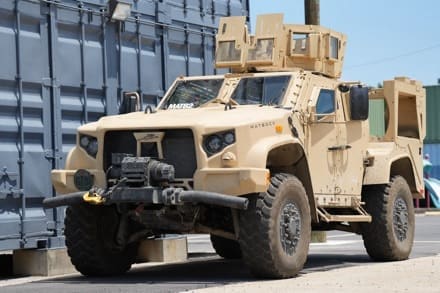
MATBOCK Announces Immediate Availability of JLTV Hybrid-Electric Conversion Kits Following Major Contract Milestone

August 24th, 2026

Virginia Beach, VA — MATBOCK, an industry leader in bringing paradigm-shifting technologies to the defense market, is proud to announce the immediate availability of its Joint Light Tactical Vehicle (JLTV) Series Hybrid-Electric Powertrain Conversion Kits. This milestone follows the successful development advances made during the $17.3 million Phase 4 contract modification in partnership with the U.S. Army Rapid Capabilities and Critical Technologies Office (RCCTO).

MATBOCK was founded on the principles to bring innovative products to the market, and while most of our products are in the soft-goods space, we have always been on the cutting edge of tech development. That drive has led us to develop some of the most innovative soft-goods, digital direct and indirect weapons sights, a medical device, and most recently, a Series Hybrid-Electric powertrain system. Zach Steinbock initiated this concept nearly 6 years ago, and after multiple iterations, the MATBOCK JLTV HEV conversion kit is officially here.

The journey to full production required adaptability and vision. With less than a year remaining before completing the contract, MATBOCK made a hard strategic pivot to ensure the program remained on schedule and achieved total success by investing in a ground up build of the range extender with a commercial partner. This strategic decision was paramount to mission success, delivering the uncompromising reliability and durability that military customers demand.

“Without a doubt, overcoming the challenges of this project required true resilience from our entire engineering team,” said Zach Steinbock, Co-Founder and President of MATBOCK. “By making a calculated pivot to leverage a commercially proven powerplant for our range extender and countless hours of integration by our engineering teams, we not only kept the program on track but delivered a product that redefines what tactical vehicles can achieve. Providing immense power on the edge directly translates to increased mission capabilities, and we are thrilled to offer this modernization to fleets today.”

Modernizing the Fleet: Plug-and-Play Power on the Edge

The MATBOCK JLTV Conversion Kits are available now as bolt-on upgrades designed to help any customer with JLTVs in their inventory to rapidly modernize their fleet. Designed to Modular Open Systems Approach (MOSA) principles (DoDI 5000.87), the integration is completely reversible, requiring no permanent OEM vehicle modifications. This preserves existing vehicle warranties and fleet commonality while utilizing single-soldier connectors that require no specialized training. Using standard military tool sets, the kit can be installed at the depot or field level in under 24 hours.

Once integrated, it transforms the base platform into a Series Hybrid-Electric Vehicle capable of extraordinary performance:

  • Massive Performance Gains: The kit delivers a 130% improvement in range and a 200% improvement in acceleration, all with zero weight impact to the vehicle’s curb weight.
  • Tactical Stealth: A 125-mile Silent Mobility Range reduces acoustic and thermal signatures by over 80%, enabling extended silent watch and long-range reconnaissance operations without the use of combustion engines.
  • Exportable Power: True to MATBOCK’s promise of “Power and Propulsion on the Edge,” the system acts as a portable microgrid. It provides up to 250 kW of HVDC export power, 42 kW of AC export power, and 17.5 kW of LVDC power, easily supporting directed energy weapons, advanced communications, and off-platform microgrid operations.

The MATBOCK JLTV HEV Conversion Kit is ready to deploy today, ensuring warfighters have the mobility, stealth, and power generation they need to maintain an unfair advantage on the battlefield.

For more information, technical specifications, or to request a quote, please visit matbock.com or contact us at sales@matbock.com.