FirstSpear

JIATF-401 Leads a New Era in Counter-SUAS Defense

October 30th, 2026

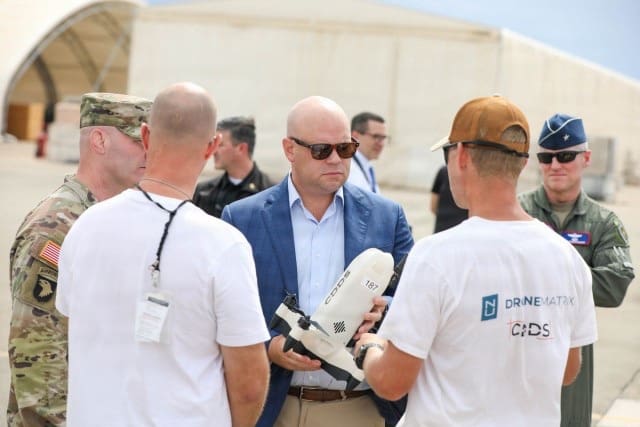
The Joint Interagency Task Force 401 is leading the Department of War’s efforts to stay ahead of the rapidly evolving threat posed by small unmanned aircraft systems. As adversaries continue to expand their use of low-cost, highly adaptable drones for surveillance, disruption and attack, the DoW is transforming how it acquires technology, fields capabilities and integrates operations across the counter-UAS enterprise.

Established in August 2025, JIATF-401 serves as a centralized organization focused on rapidly delivering C-UAS capabilities while improving the policies, standards, partnerships and training needed to meet an increasingly evolving threat environment. By bringing together stakeholders across government, industry and the joint force, the task force is helping create a more integrated approach to homeland defense and warfighter readiness.

JIATF-401 AND THE NEED FOR A UNIFIED COUNTER-SUAS APPROACH

The establishment of JIATF-401 reflected a growing recognition that traditional processes were not designed to keep pace with the speed at which drone threats are evolving. sUAS have become increasingly accessible, adaptable and difficult to counter, creating new challenges for military operations, homeland security and critical infrastructure protection. Over the past year, JIATF-401 has focused on closing the gap between operational needs and fielded solutions.

According to JIATF-401 Rapid Acquisition Chief U.S. Army Col. Tony Lindh, “Over the past 12 months, JIATF-401 worked to translate operational requirements into fielded capabilities while improving the policies, standards, training and partnerships needed to build a more integrated C-UAS enterprise.”

That effort extends beyond technology alone. By bringing together organizations across the DoW, the federal government and private industry, the task force has focused on one central objective — rapidly delivering C-UAS capabilities to warfighters at home and abroad.

The results have been felt across multiple mission areas.

“In our first year, these efforts produced results across the C-UAS mission, strengthening homeland defense, improving joint force readiness and increasing warfighter lethality while laying the groundwork for faster and more effective responses to an evolving threat,” Lindh said.

The task force’s establishment reflects a strategic shift away from fragmented efforts toward a unified approach that can quickly identify capability gaps, streamline technology adoption and ensure operational units receive the tools they need at the speed of relevance. By placing authorities, resources and decision-making under one coordinated structure, the Department aims to break down silos, reduce redundancy and accelerate the pace at which counter?sUAS capabilities are developed and deployed.
A MULTI?AGENCY TEAM DRIVING TRANSFORMATION

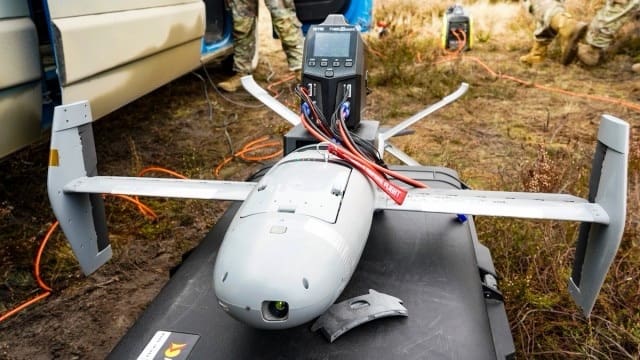
One of the defining characteristics of JIATF-401 is its integrated organizational structure. Rather than approaching the drone threat through separate organizations operating independently, the task force was built to bring together expertise from across the military and federal government under a common mission.

“JIATF-401 was established as a jointly manned organization composed of Department of War personnel drawn from across the military services, with embedded interagency expertise,” Lindh explained. “To ensure a broader whole-of-government approach, the task force incorporates embedded subject matter experts from other federal departments and agencies to align with the C-sUAS mission.”

These subject matter experts represent federal partners such as U.S. Customs and Border Protection; Federal Aviation Administration; Federal Bureau of Investigation; Department of Homeland Security; Department of State; Department of Transportation; Federal Communications Commission; Bureau of Alcohol, Tobacco, Firearms and Explosives; Cybersecurity and Infrastructure Security Agency; and U.S. Secret Service.

The result is a team capable of addressing operational, technical, acquisition and policy challenges while maintaining unity of effort across the broader C-UAS enterprise.
NEW PROCESSES DESIGNED FOR SPEED AND ADAPTABILITY

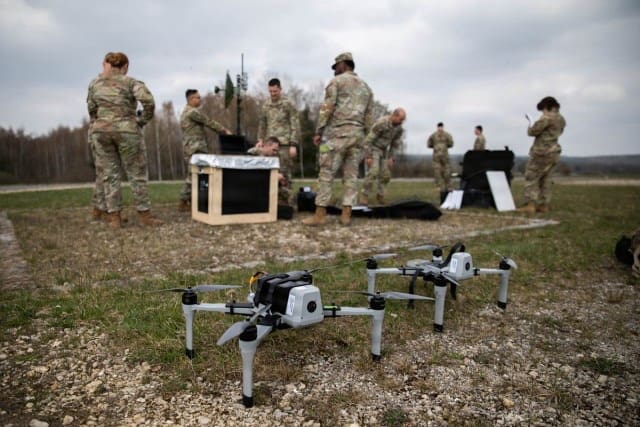
At the heart of JIATF-401’s mission is the recognition that countering rapidly evolving drone threats requires faster and more adaptable processes than those traditionally used to acquire and field capabilities.

According to Lindh, “JIATF-401 utilizes unique procurement and acquisition authorities to bypass traditional timelines and deliver C-UAS capabilities at the speed of relevance.”

A key component of that effort, he said, is drones.mil, a first-of-its-kind centralized marketplace that aggregates demand and streamlines pathways to procurement. This allows authorized users across the joint force, the interagency, as well as allies and partners, to rapidly acquire validated, tested technologies.

The task force has also helped reshape how C-UAS operations are approached in the field.

“Operationally, JIATF-401 has transitioned from traditional air defense mindset of single systems providing near-perfect defense towards a layered ‘systems-of-systems’ approach,” Lindh explained.

That shift reflects a broader understanding that countering drone threats requires more than a single technology or platform.

“There is no silver bullet technology that will solve the drone problem,” Lindh said. “We need the right people, policy, permissions and training to build a layered defense against the threat of drones.”

To support that layered approach, JIATF-401 has focused on eliminating barriers to integration across the C-UAS enterprise.

In support of this ‘system-of-system’ approach, Lindh said the task force has eliminated the reliance on stove-piped systems by establishing an enterprise-wide agreement for a common tactical user interface and advanced standardized data protocols.

“This open architecture ensures plug-and-play interoperability, allowing sensors and effectors to rapidly integrate and share threat data,” he said. “These updates provide tailored, layered defenses to help warfighters and homeland security personnel adapt as sUAS threats continue to evolve.”

TESTING, FIELDING AND PREPARING FOR FUTURE CHALLENGES

Keeping pace with the threat requires more than rapidly acquiring technologies. It also requires continuous testing, evaluation and refinement to ensure new capabilities remain effective in a changing operational environment.

To that end, “JIATF-401 is rapidly delivering and testing C-UAS capabilities in multiple theaters,” Lindh said. “These updated operational capabilities and processes are evaluated in battle labs, during joint exercises and alongside partners and allies.”

The insights gained through those activities help inform both current capability development and long-term planning efforts. Looking ahead, the task force remains focused on building systems that can adapt as drone technologies continue to evolve.

“To plan for continually evolving drone threat, JIATF-401 is advancing software-defined, hardware-enabled systems that can be updated over the air, while establishing standard test guidelines and an enterprise-wide agreement for a common tactical user interface,” he said.

At the same time, JIATF-401 is leveraging acquisition reform to strengthen the broader industrial base supporting the mission.

Through our first-of-its-kind C-UAS marketplace, accessible on drones.mil, Lindh said we are “aggregating demand to expand the industrial base, lower costs and ensure U.S. and allied forces can rapidly procure vetted, interoperable capabilities at the speed of the evolving threat.”

Together, these efforts are positioning the DoW to anticipate emerging challenges rather than simply reacting to them.

WORKFORCE AND TRAINING FOR A MODERN C-SUAS MISSION

Technology remains a critical part of the C-UAS mission, but JIATF-401 emphasizes that success depends equally on trained personnel, effective policies and strong partnerships. Lindh explained that JIATF-401 works closely with industry, academia and across the military to help expand the definition of C-UAS capability beyond hardware.

Recognizing the importance of education and professional development, the organization has invested in training initiatives designed to expand expertise across the joint force.

“To ensure education and training is available, JIATF-401 assumed oversight of the Joint Counter-UAS University at Fort Sill and developed a Train-the-Trainer model to expand C-UAS expertise across the joint force,” he said.

Additionally, the task force has strengthened collaboration with interagency partners responsible for C-UAS training and knowledge sharing.

“We have also expanded our partnership with the FBI National Counter-UAS Training Center, where JIATF-401 personnel are embedded to support instruction, and share lessons learned with our interagency partners,” Lindh said. The NCUTC is the nation’s first dedicated federal hub for training law enforcement and security professionals to detect, assess and counter unlawful drone activity.

These efforts are helping build a workforce capable of supporting a layered defense against increasingly sophisticated drone threats, while ensuring lessons learned are shared across the broader C-UAS community.
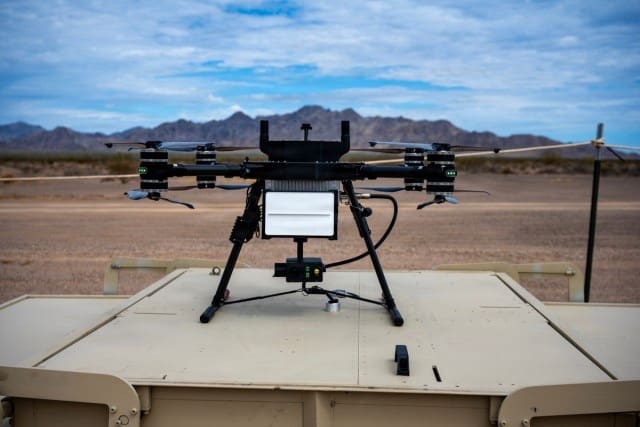
One year after its establishment, JIATF-401 continues to reshape the Department of War’s approach to the C-UAS mission by accelerating capability delivery, strengthening interoperability and bringing together military, interagency and industry partners under a more integrated framework.

Through innovative acquisition pathways, enterprise-wide standards and a layered system-of-systems approach, the task force is helping close the gap between emerging threats and operational capabilities. Its efforts span acquisition, testing, training and partnership development, all aimed at delivering effective C-UAS solutions at the speed of relevance.

As drone technology continues to evolve, JIATF-401 is helping ensure the DoW remains prepared to meet today’s challenges while building the agility and adaptability needed to address the threats of tomorrow.

For more information, visit War.gov or go to CUAS.mil to learn more about the C-UAS marketplace.

For the latest Army Acquisition news and information, visit and subscribe to Behind the Frontlines.

By Cheryl Marino for Behind the Frontlines

Quantum Systems Expands to Japan

October 29th, 2026

Quantum Systems has established a permanent presence in Japan, deepening its footprint in the Pacific Region, with plans to expand industrial cooperation with Mitsubishi Chemical and Panasonic.
Tokyo, Japan, 28 October 2026 – Quantum Systems is establishing a permanent presence in Japan by establishing Quantum Systems Japan K.K., and a local office in Tokyo. The move marks the company’s next step in building an industrial presence in the country and was announced during Chancellor Friedrich Merz’s visit to Japan.

Quantum Systems is building on its existing relationships with Mitsubishi Chemical and Panasonic, through signed Memoranda of Understanding (MoUs) intended to deepen industrial cooperation with and in Japan. The partnerships will combine Japanese manufacturing expertise with Quantum Systems’ experience in developing and producing unmanned systems. This approach will bring the company closer to Japanese customers, expand opportunities for industrial cooperation and contribute to more resilient domestic supply chains.

Japan’s changing security environment is increasing demand for unmanned capabilities that can be deployed, maintained and adapted to operational requirements. Building local industrial capacity is an important part of meeting that demand, reducing dependence on overseas supply chains and ensuring long-term access to defence technologies.

Sven Kruck, Co-CEO of Quantum Systems, said: “Japan has understood where defence is heading: unmanned systems, rapid innovation and the industrial capacity to deliver at scale. Ukraine has shown why this matters. When personnel are scarce and threats evolve fast, technological advantage is decisive. Japan’s manufacturing strength and our operational experience are a powerful combination. We are proud to put down roots in Japan and honoured to help strengthen its defence industrial base.”

Quantum Systems aims to support Japan’s growing requirements for integrated unmanned capabilities, drawing on its experience across air, land and sea and its MOSAIC UXS software platform, which enables the coordination of unmanned systems across operational domains.

“Japan’s defence requirements are evolving, particularly as unmanned systems become an integral part of its future self defence force structure. The challenge is no longer simply acquiring individual platforms but ensuring that different capabilities can operate together across all domains. Our focus is on understanding where these operational gaps exist and working with Japanese partners to address them through integrated, mission-ready capabilities,” said Martin Karkour, Chief Revenue Officer of Quantum Systems.

With its Japanese subsidiary and established industrial partnerships, Quantum Systems is expanding its ability to work directly with Japanese customers and industry. The company will focus on closer technological cooperation and adapting its capabilities to Japan’s evolving operational requirements.

Kraken Kinetics Launches Odin Energetics with Solugen

October 29th, 2026

Kraken Kinetics is proud to publicly launch Odin Energetics, our new joint venture with Solugen Aerospace & Defense.

Odin was created to rethink how America produces and delivers advanced energetics, the explosives and propellants at the core of modern munitions.

The challenge is straightforward: demand for munitions is increasing, while the industrial base supporting them remains constrained by limited capacity, long supply chains, and production infrastructure that is difficult to scale rapidly.

We believe the answer is a fundamentally different manufacturing model.

Odin is building a resilient, distributed supply chain for advanced energetics by combining advanced manufacturing with secure domestic chemical production. Through Solugen, Odin will have access to a dedicated U.S. source of critical precursor chemicals, providing greater supply assurance, scalability, and control over the inputs required to manufacture next-generation energetics.

At the center of that model is Nitroforge, a modular, expeditionary manufacturing platform designed to convert precursor chemicals into advanced energetics where capacity is needed most.

The combination of secure domestic inputs and deployable production creates a faster, more flexible, and more resilient approach to energetics manufacturing.

For Kraken Kinetics, this is a natural extension of our mission. We are focused on delivering DEFINITIVE LETHALITY™ at scale, and the energetic materials behind those effects are too important to remain a bottleneck.

Odin’s mission is simple:

Build the energetic capacity America, its warfighters, and its allies need, where they need it, when they need it.

Advanced energetics. Distributed production. Capacity for the nation’s most critical missions.

Decisive Effects. Whenever Needed.

Mehler Systems Acquires Majority Stake in MARS Armor to Strengthen Its Presence in Eastern Europe

October 29th, 2026

FULDA, GERMANY, KOSTINBROD, BULGARIA (29 October 2026)

Mehler Systems, an international group bringing together expertise in ballistic protection, tactical equipment and tactical clothing, has today signed an agreement to buy a majority stake in MARS Armor, a Bulgarian manufacturer of personal ballistic protection solutions. The acquisition strengthens the group’s presence in Eastern Europe, adds complementary products and capabilities, reinforces its EU-based supply chain and brings it closer to customers in the region.

Based in Kostinbrod, Bulgaria, MARS Armor develops and manufactures protection equipment for military, law enforcement and government users. Its portfolio includes ballistic vests, hard and soft armour inserts, helmets, shields and protective equipment for demining applications. The company also has in-house ballistic and stab-resistance testing capabilities.

MARS Armor extends the group’s reach to new customers and use cases, broadening its portfolio with additional NIJ-standard protection systems and products such as demining suits. Customers in MARS Armor’s target markets will also gain access to complementary products from across Mehler Systems.

Commenting on the acquisition, Dr. Mario Amschlinger, CEO of Mehler Systems, said: “Growing internationally means investing in local businesses with the expertise and relationships to support customers over the long term. MARS Armor gives us a strong foundation for that next phase of growth in Eastern Europe.”

MARS Armor will continue to operate under its established brand and current leadership, with the backing of Mehler Systems Group. The group is committed to supporting MARS Armor’s capabilities in Bulgaria, with a customer centric approach focused on the company’s established and future target markets.

Plamen Tashkov, CEO of MARS Armor, said: “We bring our experience, products and customer relationships to Mehler Systems. We look forward to building on these strengths and contributing to the group’s development with a strengthened portfolio in Eastern Europe and beyond.”

The acquisition marks a further step in Mehler Systems’ international growth strategy. Through targeted acquisitions, the group is expanding its footprint in key markets and strengthening the reach and resilience of its supply chain.

Lite Coms Launches the Lite Sat GT3 Vehicle Terminal to Bring LEO Throughput to the Battlefield Edge

October 29th, 2026

As BLOS transport increasingly moves to LEO constellations, the GT3 ensures elite teams stay connected at high speeds in the world’s most severe environments

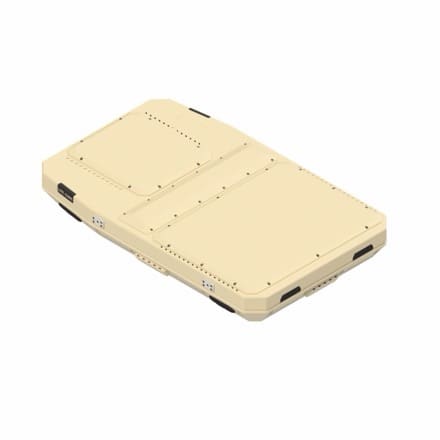
VICTOR, N.Y., October 29, 2026: Lite Coms, a U.S. designer and manufacturer of advanced tactical satellite communications (SATCOM) terminals for defense and government applications, today announced the launch of Lite Sat GT3, a tactical, flat-panel vehicular terminal designed to bring revolutionary Low Earth Orbit (LEO) throughput to the edge of the battlefield.

As beyond-line-of-sight (BLOS) transport increasingly demands LEO connectivity, the defense and tactical SATCOM industries have been seeking a solution to bring high-speed LEO throughput to manned and unmanned land vehicles operating in the most contested battlefield environments. To answer this call, Lite Coms specifically designed the GT3 to bring LEO connectivity across Communications-on-the-Move (COTM), Communications-on-the-Pause (COTP), or stationary operations.

Available immediately, the GT3 transforms commercial-off-the-shelf (COTS) hardware into a ruggedized, mission-ready solution that encases high-performance phased array technology in a sealed, machined aluminum enclosure with Mil Spec connectors.

  • LEO High-Throughput: Delivers game-changing data speeds and ultra-low latency for real-time mission execution.
  • Simultaneous multi-network operation: The GT3 supports simultaneous operation across key LEO satellite constellations, alongside 5G/LTE networks, providing resilient, always-on connectivity.
  • “Always-On” Tactical Integration: Optimized for “always-on” connectivity while mounted to Utility Task Vehicles (UTVs), Sport Utility Vehicles (SUVs), or all-terrain platforms, ensuring a reliable link at high vehicular speeds. 
  • Uninterrupted Global Connectivity: Features an embedded 5G US-made module with physical SIM and eSIM support, providing automatic cellular failover for uninterrupted global connectivity. 
  • Rapid Acquisition: Supported by Lite Link Raptor SD-Wan architecture with transport failover, load balancing, Quality of Service (QOS), and Virtual Local Area Networks (VLAN). 

“The launch of the Lite Sat GT3 is the answer to a direct call from our Defense and Tactical SATCOM customers, as well as the industry at large. As beyond-line-of-sight land operations move more into LEO constellations each day, this solution ensures warfighters have the high-speed connectivity the evolving reality of land warfare demands,” said Andrew Colaruotolo, Chief Strategy Officer at Lite Coms. “Due to the immediate need for an affordable vehicular terminal to provide uninterrupted, high-performance LEO throughput—and our deep understanding that the warfighter cannot afford to wait for battlefield edge solutions—our team prioritized the launch of the GT3, which is available now and can be delivered today.”

To learn more about the specifications of the Lite Sat GT3and how it can connect land operations to high-speed LEO throughput, please visit here. Those interested to speak to a team member about immediate delivery of the GT3 are encouraged to reach out here.

Reptilia Launches AGS 30mm 20 MOA Mount

October 29th, 2026

New 30mm configuration brings 20 MOA cant and a low mounting profile to the AGS family

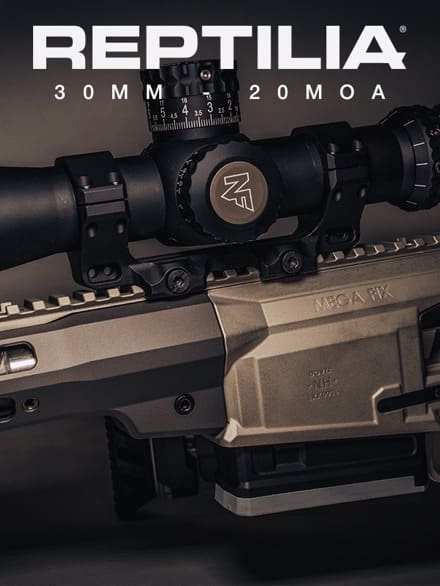
October 29, 2026 — Reptilia announces the launch of the AGS™ 30mm 20 MOA Mount in black, expanding its mounting options for modern bolt-action rifles.

The new configuration pairs a 30mm scope diameter with a 1.34-inch optical centerline height over rail. Its built-in 20 MOA cant supports extended-range applications by helping shooters retain more usable elevation adjustment within their optic.

Machined from 7075-T6 aluminum billet, the AGS features a one-piece body and Reptilia’s anti-snag clamp design. A spring-loaded nitrided steel clamp and flush-fitting hardware secure the mount to M1913 Picatinny rails while maintaining a compact profile.

Key specifications

  • Optic tube diameter: 30mm
  • Optical centerline height over rail: 1.34 inches
  • Built-in cant: 20 MOA
  • Weight: 148 grams
  • Finish: Black Type III hardcoat anodize
  • Manufactured in the USA

The AGS 30mm 20 MOA Mount is available beginning October 29, 2026, priced at $349.95. For product details and ordering, visit the AGS product page.

Arc’teryx Pro Raises Funds for SOC-F During DC Launch of Tactician Line

October 29th, 2026

During the recent AUSA Annual Meeting, Arc’teryx Pro hosted a private evening at their new Georgetown brand store.

While Tactician has had limited exposure at other industry events such as SHOT Show and Operator Expo, this was the first time many had the opportunity to get a close look at Arc’teryx Pro’s latest take on a combat clothing ensemble.

There was even an interview period with one of the line’s designers as well as an end user who trialed the garments before they were finalized.

The 200 attendees also raised $2800 to benefit the Special Operations Care Fund during a raffle for a shopping spree at the store.

I can tell you the store was packed. It was great to see old friends but also make new acquaintances.

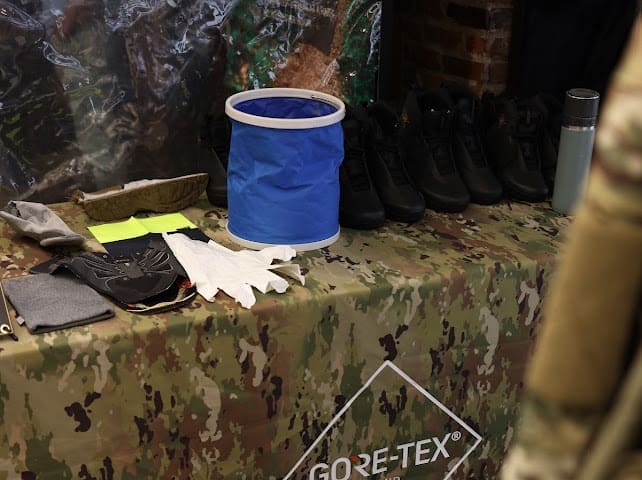
GORE-TEX Professional featured a one-person rain room and offered the chance for attendees to don boots and outer garments featuring GORE-TEX materials to see how well they work. To make things even more interesting they hosted a trivia challenge with prizes for the most accurate and fastest results.

So far, the Tactician line consists of the AR Shirt, AR Pant, and Field Shirt which serve as a field, training, and combat uniform.

Get your Tactician clothing at your favorite Arc’teryx Pro dealer.

Hands-On Experiment: User Experimentation Accelerates Technology Adoption

October 29th, 2026

In 2025, the Department of War (DoW) articulated delivering at speed as a top priority. Putting technology and capabilities into the hands of warfighters as fast as possible, when they need it, even ahead of need, can help warfighters maintain lethality and overmatch adversaries on the battlefield. Along with fielding the equipment faster, it must also be adopted and willingly used by warfighters for it to be effective. Sometimes adoption can be a bigger hurdle than clearing the process to fielding. Warfighters may opt out of using some equipment because it is not mission operable. It could be too heavy, counterintuitive, or there could just be an easier way to get the job done.

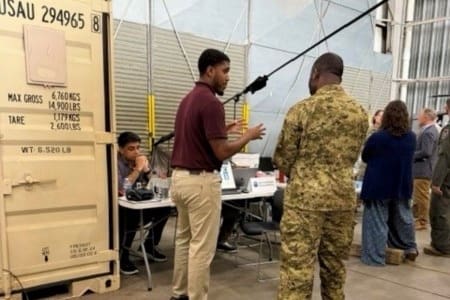
To overcome those challenges, the Portfolio Management Executive for Chemical, Biological, Radiological and Nuclear Defense (PME CBRND) is bringing together scientists and engineers who are developing systems to interact with and observe warfighters in relevant operational scenarios using actual equipment—a process commonly known as experimentation— to identify areas of improvement and develop equipment that suits warfighters’ needs. This partnership has been successful in speeding up the acquisition process and ensuring technology adoption.

“To accelerate timelines, we have to get technology in front of the warfighter as early as possible,” said Jerrett Davis, deputy joint product lead for the Joint Project Manager for CBRN Special Operations Forces (JPM CBRN SOF). “Through experimentation, we can host demonstrations where our user groups evaluate and down-select from a range of S&T, government, and commercial equipment. This process provides a validated starting point that ensures the capability we build is not only adopted but is also delivered at the speed of relevance.”

Both experimentation and demonstrations are critical to ensuring that warfighters have a voice in the acquisition process. Experimentation increases knowledge in a specific domain, while demonstrations present and confirm what is already known. Experimentation identifies specific areas of uncertainty, custom designs and conducts experiments to address that uncertainty, whereas with demonstrations, the uncertainty has already been resolved.

“Experimentation and demonstrations are an important part of the process within the special operations community because they can be flexible and move faster given the urgency of the mission. Now we’re trying to expand experimentation efforts and spread the knowledge of how to incorporate it into non-SOCOM [Special Operations Command] programs,” said Osa Penny, director of strategic stakeholder engagements for PME CBRND.

Traditional acquisition is a regimented, sequential process that flows from requirements to science & technology to testing, acquisition and ultimately fielding. Although the user receives the final product in the end, they are not always intertwined in the process. Sometimes this results in a capability that is no longer relevant; or it may be difficult to use, unwieldy to hold; or a host of other issues that could have been adjusted if the user was able to provide early and consistent input. Experimentation maintains the traditional sequence but puts feedback and warfighter touchpoints at the center of the process, allowing for direct feedback and suggestions.

Experimentation exercises are designed using relevant warfighter operational concepts. During these exercises, PME CBRND engineers and their technology developers observe warfighters using the systems in various scenarios, actively capturing data and feedback for consideration into system refinements.

Recognizing the utility of experimentation in the development process, PME CBRND and its partners at the U.S. Army Combat Capabilities Development Command Chemical Biological Center (DEVCOM CBC) created a space to conduct experimentation outside of formal exercises called the Foundry.

The Foundry is an established collection of functions and services designed to build, integrate, and assess potential capability sets for rapid delivery. It provides an opportunity for technical and operational evaluation to assess technical viability, interoperability, operational relevance and implementation factors. The current CBRN defense enterprise Foundry is located at DEVCOM CBC at Aberdeen Proving Ground, Maryland.

“If we can secure service member buy-in ahead of Milestone B [the decision point where Service leadership decides if a product is mature enough to move forward into development], we can ensure resources are not wasted on developing a capability that will never be used during operations,” said Joshua Liles, assistant program manager, JPM CBRN SOF.

Liles leads several experimentation efforts with USSOCOM. He said that many of the methods SOCOM uses to speed up acquisition can be applied to non-SOCOM programs, but doing so requires thinking outside of the box and a willingness to pursue the ‘art of the possible.’

“There are many mechanisms available to support flexible agile acquisition, and some program managers are just not aware of them,” said Liles. “Many were trained to think of things in one way, but today in 2026, we have options. If PMs can think more along the lines of ‘what if we could?’ and then seek ways to accomplish it rather than trying to fit their program into a predetermined model, we can expand the possibilities and see unconventional solutions.” Some of those mechanisms include Title 10, Section 4023, Other Transactional Agreements, and rapid prototyping opportunities, all of which could pave the way for incorporating experimentation into the process earlier.


In 2026, a team working on handheld detectors successfully used Title 10, Section 4023 (a dedicated legal authority that allows the military to rapidly purchase or acquire emerging technologies and prototypes for testing and experimentation), bypassing the standard, lengthy federal procurement process to accelerate innovation to purchase commercial-off-the-shelf (COTS) detector systems to use for warfighter experimentation during the 2026 Dragon Shield Exercise.


The team first investigated if there were any relevant commercially available systems submitted by vendors through the Joint Enterprise Technology Tool, the CBRN defense enterprise’s industry connector. When a few looked promising and fit within the requirements, the purchase was made under Title 10, Section 4023. They then created scenarios where warfighters tested the systems in would-be operational environments. Based on the feedback provided at that event, the team down selected two viable systems that will be further adapted and modified when the program officially starts in FY27. Starting the program with systems they know users will like and use allows system developers to focus on refinement using warfighter data points to help clear Milestone decisions faster.

In FY27, PME CBRND and its Joint Project Managers intend to have increased presence at experimentation events to include programs that support military communities beyond special operations forces. With a cross functional team that meets frequently to discuss logistics, strategy, and constantly keeps an eye on COTS technologies that are available for experimentation events, PME CBRND plans to get technology in the hands of warfighters as early as possible to learn, iterate and field.

By Kelly Burkhalter