TYR Tactical

Whiskey 5 – Scott-Donelan Tracking School

October 5th, 2011

WHO
The Scott-Donelan Tracking School (SDTS) is the world leader in modern combat tracking (visual man-tracking) instruction and application. The SDTS was founded by David Scott-Donelan, the originator of modern combat tracking. He brought it to the United States in 1994 when at the behest of local corrections personnel and law enforcement he founded TTOS (his first tracking company, which he left in 2009). Those programs were rejuvenated, revised, and updated tracking instruction methods and operational lessons learned in Rhodesian, modern Namibia and other AORs. DSD has over 45 years professional experience in both tracking operations and tracking training. He has literally taught specialized and conventional military and law enforcement units around the world. Founded in January 2010, TSDTS is the official Subject Matter Experts for Combat Tracking for the US Marine Corps, and the tracking expertise behind the nationally recognized BORDER HUNTER project. TSDTS has an excellent cadre of professional, passionate instructors from military and/or law enforcement backgrounds and its founder still regularly goes into the field to instruct. The top six (6) instructors themselves have over one hundred and eighty (180) years of cumulative tracking experience. Unlike some instructional entities who employ instructors based largely on limited internal train-the-trainer courses, all SDTS personnel are vetted trackers with operational experience. Scott-Donelan established the Combat Tracking Course at Ft. Huachuca and oversaw its operation for five (5) years; that program, originating from his original course standards, is now the standard for the entire United States Army.

WHAT
The Scott-Donelan Tracking School is committed to providing the finest, professional tracking instruction to our clients. Our modern Combat- and Tactical- Tracking Courses are designed to specifically address the needs and operational requirements of our clients, whether they are military, law enforcement, search and rescue, or general outdoor enthusiasts. Combat and Tactical Tracking Courses are instructed in five (5) day or 50 hour stages, and can include Levels I, II, and III. Less field-oriented courses, for urban, joint canine or investigative efforts are also available for departments and personnel needing a focus more on evidence recovery and scene analysis. Additionally, we offer a three (3) day Basic Tracking Course, which covers the essential elements of tracking and is geared toward the community at large, regardless of roles/missions/duties.
WHEN
Our courses can be scheduled year round, depending on weather conditions and patterns at the requesting agency’s location. You can find a schedule for our ‘home base’, Arizona classes by visiting www.TrackingOperations.com. Our schedule continually evolves; please watch the course calendar, visit us on Facebook or contact the company directly- info@TrackingOperations.com. Class planning is intentionally flexible and determined by the request and needs of our clients. Mobile Training Teams can be organized and sent to requesting departments or units on short notice.
WHERE
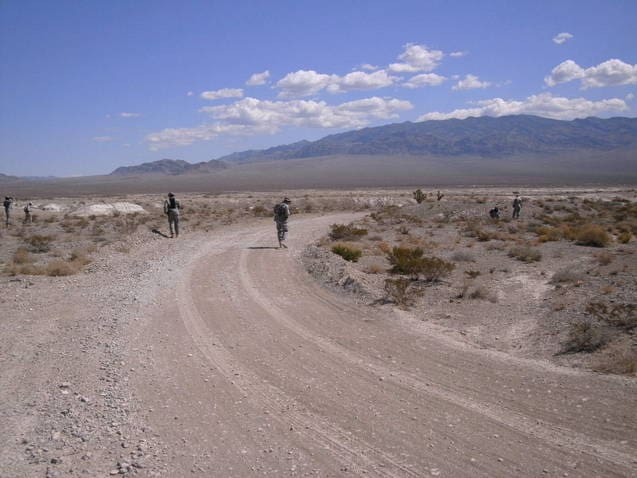
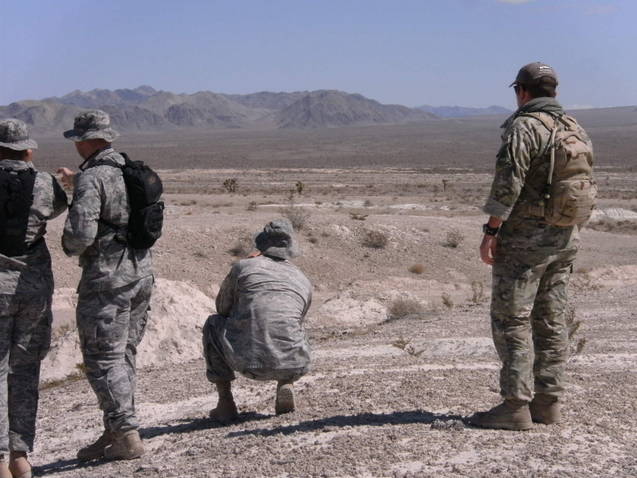
The SDTS offers training anywhere it is required in the United States or abroad. We have by necessity become adept at utilizing limited local training resources and ground to achieve instructional objectives.

WHY
The Scott-Donelan Tracking School understands the value of modern tracking as it relates to the broad spectrum of military and police operations. Tracking is an excellent skill that builds both situational awareness and tactical acuity. It is a proven force multiplier on the battlefield and a demonstrated, time-proven asset to LE investigative and prosecution efforts. We are committed to America’s forces, its Allies, and our nation’s first responders. It is our sincere dedication to “focus on making a difference, not a dollar.” Tracking is not a lost art, but rather an underutilized modern science. Let us show you how. Together we can make a difference.
USAF Security Forces Making Some Changes

October 5th, 2011

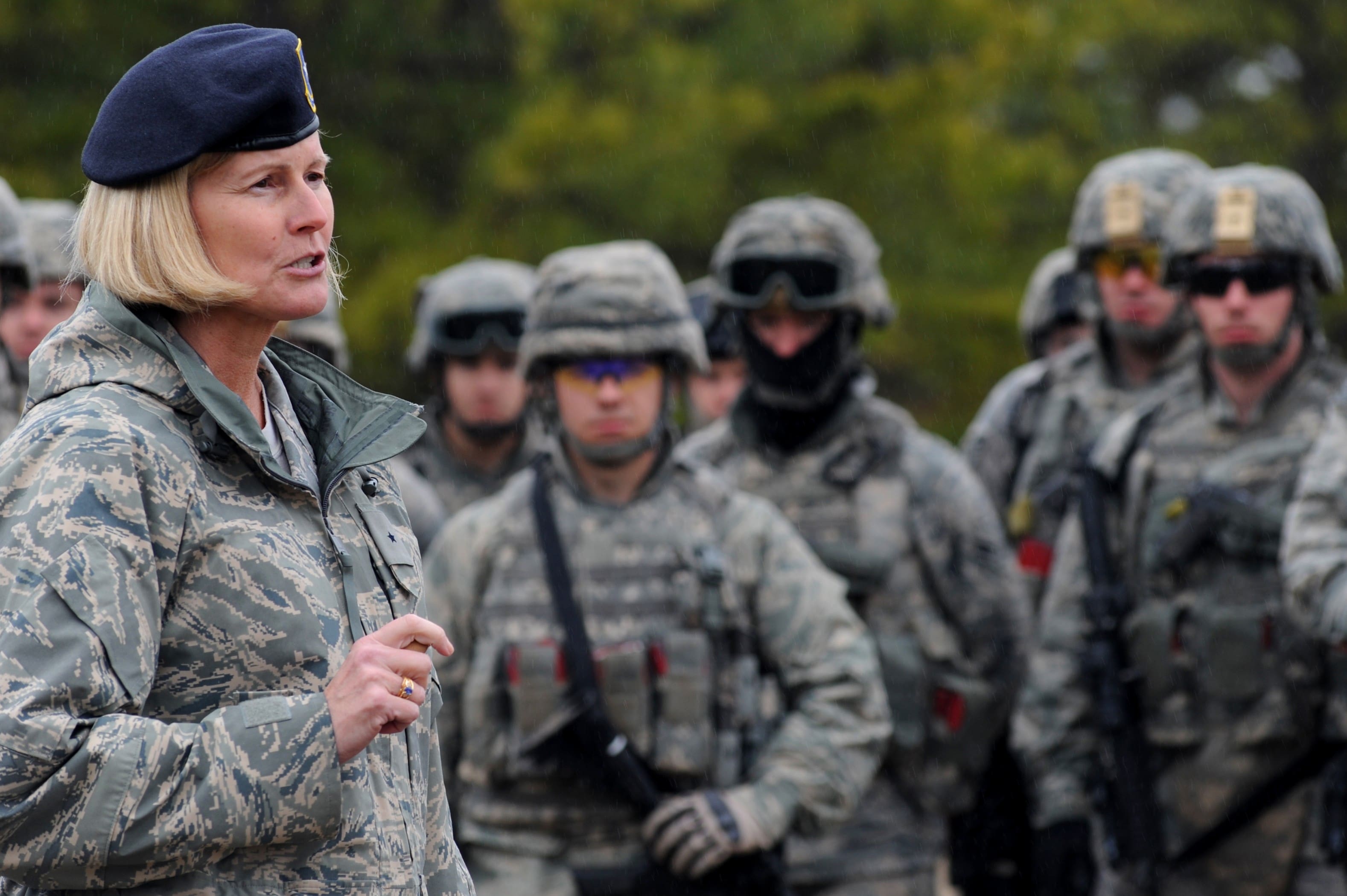
The Air Force is currently looking at making two moves that will affect their Security Forces in an initiative entitled, “SECURITY FORCES TRAINING FACILITY RE-ALIGNMENT AND MOBILITY LOGDET EQUIPMENT CONSOLIDATION.” Launched before the plan had even been briefed to the entire force, it makes some pretty serious changes.


(Photo USAF, Staff Sgt. Nathan G. Bevier)

The first is that they want to go from 8 Regional Training Centers that provide “pre-deployment training to meet expeditionary combat readiness skills training” to 4. According to Air Force documents these, “Combat skills include non-standard expeditionary ground combat roles.”

The current RTCs:
Air Combat Command – Silver Flag Alpha, Creech AFB, NV
Air Force Materiel Command – Brave Defender, Eglin AFB, FL
Air Mobility Command – Phoenix Warrior, Ft Dix
Air Force Global Strike Command – Camp Guernsey, WY
ANG – 204th SFS Ft Bliss, TX
PACAF – Commando Warrior, Anderson AFB, Guam
USAFE – Creek Defender, Sembach AB, Germany

Generally, troops attend the RTC aligned with their command.

Realigning pre-deployment training is the good part of the plan. Closing some of these facilities makes sense, particularly considering that between the 8 centers, only around 8,700 Airmen are trained annually. Fewer RTCs will save money and help further standardize pre-deployment training for SF. Go for it Air Force!


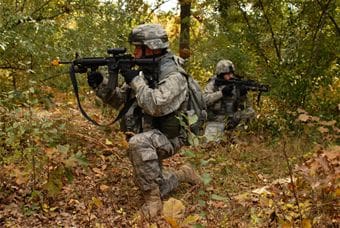
(Photo USAF, 180th FW PAO)

Unfortunately, the second part of the proposal gives us pause. There is a plan afoot to consolidate all SF LOGDETs at a single facility. You see the Air Force deploys in UTCs which are Unit Type Codes consisting of personnel to accomplish a certain function. Think of them as capabilities sets. The LOGDET is the material half of this equation and is a laundry list of the gear needed to provide that capability.

There are reasons each unit responsible to provide UTCs maintained their own LOGDETs.

1. No single point of failure. If the balloon goes up, some forces may survive initial strikes and still be able to operate with their equipment.
2. It is THEIR equipment. They maintain and can train with the gear to ensure that it is complete and works properly.
3. The commander has responsibility to ensure that his UTCs and LOGDETs are complete and ready. If it’s incomplete or sub-par the commander has to answer for it.

Separating the personnel from their equipment makes no sense. Commanders would no longer be responsible to provide combat ready forces. Furthermore, the LOGDETs would be at the mercy of transportation. TRANSCOM makes miracles happen everyday but ensuring that troops from one base mate up with the right shipping container from another base, at the right place and the right time, especially in the middle of a war zone, is a bit too much to ask.

Furthermore, if LOGDETs are consolidated the next logical step for the shoe clerks is numbers. Imagine this argument, “Well, we don’t need ALL of this gear sitting here at once, after all, we’ve never ever used it all at the same time so we can cut back on how much gear we stockpile” Then, war comes and gear does not work, is incomplete, or entire sets are missing due to funds being diverted to purchase new furniture at HQ. Don’t believe that last one? Just visit an Air Force base.

This is a bad idea and we hope it crawls back under the rock it came from.

Camo – Creating a Mirage

October 4th, 2011

Researchers at University of Dallas in Texas have figured out how to use transparent carbon nanotubes to create photothermal deflection, or as it is more commonly known, a Mirage. In their paper, “Mirage effect from thermally modulated transparent carbon nanotube sheet” they lay out the science. It seems to look pretty good in water but I’m not too sure how it would look for all aspects of observation. Additionally, I’m not too sure how it would be done on land or if it would be as effective. But, for certain underwater applications, it might be just the ticket. Like hiding the entrance to a secret underwater lair for instance.

Via Wired’s Danger Room.

Extreme Outfitters Now Carries THULS

October 4th, 2011

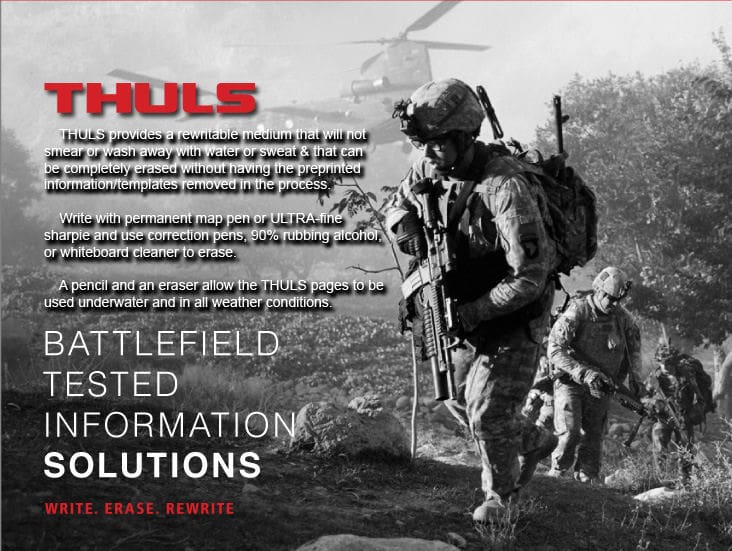
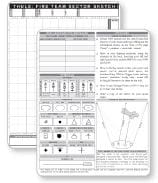
We are big fans of the THULS (Tactical Handbook, Unit Leader, Small) line of products from Mission Information Resources and are happy to see that they are now available from Extreme Outfitters.

Basically, if you’ve been building homegrown battle books or leader books, then THULS is for you. They’ve taken information directly from military doctrinal publications and printed it on their Multiple Environment Rewrite System material. MERS feels like plastic. You can write on it with a Staedtler marker and the writing can be erased with an alcohol pen but it won’t wash off in the rain or smear. Additionally, it is completely water proof and can be paired with a standard graphite pencil for use as an underwater slate. This also means that it won’t get mushy and fall apart when it gets wet like standard leader books.

There are a variety of products available

Visit www.extremeoutfitters.us.

TacJobs – SureFire

October 4th, 2011

SureFire is seeking qualified applicants for several positions across their entire spectrum of operations including National Account Manager, Program Manager, Productions Team Members, and a Public Relations Specialist.

The Fountain Valley, California-based company specializes in innovative lighting, edged tools, and weapons accessories and is at the forefront of innovation in the defense industry. SureFire offers a full benefits package which includes: three weeks of paid time off per year, a 401(k) plan, medical and dental coverage, life, accident and short and long-term disability insurances, as well as a generous employee discount on their products.

Interested parties should visit www.surefire.jobs.

Safariland Launches 6378USN ALS Low Signature Holster

October 4th, 2011

We have been drooling over samples for months now, but Safariland just released some definitive info on the new 6378USN ALS Low Signature Holster. As a quick aside, the “USN” designation doesn’t denote US Navy. Instead it stands for “US” = Berry Compliant and “N” = Non-standard. The holster features an infrared signature reducing Cordura nylon finish. The Cordura also protects the holster and helps to deaden any noise created by objects striking the holster.

The 6378 model is the concealment version of their Automatic Locking System (ALS) line and features a slight forward cant. Although often encountered in a paddle configuration, the 6378 incorporates the 3 hole pattern mounting pattern on the rear and is compatible with Safariland’s Quick Locking System (QLS) making the 6378USN a versatile, low profile holster solution.

6378USN ALS Low Signature Holster

This new finish is the heat. In addition to the ALS 6354 OPTIC QLS FORK for MRD equipped Glocks already offered by Grey Group, we know that variants of other Safariland holsters featuring this finish have already been purchased by one Army unit and are being looked at by other DoD organizations as well. Additionally, FirstSpear has developed some excellent add-ons for these new low signature holsters that we hope to be able to tell you more about soon.

The 6378USN ALS Low Signature Holster will be available from any authorized Safariland dealer.

www.Safariland.com

BFG Selected to Provide Two-Point Slings for AF Security Forces ADS Tactical

October 4th, 2011

A variant of the Blue Force Gear Vickers Combat Application Slingâ„¢ (VCAS) has been chosen by USAF Security Forces as their new two-point sling system for the M4 carbine. In a contract award announced yesterday, ADS Inc will provide over 22,000 of the sling kits to various units in the Air Force.

The kit consists of a VCAS, Vest Strap Adapter, an ITW Tac Link, a SOC-Câ„¢ Long Loop Adapter, and Buttstock Storage Pouch. While the contents might seem unconventional to many, it was assembled to fulfill Security Forces’ TTPs. For example, the Vest Strap can be used while wearing armor with the VCAS stowed in the Buttstock Storage Pouch. Conversely, while in a permissive environment where armor is not required, the VCAS is used. Additionally, a spare magazine is easily carried in the Buttstock Storage Pouch while the sling is on the weapon. Remember, for the most part Security Forces are doing just that, manning checkpoints, conducting roving patrols, etc. and may not need the enhanced capability of a two-point sling all of the time. However, they can configure their carbine for use with the two-point for situations where they need it.


Blue Force Gear USAF SF Sling Kit

Blue Force Gear products are available for agency and unit purchase through www.ADSinc.com/Blue-Force-Gear.

www.BlueForceGear.com

Source One Distributors Sponsors Marine Corps-Law Enforcement Foundation

October 4th, 2011

Source One Distributors Inc., a leader in tactical gear distribution, recently announced support for the Marine Corps-Law Enforcement Foundation (MC-LEF). Source One CEO & President Mark Llano and Director of Operations Lori Stanek both attended the foundation’s Sixteenth Annual Gala at the Waldorf-Astoria in New York City following a donation of $3000.00 to MC-LEF.

MC-LEF’s mission is to encourage the spiritual, moral, intellectual and physical development of children through education. Founded by former Marines and law enforcement personnel, MC-LEF provides scholarships to children of Marines and federal law enforcement officers who have lost their lives in the line of duty. To date, the MC-LEF has distributed aid with a value of more than $50,000,000.00 to eligible children.

This is great and we are happy to see Source One Distributors support MC-LEF. It’s an organization that bridges both military and LE.