The New iTWB

Tac Apps – Milidroid Blog

March 29th, 2011

We’ve been covering tactical software for some time now and have been kicking around the idea of combining them under a category like Field Gourmet or Corps Strength. So, we’ve done it and it’s called Tac Apps.

For our first post we’d like to introduce you to Milidroid Blog. It is a “one stop source for all thing military related to the android platform and associated equipment. We bring you industry news, articles on apps that may be of interest to those in the military, product announcements and reviews.” The US Army has shown a great deal of interest in the Droid platform so please check them out and Like them on Facebook.

www.milidroid.com

More Info on NWU Type II / III

March 29th, 2011

We had planned on waiting until the CNO chopped on an instruction for the new Navy Working Uniforms Type II / III until we wrote anything more on them, but our friends at KitUp! got a chance last week to speak with the CNO about these new uniforms. This of course unleashed a torrent of emails and phone calls asking us what we knew about the program.

Despite the lack of formal paperwork new Navy uniforms are being procured and fielded. What’s more, they will soon be seen in a combat zone near you.

Naval Special Warfare operations and direct support personnel already have a combat uniform in both AOR I & II in the form of the SOCOM issued PCU Level 9 which began fielding over a year ago. Additionally, they will now have the NWU Type II & III for use based on mission profile as well as for garrison and limited training use. These are supplied by the Navy and are the same uniforms that all Sailors who have traditionally worn cammies will now wear. For the most part, this means NSW and Naval Expeditionary Combat Command but there will also be some additional personnel who will wear these uniforms based on duty position and or mission.

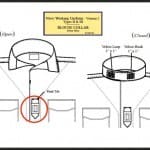
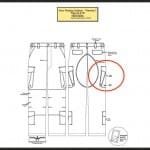
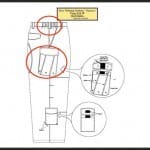
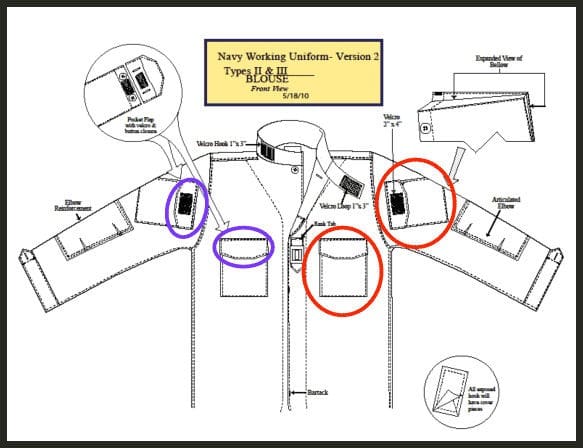
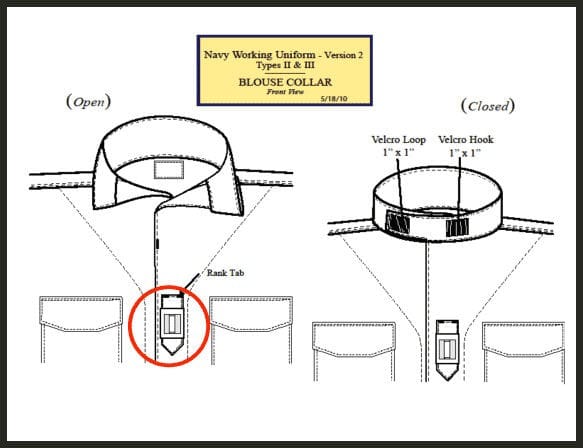
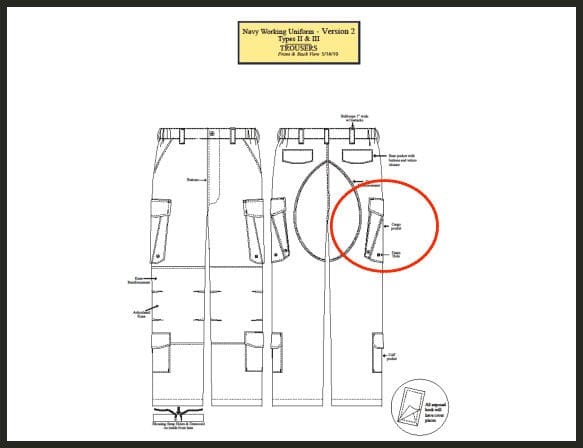
There were two versions of the NWU II / III in test. While there had been rumor of a near mutiny over the uniform’s features, a selection was made. Version 2 won out and it is the more “combat” oriented style of the two. The biggest compromise in the design is the inclusion of straight chest pockets but the flaps are tapered. As you can see from these drawings released last year by the uniform task force, they include features now considered standard in many commercial tactical clothing designs but lacking in other government issue uniforms. Of course the exception to this is the PCU level 9 and you can see some inspiration from that uniform in this new NWU style. The two uniforms are quite complimentary. This design is locked in, at least for the time being, and as quickly as these are being produced, even if any changes were to be made, they wouldn’t make it into the field for some time.

(Click on photos to enlarge)
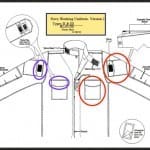
Even though it doesn’t seem like it, production and issue is moving rapidly. All Navy personnel authorized to wear the NWU Type III should have their uniforms by the end of calendar year 2011 including reserves. Wear of the current Camouflage Utility Uniform is slated to end in the Spring of next year. Remember, for many years before the GWOT the standard garrison and deployed uniform for Naval Expeditionary forces was woodland cammies or CUU. Concentration on the Type III makes sense as the majority of these personnel will be based in or deployed to wooded or jungle environments where that pattern is most appropriate. A desert pattern is truly expeditionary in nature.

The only real question at this point is which desert pattern will the Navy adopt as a service? Our bet is on AOR I for the desert pattern for all Naval expeditionary personnel (including Spec War) if for no other reason than dollars. It is simply cheaper to put everyone in the same pattern. Early on, there may have been a question about whether NSW’s desert uniforms would be paid for by SOCOM or Navy but at this point the funding lines have been drawn by uniform type. SOCOM pays for the Combat uniform and Navy pays for the Field uniform. Combat uniforms only go to NSW, field uniforms (Type II / III) go to all Expeditionary forces including NSW.

Uniformity in pattern would be nice as well. Why have two versions of the NWU Type II? There’s so much bleed over between NSW and the rest of the Navy’s expeditionary force that they often work together. Why give the enemy the advantage of figuring out who is what, based on their clothing? One of the reasons that a Navy Instruction still hasn’t been released for the new NWU variants is most likely the question of desert camouflage and the future of the NWU Type II.

We also had a couple of other points that we wanted to address.

At some point in this article we had to shoot-in-the-face the rumors that the reason the Navy did not adopt AOR 1 for all expeditionary personnel was that the Marines told them they couldn’t use it. We have no idea where it originated but it is utter nonsense.

Additionally, we have no word yet on issue of additional organizational clothing such as hats, gloves and foul weather gear.

Finally, the Anchor Constitution and Eagle emblem embedded in the NWU blue camouflage has also been embedded in both AOR 1 & 2 patterns for these new uniforms.


Spray On Dirt? Sure, Why Not

March 29th, 2011

“Lance Winslow“, online writer in retirement, came up with an interesting idea for camouflaging large numbers of vehicles quickly. In his article, “Spray on Dirt Research and Development” he suggest, “spray on dirt may be a concept worth research and development dollars.” His argument, which makes sense, is that development of an “arsenal” of simple solutions make fiscal sense in light of the high cost of a single armored vehicle. Specifically, his concept “consists of a unit with a small water tank and filler hose with a mini sump pump attachment [throw one end into a river, well, pool of left over rain water] to apply the sticky solution; the solution is fed into an inline injection on a 1.8 Hp Honda motor or an equivalent AC out put from a diesel generator with a military grade sprayer unit again totally KISS.”

However, I would say that “Lance” doesn’t have much in the way of military experience as in my recollection, tactical vehicles have no trouble collecting mud and dirt on their own. All you have to do is drive them around for a bit. In fact, most Sergeants Major would probably love to have the spray guns described in the proposal if only to clean the vehicles. But maybe a better material than plain old mud might be sprayed on vehicles that suppresses more than just a visual signature or helps deflect the blast of an IED.

LaConte Bold Coffee

March 29th, 2011

LaConte Bold is an espresso dark roast coffee from STG Originals in Chandler, Arizona. It is dedicated to the memory of retired Navy SEAL Dave LaConte who was as killed November 13, 2009 when his vehicle was hit by a roadside IED while supporting US Army operations in the Tangi Valley, Afghanistan. The idea for the coffee came from Dave’s daily ritual of coffee and cigars. In fact, his last email to the proprietor of San Tan Gear sent the day before his passing said “Cheers, Next time you’re having a coffee and cigar, think of me, Bro!”

Now, it’s a great way for all of us to commemorate Dave LaConte’s memory and to also help out our veterans as all proceeds go to various Wounded Warriors charities. Available as Whole Beans or Ground in 1 lbs bags, get yours from www.santangear.com.

Win Magnum Sidewinder HPi Boots from Military Gear Blog

March 28th, 2011

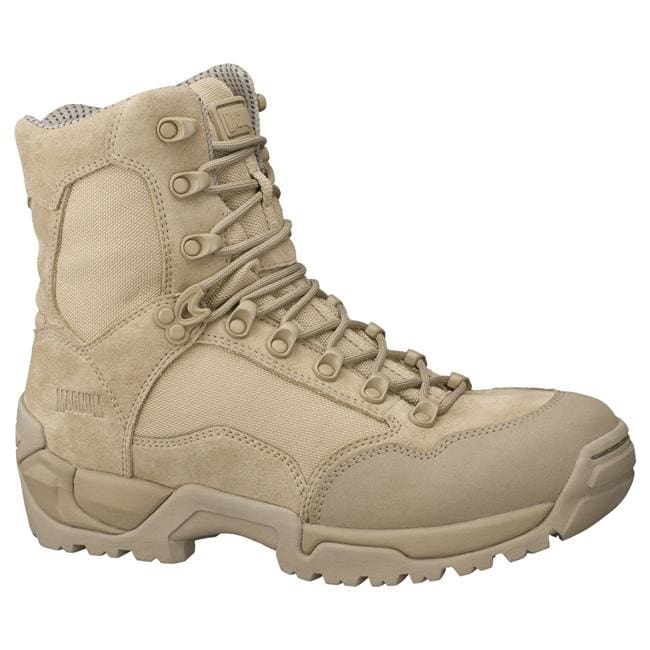
Our friends over at Military Gear Blog are sponsoring two opportunities to win a pair of Magnum Sidewinder boots. Both contests end Wednesday, March 30 at 10 a.m. CT

1. The first contest is a caption contest on MilitaryGear.com’s Facebook page – http://www.facebook.com/photo.php?fbid=185859271458800&set=a.185859268125467.42836.166499460061448&theater The entry with the most “likes” will win.

2. The second contest is on Twitter. To enter, all you have to do is retweet this review – http://militarygear.com/blog/review-magnum-sidewinder-hpi/

ATK Awarded XM25 Contract

March 28th, 2011

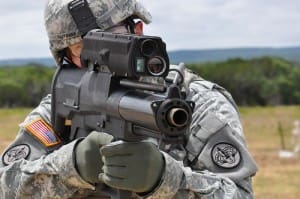
Back in early February we published a story about the deployment of three of the 25mm XM25 Counter Defilade Target Engagement Systems to Afghanistan for a Forward Area Operational Assessment. Word was that the weapons were performing well and the only real question was how to fund additional development of the system.

System developer ATK has announced today that they were awarded a 30 month, $65.8 Million contract for the Engineering and Manufacturing Development Phase by the US Army. EM&D is the next step toward full development and fielding for a program of record. The technology behind the XM25 is impressive. The system includes not only the basic weapon and ammunition but also target acquisition and fire control systems which integrate the thermal sight with direct-view optics, laser rangefinder, compass, fuze-setter, ballistic computer, laser pointer and illuminator.

“The XM25 provides the soldier on the ground a precision weapon to quickly and accurately engage targets behind cover or exposed targets, at ranges and accuracies not seen in today’s small arms,” said Bruce DeWitt, Vice President and General Manager of ATK’s Advanced Weapons Division. “A soldier using basic rifle marksmanship skills can effectively engage targets in less than five seconds while also reducing the chances for collateral damage.”

Interestingly, ATK is referring to the XM25 as the Individual Semi-Automatic Airburst System rather than the Counter Defilade Target Engagement System that we have seen in times past.

In addition to program lead ATK, the team also includes Heckler & Koch and L-3 Brashear.

Rip Shears

March 28th, 2011

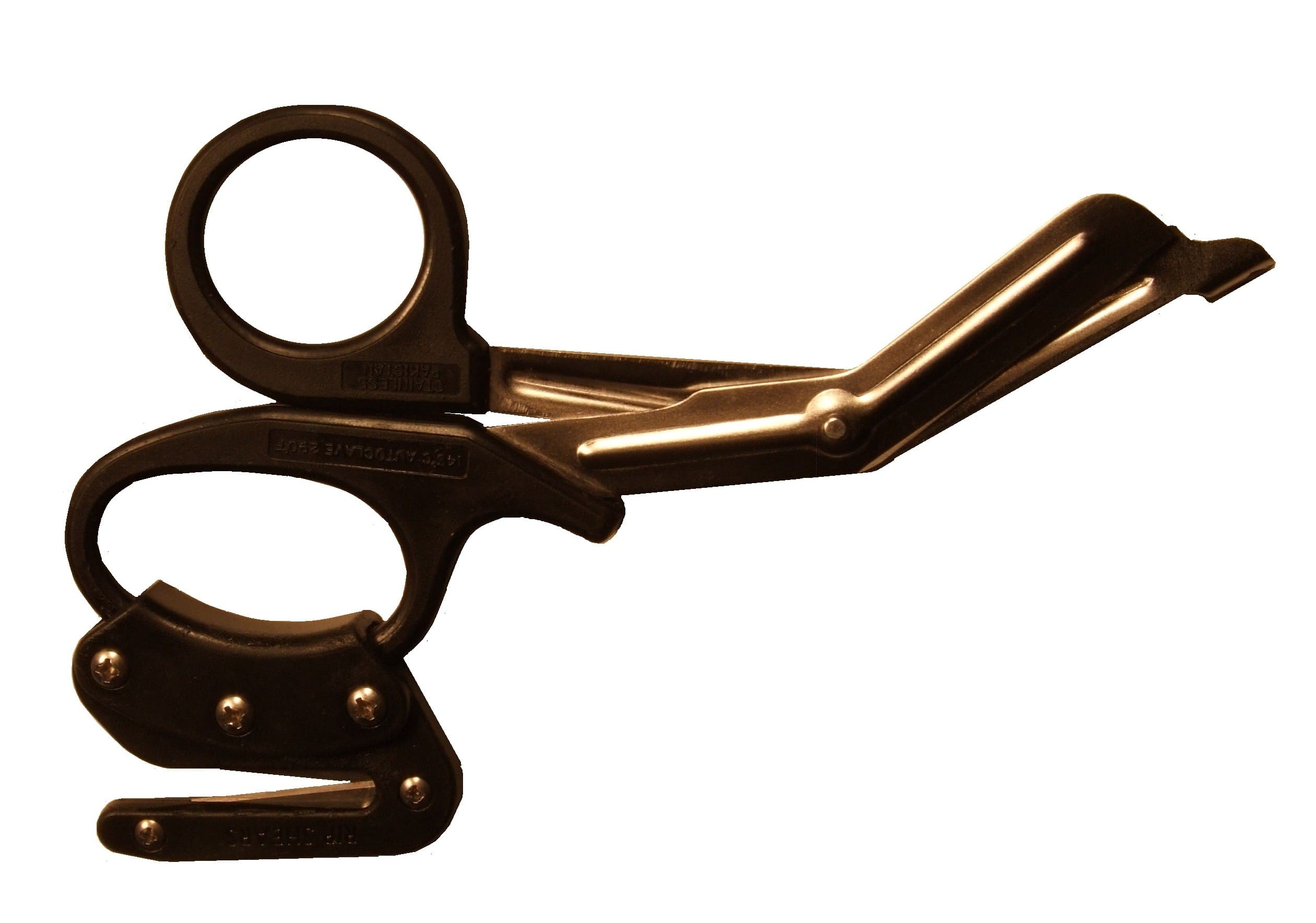
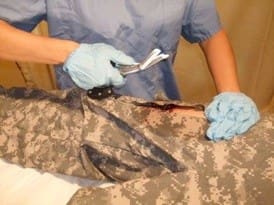
Rip Shears are a new attachment for standard EMT shears that transforms them into a tool that combines the shears with a safety knife and reflex hammer. Designed to attach directly to the handle of most 7-1/4″ shears, it provides a quick means of cutting through loose material and gear in order to access wounds.

Designed by Naval Special Warfare Corpsmen, Rip Shears are Made in the USA and crafted from fiberglass-reinforced nylon that can be autoclaved up to 270 deg F. Additionally, the blades are 440A stainless steel and are treated with a special DLC tungsten coating for increased lubricity. In fact, the coating will extend the life of the blades 4-5 times normal stainless steel. The design is simple and safe to clean with your fingers as well as replace blades. In fact, when you finally do need to change the blades, they are designed in such a manner that they are impossible to install incorrectly.

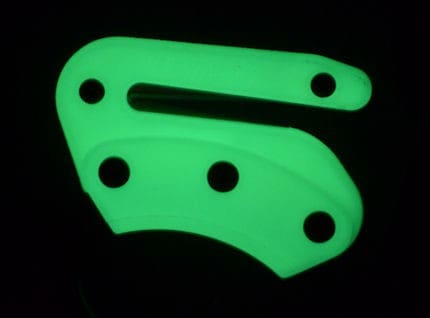
Rip Shears are offered in three models. The RS-1 is the Ripper unit by itself for installation on your current EMT shears. The RS-2 model combines the Ripper with EMT shears and the RS-3 or “Firefly” version is a Ripper featuring a glow in the dark material for civilian EMTs and flight medics.

A lot of folks are carrying hook knives to cut through webbing but they can be ineffective if the material is slack. With Rip Shears the cutting stroke is a pulling motion, offering a great deal of strength and control which can help to avoid further injuries. Rip Shears have been used on boots, leather jackets, and rigger belts. In fact, this video will give you a great idea of how well it works.


In fact, I had the chance to try them out myself and I am duly impressed. To get yours visit their distributor page www.ripshears.com and be sure to look around while you are there.

More on US Army Anthropometric Survey

March 28th, 2011

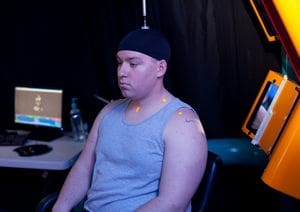
Last year we first mentioned the US Army Anthropometric Survey or ANSUR II being conducted by US Army Natick Soldier System Center. The whole point of the survey is to collect key data pertaining to how our Soldiers are built. This will in turn affect patterning and size tariffing for uniforms and other sized equipment. Americans continue to get bigger. Current data comes from information collected in 1988 but was only derived from Active Army Soldiers whereas the information used for sizing dated from WWII when I joined the Army. Recently, the Natick team collected measurements from 750 Soldiers at Indiana’s Camp Atterbury who are some of the 12,000 Soldiers, including 1,000 aviators, to be scanned from FORSCOM, TRADOC, National Guard Bureau, and First Army demobilization sites. Since the Total Force is so key to operations it is vital that their statistical sample is included in the data.

The survey includes 94 measurements of the body as well as three 3-D scans. The scans are of the whole body, the head and face and a foot. In addition for use in developing equipment, the data will also be used to design vehicle and aircraft interiors.

Additional information can be found at nsrdec.natick.army.mil/ANSURII.