Phantom Lights

FirstSpear Friday Focus – New Stratton Flannel Patterns

February 9th, 2024

One of the most anticipated drops of the new year, FirstSpear 9oz Stratton Flannels have been re-stocked in new patterns, Brown/Black & Navy/Red/White.

Backed by popular demand after launching our new Field Flannels, we developed Stratton varients to satisfy the masses.

Don’t sit on it for too long! Although these are freshly stocked in the warehouse, they will not last long in the most popular sizes.

Visit FirstSpear to find American Made kit and accessories, Built For The X.

Marine Corps and Army Assess South Korean UGV, Eyeing Future Capabilities

February 9th, 2024

Marine Corps Training Area Bellows, Hawaii —

In a strategic move meant to advance Force Design’s shift to the INDOPACOM Area of Responsibility, the Marine Corps partnered with partners from the U.S. Army and the Ministry of National Defense of the Republic of Korea to test cutting-edge autonomous vehicle technology—taking a significant step towards modernizing its advanced logistics capabilities.

In mid-December, against the picturesque backdrop of Honolulu, Hawaii, Marines from the 3d Littoral Logistics Battalion, or LLB, engaged in a pivotal Foreign Comparative Test, or FCT, of a South Korean Unmanned Ground Vehicle, or UGV, prototype—marking a critical juncture in the Corps’ exploration of advanced unmanned technologies.

This two-week test, the culmination of a collaborative partnership between Marine Corps Systems Command, III MEF, the Army’s Ground Vehicle Systems Center and its South Korean allies, demonstrated the commitment to advancing military capabilities.

Key to advancing military capabilities, FTC programs allow the acquisition community to evaluate high-readiness technologies from foreign allies to quickly and economically meet defense needs. FCT stands out by offering substantial savings, bypassing research and development expenses, reducing procurement costs, and accelerating the deployment of critical equipment. This approach not only minimizes risk but also enhances the operational readiness and safety of U.S. forces.

The FCT of the South Korean UGV prototype in Honolulu is a significant milestone in the Marine Corps’ journey towards embracing unmanned technologies. This test, rooted in the principles of Force Design, and the ever-evolving realities of contested logistics, has the potential to shape the future of Marine Corps logistics operations.

“The use of autonomy directly supports Force Design, as the emphasis on smaller operational units means personnel have to do more,” David Keeler, MARCORSYSCOM’s advanced technology integrator for the Logistics Combat Element Systems portfolio and project lead for the effort. “UGVs can supplement tactical vehicle operations since they are highly transportable, can be moved to points of need quickly and don’t require licensed operators.”

As modern warfare continues to evolve, the need for efficient, autonomous logistics solutions becomes increasingly vital—especially as the warfighter is called upon to operate within contested environments. Here, the UGV’s potential to operate effectively in such scenarios stand to revolutionize how the Marine Corps approaches logistics, a critical component of warfare.

“If you look at the war between Russia and Ukraine, you see each side is going after each other’s logistics support. That’s contested logistics,” explained MARCORSYSCOM’s International Affairs Specialist Steve Duong. “What you don’t want is a big platform with a big signature transporting something like a tire or ammo back and forth because it can easily be identified by enemy sensors. A capability like this can help Marines with their logistics while operating in dangerous environments.”

Foreign Technology as a Force Multiplier

The test’s primary goal was to evaluate the UGV’s artificial intelligence and machine learning capabilities. The selection of the South Korean UGV prototype represents a leap in technological advancement, attributed to its maturity in utilizing artificial intelligence and machine learning to complete its mission.

“When we first started planning this effort, this was the most mature vehicle that uses artificial intelligence and machine learning to complete its mission,” noted Durgadath Nanan, III MEF science advisor, emphasizing the importance of these capabilities in current and future military operations. “This is an opportunity to get access to foreign expertise. Because, you know, we have great scientists, engineers and companies in the States, but that doesn’t mean we have the most advanced capabilities in all areas.”

This FCT is more than just an evaluation of a new vehicle; it’s a foray into a future where unmanned systems play a crucial role in military operations. The success of this test could lead to a transformative shift in how the Marine Corps conducts logistics, particularly in contested environments.

“Allied technology can provide tremendous benefits for not only the Marines and the DoD, but also to the vendors,” said Keeler. “Our vendors and allies get insight to our requirements and how their technology may be employed. Most importantly, it gives the vendors direct feedback and input from our warfighters so they can further refine and mature their technology.”

Joint Collaborative Effort

Keeler repeatedly emphasized the project’s foundation on innovative military technology and collaboration between Joint Forces and Allies. He acknowledged USMC’s International Programs Office for securing funding for the FCT from the Office of the Secretary of Defense and providing program support during the test cycle in Hawaii.

Nanan, a science advisor for the Office of Naval Research stationed at III MEF, played a crucial role as the liaison, ensuring ONR’s research align with Fleet requirements.

“We make sure that the R&D at ONR is working on requirements of the Fleet, not only short-term but longer-term,” Nanan said.

In Detroit, Michigan, DEVCOM’s Ground Vehicle Systems Center (GVSC) was instrumental in planning and executing the testing for the UGV project.

Jason Bagnall, GVSC electrical engineer and UGV FCT test lead, described GVSC’s involvement, saying, “GVSC’s robotics group has expertise in UGVs design, integration, and testing, leading the USMC to seek our independent evaluation of the South Korean UGV prototype.” He added, “GVSC developed the test plan, coordinated onsite activities, and will publish a report on the platform’s suitability.”

Ultimately, the project highlights the Corps’ commitment to international collaboration and innovation. As Keeler noted, “The FCT has been a great tool for LCES. It’s given us the opportunity to generate data to inform requirements, make procurement considerations, and build relations with allied governments and businesses.”

Feedback from the Fleet

The collaboration with 3d LLB Marines in testing and operating the UGV was a pivotal aspect of the project. Their direct, hands-on experience with the vehicle provided invaluable real-world data, shedding light on the vehicle’s performance, especially its sophisticated AI and machine learning capabilities. This practical insight from those with frontline experience was critical to understand the real-world applications of the technology.

Bagnall emphasized the importance of this partnership, further highlighting the importance of obtaining feedback from the fleet.

“Our in-house engineers and commercial/academic partners are some of the best in the business,” he said. “That said, most of our engineers have never served in uniform, have never experienced combat. When a mission is completely understood, and the doctrine well-established, it’s often possible for the user community to deliver really good requirement sets for tech developers to work from.”

Defining Future Requirements

Another critical aspect of this test is the defining of requirements for future unmanned ground vehicles. As Duong pointed out, “It is the major function of this test to help define requirements for unmanned ground vehicles, for which we currently don’t have a program of record.”

This endeavor aligns with the broader goals of the Corps to integrate more unmanned systems into their operations, as envisioned in Force Design.

“I have conducted a few different FCTs, each evaluating different technologies–from medical, to mine clearance, and now autonomy and UGVs,” said Keeler. “In each case we were evaluating an allied technology that either could close a capability gap, enhance existing capabilities, or provide a new capability.”

Keeler noted, if the FCT has good results, further evaluation in operational environments may be considered, followed by a decision to procure the technology.

The Broader Perspective and International Collaboration

The test also highlighted the significance of international collaboration, particularly with South Korea, a key ally in the Indo-Pacific region.

“This program is important as it falls under the security cooperation umbrella,” Duong said, acknowledging the 70th anniversary of the U.S.-ROK mutual defense treaty and its impact on such collaborations.

Nanan encapsulated the transformative potential of testing such advanced technologies, saying, “In testing this vehicle, we’re pushing the boundaries of what’s possible and confirming our commitment to be technologically advanced. This can change the way we operate and fight, adapting to the evolving nature of warfare as seen in current global conflicts.”

Ultimately, the successful testing of the UGV prototype marks a pivotal advancement in military logistics and unmanned technologies. This collaboration not only showcases the potential of international partnerships in enhancing military capabilities but also sets a new standard for the future of autonomous operations in contested environments.

By Ashley Calingo, MCSC Office of Public Affairs and Communication | Marine Corps Systems Command

Army Announces Aviation Investment Rebalance

February 9th, 2024

Warfighting is changing more rapidly than it has in decades, and the Army is continuously transforming based on lessons learned and a sober assessment of the modern battlefield. To meet emerging capability requirements in a resource constrained environment, the Army today announced it will rebalance its aviation modernization investments across new and enduring platforms.

The Army will discontinue development of the Future Attack and Reconnaissance Aircraft at the conclusion of prototyping activities while continuing investment in the Future Long Range Assault Aircraft, and making new investments in UH-60 Blackhawk, and CH-47F Block II Chinook. The Army will also phase out operations of systems that are not capable or survivable on today’s battlefield including the Shadow and Raven unmanned aircraft systems. The Army will increase investments in cutting-edge, effective, capable and survivable unmanned aerial reconnaissance capabilities and the procurement of commercial small unmanned systems. These investments will be continuous and agile to stay ahead of emerging battlefield requirements.

“The Army is deeply committed to our aviation portfolio and to our partners in the aviation industrial base,” said Secretary of the Army Christine Wormuth. “These steps enable us to work with industry to deliver critical capabilities as part of the joint force, place the Army on a sustainable strategic path, and continue the Army’s broader modernization plan which is the service’s most significant modernization effort in more than four decades.”

“We are learning from the battlefield—especially in Ukraine—that aerial reconnaissance has fundamentally changed,” said the Chief of Staff of the Army, General Randy George. “Sensors and weapons mounted on a variety of unmanned systems and in space are more ubiquitous, further reaching, and more inexpensive than ever before. I am confident the Army can deliver for the Joint Force, both in the priority theater and around the globe, by accelerating innovation, procurement and fielding of modern unmanned aircraft systems, including the Future Tactical Unmanned Aircraft System, Launched Effects, and commercial small unmanned aircraft systems.”

As part of this transformational rebalancing, the Army will:

End development of the Army’s new manned reconnaissance helicopter, the Future Attack and Reconnaissance Aircraft (FARA), at the conclusion of FY24 prototyping activities.

End production of the UH-60V version of the Blackhawk, which extends service life of existing airframes by 10 years, after FY24 due to significant cost growth.

Delay entering production of the Improved Turbine Engine (ITEP) to ensure adequate time to integrate it with AH-64 and UH-60 platforms.

Phase out operations and sustainment of the legacy Shadow and Raven unmanned aircraft systems.

These decisions free up resources to make critical new investments in Army aviation. Going forward, the Army will:

Commit to a new multi-year contract to procure the UH-60M Blackhawk helicopter – a new airframe with a 20+ year service life – and invest in upgrades for the Blackhawk.

End uncertainty over the future of the CH-47F Block II Chinook by formally entering it into production, with a path to full rate production in the future.

Continue the Future Long Range Assault Aircraft (FLRAA) program as planned, ensuring the Army remains on a path to field the first operational unit in FY30.

Increase investments in research and development to expand and accelerate the Army’s unmanned aerial reconnaissance capability including future tactical unmanned aerial systems and launched effects.

In reviewing the FARA program in light of new technological developments, battlefield developments and current budget projections, Army leaders assessed that the increased capabilities it offered could be more affordably and effectively achieved by relying on a mix of enduring, unmanned, and space-based assets.

Moreover, without reprioritizing funds in its constrained aviation portfolio, the Army faced the unacceptable risk of decline and closure of production and sustainment lines for the Chinook and Blackhawk fleets. The Army’s new plan will renew and extend production of both aircraft, while also sustaining the experienced workforce and vendor base that underpin the Army’s aviation capabilities.

Although Army leadership had to make difficult tradeoffs between programs, this plan will allow the Army to continue building modern capability across its aviation portfolio while funding other critical priorities in future budgets. The Army remains committed to its most ambitious modernization effort in more than 40 years, which has seen significant successes such as the recent delivery and fielding of the Mid-Range Capability, M-10 Booker, Next Generation Squad Weapon, Armored Multipurpose Vehicle, Integrated Air and Missile Defense, Precision Strike Missile, Mounted and Dismounted Assured PNT, Maneuver-Short Range Air Defense, Lower Tier Air and Missile Defense Sensor, Enhanced Night Vision Goggle-Binocular, and entering the engineering and manufacturing development phase for FLRAA.

US Army Public Affairs

GA-ASI Demonstrates A2E Concept with AFSOC

February 8th, 2024

SAN DIEGO – During a series of demonstrations in December 2023, General Atomics Aeronautical Systems, Inc. (GA-ASI) and the U.S. Air Force Special Operations Command (AFSOC) worked collaboratively to execute several capability demonstrations as part of the Adaptive Airborne Enterprise (A2E) concept development.

The first demo featured the simultaneous control of three MQ-9A remotely piloted aircraft (RPA) by a single crew using the government-owned AFSOC RPA Control Suite (ARCS). ARCS adds additional capability to the Ground Control Station (GCS), by allowing a standard crew to control multiple UAS platforms. The second demo showed that an MQ-9A can launch a Altius 600 from a launch pod.

“We have established a great partnership with AFSOC,” said David R. Alexander, president of GA-ASI. “We know our RPA will be a key building block for AFSOC to achieve its A2E vision.”

AFSOC is acquiring MQ-9B from GA-ASI for rapid prototyping and will forego a traditional GCS to control the RPA. Rather, AFSOC intends to control both the MQ-9A and MQ-9B aircraft, as well as a family of small UAS, from the ARCS. This event demonstrated the viability of ARCS to control the MQ-9A platform, which will lay the foundation for future work to integrate the MQ-9B aircraft into ARCS. This event also demonstrated the viability to operate the MQ-9 platform as surrogates for small UAS, all of which will be controlled by ARCS.

“These demonstrations were what we needed to really start to make A2E a reality,” said AFSOC Col. Trey Olman. “This was the first time we were able to demonstrate control of multiple RPAs from a single workstation, which is important in reducing manpower requirements.”

The A2E demonstrations took place at Cannon Air Force Base, N.M. and Melrose Air Force Range (MAFR), N.M., and utilized Satellite Communications (SATCOM) Launch & Recovery (SLR). AFSOC launched the three MQ-9As using GA-ASI’s Portable Aircraft Control Stations (PACS) and Ground Control Stations. Once airborne, control for the three MQ-9A was handed from the three GCS to a single ARCS workstation. Control of all three aircraft was handed back from ARCS to each GCS and the three aircraft performed SATCOM landings via GA-ASI’s Automatic Takeoff and Landing Capability (ATLC).

The A2E concept envisions AFSOC projecting air power from beyond the horizon, using a family of large, unmanned aircraft along with small, expendable UAS, from permissive to denied environments. MQ-9B is the ideal platform for inserting air-launched effects into potentially hostile environments. The MQ-9B’s combination of range, endurance, reduced manpower footprint, and overall flexibility will key to AFSOC’s future family of advanced UAS systems.

XS Introduces New Sights for S&W and Colt Revolvers and CZ P10 OR Pistol

February 8th, 2024

Fort Worth, Texas (February 6, 2024) – XS® Sights is pleased to offer new sights for Smith & Wesson and Colt revolvers and the CZ P10 OR pistol.

Minimalist for S&W K-Frame and L-Frame Revolvers

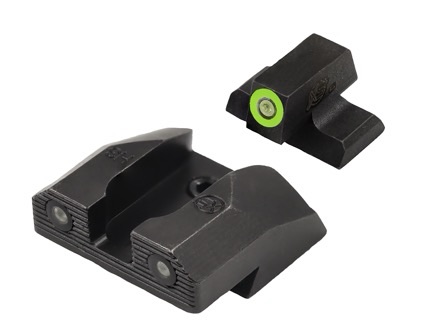
Minimalist night sights are now available for S&W K-Frame and L-Frame revolvers. Featuring a self-illuminating tritium with Orange or Green Glow Dot front sight and serrated, anti-glare, non-tritium rear sight, this sight set is designed to be as minimalistic as possible while driving focus to the front sight. The dual-illuminated front sight has a self-luminous tritium vile surrounded by XS’ proprietary photoluminescent Glow Dot that absorbs ambient light to glow in low light. The pairing ensures the front sight will glow brightly in low light and contrast well against the blacked-out rear in bright light conditions. This sight also has a rear sight ledge for one-handed racking of the slide.

Standard Dot Tritium for Colt Revolvers

Tritium Standard Dot night sights are now available for Colt Cobra and King Cobra revolvers. Designed to enhance your everyday carry gun, the unique dual illuminated front sight is available with a Green or Orange Glow Dot and has a convex shape which maximizes light absorption and intensifies the brightness. This new sight offers a superior upgrade over the factory brass sight.

R3D 2.0 for CZ P10 OR

The new R3D 2.0 is now available for the CZ P10 OR Pistol with both standard height and suppressor height options available. These second-generation tritium self-defense sights are brighter, stronger, and even easier to install than the original R3D models. Featuring a notch and post design with two rear tritium dots and a high-contrast, Orange or Green dual-illuminated Glow Dot front sight, the R3D 2.0 is designed to improve speed and accuracy in any light. The self-luminous tritium vile glows in low or no light for 12 years and is surrounded by XS’ proprietary photoluminescent Glow Dot making the front sight brighter than the two rear tritium dots. Combined with the wide notch rear sight, it provides more visible indexing for increased precision and accuracy. The rear sight ledge facilitates one-handed racking of the slide.

Improved features include:

• Bigger and brighter rear tritium dots.

• PVC rings surround the rear tritium dots for a more defined edge to improve sight picture and differentiate the front and rear sight.

• EasyPress features eliminate the need for filing and hammering and reduce the force needed for installation by up to 50%.

• BlackNitride finish with double the corrosion resistance of the original black oxide surface treatment for increased durability.

All XS sights are backed by a 30-Day Satisfaction Guarantee. The company also offers a 12-year warranty on all tritium products and a limited lifetime warranty on all other products. For more information, visit www.xssights.com.

ZeroTech Optics Unveils the Revolutionary Aspherical H.A.L.O Enclosed Reflex Sight – A Game Changer in Fast Shooting Optics

February 8th, 2024

ZeroTech Optics is excited to announce the much-anticipated launch of its cutting-edge reflex sight launched at Shot Show 2024, the H.A.L.O (Heavy duty Aspherical Lens Optic) TRAE28. This state-of-the-art Optic is set to redefine standards in reflex sights, combining unparalleled durability with extraordinary performance.

Key Specifications of the H.A.L.O TRAE28:

• Magnification: 1x

• Objective Lens: 28mm x 20mm

• Footprint: RMSc

• Reticle: 3 MOA Red Dot

• Material: 7075 Aluminum

• Brightness Settings: 10 Adjustable (including 2 NV settings)

• Durability: Shockproof, Waterproof, and Fog Proof

• Auto Sleep/Auto ON: Motion Sensor

• Illumination Control: Buttons +/- with lock feature

• Battery: CR2032 – Top Loading

• Battery Life: 50,000 Hours (Mid setting)

• Turret Index Value: 1.5 MOA/Click

• Adjustment Range: 80 MOA for Windage/Elevation

• Eye Relief & FOV: Unlimited

• Lens Coating: Fully Multi-Coated

• Operational Temperature Range: -20°c to +70°c

• Dimensions & Weight: L: 44mm, H: 33.2mm; Approx. 78 Grams (Battery Included)

Redefining Durability and Performance:

The H.A.L.O reflex sight is engineered to withstand the toughest shooting conditions. Its robust construction ensures it is shockproof, waterproof, and fog proof, making it reliable in any environment. The top-loading CR2032 battery design is a significant enhancement, allowing for battery replacement without the need to remove the entire sight, thus maintaining zero.

Advanced Features for Precision Shooting:

Featuring a 3 MOA Red Dot reticle with 10 adjustable brightness settings, including two night vision settings, the H.A.L.O offers superior visibility in various lighting conditions. The auto sleep and auto-on (shake awake) functionality, powered by a motion sensor, conserves battery life while ensuring the sight is ready when needed.

The optic’s unlimited eye relief and field of view, coupled with a multi-coated lens, provide a clear and broad visual field, essential for rapid target acquisition and situational awareness. The turret’s precise 1.5 MOA per click adjustment enables accurate windage and elevation tuning.

A Game Changer in the Field:

“The H.A.L.O reflex sight is a culmination of our commitment to innovation and excellence,” said Chris Watkins, CEO & Founder at ZeroTech Optics. “We’ve pushed the boundaries of technology to offer shooters an optic that not only withstands extreme conditions but also enhances their shooting experience with its unmatched accuracy and reliability.”

Availability:

The H.A.L.O TRAE28 reflex sight will soon be available for purchase through authorized ZeroTech Optics dealers and on the company’s website. For more information, visit www.zerotechoptics.com.

SOFWERX STEM Showcase 2024

February 8th, 2024

The SOFWERX STEM Showcase 2024 is an opportunity for Government, Academia, and Industry to showcase technology, inspire, and guide the next generation of innovators and problem solvers. SOFWERX, in collaboration with the United States Special Operations Command (USSOCOM), Industry Partners, and local Universities, Colleges, and Trade Schools will host?a 1-day STEM Showcase for high school juniors/seniors and college-age students on 10 May from 9:00 AM – 4:00 PM ET at the SOFWERX facility in Tampa, FL (Ybor City).

For more info, visit events.sofwerx.org/sofwerx-stem-showcase-2024.

Persistent Systems Awarded $5.1 Million Contract to Supply MPU5 Radios to Air Mobility Command

February 8th, 2024

Networking solutions to support Air Mobility Command’s Contingency Response Groups

Persistent Systems (“Persistent”), a leader in mobile ad hoc networking (MANET), announced today that it was awarded a $5.1 million contract by the U.S. Air Force to supply its Air Mobility Command with more than 280 MPU5 handheld MANET radios and 10 integrated sector antennas.

The MANET technology will enable the Air Mobility Command ‘s 621st and 821st Contingency Response Groups to quickly react to international situations that, in line with the service’s Agile Combat Employment (ACE) concept, require the U.S. Air Force to set up foreign airstrips, amass fuel and other resources, and coordinate aircraft landings with host countries.

“Our MPU5s deliver robust, secure, broadband line-of-sight and beyond-line-sight communications,” said Adrien Robenhymer, Persistent’s VP of Business Development for Air Force and Intelligence Community Programs, “and they do so without Air Force personnel having to rely on third-party infrastructure, which is key in a contested environment.”

The Air Mobility Command personnel currently employ old, walkie-talkie radios that cannot share video and still imagery or use geospatial awareness programs like ATAK. These limitations mean that “first-in” Contingency Response Groups operate in a slower, more plodding fashion when trying to set up runways. Likewise, relying on only audio can lead to planning errors.



The MPU5 radio runs the robust, self-forming, self-healing Wave Relay® MANET. With this adaptable, high-throughput network, users with MPU5s can seamlessly share voice, video, text, GPS and sensor data in a true peer-to-peer fashion. The radio also has a Cloud Relay™ capability which connects the line-of-sight MANET to beyond-line-of-sight LTE and SATCOM.

Working in conjunction with the MPU5s, the easy-to-erect Integrated Sector Antennas extend the Wave Relay® MANET over a massive geographic area.

“Persistent’s MANET products extend the enterprise to the tactical edge and allow full situational awareness even in austere environments,” Robenhymer said. “Beyond AMC and ACE, we see this technology have strong applications for the U.S. Department of Defense’s Joint All-Domain Command and Control, or JADC2, concept.”

Persistent Systems plans to deliver a full complement of MPU5 MANET radios and Integrated Sector Antennas to the Air Force in January.