GORE-TEX Professional

Catch Up with MATBOCK SHOT Show 2026

January 14th, 2026

Reach out to sales@matbock.com to book your meeting with the MATBOCK team. They will be releasing a new carrier and the next generation Tarsier Eclipse.

ARC Ghost:

This is a collaboration between Shaw Concepts and MATBOCK to bring innovative designs by Shaw Concepts utilizing MATBOCK Ghost. The ARC Ghost will also be on display at Show Concepts booth 60508 level one of the ballrooms.

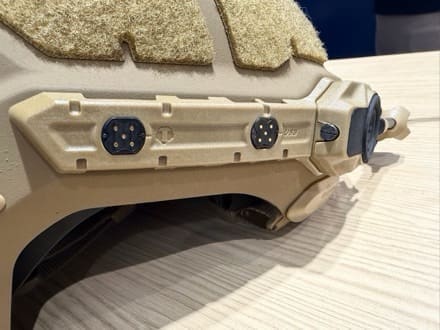
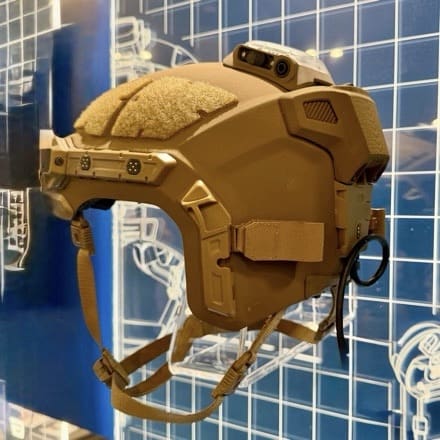
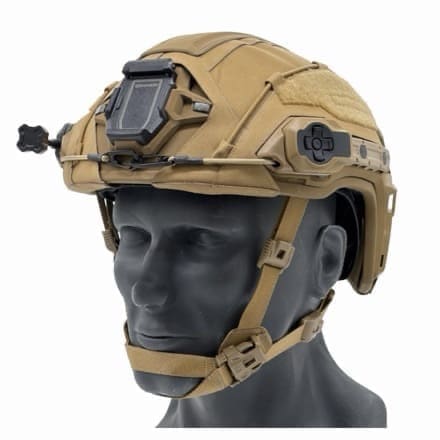
Tarsier Eclipse Pro:

After nearly 14 years, the Tarsier Eclipse is getting a huge upgrade and the Tarsier Eclipse Pro was born. Early production prototypes are going out to units now with production of the Tarsier Eclipse Pro rolling out at the end of Q1 / early Q2 2026.

*Final designs may vary slightly as these are in the final stages of pre-production prototypes.*

Schedule your meeting today and stop by Shaw Concepts booth #60508 to see the latest from both companies

See you all at Shot Show 2026! Email: sales@matbock.com

www.matbock.com

Ferro Concepts and Spiritus Systems Propose Open Standard for Plate Carrier Modularity

January 14th, 2026

Aberdeen, NC – Jan. 14, 2025Ferro Concepts and Spiritus Systems®, two of the leading manufacturers of nylon and tactical equipment designed for military and law enforcement professionals, have announced the proposal of an established universal standardized zipper and layout specification for both back panel and front flap attachment points for plater carriers. This standardization, the Universal Carrier Attachment Standard (UCAS), will enable universal compatibility between vendors and support efficient modernization efforts for the warfighter.

Currently, a universal standard for front flap and back panel attachment systems on plate carriers does not exist. This gap in product synchronicities leads to significant compatibility issues between brands, creating challenges for both end-users and procurement logistics.

Due to these frequent inconsistencies, end-users are beholden to specific brand ecosystems or more often, resort to a less cost-effective workaround to build the necessary carrier system their unique job requires. The end-result restricts operational flexibility, increases sustainment stresses, and impedes the adoption of innovative gear from the broader marketplace – a marketplace, that while competitive, is focused on providing solutions to ensure the warfighter has the best products available to them.

The primary focus of inconsistencies in the proposal include:

·       Zipper Spacing & Length Variations: Inconsistent zipper spacing, which is the measurement between the two zippers when mounted to the rear plate bag, and lengths, which is the measured length of the zipper itself.

·       Incompatible Zipper Teeth: Different zipper tooth sizes (e.g., T8 vs T10) used by various brands prevent zippers from mating together and make cross-brand integration impossible, even with similar zipper placement.

·       Front Flap/Placard Attachment Methodologies: Much like the back panel, inconsistent attachment methods are used across the marketplace. Varying mounting heights, widths and techniques exist that achieve essentially the same end state but are not compatible with one another.

Plate carriers, and more specifically the methods in which warfighters attach mission-specific equipment to them, have evolved into a fragmented provision of methodologies over the last two decades. While the basic principles of attachments have remained the same, the varied degree of designs have created incompatible, brand-specific solutions, that do not allow for the adaptability and modularity that modern soldiers require. This inconsistency further complicates supply chains, limiting the end-user to specific manufacturer standards and adaptations. The proposed Universal Carrier Attachment Standard addresses this by establishing a set of clear, open-source guidelines that manufacturers can utilize to create solutions compatible across the board.

Adopting the UCAS will deliver the following advantages:

·       Interoperability: Seamless interfacing of back panels and front flaps from one manufacturer with carriers from another.

·       Operational Flexibility: Enables units to adopt best-in-class equipment without overhauling entire vest systems.

·       Cost Efficiency: Simplifies acquisition and replacemen logistics, reducing overall spending.

Working together, both Spiritus Systems and Ferro Concepts look to enable universal compatibility to support efficient modernization efforts for the modern warfighter

Once adopted, the UCAS will be publicly published to both the Ferro Concepts and Spiritus Systems’ websites, to fully equip manufacturers for seamless universal adaptation.

“Every day, the rules of war are being rewritten – and rapidly changing threats require adaptability,” states Spiritus Systems Co-Owner, Adam Holroyd. “We, in collaboration with Ferro Concepts, want to continue to develop and deliver solutions to those working tirelessly, both foreign and domestically, to uncover and eliminate threats.”

“Ferro Concepts is happy to be partnering with another highly respected company in the industry to create a universal standard that benefits everyone. Creating cross compatibility further helps end users curate a kit exactly for their needs, making them more effective in their jobs. This collaboration furthers our mission, which has always been to take care of the end user.” — Chris Evans, Co-Owner and President of Ferro Concepts

About Ferro Concepts:

The mission of Ferro Concepts is to provide the Armed Forces and Law Enforcement community with equipment that earns its place in the field. We believe the best tactical gear isn’t designed in a vacuum; it is forged through the honest feedback of those in the line of duty. Our goal is to listen, build, and refine. By treating our customers’ insights as our primary blueprint, we ensure every stitch serves a purpose.

We are dedicated to purposeful design and minimalist utility. For us, a clean silhouette isn’t a design choice, but a result of stripping away everything that doesn’t help a professional get the job done. We focus on the details, so the end user can focus on the mission.

About Spiritus Systems®:

Spiritus Systems® strives every day to design and manufacture equipment that exceeds the users’ expectations and pushes past the industry status quo. All of our equipment is designed with an end state in mind. We spend time with users of various walks of life to form an educated and accurate picture of their needs. Our design philosophy calls on our own military service, user feedback and experience, as well as our advanced United States based manufacturing techniques to bring quality equipment to the marketplace.

Killer Innovations to Exhibit at SHOT Show 2026, Showcasing New AR Platform Advancements

January 14th, 2026

Tumwater, WA – Killer Innovations, the engineering-driven manufacturer behind Icon Defense and Velocity Defense, today announced that it will exhibit at SHOT Show 2026, taking place January 20–23 in Las Vegas, Nevada. Attendees can visit Booth #70929 to experience the company’s latest advancements in the AR platform, including the debut of its new 2110 and 2115 product lines.

Known for precision manufacturing, cutting-edge design, and a relentless focus on performance, Killer Innovations continues to push the boundaries of modern firearm components. At SHOT Show 2026, the company will highlight new AR solutions engineered to deliver enhanced features and optimized performance for both professional and enthusiast users.

“SHOT Show is the premier event for innovation in our industry, and we’re excited to return in 2026 with products that represent the next evolution of our AR platform development,” said Dave Roberts. “Our new 2110 and 2115 AR products reflect our commitment to engineering excellence and real-world performance.”

In addition to new product launches, Booth #70929 will feature Killer Innovations’ latest offerings from Icon Defense and Velocity Defense, allowing dealers, media, and industry professionals to see firsthand how the company’s design philosophy translates into high-performance firearm components.

Killer Innovations invites SHOT Show attendees to stop by the booth to meet the team, explore new products, and learn more about the company’s expanding portfolio and future development roadmap.

For more information about Killer Innovations and its brands, visit 
www.killer-innovations.com.

Introducing ProTact by Haartz LaserFusion Vigr

January 14th, 2026

Developed by Haartz in conjunction with FirstSpear®, ProTact by Haartz® LaserFusion™ Vigr™ is built on Haartz’s proven military-grade materials to capture the benefit of FirstSpear’s patented LaserFusion™ technology and is considered the standard for tactical gear attachment system platforms.

ProTact LaserFusion™ Vigr™ combines durable woven nylon fabric with an innovative, unbroken loop element, engineered to deliver unmatched strength and durability. The material is proven durable across environmental extremes, features a PFAS-free DWR finish with high bond durability, and is optimized for laser-cut, PALS-compatible slots.

Haartz is the first official partner for FirstSpear’s new Vigr™ licensing program, which makes patented technology more broadly available and accessible to tactical gear manufacturers. By purchasing and using ProTact LaserFusion™ Vigr™ fabric, manufacturers can unlock the power of the First Spear’s patented attachment technology.

Royalty free licenses are available directly from FirstSpear to manufacturers of finished goods that use the ProTact by Haartz® LaserFusion™ Vigr™ laminate and agree to certain terms and conditions. This alleviates the concern many smaller manufacturers have in transitioning to laser cut technology and processes.

Learn more about ProTact by Haartz® LaserFusion™ Vigr™ at booth #52340 in the Supplier’s Showcase, January 19-20, at the Sands Convention Center in Las Vegas.

Appointment of General (Ret.) Marc Ollier as Deputy Delegate General for Defence as of 15 January 2026

January 14th, 2026

Paris, 13 January 2026 – Meeting in an extraordinary session at the end of December, the Board of Directors of GICAT (the French Land and Airland Defence and Security Industries Association) decided to select General (Ret.) Marc Ollier to ultimately assume the position of Delegate General of the Association. He will succeed General (Ret.) Jean-Marc Duquesne, who has held the post for eleven years, at the end of July 2026.

In light of the departure in mid-January of the Deputy Delegate General for Defence, Armaments Engineer General Martine Poirmeur, General Marc Ollier will serve as Deputy Delegate General for Defence from 15 January to the end of July 2026 in order to ensure the transition, fully grasp the challenges facing the land defence industrial sector, and contribute to the formation of the future management team (Defence Deputy Delegate General and Secretary General).

During this period, he will work in tandem with General Jean-Marc Duquesne to guarantee the strategic and operational continuity of GICAT until he takes up his duties as Delegate General.

BIOGRAPHY OF GENERAL (RET.) MARC OLLIER

General (Ret.) Marc Ollier served for 39 years within the French Ministry of the Armed Forces, in France and abroad, in command, staff and strategic advisory positions. Former commander of the 12th Cuirassier Regiment equipped with Leclerc tanks, Military Governor of Strasbourg and Commander of the 2nd Armoured Brigade (2018–2020), he held operational responsibilities in close contact with the armed forces, both in France and across numerous theatres of operation within NATO, European and United Nations frameworks.

With extensive experience in central administration and capability management, he contributed to the drafting of the Defence White Paper and the Military Programming Law, and led major structural reforms within the French Army, notably through the creation of the Simplification Task Force. Most recently, as Inspector of the Armed Forces (2022–2025), he supervised audits, inspections and assessments of forces engaged in overseas operations as well as joint services.

An engineer by training, a graduate of Saint-Cyr, holder of master’s degrees from the Royal Military College of Science in Shrivenham and King’s College London, and an alumnus of the Institut des Hautes Études de Défense Nationale (IHEDN), General Marc Ollier is recognised for his expertise in strategic and capability analysis, organisational transformation and risk management. These skills will be key assets in his future role as Delegate General of GICAT, supporting the development, competitiveness and international standing of the French land and airland Defence and Security industry, in the service of national industrial sovereignty.

The challenges facing the Defence industrial sector are now considerable: industrial consolidation, accelerated innovation, strengthening of sovereign capabilities and export momentum in a profoundly transformed strategic environment. More than ever, GICAT is mobilising to support its 490 member companies and to represent the Defence and Security industry to public authorities and French and international institutional partners. Marc Ollier’s operational, strategic and organisational experience will be a decisive asset in guiding the sector through this new phase of transformation and competitiveness.

US Army Enhances C-UAS Data Flow and Interoperability During Project Flytrap 4.5

January 14th, 2026

ABERDEEN PROVING GROUND, Md. — When Soldiers took to the field for Project Flytrap 4.5, they were not only testing emerging counter-unmanned aerial system technology but also tackling a challenge facing multinational operations: how to move sensor data quickly, reliably and securely across networks.

Project Flytrap is a recurring C-UAS experimentation series in Europe focused on assessing passive and active sensors, and defeat capabilities against group 1-3 UAS in a coalition environment. Conducted by V Corps alongside U.S. and partner nation forces, the exercise series is designed to identify capability gaps, test new technologies and refine tactics under realistic operational conditions.

As part of the exercise, Army teams worked alongside V Corps to evaluate how the integrated sensor architecture, or ISA, could help address data sharing and interoperability gaps revealed during earlier iterations of the exercise.

Developed by Capability Program Executive – Intelligence, Electronic Warfare and Sensors, ISA is a framework that connects sensors and networks across domains, services and coalition partners using standardized, open-architecture data formats. As demand for rapid, interoperable sensor data grows across Europe, ISA has emerged as a scalable, plug and play backbone for operations.

“The goal is a plug and play environment where partner nations can bring in their sensors and contribute to a common operating picture,” said Russell Nadler, a technical program integrator with CPE-IEW&S’ Integration Directorate. “ISA can be the enabler that helps pass sensor data seamlessly between allied and U.S. systems.”

Conducted over multiple iterations in recent months across locations in Germany and Poland, Project Flytrap supports the Eastern Flank Deterrence Line warfighting concept by bringing U.S. and partner-nation soldiers together to evaluate new technologies under realistic conditions. Previous iterations exposed limitations in existing networks, particularly when integrating multiple sensors and processing large volumes of data in real time.

“For us, Flytrap really highlighted the importance of having an architecture that could scale and adapt as systems were added,” said Maj. Oniel Rhooms, Project Flytrap network integration lead for V Corps. “By the time we got to 4.5, ISA had matured to a point where it could actually enable that integration instead of becoming another barrier.”

Built for Interoperability

By leveraging open data standards, ISA enables information from radar, optical, infrared and acoustic sensors — regardless of origin — to flow into a shared environment without custom re-coding or system-specific interfaces. This approach provides a more flexible and resilient way to integrate sensors across units and coalition partners.

“ISA wasn’t just part of the network, it was also part of how we validated vendors,” Rhooms said. “It helped us determine early on whether systems could actually connect and deliver what they claimed, which saved time and reduced risk once we went live.”

That flexibility extended beyond technology. Rhooms emphasized the importance of the ISA team’s on-site support, noting their ability to adapt quickly as conditions changed.

“The people mattered just as much as the technology,” he said. “They were able to pivot, solve problems on the spot, and make connections happen that otherwise wouldn’t have.”

Looking ahead

As adversary drone tactics continue to evolve, exercises like Flytrap remain essential for testing technologies under real-world stress. With Flytrap 4.5 demonstrating the value of a more integrated approach, V Corps and CPE-IEW&S will continue refining how ISA supports interoperable C-UAS and sensing operations across the European theater.

By Kay Edwards

Magpul Introdces New Colors

January 14th, 2026

Today Magpul announced Modified Coyote Brown (MCB), a darker, richer take on a proven color palette. Magpul plans to will roll out MCB across key platforms, including 30-round GEN M3® PMAGs (windowed and non-windowed), CTR® and DT Carbine Stocks, MOE® grips, and select M-LOK® accessories such as the AFG, MVG, and Type 2 Rail Covers. Items will begin shipping in March.

Additionally, Olive Drab Green (ODG) PMAGs are joining the standard lineup, including GEN M3 PMAGs (windowed and non-windowed), 10- and 20-round variants, 20-round LR/SR PMAGs, and the 30-round PMAG for .300 BLK. Testing has shown these PMAGs standup to the same rigorous government protocols their time-tested black and MCT PMAGs endure, shot after shot. ODG PMAGs will be available at the end of the month, possibly during or immediately after SHOT.

Finally, the .300 BLK PMAG in Medium Coyote Tan (MCT)—previously limited to special runs—will now be a permanent catalog offering, tentatively available in February.

RENK America Awarded US Army Contract with Potential Value of Up to $75.5 Million

January 13th, 2026

Muskegon, Michigan, January 12, 2026 – RENK America today announced the award of a U.S. Army contract with a total potential value up to $75.5 million over a five-year period.

Under the Cost-Plus Fixed Fee (CPFF) contract, RENK America will provide System Technical Support (STS) services for the Hydro-Mechanical Powered Transmission (HMPT), supporting multiple critical U.S. Army platforms including the Bradley Fighting Vehicle (BFV), Armored Multi-Purpose Vehicle (AMPV), Multiple Launch Rocket System (MLRS), and Paladin Self Propelled Howitzer System (SPHS). The scope of work includes engineering and technical services, program management, and worldwide field service representative support to enhance operational reliability and sustainment.

The contract establishes a long-term framework vehicle, with work authorized incrementally through individual tasking over the five-year contract term.

“The Army recognizes the need to continue sustaining proven ground combat vehicles that are critical for defending the United States,” said Ian Pain, CEO of RENK America. “RENK America’s team, including our strong cadre of Veterans, have decades of experience to help the Army keep these vehicles available and reliable. We are proud to stand ready for our warfighters whenever and wherever needed.”

RENK America has long served as a trusted supplier to the U.S. Department of War and allied forces, delivering advanced transmission, engine, and powerpack solutions backed by a resilient, U.S.-based manufacturing and support footprint.