SIG SAUER - Never Settle

MDM 26 – TRS Brass ARCA Rail

April 30th, 2026

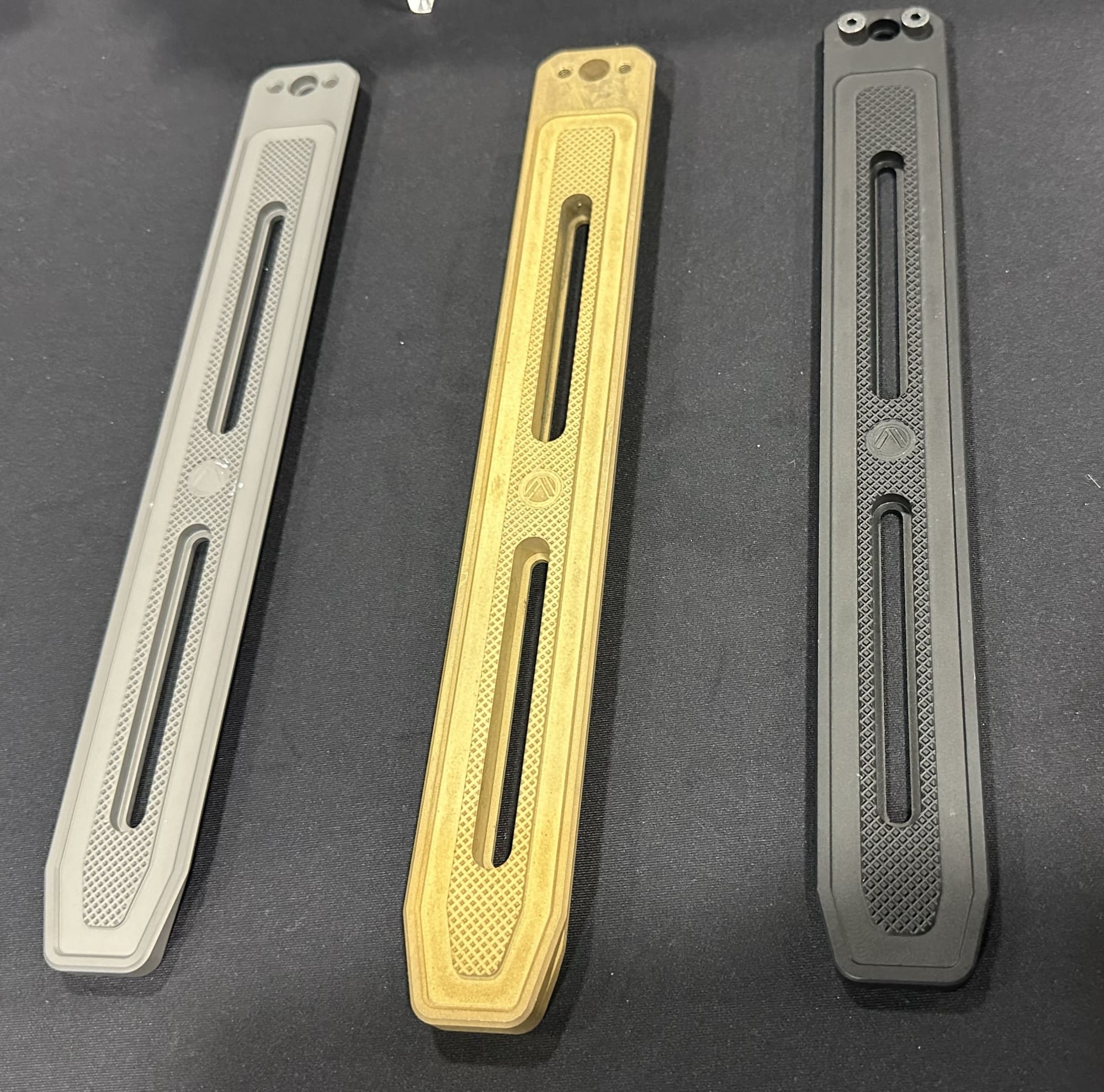
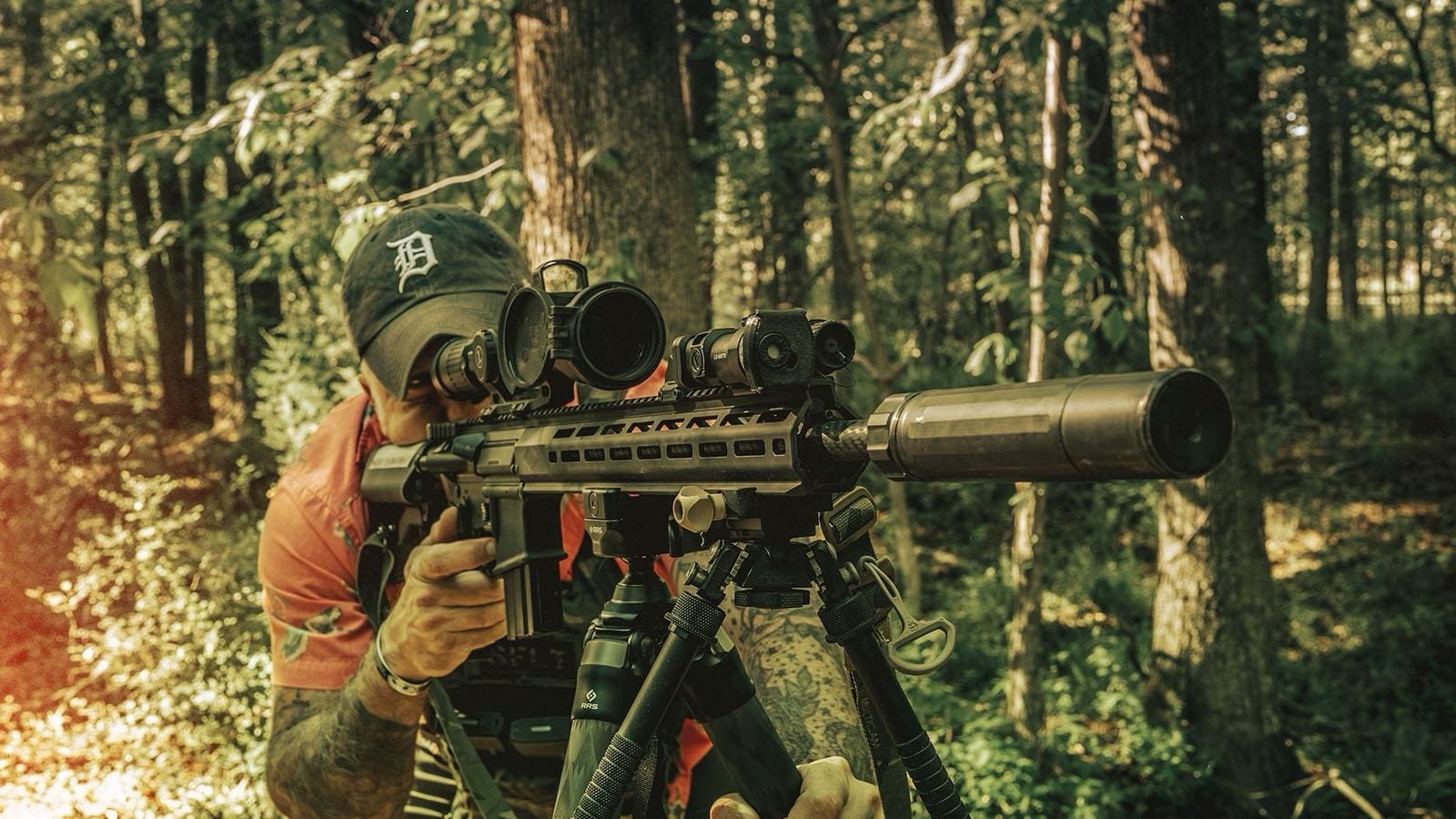
The Right Size 12″ Universal ARCA Rail from Victor Company is offered in Raw, Black, Silver and Special Gray.

ARCA compatible, it features a tapered design and adds 5.5oz to your rifle. With a knurled bottom plate it is MLOK compatible. Attaches to the underside of MLOK rails.


Also available in pure Brass which adds 27oz for additional stability.

victorcompanyusa.com/the-right-size-arca-rail

MDM 26 – Pro-Shot Defense Introduces Drone Operator Field Tool & Lens Cleaning Kit

April 30th, 2026

Pro-Shot Products has been around for 44 years, offering cleaning products to firearms enthusiasts. For the last 10, they’ve supported military and law enforcement with ever more specialized kits.

Making its debut at Modern Day Marine is the Drone Operator Field Tool & Lens Cleaning Kit. Considering the number of drones being procured under Drone Dominance, it’s great to see accessories coming out. More details soon.

MDM 26 – TEA PTT Cables

April 30th, 2026

I know they are’t sexy but if you dint have the right push-to-talk cables for your radio, you’re not going to communicate.

We’ve been friends with Television Equipment Associates since the early 90s and they have a well earned reputation of building reliable communications accessories.

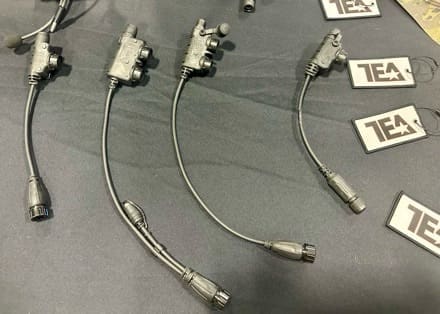
They showed us a lineup of PTT cables for many needs. From left to right above they are:

  • U94H9 PTT for AN/PRC-148 E
  • Dual comm PTT for AN/PRC-163 with EUD
  • Dual Comm PTT for AN/PRC-163 Maritime.
  • PTT for AN/PRC-152A with 10 pin connector

TEA has many more options on their website teaheadsets.com.

MDM 26 – Fightlite AMG-3

April 30th, 2026

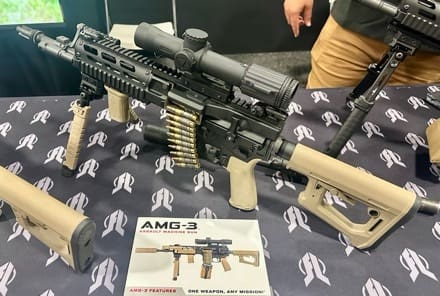
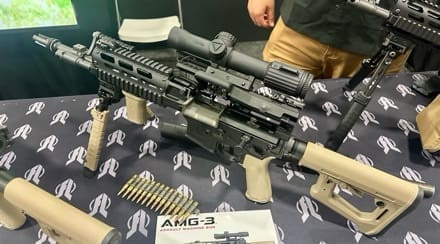
FightLite is a Florida company well known for their belt-fed AR upper receiver groups. The AMG-3 boasts a 50% weight reduction over the M249 SAW.

What makes the Assault Machine Gun 3 stand out is the side folding feed tray cover which allows you to mount longer optics to the Picatinny Rail.

Additionally, it operates reliable with both linked ammunition as well as via a standard box magazine. Piston operated, it pushes less gas into the face of the shooter and like all FightLite Belt-Feds,it features a Quick-Change barrel that can be swapped by the user without tools in as little as 3 seconds. AMG-3 barrels are available in 12.5″, 16.25″ and 20″ inch lengths for both heat mitigation and to meet operational needs.

fightlite.com

Silvus Technologies Introduces the FASST 6000 Spectrum Sensor Delivering Powerful RF Spectrum Intelligence and Geolocation to the Tactical Edge

April 30th, 2026

New low-SWaP spectrum sensor delivers industry-leading 144.5 THz/s spectrum scanning, redefining the benchmark for mobile SIGINT, EW and distributed RF sensing operations

CHICAGO, April 30Silvus Technologies (Silvus), a Motorola Solutions (NYSE: MSI) company and a global leader in advanced tactical wireless communications, today announced the launch of the FASST™ 6000 Spectrum Sensor. FASST 6000 represents Silvus’ expansion beyond MANET radio communications and mesh networking into advanced RF sensing and spectrum awareness technologies.

Designed for the tactical edge, this handheld radio signal detection system packs the performance of a much larger device into an ultra-low size, weight and power (SWaP) form factor. It’s purposefully designed for on-the-move signals intelligence operations and rapidly deployable RF sensing networks, providing warfighters and unmanned systems operators with critical situational awareness in contested environments.

At the heart of the system is Silvus’ proprietary signal processing technique: Filtering by Aliasing Spectrum Sensing Technology (FASST) that delivers extremely fast scanning speeds of up to 144.5 terahertz per second. By eliminating the lag of conventional sensors, this technology enables near-instantaneous measurement across frequencies ranging from 1 MHz to 6 GHz. Utilizing a synchronized antenna array, FASST allows operators to both detect and locate the direction of elusive short-duration, low-power or low-duty-cycle transmissions frequently missed by traditional sensors.

With scanning speeds that outperform competing systems in its size class by more than 100 times, the FASST 6000 offers a smaller, lighter and more cost-effective solution for mobile platforms and dismounted forces. Its integrated IP networking and USB interfaces, combined with embedded processing and low power consumption (17 watts), allows for rapid deployment as either a standalone asset or a component of a larger distributed sensing architecture.

“The launch of the FASST 6000 represents a pivotal shift for Silvus as we bring our expertise in tactical communications to the vital field of RF sensing,” said Mansour Rachid, vice president of research and development, Silvus Technologies. “We’re delivering exceptional scanning speed and precision in a compact, rugged form factor to empower our customers to detect and localize threats faster, setting a new pace for EW warfare and helping to ensure they maintain the information advantage on the modern battlefield.”

“At Silvus, we don’t just innovate; we set the pace for the tactical edge by turning theoretical research into battle-hardened solutions,” said Babak Daneshrad, founder and CEO, Silvus Technologies. “The FASST 6000 represents our commitment to always challenging the status quo and helping ensure that the warfighter maintains a decisive information advantage.”

The FASST 6000 supports high-speed and high-probability signal detection, recording and direction finding of RF emitters. When integrated into a StreamCaster® MANET mesh network of three or more sensors, the system enables real-time triangulation and precise geolocation of RF sources, allowing for awareness of both friendly forces and adversaries throughout battlespace. These capabilities support a wide range of missions, from localized electronic intelligence to wide-area distributed RF monitoring and detection.

FASST 6000 is available as a rugged handheld spectrum sensor for dismounted operators or as an original equipment manufacturer (OEM) module for integration into unmanned aerial, ground or maritime surface platforms. This cutting edge technology strengthens the signal intelligence portfolios of Motorola Solutions, including CRFS.

To learn more about the FASST 6000, visit www.silvustechnologies.com and follow Silvus on social media. See it in action with a live demonstration at Modern Day Marine, April 28-30, 2026 in Washington, D.C., booth 1811.

INKAS Introduces the M1 MRAP, a First-of-Its-Kind Canadian-French NATO-Aligned Armored Platform

April 30th, 2026

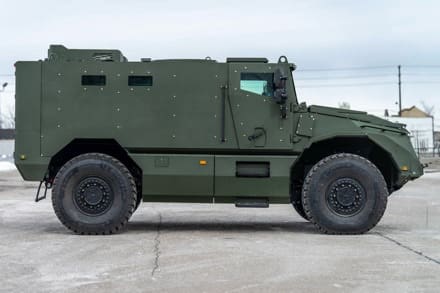
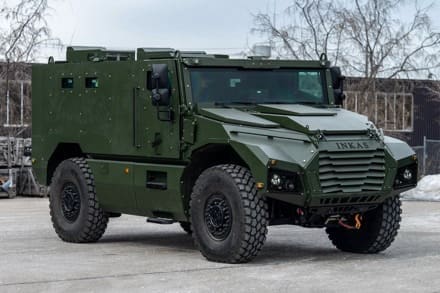
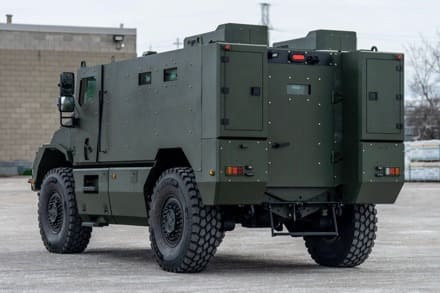
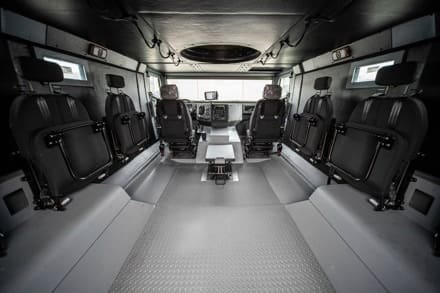
Toronto, Canada, April 30, 2026INKAS® has introduced the INKAS® M1 MRAP, a next-generation mine-resistant armored vehicle developed through a strategic Canadian–French defense collaboration with KNDS Mobility. Integrating a proven French mobility architecture with Canadian armored vehicle engineering and systems integration, the M1 represents a first-of-its-kind NATO-aligned MRAP platform designed to strengthen interoperability across allied forces.

Purpose-built for high-threat conditions, the M1 provides comprehensive 360-degree ballistic and blast protection in accordance with NATO STANAG standards, while maintaining the high mobility required for operations across complex terrain. The vehicle balances survivability, maneuverability, and mission adaptability, enabling forces to operate with confidence in contested environments.

Designed as a modular multi-role platform, the M1 can be configured for a range of mission profiles, including troop transport, command and control, reconnaissance, medical evacuation, and specialized operational support. This adaptability allows defense forces to deploy a single platform capable of supporting evolving operational requirements across multiple mission sets.

“The M1 reflects how allied partners can combine their industrial expertise to deliver meaningful operational capability,” said David Khazanski, CEO of INKAS®. “By integrating Canadian armored vehicle engineering with a proven French mobility system, we have developed a platform designed for full NATO compatibility while strengthening defense cooperation between our countries.”

The introduction of the M1 also reflects INKAS®’s growing role as a systems integrator within the allied defense ecosystem, bringing together international engineering expertise, NATO-aligned components, and mission-driven design into a deployable armored Platform.

As NATO partners continue to modernize their land forces, the INKAS® M1 MRAP offers a new interoperable solution built through trusted allied collaboration and engineered to meet the operational demands of modern defense forces.

Reptilia Announces Launch of 15” Arca Integrated Handguard and Fix It Sticks Toolkit

April 30th, 2026

Hillsborough, NC -Reptilia is proud to announce the release of two new products engineered to meet the evolving demands of modern shooters: the 15” Arca Integrated Handguard and the Reptilia Fix It Sticks Toolkit. Together, these launches reinforce Reptilia’s commitment to precision, durability, and purpose-driven design.

The 15” Arca Integrated Handguard features a fully machined Arca-Swiss interface, bringing true, direct-to-tripod capability to the rifle. Originally developed in precision photography, the Arca standard has become a preferred mounting solution among shooters seeking rapid attachment, precise balance adjustment, and enhanced stability in field conditions. Reptilia’s implementation incorporates a continuous Arca profile along the bottom of the handguard, allowing users to fine-tune rifle positioning in seconds.

Central to the design is Reptilia’s patented turnbuckle mounting system, which ensures a secure, repeatable lockup across all standard M4 upper receivers while minimizing added bulk. Full M-LOK compatibility is retained, providing flexibility for mounting bipods, illumination tools, and other accessories without compromise. The handguard is available in Black and Flat Dark Earth (FDE).

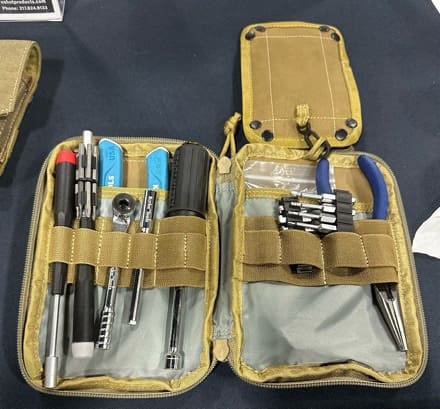
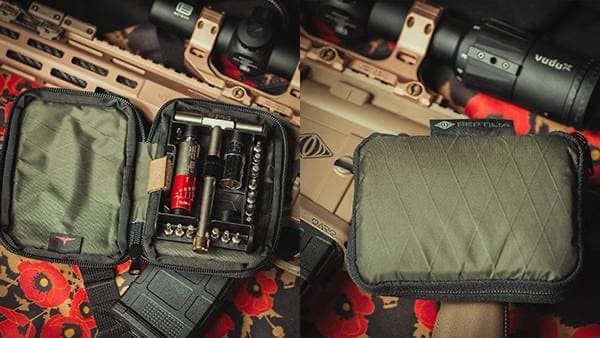
Complementing the rifle-side upgrade, the Reptilia Fix It Sticks® Toolkit offers a field-ready solution for maintenance and adjustment. The kit includes an all-in-one torque driver with a 15–65 in-lb range, a T-Way T-handle wrench with magnetic bit retention, a comprehensive 15-bit set, socket and adapter compatibility, and a brass hammer head for controlled impact tasks. The toolkit is housed in a durable, weather-resistant zippered case made by Paladin 33, constructed from X-Pac® VX21 ripstop fabric for long-term performance in demanding environments.

Both products are proudly made in the United States and backed by Reptilia’s commitment to quality and reliability.

For more information, visit ReptiliaCorp.com.

101st ABN DIV (AA) First to Employ Aevex Atlas Technology at JRTC

April 30th, 2026

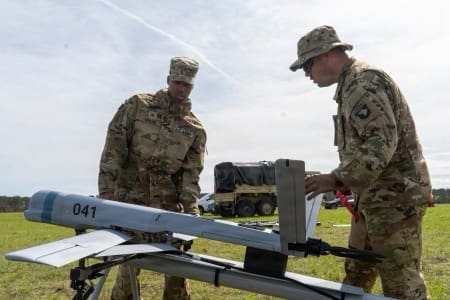
FORT POLK, La.– The 101st Airborne Division (Air Assault) became the first Division to use an Aevex Atlas Uncrewed Aircraft System (UAS) at the Joint Readiness Training Center (JRTC), Fort Polk, Louisiana, April 5, 2026. Soldiers went through a mix of intensive classroom instruction, hands-on machine and flight operations. The comprehensive training culminates in the system’s first validation during the unit’s Combine Arms Live Fire Exercise (CALFEX), April 18, 2026.

The rotation marks the first integration of the Atlas system at JRTC, a result of the company’s partnership with Project Manager Uncrewed Aircraft Systems (PM UAS) to provide Soldiers with advanced loitering munition and UAS capabilities through flight simulations and mission planning.

“This is the product’s first time at JRTC. This is a new milestone. This product will be graded [at the CALFEX], it’ll be interesting to get that feedback from the operations group,” said Caroline Christian, Logistics Analyst, PM UAS.

As a multi-domain Group II Launched Effects system, the Atlas can be deployed from land, air, or sea. It provides forward-stationed commanders with organic, instant access to Intelligence Surveillance Reconnaissance (ISR) assets and smart munitions, significantly enhancing lethality at the Forward Line of Troops (FLOT).

The Atlas includes a scout drone, which surveys, finds targets, and can be seen through a live video feed on the handheld Soldier Robotic Controller (SROC). The Atlas autonomous attack drone, called a “Storm”, enables Soldiers to command precision strikes on targets in contested and denied environments.

By utilizing these autonomous systems, units can execute fire support missions without exposing personnel to enemy counter-fire.

“No human life is in danger when these attack drones are employed,” said Staff Sgt. Randy Denson, 3rd Battalion, 320th Field Artillery Regiment, 3rd Brigade Combat Team, 101st Airborne Division (Air Assault).

The primary objective of PM UAS is to replace physical exposure with technological endurance. For the leadership at PM UAS, the value of the Aevex system is simple: it is better to lose a drone than a life.

“These drones keep our Soldiers out of harm’s way and safe. Pieces of metal can go in front of the line and get shot down. And Soldiers can be kept safe,” said Heather Cole, Assistant Product Manager, PM UAS.

Building proficiency with the Atlas system requires high-volume repetition. Soldiers “learn by doing”, an approach deeply rooted in Army doctrine.

“We want to make Soldiers bored, not because it’s boring, but I mean repetition,” said Blaine Tirendi, Director of Group 2 UAS, Aevex “So we’re having them plan different missions…So they understand the graphic user interface.”

Soldiers have noted the effectiveness of this “learn-by-doing” method.

“We’re on day six of training, [I feel] eight or nine out of 10 proficiency with the system,” said Staff Sgt. William Shouse, 3rd Battalion, 320th Field Artillery Regiment, 3rd Brigade Combat Team, 101st Airborne Division (Air Assault).

By putting Aevex’s Atlas directly into the hands of 101st Soldiers, PM UAS is ensuring that the next generation of technology is built for the user, by the user.

“Our main mission is to get feedback from the Soldiers so that we can improve the technology,” said Cole.“We’re trying to make sure the technology grows so that it helps Soldiers in a wartime situation.”

The end state is for Soldiers to become self-sufficient in employing the Atlas system during high-intensity operations. Having the technology in the hands of the 101st allows developers to refine the platform for the future fight.

“The Aevex engineers who designed the Atlas system are here to integrate Soldiers’ feedback in real time. That feedback loop is very quick, we’re making changes and maturing the technology right now,” said Christian.

By SPC Mariam Diallo