FirstSpear TV

Archive for June, 2025

Varusteleka L4 Field Shirt

Tuesday, June 17th, 2025

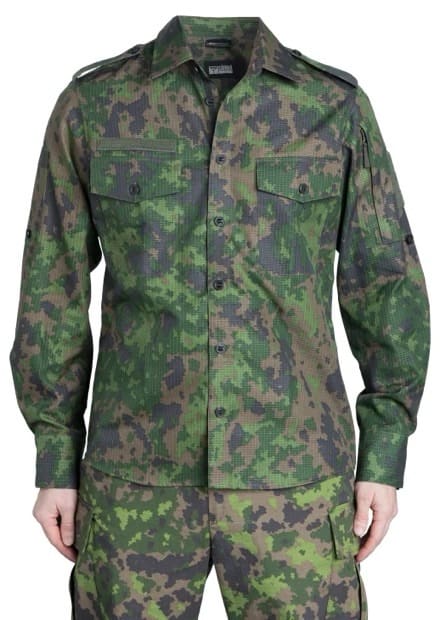
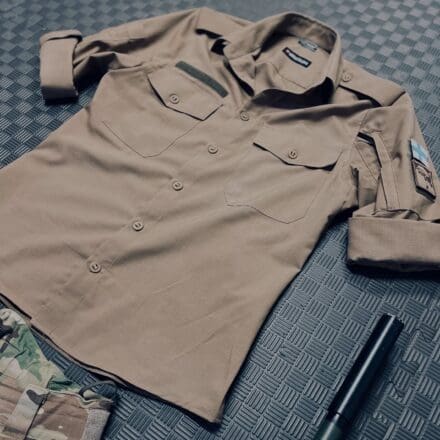
The Field Shirt is layer 4 of the Varusteleka Clothing System. Considered their Field Layer, its combines Finnish heritage with modern touches.

Features:

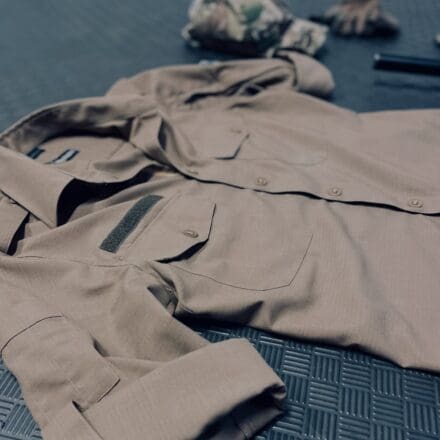
Sharp-looking collar and shoulder straps

Canadian buttons with proper buttonstrap stitching – they don’t come off easily!

Zippered sleeve pocket on the left sleeve

Pen pocket for three pens on the right sleeve

Place for your name tag on the chest

Place for your other patches on the left sleeve pocket

Sleeve tabs – you can button up rolled-up sleeves

Diamond gussets in the armpits for increased mobility in the shoulders

Offered in Khaki, Ranger Green, and Finnish M05 Woodland in sizes XSmall – 2XLarge with some Long lengths.

The solid colors are made from Merino Wool Cordura while the M05 version uses a 88% cotton and 12% polyamide ripstop blend.

The field shirts are sewn in Latvia by manufacturer Sia GPT.

www.varusteleka.com/en/product/varusteleka-l4-field-shirt/78563

Soldiers Train With – And Praise – Nett Warrior System of the Future

Tuesday, June 17th, 2025

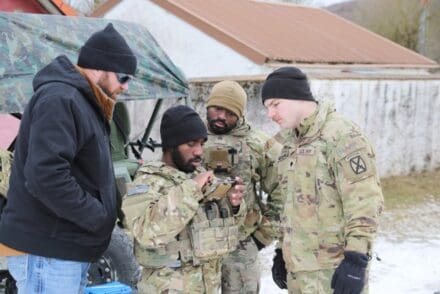
Hohenfels, Germany – With the rapid advances of technologies and the ever-changing technological landscape, it remains more important than ever for the United States Army to remain at the cutting edge of innovation. Which is why an event like the Human Machine Integration (HMI) Fight Tonight Excursion is so essential.

The HMI Fight Tonight Excursion is a training event to train today’s Soldiers on how to use the emerging technologies and devices of tomorrow. For three days, Soldiers were given hours of training and hands-on experience to test, experiment with, and provide direct feedback for some of the latest technologies and breakthroughs coming from PEO Soldier.

And the Soldiers of 3rd Brigade, 10th Mountain Division led the way.

“The Fight Tonight Excursion is an Army Futures Command Commanding General priority to rapidly integrate a Common Control Solution for uncrewed systems for the Army,” said MAJ Adam Arnold, assistant program manager of Nett Warrior. “The focus for the excursion centered around bridging Nett Warrior, Short Range Reconnaissance (SRR) Unmanned Aircraft Systems (UAS) assets along with other commercial off-the-shelf UAS with commercial controllers to provide Soldiers a common control software solution and reduce the number of controllers on the battlefield.”

Many current SRR drones only come with controllers provided by the manufacturing companies. While these controllers work, they only work for the specific drones they are made for and can quickly add a lot of excess bulk and weight for Soldiers to carry if units are given multiple different SRRs to operate.

That is where PEO Soldier and Nett Warrior come in: Working with the DEVCOM Soldier Center, they designed an all-in-one system that can deploy and control multiple different types of SRR drones, eliminating the need for Soldiers to constantly keep track of different controllers and operating systems.

Getting here has been a collaborative process from the beginning. Taking DEVCOM solutions and partners at Program Manager UAS have been integral to bringing these advanced systems online well before they were ever in the hands of Soldiers. PM UAS has been crucial in receiving UAS vendor support to update their firmware so the systems will work. It is also responsible for sending three of their trainers to join the Nett Warrior team to help train Soldiers on these advanced systems.

The feedback from the Soldiers testing the Army’s cutting-edge system has been very positive.

Soldiers who trained with the Nett Warrior system thought the software was “simpler” and more “user-friendly” than what they were currently used to. They found that the drones they controlled performed better on the Nett Warrior system and that the interface was very easy to use.

That is no small feat given that the training took place in the frigid, single-degree German winter weather.

The Nett Warrior system also adds the same extensibility to platoon leaders and commanders. Now, reconnaissance footage and intelligence can be relayed through multiple touchpoints. Leaders at all echelons can see the video in real time. Nett Warrior also allows commanders to assign tasks directly to their units and even remotely take control of the UAS if necessary.

All that in one easy-to-use system, designed from the ground up with Soldiers in mind.

“The collaborative efforts between PEO Soldier, PEO Aviation, PEO C3N, and our industry partners were in full display in the work required to bring UAS assets into the unit network architecture,” MAJ Arnold said. “The ability to pass Position Location Information (PLI) and video streaming throughout the formation will provide Soldiers with far more extensibility and situational awareness than ever before.”

After this training, the Soldiers had an additional month to use the Nett Warrior system on their own, integrating it with their other duties and training to see how the system performed in the field.

The response was incredibly positive.

The training was “an overwhelming success,” said Chief Warrant Officer 2 Brendan Henske, Brigade UAS Operations Officer, noting that the overall Nett Warrior devices and systems helped to “reduce and simplify the Soldiers’ workload.”

“Soldiers took to learning the new interface with vigor and did not want to give up the equipment at the end,” CW2 Henske said.

This is far from the end, however. The Soldiers will provide the Nett Warrior team with direct feedback on their favorite features and what could be improved. That feedback will be used to refine, improve, and perfect the Nett Warrior system.

It is that commitment, to put Soldiers at the forefront of everything being done, that helps Nett Warrior and all the teams across the multiple PEOs thrive and continue to deliver the best and most advanced systems in the world to the men and women in uniform.

By Zachary Montanaro

Overland AI Demonstrates Soldier-Led Autonomy Across Day and Night Operations

Monday, June 16th, 2025

FORT LEONARD WOOD, Mo., June 10, 2025 — Overland AI’s fully autonomous tactical vehicles, ULTRA, were deployed across 15 live mission scenarios to comprehensively demonstrate end-to-end, Soldier-operated ground autonomy.

ULTRA, Overland’s fully autonomous tactical vehicle, operating in dense forest and utilizing tree line for cover during mission scenarios at Fort Leonard Wood, Mo.

Soldiers from the 555th, 36th, and 20th Engineer Brigades, and the 173rd Airborne Brigade, executed these 15 missions using two ULTRAs. They also leveraged Overland’s tactical C2 interface, OverWatch, to plan, execute, and adapt operations on the fly. From pre-operation vehicle checks, payload swaps and munition loading, to mission planning and execution in OverWatch, the experimentation event was conducted almost entirely by end users.

“This was a particularly unique event,” said Chris Merz, who serves as the director of product at Overland AI. “Nearly every phase of the operation—from munition loading to software-based replanning—was in the hands of the Soldier. We saw real independence from the operator, not just in planning and execution, but in adapting tactics in real time.”

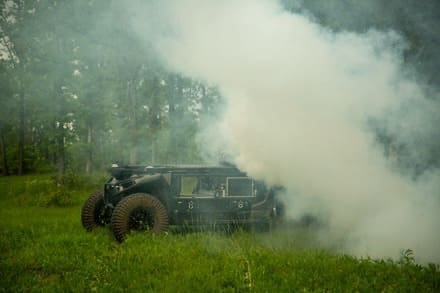
ULTRA deploying smoke deception to confuse the enemy and create an element of surprise during a day mission in wooded terrain.

Participating units were tasked with planning complex, multi-vehicle missions. Soldiers used ULTRA’s modular platform for kinetic and electronic warfare breaching, terrain shaping with XM204s, deception, obscuration, and delivery of third-party payloads, including uncrewed aerial vehicles (UAV) and electronic warfare (EW) capabilities.

Overland’s autonomy stack is highly adaptable in the field. Some operators re-tasked vehicles mid-mission in response to enemy activity and adjusted payload configurations under time pressure with little notice. Other operators, planning two simultaneous terrain-shaping missions with over 20 checkpoints and five tasks per vehicle, took less than three minutes to plan.

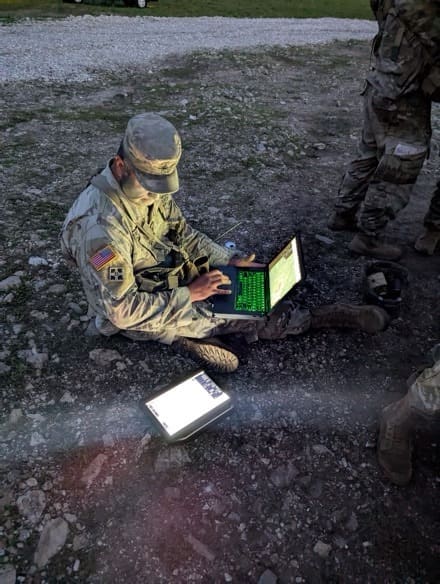
A Soldier from the 555th Engineer Brigade plans a series of missions with ULTRAs using OverWatch, Overland’s intuitive, tactical command and control (C2) interface.

“Our mission is to empower the Armed Forces to dominate any and all missions they need to accomplish,” said Byron Boots, co-founder and chief executive officer of Overland AI. “This wide-ranging event showed that Soldiers both trust our autonomous land systems and can leverage our versatile capability from start to finish.”

Overland AI remains committed to advancing autonomous military technologies, having previously secured an $18.6 million contract with the U.S. Army and the Defense Innovation Unit (DIU) to develop autonomy software for the Army’s Robotic Combat Vehicle (RCV) program. The company continues to support a range of U.S. military programs, including the U.S. Army, Marine Corps, and Special Operations Command.

To learn more about Overland AI and see open roles, visit www.overland.ai.

Ferro Concepts – Frag Bag

Monday, June 16th, 2025

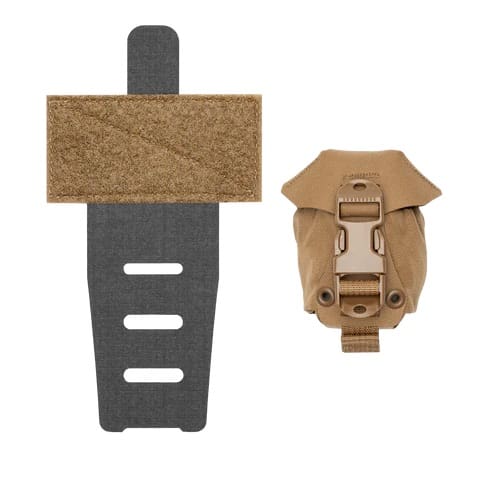
Ferro Concepts has released their Frag Bag. Designed specifically for the M67 frag grenade with the intention of mounting it upside down on the included drop panel. This allows the frag to be located below other belt mounted pouches and gives the capability to double stack your Frag Bag with one facing up and one facing down. The cupped hood offers ample security while allowing a smooth downward draw.

The buckle seems backwards? That’s because it is, keeping it in the direction it needs to be for closing it back up with ease.

Fits M67 frag grenade, NAMMO scalable offensive hand grenade, MPU5 battery, foldable handcuffs, Zyn cans x 2, and more

Offered in Black, Coyote, Ranger Green, MultiCam and MultiCam Black.

ferroconcepts.com/products/frag-bag

Mission First Tactical Introduces Cypher 3L Waist/Sling Bag

Monday, June 16th, 2025

Horsham, PA – (June 13th, 2025) – Mission First Tactical (MFT), manufacturers of state-of-the-art, USA made rifle/carbine accessories and holsters, is pleased to introduce the new Cypher 3 Liter Waist/Sling Bag; the perfect everyday commuter bag.

“We wanted to develop a versatile bag that’s a perfect everyday companion,” said David Edelman, “This new waist/sling bag offers an organizational daily essentials storage solution withsafe and quick firearm storage and access, while on-the-go.”

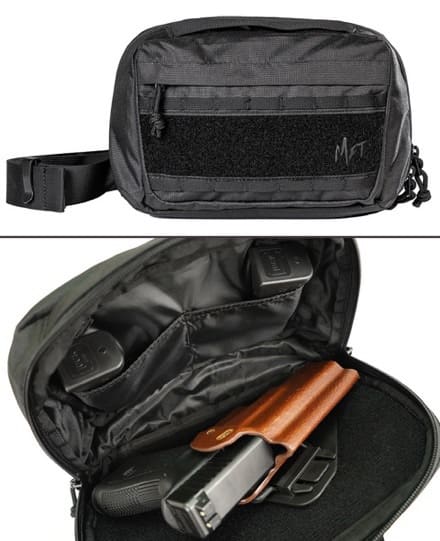
Designed with both functional storage and convenient firearm access in mind, the MFT Cypher 3L Waistpack/Sling features a dedicated, discreet and secure firearm storage area. Inspired to keep this functional as a great everyday commuter bag, daily essentials are organized and secure, offering a vast array of organizational options in a very comfortable platform. Worn as a sling style bag or waist pack, depending on preference or mission, the Cypher 3L is the go-to bag for daily commutes and travel.

The dedicated, discreet concealed firearm compartment is ambidextrous and allows for quick access. An MFT Multi-Mount Platform is included, offering the ability to mount a holstered firearm or other 1.5” belt clip accessories, with custom orientation, utilizing a hook & loop system. An adjustable strap, worn on either shoulder, makes the bag ambidextrous. A front admin/organizer panel allows quick and easy access to essentials. Also, a hidden zipper compartment rests against the body and is ideal for passports and high value documents. 

Features:

• Dedicated and discreet firearm pocket

• MFT Multi-Mount Platform included

• Smart storage for vast array of EDC organizational options

• Lighter colored WR (water resistant) ripstop liner to aid in interior visibility

• Hi-vis key clip

• Weather and abrasion-resistant construction

• Adjustable shoulder/waist strap

• Internal zippered storage pockets

• Front admin & cable storage  

• 3L capacity

• Color: Black

• Weight: 20 oz. 

MSRP: $59.99

To learn more about the MFT Cypher 3L Waist/Sling Bag and the complete product offerings from Mission First Tactical, please visit www.missionfirsttactical.com and follow themsocially on Facebook and Instagram.

Sneak Peek – Tigerstripe and & Woodland GWA Micro NODs Vault from OP Tactical

Monday, June 16th, 2025

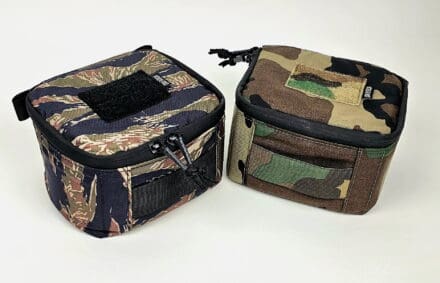
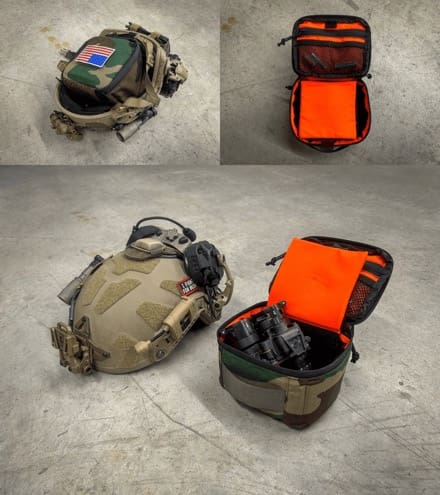
Very soon, OP Tactical will offer Tigerstripe and Woodland versions of the the popular GWA Micro NODs Vault.

Features:
– Fits in your helmet (most sizes)
– Fits most bino NODs (DTNVS, PVS31, etc)
– Low pro carry handle
– All sides are padded, includes a removable padded top divider
– Removable padded flap to keep items separate and protected
– Interior zip compartment for docs
– Mesh pockets for batteries, lens covers, etc.
– YKK GOV Aquaguard zippers
– 500D Nylon Cordura w/ DWR
– Weather resistant
– Dimensions: 6? x 5? x 4?
– Weight: 6oz
– Made in the USA; Berry Compliant

Check www.optactical.com/product/gwa-micro-nods-vault to see the new colors populate.

SERT Awarded HALO/HAHO Parachute Contract for Indonesia’s KOPASSUS

Monday, June 16th, 2025

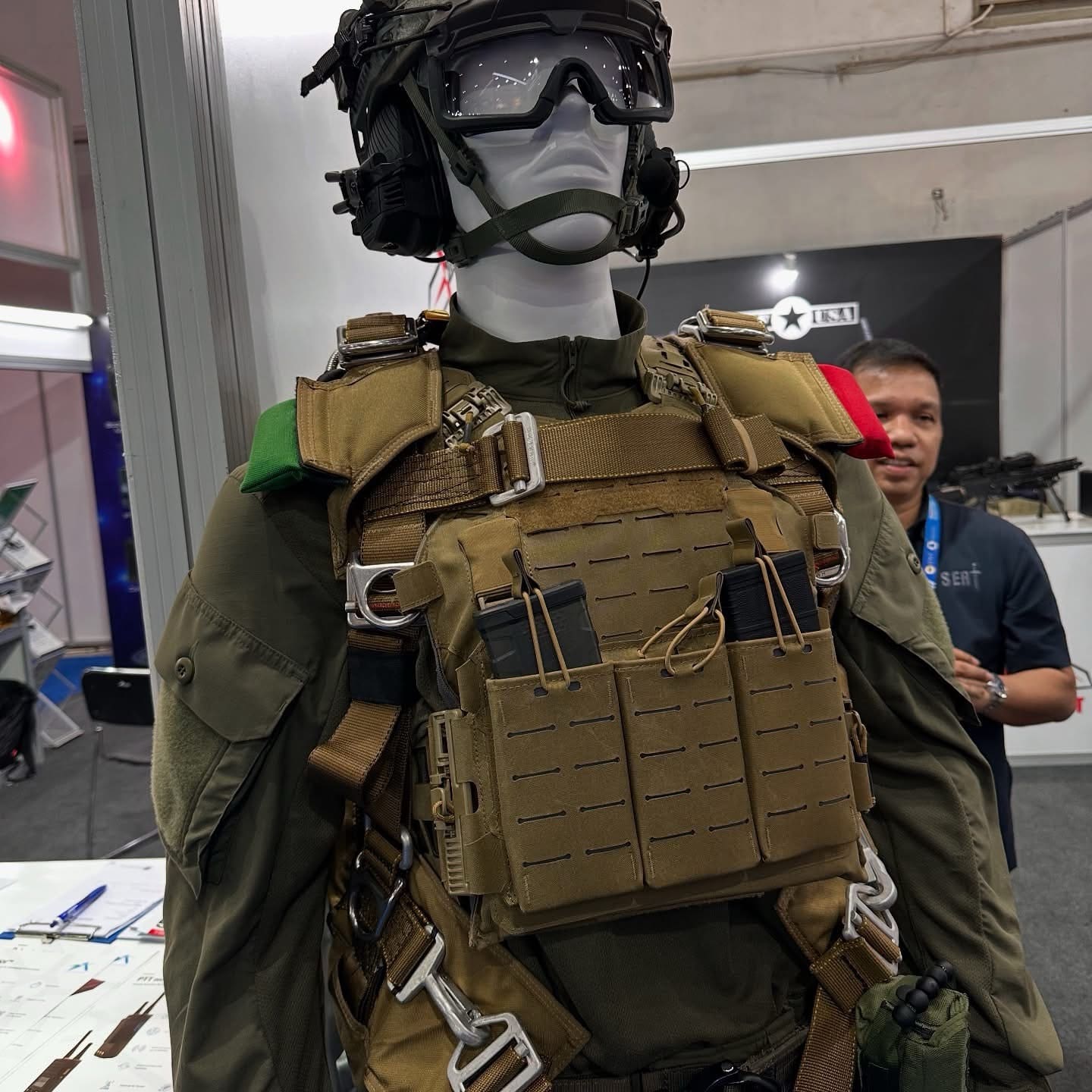
SERT Secures Contract for HALO / HAHO Parachute Systems for Indonesia’s KOPASSUS (Army Special Operations)

Date: June 2nd, 2025

SERT is proud to announce that it has been awarded a contract to supply HALO/HAHO parachute systems for Indonesia’s KOPASSUS (Army Special Operations Command). The contract covers Complete Parachute Solutions’ (CPS) Military Silhouette Series, marking a significant upgrade to the operational free-fall program for the tip of the spear of Indonesia’s military.

This partnership underscores SERT’s continued commitment to delivering state-of-the-art solutions to military and law enforcement agencies across Southeast Asia. The award follows a comprehensive evaluation process that began in December 2024, made possible through the close collaboration and unwavering support of our trusted partner, Complete Parachute Solutions.

The timing aligns perfectly with SERT’s presence at Indo Defence 2025, taking place June 11–14 in Jakarta, Indonesia. Visit us at Booth A025-B, where we will be showcasing the parachute system along with related accessories—including a new military parachuting oxygen system.

www.sert.us

Harnessing SIGINT and EW for Tactical Dominance: A Guide for Combat Arms Leaders

Monday, June 16th, 2025

Introduction

To the combat arms platoon leader and company commander: You are leading formations that will close with and destroy the enemy. Your ability to shoot, move, communicate, and then move again (see later section on countering enemy surveillance in the electromagnetic spectrum) is paramount to our success on the modern battlefield. The enemy is sophisticated, adaptive, and aggressively contesting your ability to maneuver in all domains, including the electromagnetic spectrum (EMS). You are not alone in this fight; the intelligence and cyber communities will enable you to dominate the EMS. These communities stand ready to provide you with actionable targets and the means to influence/dominate the EMS at echelon. This is not theory; this is the reality of combat against peer and near-peer adversaries, and we are bringing the full weight of the Department of Defense (DoD) and its combat support agencies to bear. Your S-2 section and Cyber Electromagnetic Warfare Activities (CEMA) cell will innovate at speed across the range of operations to ensure that you have the capabilities necessary to win.

SIGINT and EW: Your Tactical Edge

Signals intelligence (SIGINT) and electromagnetic warfare (EW) are distinct but complementary disciplines that must be integrated effectively to maximize battlefield effects. SIGINT identifies and characterizes enemy signals, providing critical intelligence that inform EW operations. EW teams can use that information to help locate enemy positions for destruction, or simply to disrupt, deceive, or deny the adversary’s use of the electromagnetic spectrum. Proper coordination between SIGINT and EW enables deception operations, enhances precision targeting, and strengthens force protection measures, ensuring that friendly forces maintain dominance over the EMS while denying the enemy key capabilities.

Based on historical analysis of large-scale combat operations (LSCO), recent lessons learned from Ukraine, and predictive analysis of China’s People’s Liberation Army (PLA) capabilities, the teaming of SIGINT and EW can be a force multiplier across the warfighting functions. By integrating SIGINT-derived intelligence with EW’s ability to deny and disrupt, we can significantly degrade an adversary’s ability to maneuver and execute multidomain operations (MDO).

Understanding SIGINT in Your Fight

SIGINT is not just a tool for strategic planners in some far-off headquarters. It is a tactical enabler that allows you to detect, locate, and exploit enemy communications in real time. Whether you are setting up an ambush, planning a fire mission, or maneuvering to secure a key objective, SIGINT can provide the enemy’s disposition, intent, and vulnerabilities. The Army’s ability to identify and track enemy command nodes, air defense systems, and maneuver elements through SIGINT means you can strike at the right place and time with overwhelming force.

How EW Shapes the Battlefield

EW is your ability to seize control of the EMS. EW is the counterweight to enemy SIGINT and can greatly affect their ability to execute command and control (C2) while disrupting their ability to communicate, navigate, and coordinate. If the enemy cannot receive orders, they cannot react. If their targeting systems are blinded, they cannot fire effectively. Ultimately, if they can’t navigate, they cannot effectively maneuver forces on the battlefield. EW, when employed effectively, can have significant battlefield effects, all without firing a shot.

EW’s Three Essential Functions:

Electromagnetic Support (ES): Detecting and identifying enemy emitters to support targeting and situational awareness.

Electromagnetic Attack (EA): Jamming and deception operations that deny the enemy use of the spectrum.

Electromagnetic Protection (EP): Ensuring that friendly forces maintain reliable communications despite enemy jamming, to include employment of emission control measures (e.g., radio power, antenna placement, etc.) to defeat enemy attempts to surveil and target friendly forces.

The Critical Role of SIGINT and EW in Tactical Operations

The operational environment requires agility, synchronization, and unity of effort to converge all sensors and effects on a rapidly evolving threat. The ability to integrate SIGINT with EW at the tactical level allows commanders to enhance targeting fidelity (SIGINT and EW), disrupt adversary operations (EW), and provide real-time intelligence for maneuver forces (SIGINT).

To focus on C2 and counter-C2, expanded maneuver, and cross-domain fires, we must team SIGINT and EW across EA, ES, and EP to present multiple dilemmas to our enemy, enhance C2 protection, and increase lethality. Let’s look at an example:

Kill Chain Analysis: A Counter-Unmanned Aerial System (C-UAS) Scenario

In an era where UAS play an increasingly critical role in modern warfare, understanding the full kill chain process for countering these threats is essential for operational success.

Phase 1: Detect and Identify

A brigade combat team (BCT) is executing a deliberate attack when SIGINT elements intercept and transcribe enemy communications emanating from an urban area associated with drone activity. Electromagnetic support reporting from sensors riding on a remote-controlled scouting vehicle confirms the presence of enemy UAS operating frequencies, geolocating multiple launch sites and relay nodes.

Phase 2: Target and Disrupt

Upon confirming the threat, the BCT’s organic EW platoon, using Terrestrial Layer System (TLS) Manpacks, receives the locations of the threat signals of interest (SOI), and executes an electromagnetic attack to jam the drone’s control frequencies, disrupting the operator’s ability to maneuver the UAS effectively. Simultaneously, SIGINT analysts coordinating with higher-echelon intelligence teams pinpoint the drone operator’s location for kinetic targeting.

Phase 3: Engage and Destroy

With the drone rendered ineffective, the fire support element coordinates an artillery strike on the enemy UAS ground control station, leveraging the precision geolocation refined by enhanced tools like the Electromagnetic Warfare Planning and Management Tool (EWPMT) and the Army Intelligence Data Platform (AIDP). Simultaneously, the EW platoon continues to jam the enemy’s communications, preventing coordinated support or retrograde. Friendly forces neutralize the threat, allowing maneuver elements to proceed unimpeded.

Phase 4: Assess and Adapt

Post-strike analysis from SIGINT utilizing High Altitude Platform (HAP) sensors reveals ongoing enemy attempts to reestablish drone operations, underscoring the necessity for sustained EA efforts. In response, SIGINT teams disseminate updated threat reporting to the EW platoon, enabling them to adjust jamming frequencies and counter enemy adaptations. Concurrently, SIGINT elements refine their intelligence collection to anticipate and prepare for potential future enemy tactics, ensuring proactive EW measures.

This coordinated SIGINT and EW kill chain ensures the enemy’s UAS capability is neutralized before it can affect friendly operations. This vignette effectively illustrates the critical synergy between intelligence-driven targeting and spectrum dominance.

How You Can Leverage SIGINT and EW at Your Level

To gain a decisive battlefield advantage, leaders must integrate SIGINT and EW capabilities to counter enemy threats in the EMS. The following approaches can help achieve this:

Incorporate SIGINT and EW into the DNA of Your Planning and Execution

From the outset, consider how to effectively integrate these capabilities into your operations to inform and shape your decision-making. Collaborate closely with supporting staff elements, such as the BCT CEMA cell and S-2 section, to gain a deep understanding of the enemy’s electromagnetic spectrum usage and identify opportunities to disrupt and exploit their vulnerabilities. By incorporating SIGINT and EW into your operational framework, you can create a more comprehensive and effective approach to achieving your mission objectives.

Train Your Leaders and Soldiers to Recognize and Exploit the EMS

Your Soldiers must understand that controlling the EMS is just as vital as controlling key terrain. Integrate SIGINT and EW considerations into your battle drills, mission rehearsals, and after-action reviews. Units that fail to account for enemy EW will put their formations at significant risk on the battlefields of the future. Training ensures you can adapt and maintain tempo under contested conditions.

SIGINT and EW teams can sense across the EMS with ES at the tactical edge. By developing new tactics, techniques, and procedures (TTPs), SIGINT support from higher echelons, such as from the division level, can be pushed down to BCTs, providing real-time EMS sensing without burdening them with protecting and maneuvering higher-echelon intelligence capabilities. Ultimately, this enables more agile and lethal maneuver forces.

Ensure Interoperability with Supporting SIGINT and EW Units

SIGINT and EW units are enablers, not afterthoughts. Integration of SIGINT and EW elements throughout the organic targeting process is key. Work with them to refine target identification and EA options. Develop unit standard operating procedures (SOPs) that detail how to request and synchronize their capabilities in real-time engagements and incorporate them in all rehearsals. Leaders must ensure that EW Soldiers are embedded within tactical formations to provide immediate effects that enhance maneuver and fires.

Adopt an Aggressive, Learning-Focused Mindset

The enemy is adapting. As such, we must do the same. Stay informed on the latest TTPs by leveraging resources such as the Center for Army Lessons Learned (CALL) and current doctrinal publications like Field Manual (FM) 2-0, Intelligence, and FM 3-12, Cyberspace Operations and Electromagnetic Warfare. We must continue to share lessons learned across our formations and with intelligence and EW enablers to continually refine our operational effectiveness.

Conclusion

In an era where the electromagnetic spectrum is as contested as the physical battlespace, success demands leaders fully integrate SIGINT and EW into their tactical decision-making. These are not ancillary capabilities but core enablers of maneuver, fires, and protection. By treating SIGINT and EW as an integral piece of battlefield operations rather than separate support functions, we can outthink, outmaneuver, and overwhelm our adversaries before they can react.

The future fight will be won by those who master the integration of intelligence and electromagnetic warfare, seamlessly fusing these disciplines into their formations and operational planning. This requires continuous learning, rigorous training, and adaptive thinking to counter evolving enemy tactics. The intelligence and EW communities stand ready to support, provide counsel for our specialties, and execute through our commanders’ intent.

Superiority in the EMS is not an option — it is a necessity. By embracing these capabilities and fostering interoperability, we ensure that our forces maintain a lethal edge on the battlefield. The challenge is clear, and the tools are at hand. Now is the time to educate our leaders and Soldiers and incorporate these capabilities into our training so we are prepared to fight and win our nation’s wars.

By MG Rick Appelhans and MG Ryan Janovic

MG Richard T. “Rick” Appelhans currently serves as the commanding general of the U.S. Army Intelligence Center of Excellence and Fort Huachuca, AZ. Prior to assuming this position, he served as the director of Intelligence, U.S. Forces Korea/deputy director of Intelligence, Combined Forces Command. MG Appelhans’ overseas assignments and deployments include the Republic of Korea, Kuwait, Germany, the Netherlands, Afghanistan, Bosnia-Herzegovina, and Iraq. He began his military career as an Armor officer, serving as a tank platoon leader, company executive officer, and battalion S-4. Since transitioning to Military Intelligence in 1997, MG Appelhans has served in a variety of command and staff assignments to include detachment commander, battalion S-2, company commander, brigade combat team S-2, analysis and control element chief, region commander, division G-2, and group commander.

MG Ryan Janovic currently serves as the commanding general of the U.S. Army Cyber Center of Excellence and Fort Eisenhower, GA. A native of Akron, OH, he graduated from the U.S. Military Academy at West Point, NY, in 1993 and commissioned into the Military Intelligence Corps. He served with Multi-National Forces-Iraq, 1st Infantry Division in eastern Afghanistan, Military Intelligence in Korea, and later with Commander United Nations Command/Combined Forces Command/U.S. Forces Korea. His other assignments include various posts throughout the U.S. to include a tour as a White House Fellow. In 2019, MG Janovic joined the cyber ranks as the deputy commander of Joint Force Headquarters – Cyber (Army), leading the organization toward unit citations earned in support of U.S. Central Command.

This article appears in the Summer 2025 issue of Infantry. Read more articles from the professional bulletin of the U.S. Army Infantry at www.benning.army.mil/Infantry/Magazine or www.lineofdeparture.army.mil/Journals/Infantry.