GORE-TEX WINDSTOPPER

Archive for July, 2025

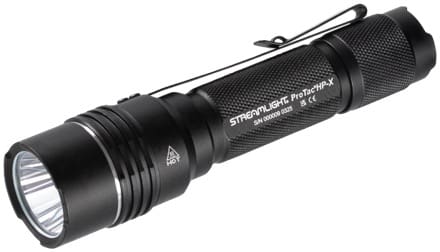
Streamlight Introduces ProTac HP-X USB and ProTac HP-X

Wednesday, July 9th, 2025

Illuminate the Distance with Tactical Lights Delivering 105,000 Candela, Long-Range Beam Distance, and Multi-Fuel Options

EAGLEVILLE, PA, July 8, 2025 – Streamlight®, Inc., a leading provider of high-performance lighting, launched the ProTac® HP-X USB and ProTac® HP-X, powerful handheld flashlights designed to deliver high candela, a focused beam and long-distance illumination in a tactical-sized body.

Both models deliver 800 lumens, 105,000 candela, and a beam distance of 648 meters. These lights offer pure candela performance, built for search, precision, and perimeter control, making them ideal for a variety of applications where throw and brightness are critical. 

“The new ProTac HP-X series delivers the high intensity beams and versatility that professionals such as those in law enforcement, search and rescue, security, and industrial operations depend on,” said Michael F. Dineen, Streamlight President. “Whether powered by USB rechargeable or disposable batteries, these lights provide robust, long-distance illumination with the durability and features our users have come to expect.”

The ProTac HP-X USB includes a Streamlight SL-B26®-protected Li-Ion USB rechargeable battery pack, featuring an integrated USB-C charge port for on-the-go charging. This USB model provides up to 31 hours of run time and recharges in five hours.

The ProTac HP-X includes two CR123A lithium batteries, offering flexibility for users who prefer or require disposable power sources, and delivers up to 24 hours of run time.

The series includes a multi-function tactical tail cap switch for momentary or constant-on operation and TEN-TAP® programming, allowing users to select from three different programs: high/strobe/low, high only, or low/medium/high. Additional features include an anti-roll face cap and unbreakable pocket clip and holster.

Built from 6000 series machined aircraft aluminum with a Type II MIL-Spec anodized finish, the lights are impact-resistant to two meters, and IP68-rated for dust-tight and waterproof operation to two meters.

The ProTac HP-X USB weighs 5.9 oz with SL-B26 battery, and the ProTac HP-X weighs 5.4 oz with two CR123A batteries.

The ProTac HP-X USB and ProTac HP-X have MSRPs of $198.21 and $178.39, respectively. Available in black, both come with Streamlight’s Limited Lifetime Warranty.  

streamlight.com

The Condition One Nightcap from Badger Ordnance

Wednesday, July 9th, 2025

In a low/no-light environment, the ability to check your elevation turret settings ranges from difficult to impossible. What options are available to you? Pull out a flashlight and destroy your natural night vision, or even worse, introduce unwanted illumination to your firing position? Maybe you have head-borne night vision. Are they adjusted to read the fine markings on your turret, if they even have the resolution required? More than likely, you’re working with clip-on thermals or night vision units and you’re not wearing head-borne night vision when behind a precision rifle. Whether on a deployment, or hunting varmints on the back 40, the ability to know the condition of your optic inputs is one that shouldn’t be overlooked.

After multiple conversations with an entity within the US Army, we created a simple, low-cost, and durable product that neither requires batteries nor risks over-illumination. Made from a high tensile nylon with a reentrant groove designed to seat a Cyalume 1.5” mini type A ChemLight, the C1 Nightcap slides onto a 35mm or 34mm standard C1 ring cap (C1 MAX variants to come) and can be both easily and quickly removed for storage by lifting the side tabs… all while weighing only 0.2 ounces. We provide each C1 Nightcap with 3 mini ChemLights and have additional units for sale. Military customers may note the NSN of these ChemLights for alternative procurement methods.

Sometimes a simple solution works best, and while this is by no means a “revolutionary game-changer” it is available for those users who may benefit. Anyone interested in purchasing the C1 Nightcap can visit www.badgerordnance.com and search for P/N 700-50 – The Condition One Nightcap.

US Army Seeks Suppliers for up to 10,000 Low-Cost Drones per Month

Wednesday, July 9th, 2025

Last week, Army Contracting Command, on behalf of Program Executive Office (PEO), Aviation, released a Sources Sought notice entitled, “Uncrewed Aircraft Systems (UAS) for the United States Army.” It complements an earlier RFI which was issued in April for Purpose Built Attritable Systems (PBAS).

This is great news. While the acquisition system has been slow to adapt to this requirement, Brigade and Division commanders are creating the capability out of hide, using Soldiers who have off-duty experience with drones, paired with 3D printing. Unfortunately, none of it is effectively resourced in manpower, training, or O&M funding. An acquisition of this magnitude will get the Army on its way to learning how to use this capability and incorporate it across the entire formation. Soldiers will adapt quickly and soon be able to employ FPV drones along with other systems to enhance ISR, precision targeting, EW, and low-cost mass effects via swarms.

This new Sources Sought focuses more on cost without the constraints of performance, payloads, and other requirements in the previous announcement. The goal of this Sources Sought is to deliver low-cost UAS solutions into Army formations rapidly and reduce “gold plating.” The Army understands UAS production capacity must expand across the industrial base.
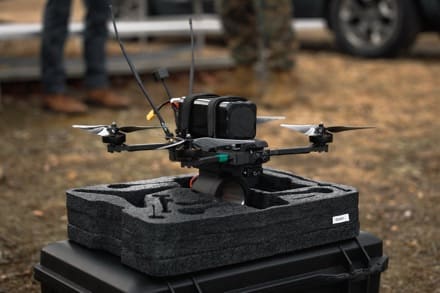
As I mentioned when the PBAS RFI was released, I refer to attritable drones as the “155 shell of the future.” The reason I use that comparison is that a 155mm shell is about $3000. The Army is looking to pay up to $2000 for each of the proposed PBAS but I think that’s a bit low. The availability of these systems, built with US sourced parts (or reliable allied country), is a national imperative.

From the Sources Sought Notice:

“The Army requires low-cost unmanned aerial systems for immediate fielding with up to 10,000 air vehicles within 12 months. The ability to deliver systems at or below our threshold cost is the primary weighted measure.  The system performance characteristics will distinguish systems meeting this core requirement.  The production capability as well as the ability for Soldiers to modify and repair are additional distinguishing characteristics. The intent for modifications is to ensure Soldiers are able to add simple payloads (such as 30mm mortars, grenades, or other lethal payloads) and non-lethal capabilities based on mission needs without vendor involvement in the field. These systems may also be utilized as targets during Counter Unmanned Aircraft Systems (C-UAS) training and other training exercises. Likewise, Soldier repair is needed to allow units to fully understand their equipment and stay in the fight while waiting for additional systems / spare components.”

The number of 10,000 per month is also significant as it is the low end of the number of attritable drones Ukraine claims it expends each month in operations against Russia. This number can surge to 30,000 per month or even higher. The question is, how can the US Army consume that many drones per month during peacetime? Well, for one, 10,000 is the surge capacity and they don’t pan to get there immediately, although I think the requirement will be far beyond just 10,000 per month of we end up in Large Scale Combat Operations. While FPV drones aren’t as capable as exquisite precision guided systems, they are a fraction of the cost and can be produced in a fraction of the time. Ukraine enjoys federated production of drones in workshops and cellars as much as in factories and produces hundreds each night. Second, the Army will use these drones for Counter Unmanned Aerial System training. So far, there hasn’t been much opportunity to go after live systems. This is an opportunity for the Army (and others in DoD) to conduct some simultaneous live training for both offensive and defensive UAS capabilities.

Accessing to the request, potential vendors of PBAS must be able to deliver the following:

  • – Unit cost for air vehicle less than $2,000.00.
  • – Additional dependent equipment to include ground control station/controller, communications equipment, goggles, batteries, and charging station for one to many controllers to UAS. Cost for these items will be fairly considered during response evaluation.
  • – Production capability to deliver an initial quantity of systems by 30 September 2025 with the ability to quickly ramp production and deliver larger quantities up to 10,000 air vehicles within 12 months.
  • – The ability for our Soldiers to modify, within reason, the system with a variety of third-party payloads, armaments, and munitions without vendor involvement
  • – The ability for our Soldiers to repair the system without vendor involvement
  • Furthermore, systems must be 2020 NDAA Sec 848, 2023 NDAA Sec 817 and American Security Drone Act of 2023 (2024 NDAA, PL 118-31, DIV A, Title XVIII, Subtitle B, SEC. 1821) compliant or demonstrate a path to compliance.

    Most important about this action? Funding is available to achieve this capacity expansion. Lack of capital has held many manufacturers back.

    The Army is seeking white papers which are due by 1600 hours CST 18 July 2025.

    Visit for sam.gov full details.

    I am concerned that there still isn’t a PBAS Interface Control Document which would help both DoD and industry create Modular Open System Architecture drones which become plug and play for the integration of end effectors, comms, guidance, and motors. This would alleviate the concern over which components will work with which drones as everything would work together. Executing this scale of acquisition before establishing these standards is putting the cart before the horse.

    Despite my concern, I am very excited about this action and look forward to the Army executing and obtaining an attritable FPV drone capability at the smallest units and all across the formation.

    Eric Graves

    Founder

    SSD

    Army Scales Down Military Working Equid Program for Warfighting Priorities

    Wednesday, July 9th, 2025

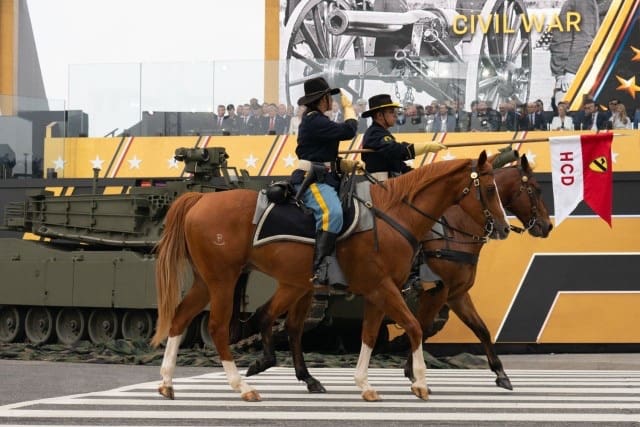
    WASHINGTON – The U.S. Army is streamlining its Military Working Equid program to align more resources with warfighting capability and readiness. MWEs include horses, mules, and donkeys owned by the Department of Defense and housed on Army installations.

    Starting in July 2025, the Army will sunset ownership, operation and materiel support of MWE programs at Fort Irwin, California; Fort Huachuca, Arizona; Fort Riley, Kansas; Fort Sill, Oklahoma; and Fort Hood, Texas. However, MWE programs will continue with The Old Guard caisson units at the Military District of Washington and Joint Base San Antonio, Texas.

    Concentrating the MWE program with The Old Guard will allow the Army to achieve significant cost savings while retaining the program for national ceremonial duties.

    The Army is committed to ensuring a smooth transfer to appropriate owners and will continue to maintain the highest standards of care for the MWEs that remain in its formations. This initiative will save the Army $2 million annually and will allow the funds and Soldiers dedicated to MWE programs to be redirected to readiness and warfighting priorities.

    Installation commanders will have one year to transfer, facilitate adoption, or donate the MWEs to vetted owners according to federal law. The Army Surgeon General’s MWE Task Force, comprised of equine veterinarian experts, will provide oversight to ensure the MWEs go to appropriate owners.

    By Office of the Assistant Secretary of the Army (Manpower & Reserve Affairs)

    Army Updates Facial Hair Policy to Reinforce Grooming Standards

    Tuesday, July 8th, 2025

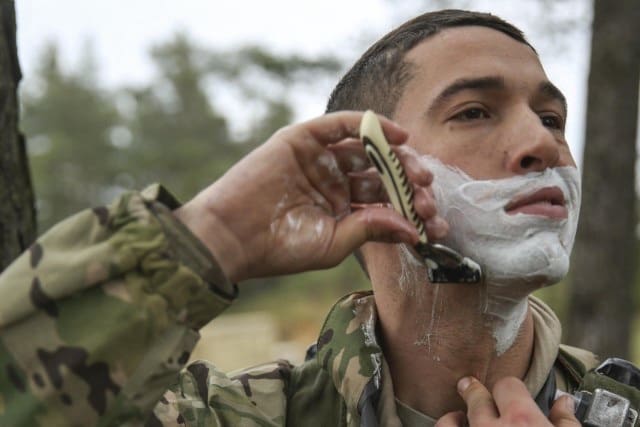
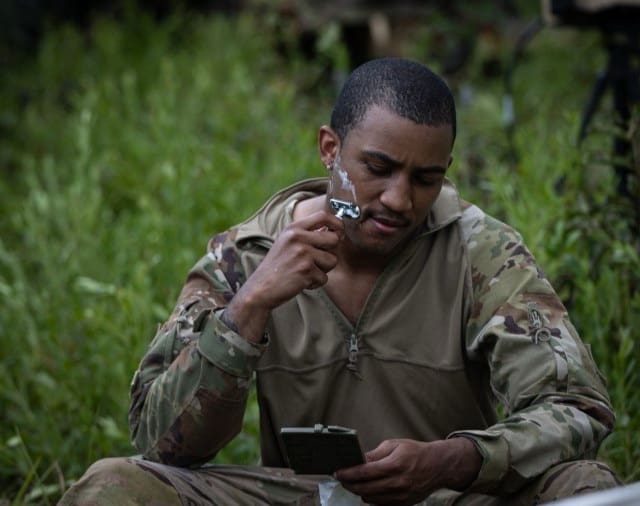
    The U.S. Army is updating its facial hair grooming policy in an Army Directive that resulted from a force-wide review of military standards. The update reinforces the Army’s long-standing policy that all Soldiers must be clean-shaven when in uniform or civilian clothes while on duty, with temporary exemptions for medical reasons and permanent exemptions for religious accommodations.

    The new policy requires exemptions for non-religious reasons to be supported by a temporary medical profile (DA Form 3349-SG) and an exception-to-policy (ETP) memo granted by an O-5 officer in the chain of command. The change, which will be effective the day the directive is signed, will ensure that leaders are actively involved in the process.

    Soldiers requiring exceptions must also maintain presentable copies of their required documents when in uniform or civilian clothes while on duty. Similarly, religious exemptions will require religious accommodation documentation.

    “This update reinforces our culture that fosters discipline – and discipline equals readiness,” said Sgt. Maj. of the Army Michael R. Weimer. “Through a phased implementation we are working with providers through commanders to effectively address grooming standards to ensure we maintain a professional force.”

    The directive also provides guidance on pseudo-folliculitis barbae or PFB, which is commonly known as razor bumps. It emphasizes the roles of healthcare providers and commanders in motivating and supporting Soldiers with PFB to manage their condition and to adhere to grooming standards within a reasonable timeframe.

    Army healthcare providers, commanders, and leaders will assist Soldiers by providing education and treatment plans while monitoring Soldiers’ progress toward adhering to the grooming standards. Soldiers who cannot comply with grooming standards within a reasonable time may be administratively separated.

    This policy update underlines the Army’s commitment to maintaining both warfighting readiness and a uniform, disciplined force. We will ensure our Soldiers have the resources and support they need to meet Army standards.

    By U.S. Army Public Affairs

    Rheinmetall Wins Major Order for Artillery Ammunition – Order Value in the Hundreds of Millions of Euros

    Tuesday, July 8th, 2025

    A European NATO country has signed a multi-year contract with Rheinmetall’s subsidiary Rheinmetall Denel Munition (RF) Pty Ltd (RDM) in South Africa for the delivery of 155 mm projectiles from the Assegai family and bimodular propelling charges. The order was booked in the second quarter of 2025 and is worth several hundred million euros. Deliveries will begin in 2025 and conclude with final delivery in 2027. The order is the largest in the history of Rheinmetall Denel Munition.

    The Rheinmetall Assegai 155mm projectiles and bi-modular propelling charges will be integrated into the customer’s artillery weapon systems, delivering range capability of more than 40,000m with optimal performance in the target area.

    “The Rheinmetall Assegai user group is growing rapidly across the globe, and we are delighted that another customer has now also selected Rheinmetall Assegai to be delivered fast and in volume.” says Dr. Frank Dirksen, CEO of Rheinmetall Denel Munition.

    Capacity

    Rheinmetall continue to invest heavily into capacity enhancement of existing facilities and establishing new manufacturing facilities which provide the ability to serve the growing demand for modern 155mm projectiles and charges. Rheinmetall is one of the world’s leading manufacturers of large-calibre ammunition. The Düsseldorf-based Technology Corporation Rheinmetall has been increasing its production capacity since 2022, and aims at producing around 1.5 million 155 mm artillery shells per year by 2027.

    Technology

    The Assegai suite of projectiles and Charges are qualified and in-service with multiple user nations, providing interoperability and a fast-track integration into service.

    The Assegai projectile suite consist of ballistically matched High Explosive, Illumination, Infrared Illumination, Smoke, Pre-formed Fragmented (PFF) and Rocket-Assisted (V-LAP) projectiles.

    South African Economic Benefit

    “Rheinmetall Denel Munition is a proud member of the South African defence industry, employing more than 2,500 workers across South Africa. Major multi-year contracts like this provide us the ability to continue on our growth path which contribute directly to the South African economy.” says Dr. Dirksen.

    About Rheinmetall Denel Munition (RDM)

    Rheinmetall Denel Munition (Pty) Ltd is jointly owned by Rheinmetall Waffe Munition GmbH (51 %) of Germany and Denel (Pty) Ltd. South Africa.

    Rheinmetall Denel Munition (Pty) Ltd specialises in the development, design and manufacture of large- and medium-calibre ammunition families and is a world leader in the field of artillery, mortar and infantry systems as well as plant engineering.

    Rheinmetall Denel Munition (Pty) Ltd invest and support more than 1,500 domestic suppliers including SMME’s which benefit more than 250,000 South Africans.

    Mission First Tactical Introduces Introduces the Versatile and Discreet 5L Achro Sling Bag – The Ultimate Everyday-Carry Companion

    Tuesday, July 8th, 2025

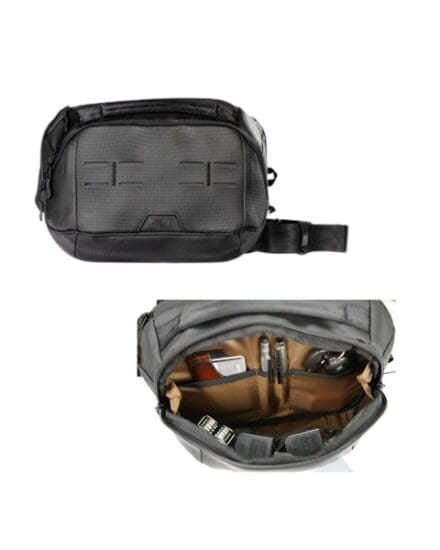
    Horsham, PA – (July 7th, 2025) – Mission First Tactical (MFT), the leading manufacturer of state-of-the-art, USA made rifle/carbine accessories and holsters, proudly announces the launch of its latest innovation – the 5L Achro™ Sling Bag. As part of the Achro™ series, this revolutionary bag epitomizes the concept of “without color,” embracing the art of blending in with a low-vis, everyday-carry bag featuring a dedicated, discrete firearm storage system. Achro™ derived from “Achromatic” is defined as “without color” … The Gray Man.

    Designed to meet the needs of modern commuters and travelers seeking both functionality and security, the Achro™ 5L Sling Bag offers an array of organizational options in a comfortable platform. Whether you’re a daily commuter, law enforcement professional or a weekend warrior, this sling bag caters to your lifestyle with utmost precision.

    “The 5L Achro™ Sling Bag represents the culmination of decades of professional travel experience. We aimed to create the perfect commuter pack, catering to the modern individual’s needs while ensuring safe and secure storage without compromising on style,” said Ryan Ditta, Program Manager at Mission First Tactical.

    Key Features of the Achro™ 5L Sling Bag:

    Dedicated and Discreet Firearm Pocket: The concealed firearm compartment allows for safe, quick access and features a hook & loop system for custom orientation.

    MFT Multi-Mount Platform: The included platform enables users to mount a holstered firearm or other 1.5” belt clip accessories with ease.

    Organized Storage: The bag offers a front admin/organizer panel, fleece-lined sunglass pocket, aluminum key clip and internal zippered storage pockets, keeping daily essentials neatly arranged.

    Tablet Compartment: A padded tablet compartment with separate access ensures the safety of your devices on the go.

    Premium Comfort: The Achro™ Sling Bag features a padded EVA foam back panel and adjustable shoulder strap, making it incredibly comfortable for extended use. The strap is removable and adjustable, worn on either shoulder, making itambidextrous.

    Rugged Durability: Constructed from 1000D KARBONITE, a water and abrasion-resistant material, the Achro™ Sling Bag is designed to withstand the harshest elements.

    Low-Vis Aesthetic: The tonal (lighter colored) ripstop interior lining enhances interior visibility while maintaining a discreet, Gray Man design.

    Priced affordably at an MSRP of $79.99, the 5L Achro™ Sling Bag combines exceptional quality, functionality, and style, all backed up with a Lifetime Warranty, as are all Mission First Tactical products.

    Don’t miss this opportunity to upgrade your everyday-carry game! To learn more about the 5L Achro™ Sling Bag and explore the complete product lineup from Mission First Tactical, please visit www.missionfirsttactical.com. Stay connected with the latest updates by following MFT on Facebook and Instagram.

    CTOMS and Accuracy Under Fire Announce Partnership to Provide AUFIRE Training Device in Canadian Markets

    Tuesday, July 8th, 2025

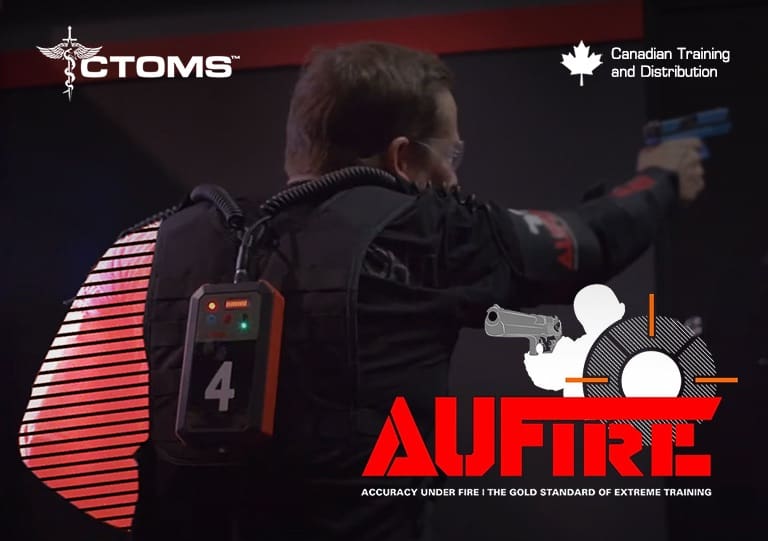
    CTOMS, a leader in tactical medical and training solutions, is proud to announce a strategic partnership with Accuracy Under Fire to provide the AUFIRE training device to Canadian markets. This collaboration unites two industry innovators dedicated to enhancing tactical training with realistic, relevant solutions.

    The AUFIRE training device is a groundbreaking tool designed to bring unparalleled realism to tactical training for military, law enforcement, and first responders. By simulating the physical and psychological hurdles of being wounded in the arm, AUFIRE locks the affected arm, forcing trainees to work techniques, adapt, and fight through challenging scenarios. Key features include:

    Realistic Injury Simulation: Through immobilization, AUFIRE replicates the experience of an arm injury, requiring trainees to continue performing under simulated combat stress.

    Enhanced Tactical Decision-Making: Forces users to adapt their tactics, improving resilience and problem-solving in high-pressure situations.

    Adaptable: AUFIRE can be integrated into existing training programs.

    This partnership underscores our commitment to providing Canadian professionals with innovative tools to prepare for worst case scenarios. AUFIRE’s unique approach to simulating combat injuries enhances training realism, ensuring operators are better equipped to handle these critical situations.

    CTOMS will serve as the exclusive Canadian distributor of the AUFIRE training device, integrating it into their robust portfolio of tactical training and medical solutions. Accuracy Under Fire, focused on realistic training innovations, will leverage CTOMS’ extensive network to bring AUFIRE to Canadian markets.

    Together, CTOMS and Accuracy Under Fire are redefining tactical training, aiming to equip those who serve with the tools to excel. For more information on AUFIRE, visit ctomsinc.com.