GORE-TEX WINDSTOPPER

Archive for August, 2025

MFIX25 Key to Army Fires Transformation

Saturday, August 9th, 2025

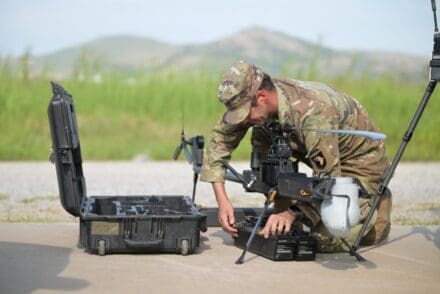
FORT SILL, Okla. — The Fires Capability Development Integration Directorate (Fires CDID) hosted the Maneuver and Fires Integrated Experiment 25 (MFIX25) this month on Thompson Hill at Fort Sill, where Soldiers from the 101st Airborne Division and 4-60th ADA, along with more than 37 industry and government partners, participated in concept-driven experimentation that continues to transform and improve the fires enterprise.
“We’ve always designed MFIX around the Soldier,” said Col. Allen Redford, director of Fires CDID. “This environment gives us the opportunity to put technology in their hands, get feedback in real time, and evolve faster than the threat.”

Throughout the event, participants focused on improving counter-unmanned aerial systems (C-UAS), air and missile defense integration, and sensor-to-shooter capabilities. Unlike traditional lab testing, MFIX placed new technologies in complex, operationally realistic environments challenging systems to perform in real time while allowing Soldiers to provide direct input on usability and effectiveness.

A key area of experimentation included defeating small drones — a growing threat in both conventional and irregular warfare.
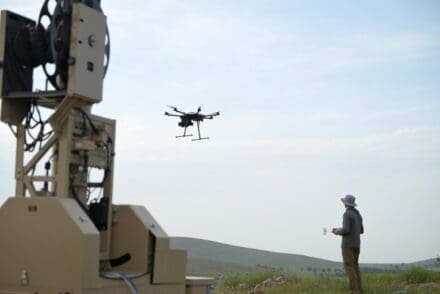
“We’re seeing UAVs become cost-effective, faster and harder to detect,” Redford said. “Our responsibility is to make sure soldiers have the tools to adapt quickly and stay ahead.”

MFIX has several success stories, including bringing systems like Mobile Short-Range Air Defense (M-SHORAD) from concept to fielding. Soldier feedback during previous events helped refine fire control software, improve sensor interoperability and shape requirements that ultimately accelerated procurement timelines.

“MFIX allowed us to close the gap between the lab and the battlefield,” Redford said. “We’ve seen systems move from prototype to combat-ready much faster because of the feedback loop created here.”

In addition to testing new systems, this year’s MFIX emphasized joint integration strengthening the Army’s ability to coordinate with other services across multiple domains. From refining joint targeting processes to improving data sharing between sensors and platforms, interoperability remains a top priority.

Over the years, several technologies have been fielded directly because of lessons learned at MFIX. Systems such as the Pitbull C-UAS jammer and MyDefence Wingman were redesigned based on Soldier evaluations and are now on track for broader use across Army formations.

As MFIX transitions into the larger Cross-Domain Fires Concept-Focused Warfighting Experiment (CDF CFWE), its core mission endures to put emerging technologies in the hands of Soldiers, ensure modernization remains grounded in operational relevance and evaluate concepts and technologies that address future capabilities.

“We ask every participant to leave here thinking: How can this be better, faster, lighter?” Redford said. “That mindset is what drives the Army forward.”

By Laticia Sims
USMC Selects Galvion for Integrated Helmet System

Friday, August 8th, 2025

This was just announced by the Department of Defense. More details soon.

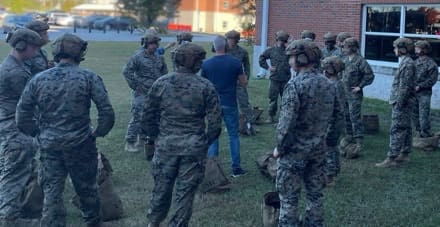
Galvion Technologies LLC, Portsmouth, New Hampshire, was awarded a $131,396,295 firm-fixed-price indefinite-delivery/indefinite-quantity contract for the Integrated Helmet System. This contract provides for the procurement of Integrated Helmet System with associated components and accessories. The ordering period will be a maximum of five years and is expected to be completed in August 2030. Work will be performed in Portsmouth, New Hampshire. No funds will be obligated at time of award. Funds will be obligated on individual task/delivery orders as they are issued. The requirement was procured under the authority of 10 U.S. Code 4022(f) as a follow-on agreement to the prototype agreement (M67854-20-9-1001). Marine Corps Systems Command, Quantico, Virginia, is the contracting activity (M67854-25-D-5300).


USAF Characterizes Fatality at FE Warren AFB as Involuntary Manslaughter, Not Faulty M18 – Arrests Perpetrator

Friday, August 8th, 2025

The US Air Force has released the following statement regarding the death of Amn Lovan on 20 July, 2025 as involuntary manslaughter, committed by another Airman.

“Air Force authorities are conducting a comprehensive investigation into the facts and circumstances of the fatal firearm discharge at F.E. Warren AFB on 20 July 2025 that involved an M18 pistol.  Out of an abundance of caution and based on initial reporting, Air Force authorities ordered various safety precautions involving the M18 after this tragic event.  Since then, the investigation has progressed and an individual has now been arrested on suspicion of making a false official statement, obstruction of justice, and involuntary manslaughter.  As with all individuals accused of a crime, the person arrested in this case is presumed to be innocent until proven guilty in a court of law.  The investigation in this case is ongoing and further details are not available.”

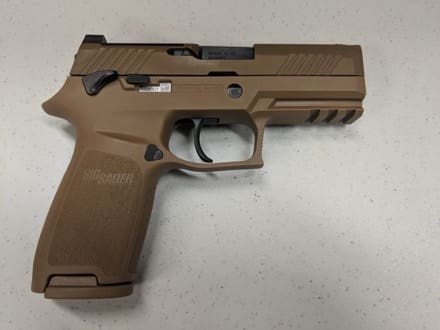
We are waiting to hear from Air Force Global Strike Command whether they have lifted the restriction on use of the M18 pistol put in place in late July.

Update: AFGSC has stated that they have not completed inspections of their M18 fleet yet. We’re not particularly surprised considering it took the command 22 months to release a report on a HMMWV rollover in 23 which resulted in a fatality. They seem to lack a sense of urgency. We hope that doesn’t extend to use of their portions of the nuclear triad in the event they are ever called upon.

SORD – Mountain and Cold Weather Operations Booties

Friday, August 8th, 2025

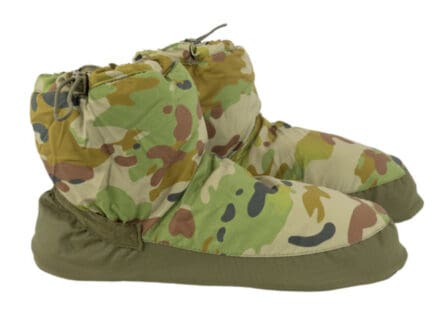
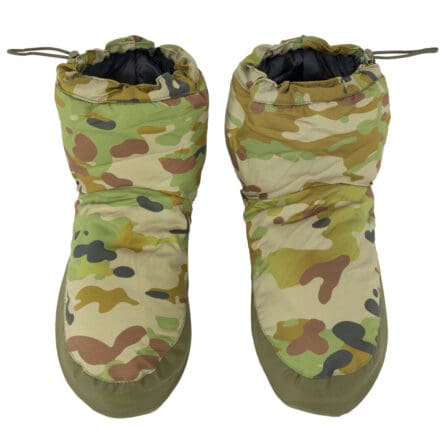
From SORD come the Mountain and Cold Weather Operations (MACWO) Booties.

Insulated with the lightest indication currently available, Primaloft Cross Core Ultra Insulation which contains Aerogel, combined with a DWR-coated NanoSteath 70d Ripstop AU-T Camouflage upper, 210D Ripstop Nylon rand, MIL-SPEC GripTAC non-slip sole and thermal reflective inner lining. These tent booties weigh just 100 grams.

Offered in AU Terrain or MultiCam in sizes 8-10 or 11-13.

www.sordaustralia.com/macwo-booties

Ocean State Innovations and 1947 Exhibiting at SHOP Show

Friday, August 8th, 2025

Ocean State Innovations and 1947 are excited to be attending SHOP Show! Join us on October 7th in a 10,000 sq ft hangar at the Drop Zone at Sky Dive Paraclete XP in Raeford, North Carolina.

We’re looking forward to connecting with industry leaders, showcasing our latest innovations, and exploring new opportunities in tactical and performance textiles.

US Army to Begin Recruiting for Space Operations Specialist MOS

Friday, August 8th, 2025

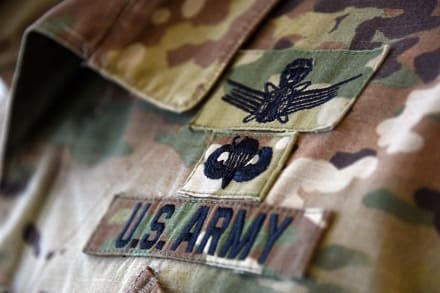
Announced in early May, a new Army enlisted military occupational specialty, 40D, Space Operations Specialist is set to begin recruiting serving Soldiers for around 900 positions. The new MOS is a nonaccessions MOS and only available to those in grades E4-E9.

Soldiers interested in transitioning to MOS 40D must have a minimum of two years of prior service in another MOS and the ability to obtain a Top Secret security clearance.

Creation of the MOS was needed as the Army continues to increase its reliance of space-based assets. Currently, the Army currently has commissioned officers in functional area 40A as its permanent space cadre and this move will help round out the force and increase tactical and technical expertise as the service enables its vision to support multidomain operations. In particular, the Army updating space doctrine and developing its counter-space capability by fielding new EW systems.

“Establishing the Space Operations MOS is a zero-growth effort,” said Command Sgt. Maj. John Foley, US Army Space and Missile Defense Command (SMDC). “A space enlisted MOS will help stabilize career progression and retention for Soldiers and NCOs who temporarily leave their current MOSs for three years to support space operations.”

They will learn all aspects of space operations and global missile defense, thereby becoming the best possible senior enlisted advisors.

Personnel previously “loaned” to the space community will transition back to air defense, signal, and intelligence units, but the manpower authorizations will convert to space operations for accessions open to every MOS in the Army.

The new MOS is expected to become formalized in October of 2026. In the meantime, Soldiers will attend Initial Qualification Training and Additional Skill Identifier 3Y.


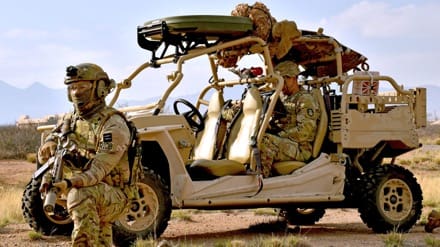
A Soldier with 18th Space Company, 1st Space Brigade, operates a miniaturized tactical space system in a small tactical vehicle guarded by a British Army Special Operations Brigade soldier during Project Convergence Capstone 4 experimentation at White Sands Missile Range, Feb. 28, 2024. (US Army photo by Brooke Nevins)

Meanwhile, the Army plans to deactivate two space control companies in the 1st Space Brigade and simultaneously activate two space control companies in the planned Theater Strike Effects Groups, the first of which will be embedded with Indo-Pacific Command (INDOPACOM) in October, 2027. As far as enabling systems go, the Army has fielded five of the Tactical Integrated Ground Suite Version 2 (TIGS V2) which are manportable electronic attack systems. TIGS V2 was developed based upon the Broadband Advanced Ground Radio (BAdGR) effort by SMDC.


FirstSpear Friday Focus: Contractor Bag w/ Frame

Friday, August 8th, 2025

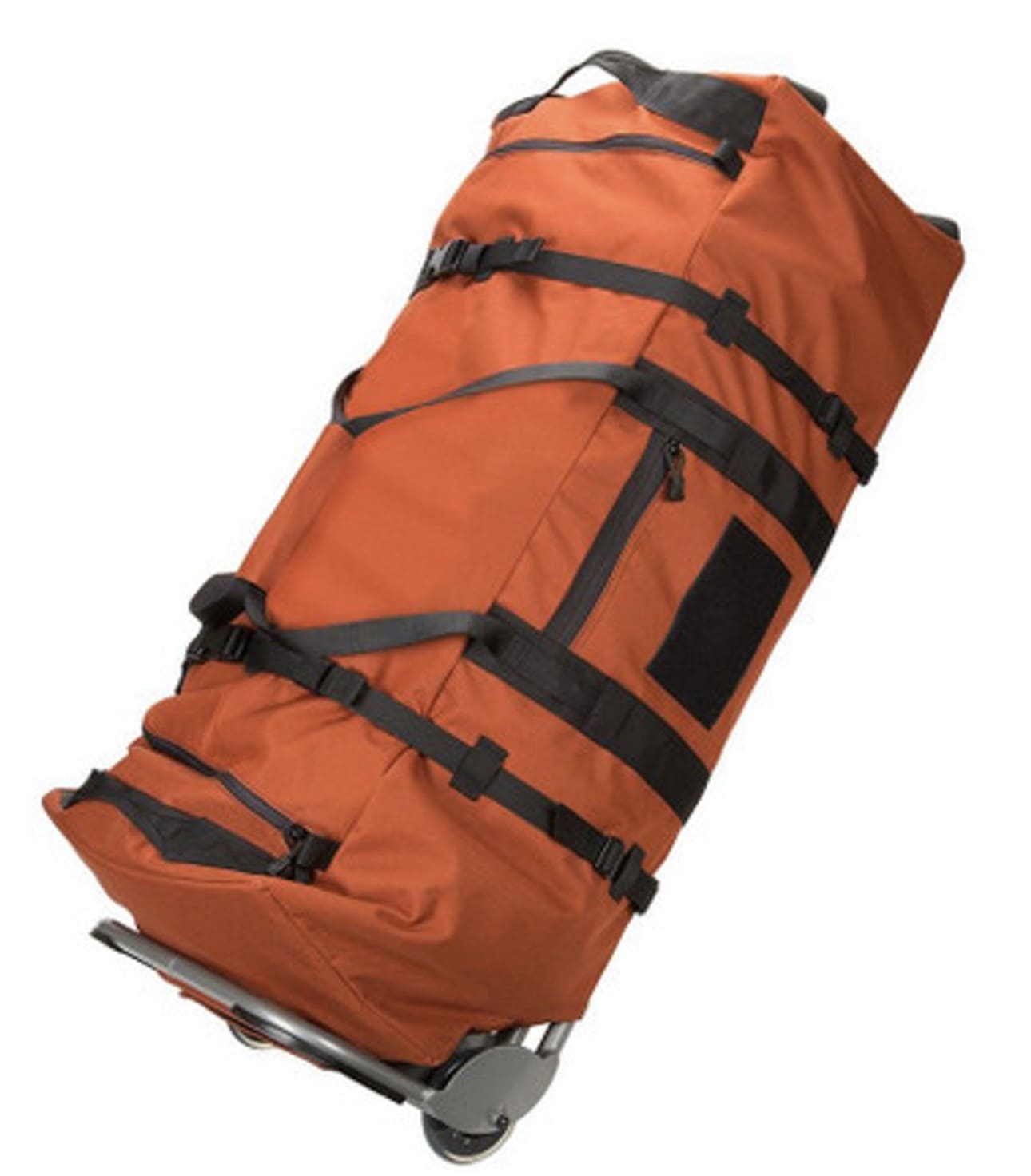
This week’s focus is a piece of equipment that embodies versatility, durability, and adaptability: the Contractor Bag. Whether you’re on a mission in rugged terrain, working in demanding environments, or simply need a reliable way to transport gear, this bag has you covered.

• Lightweight
• Durable
• Removable metal frame
• Oversized zippered opening

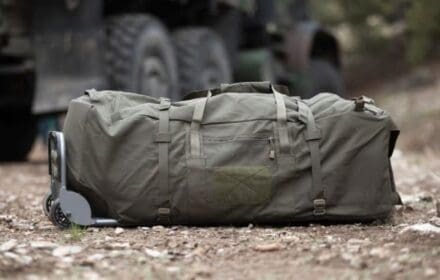
The Contractor Bag is a spacious duffel styled bag with removable frame. The oversized zippered opening makes it easy to load and features secondary retention straps with quick release buckles. The frame is engineered to be lightweight and durable. It has 2 wheels which make the bag easy to maneuver. There are also reinforced handles in several key locations and external zippered pockets.

Dimensions

• 16” wide
• 11.5” deep at the top 12.5” deep at the bottom
• 36” long

It’s more than just a bag; it’s a reliable partner in your mission success, designed to support you no matter where the job takes you.

For more information, check out www.first-spear.com/contractor-bag-and-rolling-frame.

For more information or a request for estimate, click here.

The C5ISR Center Uses AI, ML to Transform Countermine Operations

Friday, August 8th, 2025

FORT BELVOIR, Va. — For nearly two centuries, explosive hazards, EH, have plagued the battlespace and posed a significant threat to our warfighters. During Operations Enduring Freedom and Iraqi Freedom, EH were a primary threat to vehicles and a chief source of Warfighter casualties. Today, that threat has evolved and includes notably more complex and lethal systems, such as sophisticated new top-attack EH. Such threats demand a modern response and solution.

By integrating advanced sensor technology, artificial intelligence and machine learning the U.S. Army’s countermine mission has entered a new era — an era defined by greater survivability, situational awareness, enhanced operational speed, accuracy, and safety.

The U.S. Army’s Command, Control, Communications, Computers, Cyber, Intelligence, Surveillance and Reconnaissance (C5ISR) Centeris at the forefront of change where mine-detection innovation meets the battlefield. The collaboration between scientists, engineers, technical experts and Soldiers creates a unique opportunity for hands-on technology development and direct Soldier feedback.

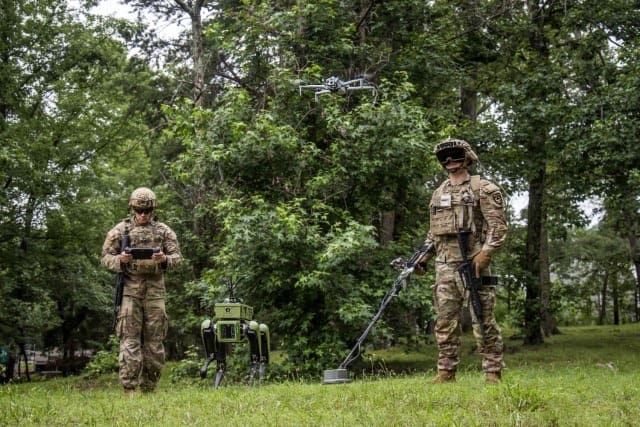
Across the Army, traditional mine detection is often manual and can put Soldiers very close to harm’s way. However, with the implementation of advanced sensor technology, robotic platforms, and AI-powered systems operated at a distance, warfighters can autonomously detect mines and other threats while maintaining safe standoff distances from the explosives.

“If you’re looking at what C5ISR Center is doing with Strykers, we’re taking a system that has great armor, but limited visibility, limited situational awareness, and we’re integrating new sensors across it so that Soldiers can see threats 360 degrees around the vehicle, in the daytime or at night,” said Collin Bright, a research engineer with C5ISR Center.

The C5ISR Center’s Countermine team incorporated advanced detection capabilities into thermal sensors that C5ISR integrated into a Stryker, giving Soldiers increased visibility into hidden dangers. By leveraging AI and ML software and technology, these integrations will significantly increase Soldiers’ reaction time and ultimately increase their survivability.

“The C5ISR Center has integrated a Stryker with thermal capabilities,” said Sierra Pangilinan, a computer scientist with C5ISR Center. “By integrating the Stryker with this technology, it’s like giving Soldiers an extra set of eyes. Especially when they’re tired. Soldiers can work a 24-or-48-hour or more mission. These tools ensure they’re still protected and aware.”

As the complexities of battle continue to grow across even more unpredictable terrains, the need for flexible and adaptable, soldier-centric technology becomes imperative. The C5ISR Center represents Army innovation and a peek at the future with — software and sensors that adapt to any platform, algorithms that improve with every mission, and most importantly, a system that puts soldier survivability at the center of every design.

“The goal is to move away from World War II-era methods,” said Pangilinan. “Now, we’re applying agile development, scalable platforms, and machine learning to build tools that not only win wars — but save lives.”

Staff Sgt. Christopher Miller, a combat engineer assigned to C5ISR Center, emphasized the importance of the Center’s innovation and technological advancements which assist with the execution of missions. “We’re no longer dismounting blind,” Miller said. “With 360-degree cameras and AI threat tagging, we know what’s outside before that ramp drops. That gives us the edge — whether it’s returning fire or avoiding landmines. Without the technology, you can only hope that your intel is spot-on.”

In addition to saving the lives of Soldiers, the center is focused on saving lives long after a war or conflict ends. Unfortunately, mines don’t disappear after a conflict, so having the detection technology available post-conflict is crucial.

“The passion behind the mission is shared across military, civilian and contractor teams,” Bright said. “Everybody here — from senior scientists to interns — believes in what we’re doing. “And when you see your work directly contributing to Soldiers coming home safely, it’s not just a job — it’s a calling.”

By Kyle Richardson, C5ISR Center Public Affairs