GORE-TEX WINDSTOPPER

Archive for September, 2025

Cubic Wins United States Air Force (USAF) Contract for Halo Satellite Communications Antenna

Thursday, September 25th, 2025

Delivering adaptive and resilient communications

SAN DIEGO – September 23, 2025 –

Cubic Defense’s, Secure Communications business unit, a leading provider in secure communications has been awarded a cost-plus-fixed-fee contract by the Air Force Research Laboratory to advance Halo, a multi-link, multi-band, multi-orbit hybrid SATCOM antenna. The contract will run through July 22, 2027, with the work to be performed in San Diego, CA.

“Receiving this award reflects our success to date in the advancement of this technology and our continued commitment to work alongside the government and deliver assured data access to the Warfighter in a timely fashion,” said Dr. Dan Moran, Vice President and General Manager of Cubic Secure Communications. “Halo will deliver compact, power-efficient, and resilient satellite connectivity to meet critical mission needs in multiple domains.”

Halo is a software-defined antenna system for hybrid SATCOM operations. It supports simultaneous transmission and reception in Multiple bands, enabling high-throughput, multi-beam communications. Designed for resilience, Halo maintains redundant network paths and connects seamlessly across multiple constellations. Halo enables end-users to have a single device that can securely leverage SATCOM services from multiple commercial and government satellite providers.

Built on open standards and optimized for ultra-low size, weight, and power (SWaP), Halo is scalable across many platforms and missions.
The system features a flat-panel active electronically scanned array (AESA) with 2D beam steering, delivering robust and flexible connectivity for modern defense operations.

To learn more about Cubic Secure Communications, visit
www.cubic.com.

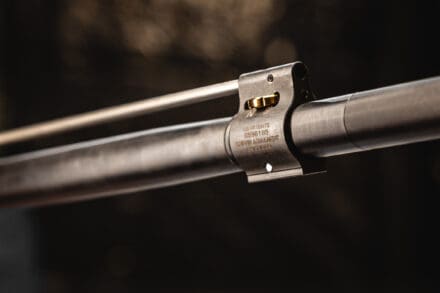
Griffin Armament Releases Adjustable Gas Block

Thursday, September 25th, 2025

Watertown, WI – September 22, 2025 –

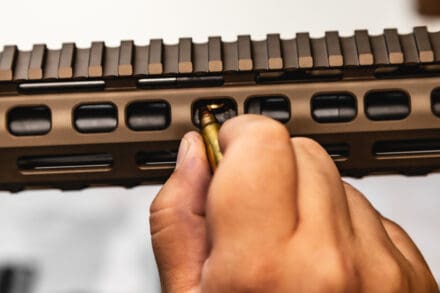
It has long been Griffin Armament’s belief that the ideal AR-15 should have 2 simple modes – Normal and Suppressed – affording a K.I.S.S. concept optimization for use with and without suppressors, easily adjustable by tool-less means or with a tool any sportshooter or rifleman has such as a round of 5.56mm ammunition which is already used for example to remove the firing pin retaining pin from the bolt. The Griffin Adjustable AR-15 Gas Block achieves this simplicity and is a product made possible by the acquisition of two patents from MicroMoa LLC – the original manufacturers of the “Govnah gas block”.

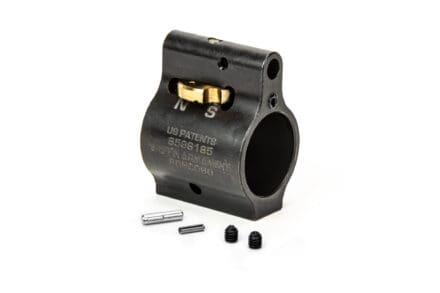
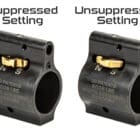
The Griffin Adjustable AR-15 Gas Block provides normal and suppressed operation via rotationally sliding a 17-4 regulator plate from the Normal position to the Suppressed position. This regulator plate is detented by a 718 inconel spring and ceramic ball bearing, ensuring reliability under extreme operating temperatures. There are two 180° opposed sides of the regulator plate- each identifiable from the other- each side affording a normal and suppressed setting giving users the choice between two slightly different suppressed port holes in their chosen configuration. The suppressed gas ports on conventional plates are .004” apart offering two sizes, and the low back pressure plates have 2 sizes .008” apart with the exception of the .300BLK plate.

Griffin to-date has developed a total of 9 plates to address the majority of setups in the hands of end users today. Additionally, we offer 2 pre-drilled “Drill Your Own” plates with .033? starting holes to improve the ease of drilling, that allow the custom side end  user to determine and drill their preferred hole sizes for their desired results. One of the pre-drilled options has the two .096? normal (unsuppressed) operation pass through holes pre-drilled, and the other has all four holes spot-chamfered to .108? with .033” pre-drilled starter holes only, allowing end users to customize all four port sizes. Which plate you should use is a factor of your host firearm’s gas system length, its caliber, and the type of suppressor being used (conventional or low back pressure/high flow), or a combination of both for those with extensive suppressor collections.

Rather than providing a one-size fits all adjustable gas block solution, the Griffin Adjustable Gas Block is more tailored to your setup making changing settings simple without the need to remember numbers or positions. This simplistic and visual objective 2-position adjustment eliminates confusion, and allows the user to easily identify what state the rifle is in at a glance. This gas block was designed to fit underneath most rail systems on the market, accessible through the slots in the rail, and requires the use of a straight gas tube. A .625” version for pencil barrels is planned, and a future AR-10 model will utilize a normal bent gas tube.

“There are a plethora of adjustable gas block solutions on the market, but coming from a military background, we always felt they were too broad in their application, too expensive, or required modifications to the firearm to be an ideal solution for the average gun owner. I always wanted a 2 position setup, normal and suppressed, without needing to remember numbers. When you have 18 settings for example, like a one size fits all baseball cap, 16 of them never get used once you determine which setting your firearm and suppressor combination requires. Our block gets you much closer to ideal performance, while still offering the flexibility of the 2 different sides of the plate. We spent a significant amount of time on design and optimization of the manufacturing process to bring the cost to a level most people can afford – with a street price just under $100.”

– Austin – Director of Product Development – Griffin Armament

Key Points:

– 17-4 H900 Heat Treated Stainless Steel Regulator Plate (User’s choice based on setup)

– 32RC hardened, Black Oxide Finished 416R Barrel-Quality Steel Block

– .750” Gas Block Diameter with Mil-Spec Tolerances of Gas Tube and Barrel diameters

– Low Profile Design – Fits Under Most Rails

– STD .460 knurled cup point set screw spacing

– Pre-Drilled for ease of barrel pin installation

– Includes all required pins and fasteners

Perpetual Lifetime Warranty

Specs:

– Weight: 1.8 oz

– MSRP: $102.95 (Includes User’s Choice of Regulator Plate)

– Additional Regulator Plates can be purchased for $34.95

– The Adjustable Gas Block will be offered as an optional $45 Upgrade for Complete Griffin Armament uppers, and Griffin Armament Rifle Builds

To find out more on Griffin Armament’s entire product line, please visit our website at www.GriffinArmament.com.

For attendees of the 2026 SHOT Show, Griffin Armament will be exhibiting the Griffin Adjustable Gas Block along with the rest of their product line at Booth # 20455.

Streamlight Launches Sidewinder Compact III

Thursday, September 25th, 2025

Ultra-Compact, Multi-Fuel Flashlight with 185° Tilting Head, Mounting Options, and a User-Configurable LED Option

EAGLEVILLE, PA, August 26, 2025 – Streamlight® Inc., a leading provider of high-performance lighting, announced the launch of the Sidewinder Compact® III, an ultra compact, high-performance, multi-fuel flashlight with multiple LED sources. This light is engineered to meet a variety of hands-free task illumination requirements with various color LEDs that are operable at varying outputs and run times. With its 185-degree tilting head, durable build, gear and helmet mounting capabilities, the Sidewinder Compact III delivers powerful performance in a lightweight, highly versatile form.

The new Sidewinder Compact III features a user-configurable model with LED options that allows users to select two of three color LEDs (red, green or blue) in addition to standard white and infrared (IR) outputs. The military model includes white, red, blue and IR LEDs, while the aviation model contains white, green, red and IR LEDs. Each LED operates at multiple brightness levels, and includes a strobe mode. The light uses either one AA alkaline or one 3-volt CR123A lithium battery, offering flexible power options and extended run time in extreme environments.

“We engineered this light with versatility at its core,” said Michael F. Dineen, President of Streamlight. “It offers a powerful combination of compact design, high performance, and rugged reliability. Whether it’s mounted on a helmet, clipped to a vest, or used handheld, the Sidewinder Compact III is ready to perform.”

The light’s white LED provides up to 275 lumens and 3,200 candela on High with a beam distance of 113 meters. Run times range from 70+ hours on Low when using an AA battery, and 100+ hours when a CR123A battery is inserted. The light’s color and IR LEDs also offer long run times and are ideal for preserving night vision, signaling, or task-specific visibility needs.

The Sidewinder Compact III was designed with a compound On-Off mode selector switch that separates the On-Off, dimming, strobe and LED-selection functions. The rotary selector knob features a tactile IR indicator and pull-to-turn locking design that provides easy operation even with gloves, while also preventing accidental mode changes. The light also features an unbreakable polycarbonate lens with scratch-resistant coating.

The Sidewinder Compact III includes a durable belt/gear clip with integrated helmet mount features, which fits existing Sidewinder® helmet mounts adapters. A cord attachment hole on the clip supports up to 25 lbs. pounds of load.

Constructed from high-impact nylon, the Sidewinder Compact III is built to withstand rugged use. It is IPX7 waterproof to 1 meter for 30 minutes and impact-tested to 3 meters.

Measuring 3.1 inches long, the light weighs 3 ounces with a AA battery and 2.7 ounces when using one CR123A lithium battery. The light has an MSRP that ranges from $137.47 to $198.22, depending on the model. The Sidewinder Compact III is available in Coyote and comes with Streamlight’s One-Year Limited Warranty.

Brookwood Stocking 70D Polyester in MultiCam Alpine

Thursday, September 25th, 2025

Brookwood Introduces IN-STOCK Flite™ 50 x 70D Polyester in MultiCam® Alpine for Winter 2025
Brookwood is expanding its in-stock offerings with the launch of Flite™ 50 x 70D lightweight polyester fabric printed in MultiCam® Alpine, available now and ready to ship.

Engineered for performance in cold-weather environments, Flite™ delivers the ideal balance of strength, packability, and lightweight construction. Designed with winter operations in mind, this fabric is particularly well-suited for overwhites and other tactical applications where concealment in alpine terrain is critical.
By making this fabric available in-stock, Brookwood ensures faster turnaround for customers needing reliable winter camouflage solutions this season.

For more information or to place an order, visit Brookwood’s website brookwoodcompanies.com/product/flite-multicam-alpine.

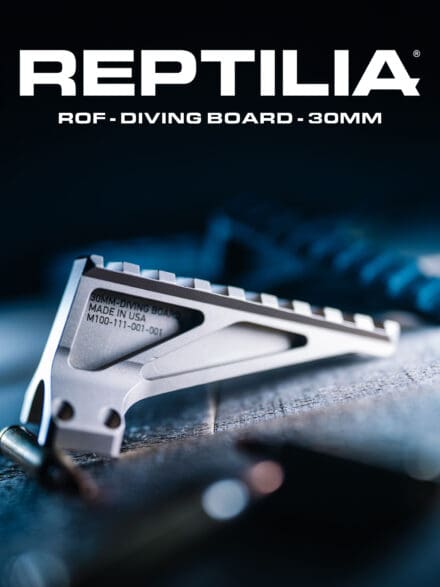
Now Available: Reptilia ROF – Diving Board – 30MM A DoD-Requested Solution, Built for Strength and Precision

Thursday, September 25th, 2025

HILLSBOROUGH, NC – September 25, 2025. Reptilia® is proud to announce the release of the ROF™ – Diving Board – 30MM, expanding the proven ROF platform to support 30mm optics.

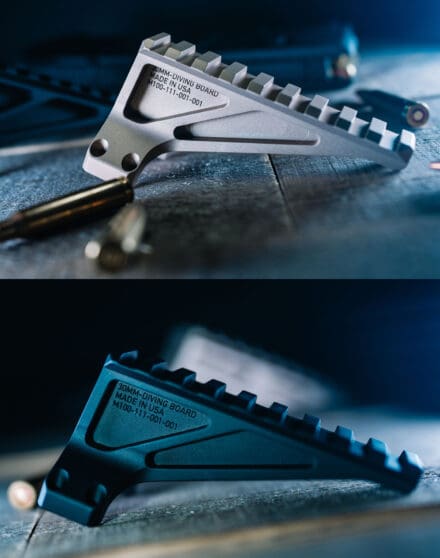
Originally designed at the request of a U.S. Department of Defense customer, the ROF™ Diving Board was created to integrate seamlessly with Geissele® Super Precision® Magnified Optic Mounts and is also fully compatible with Reptilia® AUS™ Mounts.

The Diving Board adds a MIL-STD-1913 rail at the optimal position and height, enabling users to mount laser range finders, designators, or miniature red dot optics with precision and confidence.

The new 30mm ROF™ Diving Board is available now in Black and  FDE MIL-STD Type III, Class 2 hard anodize.

Key Specifications:

  • Machined from billet 7075-T6 aluminum
  • MIL-STD, Type III, hardcoat anodized
  • Nitrided 4140 steel screws
  • 100% Made in USA

Like all Reptilia® products, the ROF™ Diving Board reflects the company’s mission to deliver professional-grade solutions that balance innovation, reliability, and real-world performance.

Availability
The ROF™ – Diving Board – 30MM is available now at reptiliacorp.com.

Zulu Origin – LODEout

Thursday, September 25th, 2025

Add this to the list of cool stuff I saw at DSEI.

LODEout is Zulu Origin’s magnet based attachment system and I got a chance to check it out in the Edgar Brothers stand during the recent DSEI in London.

Zulu Origin is itself an interesting story. Several Veterans of various British military units got together after some time in university and industry to start a company solving problems facing the individual Soldier. Those same solutions, like LODEout, can be applied to a variety of applications.

The LODEOut system uses two components:

Receivers (above) and Modules (below)

The Receivers are designed to be used in conjunction with existing legacy systems like MOLLE or a Velcro grid and facilitate the rapid donning and doffing of the Modules.

Modules are purpose built pouches or panels, backed with rare earth magnets which plug into sockets on the Receiver. The magenta are backed up by the Rabbit Teeth Retention which “bite” into the top of the Receiver so the Module won’t come loose during operations.

I think of the Rabbit Teeth Retention like the teeth on the killer rabbit from “Monty Python and the Holy Grail” that won’t let go once they get ahold of you. Except, these will let go as long as you pull the magnets free of their sockets and then pull the panel up. RTR are optional use in case the Module is one you want to be able to quickly detach. Use RTR for long movements or airborne and maritime operations.

As you can see in the top photo, Zulu Origin has already created a wide variety of Modules including Strip Charge Platforms, Rapid Deployment Stretchers (RD Stretcher), Individual First Aid Kits (IFAK), and Utility Pouches which have seen operational use with UK Forces. My favorite Module keeps a quadcopter mounted at the ready on the thigh, for rapid employment.

Zulu Origin is also in negotiation with numerous other manufacturers to licensing the LODEout system. Look for more info on them soon.

25th Infantry Division Leads the Way in Army Modernization with xTechPacific 2025

Thursday, September 25th, 2025

SCHOFIELD BARRACKS, Hawaii – From September 9–18, 2025, the 25th Infantry Division transformed its training areas into a living laboratory for the U.S. Army’s modernization efforts, hosting the xTechPacific 2025 competition.

The event, which brought ten innovative small businesses to Oahu, gave Army and joint leaders a rare chance to see emerging capabilities tested in realistic operational settings. Soldiers of the 25th Infantry Division and partner units integrated new technologies into live experimentation across Schofield Barracks and Joint Base Pearl Harbor-Hickam, culminating in Distinguished Visitors Day on September 18.

For the 25th Infantry Division, xTechPacific was more than just a showcase of new tools. It was a powerful demonstration of the Army’s Transformation in Contact initiative, which ensures emerging technologies are tested, refined, and employed by operational forces at the point of need.

Transforming in Contact

The Army’s Transformation in Contact initiative is designed to shorten the gap between laboratory innovation and battlefield application. Instead of waiting for long acquisition cycles to deliver fully mature systems, the initiative prioritizes getting promising prototypes into the hands of Soldiers early — allowing them to shape how technology evolves.

As one of the Army’s forward-deployed divisions in the Indo-Pacific, the 25th Infantry Division is uniquely suited for this mission. Its training environments mirror the diverse challenges of the theater: dense jungle terrain, mountainous regions, urban spaces, and maritime surroundings. By hosting xTechPacific 2025, the Division positioned itself as the Army’s bridge between innovators and operational demands.

“The 25th Infantry Division is leading the Army in continuous transformation, and we welcome every opportunity to partner with industry,” said U.S. Army Maj. Gen. James Bartholomees, commanding general of the 25th Infantry Division and U.S. Army Hawaii. “This division was the first in contact on the day of Pearl Harbor, and we have remained in contact ever since—that’s why innovation is so critical. Innovation today directly impacts our readiness against both current and future threats in the most dynamic theater in the world.”

Confronting the Hidden Threat: UXO and IED Detection

Few threats create more danger for ground forces than buried explosives and unexploded ordnance (UXO). In the Indo-Pacific, where soils vary from volcanic rock to dense clay, detecting these hazards is particularly challenging.
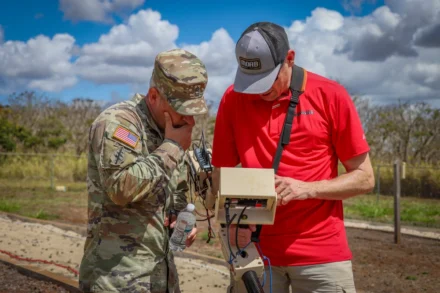
At Schofield Barracks’ South Range, innovators worked side-by-side with Soldiers to test advanced detection technologies. Some systems used drone-mounted magnetometers to map anomalies hidden underground. Others combined ground-penetrating radar with thermal imaging to distinguish between clutter and dangerous ordnance.

Soldiers provided critical feedback on ease of use, portability, and performance under stress. For the Division, these tests were not abstract — they reflected real threats encountered during operations.

“The work being done here in the Indo-Pacific is decisive for giving our troops an advantage in protection and capability,” said U.S. Army Lt. Gen Joel B. Vowell, deputy commanding general of U.S. Army Pacific Command. “When Soldiers, industry, and academia come together in real-world experimentation, the results can be transformational.”

The UXO experimentation underscored Transformation in Contact’s central idea: Soldiers must shape the development of tools that will one day protect them on patrol or in combat. By hosting these trials, the 25th Infantry Division directly influenced how the Army will confront the IED and UXO challenge in the years ahead.

Dominating the Spectrum: Electronic Warfare

Electronic warfare (EW) is one of the most contested domains in modern conflict, and the Indo-Pacific presents unique challenges across vast distances and crowded airwaves. For the 25th Infantry Division, ensuring its formations can fight through interference, jamming, and deception is essential.
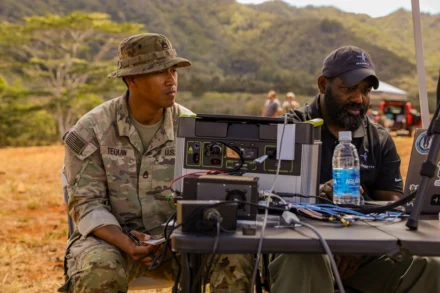
At South Range, Soldiers tested portable spectrum-awareness systems designed to detect and classify enemy signals. These devices, many of them compact enough to fit in a rucksack, used artificial intelligence and advanced processing to rapidly identify emitters across multiple frequencies.

During live scenarios, Soldiers moved through training lanes where they were challenged to detect and respond to simulated electromagnetic threats. Some systems automatically geolocated emitters, allowing units to pinpoint hostile sources. Others provided simplified user interfaces to reduce the cognitive load on Soldiers in fast-moving situations.

“For the first time, Soldier experimentation was incorporated directly into this competition, shaping how technology meets mission needs,” said Jessica Stillman, the U.S. Army xTech program manager. “These innovators received direct feedback from Soldiers and scientists to refine their solutions and ensure operational relevance. This competition embodies how the Army is transforming—incorporating Soldier experimentation into innovation from concept to capability.”

For the Army, xTechPacific’s EW demonstrations showed how Soldier feedback can make advanced technologies more practical for the field. For the 25th Infantry Division, the event reinforced its role as a leader in shaping the Army’s ability to dominate the spectrum in contested environments.

Securing the Seas: Watercraft Defense and Logistics

Operating in the Indo-Pacific means operating across the world’s largest maritime theater. For the Army, this requires not only defending watercraft from threats but also sustaining forces across distributed islands and austere shorelines.
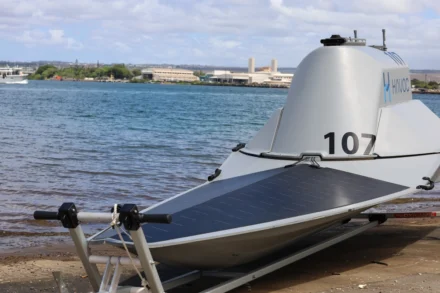
At Ford Island Waterway and later at Schofield Barracks, the 25th Infantry Division helped evaluate technologies designed to meet these challenges head-on.

Autonomous surface vessels demonstrated their ability to provide layered defense for logistics convoys, escorting larger craft while detecting and neutralizing potential threats. Other systems focused on logistics, showcasing modular platforms that could be assembled in shallow waters to support distributed operations.

Soldiers tested these systems in scenarios simulating contested maritime environments, providing input on maneuverability, reliability, and adaptability to real-world missions.
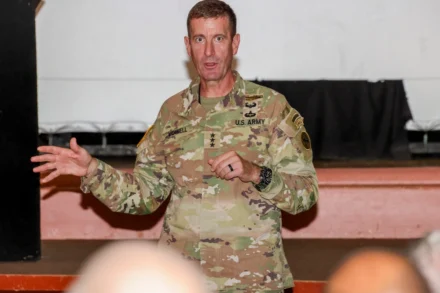
“I’ve seen firsthand how Soldiers, warrant officers, and industry working together can develop life-saving solutions in combat,” said Vowell. “We don’t have the luxury of mass; instead, we must innovate asymmetrically to offset our adversaries’ advantages.”

The Division’s role in hosting these demonstrations highlighted how Transformation in Contact extends beyond the battlefield ashore. By testing technologies in Hawaii’s waterways, the 25th Infantry Division reinforced its readiness to operate in a truly joint, multi-domain environment.

Distinguished Visitors Day: Showcasing Innovation

On September 18, senior Army and joint leaders gathered at Schofield Barracks for Distinguished Visitors Day, the capstone event of xTechPacific 2025.

Guests observed live technology demonstrations in the morning before transitioning to Schofield’s Sgt. Smith Theater for a watercraft expo and the award ceremony. There, the Army recognized three winning innovators, each earning prize funding and the opportunity to pursue further development under the Army’s Small Business Innovation Research program.

“The ideas and technologies you bring will help our reconnaissance companies deploy, fight, and win in multi-domain operations” said Bartholomees.

For leaders, the day was about more than recognizing innovation — it was about seeing firsthand how the Army is accelerating modernization by placing Soldiers at the center of experimentation.

A Division at the Forefront

The xTechPacific 2025 competition reaffirmed the 25th Infantry Division’s position as one of the Army’s leading formations in modernization. By hosting live experimentation in Hawaii, the Division not only validated promising technologies but also demonstrated how the Army is operationalizing its Transformation in Contact initiative.

“Innovation today directly impacts our readiness against both current and future threats in the most dynamic theater in the world,” said Bartholomees.

As the Army looks to the future, the 25th Infantry Division’s role will remain vital. Positioned at the center of the Indo-Pacific, the Division will continue to connect innovators with operational realities, ensuring Soldiers remain ready, lethal, and adaptive in the face of evolving threats.

The Division’s leadership in this effort is not new. Over the past several years, the 25th Infantry Division has been at the cutting edge of transformation by fielding and refining some of the Army’s newest capabilities. The High Mobility Artillery Rocket System (HIMARS) has already proven its value in Pacific-focused training exercises, providing long-range precision fires that extend the Division’s reach across the region’s vast maritime and island geography. By incorporating HIMARS into distributed operations, the Division has shown how precision fires can deter aggression and provide critical options to commanders.

The Division has also embraced the Infantry Squad Vehicle (ISV), a lightweight, highly mobile platform that increases the agility of small units in jungle and mountainous terrain. Soldiers have employed ISVs in rigorous training scenarios across Hawaii, demonstrating how these vehicles enhance maneuverability, reduce fatigue, and enable faster movement in terrain that would otherwise slow infantry forces.

Beyond new equipment, the Division has restructured its formations to better align with the demands of multi-domain operations. Adjustments in task organization, command relationships, and sustainment practices reflect lessons learned through repeated experimentation. These changes allow the Division to operate more effectively as part of joint and coalition task forces, ensuring its units are ready to fight and sustain operations across dispersed island chains.

By combining these advancements with its role as host of xTechPacific, the 25th Infantry Division continues to demonstrate how Transformation in Contact is more than a concept — it is a daily practice. Positioned at the center of the Indo-Pacific, the Division will remain the Army’s proving ground for innovation, ensuring Soldiers stay ready, lethal, and adaptive in the face of evolving threats.

“The technologies showcased [at xTechPacific] will not only serve the Army, but also benefit society,” said Bartholomees. “Their dual-use applications, ranging from disaster response to infrastructure security, demonstrate how military innovation drives national progress and resilience.”

Story by SSG Alvin Conley 

25th Infantry Division

GA-ASI Line of UAS Passes 9 Million Flight Hours

Wednesday, September 24th, 2025

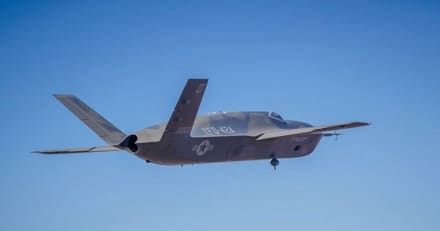
SAN DIEGO – 21 September 2025 – Ongoing flight operations of the new YFQ-42A Collaborative Combat Aircraft helped General Atomics Aeronautical Systems, Inc., set a new company record this week, pushing past a total of 9 million flight hours.

GA-ASI has been tracking total flight hours across its fleet of unmanned aerial systems since the company’s inception 33 years ago. Its line of UAS includes iconic aircraft such as the Predator®, Reaper®, Gray Eagle®, Avenger®, and MQ-9B SkyGuardian®/SeaGuardian®


“What an amazing moment,” said GA-ASI President David R. Alexander. “Having spent so much time supporting the U.S. military and its allies around the world with our other aircraft, it seems fitting that flight testing our new unmanned fighter jet for the U.S. Air Force was what helped bring us past this milestone as we look ahead to a program that will change air dominance again.”

YFQ-42A’s ongoing flights are only part of GA-ASI’s unmanned operations. At any point in time, as many as 50 GA-ASI aircraft are in flight supporting global security for U.S. and allied users worldwide.

GA-ASI’s aircraft have been a mainstay for the United States, allies and partners since the first flight of what was then called the RQ-1 Predator on July 3, 1994. The U.S. Air Force changed the designation to MQ-1 Predator in 2002. Other aircraft, including the MQ-1C Gray Eagle, MQ-9A Reaper, and MQ-20 Avenger, followed as GA-ASI drove forward the capabilities and employment of uncrewed aircraft.


More recently, GA-ASI has begun deliveries of its new MQ-9B SkyGuardians and SeaGuardians. MQ-9B is the world’s most advanced Remotely Piloted Aircraft System, delivering exceptionally long endurance and range — with automatic takeoff and landing under pole-to-pole satellite-only control — and will be able to operate in unsegregated airspace using the GA-ASI-developed Detect and Avoid system.

GA-ASI has made deliveries to the U.K.’s Royal Air Force (Protector) and the Belgian Air Force, and are fulfilling orders from Canada, Denmark, Poland, Japan, Taiwan, India, and the U.S. Air Force in support of the Special Operations Command. MQ-9B has also supported various U.S. Navy exercises, including Northern Edge, Integrated Battle Problem, and Group Sail.

Meanwhile the company has been supporting the development of new aircraft and concepts of operation for the future of airpower. GA-ASI built and flies the XQ-67A Off Board Sensing Station – its second uncrewed combat jet – for the U.S. Air Force Research Lab. Just last month, GA-ASI announced the start of flight testing for its third, the new YFQ-42A Collaborative Combat Aircraft. The new unmanned fighter jet has been designed and developed by GA-ASI and is built for rapid production, in large quantities, at an affordable price.