Aquaterro

Archive for December, 2025

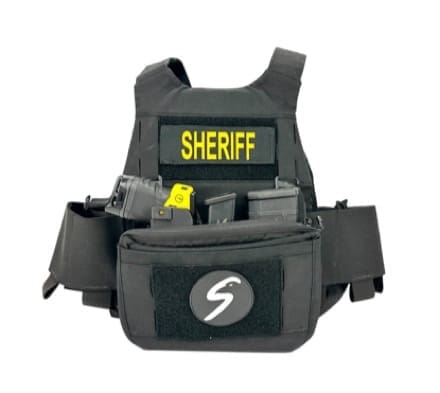
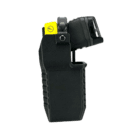
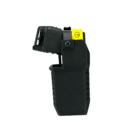
Soileater T10-V2 Insert for Taser 10

Monday, December 29th, 2025

The new T10-V2 Insert from Soileater is a fully ambidextrous Insert designed to securely hold your Taser 10® inside of your chest-rig or plate carrier.

Features:

Out of the box Level-I friction retention with the option to add Level-II Retention by installing the included Retention Kit straps. 

Comes with 2x Hook & 2x Loop adhesive Velcro® strips that allows you as the end-user to match the Velcro® inside your chest-rig or plate-carrier. This means that the T10-V2 can be inserted into any chest-rig or plate carrier that is lined in Hook or Loop fastener. 

Equipped with an Internal magnet inside, to work with the Axon® Signal system for BWC.

The T10-V2 completely covers the ambi-safety on the Taser 10®, reducing the risk of the safety accidently being deactivated, and the light and activation sound being emitted. 

The T10-V2 is equipped with a safety ramp that places your Taser 10® from fire to safe in case you accidently attempt to holster your Taser while on fire. (Always place your Taser on safe prior to attempting to re-holster).

www.soileater.com/product-page/t10-v2-insert

The owner of Soileater is a fulltime LEO /SWAT guy, who strives to bring innovative solutions to problems frequently encountered by law enforcement and SWAT team members.

Orqa Scales Global Production Capacity to 1m Drones

Monday, December 29th, 2025

Orqa’s New Global Manufacturing Program Expands Proprietary Drone Production to 1 Million Units Annually

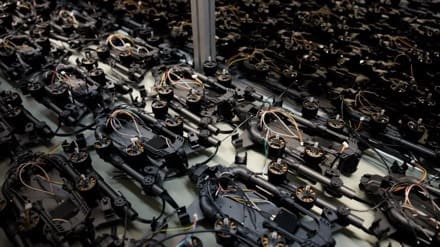
Osijek, Croatia / California, US — December 2025: Orqa, Europe’s leading developer of FPV (first-person view) and unmanned aerial systems (UAS), today announced the launch of its Global Manufacturing Partnership Program, a strategic initiative that will expand Orqa’s production capacity to more than one million drones per year through collaborations with the US Army and with trusted partners worldwide.  This game-changing move will create, for the first time, a resilient global supply chain for the industry, wholly independent of China.

Building on its proven ability to produce 280,000 drones annually at its European headquarters in Osijek, Croatia, Orqa is now extending this robust production model globally through a decentralised network of strategic manufacturing partners. 

Partnerships are already established across key territories in North America, Europe, the Middle East, and the Indo-Pacific, with additional agreements in progress to further expand Orqa’s global footprint. Together, these facilities will form a distributed and resilient production network that meets rising global demand for defence-grade UAS platforms while supporting re-industrialisation and creating high-value manufacturing jobs in local markets. 

“We are a rapidly growing business with the capacity to produce 280,000 drones at our headquarters alone,” said Srdjan Kovacevic, CEO of Orqa. “Our Global Manufacturing Partnership Program extends this capability by enabling allied markets to produce the same high-performance systems using Orqa’s standardized components. The agreements we’ve already secured put us on track to achieve our target capacity of one million drones per year, a significant milestone at a time when global security challenges are evolving rapidly.”

Through this model, Orqa combines world-leading engineering with localized manufacturing agility, ensuring that each manufacturing partner can deliver drones and components to the highest standards while reducing lead times, logistics complexity, and regulatory barriers. By increasing global production to 1 million per year, allied territories will have the means to level up their defence tech capabilities significantly.

orqafpv.com

Guardians Wear New Space Force Dress Uniforms for First-Time at Basic Training Graduation Ceremony

Monday, December 29th, 2025

PHILADELPHIA  –  

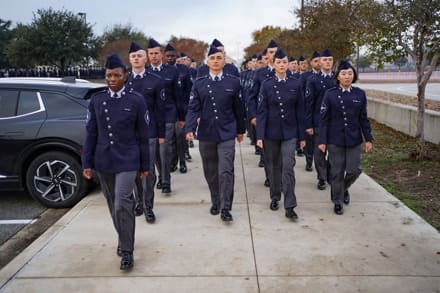
The U.S. Space Force’s newest Guardians were the first trainees to wear the new service dress uniform for a basic military training graduation ceremony at Joint Base San Antonio-Lackland, Texas, Dec. 18, thanks to the Defense Logistics Agency Troop Support Clothing and Textiles supply chain.

“I feel an incredible sense of pride in our DLA team and in the new Guardians beginning their service today,” said Christopher Gaudio, C&T’s recruit training center and clothing sales stores division chief.

Gaudio represented DLA at the graduation with Angela Maragni, a C&T product specialist.

“To witness the first-ever graduating class wearing these uniforms, which are a direct result of the dedicated partnership between the Space Force, DLA, and our industry partners, is incredibly rewarding,” Gaudio said. “It’s a powerful, visible reminder of our core mission: ensuring our nation’s defenders are equipped for success and respected for their service.”

The C&T team collaborated with its internal contracting, technical and customer teams, the Space Force, the Air Force Uniform Office and domestic fabric and clothing vendors from initial concept and design to production and delivery.

C&T is supporting the Space Force’s fielding of the new dress uniform to approximately 11,000 Guardians and new recruits annually, with nearly 600,000 items in more than 400 sizes, Gaudio said.

The Space Force dress uniform ensemble includes men’s and women’s dark blue dress coats, caps, lightweight jackets, belts, enlisted rank and color insignia, as well as men’s trousers, shirts and ties, and women’s slacks, skirts, cravats and overblouses.

Uraina Gray-Scully, C&T’s product services and technical support chief, described the uniform as modern with unique features, including a semi-fitted coat with an asymmetrical six-button front closure, and a military standup collar with cording.

Considering the Space Force is a smaller and newer military service, C&T was intentional in working with vendors to establish the right support structure for smaller fabric and end-item quantities compared to other services, said Arlett R. Hartie, integrated supply team chief for C&T’s accessories team. Hartie and team lead acquisitions for the Space Force dress uniform accessories and was instrumental in fielding the Space Force’s first physical training uniform’s last year.

“We had a lot of collaboration even prior to award so that we could be ready to hit the ground running with the acquisition,” Hartie said.

Gray-Scully and the dress clothing team ensured vendors met uniform specifications from pre-production to testing and provided on-site support at cloth and garment manufacturers, including shade evaluation for Space Form dress uniform items.

“It really is a collaborative effort when we are at the production facilities,” Gray-Scully said. “The specifications allow for minor adjustments, since all garment manufacturing facilities operate differently.”

For example, while C&T personnel visited a coat manufacturer with customer representatives, slight adjustments were made to the coat’s button placement and collar.

Lisa Vivino, C&T’s contracting division chief for dress clothing, described this as a common challenge with new items being produced for the first time.

“Once the contracts were in place, as with anytime with a brand new item, you think everything is good, the specification, the shade [evaluation], all that stuff, and then as the vendors begin to produce as the experts in the field, they begin to notice things that are challenges and make recommendations of things we might want to consider,” Vivino said.

Vivino led contracting oversight for the high-visibility roll-out, as her team executed acquisitions to meet the Space Force’s roll-out deadlines.

“It was complex, a lot of communications, a lot of collaborations across C&T, industry, and the Space Force,” Vivino said. “We’re proud of [our work] and glad it was successful.”

With about 16 contracts in place since late 2024 and earlier this year, C&T provided initial quantities to Guardians for the service’s Oct. 1 and Dec. 1 initial implementation deadlines, Vivino said.

“All of the items have been in production, and all of the deliveries have been underway for several months now,” Vivino said.

The Space Force started pre-orders for some Guardians including recruiters, training instructors, December ROTC graduates, and senior leaders in November, according to its website. Pre-ordered uniforms are scheduled for delivery by June 2026.

“Going forward, we’ll continue to use the forecast to continue the sustainment support for the Space Force,” David Cortes, C&T’s dress clothing planning chief, said.

By Mikia Muhammad, DLA Troop Support Public Affairs

Schiebel Successfully Concludes Initial Camcopter S-300 Flights in France

Sunday, December 28th, 2025

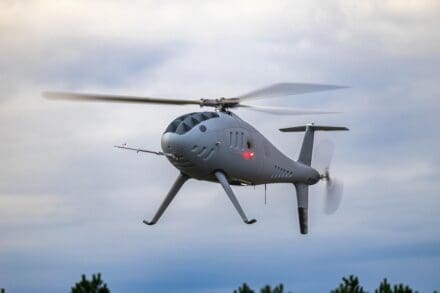
Vienna, 18 December 2025: Schiebel has successfully completed the first CAMCOPTER® S-300 flight test campaign in France, marking an important milestone in the programme’s progression. The flights were conducted at the CESA Drones test site in Sainte-Hélène near Bordeaux, where the S-300 further expanded the operational envelope, reaching a total of 100 flight hours.

The flight activities in France build on previous experience gained with the CAMCOPTER® S-300 and represent a further step in expanding the aircraft’s operational flight envelope. Conducted in a military environment, the flights focused on verifying key flight characteristics and overall system performance.

“France has been a trusted partner for Schiebel for many years, making it a natural location for the next phase of CAMCOPTER® S-300 flight activities,” said Hans Georg Schiebel, Chairman of the Schiebel Group. “Our long-standing relationship with the French Navy and our local presence through Schiebel Aéronaval SAS reflect our deep roots in France, while the S-300 is being developed to meet the requirements of international military and government users worldwide, building on Schiebel’s global experience in unmanned aviation.”

During the flights, the CAMCOPTER® S-300 demonstrated stable and controlled behaviour while undergoing typical evaluations for an unmanned air system at this stage, including handling qualities, flight control response and overall aircraft performance.

The CAMCOPTER® S-300 builds directly on Schiebel’s extensive experience with the CAMCOPTER® S-100, a maritime-proven unmanned helicopter with several hundred thousand flight hours accumulated worldwide. Drawing on this operational heritage, the S-300 is designed to deliver increased payload capacity, extended endurance and enhanced mission flexibility for demanding military and government applications.

Daniel von Chamier, Group Director of Sales, on Scaling Growth at Mehler Systems

Sunday, December 28th, 2025

FULDA, GERMANY (18.12.2025)

In a recent interview, Daniel von Chamier, Group Director of Sales at Mehler Systems, reflects on market dynamics, growth priorities, and the importance of execution as demand across global defence and security markets continues to rise.

Q: The global defence and security sector is experiencing a surge in investment and modernisation. How is Mehler Systems positioning itself to respond to this growing demand?

A: What you’re seeing now is the result of decisions we started making quite a while ago. As requirements evolved and projects became larger and more complex, it became clear that relying on existing structures alone would not be sufficient.

We are continuing to expand production, and at the same time we are further strengthening the sales organisation. A key part of this is our increased focus on international markets. For a long time, we were very strong in German-speaking regions. That remains important, but it is no longer enough on its own.

Today, we work with customers who have very different ways of procuring, very different expectations, and very different operational realities. That’s why building international teams remains a priority. People who understand the language, the culture, and how things really work on the ground make a huge difference, especially as demand continues to grow.

Q: From your perspective, what are the main factors behind Mehler Systems’ strong market performance in recent years?

A: It’s never just one factor. What has worked well for us is that several things came together at the right time and were executed consistently.

One key element is our in-house capability. We can develop, test, and validate solutions internally across different product areas. This gives us speed and flexibility when customer requirements change or when new operational needs emerge.

Experience also plays a big role. We’ve been doing this for more than 40 years, so we understand materials, suppliers, and production realities very well. We know where risks are and how to manage them. On top of that, customers increasingly look for complete systems rather than individual products. Being able to align protection, clothing, and equipment within one group gives us a clear advantage.

Q: Which markets are currently driving growth, and why?

A: Right now, Europe and the Asia-Pacific region stand out very clearly. What’s driving this is a change in mindset. For many years, defence planning was focused on expeditionary missions. That has shifted.

There’s a renewed focus on territorial defence and readiness. That naturally leads to more investment and more procurement. And it’s not just about buying more of the same. Customers are looking at complete systems, how things work together, how fast they can be delivered, and how sustainable the supply chain is.

From what I see, this isn’t a short-term reaction. It’s a longer-term adjustment to a changed security environment.

Q: Trust is critical in this industry. How do you build and maintain trust with customers and end users?

A: Trust is built through performance, not through talking. That means being transparent about what works, what doesn’t, and where the limits are. We test a lot, and we don’t hide the results. Durability, comfort, integration, all of that matters in real use.

We don’t treat testing as a sales argument. We treat it as responsibility. At the end of the day, someone is wearing this system in a situation where things can go very wrong very quickly. If you keep that in mind, a lot of decisions become very clear.

The same applies to partnerships. We work long-term. We look for partners who think the same way and who understand that this is not about quick wins, but about reliability over years.

Q: Mehler Systems works with a number of long-term defence and security partners across different regions. What defines these relationships?

A: What really defines our long-term partnerships is continuity. These relationships are built over many years, often across several generations of equipment and changing operational requirements. It’s not about delivering one solution and moving on, but about staying relevant as needs evolve.

Working with the same partners over a long period forces you to adapt. Requirements change, threats change, and operational concepts change. Being a trusted partner means listening carefully, adjusting solutions, and sometimes rethinking established approaches rather than simply repeating what worked in the past.

Another key element is discretion. In this industry, not everything that creates value can or should be communicated publicly. Respecting that is part of building trust. The real measure of these partnerships is not visibility, but longevity and consistency.

For Mehler Systems, these long-term relationships are essential. They create stability, provide honest feedback, and help us develop integrated systems that are grounded in real operational experience rather than assumptions.

Q: How do you manage growth without neglecting long-standing customers?

A: Honestly, that’s one of the hardest parts. We don’t want to tell long-term customers that they have to wait because something new and exciting came up somewhere else. At the same time, we don’t want to turn away new customers either.

The only way to deal with that is to grow properly. That means more people in sales, more capacity in production, and better coordination internally. We’ve invested a lot in all three areas.

It’s still a balancing act, and there are moments where demand is right at the edge of what’s comfortable. But with the expansions we’ve made, we still have room. That’s important, because reliability disappears very quickly once you start overstretching.
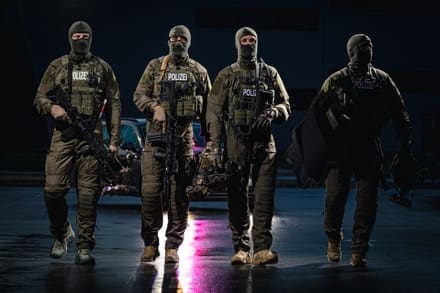
Q: Mehler Systems works closely with elite European special operations units such as KSK. How have these partnerships evolved over time, and how do they influence your work today?

A: They keep us honest. When you work with people who actually use the equipment in real operations, there’s no room for theory or marketing ideas that sound good on paper. That has shaped these partnerships from the very beginning.

Over time, the relationship naturally moved beyond a classic customer–supplier setup. We don’t just deliver products and wait for the next order. We stay in close contact, talk openly about what works, what doesn’t, and what needs to change. Having former operators within the organisation helps a lot here, because there’s a shared understanding of operational reality and no need to translate everything into theory.

The feedback we get is very practical. It covers protection levels, mobility, comfort, temperature management, weight, and how systems behave when someone is moving constantly, tired, and under pressure. That feedback directly influences how we develop ballistic solutions, tactical clothing, and equipment, and how all of it works together as a system.

Q: Large-scale programmes such as MOBAST have received significant visibility in recent years. What impact has this had on Mehler Systems’ position in the market?

A: One of the most important aspects is that this programme was delivered fully on time, which is far from common in large defence projects.

Successfully executing a programme of this scale demonstrates that we are capable of handling complex, high-volume requirements while maintaining quality and delivery discipline. It shows that we can manage both large framework programmes and smaller, more specialised projects at the same time.

It also proved something internally. That we can run a massive programme like that and still keep everything else going. Police contracts, other military customers, smaller projects, none of that stopped.

Q: What do projects of that scale say about Mehler Systems’ ability to adapt?

A: They show that we can adapt very quickly when we have to. For MOBAST, we had to ramp up production fast and even set up new facilities in a short time. That’s not easy, and it only works if people across the organisation are aligned.

What I’m particularly proud of is that quality didn’t suffer. Not a single system was rejected. That doesn’t happen by accident. It happens because people care about what they’re doing.
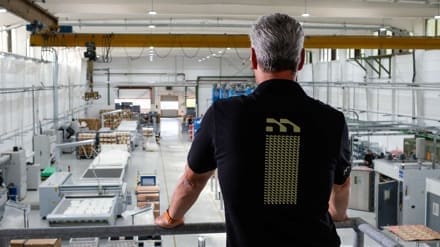
Q: The project in support of Ukraine has been one of the most complex undertakings in recent years. What can you share about Mehler Systems’ involvement and contributions?

A: What I can say is that this was a true group effort. We were asked to provide an integrated, head-to-toe solution, combining protection, clothing, and equipment.

Coordinating such a project under time pressure and across multiple entities is challenging, but it also shows what the group is capable of. Everything so far has been on track, and deliveries have started as planned.

Beyond the technical and logistical aspects, it’s a project where everyone involved understands the responsibility that comes with it.

Q: Looking ahead, what are your priorities for further strengthening Mehler Systems’ global presence?

A: Internationalisation remains the main priority. We want to be closer to customers in more regions, without losing what makes us reliable.

That includes strengthening sales channels, building the right partnerships, and selectively expanding know-how where it makes sense. Trade shows are part of that, because they allow direct conversations with users and decision-makers.

For me, growth only makes sense if it’s sustainable. Being able to say yes to a customer is easy. Being able to deliver on that yes is what really matters.

About Daniel von Chamier:

Daniel von Chamier is Group Director of Sales at Mehler Systems, overseeing global sales activities across the group and its brands, including Mehler Protection, Lindnerhof, and UF PRO. He brings extensive international leadership experience, having previously served as Managing Director and Group COO within the LHD Group, as well as Managing Director at the uvex group. His career spans senior sales and executive roles across the US, Europe, Africa, the Middle East, and the Asia-Pacific region. Earlier in his career, von Chamier held operational roles in emergency services and law enforcement, providing him with first-hand insight into the realities faced by end users.

For more information about Mehler Systems, please visit mehler-systems.com.

Space Flag 26-1 Expands, Advances Electromagnetic Warfare Tactics

Sunday, December 28th, 2025

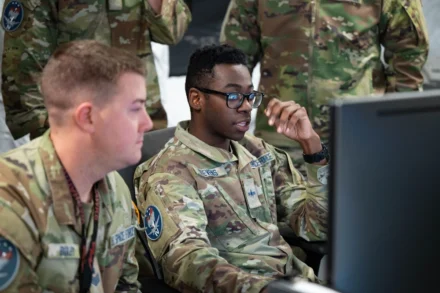
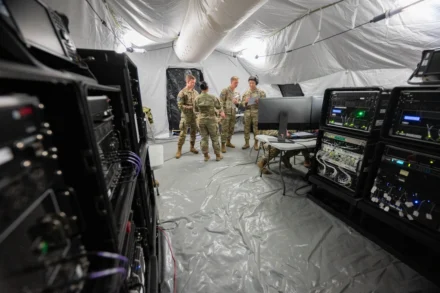
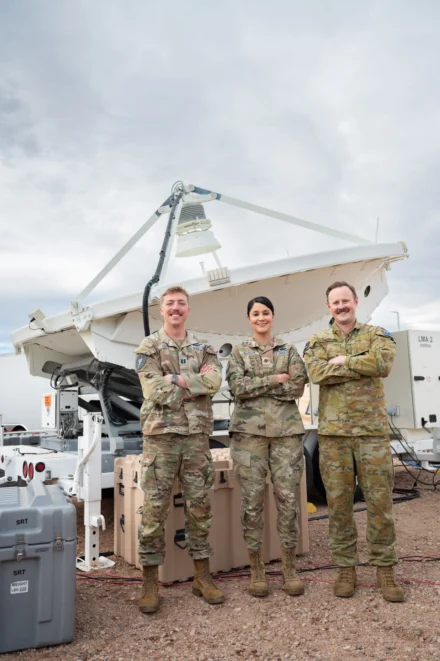
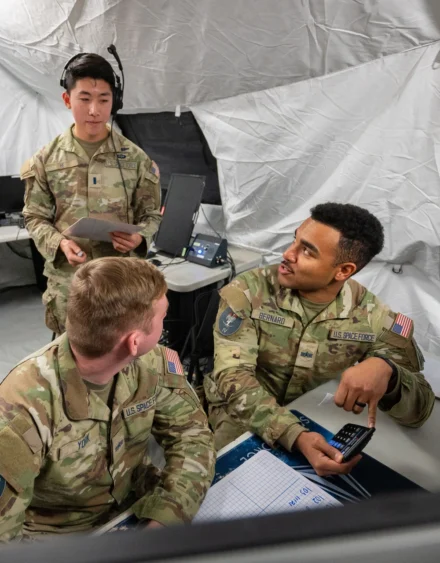
COLORADO SPRINGS, Colo. — Space Training and Readiness Command concluded its largest iteration of Space Flag, Dec. 19, 2025, challenging Guardians as well as joint partners in a contested environment designed to mirror real-world conflict.

The 22nd iteration began Dec. 1 and saw over 400 “Blue” players and nearly 300 Exercise Control Group members across several distributed locations.

Hosted by the 392nd Combat Training Squadron, this iteration introduced the use of live range emitters employed for real-time signal geolocation. This gave players the opportunity to use their equipment and test their skills just like they would in real-world operations.

“As exercise developers, we want to create a realistic and challenging environment for our players to engage in,” said Lt. Col. Bryce Carlson, 392nd CTS commander. “Using our wide range of modeling and simulation capabilities or through live environments, exercises like Space Flag allow us to stress our players in a combat like environment and test them to make sure that they can accomplish their mission objectives under a range of conditions.”

Space Flag 26-1 also integrated with Combat Forces Command’s Combat Leaders Development Course for the first time, placing combat squadron commanders and enlisted leaders in scenarios designed to assess how they lead their formations under wartime conditions.

Their assessment and feedback provide students and exercise players with ways to improve tactics and procedures, while informing how Space Flag continues to evolve to support combat-ready leadership and operational execution.

An initial team from Space Forces Indo-Pacific Command also participated to assess operational concepts of two different non-kinetic fires elements, a new development which integrates CFC’s Mission Delta 3 and the U.S. Army’s 1st Space Brigade to improve operational planning related to electromagnetic warfare.

“Our ultimate goal is to prepare Guardians and joint operators to win in a contested space environment,” said Carlson. “We continually utilize feedback we receive from our planners and exercise players to evolve and advance our exercises to mirror real-world threats so that Guardians are combat credible and ready to fight as part of the Joint force.”

This iteration’s objectives reflected real-world joint plans and CFC priorities and aimed to facilitate Space Force Generation (SPAFORGEN) readiness and training objectives. Space Flag 26-1 reinforced combat squadron leaders’ and mission planning cells’ ability to integrate plans across CFC and execute operational direction at the tactical level.

“Our teams are constantly innovating to find ways to provide threat-informed combat training environments to our Guardians and joint operators,” said Col. Agustin “Rico” Carrero, Delta 11 commander. “It’s extremely rewarding to be able to demonstrate and improve our Guardians’ warfighting readiness through Space Flag’s increasingly robust virtual environment, ensuring their lethality and decisive action against any adversary.”

Story by 2nd Lt Margaret Blice 

Space Training and Readiness Command

Rheinmetall and SATIM Sign Technology Supply Agreement: Support for German Bundeswehr in SAR Programme

Saturday, December 27th, 2025

The technology group Rheinmetall, based in Düsseldorf, and SATIM Monitoring Satelitarny, a Polish deep-tech company specialising in the AI-supported analysis of synthetic aperture radar (SAR) imagery, have signed a technology supply contract. The content is the support of the German customer’s satellite-based reconnaissance program. The agreement formalises SATIM’s role as a technology supplier to Rheinmetall for the delivery of intelligence, surveillance, and reconnaissance (ISR) capabilities for the Bundeswehr.


Under the contract, SATIM will supply AI-based capabilities that transform large volumes of complex radar imagery into actionable information. The agreement supports SPOCK-1, the German satellite reconnaissance program awarded to Rheinmetall ICEYE Space Solutions. SATIM will provide its technology as a supplier within the European Union, while Rheinmetall will operate the system independently in Germany.

Timo Haas, CEO of Rheinmetall Electronics: “Our partnership with SATIM marks another important milestone in advancing Rheinmetall’s strategy to strengthen our capabilities and footprint in an increasingly digital and connected battlespace. By combining our expertise and technologies, we are building a powerful foundation for faster, data-driven decision-making and superior situational awareness for our customers. This collaboration is another example of cutting-edge and combat-ready solutions at speed.”

Jacek Strzelczyk, CEO of SATIM: “The contract between SATIM and Rheinmetall combines the agility and innovation of a deep-tech start-up with the scale and mission experience of a global defence prime. Together, we will deliver effective solutions that support Germany’s national security priorities and will strengthen allied defence capabilities. This milestone demonstrates the maturity of our technology and its alignment with Germany’s ISR requirements.”

The technology supply contract brings together Rheinmetall’s system integration expertise and its established position in the German defence  market with SATIM’s AI-based data analysis capabilities. The collaboration is intended to enhance situational awareness, support informed decision-making, and enable timely operational responses in a complex and evolving security environment.

Savage Range Systems Names New Sales Director

Saturday, December 27th, 2025

WESTFIELD, Massachusetts – December 19, 2025 – Savage Arms®, an iconic firearm manufacturer, announces the appointment of Steve Thomas as Sales Director of Savage Range Systems, Inc.

Thomas brings over 25 years of experience in sales and business development within the shooting range industry. His extensive background includes directing projects for the U.S. military, as well as federal, state and local law enforcement agencies, and the recreational shooting sector. 

“We are very excited for Steve to join the Savage family,” said Beth Shimanski, Vice President of Marketing at Savage Arms. “His wide range of experience in the public and private sectors make him an extremely versatile addition to our operation. As we continue to grow and expand in the coming year, we are sure that this addition will allow our team to perform at the highest level.” 

Thomas also has experience in the International Ministry of Interior (MOI) and Ministry of Defense (MOD) markets. Based in Minnesota, Thomas is a lifelong sports enthusiast with a passion for all things Minnesota. 

Steve Thomas can be contacted at sthomas@savagearms.com or (801) 602-0014. For more information about Savage Range Systems’ leading line of range technology, systems, shoot houses and more, visit www.SavageRangeSystems.com