Atrius Development Group

Archive for February, 2026

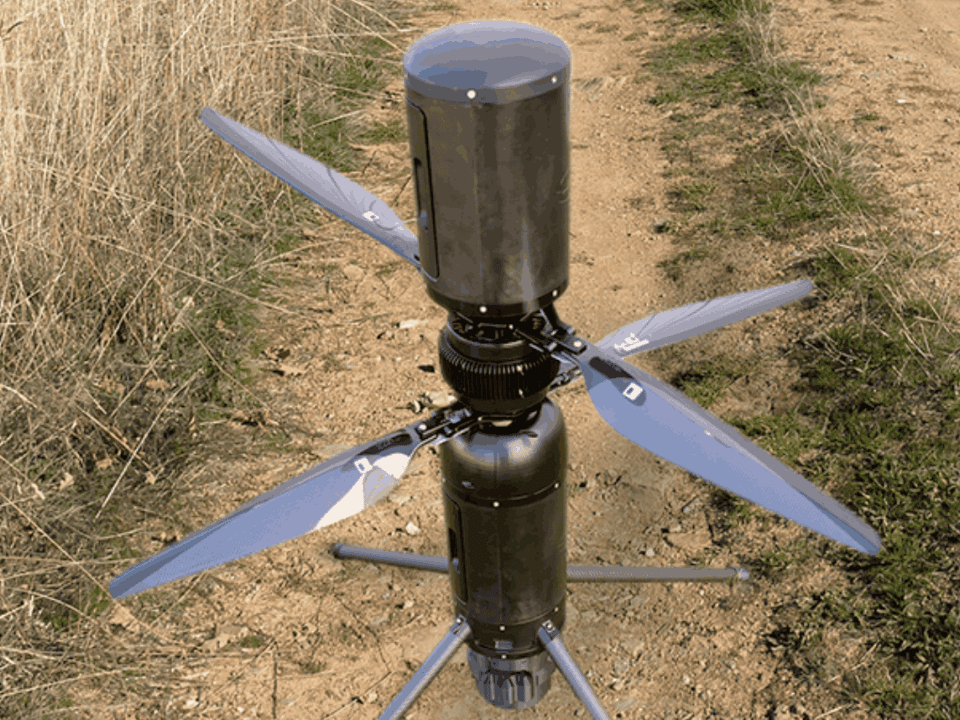
Mehler Protection Unveils New Close Range Active Counter-UAS System for Land Vehicles at Enforce Tac 2026

Monday, February 23rd, 2026

KÖNIGSLUTTER, GERMANY (23 February 2026)

Mehler Protection presents SCILT, a new close-range protection system to counter drones attacking land vehicles from short range and low angles. The system is presented for the first time at Enforce Tac 2026.

Uncrewed Aerial Systems (UAS) increasingly no longer approach only from above. Instead, they emerge from terrain, ditches, flanks, and rear sectors, appearing at very short distance and leaving minimal reaction time. SCILT is conceived specifically to address this immediate close-in envelope, where conventional mobile air-defence systems and unit-level counter-UAS solutions reach detection and defeat limits.

SCILT is conceived as a dedicated last protective layer for individual vehicles, addressing the gap between large-scale mobile air defence systems and passive vehicle protection. Designed to counter small drones, including FPV drones, kamikaze drones, and loitering munitions, SCILT operates in close and very close-range engagements and is intended to defeat both single drones and multiple simultaneous threats in the immediate hazard zone.

The system combines effector modules, sensors, and operating logic directly on the vehicle, enabling defence against drones approaching from lateral and frontal directions as well as low-angles. Sensor kits can include electro-optical and other close-range surveillance sensors to support detection and operator decision-making. Cost-effective effector solutions support scalable employment across different mission profiles.

Key characteristics include:

  • Close and very close-range protection against drones
  • Sector-based configuration, allowing individual directions to be activated or deactivated depending on formation and movement
  • Three staged alert levels: detection alert, approach alert, and trigger alert
  • In its first version, SCILT operates deliberately with a man-in-the-loop architecture, with further automation planned as technology, procedures, and approval processes evolve

Effector modules use market available standard ammunition types in shotgun-calibre, ranging from rubber projectiles to hardened-core, tungsten-carbide fragment, and armour-piercing variants. This effector spectrum enables controlled hazard areas and scalable effects depending on scenario requirements, while cost-effective effector solutions support employment against both single drones and multiple simultaneous threats.

SCILT is controlled via a vehicle data bus and integrates into existing vehicle architectures. Where such interfaces are not available, the system operates as a self-contained package with its own close-range surveillance and control chain. Remote control units can be installed at multiple positions inside the vehicle.

The development of SCILT has been ongoing for approximately one and a half years. Mehler Protection conducted 48 test campaigns, including external and terminal ballistics, temperature behaviour, trigger reliability testing, and fragment-density measurements to determine the optimal effective range.

The first version of SCILT is planned to be available from summer 2026 as an effector package with sensor kits and control units that can be integrated into different vehicle configurations.

SCILT builds on Mehler Protection’s long-standing platform protection portfolio across land, air, and sea. The company supplies protection solutions for helicopters, land vehicles and naval systems, and is a main supplier of protection systems for almost all naval platforms currently under construction for the German Navy.

Learn more about Mehler Protection’s platform armour solutions.

Army Announces Winners of the Inaugural Best Drone Warfighter Competition

Monday, February 23rd, 2026

FORT RUCKER, Ala. – The U.S. Army today announced the winners of the inaugural Best Drone Warfighter Competition, a three?day event held on February 17-19 that brought together elite drone operators from across the active duty, reserve, and National Guard components.

The competition was hosted by the Army Aviation Center of Excellence and the Maneuver Center of Excellence, in Huntsville, Alabama, sponsored by the Army Aviation Association of America (AAAA) in partnership with the University of Alabama Huntsville. The event drew over 200 competitors and more than 800 attendees, showcasing the Army’s most skilled small?UAS operators. Participants competed in three distinct challenges designed to test speed, precision, teamwork, and creativity in small UAS employment: a high speed drone race, a tactical squad lane, and an innovation showcase, highlighting the Army’s commitment to integrating advanced unmanned aerial systems at every echelon of the force.


Winners of the 2026 Best Drone Warfighter Competition are:

• Best Drone Operator: Sgt. Javon Purcher, 1st Cavalry Division, Fort Hood, Texas

• Best Tactical Squad: Staff Sgt. Angel Caliz and Spc. Jonah Burks, 2nd Cavalry Regiment, Vilseck, Germany

• Best Innovation: 1st Lt. Ryan Giallonardo, Chief Warrant Officer 3 Robert Reed, Chief Warrant Officer 2 Nathan Shea and Sgt. 1st Class Brent Wehr, 28th Infantry Division, Pennsylvania Army National Guard

Competitors raced Neros Archer FPV drones through a complex, obstacle course; executed cross?country hunter-killer missions in paired teams to identify and neutralize targets; and showcased Soldier designed technologies in front of a panel of experts aimed at improving survivability, lethality, and battlefield adaptability.

Beyond identifying top performers, the competition demonstrated how rapidly the Army’s unmanned capabilities are advancing. The event reinforced the service’s focus on developing operators who can excel in contested environments and contribute to combat formations that are more lethal, agile, and technologically integrated.


The Best Drone Warfighter Competition aligns with the Army’s broader modernization priorities, underscoring the role of advanced unmanned systems in strengthening readiness and preparing Soldiers for the demands of future conflicts.

For additional imagery and media, go to www.dvidshub.net/feature/USArmyBDWC

By LTC Vonnie Wright

Successful Testing: Rheinmetall Demonstrates the FV-014 Loitering Munition System to a Potential NATO Customer

Monday, February 23rd, 2026

Rheinmetall has successfully demonstrated its new FV-014 loitering munition system to a potential NATO customer. The demonstration took place on 18 February 2026 at the National Test Centre for Unmanned Aerial Systems of the German Aerospace Centre (DLR) in Cochstedt, Saxony-Anhalt. During the demonstration, the FV-014 loitering munition system (LMS) simulated various mission scenarios and attack flights. For Rheinmetall, the successful test marks another milestone in its loitering munition activities.


Rheinmetall’s state-of-the-art LMS FV-014 is designed for dynamic combat deployment at ranges of up to 100 kilometres. The system combines high effectiveness against armoured and soft targets with state-of-the-art sensor technology, network capability and deployment options even in GNSS-jammed environments.
The FV-014 is designed as a true LMS, combining reconnaissance and effect in a single system. It supports tactical units in combating high-value point targets, such as combat vehicles, artillery positions or command vehicles, over long distances beyond the line of sight. 

The system is launched from a launch container using a booster, but can also be deployed from a multi-launcher. After launch, the FV-014 unfolds its folding wings and transitions to aerodynamic flight. The system has an operational range of up to 100 kilometres with a flight duration of 70 minutes, providing sufficient time for observation, target selection and attack decision-making.

Operation and system integration
The FV-014 is initially designed as a portable system for use at troop level and is controlled via a user-friendly ground station that enables permanent human-in-the-loop control. The operator can identify targets, fly to them, launch a precise attack or abort the mission if conditions change.

Design and survivability
The FV-014 flight body follows a classic wing concept with electric propulsion and faceted structures to reduce signatures and enable high approach speeds in the target area. The system is optimised for low acoustic and thermal signatures and can also be used in electromagnetically demanding scenarios with disrupted satellite navigation.

You can view a video of a demonstration of the FV-014 LMS at the Rheinmetall proving ground Unterluess at the following link: Loitering Munition System FV-014 | Rheinmetall

The FV-014 at a glance

? Type: Loitering munition / kamikaze drone
? Mission spectrum: Target reconnaissance, target tracking, precise single or swarm attack, deployment in GNSS-denied scenarios.
? Launch weight: approx. 20 kg with 6 kg payload. 
? Range: up to 100 km, (60 km data link range).
? Flight duration: 70 minutes.
? Warhead: approx. 5 kg HEDP (High-Explosive Dual Purpose) with a penetration capacity of more than 600 mm RHA, also effective against unarmoured targets and infrastructure.
? Transport and launch container with booster launch for quick deployment.
? Operator station with data link for real-time situational awareness and target assignment.
? Designed for swarm operations to simultaneously engage multiple targets or saturate enemy defence systems.
? Can be used in mobile and scalable launcher configurations on land vehicle platforms and seagoing units.
? Electric motor with propeller for quiet approach.
? Designed for reduced radar and IR signature.
? Robust against GNSS interference, suitable for use in highly contested airspace.

Kruschiki Supply Co – MultiCam Fleece Ear Cap

Sunday, February 22nd, 2026

At the risk of becoming the silly hat company, Kruschiki has succumbed to many asks for MultiCam Fleece Ear Caps.

kruschiki.com/collections/new-items/products/multicam-fleece-ear-cap

Tasmanian Tiger Introduces the TT Modular Pack 30 SL

Sunday, February 22nd, 2026

Mission-ready, short-range 30-liter modular backpack with adjustable Y2 Carrying System, engineered for military, tactical, and outdoor professionals.

Knoxville, Tenn. (February 2026) – Tasmanian Tiger®, a tactical nylon line of products distributed exclusively for the US market by Proforce Equipment, Inc., announces the release of the TT Modular Pack 30 SL, a mission-configurable short-range backpack designed to meet the demands of military personnel, law enforcement officers, and serious outdoor users.

Built around Tasmanian Tiger’s adjustable Y2 Carrying System, the TT Modular Pack 30 SL offers a 30-liter (1,831 cubic inches) capacity while providing an exceptionally wide range of back-length adjustment. The SL (Short to Long) designation reflects the pack’s ability to accommodate both shorter and taller users without compromising fit, load stability, or comfort.

The ergonomically padded back panel integrates aluminum support elements for enhanced load transfer and rigidity. A detachable rear panel with a shapeable aluminum rail allows users to customize the pack’s structure to mission-specific requirements. Length-adjustable shoulder straps and padded hip fins with zippered pockets, removable via hook-and-loop attachment, further enhance adaptability and load management.

Engineered for modularity, the TT Modular Pack 30 SL features a laser-cut MOLLE system on the front and sides, as well as MOLLE hook-and-loop panels inside the main compartment. This configuration enables extensive customization and expansion with compatible pouches and accessories. The front panel offers four MOLLE loops across by five loops vertically, while the sides provide four loops across by seven loops vertically, with one interruption.

Inside, the pack includes two hook-and-loop accessory pockets with zippers, additional inner zippered pockets, and small mesh compartments for organizing smaller items. A lid pocket with a small organizer, an additional flat zip pocket on the front, and a daisy chain provide further storage and attachment options.

The pack’s individually adjustable and removable side compression straps can be rethreaded to block the main zipper for added security. Antenna ports into the main compartment support communications equipment integration. A hook-and-loop surface on the exterior allows for identification patches and insignia.

Constructed from durable CORDURA® 700 den fabric (500 den in Multicam), the TT Modular Pack 30 SL is built to withstand rigorous operational environments. The pack weighs 4.3 pounds (1.94 kilograms) and measures 22.5x10x7.5 inches (57x26x19 cm).

With its adaptable fit, robust construction, and mission-focused modularity, the TT Modular Pack 30 SL delivers a scalable load carriage solution for short-range operations, training, and extended field use. The TT Modular Pack 30 SL is available in black, olive, and coyote for an MSRP of $399. Multicam is available at an MSRP of $499.

Check out the new 2026 product line digital catalog here. Click to see the Tasmanian Tiger Full Product Line Vol. 5 digital catalog here. Find a local dealer here for any of the exciting Tasmanian Tiger products.

Delta Three Oscar Announces Official Partnership with The Dirt Therapy Project to Support Veterans

Sunday, February 22nd, 2026

(Huntington Beach, CA – 02/19/26Delta Three Oscar, the ballistic arm of impact protection brand D3O is showing its commitment to supporting those who serve, by announcing its official partnership with The Dirt Therapy Project, a non-profit dedicated to supporting military Veterans through mountain bike experiences and community connection. 

With a mission to save lives and bring home troops safely, Delta Three Oscar will be supporting The Dirt Therapy Project’s Veteran rides throughout the year, helping promote the organization, enhance safety, and strengthen the sense of community that helps Veterans reestablish life after service. 

Delta Three Oscar was founded on a simple but powerful mission: to save lives, by delivering advanced protection solutions to military, law enforcement, and first responders. The company engineers the world’s best ballistic helmet suspension systems, ballistic protection pads to reduce back face deformation for chest plates, as well as impact protecting knee guards and underfoot shock absorbing mid soles. 

By extending its commitment to safety from the frontline and into veterans’ everyday lives, the brand is combining its 20 years of expertise in protective technology with its leadership in mountain bike protection. As a key ingredient used by leading bike brands including Troy Lee Designs, Fox, ODI, Specialized and Dakine, it is uniquely positioned to bring the best protection to Veteran mountain bike riders. By bridging these two industries, Delta Three Oscar is helping Veterans reconnect through mountain biking an activity that the team at The Dirt Therapy Project has proven to support mental wellbeing and help alleviate stress associated with active deployment. 

“Whether protecting troops on the frontline or mountain bike riders on the trail, our mission to deliver the best protection possible and bring people home safely is the same.” said Serena Thynne, Head of PR at Delta Three Oscar. “That’s why we’re proud to support The Dirt Therapy Project. We have seen first-hand the life-changing impact they have in helping Veterans transition back into their communities.”  

The Dirt Therapy Project hosts community events and mountain bike experiences which offer their members therapeutic benefits, community support, and confidence as they transition to civilian life. Through this official partnership, Delta Three Oscar will: 

• Support Veteran Ride events throughout the year 

• Provide advanced protective solutions to enhance rider safety 

• Collaborate on awareness initiatives highlighting Veteran challenges and wellbeing 

• Offer exclusive opportunities for the Veteran community to participate in select events  

“This partnership strengthens our ability to serve Veterans in meaningful ways,” said Jonathan Hagerman Founder of The Dirt Therapy Project. “With Delta Three Oscar’s commitment to protection and performance, we can continue expanding our reach and impact.” 

As the partnership rolls out across 2026, supporters can expect collaborative content, community-led ride days, and exclusive engagement opportunities that bring together veterans, riders, and the top mountain bike brands who share a commitment to protection, performance, and purpose. 

Pennsylvania Guard Soldiers Strengthen AI, Critical Thinking Skills

Sunday, February 22nd, 2026

FORT INDIANTOWN GAP, Pa. — Pennsylvania National Guard Soldiers and civilian employees participated in an Artificial Intelligence 201 course Feb. 11–12.

The course, taught by U.S. Army War College faculty, aimed to prepare leaders to responsibly integrate artificial intelligence into military decision-making while reinforcing critical thinking and mission command principles.

“A lot of people find it very scary, and just like with any new technology, we should be cautious,” said Lt. Col. Kelly Ihme, an assistant professor at the U.S. Army War College and one of the course’s instructors. “Trust but verify. But this is a computer program. It’s predictive math.”

AI 101 introduces Soldiers to the basics of AI, including how to use and understand it, while AI 201 focuses on critical thinking and effective AI prompting.

“At the War College, we’re starting to develop that type of course,” Ihme said. “It’s more about, how do we think about problems? And then where does AI get inserted into those problem sets? So that we’re never taking the human out of the loop, but we’re stepping up the critical thinking and really engaging critical skills questions on AI and where it fits.”

The students found the classes useful and knowledgeable, even wanting to attend more in the future.

“If they had another AI class, I would go again,” said Maj. Maria Myers, logistics branch chief at Joint Force Headquarters. “I would even do this exact same level again, just for repetition and to make sure that I’m still using it correctly, because I do plan to try to implement it in a couple of ways already that they had mentioned.”

Ihme said the 201 course pushes students to dig deeper than the nuts and bolts of AI. The class encourages them to approach AI with a leadership mindset.

“It’s a mission command skill. And if you’re not using AI with some of those mission command ideals in mind, you’re going to get icky outputs or less efficient outputs, and then you’re going to put AI aside,” said Ihme. “You’re not going to throw a private aside and tell them they’re an ineffective private because you didn’t provide them the leadership they needed to succeed. It’s the same with AI.”

Myers said that while she believes AI should be used with caution, it remains a helpful tool for saving time. But, she emphasized that users need to understand how to properly use and prompt AI before utilizing it for work.

“I’m sure some people will think it’s a pain, and there will be people that are against it, because it’s different,” Myers said. “But I think that this class and the level it goes into is a good introductory class because you need to have the knowledge and the understanding and the information from the human aspect to get the appropriate answer.”

The Pennsylvania National Guard is hoping to expand these classes in an effort to have Fort Indiantown Gap become an AI center of excellence, Imhe said. Ihme said she is ready for the next step of AI in the Army.

“Let’s keep providing classes like this, both foundational and thinking classes, so that we can figure out, not just that we’re playing with AI, but that we’re taking the next leap of using AI to propel us forward,” Ihme said.

By SGT Kayden Bedwell

VA Undoes Decades-Old Wrong and Protects Veterans’ Second Amendment Rights

Saturday, February 21st, 2026

WASHINGTON — The Department of Veterans Affairs today announced a major new step to protect Veterans’ Second Amendment rights. Effective immediately, VA will not report Veterans to the Federal Bureau of Investigation’s National Instant Criminal Background Check System as “prohibited persons” only because they need help from a fiduciary in managing their VA benefits.

This corrects a three-decade-old wrong that deprived many thousands of Veterans in VA’s Fiduciary Program of their constitutional right to own a firearm without a legal basis.

After a thorough review, VA recognized that many Veterans had been deprived of their Second Amendment rights without hearings or adequate determinations that they posed a sufficient risk of danger to themselves or others. In consultation with the Department of Justice, VA has determined this practice violates both the Gun Control Act and Veterans’ Second Amendment rights. According to federal law, a decision by a judicial or quasi-judicial body is needed before someone can be reported to NICS.

A determination by the VA that a fiduciary is needed to help manage a Veteran’s VA benefits falls far short of this legal standard.

In addition to immediately stopping the reporting of VA Fiduciary Program participants to NICS, the department is working with the FBI to remove all past VA reporting from NICS, so no Veterans are unfairly deprived of their Second Amendment rights based solely on participation in VA’s Fiduciary Program.

“Many Americans struggle with managing their finances, and Veterans’ Second Amendment rights shouldn’t be stripped just because they need help in this area. But for too long, Veterans who needed the services of a VA fiduciary were deprived of their right to bear arms,” said VA Secretary Doug Collins. “Under the leadership of President Trump, we’re correcting this injustice and ensuring Veterans get the same due-process and constitutional rights as all Americans.”

The Department of Justice supports this action.

“It is both unlawful and unacceptable for Veterans who serve our country to have their constitutional rights threatened,” said Attorney General Pamela Bondi. “It has been my pleasure to partner with Secretary Collins on this project, and I am directing the Bureau of Alcohol, Tobacco, and Firearms to review its regulations and propose changes that will prevent current and future violations of our Veterans’ Second Amendment rights.”

– Veterans Administration