SIG SAUER - Never Settle

Archive for June, 2026

Rheinmetall Destinus Strike Systems Sets Out Its Program Priorities

Thursday, June 18th, 2026

At Eurosatory 2026 in Paris, the European joint venture Rheinmetall Destinus Strike Systems set out its priorities. The joint venture is accelerating the introduction of the Ruta Block 3 – a cruise missile for strategic deep strike with a range of over 2,000 kilometers and a warhead of up to 250 kilograms – and begins production with its initial products, the Kryla and Ruta Block 2 cruise missiles.

The Ruta Block 3 is designed for high-value and hardened targets at depth and is launched exclusively from standard containers, which can be carried on vehicle platforms – including Rheinmetall HX trucks – and in maritime applications. Firing readiness is reached in around 2 minutes.

The objective is NATO qualification, making the Ruta Block 3 available to all NATO and EU member states.

“Together we are advancing NATO qualification on an accelerated path, embedded in existing programs for European defense ministries. This allows us to rapidly provide European armed forces with a ready-to-deploy, certified and fully European effector,” says Roman Köhne, Head of Division Weapon and Ammunition, Rheinmetall.

The basis is the signed Term Sheet; the final shareholders’ agreement is close to signature. Within the joint venture, Destinus combines its technology with Rheinmetall’s industrial scale.

Joint production begins with the joint venture’s two initial products. Kryla is a compact, cost-efficient cruise missile with a 50 kg warhead for massed saturation strikes; it launches from containers and from common rocket artillery launchers (MLRS), immediately adding a cruise-missile capability to existing launcher fleets.

Ruta Block 2 carries a 250 kg warhead, is designed for high target effect against high-value and hardened targets and is launched exclusively from containers.

“We are firmly committed to launch from standard sea containers. This gives our customers maximum flexibility: our systems can be deployed across virtually any land and sea platform and through existing logistics chains – concealed and brought to firing readiness in the shortest time,” says Mikhail Kokorich, Founder and CEO of Destinus.

The joint offering comprises Kryla, Ruta Block 2 and Ruta Block 3 – precision deep strike throughout, from a 100% European value chain.

For logistical independence, Rheinmetall Destinus Strike Systems will establish its own facility for final assembly, integration and testing in Germany; initial delivery readiness is planned for 2026.

Parsons and DroneShield Highlight Open-Architecture Approach to Countering Evolving Drone Threats

Thursday, June 18th, 2026

Recent Demonstration Showcases Interoperable Counter-UAS Capabilities for National Security and Critical Infrastructure Missions

Warrenton, VA. – 16 June 2026 – DroneShield, a global leader in advanced counter-unmanned aircraft system (C-UAS), recently highlighted its participation in a recent C-UAS demonstration with Parsons Corporation, showcasing how interoperable technologies can help organizations detect, track, and respond to evolving drone threats.

The demonstration brought together advanced sensing, command-and-control, and counter-drone technologies within a common operational environment, highlighting how organizations can leverage best-of-breed capabilities to improve situational awareness and accelerate decision-making during complex security operations.

As part of the demonstration, DroneShield provided drone detection, electronic warfare, and mitigation capabilities within Parsons’ DroneArmor™ command-and-control environment. The event highlighted how open architectures enable technologies from multiple providers to work together, giving operators greater flexibility to build solutions tailored to mission requirements.

DroneShield’s portfolio of counter-UAS and electronic warfare solutions is deployed globally across military, government, law enforcement, critical infrastructure, and commercial environments.

Parsons is a leading disruptive technology provider in the national security and global infrastructure markets, with capabilities across cyber and electronic warfare, space and missile defense, transportation, water and environment, urban development, and critical infrastructure protection. The demonstration underscored the value of industry collaboration in addressing increasingly sophisticated airspace security challenges. The demonstration underscored the value of industry collaboration in addressing increasingly sophisticated airspace security challenges.

“Drone threats continue to evolve, and organizations need technologies that work together seamlessly,” said Nate Webb, Director of Strategic Projects at DroneShield. “This demonstration highlighted the value of interoperability and open architectures, allowing customers to combine best-of-breed capabilities into effective counter-drone solutions that can adapt as mission requirements change.”

DroneShield’s solutions are designed to integrate with a broad range of command-and-control systems, sensors, and mitigation technologies. This approach enables customers to build layered counter-drone ecosystems that meet operational requirements while maintaining flexibility as technologies and threats continue to evolve.

Tactical Photonics Presents Europe’s Most Precise Laser Targeting Payload for Drones, Free of US Export Controls

Thursday, June 18th, 2026

At under 2 kg and nearly half of the cost of US equivalents, it is the most accurate European payload in its class with the longest targeting range, designed for off-the-shelf integration across drone platforms.  As Russia’s GPS jamming spreads across the region, laser designation offers the only targeting solution that does not rely on GPS at all.

June 17, 2026 – Vilnius, Lithuania. When GPS guidance fails, a drone can drift off course by as much as 100 km. Over the last month, at least six drone incidents across Europe have been linked to GPS jamming and spoofing – and the problem is spreading. For ordinary Europeans, it means air raid sirens, evacuation orders, and, in Romania’s case, waking up to a drone embedded in your apartment building.
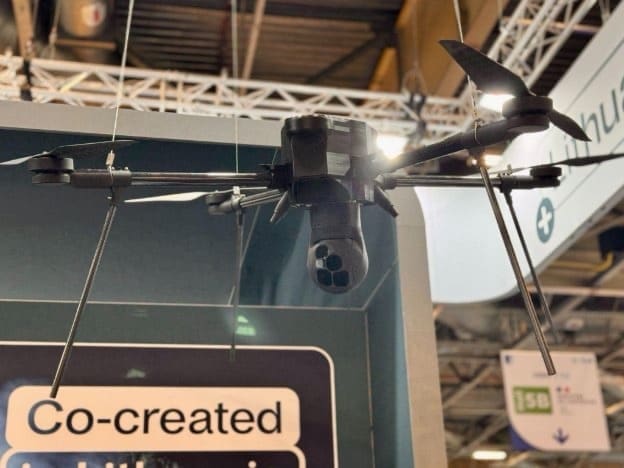

3D-printed plastic prototype of a payload mounted on a real-size drone, Eurosatory 2026 (Source: Tactical Photonics )

Russian electronic warfare (EW) demonstrated the scale of this problem when Ukrainian strike drones were diverted across the region within 48 hours, one striking the chimney of an Estonian power plant.

When a drone is knocked off its course, it does not stop flying. It can wander hundreds of kilometers and deliver whatever payload it carries wherever it happens to land.

However, Europe has an emerging solution to this. Current targeting systems rely on GPS or radio links, both of which Russian jamming has shown it can disrupt. Laser targeting designators don’t need GPS at all. They  work on fundamentally different principle: light cannot be intercepted or spoofed. Until now, similar high-tier systems had to be acquired through US-based companies, controlled by the US authorities.

Tactical Photonics, part of Aktyvus Photonics Group, is changing that by presenting the most accurate laser targeting payload in its 2 kg class, with the longest targeting range. To do so, the company joined forces with Lithuanian talents and built a separate entity powered by Aktyvus Photonics laser technology. A key benefit of laser designation is precision strike capability – ensuring guided munitions hit exactly where intended.

The payload functions as a laser designator, it marks targets with a laser spot, which laser-guided munitions then home in on to strike with precision. The payload does not carry or launch munitions itself, but determines exactly where they land.

“We built this because we were asked to – by Ukrainian and Baltic national forces. Europe has invested billions in the next generation of tactical drones, but it has not solved the targeting problem. And the payload is usually what determines whether the drone is useful or not,” says Laurynas Šatas, CEO of Aktyvus Photonics Group.

“Lasers are key here, as they turn a surveillance drone into a precision strike platform, and these are still US-made, ITAR-controlled, and out of reach for programmes that cannot wait for a US State Department approval. There were no commercially viable companies in Europe providing laser payloads, and we intend to change that.”

According to the company, the payload weighs under 2 kg and is designed to hit small moving targets at ranges beyond 3 km. This is enabled by 4-axis mechanical stabilisation – a critical differentiator in this class of system. Most payloads in this weight category rely on 2-axis stabilisation and digital image processing, which limits both range and accuracy. Four mechanical axes maintain a stable targeting lock on small moving targets even as the drone itself manoeuvres, replicating the performance of much larger systems in a fraction of the weight.

4 axes. 3 km range. 2 kg. 1 system. For comparison, the equivalent US system from L3Harris WESCAM weighs approximately 15 kg and costs two times more. With this component, a drone can guide the full range of laser-guided STANAG 3733 NATO munitions.

Beyond precision, the system significantly increases situational awareness for the operator. It enables forces to operate beyond line of sight (BLOS), requires less crew training than comparable systems, and is designed for rapid deployment across multiple drone platforms.

“Military experts ask how can a European company build this better and cheaper than established American suppliers. Well, the answer is where we come from. Lithuania has been a global hub for laser science for decades. Some of the world’s leading laser companies were and are being built here. We have extremely well-trained scientists and engineers. The knowledge is here, the supply chain is here, and the cost base reflects that. It is not a surprise that this technology gets cheaper when it is built in the country that helped invent it,” adds Šatas.

The system is compatible with fixed-wing drones and helicopter-type drones. It can also work alongside loitering munitions – which carry a SAL seeker that homes in on the laser-marked target, rather than marking targets themselves.

European defence investment grew by 14% last year, faster than any other continent, reaching €739 billion, the steepest climb since the 1950s and double the level of a decade ago.

“As spending increases, Europe needs to become more independent in every area and own different parts of the supply chain,” continued Šatas.

“We are not building drones. We are building the part that determines how precise a drone can be, and making that part available in Europe at a price and scale that procurement officers can actually work with.”

The payload made its public debut at Eurosatory 2026, one of the world’s leading defence and security exhibitions, displayed on a small drone at the Lithuanian national stand. Production is set to scale to 600 units per year from 2027.


Red Cat Introduces Hellcat, a Global Small UAS Configuration Built on the Proven Black Widow Platform

Thursday, June 18th, 2026

SALT LAKE CITY, June 15, 2026 — Red Cat Holdings, Inc.?(Nasdaq: RCAT) (“Red Cat” or the “Company”), a U.S.-based provider of advanced all-domain drone and robotic solutions for defense and national security, today introduced Hellcat™, a dual-use small unmanned aircraft system (sUAS) built on the proven Black Widow™ platform and designed for rapidly evolving operational environments.

Red Cat is unveiling Hellcat in conjunction with Eurosatory 2026, where defense leaders, government buyers, and industry partners from across Europe and allied nations are convening to evaluate current and future capabilities with a focus on small UAS, contested-environment operations, and interoperable systems. Built on the proven Black Widow platform, Hellcat incorporates extensive feedback gathered directly from warfighters in the field and lessons learned through an ongoing partnership with Ukraine.

Hellcat is designed to support customer-driven configurations, faster integration cycles, and software-defined updates that keep pace with changing mission needs. The platform brings Red Cat’s small UAS architecture to a broader global mission set, supporting coalition partners and customers with varying command-and-control preferences, payload needs, and integration paths.

“Black Widow was purpose-built to meet the rigorous requirements of the U.S. Army’s Short Range Reconnaissance program, and it remains a cornerstone of our small UAS leadership,” said Jeff Thompson, Chief Executive Officer of Red Cat. “For the development of this new platform, it’s been an ongoing honor to work side by side with Ukrainian drone experts in theater, continuously transforming our ISR drones to meet the ever-evolving demands of the battlefield.”

Hellcat is designed around Modular Open Systems Architecture (MOSA) principles, enabling customers to configure command-and-control, payload, software, and integration pathways based on operational needs. The platform is intended to support a broad range of customer requirements, including different government procurement frameworks, coalition interoperability needs, and mission-specific software environments.

“Small UAS programs need to keep pace with how operators are using them in the field,” added Thompson. “Hellcat reflects Red Cat’s approach to working directly with warfighters, incorporating feedback from operational environments, and folding those lessons back into the platform so users can adapt as the mission changes.”

Hellcat’s baseline configuration includes GPS-denied operation from power-on, RTH Azimuth recovery without GPS, WEB™ Standoff Radio support, a low-visibility tactical finish, and a field-repairable, rucksack-portable design. The aircraft offers 50+ minutes of flight time, up to 6.8 miles / 11 km of range with maintained operator line-of-sight, and is available with Red Cat’s Ocellus™ 3CP three-camera payload option.

Hellcat complements Red Cat’s broader Family of Systems, which includes Black Widow, FlightWave Edge 130™, FANG™, Blue Ops Variant 7 Uncrewed Surface Vessel (USV), and command-and-control and autonomy capabilities across air, land, and sea. Together, these systems support Red Cat’s strategy to deliver trusted U.S. and allied robotic solutions that enhance situational awareness, operational effectiveness, and mission safety for defense and national security customers.

For more information on Hellcat, visit redcat.red/hellcat.

INEOS Grenadier Delivers for the UK Ministry of Defence (MOD)

Thursday, June 18th, 2026

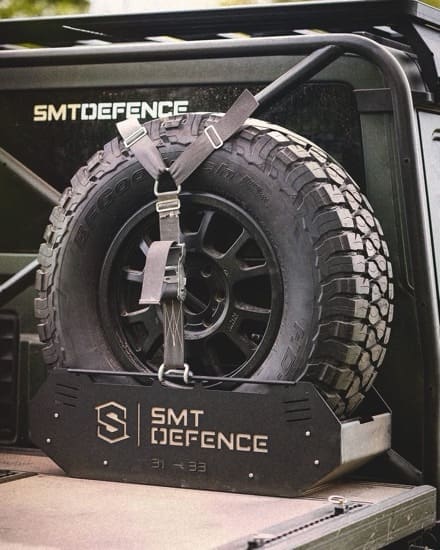
We have joined forces with military vehicle specialists SMT Defence and New Military Solutions to form Team Grenadier, a UK-anchored industrial collaboration. The partnership delivers on the core requirements of the MOD’s Light Mobility Vehicle programme, by combining a world-leading 4X4 vehicle platform with deep-rooted special operations and systems integration expertise.

At the heart of the programme is the Grenadier — a purpose-built, highly durable vehicle designed for exceptional reliability and off-road performance. Its ladder-frame chassis, permanent four-wheel drive, beam axles and high payload capacity provide a robust foundation for military adaptation across multiple roles and operating environments.

The Grenadier Multi-Role Light Vehicle is one of nine applications showcasing the versatility of the platform, which is already supporting fire, police and rescue services in highly demanding conditions around the world.

Engineered to be robust, adaptable and easy to maintain, it’s a vehicle designed to keep working when it matters most.

Built to adapt. Built to work. Built for more.

ineosgrenadier.com

DAF Updates Uniform Guidance for Chaplain Corps, Air Force Maternity Uniforms

Thursday, June 18th, 2026

ARLINGTON, Va. (AFNS) —  

The Department of the Air Force released implementation guidance for the Chaplain Corps uniform and the new Air Force maternity wrap dress, June 15.

Chaplain insignia
As outlined in a Department of War announcement in March 2026, chaplains will now wear the chaplain insignia in lieu of officer rank insignia on the chest of the Operational Camouflage Pattern uniform, as well as the patrol cap, tactical cap and outer garments. There is no change to the chaplains’ service dress uniform.

While rank will no longer be worn by chaplains in OCPs, established customs and courtesies should still occur according to DAF Instruction 90-1201. Examples of standard customs and courtesies include:

Officer-to-Chaplain Interactions (“When in Doubt, Salute”)
When two officers approach each other and the rank of one cannot be visually determined (as will now be the case with chaplains in OCPs), standard military courtesy dictates that they should mutually exchange a salute and a verbal greeting.

Enlisted-to-Chaplain Interactions
This dynamic remains functionally unchanged. Because all military chaplains are commissioned officers, enlisted personnel and noncommissioned officers will use the chaplain insignia itself as the visual cue to initiate a salute, regardless of the chaplain’s specific grade.

Prior Knowledge and Unit Familiarity
In most day-to-day operations at the wing or delta level, personnel are expected to know their chain of command and the leadership within their units. Officers and enlisted members will generally know the rank of their assigned chaplains (e.g., knowing that the wing chaplain is a lieutenant colonel). In these instances, the junior member initiates the salute based on prior knowledge rather than visual identification.

• Verbal Introductions and Address
When exact rank must be established for protocol or administrative reasons and is not visually present, it will be established through verbal introduction or title (e.g., “Good morning, Chaplain [Name]” or “Good morning, Major [Name]”). According to standard customs, chaplains may be addressed by their rank or by the title “chaplain.”

(U.S. Air Force photo by Tech. Sgt. Jessica Avallone)

Air Force maternity wrap dress

This new guidance also announces the Air Force maternity wrap dress may be worn as a mess dress, semi-formal and Class A uniform equivalent for Air Force pregnant Airmen, with a mandatory wear date of July 2030.

Name tags are not authorized on the mess or semi-formal configurations, but a metal engraved name tag is required for the Class A configuration.

The wrap dress is currently available in some stateside AAFES store locations, and all stateside locations are expected to be stocked by the end of this month. Overseas locations should expect stock within the next couple of months. The wrap dress will also be available soon on AAFES’s website.

Space Force Guardians are not authorized to wear the Air Force maternity wrap dress. They will continue to wear the Air Force jumper according to SPFI 36-2903. The new Space Force maternity uniform is currently in its prototype phase and set to be available to Guardians in 2027.

CAC-enabled Airmen and Guardians can read more about these policies on MyFSS:

Chaplain OCP Uniform Reform

Air Force Maternity Wrap Dress Guidance

– Secretary of the Air Force Public Affairs

Reptilia’s New 13IN ARCA Handguard in Black and FDE

Thursday, June 18th, 2026

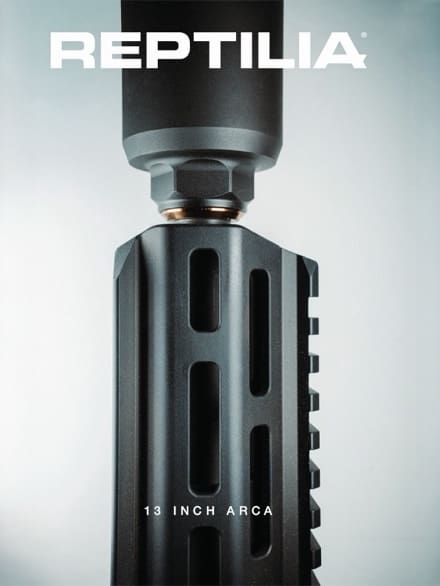
HILLSBOROUGH, NC — Reptilia is proud to announce the release of the new 13” ARCA Handguard, now available in both Black and Flat Dark Earth.

Designed for shooters who demand maximum versatility from their rifle, the 13” ARCA Handguard integrates a continuous Arca-Swiss interface directly into the handguard, eliminating the need for bolt-on rails while providing seamless compatibility with modern tripod systems. The result is a cleaner, stronger, and more streamlined solution for precision rifle applications, hunting, competition, and field use.

Built around Reptilia’s patented turnbuckle mounting system, the handguard delivers a secure and repeatable lockup across standard M4 upper receivers while maintaining a lightweight profile and full M-LOK compatibility. Shooters can quickly attach to tripod systems, fine-tune rifle balance through fore-aft adjustment, and configure mission-essential accessories without compromise.

“The 13in ARCA Handguard expands the capabilities of the AR platform while maintaining the simplicity and durability our customers expect,” said Reptilia. “By integrating the ARCA interface directly into the handguard, we’re providing a purpose-built solution that enhances stability, versatility, and overall rifle performance.”

Manufactured from 6061-T6 aluminum extrusion and protected by a MIL-STD Type III Class 2 hardcoat anodized finish, the 13” ARCA Handguard is engineered to withstand hard use in demanding environments. Like all Reptilia products, it is proudly made in the USA and backed by a lifetime warranty against manufacturing defects.

Key Features

  • Integrated full-length Arca-Swiss interface
  • Patented Reptilia turnbuckle mounting system
  • Compatible with all standard M4 upper receivers
  • Full M-LOK accessory compatibility
  • 6061-T6 aluminum construction
  • MIL-STD Type III Class 2 hardcoat anodized finish
  • Made in the USA
  • Available now in Black and Flat Dark Earth

The Reptilia 13” ARCA Handguard is available at reptiliacorp.com.

B.E. Meyers and Co. Awarded Contract to Deliver DAGIR-V1 Systems in FY27 Supporting US Army Small Arms Fire Control and Night Lethality

Thursday, June 18th, 2026

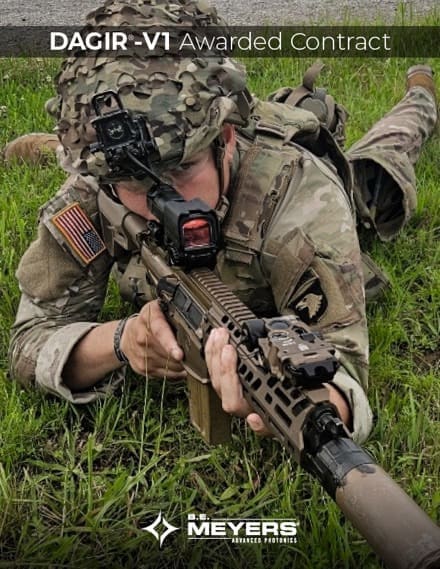
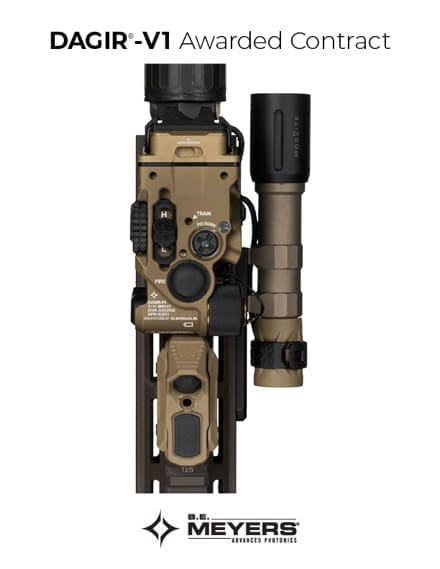
June 16, 2026 (Redmond, WA) – B.E. Meyers & Co., Inc. has been awarded a contract for 8,936 DAGIR®-V1 systems by the U.S. Army’s PM Soldier Lethality (PM SL), under the Capability Program Executive – Ground Soldier Systems (CPE-G) to fulfill the US Army’s specific needs in the M7 Surrogate Fire Control Program. The DAGIR® series of infrared and visible aiming and illumination laser systems are advanced VCSEL-based systems and are designed for multi-platform applications. This order will be delivered in GFY2027 through an order via the Defense Logistics Agency (DLA) Tailored Logistics Support (TLS) program.


The DAGIR® family of advanced, multi-platform laser systems constitutes B.E. Meyers & Co.’s latest generation of photonic solutions for Near Infrared (NIR) illumination and aiming on weapon platforms. The U.S. Army’s selection of the DAGIR®-V1, following testing, evaluation, and Soldier feedback, further establishes the DAGIR® as the premier advanced multi-platform aiming laser.  “Following our deliveries of MAWL®-X1 systems to the DoW in previous years, we are honored to continue our support of the US Army with our DAGIR® laser system. These systems, proudly American Made, ensure that our Warfighters have multi-function laser technology that supports the clarity, speed, and precision of modern night lethality needs” said Matthew Meyers, CEO and second-generation owner of B.E. Meyers & Co.

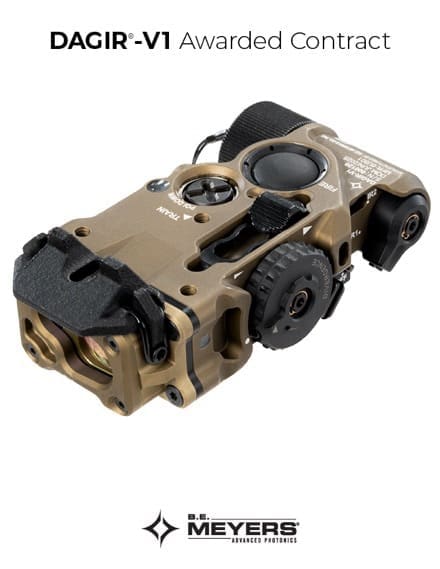
The DAGIR® series of lasers represents a major advancement in multi-function aiming and illumination technology, combining a Near-Infrared illuminator with both NIR and visible aiming lasers in a compact, ruggedized system. Designed through advanced optical engineering, the DAGIR® series delivers exceptional illumination quality, ergonomic operation, and a refined form factor. USSOCOM previously selected the DAGIR®-V1 under the SAL-UHP program designated the LA-30 with NSN 5855-01-724-3043. The DAGIR®-V2 features an additional visual laser override button, and has also been adopted by USSOCOM under the Miniature Aiming Laser – Ultra High Power (MAL-UHP) contract.

The U.S. Army selected DAGIR®-V1 is a versatile, weapon mounted NIR/visible pointer and NIR illuminator engineered for demanding operational requirements. Its over-bore 40 mW IR pointer and dual 350 mW VCSEL based IR illuminators deliver consistent performance through dense photonic barriers and in high ambient light environments. The laser system’s best-in-class human machine ergonomic interface enables soldiers to adjust beam divergence and output without removing their hand from the weapon. All optical and electronic components are fully sealed within a compact, durable aluminum housing designed to withstand extreme environmental and mission specific stresses.

At the core of the DAGIR®-V1 is the MINIRVA™ diode system, utilizing advanced VCSEL (Vertical Cavity Surface Emitting Laser) technology to achieve exceptional beam precision and clarity. This evolutionary advanced VCSEL core provides sharper beam projection and more defined illumination, improving target identification, situational awareness, and threat assessment across diverse operational environments.

The DAGIR®’s unique capabilities integrate seamlessly with the U.S. Army’s ongoing modernization efforts in visual augmentation systems and next generation small arms programs. As a U.S. Army veteran-operated company, B.E. Meyers & Co. is proud to support the enhancement of U.S. Army Soldiers’ night fighting capabilities and remains committed to delivering the best possible advanced photonic systems for the warfighter.

Who We Are:

B.E. Meyers & Co., Inc. is a Defense Technology Manufacturer located in Redmond, Washington. As a privately held, Veteran-operated, second-generation US Small Business in our 52nd year, we are a global leader in tactical laser systems for combat applications, as well as optoelectronic systems for rotary wing aircraft, fixed wing platforms, and UAVs, along with other integrated systems. We are a true “Made in America” operation, with design, development, production, and final assembly occurring in our Redmond, Washington headquarters.  We are proud of our work and who we serve as we evolve critical defense technology and reenergize American Manufacturing.

Who We Support:

Our customers include all branches of US Department of War, US Federal and State Law Enforcement agencies, select US consumer channel partners, international allies in over 50+ countries, as well as defense primes both in the US and internationally.  Our key product brands in these spaces include VSLAP®, IZLID®, GLARE®, MAWL®, DAGIR®, BOARS®, MILR®, KIJI®, and others.

Made in America:

B.E. Meyers & Co. operates in multiple market segments as a defense-centric Original Equipment Manufacturer (OEM) at our core. Our business and our products are:

§     US based

§     US owned

§     Certified SBA Small Business

§     ITAR compliant

§     ISO 9001:2015

§     Made in America

§     Buy American Act compliant

§     Berry Amendment compliant

Strategic Sourcing:

With respect to strategic sourcing amid the U.S.-China trade war, B.E. Meyers & Co. is dedicated to an, “Anywhere But China” supply chain policy wherever possible, and especially for key components.

We continually promote efforts to diversify our supply chain, and we also invest in ensuring critical components are stocked to avoid disruptions.

Product Lines:

The DAGIR® series is currently under contract with various US DoW and other entities.

Please see Chuck Pressburg of Presscheck Consulting’s overview of the DAGIR® series here, as well as Steele Industries overview here.

For sales information on the DAGIR®, and other innovative laser solutions from B.E. Meyers & Co., please visit bemeyers.com or connect with us at info@bemeyers.com.