Wilcox Ind

Archive for August, 2026

Mehler Protection and UF PRO to Showcase Protection and Tactical Clothing Solutions at The Emergency Services Show 2026

Thursday, August 20th, 2026

FULDA, GERMANY, KOMENDA, SLOVENIA (19 August 2026)

Mehler Protection and UF PRO, brands of the Mehler Systems Group, will exhibit at The Emergency Services Show 2026, taking place on 16–17 September at the NEC Birmingham, United Kingdom. Visitors can meet the teams in Hall 5 at Stand G42.

The Emergency Services Show brings together professionals from across police, fire and rescue, ambulance, search and rescue, and other frontline services to explore the equipment, technologies and solutions shaping emergency response, resilience and public safety.

Mehler Protection and UF PRO will present ballistic protection and tactical clothing for a range of applications, from everyday police duties to specialist tactical operations and challenging environmental conditions.

Mehler Protection will present a selection of modular and configurable personal protection solutions, including the HYVE modular vest system and the M.U.S.T. modular protection system. The display will also feature the overt vests, hard and soft ballistic protection, and ballistic helmets, providing an overview of the company’s capabilities across different law enforcement applications.

UF PRO will showcase tactical clothing designed to support mobility, durability and comfort during extended operational use. The selection will include products from the P-40 range for everyday police and response duties, as well as combat clothing from the Striker family for more demanding tactical operations.

Flame-retardant clothing will form an important part of the presentation. The Striker X FR Combat Shirt and Combat Pants are designed for operations where protection against heat and flame must be combined with mobility, comfort and compatibility with tactical equipment.

Visitors will also be able to explore UF PRO outerwear for changing weather and temperature conditions, including softshell, winter and wet-weather solutions from the Hunter, Delta, AcE and Monsoon ranges. Selected garments will be available for try-on, allowing visitors to experience their fit, mobility and functionality first-hand.

By exhibiting together at The Emergency Services Show, Mehler Protection and UF PRO will provide police and emergency-service professionals with an opportunity to explore both individual products and complete equipment configurations developed around different operational needs.

Visit Mehler Protection and UF PRO in Hall 5, Stand G42, at The Emergency Services Show, taking place on 16–17 September 2026 at the NEC Birmingham, United Kingdom.
Denmark Selects Terma to Deliver Nationwide Counter-Drone Defense System

Thursday, August 20th, 2026

Terma will deliver a sovereign, integrated counter-drone defense system that connects existing and future sensors into one shared drone situational picture. With AI-supported processing of sensor data, the system will give the Danish Armed Forces and other authorities a stronger foundation to detect, understand and act on drone threats in real time.


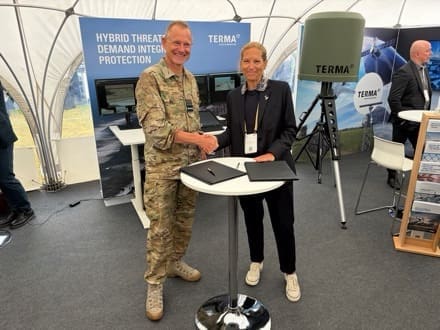
Per Pugholm Olsen, Head of DALO (Left) and Terma CEO Henriette Hallberg (Right)

Lystrup, Denmark – 19 August 2026 – The Danish Ministry of Defence Acquisition and Logistics Organisation (DALO) has entered into an agreement with Terma for the delivery of a new, integrated command-and-control system for counter-drone defense. The system will create a shared drone situational picture for the Danish Armed Forces and other authorities.

“I am pleased to sign this agreement, which will strengthen Denmark’s ability to maintain an up-to date drone situational picture. This new agreement with Terma is an important cornerstone in the ongoing effort to build a strong counter-drone capability, both within the Danish Armed Forces and Danish industry,” says Lieutenant General Per Pugholm Olsen, Chief of DALO.

From individual sensors to a shared drone situational picture

Denmark already operates sensors across the Armed Forces, civilian authorities and critical infrastructure, but today the information remains in separate systems and at different locations. The solution is built on Terma Helion, Terma’s sovereign multi-domain data backbone. Helion connects existing and future sensors and brings their data together into one shared drone situational picture. The platform integrates distributed systems and transforms large volumes of data into information that supports tactical decision-making at both local and central levels.

“In a security environment where drones represent a persistent and growing threat, the ability to detect, classify and act on threats across domains is fundamental to national security,” says Henriette H. Thygesen, CEO of Terma. “The ability to connect sensors, process data and turn information into timely decision support is essential to effective counter-drone defense. By creating a shared drone situational picture, we give the Danish Armed Forces and other authorities a strong foundation to act faster and with greater confidence. We are proud of the trust Denmark has placed in Terma. It confirms our ability to deliver mission-critical defense solutions that strengthen security in Denmark and across Europe.”

The solution also integrates OSL Technology’s FACE® platform for command and control and data fusion. OSL Technology became part of Terma in 2025. FACE brings together and processes data from Terma’s radar and surveillance technologies as well as third-party sensors and countermeasures. AI supports the processing, classification and prioritization of sensor data, enabling operators to rapidly identify and act on relevant incidents.

The solution builds on OSL Technology’s operational experience from complex civilian and military environments. Since 2019, OSL has been the prime contractor and system integrator for Heathrow Airport’s counter-drone system and also delivers counter-drone systems to the Ørland and Evenes air bases under a multi-year framework agreement with the Norwegian Defence Materiel Agency (FMA). Combined with Terma’s radar, surveillance and multi-domain capabilities, this creates a market-leading, open and modular counter-drone solution.

National control and flexibility for future threats

The solution will ensure national control over operational sensor data while enabling technologies from multiple suppliers to be integrated. It will be delivered in cooperation with other Danish industry partners and draw on expertise from across the Danish defense industry.

The scalable architecture allows sensors, sites, countermeasures and other capabilities to be continuously added over time. The solution can therefore support the management of drone incidents at military installations, airports, ports, energy facilities, government buildings and other critical infrastructure.

Facts

Together, the technologies enable authorities to:

  • Detect, classify and track drone activity
  • Fuse and prioritize sensor data using AI
  • Maintain a shared drone situational picture
  • Coordinate decisions and actions at Danish Armed Forces locations
  • Integrate new sensors and countermeasures as threats evolve

Rheinmetall and Hensoldt Demonstrate Successful Integration of Passive Sensor Technology into a Modern Air Defence System

Thursday, August 20th, 2026

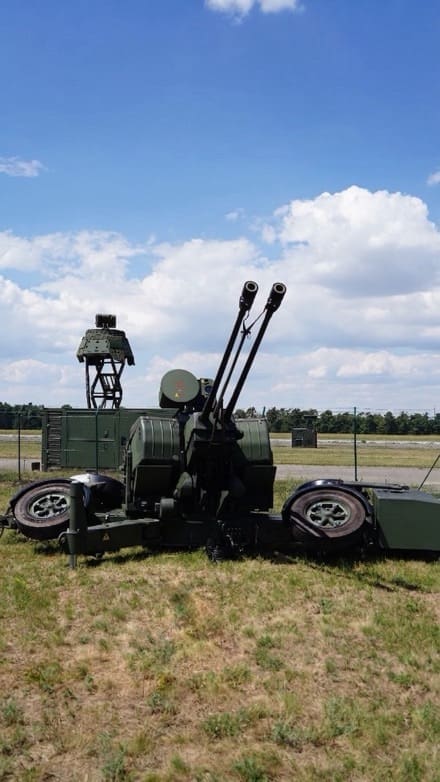
During the German Air Force exercise Timber Express 2026 in Manching, Rheinmetall Air Defence and Hensoldt achieved a milestone for future networked air defence. During a German Air Force exercise, the air picture generated by Hensoldt’s Twinvis passive radar was successfully integrated into Rheinmetall’s Skymaster command and weapon engagement system, which was directing the Skynex Air Defence battery deployed in the scenario.

The integration took place under realistic NATO networking conditions and demonstrated the high flexibility and open architecture of the Skymaster system. A common air picture could be generated by fusing and correlating sensor data within NATO’s Link 16 network. The Hensoldt passive radar demonstrated excellent performance in detecting and tracking air targets. This confirms the high operational value of modern passive sensor technology for air defence. Twinvis is a passive radar based on the latest digital technology that can be used for wide-area military airspace surveillance or civil air traffic control.

Particularly noteworthy is Skymaster’s ability to combine active and passive radar sensors with electro-optical sensors into a comprehensive air picture within the air defence network. This creates new opportunities for resilient, low-emission air surveillance in line with a modern emissions control strategy (EMCON), while at the same time improving situational awareness for the protection of high-value infrastructure, critical facilities and mobile military units.

The demonstration highlights the future viability of distributed and interconnected sensor networks and illustrates how passive sensor technologies can usefully extend and complement existing air defence systems. Furthermore, passive systems increase network survivability due to the absence of a distinctive identification. The findings provide an excellent foundation for the integration into stationary Skynex systems, mobile Skyranger solutions and modern counter-UAS systems such as the Skyspotter. 

The success of this trial was possible through the close and constructive cooperation between the participating German Air Force organisations, the exercise management team and the expert teams from Rheinmetall Air Defence and Hensoldt. Together, they achieved a NATO-compatible integration of the highest quality in a challenging technical environment, making an important contribution to the continued development of modern integrated air defence capabilities.

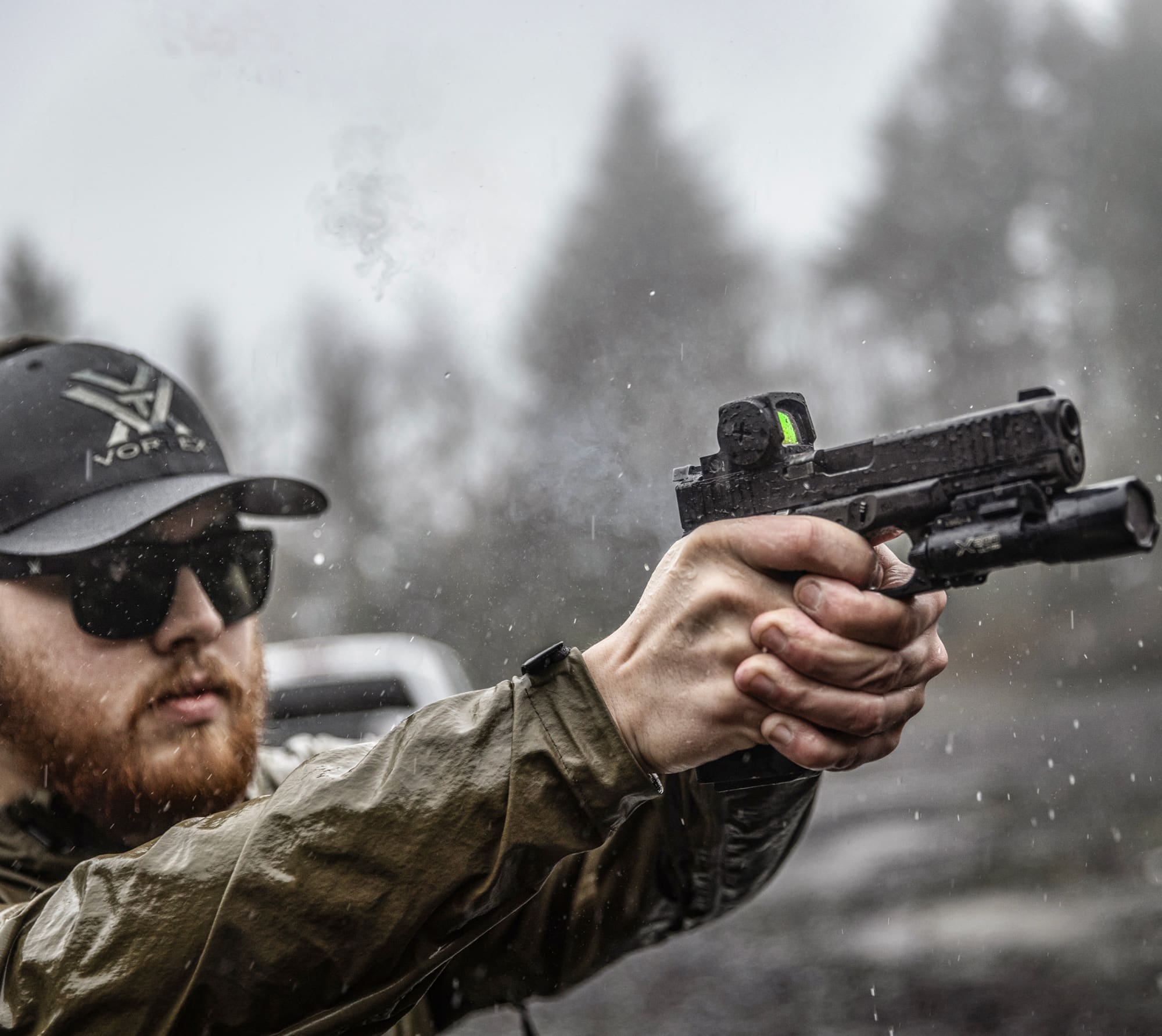
Vortex Adds New Green Dot Version to the Venom Enclosed Lineup

Thursday, August 20th, 2026

Same range workhorse. Now available with a 3 MOA green dot.

BARNEVELD, Wis. – Shooters have strong preferences when it comes to red dots. Some prefer red. Others prefer green, especially in certain lighting conditions. Now, these shooters have another option with the addition of the new green dot model in the Venom ® Enclosed Micro Red Dot lineup.

Range days don’t always come with perfect weather. The workhorse Venom® Enclosed Micro Red Dot family is equally at home on a pistol, offset on a carbine, or piggybacked on an LPVO. Adjustable brightness settings help keep the dot visible in changing light, while its enclosed design shields the emitter from rain, dust, or snow, so changing conditions never have have to cur a range session short.

ENCLOSED ALUMINUM HOUSING – Durable 6061 aluminum, blocks out weather, mud, snow, and debris.

LARGE VIEWING WINDOW – For fast target acquisition and a full sight picture.

ASPHERICAL LENS – For distortion-free sight picture and truer colors.

MOTION ACTIVATION WITH 10 MINUTE AUTO-SHUTOFF – Automatically activates with motion while 10 minute auto-shutoff saves battery life.

TOP BUTTONS – For hassle-free adjustments.

For some shooters, a green dot may be easier to pick up against certain backgrounds, in changing light inside or outdoors, or for those who simply see green better than red. The new model gives those shooters another option while preserving the controls, handling, and protection Venom® users already know.

The Venom® Enclosed Micro Green Dot is now available with an MSRP of $289.99 and a MAP of $199.99. To learn more, compare models, or find a dealer, check out the new Vortex® Store Locator .

Hanwha Wins US Army Mobile Tactical Cannon Contract

Thursday, August 20th, 2026

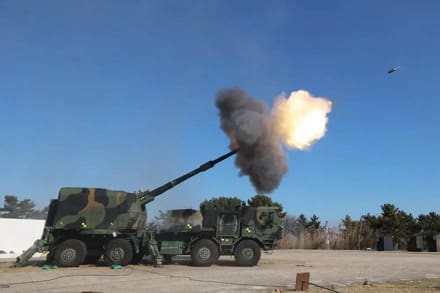
Hanwha Defense USA (HDUSA) announced that it has won a contract from the U.S. Army to deliver prototype K9 Mobile Howitzers (K9MH) for the Army’s new Mobile Tactical Cannon (MTC) program. The agreement provides for the accelerated delivery of six prototype MTC systems, with an option for an additional 12. This award marks HDUSA’s first major contract with the U.S. Army. 

HDUSA will provide a technically superior and rapidly fieldable 155 mm artillery system that supports the U.S. Army’s modernization and long-range precision fires objectives. With more than 2,500 K9 Howitzers already fielded globally, Hanwha is uniquely positioned to partner with the U.S. Department of War (DoW) to establish high-volume industrial capacity centered around the company’s wartime production ethos.

Hanwha’s phased-in localization strategy with domestic production and support means America’s defense industrial base will benefit from advanced manufacturing techniques, demonstrated technology, and good jobs. HDUSA is establishing a Phase I site in Opelika, Alabama, that will serve as the U.S. integration and test facility for Hanwha’s family of K9 Mobile Howitzers. HDUSA signed a three-year lease as part of the company’s strategic commitment to invest in the U.S. artillery system supply chain, enhance America’s combat vehicle industrial base, and serve as a long-term artillery modernization partner to the U.S. Army.

“We’re honored that the U.S. Army has selected Hanwha’s K9 Mobile Howitzer to fulfill its Mobile Tactical Cannon requirement. The K9MH is the total artillery solution and will be the centerpiece of Army Fires’ transformation into a more modern, more lethal force,” said Mike Smith, Hanwha Defense USA COO and President of Land Systems. “The U.S. Army’s selection is a testament to our track record of delivering devastating capability at speed, at scale, on cost, and onshore. As the wheeled variant of the K9, the K9MH provides an expansion path towards a tracked capability with designed-in margin for the future fight. And with such a capability, that fight will not be a fair one.”

Compatible with the Army’s full suite of munitions, the K9MH’s selection means the U.S. has now joined nearly a dozen allies who share a global industrial network and supply chain.

“Hanwha’s global supply chain and local production experience in Australia, Egypt, Poland, and Romania demonstrate a proven commitment to local execution we’re excited to bring to the U.S.,” said Michael Coulter, Hanwha Defense USA CEO. “Localization is central to Hanwha’s global business model, leveraging our global leading industrial technology and process in Korea to create sovereign industrial strength in the U.S., whether it be in shipbuilding, munitions, or combat vehicles.”

“This award reflects Hanwha’s enduring commitment to the United States and to strengthening the U.S. defense industrial base,” said Hanwha Group Chief Strategy Officer Alex Wong. “We are not simply delivering a system — we are building an American manufacturing enterprise, transferring technology, and creating a lasting foundation for broad industrial collaboration. Hanwha is invested in America for the long term.”

“We’re focused on creating a U.S.-anchored K9 Mobile Howitzer manufacturing network — with Opelika, Alabama, as the current Phase I launch point — that can deliver advanced Mobile Tactical Cannons at the speed and scale the U.S. Army needs,” said Jason Pak, Hanwha Defense USA Head of Land Systems-Artillery.

HDUSA will continue to evaluate future phases and locations as the company expands its U.S. artillery systems footprint and production capacity. The company is committed to engaging with suppliers and developing the workforce of the future necessary for long-term sustainment and technology insertion activities.

At a time when the U.S. is placing renewed focus on strengthening America’s defense industrial base, HDUSA believes its combination of mature capability and industrial commitment offers both near-term relevance and long-term value.

The Army Azimuth

Thursday, August 20th, 2026

Since 1775, the United States Army has defended our republic and carried the torch of liberty through suffering and sacrifice. From the frozen Delaware at Trenton to the bluffs of Normandy, the jungles of Guadalcanal, and the winter hills of Chosin, American Soldiers faced enemies in brutal conditions and held the line. They answered the Nation’s call. One hundred and ninety campaign streamers fly from our Army flag, each testifying to the valor of our forebearers. Their legacy is ours to uphold.

Answering the Nation’s Call

The Army serves the Nation. We preserve peace and security, support our national objectives, and overcome any force whose aggression imperils us. Our strategic direction is clear:

  • Defend the Homeland. We secure our Nation’s borders, protect the American people against attack, and respond to domestic crises — these are our most sacred duties. A secure Western Hemisphere is a prerequisite for joint power projection.
  • Warfighting. America’s Army applies violence decisively on battlefields marked by unrelenting speed, precision lethality, and persistent observation. We dominate from the outset to control escalation, prevent prolonged war and counter enemies who employ stand-off weapons, including unmanned systems and WMD.
  • Project Power On and From the Land. The Army projects land power by generating combat credible formations, prepositioning capabilities where they matter most, and strengthening the capacity of our Allies and partners. The Army maintains units postured to respond immediately to crises and contingencies regionally and worldwide.

The Army is the Foundation of the Joint Force

The Army has aggressively pursued change to prepare for large scale combat operations. We shifted from brigade modularity to a force organized for multidomain operations at all echelons. We fielded long range precision fires that strike deep and sink ships at sea, evolved air defenses for skies saturated with unmanned systems, upgraded theater logistics, expanded terrestrial intelligence, and established new units integrating space, cyber, electronic warfare, and artificial intelligence into command and control.

The work of change continues. Today we emphasize the fundamentals of Soldiering, ensuring a strong grounding in warrior ethos, individual Soldier readiness, and small unit tactical skills. As the Army campaigns around the world, we turn our focus to operational readiness to achieve our central task: To be ready to fight and win the battles and wars of the Nation.

A ready Army is the foundation of the Joint Force, providing a range of capabilities that underpin joint operations and give our leaders immediate options. We employ four operational warfighting elements — convergence, strike, close battle, and endurance — to deliver joint all domain maneuver. We bind the regional land power networks of Allies and partners, offering distinct advantages for access and interoperability.

What Land Dominance Demands

U.S. Army forces must be prepared to overcome the most complex challenges our adversaries can impose and master an operational environment that looks fundamentally different from the battlefields of yesterday. To prepare for modern war, the Army will:

  • Embrace a Warrior Mindset. We possess the grit to endure hardship and the courage to act honorably. Our Soldiers and Civilians uphold high standards and seek continuous development. Leaders at all echelons see Soldiers as the decisive advantage and prioritize training mission essential tasks.
  • Outpace our Adversaries. We learn, innovate, and adapt faster by pairing our human ingenuity and judgment with advanced technologies like autonomy and artificial intelligence. Our professional military educational institutions teach the essence of warfighting, and our combat training centers validate readiness through crucibles designed to replicate the challenge of combat. Experience, reflection, and accountability propel our force to excellence.
  • Gain Positional Advantage. We gain positional advantage through posture that comes in many forms: from forward basing to campaigning to stockpiling supplies. We continually reinforce forward areas, harden lines of communication, and exploit opportunities.

The next war will not look like our last. Yet there are timeless truths in war. The battlefield does not forgive weakness. Land combat in the modern era will demand every ounce of rigor, endurance, and courage we possess. Every shortcut in training and lapse in discipline will be paid for in blood.

This is the Army we must be: disciplined, lethal, and relentless — an Army that closes with and destroys the enemy, leaving no doubt about the will and power of the United States. As it has for more than 251 years, our Army will stand ready to fight, and win — whenever and wherever the Nation calls.

This We’ll Defend!

Christopher C. LaNeve
40th Vice Chief of Staff
General, United States Army

Reptilia Releases Saddle Mount for Beretta A300 20 Gauge Shotguns

Thursday, August 20th, 2026

The new low-profile optic mount brings Aimpoint® ACRO and Steiner Optics® MPS™ compatibility to the Beretta A300 20 Gauge platform.

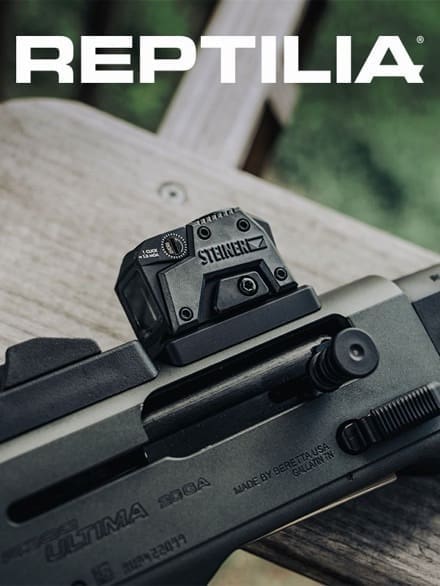
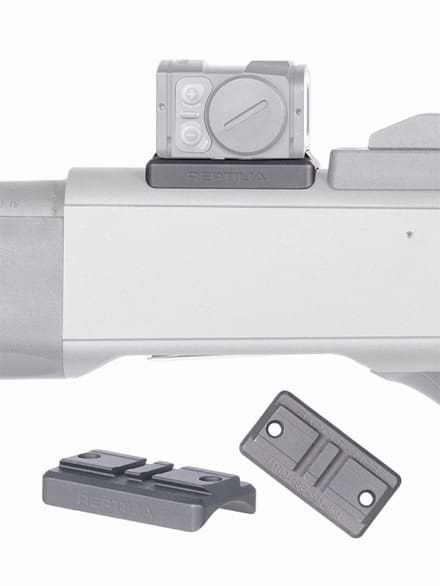
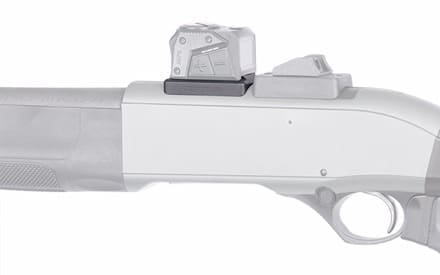
Reptilia is expanding its line of purpose-built shotgun optic mounts with the release of the SADDLE™ Mount for the Beretta® A300™ 20 Gauge, designed specifically for optics utilizing the Aimpoint® ACRO footprint.

The new SADDLE provides a lightweight, durable, and low-profile mounting solution for A300 20 Gauge owners looking to add a modern enclosed-emitter red dot optic while maintaining the natural handling characteristics of the shotgun.

Machined from billet 7075-T6 aluminum and finished with MIL-STD Type III hardcoat anodizing, the SADDLE mounts directly to the Beretta A300 20 Gauge using the factory mounting screws. Its low-profile design positions the optic close to the bore, providing a streamlined mounting solution while maintaining a natural sight picture and allowing the shooter to co-witness with the factory iron sights.

The SADDLE is compatible with optics utilizing the Aimpoint ACRO footprint, including the Aimpoint® ACRO P-1, ACRO P-2, and ACRO C-2, as well as the Steiner Optics® MPS™.

At just 23 grams, the SADDLE adds minimal weight while providing a robust mounting interface designed for hard use.

Features:

  • Designed specifically for the Beretta® A300™ 20 Gauge
  • Compatible with the Aimpoint® ACRO footprint
  • Compatible with Aimpoint ACRO P-1, P-2, and C-2 optics
  • Compatible with the Steiner Optics® MPS™
  • Machined from billet 7075-T6 aluminum
  • MIL-STD Type III hardcoat anodized
  • Low-profile mounting solution
  • Weighs 23 grams
  • Uses factory Beretta mounting screws
  • Made in the USA

The Reptilia SADDLE for the Beretta A300 20 Gauge gives shooters a dedicated solution for mounting durable, enclosed-emitter optics without unnecessary height or bulk. Purpose-built for the platform and designed around the proven ACRO footprint, it delivers a simple, secure, and streamlined optic mounting solution for the modern shotgun. BUY NOW!

KATUSA: 76 Years of “We Go Together”

Thursday, August 20th, 2026

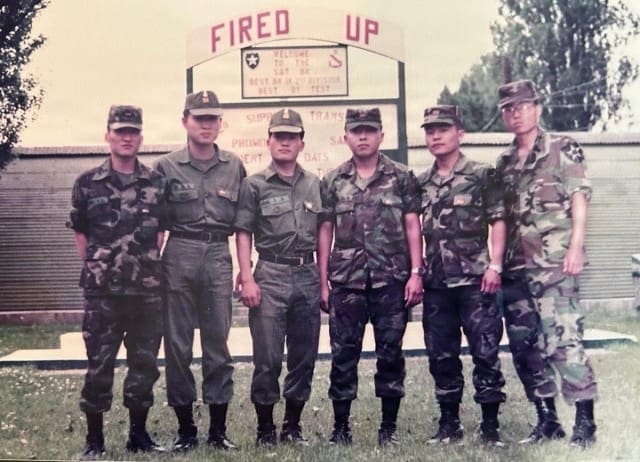
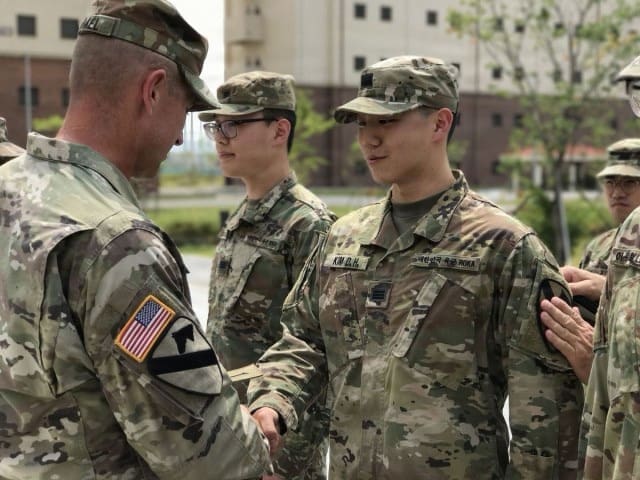
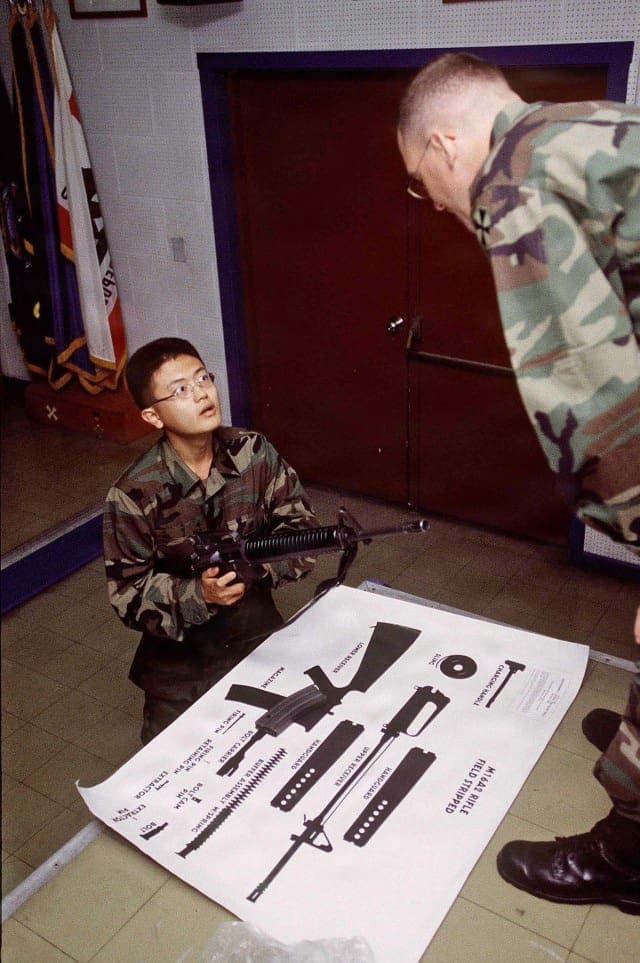
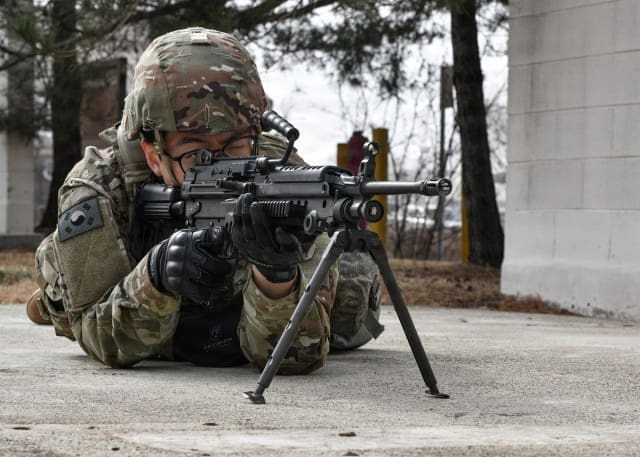
August 15 is recognized as the birthday of the Korean Augmentation to the United States Army Soldier program, or KATUSA. The program was created only weeks after the Korean War ignited, and to this day KATUSAs continue to serve side-by-side with Eighth Army Soldiers providing priceless support and friendship.

The Korean War began June 25, 1950. Roughly three weeks later the KATUSA program was initiated July 15 by an informal agreement between the Honorable Syngman Rhee, president of the Republic of Korea, and General of the Army Douglas MacArthur, commander in chief, United Nations Command.

During the first two months of the war, the Republic of Korea Army had been destroyed as a fighting force and the U.S. Army was significantly understrength and had been “compressed” into the Pusan perimeter by North Korean forces, as described in an official Army report. Replacements and fighting men were in desperate need.

The concept of the KATUSA program was to augment the U.S. forces. In the beginning most KATUSAs were recruited directly off the streets of Pusan, now spelled Busan. After a basic training period, KATUSA Soldiers were sent to combat units serving as infantrymen. The first KATUSAs reached U.S. Army units by mid-August 1950.

They were issued U.S. supplies, but were paid by and remained administered under the Republic of Korea Army. Throughout the Korean War, up to a maximum of 23,000 KATUSAs served at any one time, according to the Army.

After the 1953 armistice, KATUSA Soldiers remained with U.S. Army units to receive training not readily available in the ROKA and to enhance U.S. Army in Korea’s mission capability.

Since 1950, the KATUSA Soldier Program has been ongoing with only periodic strength adjustments dictated by requirements. Originally, KATUSA Soldiers were returned to the ROKA after serving with the U.S. Army. Since 1968, however, KATUSA Soldiers remain with Eighth Army until their service commitments are completed. The ROKA Support Group was established May 11, 1965 at the request of the Eighth Army commander to administer the KATUSA Soldier program.

Today, young South Korean men planning to conduct their mandatory military service obligation can apply to become a KATUSA if they have a command of the English language and if positions are available.

Eighth Army has stated the KATUSA program increases the ROK-U.S. combined defense capability on the Korean peninsula. The program is also significant not only because of the military manpower and monetary savings that it provides to the U.S. Army, but also because it puts a face on the ROK-U.S. alliance and the combined commitment to deter war.

The KATUSA program is the very essence of one of Eighth Army’s favorite phrases, “katchi kapshida,” — “we go together.”

Information for this article provided by Eighth Army and these sources:

“Integration of ROK Soldiers into US Army Units (KATUSA)” (U.S. Army)

“The KATUSA Experiment” by David Curtis Skaggs (excerpt)

By Kenji Thuloweit