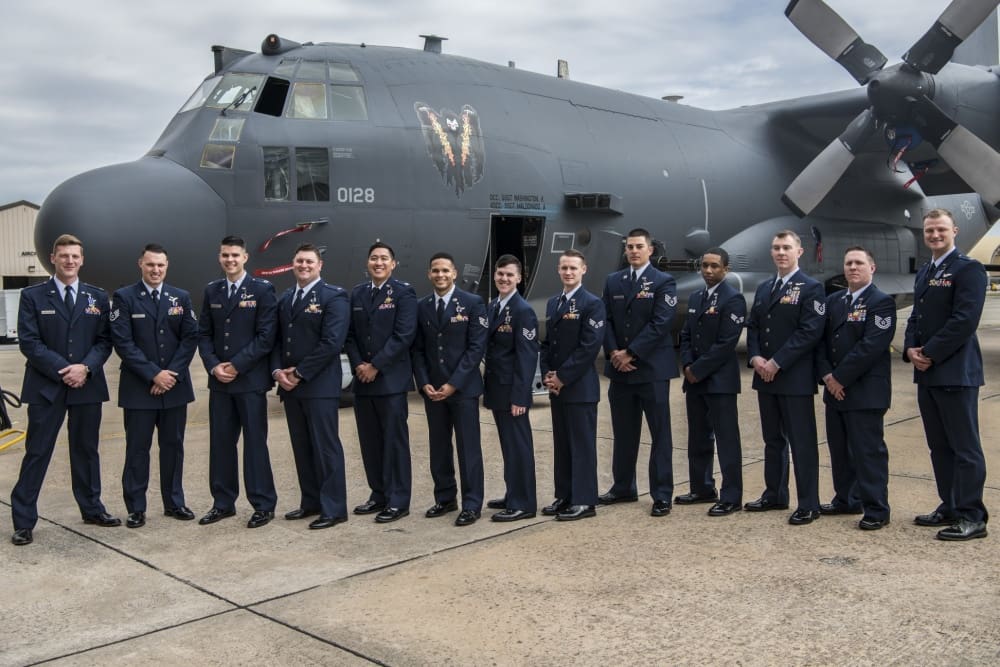
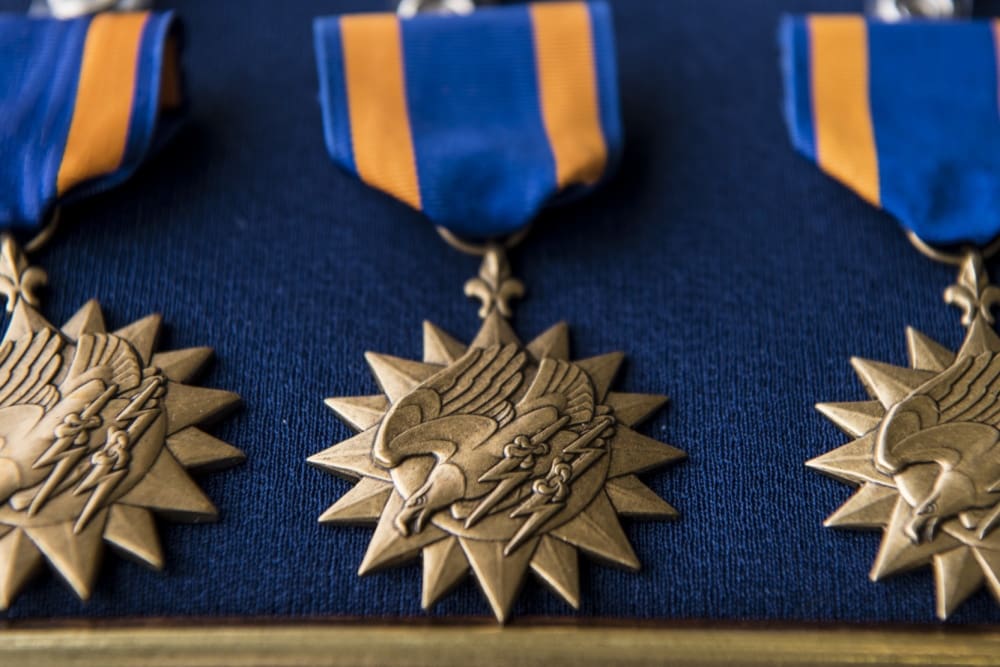
The aircrew of Spooky 41, an AC-130U “Spooky” gunship from the 4th Special Operations Squadron, was awarded medals for their role in a nine-hour mission over Nangarhar, Afghanistan. These medals included two Distinguished Flying Crosses and 12 Air Medals.
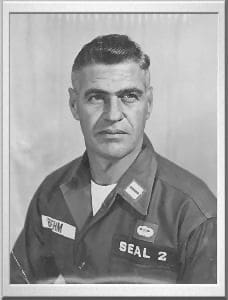
Maj. Wright, an Air Force Special Tactics officer, led a seven-man Special Tactics Team (STT) in support of the Army Special Forces company conducting the operation on the ground.
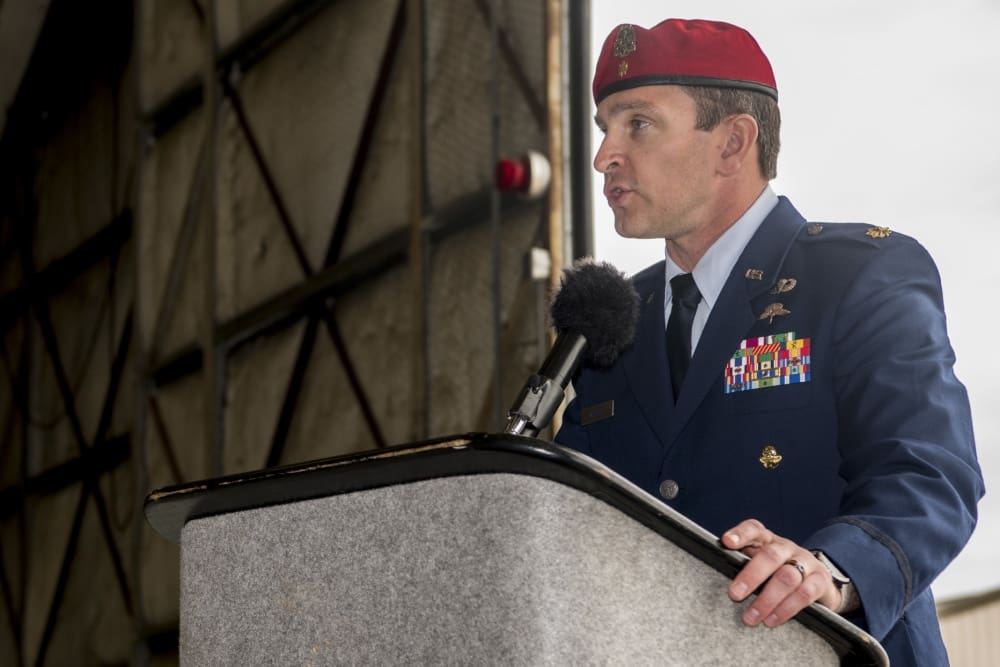
The following is his account of the mission from his perspective on the ground.
Vignette by Maj Jeffrey Wright, 24th Special Operations Wing (Air Force Special Tactics)
I served as the lead joint terminal attack controller and fire support coordinator for a major assault against a notorious Islamic State – Khorisan (ISIS-K) stronghold in Nangarhar, Afghanistan. This operation took place from 1 April through 6 April 2019, and the events below took place on the night of 3-4 April.
It would be inaccurate to describe this target as a village. Rather, this was a military installation literally dug into the side of the mountains, with a single path through which friendly forces could assault. The enemy consolidated their forces here in a warren of interconnected command and control nodes, operations centers, staging areas, and ‘on-base housing’ for ISIS-K leaders. This was no low-level commander and his men: this place was ‘ISIS-K’s Pentagon.’
I am aware of at least three previous assaults against this position that were quickly defeated by virtue of the enemy’s elaborate defense, high degree of training and commitment, and skillful application of firepower against friendly forces.
In my 20-plus years of training and experience in the art of attacking and defending ground objectives, I have seen few more formidable defensive positions – or ones more daunting to attack. I would have to reach for examples like Normandy, Iwo Jima or Hamburger Hill to appropriately convey the degree to which the enemy were prepared and ready for our assault.
The enemy stayed hidden until the assault force drew close. The result was an intense firefight where the lead elements found themselves under fire from not only all sides, but also three dimensions. The enemy had prepared apertures in floors and ceilings, and used barricaded shooters to devastating effect. By using networks of subterranean passageways, the enemy would re-appear behind our forces even after they’d cleared buildings.
Despite our numerical superiority, the situation was dire. From my support-by-fire position, I could do little to help. The safe evacuation of the growing numbers of wounded was up to my Special Tactics teammates in close-range gun battles with the enemy – literally fighting room-to-room. During the fight, the combat controller with the lead element of the assault force reached out for help, and got Spooky41 on the radio.
In short order, I heard the bark of the AC-130U’s guns. I distinctly remember wondering whether they were shooting at the right target, given the speed of their reaction – in 10 years as a JTAC, I’d never seen any kind of fire support as responsive. Sure enough, the first rounds were right on target – a good thing, because the enemy was so close to the assault force.
The enemy now had a problem on their hands. They had probably figured that their proximity to friendlies would mitigate our ability to bring fires to bear on them. Now, they were being heavily attacked by the AC-130U’s weapons.
The precise application of fires allowed friendly forces to establish a defensive perimeter and turn to the task of evacuating the wounded. The terrain prohibited the helicopter from landing, so they performed hoist lifts of the most critical patients. This entailed coming to a hover within machine gun range of dozens, if not hundreds, of enemy fighters keen to press home their advantage.
I watched this unfold with a sense that ‘this is how it happens…this is how aircraft get shot down.’ Yet, the enemy wasn’t able to get a single shot off as the patients were extracted, one by one. The reason there will be no memorials for three separate medical evacuation aircrews is because Spooky 41’s fires were so responsive and so precise that the enemy was effectively neutralized.
At least three members of my team were relaying information on two different nets in an effort to coordinate air and ground movement. Looking back, I am amazed that Spooky41 managed to track everyone so effectively. Even with my high degree of situational awareness as the man on the ground and with my degree of experience, I had a hard time keeping it all straight. At several points they were engaging different targets simultaneously and on different nets. I had one net in each ear – I watched and listened as they delivered salvo after salvo of fires with zero error.
A co-located teammate directed a few F-16 strikes during this time and I worked with Spooky41 to integrate the fires. It felt almost like a weapons school exercise, in that the degree of difficulty was so high and the number of assets so numerous that it far exceeded normal training scenarios.
I don’t know exactly how many of the wounded would have died without immediate medical evacuation, but I can say with certainty that the medical evacuation aircrew would have been among the casualties if it weren’t for the fires provided by Spooky 41.
I personally took fire the following day and the enemy’s expert gunnery put the bullets within arm’s reach. Had they been allowed to get a shot off at the MEDEVAC helicopters, we’d have lost aircraft. But again – after the initial gunshots and IED blast injuries, no further harm befell Americans or our Afghan allies that night.
Spooky 41’s legendary airmanship is the reason why – period.
I resolved that the first thing I would do upon getting back to Bagram was to seek each of them out and thank them for what they did for us that night. I’ve been to far too many memorials and seen far too many folded flags. I didn’t have to do that on this trip because instead of Americans giving their lives for their country that night, Spooky41 made the enemy die for theirs – on time, on target, and in the most complex environment I’ve ever seen – training, or combat.
1st Special Operations Wing Public Affairs
U.S. Air Force photo by SrA Joseph P. Leveille